Hardcover. Boston, Faber and Faber, 1st, 1994, Book: Very Good, Dust Jacket: Very Good, Hardcover in a bright, unclipped dust jacket, pages. "I write of peoples and of a struggle." So begins A New World, an ambitious and extraordinary book that challenges conventional historical narrative by presenting episodes in North America's history through the eyes and voices of the Europeans who established the first colonial outposts here. Beginning with the swaggering John Smith at Jamestown and ending with the beleaguered Montcalm at Quebec, Arthur Quinn allows towering historical figures to emerge from an often beautiful, sometimes forbidding early American landscape and speak. An elderly William Bradford looks back with growing despair at the early promise of the Pilgrim colony at Plymouth. Governor John Winthrop tries to administer a dose of practicality to the Puritans of Massachusetts. Jesuit missionaries bring Christianity and disaster to the Huron Confederacy. A blustering Peter Stuyvesant watches Manhattan slip from Dutch grasp. William Penn's Holy Experiment in Pennsylvania goes increasingly awry. And, finally, the British and the French fight history's first world war for supremacy in the New World. Telling each story using the literary conventions of the day, Quinn casts North America's colonial beginnings as a multicultural epic, gripping the reader throughout with his uncanny eye and storytelling skill. Clean copy.
Hardcover. New York, Morrow, 1st, 1993, Book: Very Good, Dust Jacket: Very Good, Hardcover, 160 pages. Illustrated in full color. In a clean, bright dust jacket. A commercial artist who started out sketching in the 1930s for pulp magazines, Lovell advanced to the glossier "slicks" in the 1950s and has since specialized in Old West, Plains Indian, and Civil War themes. He here presents from that long career his best canvases, among them his famed depictions of Lee's surrender and the Fifty-fourth Massachusetts' assault (in film, the climax of Glory). His spark of inspiration is usually to visualize an incident he has read of in the journals of the first white explorers and trappers, such as those of Lewis and Clark. Whether it's Clark firing his rifle or Indians encountering a cannon lost by Fremont, Native Americans are generally presented as wary but curious about the newcomers; Lovell puts the warfare outside of the frame. Themes aside, he works expertly with natural color, and though not a modern George Caitlin, his attention to the detail of Indian dress, carriage, and equipage is quite affecting, fully reflective of his respect for the cultures of Apache, Sioux, etc. A rich tribute to a captivating artist who evokes the West's vast landscape and its individual braves and traders in moods of exuberance and perseverance.
Hardcover. New York, William Morrow & Co, 1st, 1993, Book: Very Good, Dust Jacket: Very Good, 160 pages. Hardcover. Color illustrations. Clean, unmarked copy with only minor wear to dust jacket. "A commercial artist who started out sketching in the 1930s for pulp magazines, Lovell advanced to the glossier "slicks" in the 1950s and has since specialized in Old West, Plains Indian, and Civil War themes. He here presents from that long career his best canvases, among them his famed depictions of Lee's surrender". Gorgeous color plates.
Softcover. NY, Atlantic Monthly, Uncorr. Proof wraps, 2002, Book: Very Good, Dust Jacket: None, Paperback. Uncorrected proof. Like new.The book opens with the disappearance of a man named Franko Bradovich in Kosovo. Franko, a native Montanan posing as a local, was a spy of sorts, an operative who was helping the Lucani (a loose affiliation of DEA, FBI, CIA, etc. agents operating outside the law) bust a drug trafficking scheme from Bulgaria through Kosovo and Serbia to Europe. Franko was living with the family of a farmer named Daliljaj (and was in love with the farmer's daughter Fedima) and an apparently helpful American-raised Slav (Bozi Bazok), who's become part of the Serb army's shock troops, has warned Franko that the army was headed toward them with bloodshed in mind. Later, though, Franko, who's been posing as a drug trafficker, is brought in by local police for questioning and is beaten--making Bazok's helpfulness questionable at best. Either way, Franko can't really afford to stick around. Bazok agrees to help him and, reluctantly, Daliljaj, Fedima, and their relatives, escape the sweep, in exchange for the massive quantities of drugs he believes Franko is hiding. But Bazok betrays him and slaughters Daliljaj and all of Fedima's other family while they wait for Franko to return with transport. When Franko returns, Bazok has disappeared, taking Fedima with him.
Softcover. Chapel Nill NC, University of North Carolina Press , 1st, 2002, Book: Very Good, Dust Jacket: None, Softcover, 419 pages. This sweeping, richly evocative study examines the origins and legacies of a flourishing captive exchange economy within and among native American and Euramerican communities throughout the Southwest Borderlands from the Spanish colonial era to the end of the nineteenth century. Indigenous and colonial traditions of capture, servitude, and kinship met and meshed in the borderlands, forming a "slave system" in which victims symbolized social wealth, performed services for their masters, and produced material goods under the threat of violence. Slave and livestock raiding and trading among Apaches, Comanches, Kiowas, Navajos, Utes, and Spaniards provided labor resources, redistributed wealth, and fostered kin connections that integrated disparate and antagonistic groups even as these practices renewed cycles of violence and warfare. Always attentive to the corrosive effects of the "slave trade" on Indian and colonial societies, the book also explores slavery's centrality in intercultural trade, alliances, and "communities of interest" among groups often antagonistic to Spanish, Mexican, and American modernizing strategies. The extension of the moral and military campaigns of the American Civil War to the Southwest in a regional "war against slavery" brought differing forms of social stability but cost local communities much of their economic vitality. Clean copy.
Hardcover. Albuquerque, NM, University of New Mexico Press, 1st, 1984, Book: Very Good, Dust Jacket: Very Good, 195 pages, illustrated throughout in color and b&w. Blue cloth with gilt title to spine. Blue pictorial dust jacket. Light shelfwear to covers, else like new.Traces the life of the Navajo artist, including his experiences as a code talker for the Marines in World War II, and looks at his paintings and watercolors.
Hardcover. Norman, OK, University of Oklahoma Press (, 1st, 1989, Book: Very Good, Dust Jacket: Very Good, Hardcover, 415 pages, b&w illustrations. Light edge wear to dust jacket, creases to front flap. Light soiling to edges. Else a clean, tight copy. The first major battle between the U.S. Army and the Cheyenne Indians took place on the south fork of the Solomon River in present-day northwest Kansas. In this stirring account, William Y. Chalfant recreates the human dimensions of what was probably the only large-unit sabre charge against the Plains tribes, in a battle that was as much a clash of cultures as of cavalry and Cheyenne warriors.
Hardcover. NY, Funny Garbage Press, 1st, 2001, Hardcover, 212 pages. Legendary underground cartoonist Panter's comics are typically anarchic and fun, but they also delve deeper. First produced in 1983, Cola Madness is published here in book form for the first time. The work stars Jimbo, Panter's enduring punk everyman, sharing billing with a cast of idiosyncratic characters including Bob War; his calamitous brother, Uncle Garcia, a smart-talking dinosaur and beleaguered guardian in a bathrobe; and Kokomo, a native in an unspecified tropical land colonized by oil companies. Posited as the hallucinatory fever dream of Kokomo, Panter's farce follows Jimbo's misadventures as he tries to get a Moka Cola at the local Jack-in-the-McTacos, the whole zany affair culminating in an absurd, scatological climax at an automated fast food restaurant. Panter delivers a visionary response to contemporary American life viewed through the wrong end of some cosmic telescope. This delightfully inane story offers a selection of Panter's themes: humanity's troubled relationship with nature and technology; the tension between restraint and the uncontrollable urge; family relationships; and Jimbo's endearing, comical self-doubt. Panter's black and white "ratty line" drawing style offers great economy while suggesting a broad range of graphic style from art brut to bathroom graffiti, and calls to mind the works of legendary cartoonists Jack Kirby and Osamu Tezuka.
NY, Clarion Books, 1st US, 1999, Book: Very Good, Dust Jacket: Very Good, Hardcover in a bright, unclipped dust jacket. 48 pages. Color photos and illustrations. Illustrated end papers. More than 130 full-color photographs adorn this handsome re-creation of daily life in a Plains Indian village in 1868. Readers will meet Real Bird and his family, part of a Northern Cheyenne tribe in southeastern Montana. Each member has an important role: Men prepare to become warriors and hunters, while women learn to raise crops and build a home-a tipi-from poles and buffalo hides. The clothes the family wears, from elaborate ceremonial headdresses to colorful beaded moccasins; the foods they eat; the games they play; the crafts and jewelry they make; and the spiritual rituals they perform are among the many topics included. This large-format book, with clear text and informative sidebars, provides a detailed pictorial account of the Plains Indian life more than a century ago. Clean copy.
Softcover. Seattle, University of Washington Press, 1st, 2000, Book: Very Good, Dust Jacket: None, Softcover. Like new in publishers shrink-wrap. Chief Joseph's exhausted words of surrender, 'Hear me, my chiefs, I am tired; my heart is sick and sad. From where the sun now stands, I will fight no more forever', are the accepted end of the Nez Perce War of 1877, in which several bands of Nez Perce attempting to find a new home outside their diminished Idaho reservation clashed with the U.S. military (and occasionally other Indians) along the Clearwater and Big Hole Rivers, and finally at the foot of the Bear Paw Mountains. However, a number of Nez Perce escaped transportation to Indian Territory with Joseph and continued their flight to Canada, with perhaps a hundred eventually joining Sitting Bull's Lakota."I Will Tell of My War Story" reproduces, describes, and discusses a remarkable series of drawings by an anonymous Indian artist who fought with Chief Joseph and later reached Canada. The drawings, in red, blue, and black pencil, include portraits of principal participants in the war, battle scenes, and views of Nez Perce camp life and celebrations during the war and after. The drawings are preserved in a small pocket ledger labeled 'Cash Book' on the front, which was acquired by Indian Agent Charles D. Warner in the 1880s. It was willed by him to a family living in northern Idaho, and is now in the collection of the Idaho State Historical Society. Scott Thompson worked closely both with the owners and with members of the Nez Perce community in preparing his manuscript. Thompson's detective work and research methods to identify Nez Perce and other parties pictured in the Cash Book make fascinating reading. He is careful to point out what is speculation and what has been documented or attested to by experts on dress, weapons, ceremony, and other aspects of Native culture. The Cash Book drawings are unique in several ways. They are one of very few firsthand pictorial records of the Nez Perce War, representing an even scarcer record of this war as seen from the Indian viewpoint. They contain invaluable historical and ethnographic information not only explicit in the form of military and Native dress, regalia, and quite graphic battle scenes, but also implicit. The drawings reveal an important stage of cultural adaptation as shown by the mixture of white and Native goods combined in Nez Perce material culture during the 1870s and 1880s, and by the artist's assimilation of white/European drawing techniques such as texture and perspective. The artist combined these drawing techniques with Native art traditions to make exceptionally effective pictorial communications. Scott M. Thompson is an art teacher at Chase Middle School in Spokane, Washington.
Hardcover. Hartford CT, Hurlbut, Scranton & Co., 1st, 1864, Book: Very Good, Dust Jacket: None, Hardcover, 763 pages, illustrated with many full-page plates, most hand-colored (including second title page). Leather bound with some splitting along spine edges. Black spine label with gilt lettering. Internally very good, minor foxing.
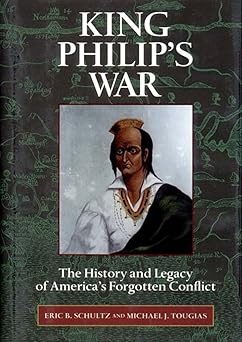
Hardcover. Woodstock VT, Countryman Press, 4th pr., 1999, Book: Very Good, Dust Jacket: Very Good, Hardcover in a bright, price-clipped dust jacket, 416 pages, b&w illustrations. Now largely forgotten, the massacres of 1675 to 1676, known as King Philip's War, ended the harmonious relations that had existed between native Americans and the colonists since their arrival at Plymouth Rock in 1620. Tensions had been rising as the number of settlers grew, and the pillaging of an outlying farm by affronted young braves escalated into open hostilities. Pitched battles were fought from Rhode Island to Maine. Hundreds of English died as farmers fled and cowered behind stockades or in the few port towns. Thousands of natives were slaughtered and the rest dispersed or sold into slavery in the West Indies. The savagery resulted in the clearing of the native populations from southern New England and the unopposed expansion of the New England colonies. It also became the brutal model on which the United States came to deal with its native peoples. King Philip's War tells the story with such close attention to detail that each ambush, each burned-out farm, becomes a vivid image. The authors make abundant use of maps and photographs of old sites to enable the reader to follow the course of the war: the book forms an exhaustive guide for the armchair historian or anyone wishing to visit the monuments and battlefields today. Clean copy.
Hardcover. Cincinnati OH, George Conclin, 6th Ed., 1841, Book: Very Good, Dust Jacket: None, Hardcover, 288 pages, 9 b&w woodcut illustrations. Sixth edition, first published in 1838. Tan cloth, paper label on spine, label is chipped, worn in areas. Covers with light soil. Still, internally a tight, clean copy with light foxing.
Hardcover. NY, Time Life, reprint, 1983, Book: Very Good, Dust Jacket: None, 456 pages. Hardcover with no dust jacket. Dark blue leather bound with gilt titles to front cover and spine. Embossed decoration on front cover. Gilt text block edges, red ribbon marker. Clean, tight copy. In 1861 William Watson, a native Scot who had established himself as a Louisiana businessman, enlisted in the Confederate forces although still a British subject. In 1887 he penned his memoirs "to give", he said, "a simple narrative of my experience in a war campaign". Far from simple, Watson's work clearly and forcefully describes his experiences with the 3rd Louisiana infantry in battles at Wilson's Creek and Pea Ridge while depicting the mundane aspects of camp life and providing delightful and colorful character sketches of fellow soldiers and officers, including the legendary General Ben McCulloch. But Watson offers much more than the story of a soldier's life. He also provides an excellent depiction of southern society undergoing the crisis of secession and the tumultuous early years of the Civil War.
Hardcover. US, Combined Books, 1st, 1993, Book: Very Good, Dust Jacket: Very Good, Hardcover, 312 pages, b&w illustrations. Light shelf-wear to dust jacket, else a clean, tight copy. The destruction of George Armstrong Custer's command at Little Bighorn by the Sioux and Northern Cheyenne on 25 June, 1876 has been etched in the national memory and has remained one of America's longest lingering controversies. The Little Bighorn Campaign penetrates the mysteries of Custer's disaster as well as the broader context of the 1876 campaign against the Sioux.
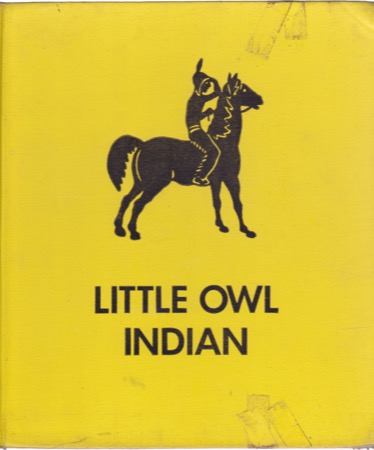
Hardcover. Boston, Houghton Mifflin, reprint, Book: Good, Dust Jacket: None, Hardcover, yellow cloth with black stamping. 32 pages illustrated with bold colors by the author. A young Indian boy gives timely warning of a forest fire, saving both the wild animals and his people. Tape residue on covers where dj was taped to book, light stamp to front endpaper. Ex-lib. Interior clean.
Hardcover. NY, Farrar, Straus and Giroux, 1st, 1971, Hardcover in a bright dust jacket, 378 pages. From dust jacket notes: "For most Americans, the Second World War started on December 7, 1941, and much of the fighting took place in strange, faraway places. For the British, the war started on September 3, 1939, and much of the action took place in the skies over England. In the spring of 1940, after months of uneasy calm, Germany invaded the Lowlands and conquered France within a few days, leaving England without her only meaningful ally on the Continent. A year would pass before the Soviet Union was drawn into the war, and eighteen months before the Japanese attacked Pearl Harbor. The United Kingdom, with a land area about the size of Wyoming, was alone, all alone, with only the Straits of Dover separating the island from Hitler's war machine. For six years Mollie Panter-Downes covered the war for The New Yorker magazine from her native England. Even at the height of the air war over London, when 'all that is best in the good life of civilized effort appears to be slowly and painfully keeling over,' she continued to file her fortnightly reports in an understated but dramatic fashion that reflected the fortitude of her fellow countrymen: 'The announcements of the first air-raid deaths are beginning to appear in the obituary columns of the morning papers. No mention is made of the cause of death, but the conventional phrase "very suddenly" is always used.' William Shawn, editor of The New Yorker, has assembled Miss Panter-Downes' 'Letter from London' columns into a consecutive, on-the-spot chronicle of the war in England."
Hardcover. NY, Henry Holt, 1st, 1997, Book: Very Good, Dust Jacket: Very Good, Hardcover in a bright, unclipped dust jacket. Charles Mason (1728-1786) and Jeremiah Dixon (1733-1779) were the British surveyors best remembered for running the boundary between Pennsylvania and Maryland that we know today as the Mason-Dixon Line. Here is their story as reimagined by Thomas Pynchon, in an updated 18th-century novel featuring Native Americans and frontier folk, ripped bodices, naval warfare, conspiracies erotic and political, and major caffeine abuse. Clean copy.
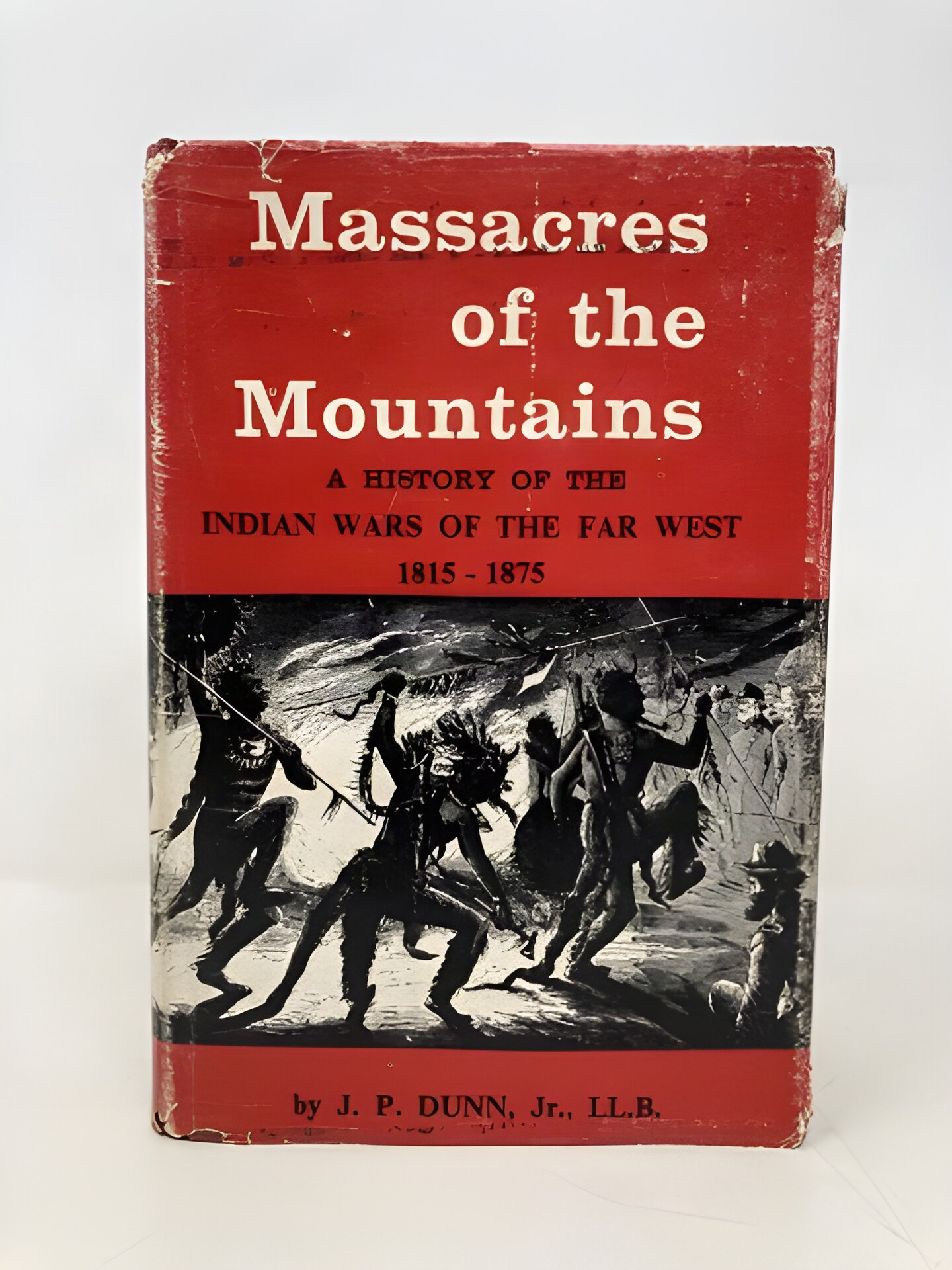
Hardcover. NY, Archer House, reprint, 1958, Book: Very Good, Dust Jacket: Good, Hardcover in a lightly worn dust jacket, 110 b/w illustrations. 669 pages. This is a facsimile reprint of edition first published in 1886. Covering 60 years of merciless bloody conflict, it documents in detail every major Indian battle between 1815 and 1876. Dust jacket spine faded, otherwise a clean, very good copy.
Hardcover. NY, Time Life, reprint, 1982, Book: Very Good, Dust Jacket: None, 389 pages. Hardcover with no dust jacket. Dark blue leather bound with gilt titles to front cover and spine. Embossed decoration on front cover. Gilt text block edges, red ribbon marker. Clean, tight copy. The commander of a Georgia regiment through much of the Civil War mused later in his memoirs that the heaviest burden fell not upon the man at the front, but upon the woman who waited and prayed for victory: "While the men were carried away with the drunkenness of the war, she dwelt in the stillness of her desolate home." Sallie Brock Putnam spoke for Southern womanhood. She was a native of Madison County, Virginia, and seems to have come from a family of good social standing. The book contains an unexpectedly full history of the Civil War; the author exhibits a strong grasp of strategy and tactics. But at its heart is an incisive eyewitness account of life in a capital that was swollen to four times its normal population by the exigencies of war. Brock's descriptions of Jefferson Davis' inauguration and the Richmond Bread Riot of 1863 are dramatic, but no more so than her accounts of nameless refugees, race relations, opportunistic merchants and blockade runners. Confederate prisons and family matters. In contrast to other female Southern writers of the period, she was more sober and factual, less gossipy and speculative. She wrote with shrewdness and maturity, and with a remarkable lack of self-pity and exaggeration. Yet the reader cannot miss her courage, sacrifice and suffering. Sallie Brock Putnam died in 1911.
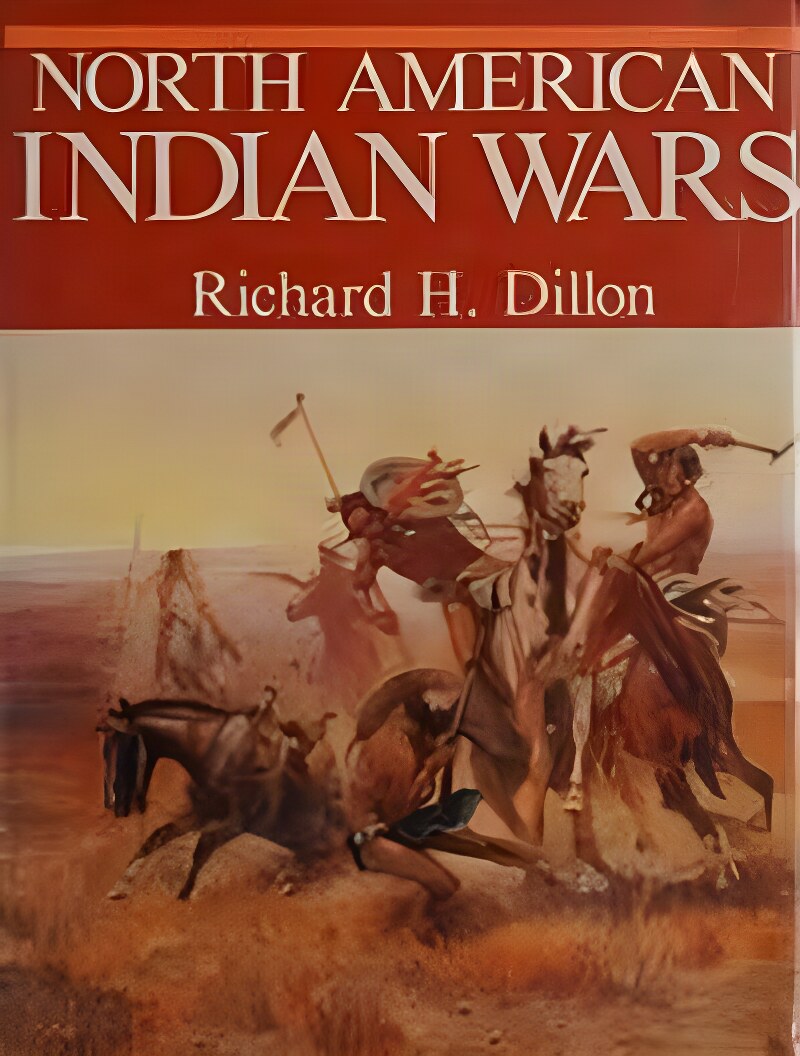
Hardcover. Secaucus NJ, Chartwell Books, 1993, Book: Very Good, Dust Jacket: Very Good, Hardcover, 255 pages, illustrated throughout in color and b&w. Folio. Light edgewear to dust jacket, else a clean, tight copy.
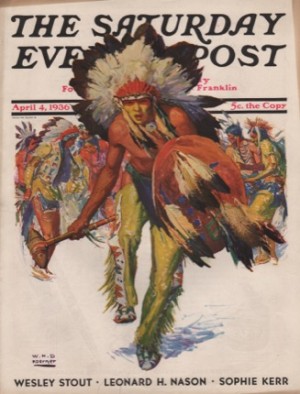
1936, Color art of Native American war dance by W.H.D. Koerner. 10 X 13". PLEASE NOTE: The image shown is a scan of the actual product you are purchasing. What you see is what you get. The sheet may have some imperfections beyond the cropped area shown. You are buying THIS PAGE ONLY- not the entire magazine. Your order will be placed carefully between stiff paper and an acetate overlay, then packed in a rigid cardboard sleeve to prevent bending.
Hardcover. London, Merrill Holberton, 1st, 1998, Book: Very Good, Dust Jacket: Very Good, Hardcover, 160 pages. Black & white photography. Clean, tight copy. These largely unpublished photographs, some only recently discovered, were taken by Aby Warburg on his trip to the American frontier in 1895. Neither a photographer nor a native tourist, Warburg was a scholar with a camera. As seen though his own cultural and psychological perspective on art, these insightful photographs are significant not only to the study of Native American and frontier life, but also to an understanding of Warburg's unique vision of cultural history. 80 duotone photos.
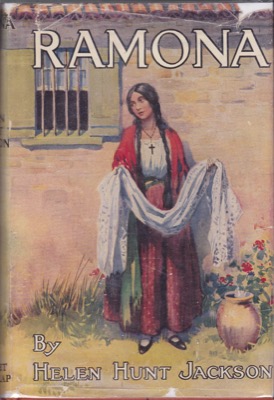
Hardcover. NY, Grosset & Dunlap, reprint, Book: Very Good, Dust Jacket: Good, Hardcover in a bright wraparound dust jacket. Ramona, written by Helen Hunt Jackson, is a timeless work of historical fiction that first captured hearts in 1884. Set against the rugged beauty of post-Mexican-American War California, this powerful novel weaves together romance, cultural heritage, and social justice in a narrative that resonates deeply with readers. We follow the life of a young woman of mixed Native American and European descent as she navigates the complexities of identity, love, and survival in a land fraught with change. Name on front fly leaf otherwise clean.


 "Art of Tom Lovell, The - An Invitation to Historyby: Hedgpeth, Don/Walt Reed")
 "Art of Tom Lovell, The: An Invitation to Historyby: Hedgpeth, Don and Walt Reed")
 "Badger Gamesby: Jackson, Jon A.")
 "Carl Gorman's Worldby: Greenberg, Henry & Georgia")
 "Cheyennes and Horse Soldiers: The 1857 Expedition and the Battle of Solomon's Forkby: Chalfant, William Y.")
 "Daily Life In A Plains Indian Village 1868by: Terry, Michael Bad Hand")
 "I Will Tell of My War Story: A Pictorial Account of the Nez Perce War (Samuel and Althea Stroum Book)by: Thompson, Scott M.")
 "Indian Races of North and South America, The: Including the Late Sioux War and Indian Massacre in Minnesotaby: Brownell, Charles de Wolf")
 "Life in the Confederate Army: Being the Observations and Experiences of an Alien in the South During the American Civil War (Collector's Library of the Civil War)by:")
 "Little Bighorn Campaign, The : March-September 1876 (Great Campaigns Series)by: Sarf, Wayne Michael")


 "London War Notes 1939-1945by: Mollie Panter Downes")

 "Mosby's Rangers (Collector's Library of the Civil War)by: Williamson, James J.")
 "Photographs at the Frontier - Aby Warburg in America 1895-1896by: Cestelli Guidi (ed), Benedetta and Nicholas Mann")