Hardcover. NY, Time Life, reprint, 1983, Book: Very Good, Dust Jacket: None, 389 pages. Hardcover with no dust jacket. Dark blue leather bound with gilt titles to front cover and spine. Embossed decoration on front cover. Gilt text block edges, red ribbon marker. Clean, tight copy. The commander of a Georgia regiment through much of the Civil War mused later in his memoirs that the heaviest burden fell not upon the man at the front, but upon the woman who waited and prayed for victory: "While the men were carried away with the drunkenness of the war, she dwelt in the stillness of her desolate home." Sallie Brock Putnam spoke for Southern womanhood. She was a native of Madison County, Virginia, and seems to have come from a family of good social standing. The book contains an unexpectedly full history of the Civil War; the author exhibits a strong grasp of strategy and tactics. But at its heart is an incisive eyewitness account of life in a capital that was swollen to four times its normal population by the exigencies of war. Brock's descriptions of Jefferson Davis' inauguration and the Richmond Bread Riot of 1863 are dramatic, but no more so than her accounts of nameless refugees, race relations, opportunistic merchants and blockade runners. Confederate prisons and family matters. In contrast to other female Southern writers of the period, she was more sober and factual, less gossipy and speculative. She wrote with shrewdness and maturity, and with a remarkable lack of self-pity and exaggeration. Yet the reader cannot miss her courage, sacrifice and suffering. Sallie Brock Putnam died in 1911.
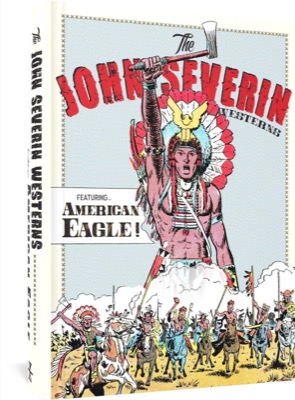
Hardcover. Seattle, Fantagraphics, 1st, 2023, Book: Very Good, Dust Jacket: None, Hardcover, pictorial boards, 484 pages illustrated in color. In the 1950s, between his legendary EC work and his celebrated Marvel comics, John Severin joined with Mad artist Will Elder and Two-Fisted Tales writer Colin Dawkins to introduce a new level of historical accuracy to the comic-book Western. While Native Americans had generally been vilified or left in the shadows of gun-slinging cowboy heroes, the American Eagle stories featured in Prize Comics Western were built around action-packed tribal intrigues and a heroic Crow warrior. Collected here for the first time are all of the American Eagle stories drawn by Severin from Prize Comics Western #85-#113. Plus Severin-drawn stories featuring The Fargo Kid, Black Bull and The Lazo Kid. More than 55 exciting, gorgeous, Western tales of bullets vs. arrows, stampedes, tribal warfare, prospectors, buffalo hunters, broken treaties, gun battles, cavalry charges, wagon trains, and warriors on horseback. Thanks to Severin's famously exacting art, you'll be able to smell the leather and gunpowder. With commentary by comics historian Howard Leroy Davis. Clean, bright copy.
Hardcover. NY, Alfred A. Knopf, 1st, 2010, Book: Very Good, Dust Jacket: Very Good, Hardcover in a bright, unclipped dust jacket. He was the greatest Indian warrior of the nineteenth century. His victory over General Custer at the battle of Little Bighorn in 1876 was the worst defeat inflicted on the frontier Army. And the death of Crazy Horse in federal custody has remained a controversy for more than a century. The Killing of Crazy Horse pieces together the many sources of fear and misunderstanding that resulted in an official killing hard to distinguish from a crime. A rich cast of characters, whites and Indians alike, passes through this story, including Red Cloud, the chief who dominated Oglala history for fifty years but saw in Crazy Horse a dangerous rival; No Water and Woman Dress, both of whom hated Crazy Horse and schemed against him; the young interpreter Billy Garnett, son of a fifteen-year-old Oglala woman and a Confederate general killed at Gettysburg; General George Crook, who bitterly resented newspaper reports that he had been whipped by Crazy Horse in battle; Little Big Man, who betrayed Crazy Horse; Lieutenant William Philo Clark, the smart West Point graduate who thought he could "work" Indians to do the Army's bidding; and Fast Thunder, who called Crazy Horse cousin, held him the moment he was stabbed, and then told his grandson thirty years later, "They tricked me! They tricked me!" With the Great Sioux War as background and context, drawing on many new materials as well as documents in libraries and archives, Thomas Powers recounts the final months and days of Crazy Horse's life not to lay blame but to establish what happened.
Hardcover. Gretna LA, Pelican Publishing, 1st, 2003, Book: Very Good, Dust Jacket: Very Good, Hardcover in a bright dust jacket. In June 1892, a thirty-year-old shoemaker named Homer Plessy bought a first-class railway ticket from his native New Orleans to Covington, north of Lake Pontchartrain. The two-hour trip had hardly begun when Plessy was arrested and removed from the train. Though Homer Plessy was born a free man of color and enjoyed relative equality while growing up in Reconstruction-era New Orleans, by 1890 he could no longer ride in the same carriage with white passengers. Plessy's act of civil disobedience was designed to test the constitutionality of the Separate Car Act, one of the many Jim Crow laws that threatened the freedoms gained by blacks after the Civil War. This largely forgotten case mandated separate-but-equal treatment and established segregation as the law of the land. It would be fifty-eight years before this ruling was reversed by Brown v. Board of Education. Keith Weldon Medley brings to life the players in this landmark trial, from the crusading black columnist Rodolphe Desdunes and the other members of the Comite des Citoyens to Albion W. Tourgee, the outspoken writer who represented Plessy, to John Ferguson, a reformist carpetbagger who nonetheless felt that he had to judge Plessy guilty. Clean copy.
Art Intitute of Chicago/Yale University Press, 1st, 2021, Book: Very Good, Dust Jacket: None, Hardcover, pictorial cloth, 251 pages illustrated in color. The extraordinary life of a captivating American artist, beautifully illustrated with his dreamlike drawings Much of Joseph Elmer Yoakum's story comes from the artist himself--and is almost too fantastic to believe. At a young age, Yoakum (1891-1972) traveled the globe with numerous circuses; he later served in a segregated noncombat regiment during World War I before settling in Chicago. There, inspired by a dream, he began his artistic career at age seventy-one, producing some two thousand drawings over a decade. How did Yoakum gain representation in major museum collections in Chicago and New York? What fueled his process, which he described as a "spiritual unfoldment"? This volume delves into the friendships Yoakum forged with the Chicago Imagists that secured his place in art history, explores the religious outlook that may have helped him cope with a racially fractured city, and examines his complicated relationship to African American and Native American identities. With hundreds of beautiful color reproductions of his dreamlike drawings, it offers the most comprehensive study of the artist's work, illuminating his vivid and imaginative creativity and giving definition and dimension to his remarkable biography. Clean copy. NOTE: DUE TO WEIGHT, DOMESTIC SHIPPING ONLY.
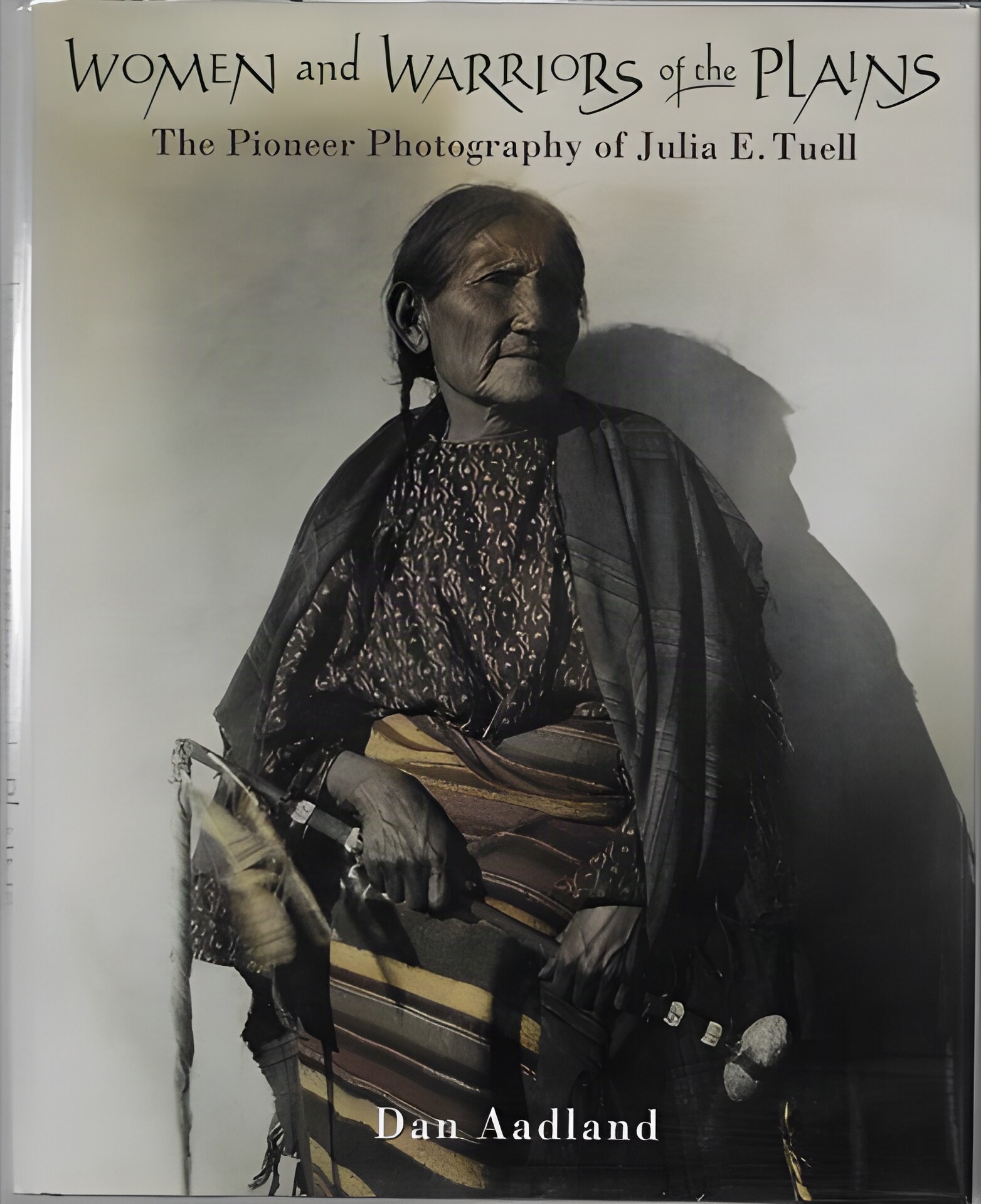
Hardcover. New York, Macmillan, 1st, 1996, Book: Very Good, Dust Jacket: Very Good, 182 pages. Hardcover with dust jacket. Clean, tight copy. A photographic tribute to Julia Tuell, one of the first women to photograph Native Americans at the turn of the 20th century.
Hardcover. Fleischmanns NY, Purple Mountain Press, 1st, 1996, Book: Very Good, Dust Jacket: Very Good, Hardcover in a bright, unclipped dust jacket. 178 pages.Award-winning biographer and historian Lincoln Diamant introduces a diverse group of men and women who contributed in unique ways to the eight-year American Revolution. . . . Among them are soldiers and civilians, veteran generals and three-week militiamen, patriots and spies, a host of Native American and African-American volunteers, and more than a few courageous women. Clean copy.
Softcover. Caldwell ID, Caxton Press, reprint, Book: Very Good, Dust Jacket: None, Softcover, 328 pages. illustrated frontispiece. Extensive b&w photographs throughout. The Nez Perce campaign is among the most famous in the brief and bloody history of the Indian wars of the West. Yellow Wolf was a contemporary of Chief Joseph and a leader among his own men. His story is one that had never been told and will never be told again. A first person account, through author L.V. McWhorter of the Nez Perce's ill-fated battle for land and freedom. Clean copy.

 "Richmond During the War; Four Years of Personal Observation By a Richmond Lady (Leather Bound Hardcover) by: Putnam, Sallie B.")
 "We As Freemen: Plessy v. Fergusonby: Keith Weldon Medley")