Softcover. Ann Arbor MI, University of Michigan Press, reprint, 2002, Book: Very Good, Dust Jacket: None, Softcover, 316 pages. The first known mystery written by an African-American, set in 1930s Harlem. Rudolph Fisher, one of the principal writers of the Harlem Renaissance, weaves an intricate story of a native African king, who, after receiving a degree from Harvard University, settles into Harlem in the 1930s. He becomes a "conjure-man," a fortune-teller, a mysterious figure who remains shrouded in darkness while his clients sit directly across from him, singly bathed in light. It is in this configuration that one of these seekers of the revelation of fate discovers he is speaking to a dead man. Thus a complex mystery begins, involving suspects and characters who are vividly and richly portrayed, and who dramatically illuminate for the reader a time, a place, and a people. Clean copy.
Softcover. Washington DC, Smithsonian Institution, 1st, 1945, Book: Very Good, Dust Jacket: None, Softcover in gray wrappers, 244 pages, 20 full page photo plates on slick paper. 33 text figures. 1 map. Errata slip tipped in. Owner's small sticker on inside cover otherwise clean.
Softcover. Austin TX, University of Texas Press, 3rd Pr., 1994, Book: Very Good, Dust Jacket: None, Softcover, 264 pages including appendices, bibliography and index. Profusely illustrated with b&w and color photographs. Superb images, portraits of individuals and family groups, and their arts, convey a quality of intimacy and serenity. Scenes of daily activity show many details of the way the Navajos life has been lived. Clean, bright copy. DOMESTIC SHIPPING ONLY.
Hardcover. NY, Printed for I. Riley and Co, 2nd Ed., 1806, Book: Very Good, Dust Jacket: None, The First Settlers of Virginia, an Historical Novel, Exhibiting a View of the Rise and Progress of the Colony at James Town, a Picture of Indian Manners, the Countenance of the Country, and its Natural Productions. Hardcover, Second edition, considerably enlarged. Contemporary calf over boards. Octavo. xii, [13]-284 pages. PLEASE NOTE: No frontispiece engraving of Pocahontas rescuing John Smith. No signs of extraction, so probably never bound in. A reproduction of the frontis laid in. This is one of the earliest American romantic novels about Native Americans. Davis was an English immigrant with literary aspirations who lived in Philadelphia at the beginning of the 19th century. He was acquainted with the likes of Thomas Jefferson and Aaron Burr. He originally adapted this material from his 1803 "Travels of Four Years and a Half in the United States of America" and published it in 1805 as "Captain Smith and Princess Pocahontas: An Indian Tale." This expanded version includes Davis's autobiography, "A Memoir of the Author" (pp. {275]-284). Includes "Errata" on page [274]. Clean, no markings.
Hardcover. NY, McGraw Hill, 1st, 1966, Book: Very Good, Dust Jacket: Very Good, Hardcover in a bright, unclipped dust jacket. The American Trails Series, edited by A.B. Guthrie, Jr. 383 pages, includes a two-page map. This book offers an account of the route between Siberia and Alaska that continues southward along the Rockies all the way to Mexico and beyond. Cushman details the stories of the many groups who have traversed parts of the route from prehistoric peoples to Native Americans, Spanish explorers, fur traders, cowboys, and whiskey runners of the Prohibition era. A clean and pristine copy of the first printing,
Hardcover. Seattle, Fantagraphics, 1st, 2023, Book: Very Good, Dust Jacket: None, Hardcover, pictorial boards, 484 pages illustrated in color. In the 1950s, between his legendary EC work and his celebrated Marvel comics, John Severin joined with Mad artist Will Elder and Two-Fisted Tales writer Colin Dawkins to introduce a new level of historical accuracy to the comic-book Western. While Native Americans had generally been vilified or left in the shadows of gun-slinging cowboy heroes, the American Eagle stories featured in Prize Comics Western were built around action-packed tribal intrigues and a heroic Crow warrior. Collected here for the first time are all of the American Eagle stories drawn by Severin from Prize Comics Western #85-#113. Plus Severin-drawn stories featuring The Fargo Kid, Black Bull and The Lazo Kid. More than 55 exciting, gorgeous, Western tales of bullets vs. arrows, stampedes, tribal warfare, prospectors, buffalo hunters, broken treaties, gun battles, cavalry charges, wagon trains, and warriors on horseback. Thanks to Severin's famously exacting art, you'll be able to smell the leather and gunpowder. With commentary by comics historian Howard Leroy Davis. Clean, bright copy.
Hardcover. NY, Alfred A. Knopf, 1st, 2010, Book: Very Good, Dust Jacket: Very Good, Hardcover in a bright, unclipped dust jacket. He was the greatest Indian warrior of the nineteenth century. His victory over General Custer at the battle of Little Bighorn in 1876 was the worst defeat inflicted on the frontier Army. And the death of Crazy Horse in federal custody has remained a controversy for more than a century. The Killing of Crazy Horse pieces together the many sources of fear and misunderstanding that resulted in an official killing hard to distinguish from a crime. A rich cast of characters, whites and Indians alike, passes through this story, including Red Cloud, the chief who dominated Oglala history for fifty years but saw in Crazy Horse a dangerous rival; No Water and Woman Dress, both of whom hated Crazy Horse and schemed against him; the young interpreter Billy Garnett, son of a fifteen-year-old Oglala woman and a Confederate general killed at Gettysburg; General George Crook, who bitterly resented newspaper reports that he had been whipped by Crazy Horse in battle; Little Big Man, who betrayed Crazy Horse; Lieutenant William Philo Clark, the smart West Point graduate who thought he could "work" Indians to do the Army's bidding; and Fast Thunder, who called Crazy Horse cousin, held him the moment he was stabbed, and then told his grandson thirty years later, "They tricked me! They tricked me!" With the Great Sioux War as background and context, drawing on many new materials as well as documents in libraries and archives, Thomas Powers recounts the final months and days of Crazy Horse's life not to lay blame but to establish what happened.
Softcover. Santa Fe, Museum of New Mexico Press, 1st revised, 2003, Book: Very Good, Dust Jacket: None, Softcover, pages. Maria, the potter of San Ildefonso (1887-1981), is not only the most famous of Pueblo Indian potters but ranks among the best of international potters. Her work Is collected and exhibited around the world, and more than any other artist, Maria Martinez brought "signatures" to Indian art. She and other members of her family revived a dying art form and kindled a renaissance in pottery for all the Pueblos. She raised this regional art to one of international acclaim. This lavishly illustrated book draws from Spivey's 1979 classic work. Featuring entirely new photography and 120 added pots as well as a significantly expanded text, this volume considers the entirety of this artist's immense oeuvre and important works and developments in her collaboration with Julian, and after his death, with her daughter-in-law Santana, son Popovi Da, and grandson Tony Da, bringing the legacy of Maria into the bright future of Pueblo ceramics.
Hardcover. NY, Macmillan, 5th pr., 1966, Book: Very Good, Dust Jacket: Good, Hardcover in a edgeworn, price-clipped dust jacket. 371 pages with index. A vivid, swiftly paced account of the dispossession of the Plains Indians during the half century after 1840. Epic in sweep, magnificent in detail - here is the tragedy of the Indians who once roamed and hunted on the Great Plains. Included in this great saga are the names one expects: Red Cloud of the Sioux, Black Kettle of the Cheyennes, Generals Sheridan, Sherman, and Custer, Colonel Miles, Crazy Horse, Sitting Bull, and Chief Joseph of the Nez Perces. No marking.
Hardcover. Boston, Bradbury Soden & Co., 1st thus, 1844, Book: Good, Dust Jacket: None, Hardcover, 336 pages, frontispiece engraving with tissue guard, extra engraved title page, many b&w text illustrations. Brown cloth with black leather spine stamped in gilt. Pages with tanning to edges, light water stain to bottom corners of most pages, affecting text and images, but not horrible. Covers show mottling, discoloration to foredges, front and rear. Interior clean, binding tight.
Softcover. Indiana Historical Society, 1st, 1996, Book: Very Good, Dust Jacket: None, Softcover in pictorial wraps, 358 pages, 2 maps, b/w photos, appendices, notes, important dates, bibliography, index. Explores the history and culture of the Miami Indians, who have fought for many years to gain tribal status from the U.S. government. Clean copy.
Hardcover. NY, Kraus Reprint, reprint, 1977, Book: Very Good, Dust Jacket: None, Hardcover, brown cloth, 341 pages. A reprint of a book first published in 1856. No dust jacket issued.
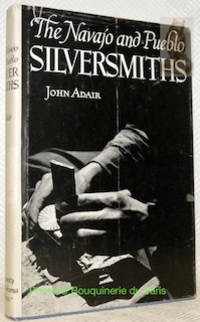
Hardcover. Norman OK, University of Oklahoma Press, 8th pr., 1970, Book: Very Good, Dust Jacket: Very Good, Hardcover in a lightly worn dust jacket, 220 pages with black & white illustrations. A thorough study of the art of the Indian silversmiths of the Southwest. Includes the history of the craft as well as names and localities of pioneer artisans. Bookplate on inside front cover, otherwise clean.
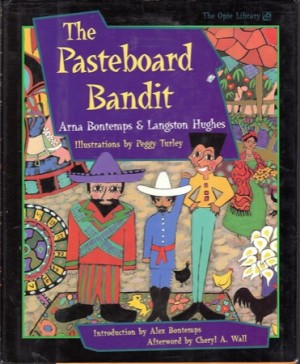
Hardcover. NY, Oxford University Press, 1st, 1997, Book: Very Good, Dust Jacket: Very Good, Hardcover in a bright, unclipped dust jacket. 94 pages, color illustrations by Peggy Turley. In this delightful children's tale, an American boy, Kenny Strange, moves to the quiet Mexican town of Taxco with his parents and strikes up a friendship with young Juanito Perez, a Taxco native. The two boys are brought together by an enchanting toy, the pasteboard bandit Tito. Chosen by Juanito at a town fair from among the other pasteboard toys, Tito, with his colorful clothes and bright eyes, becomes Juanito's and Kenny's constant companion, and the threesome share many adventures in and around the town's rolling green hills. The boys' growing friendship, Kenny's introduction to a culture unlike his own, and Tito's witty reflections on being a toy will be recognized instantly by anyone young or old who has ever made a friend or imagined that a toy might be real. Originally written in 1935, but never before published, The Pasteboard Bandit grew out of several trips Langston Hughes made to Mexico during his lifetime. Hughes first went to the town of Toluca at age 5 to visit his father, and again when he was older. During these visits, Hughes met many writers and artists, and it is their influence that informs the story of The Pasteboard Bandit--a story of two cultures meeting. When Hughes left Mexico for the last time, at age 32, he was carrying the first draft for The Pasteboard Bandit. Clean copy.
Hardcover. NY, Hastings House, 1st, 1941, Book: Good, Dust Jacket: None, Hardcover, gray cloth stamped with dark blue design, 124 pages, sepia tone photos throughout. This work is Gilpin's photographic love letter to the Pueblos of the southwest. Laura Gilpin (1891-1979) attained international recognition as photographer and her images of the Navajo and Pueblo peoples of the four corners area offer an important record of these cultures. She excelled in a field that up to the point, had largely been the purview of men. Cloth covers with edgewear, light soil. Inscription on inside front cover. Covers fair, interior good+.
Softcover. Wellesley MA, Branden Books, 1st, 2014, Book: Very Good, Dust Jacket: None, Softcover, 276 pages, several b&w illustrations. SIGNED BY POTVIN on title page. Clean copy.
Softcover. Urbana, University of Illinois Press , 1st, 1993, Book: Very Good, Dust Jacket: None, Softcover, 361 pages, b&w illustrations. The Stonemans is an eye-opening slice of Americana---a trip through nearly twenty years of country music history following a single family from their native Blue Ridge Mountains to the slums of Washington, D.C., and the glitter of Nashville. As early as 1924 Ernest V. "Pop" Stoneman realized the potential of what is now known as country music, and he tried to carve a career from it. Successful as a recording artist from 1925 through 1929, Stoneman foundered during the Great Depression. He, his wife, and their nine children went to Washington in 1932, struggling through a decade of hardship and working to revive the musical career Pop still believed in. The Stoneman Family won the Country Music Association's Vocal Group of the Year Award in 1967. After Pop's death a year later, some of the children scattered to pursue their own careers. Ivan Tribe relies on extensive interviews with the Stonemans and their friends in this chronicle of a family whose members have clung to their musical heritage through good times and bad.
Hardcover. NY, Atlantic Monthly Press , 1st, 2000, Book: Very Good, Dust Jacket: Very Good, Hardcover in a bright dust jacket. 238 pages. Gilt titles on spine. Clean, unmarked copy with only minor wear to dust jacket. With the sticker on cover stating" "Selected By The New Yorker As one of the best American fiction writers under 40". A collection of stories about young Native Americans introduces a surprising cast of characters who live and love in two worlds, balancing their Indian heritage and traditions against the realities of the modern world. Clean copy.
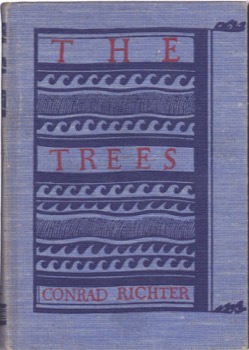
Hardcover. NY, Alfred A. Knopf, 1st, 1940, Book: Very Good, Dust Jacket: None, Hardcover, light blue cloth with red and dark blue lettering on the spine and cover, 302 pages. A moving novel of the beginning of the American trek to the west. Toward the close of the eighteenth century, the land west of the Alleghenies and north of the Ohio River was an unbroken sea of trees. Beneath them the forest trails were dark, silent, and lonely, brightened only by a few lost beams of sunlight. Here, in the first novel of Conrad Richter's Awakening Land trilogy, the Lucketts, a wild, woods-faring family, lived their roaming life, pushing ever westward as the frontier advanced and as new settlements threatened their isolation. This novel gives an excellent feel for America's lost woods culture, which was created when most of the eastern midwest was a vast hardwood forest---virtually a jungle. The Trees conveys settler life, including conflicts with Native Americans, illness, hunting, family dynamics, and marriage. INSCRIBED BY RICHTER on the front fly leaf. A bright, sharp copy missing the dust jacket. Related ephemera laid in.
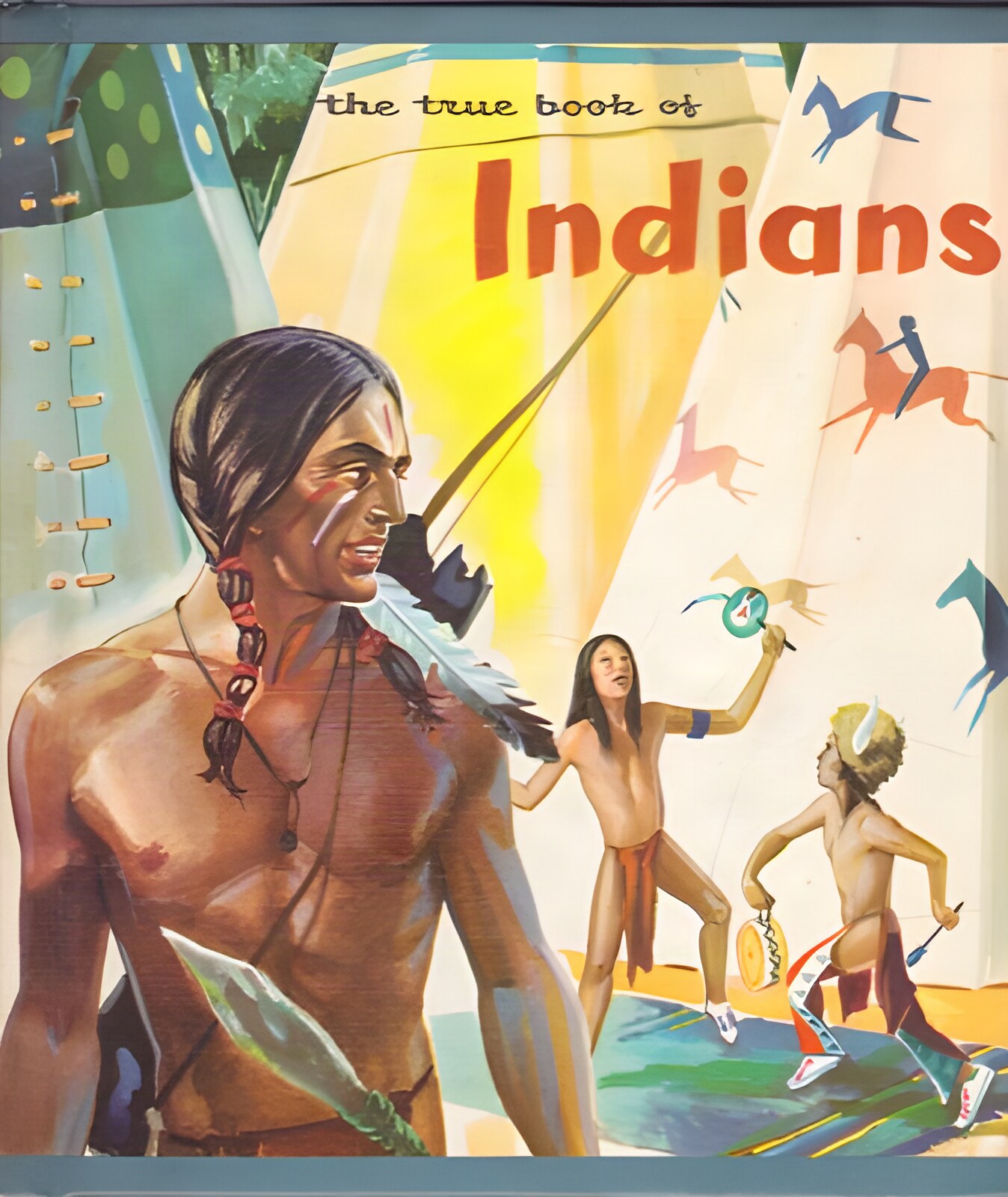
Hardcover. Chicago, Childrens Press, revised ed., 1970, Book: Very Good, Dust Jacket: None, Hardcover, pictorial cloth, 48 pages illustrated in b&w and color. Describes in simple text how the Indians of the sea coast, plains, deserts, swamps, and woodlands lived and how their way of life was influenced by the environment. Clean copy.
Hardcover. NY, Oxford University Press, 1st, 2011, Book: Very Good, Dust Jacket: Very Good, Hardcover in a bright, unclipped dust jacket. 336 pages, b&w illustrations. Author Larry Hamberlin guides us through this large but oft-forgotten repertoire of operatic novelties, and brings to life the rich humor and keen social criticism of the era. In the early twentieth-century, when new social forces were undermining the view that our European heritage was intrinsically superior to our native vernacular culture, opera-that great inheritance from our European forebearers-functioned in popular discourse as a signifier for elite culture. Tin Pan Opera shows that these operatic novelty songs availed this connection to a humorous and critical end. Combining traditional, European operatic melodies with the new and American rhythmic verve of ragtime, these songs painted vivid images of immigrant Americans, liberated women, and upwardly striving African Americans, striking emblems of the profound transformations that shook the United States at the beginning of the American century. Clean copy.
Softcover. NJ, Rutgers University Press, 1st, 2003, Book: Very Good, Dust Jacket: None, Softcover, 244 pages. The story of westering Americans in the late nineteenth and early twentieth centuries has been told most notably through photographs of American Indians. Unlike this vast archive, produced primarily by male photographers, which depicted American Indians as either vanishing or domesticated, the lesser-known images by the women featured in Trading Gazes provide new ways of seeing the intersecting histories of colonial expansion and indigenous resistance. Four unconventional women-Jane Gay, who documented land allotment to the Nez Perces; Kate Cory, an artist who lived for years in a Hopi community; Grace Nicholson, who purchased cultural items from the Karuk and other northern California tribes; and Mary Schaffer, who traveled among the Stoney and Metis of Alberta, Canada-used cameras to document their cross-cultural encounters. Trading Gazes reconstructs the rich biographical and historical contexts explaining these women's presence in different Native communities of the North American West. Their photographs not only record the unprecedented opportunities available for Euro-American women eager to shed gender restrictions, but also reveal how women's newfound mobility depended on the increasing restrictions placed on Native Americans in this era.
Hardcover. Paterson NJ, St. Anthony Guild Press, 1st, 1956, Book: Very Good, Dust Jacket: None, Hardcover in light tan cloth stamped in brown, 113 pages. Illustrated in 2-colors by Robert Bradbury. A tale of an orphaned American Indian girl who was worthy of sainthood in the eyes of her admirers. Remnants of color dust jacket and related article laid in. Clean copy.

 "The Conjure-Man Dies: A Mystery Tale of Dark Harlemby: Fisher, Rudolph")
 "The Contemporary Culture of The Cahita Indians. Smithsonian Institution, Bureau of American Ethnology, Bulletin 142. by: Beals, Ralph L.")
![The First Settlers of Virginia, an Historical Novel, Exhibiting a View of the Rise and Progress of the Colony at James Town...by: [Davis, John (1774-1854)]](https://www.browsingisarousing.com/shop/images/The-First-Settlers-of-Virginia-an-Historical-Novel-Exhibiting-a-View-of-the-Rise-and-Progress-of-the398264-451892.jpg "The First Settlers of Virginia, an Historical Novel, Exhibiting a View of the Rise and Progress of the Colony at James Town...by: [Davis, John (1774-1854)]")
![The First Settlers of Virginia, an Historical Novel, Exhibiting a View of the Rise and Progress of the Colony at James Town...by: [Davis, John (1774-1854)]](https://www.browsingisarousing.com/shop/images/The-First-Settlers-of-Virginia-an-Historical-Novel-Exhibiting-a-View-of-the-Rise-and-Progress-of-the398264-451892_50_th.jpg)
![The First Settlers of Virginia, an Historical Novel, Exhibiting a View of the Rise and Progress of the Colony at James Town...by: [Davis, John (1774-1854)]](https://www.browsingisarousing.com/shop/images/The-First-Settlers-of-Virginia-an-Historical-Novel-Exhibiting-a-View-of-the-Rise-and-Progress-of-the398264-451893_50_th.jpg)

 "The Legacy of Maria Poveka Martinezby: Richard L. Spivey , Maria Montoya Martinez, et al.")

 "The manners, customs, and antiquities of the Indians of North and South America (Parley's Cabinet Library)by: Goodrich, Samuel G.")


 "The Pueblos: A Camera Chronicleby: Gilpin, Laura")
 "The Scalp Hunters: Abenaki Ambush at Lovewell Pond 1725by: Kayworth Alfred E; Potvin Raymond G")
 "The Stonemans: An Appalachian Family and the Music That Shaped Their Livesby: Tribe, Ivan M.")



 "Tin Pan Opera: Operatic Novelty Songs in the Ragtime Eraby: Larry Hamberlin")
 "To Image and to See: Crow Indian Photographs by Edward S. Curtis and Richard Throssel 1905-1910 by: Northern Tamara; Brown Wendi Starr")