Hardcover. Garden City NY, Doubleday, Doran & Co, 1st, 1932, Book: Good, Dust Jacket: None, Hardbound, 261 pages. Black & white illustrations by Carl Moon with one color plate in front. Rough cut edge. Turquoise cloth covers. Markings, soiling, to covers. Corners bumped. Spine and edgewear. Spine fade. Yellow top edge. Illustrated front endpapers. Ex-library with usual markings and stamping. Also extra library card on back of color plate.
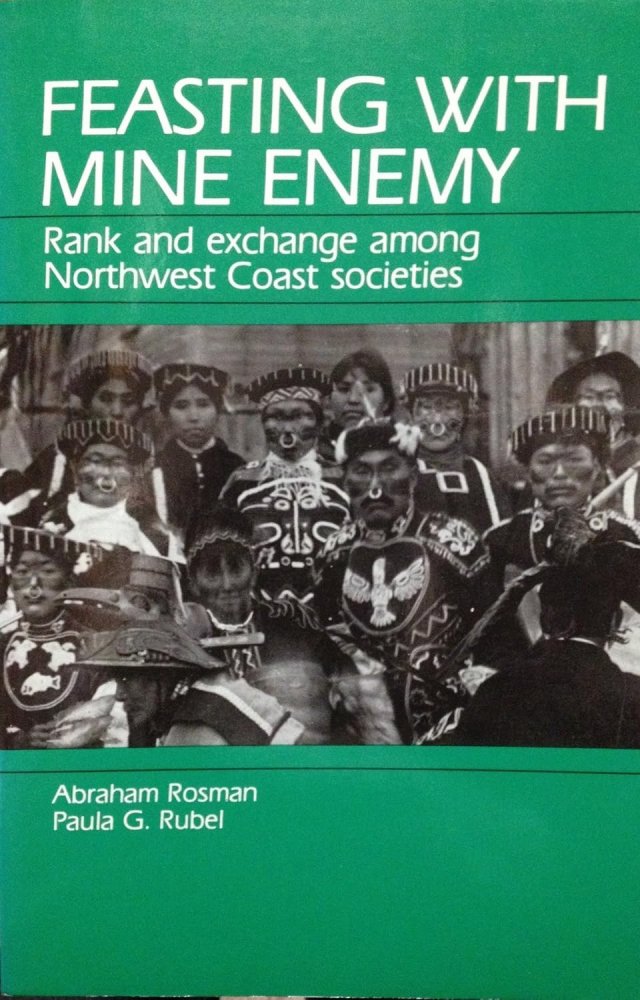
Softcover. Waveland Press, reprint, 1986, Book: Very Good, Dust Jacket: None, Softcover, 221 pages, b&w illustrations. This work represents a reexamination, comparatively, of ethnographic data on six Northwest Coast societies, emphasizing underlying structures & the exchange systems of each. Clean copy.
Hardcover. Garden City, NY, Doubleday, Page and Co. , 1st, 1922, Book: Very Good, Dust Jacket: Very Good, Hardcover, 71 pages, illustrated end papers, copyright page and title page, color frontispiece. Color plates at pages 22 and 49. Light edge wear, small tears to dust jacket; protected by mylar cover. Foxing to top edge. Else a very clean, tight copy.
Hardcover. New York, Dial Press, 1st, 1969, Book: Very Good, Dust Jacket: Very Good, Hardcover. 90 pages. Black & white illustrations by Alan E. Cober. Edgewear, light rubbing to dust jacket. Clear plastic protective cover.
Softcover. Washington DC, Smithsonian's National Museum of the American Indian, 1st, 2004, Book: Very Good, Dust Jacket: None, Softcover, 263 pages. Color plates throughout. Five essays by contributors. Clean copy.
Softcover. Charleston, SC, Arcadia Publishing, 1st, 2004, Book: Very Good, Dust Jacket: None, Softcover, 128 pages, b&w photos throughout. At the foot of the Huachuca Mountains, the U.S. Army founded one of the most crucial military posts for American expansion into the southwest frontier. Soldiers had been stationed in the region for decades, but in 1877 Fort Huachuca became the symbolic cornerstone of America's western domain. The Native American word huachuca, meaning "place of thunder," described the sporadic but marvelous electrical storms in the area, but the skies would not be the only thing booming. During the tumultuous campaigns to resolve American and Indian disputes, the U.S. infantry and famed Buffalo Soldiers faced off with Geronimo and his Apache nation in both tense negotiations and bitter combat. As time marched on, the fort developed into a permanent installation with barracks, modern training grounds, and other facilities to accommodate troop rotations and eventually became the innovative Center for Military Intelligence. Clean copy.
Hardcover. New York, Crown Publishers, 1st Thus, 1971, Book: Very Good, Dust Jacket: Very Good, 239 pages. Hardcover. Black & white illustrations. Dust jacket in protective clear plastic cover. Clean, unmarked text.
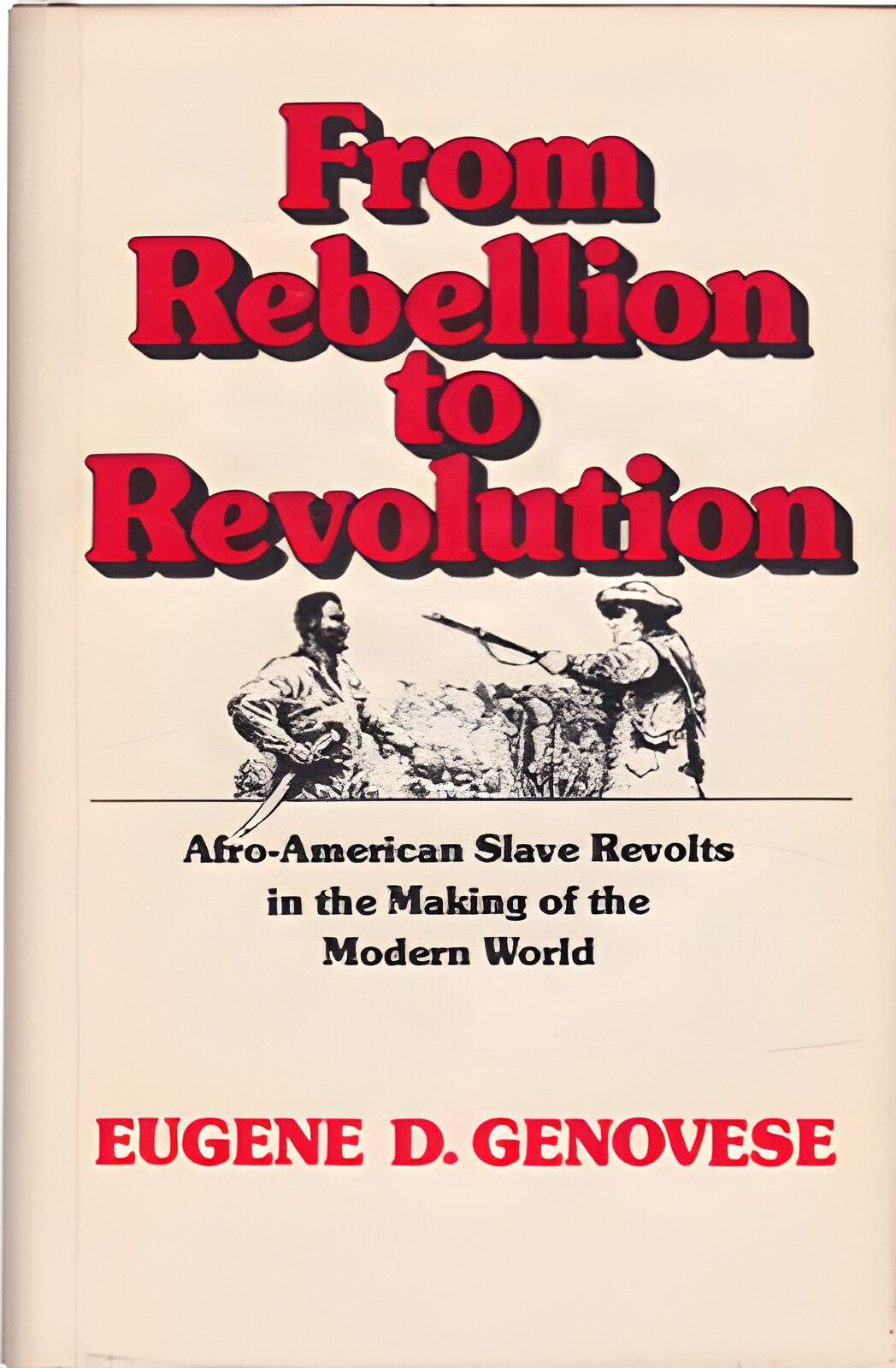
Hardcover. Baton Rouge, Louisiana State University , 1st, 1979, Book: Very Good, Dust Jacket: Very Good, Hardcover in a bright dust jacket, 173 pages. This work is a brief look at worldwide slave revolts in the 17th through 19th centuries, emphasizing their interrelations with European power struggles, which gave rebels hope of finding weak spots in the defenses of the slave powers. The French Revolution also had an influence on slave revolts, but the canny European powers used indigenous peoples to suppress slave revolts (e.g., native Americans) and took advantage of African ethnic divisions as well. American slaves stood little chance of revolt and were under constant surveillance from Southerners, who coward in fear after the successful rebellions in the Caribbean, particularly in Hispaniola, and after Nat Turner and John Brown's efforts. Genovese also brings up religion's double-edged sword: one side used to pacify slaves and the other side to inspire them to break their chains. In short, this scholarly treatise is thought-provoking as well as informative and ends with an inspirational quote from one of Frederick Douglass's lectures. Name on front fly leaf, otherwise a clean copy.
Hardcover. Lincoln NE, University of Nebraska Press, 1st thus, 2017, Book: Very Good, Dust Jacket: Very Good, Hardcover in a bright dust jacket. 693 pages with index, 16 pages of plates. A Fur Trader on the Upper Missouri offers the first annotated scholarly edition of Jean-Baptiste Truteau's journal of his voyage on the Missouri River in the central and northern Plains from 1794 to 1796 and of his description of the upper Missouri. This fully modern and magisterial edition of this essential journal surpasses all previous editions in assisting scholars and general readers in understanding Truteau's travels and encounters with the numerous Native peoples of the region, including the Arikaras, Cheyennes, Lakotas-Dakotas-Nakotas, Omahas, and Pawnees. Truteau's writings constitute the very foundation to our understanding of the late eighteenth-century fur trade in the region immediately preceding the expedition of Meriwether Lewis and William Clark commissioned by President Thomas Jefferson in 1803. French and English text. Bright, clean copy.
Hardcover. Norton/Smithsonian, 1st, 2002, Book: Very Good, Dust Jacket: Very Good, Hardcover, 288 pages. From the foremost collection of the artist's work, a remarkable portrait of Native American life. In 1832, George Catlin-showman, entrepreneur, and artist-made the first of four trips into Indian country, painting as he went, in a wonderfully spontaneous, if somewhat naive style. His ambition was to paint every tribe. He fell short. But what he did achieve, and the subject of this splendid volume, is a remarkable look into the faces and daily activities of Native Americans before their lands and their numbers were so radically diminished. And while Catlin was clearly influenced by the idea that Indians were Noble Savages (rapidly acquiring the vices of the white man while losing their "savage" virtues), his passion for his work is evidence of a profound respect and affection for his subjects, clearly demonstrated in this magnificent book. 275 illustrations, 150 in color.
Hardcover. Washington DC, Government Printing Office, 1st, 1948, Book: Very Good, Dust Jacket: None, Hardcover, olive green cloth hardcover with gilt lettering on spine. 986 pages, includes drawings, photographs, maps (some fold-out) and an extensive bibliography. Super condition with just a small ownership sticker on inside front cover, otherwise a clean, tight copy. DUE TO WEIGHT, DOMESTIC SHIPPING ONLY.
Hardcover. Washington DC, Government Printing Office, 1st, 1949, Book: Very Good, Dust Jacket: None, Hardcover, olive green cloth hardcover with gilt lettering on spine. This is Smithsonian Institution Bureau of American Ethnology Bulletin 143; 818 pages, includes drawings, photographs, maps and an extensive bibliography. Super condition with just a small ownership sticker on inside front cover, otherwise a clean, tight copy. DUE TO WEIGHT, DOMESTIC SHIPPING ONLY.
Hardcover. New York, Watson-Guptill Publications, 1st, 1978, Book: Very Good, Dust Jacket: Very Good, Hardcover in a bright, unclipped dust jacket. Quarto Format. 208 pages, 150 black-and-white and 48 colored illustrations. Notes; Bibliography; Index. Collection of paintings of the American West, primarily Native Americans. DUE TO WEIGHT, DOMESTIC SHIPPING ONLY.
Hardcover. New York, HarperCollins Publishers, 1st, 1995, Book: Near Fine, Dust Jacket: Near Fine, Hardcover. SIGNED AND INSCRIBED BY ASHLEY WOLFF ON TITLE PAGE WITH ILLUSTRATED SKETCH. Blue board with black cloth spine, pictorial dust jacket, gorgeous full page color illustrations. Extremely slight rubbing to dust jacket, covers and pages crisp, clean and unmarked; a beautiful book in excellent condition.
Hardcover. New York, HarperCollins Publishers, 1st, 1995, Book: Near Fine, Dust Jacket: Near Fine, Hardcover. SIGNED AND INSCRIBED BY ASHLEY WOLFF ON TITLE PAGE WITH ILLUSTRATED SKETCH. Blue board with black cloth spine, pictorial dust jacket, gorgeous full page color illustrations. Extremely slight rubbing to dust jacket, covers and pages crisp, clean and unmarked; a beautiful book in excellent condition.
Hardcover. NY, William Morrow and Co., 1st, 1939, Book: Good, Hardcover, oblong salmon cloth-covered boards, illustrated paper label on front cover, wear to corners. Prose and poetry on eleven aspects of Pueblo Indian life, each passage accompanied by a beautiful color illustration after watercolors by Native American artists, including Allan Houser, an Apache who was the great-grandson of Geronimo and Gerald Nailor, a Navajo; both of whom studied at the Santa Fe School. Mild soil, shelfwear. No markings.
Softcover. Seattle, University of Washington Press, 1st, 2000, Book: Very Good, Dust Jacket: None, Softcover. Like new in publishers shrink-wrap. Chief Joseph's exhausted words of surrender, 'Hear me, my chiefs, I am tired; my heart is sick and sad. From where the sun now stands, I will fight no more forever', are the accepted end of the Nez Perce War of 1877, in which several bands of Nez Perce attempting to find a new home outside their diminished Idaho reservation clashed with the U.S. military (and occasionally other Indians) along the Clearwater and Big Hole Rivers, and finally at the foot of the Bear Paw Mountains. However, a number of Nez Perce escaped transportation to Indian Territory with Joseph and continued their flight to Canada, with perhaps a hundred eventually joining Sitting Bull's Lakota."I Will Tell of My War Story" reproduces, describes, and discusses a remarkable series of drawings by an anonymous Indian artist who fought with Chief Joseph and later reached Canada. The drawings, in red, blue, and black pencil, include portraits of principal participants in the war, battle scenes, and views of Nez Perce camp life and celebrations during the war and after. The drawings are preserved in a small pocket ledger labeled 'Cash Book' on the front, which was acquired by Indian Agent Charles D. Warner in the 1880s. It was willed by him to a family living in northern Idaho, and is now in the collection of the Idaho State Historical Society. Scott Thompson worked closely both with the owners and with members of the Nez Perce community in preparing his manuscript. Thompson's detective work and research methods to identify Nez Perce and other parties pictured in the Cash Book make fascinating reading. He is careful to point out what is speculation and what has been documented or attested to by experts on dress, weapons, ceremony, and other aspects of Native culture. The Cash Book drawings are unique in several ways. They are one of very few firsthand pictorial records of the Nez Perce War, representing an even scarcer record of this war as seen from the Indian viewpoint. They contain invaluable historical and ethnographic information not only explicit in the form of military and Native dress, regalia, and quite graphic battle scenes, but also implicit. The drawings reveal an important stage of cultural adaptation as shown by the mixture of white and Native goods combined in Nez Perce material culture during the 1870s and 1880s, and by the artist's assimilation of white/European drawing techniques such as texture and perspective. The artist combined these drawing techniques with Native art traditions to make exceptionally effective pictorial communications. Scott M. Thompson is an art teacher at Chase Middle School in Spokane, Washington.
Hardcover. San Francisco CA, California Academy of Sciences, 1st, 1981, Book: Very Good, Dust Jacket: None, Hardcover, 96 pages, an exhibition catalog with 43 color plates. Essays by Donald Hagerty, Dan Dixon, Ansel Adams, others. INSCRIBED BY DAN DIXON (the artist's son) on front fly leaf. Embossed white cloth covers in a matching slipcase. 8 page exhibition brochure listing 118 works is laid in.
Barre, MA, Barre Publishers, 1st, 1972, Book: Very Good, Dust Jacket: Very Good, Hardcover, 152 pages, photographs by Curtis. Introduction and commentary by Don D. Fowler. One hundred and eighteen superb representative photographs have been selected from Curtis's monumental work and reproduced in this book by The Meriden Gravure Company. Don Fowler describes Curtis the photographer and ethnographer, and the Indian groups depicted, commenting on the unique cultural characteristics of each tribe.
Hardcover. NY, The Viking Press, 5th pr., 1950, Book: Very Good, Dust Jacket: None, Hardcover, gray cloth covers stamped in blue, 56 pages illustrated in color and b&w by Herrera. Covers with some discoloration, interior clean, no markings.
Softcover. NY, Viking Press, Uncorr. proof, 1983, Book: Very Good, Dust Jacket: None, Softcover, yellow wrappers. Unrevised and unpublished proofs. Page numbers hand written, 562 pages. SIGNED BY MATTHIESSEN on half-title page: "With best wishes/Peter Matthiessen". The author's controversial and suppressed book about the confrontation between American Indian activists and the FBI in the early 1970s at Pine Ridge Reservation near Wounded Knee. Clean, bright copy.
Hardcover. New York, Viking Press, First Thus, 1983, Book: Very Good, Dust Jacket: Very Good, 628 pages. Hardcover. Bright dust jacket with light sun fading to spine. Clean & unmarked text. A nice copy.
Hardcover. Paris/London, Robert Delpire/Photography Magazine, 1st, 1956, Book: Very Good, Dust Jacket: None, Hardcover, 25 pages & 77 plates, finely printed in photogravure. Original white cloth. 4to. Text by Manuel Tunon de Lara. Werner Bischof's last assignment, completed by Robert Frank and Pierre Verger. Early Frank publication, preceding The Americans. Clean. No dust jacket
Hardcover. Portland, Or., C. H. Belding, 1st, 1978, Book: Very Good, Dust Jacket: Very Good, Hardcover, 119 pages, illustrated throughout in color. Clean, unmarked copy with only minor wear to dust jacket.

 "Far-Away Desertby: Moon/Carl Moon, Grace")
 "Fire Bird, Theby: Stratton-Porter, Gene")
 "Fire Plume, The: Legends of the American Indiansby: Bierhorst (Ed.), John")
![First American Art: The Charles and Valerie Diker Collection of American Indian Art by: Bernstein, Bruce [Editor]; McMaster, Gerald [Editor]; Ash-Milby, Kathleen E. [](javascript:largeIMTop('https://www.browsingisarousing.com/shop/images/First-American-Art-The-Charles-and-Valerie-Diker-Collection-of-American-Indian-Art_by_Bernstein-Bruc378700-411946.jpg','https://www.browsingisarousing.com/shop/images/First-American-Art-The-Charles-and-Valerie-Diker-Collection-of-American-Indian-Art_by_Bernstein-Bruc378700-411946.jpg',0,'378700',0,'') "First American Art: The Charles and Valerie Diker Collection of American Indian Art by: Bernstein, Bruce [Editor]; McMaster, Gerald [Editor]; Ash-Milby, Kathleen E. [")
 "Fort Huachuca by: Price, Ethel Jackson")
 "Fourth World of the Hopis, Theby: Courlander, Harold")
 "Fur Trader on the Upper Missouri: The Journal & Description of Jean-Baptiste Truteau, 1794-1796by: (Ed.) Raymond J. DeMallie et al")
 "HANDBOOK OF SOUTH AMERICAN INDIANS Volume 3: The Tropical Forest Tribes by: Steward Julian H. (ed.)")
 "HANDBOOK OF SOUTH AMERICAN INDIANS Volume 5: The Comparative Ethnology of South American Indians by: Steward Julian H. (ed.)")
 "Henry Farnyby: Carter, Denny")
 "How Chipmunk Got Tiny Feet: Native American Animal Origin Stories (SIGNED BY ILLUSTRATOR)by: Hausman, Gerald and Ashley Wolff")
 "How Chipmunk Got Tiny Feet: Native American Animal Origin Stories (SIGNED BY ILLUSTRATOR)by: Hausman, Gerald and Ashley Wolff")


 "I Will Tell of My War Story: A Pictorial Account of the Nez Perce War (Samuel and Althea Stroum Book)by: Thompson, Scott M.")
 "Images of the Native Americanby: Dixon, Maynard")
 "In a Sacred Manner We Live: Photographs of the North American Indianby: Curtis, Edward S.")



 "In the Spirit of Crazy Horse (SIGNED PROOF)by: Matthiessen, Peter")


 "In the Spirit of Crazy Horseby: Matthiessen, Peter")


 "Incas to Indiansby: Bischof, Werner, Robert Frank and Pierre Verger")
 "Indian Baskets of the Northwest Coastby: Lobb, Allan")