Hardcover. NY, Macmillan, reprint, 1932, Book: Very Good, Dust Jacket: None, Hardcover, 257 pages. Later printing. Bound in black cloth boards with paper titles present to the spine and front board. Stuart Chase was an American economist and engineer trained at MIT. His writings covered topics as diverse as general semantics and physical economy. His hybrid background of engineering and economics places him in the same philosophical camp as R. Buckminster Fuller. Chase's thought was shaped by Henry George, Thorstein Veblen and Fabian socialism. Chase spent his early political career supporting "a wide range of reform causes: the single tax, women's suffrage, birth control and socialism." Chase's early books The Tragedy of Waste (1925) and Your Money's Worth (1928) were notable for their criticism of corporate advertising and their advocacy of consumer protection. Although not a Marxist, Chase admired the planned economy of the Soviet Union, being impressed with it after a 1927 visit. Chase stated that "The Russians, in a time of peace, have answered the question of what an economic system is for." It has been suggested that he was the originator of the expression a New Deal, which became identified with the economic programs of American president Franklin Delano Roosevelt. Inscription on front fly leaf, otherwise clean.
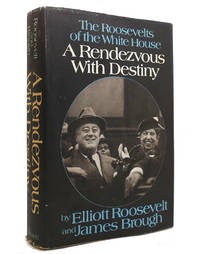
Hardcover. NY, G. P. Putnam's Sons, 1st, 1975, Book: Very Good, Dust Jacket: Very Good, Hardcover in a lightly worn dust jacket, 446 pages with index, b&w photos. Name on half-title page otherwise clean.
New York, Scholastic Press, 1st, 1999, Book: Very Good, Dust Jacket: Very Good, Hardcover in a bright, unclipped dustjacket. Color illustrations by Ted Lewin. Unpaginated. Skinny as a beanpole and tall for his age, an awkward young boy learns that Abraham Lincoln was called "gorilla, baboob, backwards hick." Yet along with big feet and big hands, Lincoln had a big heart and the great ability to keep a nation together. And what the boy learns as he studies Lincoln opens his mind to great possibilities for his own future.
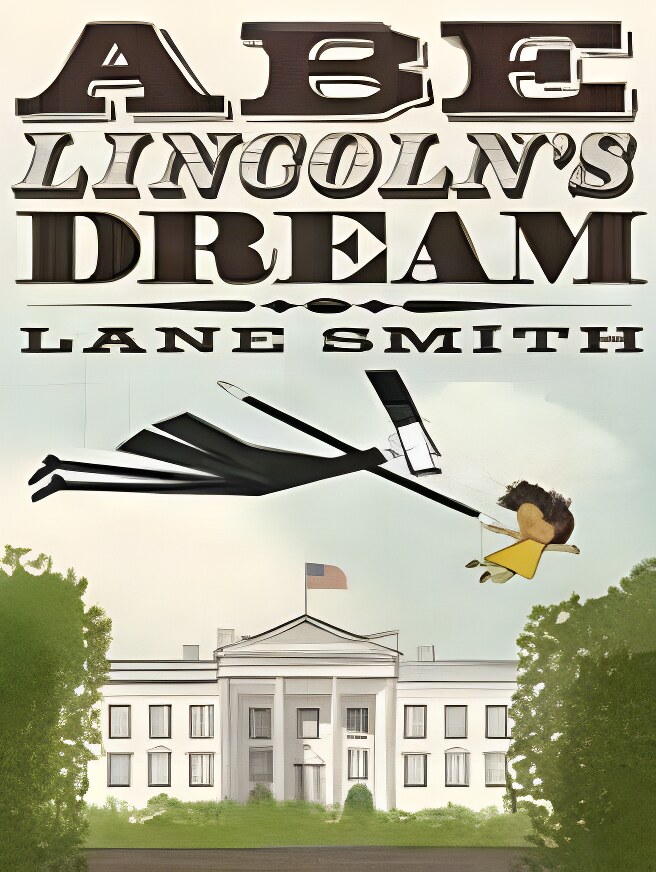
Hardcover. New York, Roaring Brook Press, 1st, 2012, Book: Very Good, Dust Jacket: None, 32 pages. Hardcover no dust jacket. Color illustrations. When a school girl gets separated from her tour of the White House, and finds herself in the Lincoln bedroom, she also discovers the ghost of the great man himself. Illustrations by Lane Smith. Clean, unmarked copy in excellent condition.
Hardcover. NY, Atheneum, 1st, 1991, Book: Very Good, Dust Jacket: Very Good, Hardcover in a bright, unclipped dust jacket with edge wear, short closed tears. The first full-length biography--and likely the authoritative one for years to come--of the flamboyant black congressman who, as civil-rights gadfly and as libertine, exemplified the gap between our nation's ideals and practices that was given a name in Gunnar Myrdal's ``American Dilemma.'' Blessed with good looks, eloquence, and a bully pulpit (he succeeded his father as head of the Abyssinian Baptist Church, the nation's largest black congregation), Powell became ``Mr. Civil Rights'' in the pre-King era by combining agitation and electoral politics. As congressman from Harlem, Powell denounced racist southern colleagues and introduced the ``Powell Amendment'' to deny federal funds to projects or organizations that practiced discrimination. In 1960, he became chairman of the House Committee on Education and Labor, then the strongest position ever held by a black in the US government. Columbia Univ. political-science professor Hamilton also highlights how the Democratic politician became a thorn in the side of ally and foe alike. Powell was a maverick seldom bound by party (he endorsed Eisenhower for President), duty (a high absentee rate), or conventional morality. Inevitably, after an income-tax evasion trial, a suit filed by a Harlem resident he called a ``bag woman,'' and a European junket with two attractive female aides, Powell was stripped of his chairmanship by the House of Representatives despite his cry of double standards for white counterparts. Blending scholarship and ironic detachment, an admirably balanced treatment of a politician who provoked anything but objectivity during his Marion Barry-like career.
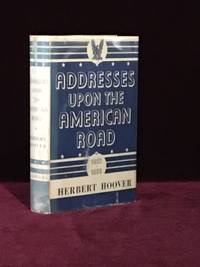
Hardcover. NY, Charles Scribner's Sons, 2nd pr., 1938, Book: Very Good, Dust Jacket: Very Good, Hardcover in a bright dust jacket, 390 pages. With 30-page booklet outlining speeches laid-in, containing a number of press blurbs supporting Hoover's ideas. Scribner's colophon on copyeight page but no A, so assumed 2nd printing. Clean copy.
Hardcover. NY, Free Press , 1st, 1997, Book: Very Good, Dust Jacket: Very Good, Hardcover in a bright, unclipped dust jacket. 464 pages, b&w illustrations. A great but frequently overlooked figure in America during the early decades of the 19th century now gets his due. Military historian Eisenhower (son of the late president) describes a natural leader of imposing stature, overweening pride, exceptional courage, and wide learning, who possessed considerable organizational and diplomatic skills along with outstanding martial instincts. As the nation's youngest general, Scott distinguished himself in the War of 1812, and he was a hero of the Mexican War in the 1840s. After a brilliant campaign fought entirely on foreign soil, he stormed and captured Mexico City despite considerable political maneuvering on the battlefield and the homefront by a variety of influential enemies. In peacetime, he served successfully as a diplomat to the Canadians, the British, the Seminoles, and the Cherokees. Clean copy.
Hardcover. Boston, Houghton Mifflin, 2nd pr., 1969, Book: Very Good, Dust Jacket: Good, Hardcover in a worn, chipped dust jacket, 505 pages with b&w illustrations. Amazing detail, yet easily flowing narrative of the governor who preceded FDR, who--with Frances Perkins assistance as Industrial Commissioner--shaped a state's humane response to sweatshops, immigration. His 1928 presidential campaign faced burning Klu Klux Klan crosses and harrassment when he ventured outside the Northeast. After losing to Herbert Hoover he left his successor to Governor of New York, Franklin D. Roosevelt, a working government and blueprint for social reform that Roosevelt would later put to use as President. Name on half title page, otherwise clean internally.
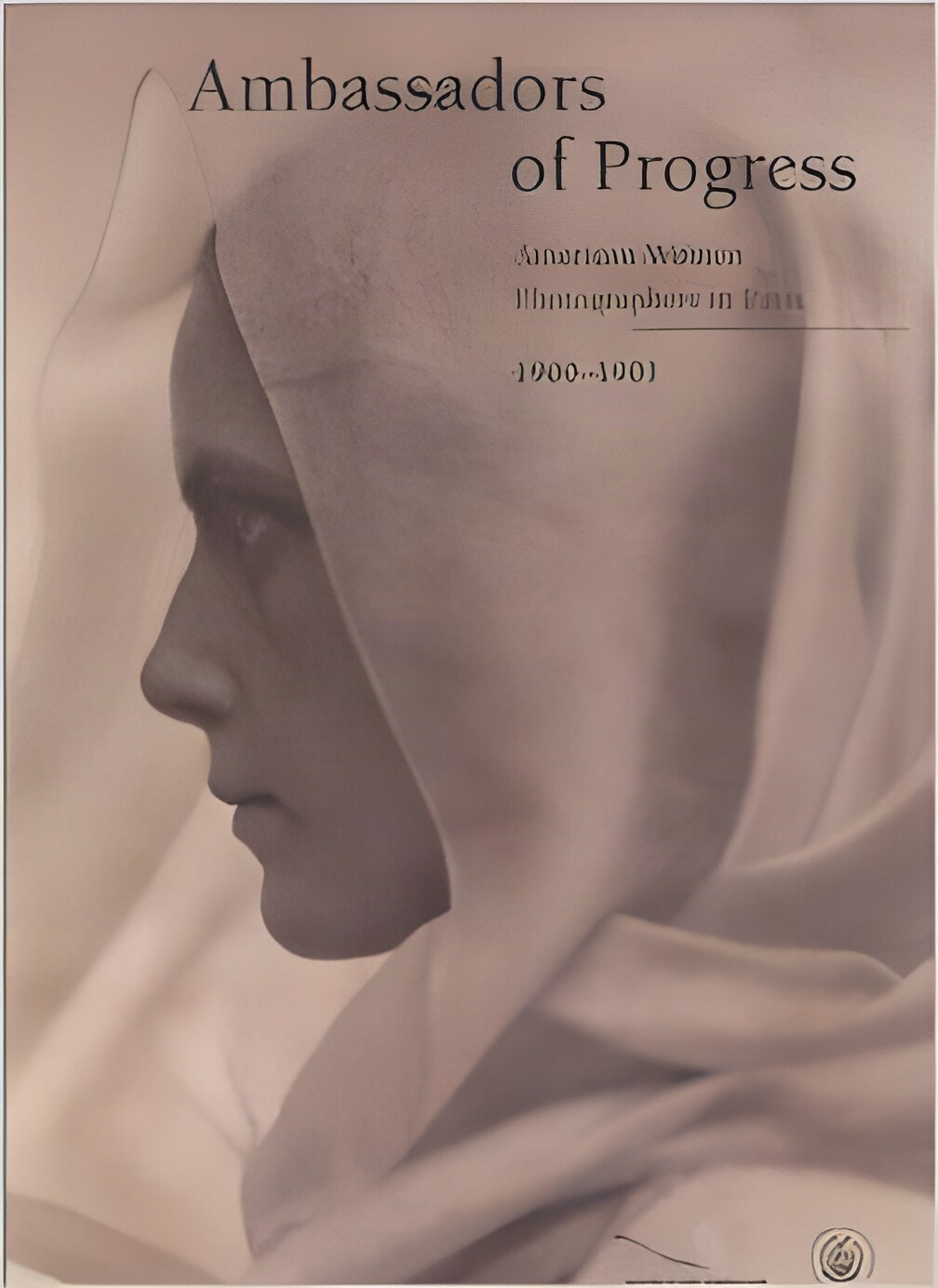
Hardcover. US, Library of Congress/Musee d'Art Giverny, 1st, 2001, Book: Very Good, Dust Jacket: Very Good, Like new in publisher's shrink-wrap. Hardcover, 250 pages. An exhibition held in Paris a century ago demonstrated the key role American women photographers played in the international pictorialist movement. The accomplishment of these professional and amateur photographers clearly demonstrated a mastery of the medium and made a strong impression on those in attendance. Ambassadors of Progress explores this largely unknown event. Each of the 29 artists, including such well-known figures as Gertrude Kaesebier, Amelia van Buren and Zaida Ben-Yusuf, is represented in a selection of approximately 70 breathtaking color plates drawn from the Frances Benjamin Johnston Collection at the Library of Congress and the National Museum of American History. The photographs include landscapes, portraiture, genre scenes, and still-lifes, all of which are evocatively composed and delicately toned using a variety of photographic techniques. The book contains essays by Verna Curtis (Curator of Photography, Library of Congress -- on Frances Benjamin Johnston as photographer and curator), Michel Poivert (President, Societe Francaise de Photographie -- on the French critical reception), Derrick R. Cartwright (Director, Hood Museum of Art, Dartmouth College -- on the relationship of pictorialist photography to contemporary American painting), and Andrew Robb (Senior Photograph Conservator, Library of Congress -- on the conservation processes surrounding these works).
Chicago, Chicago Review Press, 1st, 2014, Book: Very Good, Dust Jacket: Very Good, Hardcover in a bright dust jacket. The presidential election of 1844 was one of the two or three most momentous elections in American history. Had Henry Clay won instead of James K. Polk, we'd be living in a very different country today. Polk's victory cemented the westward expansion that brought Texas, California, and Oregon into the union. It also took place amid religious turmoil that included anti-Mormon and anti-Catholic violence, and the "Great Disappointment," in which thousands of followers of an obscure preacher named William Miller believed Christ would return to earth in October 1844. Author and journalist John Bicknell details even more compelling, interwoven events that occurred during this momentous year: the murder of Joseph Smith, the religious fermentation of the Second Great Awakening, John C. Fremont's exploration of the West, Charles Goodyear's patenting of vulcanized rubber, the near-death of President John Tyler in a freak naval explosion, and much more. All of these elements illustrate the competing visions of the American future--Democrats versus Whigs, Mormons versus Millerites, nativists versus Catholics, those who risked the venture westward versus those who stayed safely behind--and how Polk's election cemented the vision of a continental nation. Clean copy.
Hardcover. New Haven, Yale University Press, 1st, 2006, Book: Very Good, Dust Jacket: Very Good, Hardcover, 226 pages. Gilt title on spine. Clean inside and out. From the dust jacket: "...in its decision to invade Iraq, the Bush administration failed in its stewardship of American Foreign policy." Clean copy.
Hardcover. Boston, Lothrop, Lee & Shepard & Co., 2nd printing, 1933, Book: Very Good, Dust Jacket: Very Good, 318 pages. Blue cloth covers, gilt titles to front board and spine, blue dust jacket with illustration, b&w frontispiece of Hamilton's portrait, 7 additional b&w plates. Mild rubbing and chipping to dust jacket, previous owner's signature to front endpaper, otherwise pages crisp and unmarked, clean covers; overall, a very neat, tight copy.
Hardcover. London, The Fine Arts Society, 1st, 1907, Book: Very Good, Dust Jacket: None, 376 pages, hardcover. Decorated boards with gilted top text block. Illustrated by Elizabeth M. Chettle. Homes and memorials of the founders of Virginia, the New England states, and Pennsylvania. Also includes the universities of Harvard and Yale, the first president of the United States and other illustrious Americans. Fading and edgewear to spine. Light bumping to corners with mild fraying. Moderate spotting to text block edges. Weak spine at front endpapers. Unmarked. A clean copy.
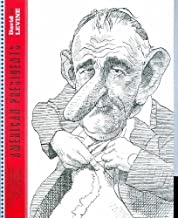
Softcover. Seattle, Fantagraphics, 1st, 2008, Book: Very Good, Dust Jacket: None, Softcover, 128 pages. For more than a half century, David Levine has taken on the most powerful men of the free world with only his pen and a bottle of India ink. That pen has proved to be mightier than the sword as Levine skewered, illuminated, satirized and condemned every president of the 20th century, as well as the most significant presidents from colonial times and the Civil War era. His drawing of Lyndon Johnson revealing a scar in the shape of Vietnam is considered one of the most recognized (and most copied) of the Vietnam era. His devastating wit and delicately cross hatched drawing have exposed the venality of the Nixon administration, the phoniness of the Reagan years, the duplicity of the Clinton era, and the evil of the Bush cabal. Nine administrations have come and gone during Levine's tenure, and with a new one on the horizon, the artist remains, unbowed, unfazed, and unrelenting. Now for the first time, the best of Levine's five decades of portraits of American Presidents and their administrations are gathered in a comprehensive and visually dynamic book. From John Adams to George Bush; from John Quincy Adams to George W. Bush; from the Great Emancipator to the Great Society, Levine has captured them all including newly elected Barack Obama.
Hardcover. NY, Harper & Row, 1st, 1984, Book: Very Good, Dust Jacket: Very Good, Hardcover in a bright, price-clipped dust jacket. Volume Three only, index, bibliography, chapter notes, maps, b&w illustrations. Award sticker on front cover. Clean copy
Hardcover. NY, Bantam, 1st, 2010, Book: Very Good, Dust Jacket: Very Good, Hardcover in a bright, unclipped dust jacket. 518 pages, b&w illustrations. Appetite for America is the incredible real-life story of Fred Harvey--told in depth for the first time ever--as well as the story of this country's expansion into the Wild West of Bat Masterson and Billy the Kid, of the great days of the railroad, of a time when a deal could still be made with a handshake and the United States was still uniting. As a young immigrant, Fred Harvey worked his way up from dishwasher to household name: He was Ray Kroc before McDonald's, J. Willard Marriott before Marriott Hotels, Howard Schultz before Starbucks. His eating houses and hotels along the Atchison, Topeka, and Santa Fe railroad (including historic lodges still in use at the Grand Canyon) were patronized by princes, presidents, and countless ordinary travelers looking for the best cup of coffee in the country. Harvey's staff of carefully screened single young women--the celebrated Harvey Girls--were the country's first female workforce and became genuine Americana, even inspiring an MGM musical starring Judy Garland. Clean copy.
Hardcover. Krause Publications, 1st, 2007, Book: Very Good, Dust Jacket: Very Good, Hardcover, 208 pages. As the 2004 Presidential Election was beginning to take shape, Kyle Cassidy took note of the important role the simple concept of gun ownership was playing. Hardly anyone he knew didn't have an opinion in the debate over owning guns. Why was a constitutionally protected right so heavily debated, and who exactly as these folks that own guns? "I began to wonder who these seventy or so million Americans were, how they lived and what was important to them. I set out to photographs as many gun owners as I could and ask them one question: "Why do you own a gun." Cassidy traveled over 20,000 miles, crisscrossing the country to meet with gun owners in their homes. Cassidy's photo essays create a powerful, thought provoking and sometimes startling view of gun ownership in the U.S. These "everyman" portraits, and the accompanying views of gun owners, fashion a riveting and provocative book.
Hardcover. Krause Publications, 1st, 2007, Book: Very Good, Dust Jacket: Very Good, Hardcover, 208 pages. As the 2004 Presidential Election was beginning to take shape, Kyle Cassidy took note of the important role the simple concept of gun ownership was playing. Hardly anyone he knew didn't have an opinion in the debate over owning guns. Why was a constitutionally protected right so heavily debated, and who exactly as these folks that own guns? "I began to wonder who these seventy or so million Americans were, how they lived and what was important to them. I set out to photographs as many gun owners as I could and ask them one question: "Why do you own a gun." Cassidy traveled over 20,000 miles, crisscrossing the country to meet with gun owners in their homes. Cassidy's photo essays create a powerful, thought provoking and sometimes startling view of gun ownership in the U.S. These "everyman" portraits, and the accompanying views of gun owners, fashion a riveting and provocative book.
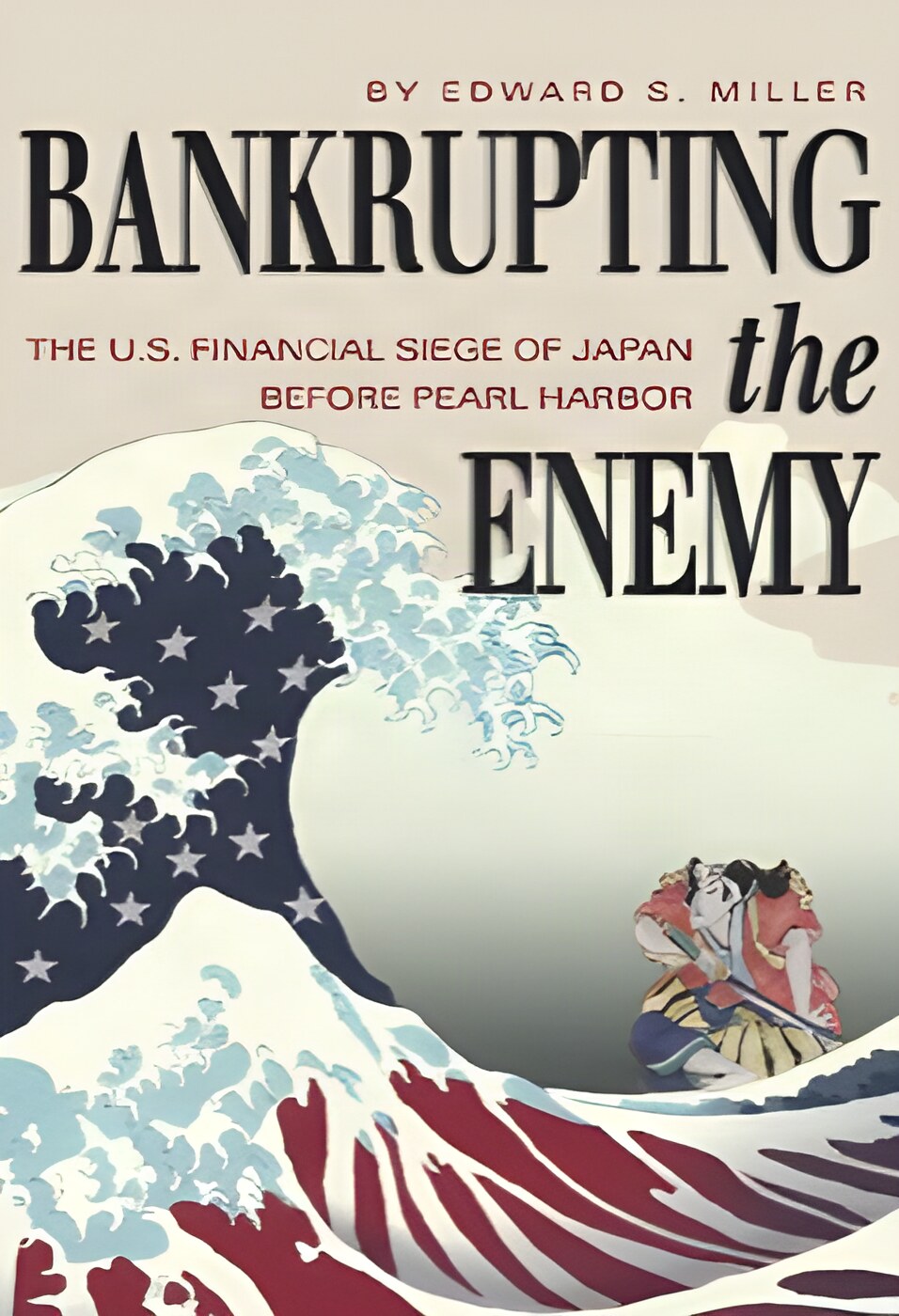
Softcover. Annapolis MD, Naval Institute Press, 1st pbk, 2023, Book: Very Good, Dust Jacket: None, Softcover, 325 pages, b&w illustrations. Author Edward S. Miller contends in this work that the United States forced Japan into international bankruptcy to deter its aggression. While researching newly declassified records of the Treasury and Federal Reserve, Miller, a retired chief financial executive of a Fortune 500 resources corporation, uncovered just how much money mattered. Washington experts confidently predicted that the war in China would bankrupt Japan, not knowing that the Japanese government had a huge cache of dollars fraudulently hidden in New York. Once discovered, Japan scrambled to extract the money. But, Miller explains, in July 1941 President Roosevelt invoked a long-forgotten clause of the Trading with the Enemy Act of 1917 to freeze Japan's dollars and forbade it to sell its hoard of gold to the U.S. Treasury, the only open gold market after 1939. Roosevelt s temporary gambit to bring Japan to its senses, not its knees, was thwarted, however, by opportunistic bureaucrats. Dean Acheson, his handpicked administrator, slyly maneuvered to deny Japan the dollars needed to buy oil and other resources for war and for economic survival. Clean copy.
Softcover. Cambridge UK, Cambridge University Press, 1st pbk., 1999, Book: Very Good, Dust Jacket: None, Softcover, 267 pages. This book argues that modern presidents could learn much from Franklin Roosevelt's method of organizing his presidency. Roosevelt consciously avoided a large, functionally specialized White House bureaucracy. Instead, he developed staff agencies composed mostly of civil servants and personally managed them using competitive administrative practices. Matthew Dickinson is the first scholar to reconstruct the methods FDR used and his research suggests modern presidents could benefit greatly by studying them. Clean copy.
Hardcover. Oklahoma Heritage Assn., 2000, Book: Very Good, Dust Jacket: Very Good, Hardcover in a bright, unclipped dust jacket. 324 pages, b&w illustrations. SIGNED BY CO-AUTHOR THOMPSON on the title page.Bryce Harlow was one of the most extraordinary political figures in the United States in the second half of the 20th century. He served four presidents with great honor and distinction. His word was his bond. With his gentle manner and Oklahoma drawl, Harlow advised Presidents on more public issues than perhaps anyone in American history. Dr. Henry Kissinger says Harlow spent his entire adult life studying the ways of Washington, D.C., alternating between participant and observer. Harlow had a deep sense for the Presidency, its power, its majesty, and the awful responsibility it imposes. Clean, unread copy.
Hardcover. New York, Harper & Row, 1st, 1990, Book: Very Good, Dust Jacket: Very Good, SIGNED BY AUTHOR ON HALF-TITLE PAGE. Brown boards, white cloth spine, color illustrated dust jacket, large full page color illustrations by Alice Provensen.
Hardcover. NY, Dodd, Mead & Company, 2nd pr., 1929, Book: Good, Dust Jacket: None, Hardcover, green cloth with gilt and black decoration, 321 pages. Illustrated with decorated endpapers (map) and vintage black and white photographs. Carl Than Akeley (1864-1926) was a taxidermist, naturalist and inventor was born near Clarendon, New York. Akeley would make five expeditions to Africa collecting specimens, first for the Field Museum in Chicago, and then for the American Museum of Natural History in New York. In 1911 he proposed to Henry Fairfield Osborn, president of the museum, a plan to present animal groups against painted backgrounds that would faithfully recreate the habitat which the animals lived. He had many adventures on the trips to Africa, including one where he was attacked by a leopard. Akeley died on his last expedition in his camp, near Mount Mikeno. This book is an account of Akeley's last expedition, and has a foreword by Henry Fairfield Osborn. The book is shaken and binding a little loose but holding, no loose pages. Previous owner's inscription on blank pelim page otherwise clean.


 "A. Lincoln and Meby: Borden/Ted Lewin, Louise")
 "Abe Lincoln's Dreamby: Smith, Lane")
 "Adam Clayton Powell, Jr.: The Political Biography of an American Dilemmaby: Charles V. Hamilton")
 "Agent Of Destiny: The Life And Times Of General Winfield Scottby: John Eisenhower")


 "America at the Crossroads: Democracy, Power and the Neoconservative Legacyby: Fukuyama, Francis")
 "American Colossus, An: The Singular Career of Alexander Hamiltonby: Bailey, Ralph Edward")
 "American Pilgrim's Way in England, Theby: Huish, Marcus B.")
 "Appetite for America: How Visionary Businessman Fred Harvey Built a Railroad Hospitality Empire That Civilized the Wild Westby: Stephen Fried")
 "Armed America: Portraits of Gun Owners in Their Homesby: Cassidy, Kyle")
 "Armed America: Portraits of Gun Owners in Their Homesby: Cassidy, Kyle")
 "Bitter Harvest: FDR, Presidential Power and the Growth of the Presidential Branchby: Dickinson, Matthew")
 "Bryce Harlow: Mr. Integrity (SIGNED COPY)by: Ralph G. Thompson/ Bob Burke")
 "Carl Akeley's Africaby: Mary L. Jobe Akeley")