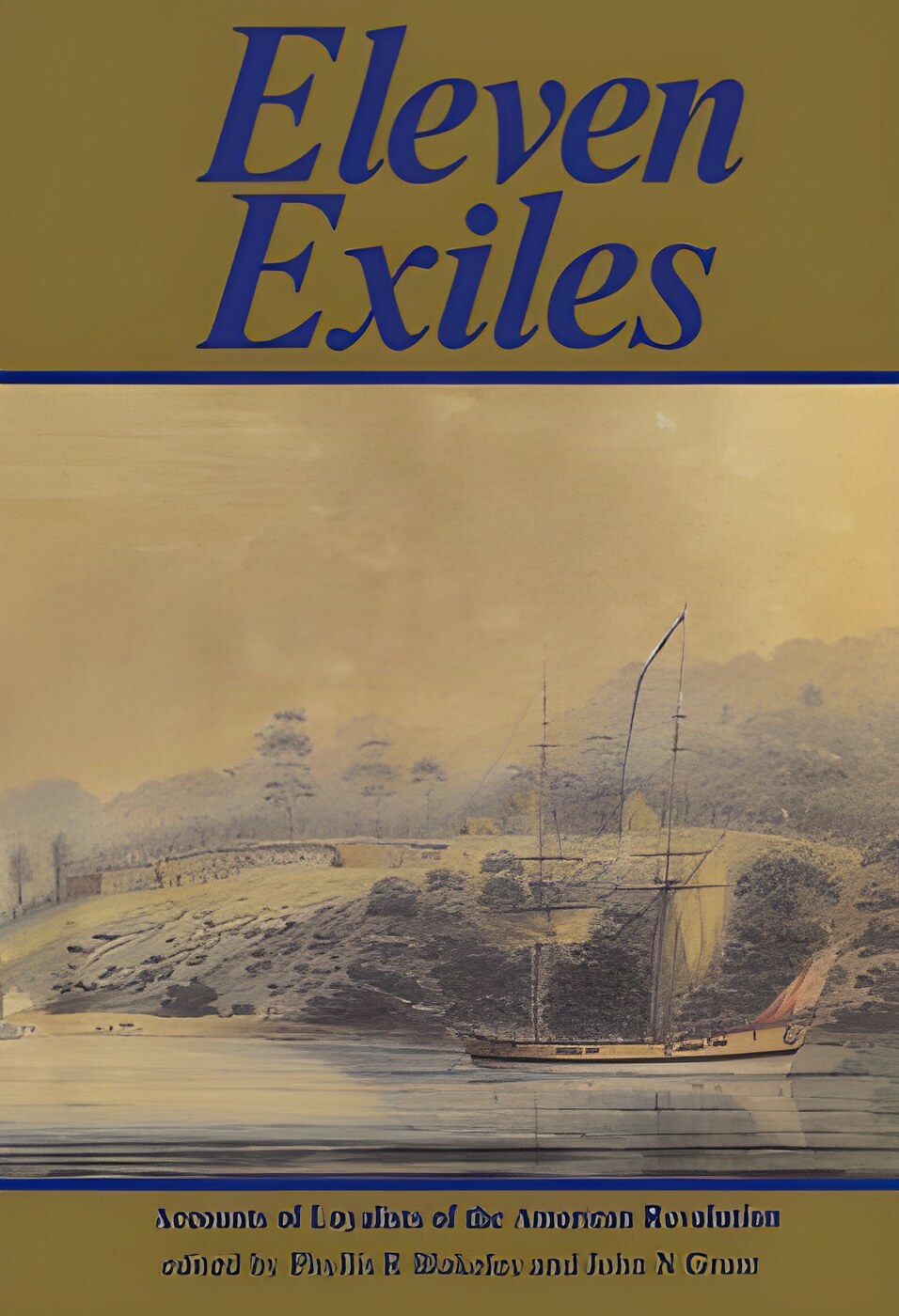
Hardcover. NY, Abrams, 1st, 2004, Book: Very Good, Dust Jacket: Very Good, Hardcover, 192 pages. Taken from 1939 to 1943 under the auspices of the Farm Security Administration and the Office of War Information, these 175 "lost" photos feature shots by Russell Lee, Andreas Feininger and Marion Post Wolcott, using the then-revolutionary technology of Kodachrome film. Color photographs taken before 1939 have largely deteriorated, so these surviving photos are later than the most familiar b&w Depression-era shots. This 11 3/4 "x8 1/2 " volume thus "colorizes" one's normally black-and-white impressions of a very vibrant time, as Hendrickson (Sons of Mississippi) notes in his introduction. The logic behind the arrangement of the photos, which at first seems largely random, as it follows neither photographer, location nor chronology, becomes clear by the end of the book: the U.S.'s industrial rise. Images of urban lethargy and farmhands picking cotton under hot blue skies (the unbearable conditions of cotton-picking somehow seem more apparent in color) gradually give way to images of mobility, mechanization and a changing economy. Arnold T. Palmer's gleaming portraits of Rosie the riveter-like aircraft workers follow Jack Delano's earthier photos of male railroad workers, their sweaty and intent faces caked with soot. Tellingly, the book ends with photos of bombers flying over California.
Hardcover. El Paso, TX, Sweet Earth Flying Press, 1st, 2009, Book: Very Good, Dust Jacket: Very Good, 115 pages. Hardcover with dust jacket. Clean, unmarked copy with only minor wear to dust jacket. Penned by two of the most famous African American writers of the 1930s, this never-before-published coming-of-age story chronicles the adventures of a 12-year-old Mexican boy, Miguel Del Monte, who joins his uncle in herding wild broncos from northern Mexico to Los Angeles. Set against the backdrop of the Mexican Revolution, this historic tale follows Miguel as he embarks on this unexpected trip across the American Southwest desert, determined to prove himself brave and smart enough to deal with the anticipated hardships. Along with a close encounter with roving bandits and the dangerous forces of nature, Miguel has bittersweet interactions with people of diverse racial and cultural groups, learning important lessons along the way. Separated into concise episodes and reflecting the beauty of various peoples, this collection depicts the power of tolerance and multicultural inclusion.
Hardcover. Boston, Houghton Mifflin , 2nd pr., 1957, Book: Very Good, Dust Jacket: Very Good, Hardcover in a bright, unclipped dust jacket. Authorized biography of the early baseball executive who originated the workable farm system, developed efficient scouting, pioneered revolutionary training devises and techniques, and introduced black players to major league baseball. 312 pages includes index.
Hardcover. Lincoln NE, University of Nebraska Press, 1st, 2007, Book: Very Good, Dust Jacket: Very Good, Hardcover in a bright, unclipped dust jacket. 683 pages, b&w illustrations. He was not much of a player and not much more of a manager, but by the time Branch Rickey (1881-1965) finished with baseball, he had revolutionized the sport--not just once but three times. In this definitive biography of Rickey--the man sportswriters dubbed "The Brain," "The Mahatma," and, on occasion, "El Cheapo"--Lee Lowenfish tells the full and colorful story of a life that forever changed the face of America's game. As the mastermind behind the Saint Louis Cardinals from 1917 to 1942, Rickey created the farm system, which allowed small-market clubs to compete with the rich and powerful. Under his direction in the 1940s, the Brooklyn Dodgers became truly the first "America's team." By signing Jackie Robinson and other black players, he single-handedly thrust baseball into the forefront of the civil rights movement. Lowenfish evokes the peculiarly American complex of God, family, and baseball that informed Rickey's actions and his accomplishments. His book offers an intriguing, richly detailed portrait of a man whose life is itself a crucial chapter in the history of American business, sport, and society.
Hardcover. Princeton NJ, Princeton University Press, 1st, 1966, Book: Very Good, Dust Jacket: Very Good, Hardcover in a lightly worn dust jacket, 228 pages. This study is an attempt to add a new dimension to our understanding of the causes of the American Revolution. It is an analysis of the role of the subministers--the secretaries and undersecretaries--of the major departments of the British government responsible for colonial policy during the period from 1763 to the outbreak of the Revolution--the period of the Stamp and Sugar Acts, the Townshend Duties, and the Coercive Acts--and of their role in the war itself. Name on front fly leaf otherwise clean.
Hardcover. San Rafael CA, Presidio Press, Revised Ed., 1976, Book: Very Good, Dust Jacket: Good, Hardcover in a lightly worn dust jacket. 226 pages, An updated edition of the 1961 printing. B&w illustrations. "The author relates the fascinating story of the propaganda and subversion activities of both factions during the American Revolutionary War."
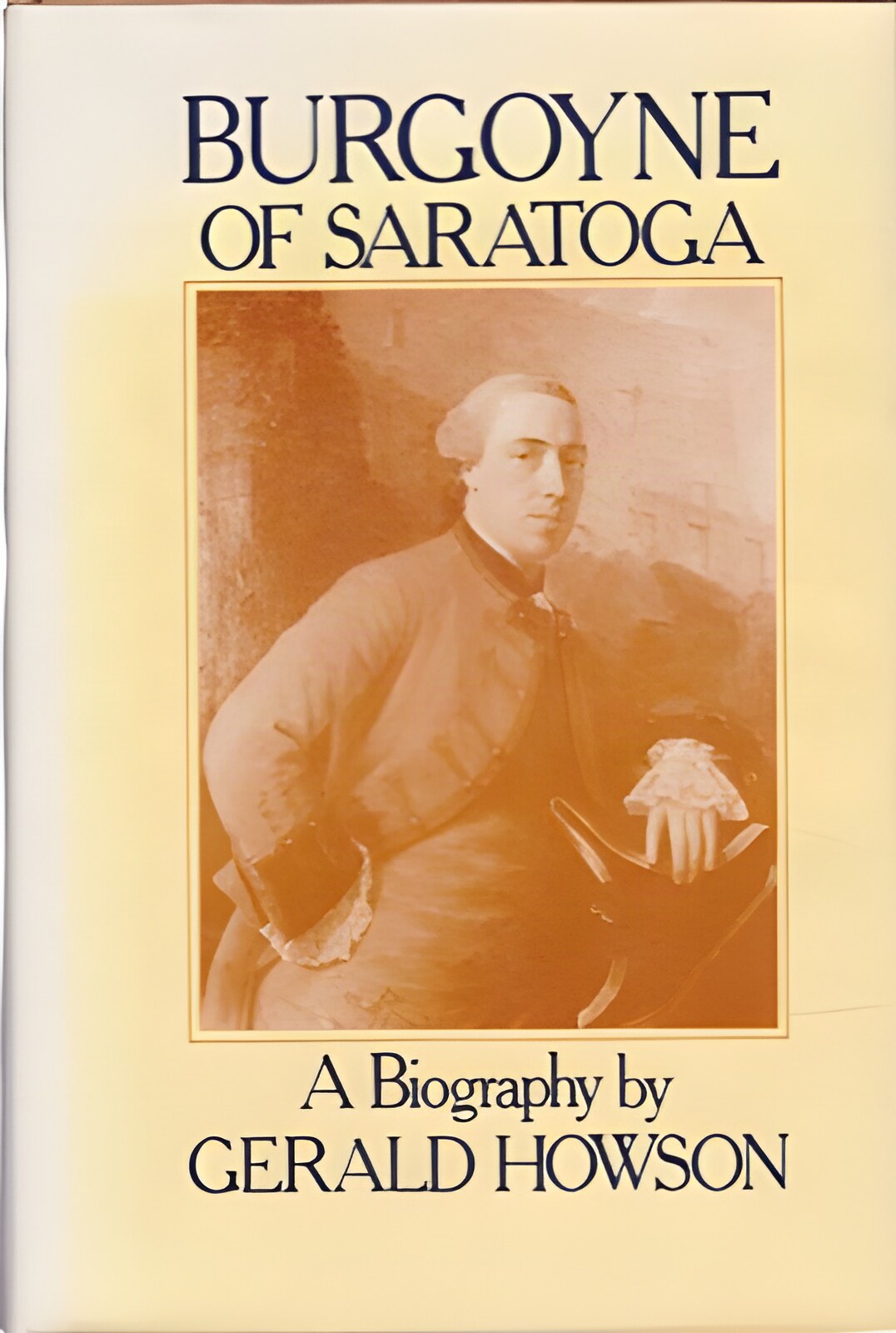
Hardcover. NY, Times Books, 1st, 1979, Book: Very Good, Dust Jacket: Good, Hardcover in a lightly worn dust jacket that shows fading, 360 pages, b&w illustrations, endpaper maps. General John Burgoyne was a British army officer, politician and dramatist. He first saw action during the Seven Years' War when he participated in several battles, mostly notably during the Portugal Campaign of 1762. Burgoyne is best known for his role in the American War of Independence. During the Saratoga campaign he surrendered his army of 5,000 men to the American troops on October 17, 1777. Appointed to command a force designated to capture Albany and end the rebellion, Burgoyne advanced from Canada but soon found himself surrounded and outnumbered. He fought two battles at Saratoga, but was forced to open negotiations with Horatio Gates. Although he agreed to a convention, on 17 October 1777, which would allow his troops to return home, this was subsequently revoked and his men were made prisoners. Burgoyne faced criticism when he returned to Britain, and never held another active command. Clean copy.
Hardcover. NY, Delacorte Press, 1st, 1983, Book: Very Good, Dust Jacket: Very Good, Hardcover in a bright, unclipped dust jacket. INSCRIBED BY GEYER on the front fly leaf. What is it like to cover revolutions and interview the great revolutionary figures of our time? This lively firsthand account of one of our most eminent foreign correspondents, the first American woman journalist to cover the world on such a scale, provides a glimpse into this glamorous, rewarding, exhausting, and grueling life. About the Author: Georgie Anne Geyer was a foreign correspondent, an author and biographer, and a syndicated columnist for half a century. Clean copy.
Softcover. NY, Rizzoli, 1st, 2005, Book: Very Good, Dust Jacket: None, Softcover, large oblong format, 304 pages. Described as "the closest thing to a rock star" in graphic design today (USA Today), Chip Kidd is universally recognized as an American master of contemporary book design. At the forefront of a revolution in publishing, Kidd's iconic covers, with their inventive marriage of type and found images, have influenced an entire generation of design practitioners in many fields.Chip Kidd: Book One collects all of his book covers and designs for the first time, as well as hundreds of developmental sketches and concepts-annotated by Kidd and by many of the best-selling authors he's worked with over the years. The result is an important contribution to the design canon today as well as a visually dazzling (and often hilarious) insider's look at the design and publishing process.The book also showcases Kidd's work with comics and graphic novels, including his collaborations with leading artists and writers in the field. Featured are projects for DC Comics, including Batman and Superman, as well as Kidd's award-winning exploration of the art of Charles M. Schulz. Chip Kidd: Book One is sure to enthrall design aficionados, book lovers, pop-culture fanatics, comics fans, and design students. DUE TO SIZE AND WEIGHT, DOMESTIC SHIPPING ONLY.
Hardcover. York, George Shumway, 1st, 1978, Book: Very Good, Dust Jacket: Fair, 71 pages. Hardcover. Black & white illustrations. Stain along dust jacket spine and edge of front and rear dust jacket cover. No slipcase. Clean, tight copy.
Softcover. Los Angeles, Augustan Reprint Society, reprint, 1990, Book: Very Good, Dust Jacket: None, Softcover, 23 and 27 pages, introduction by Claudis Johnson. Facsimile reprints of two pamphlets written to benefit priests who were expelled by the revolutionary French Government. Both authors championed causes to relieve their plight. Clean copy.
Hardcover. Hoboken, John Wiley & Sons, Inc., First Edition, 2006, Book: Very Good, Dust Jacket: Very Good, 272 pages. Hardcover. Black cloth covered boards with red printed titles to spine. Dust jacket in very good condition. Illustrations in bw throughout. Clean & unmarked copy.
Hardcover. Cambridge MA, Harvard University Press , 1st, 2017, Book: Very Good, Dust Jacket: Very Good, Hardcover in a bright, unclipped dust jacket. 586 pages, b&w illustrations. Cuba's Revolutionary World examines in forensic detail how the turmoil that rocked a small Caribbean nation in the 1950s became one of the twentieth century's most transformative events. Initially, Castro's revolution augured well for democratic reform movements gaining traction in Latin America. But what had begun promisingly veered off course as Castro took a heavy hand in efforts to centralize Cuba's economy and stamp out private enterprise. Embracing the Soviet Union as an ally, Castro and his lieutenant Che Guevara sought to export the socialist revolution abroad through armed insurrection. Castro's provocations inspired intense opposition. Cuban anticommunists who had fled to Miami found a patron in the CIA, which actively supported their efforts to topple Castro's regime. The unrest fomented by Cuban-trained leftist guerrillas lent support to Latin America's military castes, who promised to restore stability. Brazil was the first to succumb to a coup in 1964; a decade later, military juntas governed most Latin American states. Thus did a revolution that had seemed to signal the death knell of dictatorship in Latin America bring about its tragic opposite. Clean copy.
Hardcover. Pound Press, 1st, 2009, Book: Very Good, Dust Jacket: Very Good, Hardcover in a bright dust jacket. Photographing the intersection between culture and nature for over 25 years, Virginia Beahan creates luminous and finely detailed images with an 8x10 view camera that describe the complexities of this relationship in diverse geographic settings. Her eight-year project in the waning years of Fidel Castro's revolutionary Cuba resulted in a major 2009 monograph entitled CUBA singing with bright tears. The images depict a country both tragic and beautiful, struggling beneath the weight of history. Larger-than-life images of revolutionary heroes Che Guevara and Jose Marti populate the island. The Bay of Pigs is sublime and treacherous; an atmospheric body of water rimmed with jagged black coral is the same unwelcoming shore that greeted invading CIA-trained Cuban exiles over forty-seven years ago. On a billboard, Fidel Castro reminds us that the US might invade again, and if so, he "will die fighting." Virginia Beahan's work falls within the tradition of great American photographers such as Walker Evans and Robert Adams. Her luminous and detailed large-format photographs reveal a landscape imbued with nuanced stories of culture shaped by geography and human action. Cuba's long and complicated relationship with the United States is part of this unfolding drama. Clean, bright copy.
Hardcover. NY, Abrams Press, 1st, 2023, Book: Very Good, Dust Jacket: Very Good, Hardcover in a bright, unclipped dust jacket, 439 pages. In the 1950s, comics meant POW!BAM! superheroes, family-friendly gags, and Sunday funnies, but in the 1960s, inspired by these strips and the satire of MAD magazine, a new generation of creators set out to subvert the medium, and with it, American culture. Their "comix"--spelled that way to distinguish the work from their dime-store contemporaries--presented tales of taboo sex, casual drug use, and a transgressive view of society. Embraced by hippies and legions of future creatives, this subgenre of comic books and strips often ran afoul of the law, but that would not stop them from casting cultural ripples for decades to come, eventually moving the entire comics form beyond the gutter and into fine-art galleries. Brian Doherty weaves together the stories of R. Crumb, Art Spiegelman, Trina Robbins, Spain Rodriguez, Harvey Pekar, and Howard Cruse, among many others, detailing the complete narrative history of this movement. Through dozens of new interviews and archival research, he chronicles the scenes that sprang up around the country in the 1960s and '70s, beginning with the artists' origin stories and following them through success and strife, and concluding with an examination of these creators' legacies. Dirty Pictures is the essential exploration of a truly American art form that recontextualized the way people thought about war, race, sex, gender, and expression.
Hardcover. NY, Abrams Press, 1st, 2023, Book: Very Good, Dust Jacket: Very Good, Hardcover in a bright, unclipped dust jacket, 439 pages. In the 1950s, comics meant POW!BAM! superheroes, family-friendly gags, and Sunday funnies, but in the 1960s, inspired by these strips and the satire of MAD magazine, a new generation of creators set out to subvert the medium, and with it, American culture. Their "comix"--spelled that way to distinguish the work from their dime-store contemporaries--presented tales of taboo sex, casual drug use, and a transgressive view of society. Embraced by hippies and legions of future creatives, this subgenre of comic books and strips often ran afoul of the law, but that would not stop them from casting cultural ripples for decades to come, eventually moving the entire comics form beyond the gutter and into fine-art galleries. Brian Doherty weaves together the stories of R. Crumb, Art Spiegelman, Trina Robbins, Spain Rodriguez, Harvey Pekar, and Howard Cruse, among many others, detailing the complete narrative history of this movement. Through dozens of new interviews and archival research, he chronicles the scenes that sprang up around the country in the 1960s and '70s, beginning with the artists' origin stories and following them through success and strife, and concluding with an examination of these creators' legacies. Dirty Pictures is the essential exploration of a truly American art form that recontextualized the way people thought about war, race, sex, gender, and expression.
Hardcover. NY, Abrams, 1st, 2018, Book: Very Good, Dust Jacket: Very Good, Hardcover, 352 pages, b&w illustrations. In a bright, unclipped dust jacket. The 1960s to early '70s was a pivotal time for American culture, and New York City was ground zero for seismic shifts in music, theater, art, and film-making. The Downtown Pop Underground takes a kaleidoscopic tour of Manhattan during this era and shows how deeply interconnected all the alternative worlds and personalities were that flourished in the basement theaters, dive bars, concert halls, and dingy tenements within one square mile of each other. Author Kembrew McLeod links the artists, writers, and performers who created change, and while some of them didn't become everyday names, others, like Patti Smith, Andy Warhol, and Debbie Harry, did become icons. Ambitious in scope and scale, the book is fueled by the actual voices of many of the key characters who broke down the entrenched divisions between high and low, gay and straight, and art and commerce -- and changed the cultural landscape of not just the city but the world.
Hardcover. New York, Atheneum, reprint, 1995, Book: Very Good, Dust Jacket: Very Good, Hardcover, 409 pages, a classic novel of the American Revolution. 14 color plates plus title page, 47 pen line drawings by N.C. Wyeth. The definitive edition of the Scribner's Illustrated Classic with the original canvases newly photographed. While not a First Edition it is superior in every way considering the quality of the color plates. Bright, clean copy in a similar dust jacket.
Hardcover. Boston, Houghton Mifflin, 2nd pr., 1965, Book: Very Good, Dust Jacket: Good, Hardcover in an edgeworn dust jacket, 326 pages. Name on front fly leaf, otherwise clean.
Hardcover. Northampton MA, Betty Allen Chapter Daughters of the American Revolution, 1st, 1914, Book: Very Good, Dust Jacket: None, Hardcover, 233 pages, b&w illustrations. Blue cloth with gilt lettering, light fading to edges, spine. Previous owner's signature, address on front fly leaf.
Softcover. Toronto, Dundurn Press, 1st, 1982, Book: Very Good, Dust Jacket: None, Softcover, 336 pages. Includes table of contents, bibliography, index, maps and b&w photographs and illustrations. The 11 exiles were: John Howe, Printer; Francis Green; Joseph Durfee, Shelburne Pioneer; Molly Brant, Mohawk Heroine; Ward Chipman, founding father of New Brunswick; William Schurman of Prince Edward Island; Sir John Johnson; Ranna Cossit; Sarah Sherwood; Boston King and William Jarvis.
Softcover. Philadelphia, J.B. Lippincott, reprint, 1970, Book: Very Good, Dust Jacket: None, Softcover, 186 pages. A detailed study of the politics underlying British policies of mercantilism in the American colonies. Focusing on the political activity of interest groups in the British Empire of the eighteenth century, Professor Kammen relates political influence in Georgian England to American colonial history, to the early history of the industrial revolution, to the incredible flood of writings in the later eighteenth century on political economy, and to the dynamics of Anglo-American political society, public life, and the empire. Name on front fly leaf otherwise clean.
Hardcover. Berkeley CA, University of California Press, 1st, 1974, Book: Very Good, Dust Jacket: Good, Hardcover in a lightly worn dust jacket, 205 pages. Name on front fly leaf otherwise clean. Small hole on dj front.

 "Boy of the Borderby: Bontemps, Arna/ Langston Hughes")
 "Branch Rickey: Baseball's Ferocious Gentlemanby: Lee Lowenfish")

 "Buying the Night Flight: the Autobiography of a Woman Foreign Correspondent (SIGNED COPY)by: Geyer, Georgia Anne")

 "Colonial Riflemen in the American Revolutionby: Huddleston, Joe D.")

 "Cradle of Violence - How Boston's Waterfront Mobs Ignited the American Revolutionby: Bourne, Russell")

 "CUBA: singing with bright tearsby: Virginia Beahan; Contributor Jon Lee Anderson/Pico Iyer")


 "Downtown Pop Underground: New York City and the literary punks, renegade artists, DIY filmmakers, mad playwrights, and rock 'n' roll glitter queens who revolutionized culture by:")
 "Downtown Pop Underground: New York City and the literary punks, renegade artists...and rock 'n' roll glitter queens who revolutionized cultureby: McLeod, Kembrew")
 "Drumsby: Boyd, James and N. C. Wyeth")

 "Early Northamptonby: N/A")