Hardcover. NY, W. W. Norton & Company, 1st, 1976, Book: Very Good, Dust Jacket: Very Good, Hardcover in a lightly worn dust jacket, 332 pages, b&w illustrations. Clean, tight copy.
Softcover. Berkeley CA, University of California Press, reprint, 1966, Book: Very Good, Dust Jacket: None, Softcover, 151 pages. Deals with the parliamentary group in England which claimed the Whig tradition during the American Revolution. The Americans asserted rights that were essentially Whig, but at the same time repudiated the authority of parliament, the stronghold of Whig tradition. Fading to spine, name on front fly leaf, otherwise clean.
Hardcover. New York, Longmans Green and Co., 1st, 1938, Book: Very Good, Dust Jacket: None, Hardcover, red cloth, b&w illustrations by Henry Pitz. 324 pages. A story of the American Revolution and what occured when the colonists of northern New Jersey became aroused and embittered by enemy oppression. Clean copy.
Hardcover. New York, Gulliver/Harcourt Brace & Co., 1st, 1994, Book: Very Good, Dust Jacket: Very Good, 362 pages, illustrated glazed boards with a matching unclipped dust jacket.
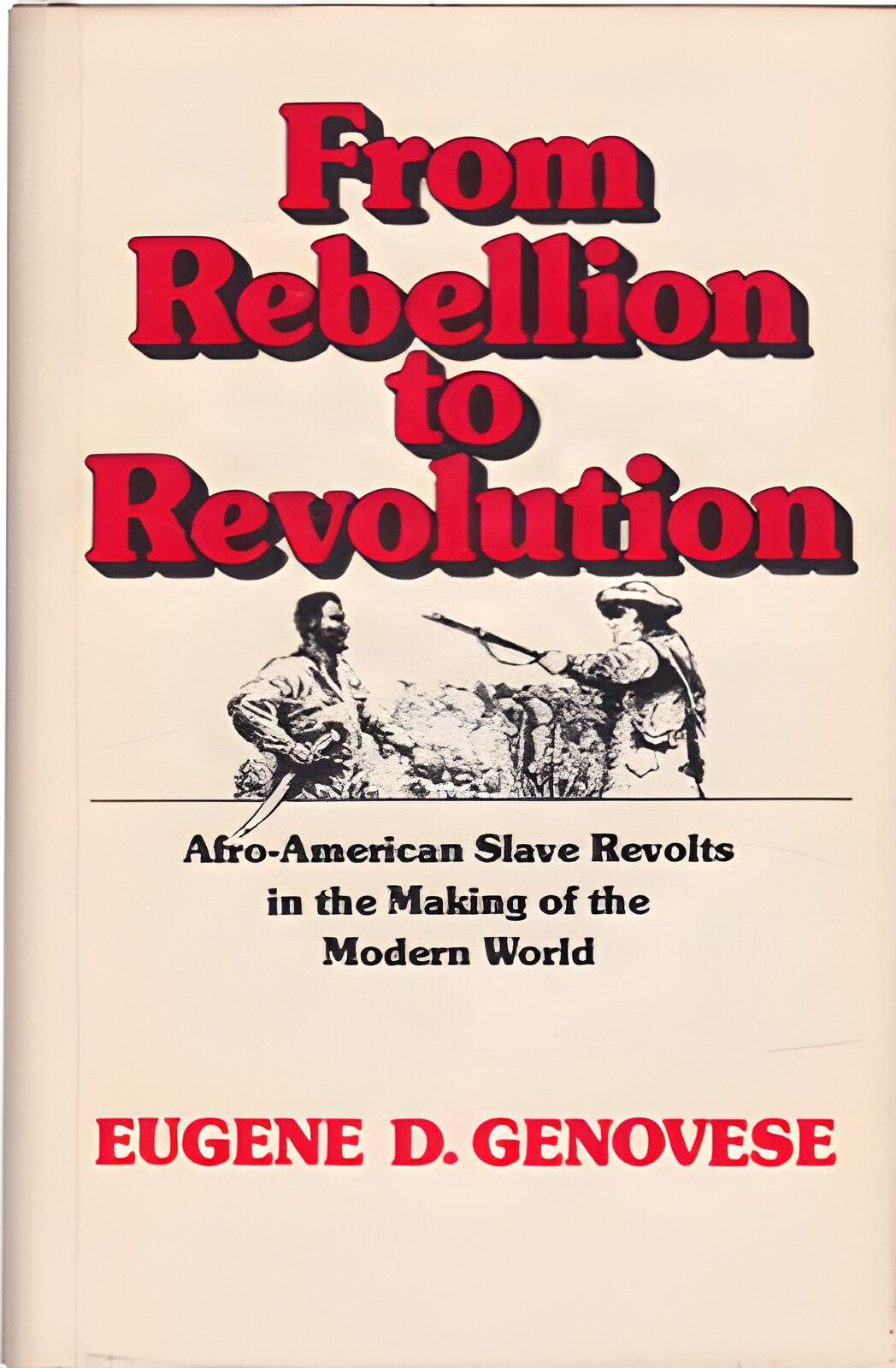
Hardcover. Baton Rouge, Louisiana State University , 1st, 1979, Book: Very Good, Dust Jacket: Very Good, Hardcover in a bright dust jacket, 173 pages. This work is a brief look at worldwide slave revolts in the 17th through 19th centuries, emphasizing their interrelations with European power struggles, which gave rebels hope of finding weak spots in the defenses of the slave powers. The French Revolution also had an influence on slave revolts, but the canny European powers used indigenous peoples to suppress slave revolts (e.g., native Americans) and took advantage of African ethnic divisions as well. American slaves stood little chance of revolt and were under constant surveillance from Southerners, who coward in fear after the successful rebellions in the Caribbean, particularly in Hispaniola, and after Nat Turner and John Brown's efforts. Genovese also brings up religion's double-edged sword: one side used to pacify slaves and the other side to inspire them to break their chains. In short, this scholarly treatise is thought-provoking as well as informative and ends with an inspirational quote from one of Frederick Douglass's lectures. Name on front fly leaf, otherwise a clean copy.
Hardcover. Baltimore MD, Johns Hopkins University Press, 3rd pr., 1987, Book: Very Good, Dust Jacket: None, Hardcover, gray cloth, 411 pages, b&w illustrations. Ex-lib with light stamping, residue to rear inside cover. Otherwise a clean, tight copy. David Hounshell explores the development of the 'American system' of manufacturing in the half century before the Civil War and the transition of this system into the 'mass production' of the 20th century. Hounshell explores the important role of individuals in the diffusion and development of production technology and the central place of marketing strategy in the success of selected American manufactures. While Ford Motor company was the seabed of the assembly line revolution, General Motors initiated the new era of annual model change. With the new marketing strategy, the technology of 'the changeover' became of paramount importance. Hounshell chronicles how painfully Ford learned this lesson with the change from the Model T to the Model A and then to the V-8 in 1932.
Hardcover. Boston, Farrand Mallory and Co., 1st, 1810, Book: Good, Dust Jacket: None, Hardcover, contemporary calf with a red leather spine label with gilt lettering. Library bookplate on inside front cover, two small spine labels otherwise no other markings or stamping. There is a general tanning to the pages and moderate foxing. Sound throughout. Title page states three volumes but research says this was the only volume printed.
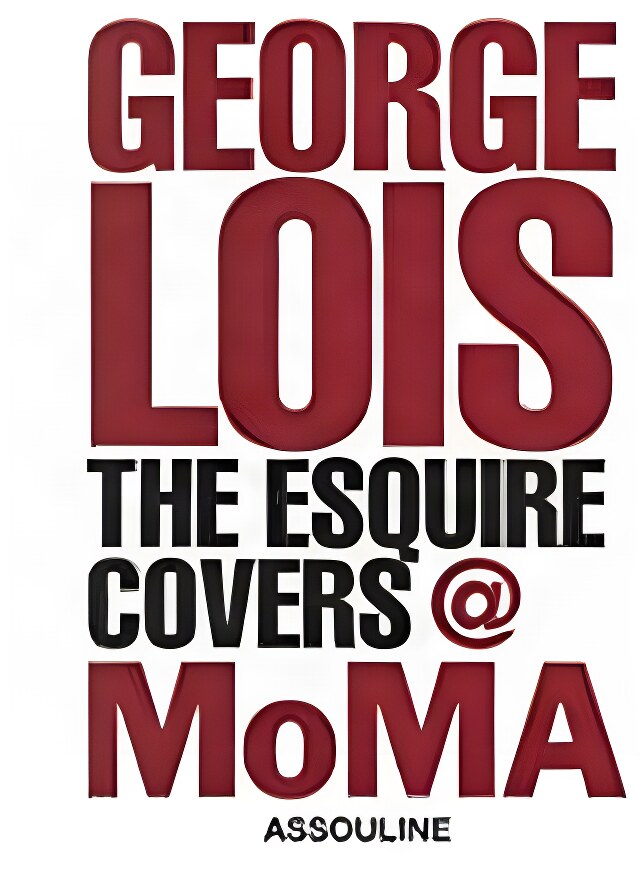
Hardcover. New York , Assouline Publishing, 1st, 2010, Book: Very Good, Dust Jacket: None, 200 pages, color illustrations. At the forefront of American advertising's creative revolution in the 1960s, George Lois was hand-picked by magazine editor Harold Hayes to visually convey that Esquire--a proponent of that era's New Journalism--was on the cutting edge of American culture. In 2008, New York City's Museum of Modern Art acquired a wide range of George Lois's groundbreaking, often controversial Esquire covers for its permanent collection. This fascinating catalogue presents the original exhibit, with additional covers and images from Lois's private collection, including photos of the designer at work and out-takes of the shoot that resulted in Andy Warhol "drowning" in one of his own tomato soup cans. Like new in publisher's shrink-wrap.
Hardcover. NY, Assouline Publishing , 1st, 2010, Book: Very Good, Dust Jacket: Very Good, Hardcover, 200 pages. In 2008, the Museum of Modern Art acquired a wide range of George Lois's groundbreaking Esquire magazine covers and put them on display for a full year. The Esquire Covers at MoMA collects the entirety of that exhibit, many more covers, and unseen images from Lois's private collection, including personal photographs of the designer at work and outtakes of a shoot with Andy Warhol. George Lois, who led advertising's creative revolution in the 1960s, was hand-picked by the legendary editor Harold Hayes to convey visually that Esquire--a leading proponent of another creative revolution of the time, New Journalism--was on the cutting edge of profound changes in American culture. With images of JFK, RFK, and Martin Luther King, Jr. watching over Arlington National Cemetery; of Richard Nixon under the makeup-artist's powder-puff; and of Muhammad Ali as the martyred Saint Sebastian, he did just that.
Hardcover. NY, Contemporary Books, 1st, 2003, Book: Very Good, Dust Jacket: Very Good, Hardcover in a bright, unclipped dust jacket, 398 pages. From its inauspicious beginnings through its improbable Super Bowl victories and its ultimate demise, the American Football League had a colorful and sometimes bizarre ten-year history that will not soon be forgotten. Going Long takes you back to that thrilling decade with the men who made the AFL--and who made it great. In this unique oral history, 170 voices come together to tell the unbelievable story of that maverick league, a rollicking tale of eight teams that refused to die. In 1959, the NFL had just a dozen teams, with only two located west of the Mississippi River. For forty years, it had enjoyed total dominance over the gridiron, tackling rival franchises and knocking them out of the game. But a revolution was coming to American football, and it all began with a man named Lamar Hunt, the Texas millionaire who desperately wanted a league of his own. With a team of enthusiastic investors, Hunt fired what he later called "the first cannon shot in what turned out to be the pro football war." It was a war that would rage on for ten rough-and-tumble years. Flavored with wild (and often ribald) anecdotes, inside stories, personal interviews, and never-before-told material, Going Long brings the incredible story of the upstart AFL to life through the words of the players, coaches, owners, and others who lived it--including Joe Namath, Mike Ditka, Bubba Smith, Roger Staubach, Pat Summerall, Curt Gowdy, and many others. Hearkening back to a simpler time in sports, this behind-the-scenes true story reveals the origins of the modern game we know today and how it all began with a fight to the death for professional football supremacy.
Hardcover. New York , De Vinne Press, 1st, 1916, Book: Very Good, Dust Jacket: None, Hardcover, 269 pages. Light blue and white cover. Printed for the Naval History Society. Pages untrimmed. Worn slipcase. Clean condition inside and out. Number 582 of 650 copies. B&w illustrations with tissue guards by various artists. Includes one page insert addressed to members of the Naval History Society. With introduction stressing the importance of Naval campaigns in the American Revolution.
Hardcover. Boston, Benjamin B. Mussey and Company, Second Edition, 1853, Book: Very Good, Dust Jacket: None, 364 pages. Hardcover. Two volumes in one, revised edition to the original published work by the author of "May Martin or The Money Diggers;" "Locke Amsden or The Schoolmaster." Green cloth boards with embossed decoration to cover & gilt titles to spine. Scuffed edges to boards, frayed edge to spine. Moderate foxing throughout. Otherwise clean, tight copy.
Hardcover. NY, Knopf, 1st, 1999, Book: Very Good, Dust Jacket: Very Good, Hardcover in a bright dust jacket, 599 pages. Don't pick up this fascinating, deeply eccentric book expecting to find a conventional biography of Eugene V. Debs (1855-1926). The fiery American labor leader who founded the Socialist Party of America is not so much the subject as the central figure in a group portrait of utopian dreamers--including Karl Marx, Brigham Young, abolitionist Wendell Phillips, poet James Whitcomb Riley, and detective-agency founder Allan Pinkerton--from the time of the French Revolution through the dawn of the 20th century. Author Marguerite Young is a legendary Greenwich Village bohemian who died in 1995. She devoted the last 25 years of her life to this volume, which was intended as a recapitulation of the issues that had engaged Debs - justice for workers, peace for everyone, racial equality - and continued to galvanize America in the 1960s and beyond. Young doesn't provide a lot of straight factual information about Debs's life, but takes instead a snapshot of his soul as it was formed by reading and experience. The narrative closes (sort of) with the national railroad strike of 1877, a bitter defeat for labor that turned railroad worker and union activist Debs toward greater radicalism. Though not a work for the traditionally minded, Young's genre-bending book will thrill students of American social and socialist history. Clean copy.
Hardcover. Boston, Houghton Mifflin , 1st, 1929, Book: Very Good, Dust Jacket: None, Hardcover, illustrations by F.C. Yohn. Color frontispiece. illustrated end papers. Book store stamp on rear paste-down. light edgewear, otherwise clean.
Hardcover. New York , D. Appleton and Company, 1st, 1899, Book: Very Good, Dust Jacket: None, Hardcover, 519 pages. Blue cloth with gilded lettering. Top edge gilt. Minor bump on edges and spine. Previous owner inscription on front fly leaf. Many b&w illustrations by various artists. Nice, clean interior.
Hardcover. New Haven CT, L. Candee, 8th Ed., 1842, Book: Good, Hardcover, brown leather covers with marbled endpapers. Frontis engraving "Landing of the Pilgrims at Plymouth Dec. 22, 1620" with tissue guard. plus seven other engravings, Volume 1 only. Covers worn at edges, leather spine with chipping making title unreadable. Pages 309-337 with dog ear crease to top corners. Small bookplate inside front cover. Despite faults a solid copy.
Hardcover. NY, Houghton Mifflin Harcourt, 1st, 2012, Book: Very Good, Dust Jacket: Very Good, Hardcover in a bright, unclipped dust jacket, 321 pages. In spring 2011, Anthony Shadid was one of four New York Times reporters captured in Libya, cuffed and beaten, as that country was seized by revolution. When he was freed, he went home. Not to Boston or Beirut--where he lives-- or to Oklahoma City, where his Lebanese-American family had settled and where he was raised. Instead, he returned to his great-grandfather's estate, a house that, over three years earlier, Shadid had begun to rebuild. House of Stone is the story of a battle-scarred home and a war correspondent's jostled spirit, and of how reconstructing the one came to fortify the other. In this poignant and resonant memoir, the author of the award-winning Night Draws Near creates a mosaic of past and present, tracing the house's renewal alongside his family's flight from Lebanon and resettlement in America. In the process, Shadid memorializes a lost world, documents the shifting Middle East, and provides profound insights into this volatile landscape. House of Stone is an unforgettable meditation on war, exile, rebirth, and the universal yearning for home. Clean copy.
Hardcover. Cambridge MA, Harvard University Press, 1st, 1989, Book: Very Good, Dust Jacket: Very Good, Vol. 1: Slaves and Liberators, 379 pages with 156 b&w, 40 color illustrations. Vol. 2: 306 pages, 131 b&w, 52 color illustrations. Both volumes like new, shrinkwrapped in cardboard slipcases. DUE TO WEIGHT, DOMESTIC SHIPPING ONLY.
Hardcover. NY, Columbia University Press, 1st, 1974, Book: Very Good, Dust Jacket: Very Good, Hardcover in a bright dust jacket, 200 pages. 'Carol Berkin's lively narrative of one British Loyalist's disastrous career uncovers in an arresting manner the other side of the U. S. Revolution. The Revolution, from Sewall's point of view, was an unnecessary and unworthy attack by charlatans and demagogues on the best society the world had yet created. Although Sewall sought to avoid confrontation with his increasingly revolutionary friends, including Sam & John Adams and John Hancock, and at the same time be independent in his appointed posts, he was trapped in the political hierarchy of colonial Massachusetts. When the Revolution began in earnest, he left a beleaguered Boston to take refuge in England where he met the same fate as the other Tory refugees: he was an insignificant colonial, unworthy of royal patronage. ' Name on front fly leaf, otherwise clean.
Hardcover. Urbana IL, University of Illinois Press, 1st, 1961, Book: Very Good, Dust Jacket: Very Good, Hardcover in alightly worn dust jacket, 260 pages. "In this first biography of Warren since 1865, John Cary re-establishes Warren's deserved reputation as an American patriot and leading figure of the American Revolution. He ranks Warren with Samuel Adams as the two most important figures in the Massachusetts revolutionary movement." Name on front fly leaf, otherwise clean.
Hardcover. New Haven CT, Yale University Press, 2nd pr., 1922, Book: Good, Dust Jacket: None, Hardcover, marbled boards with gray cloth spine, 333 pages plus index. Endpapers map. Janet Schaw, a supporter of the Crown, illustrates the extent to which the American Revolution had, by 1775, become a close, personal insurgency, pitting neighbor against neighbor. Schaw was a young, well-educated Scottish woman who traveled to North Carolina to visit her older brother Robert, the owner of a plantation on the Cape Fear River near Wilmington. She arrived in March of 1775 and while in North Carolina witnessed, among other things, land clearing through controlled burning and the killing of an alligator. More important, she observed a society that was splitting asunder under the stress of revolutionary politics. The decisions of the Wilmington Committee forced men and women along the Cape Fear to take sides. Worn covers with spine cloth coming loose. Binding is solid.
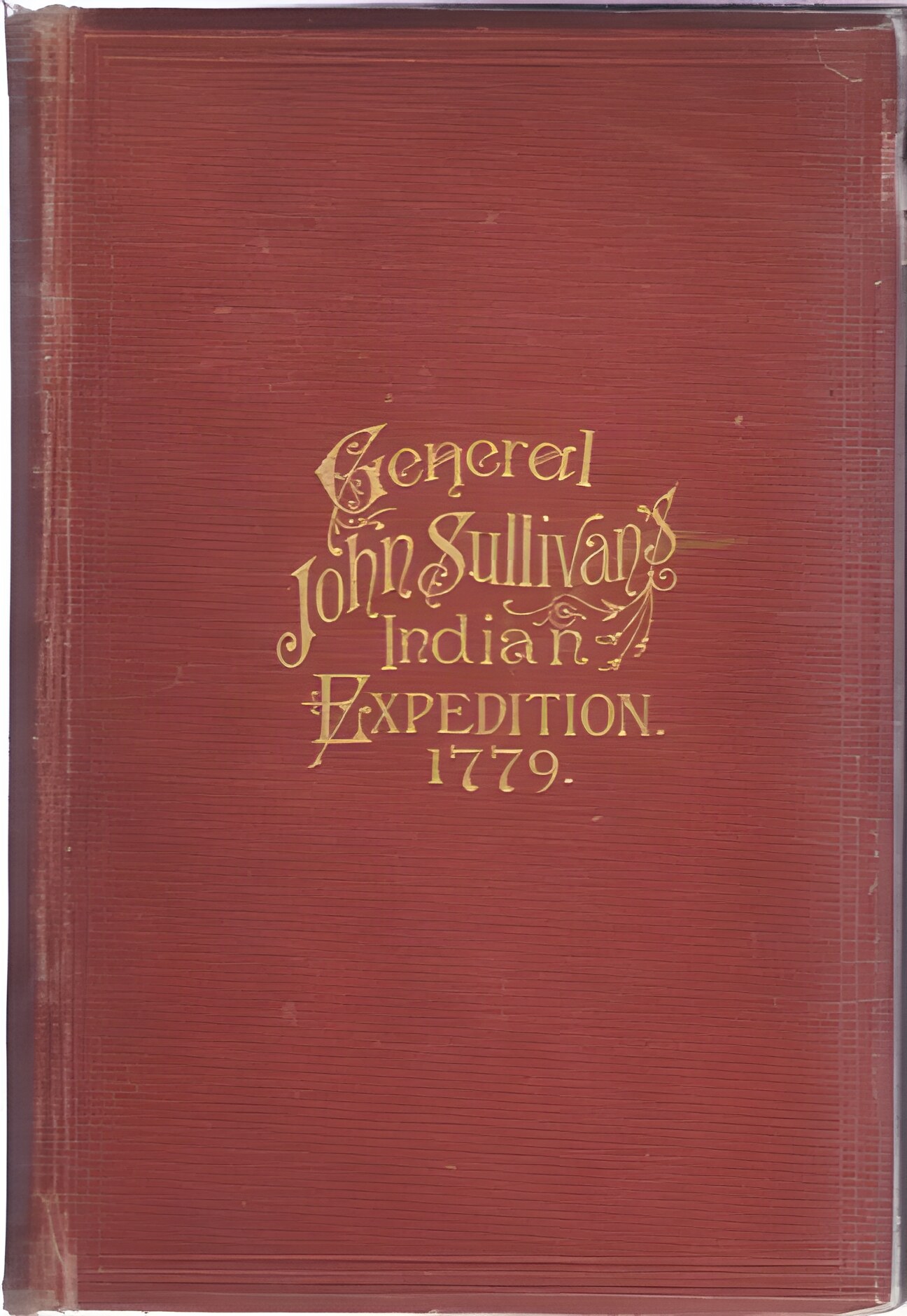
Hardcover. Auburn NY, Knapp, Peck and Thomson, 1st, 1887, Book: Fair, Dust Jacket: None, Hardcover, original red cloth, gilt titles and rules, blind-stamped double border. 581 pages including Errata leaf. Includes several fold-out maps, plus pockets inside the front and rear boards containing maps and plans. Engraved frontispiece of Sullivan, engraved portraits in text of Brigadier General James Clinton, Colonel Peter Gansevoort (from a portrait by Gilbert Stuart, famous for his portrait of George Washington), and Colonel Philip Van Cortlandt. John Sullivan was an American general in the Revolutionary War and a delegate in the Continental Congress. Sullivan served as a major general in the Continental Army and as Governor (or 'President') of New Hampshire. He is most famous for leading the Sullivan Expedition in 1779, a scorched earth campaign against the Iroquois towns that had taken up arms against the American revolutionaries. This volume contains journals by 27 officers present during the campaign, and has become the authoritative primary source of the event. Both front and rear hinges cracked with spine cloth loose, battlefield map at page 288 has a tear but no loss, front signature with title page loose but whole. All other maps present in envelopes and in very good condition. Covers worn.
Hardcover. NY, Harper, 2nd pr., 2013, Book: Very Good, Dust Jacket: Very Good, Hardcover in a lightly worn dust jacket, 265 pages, b&w illustrations. The first installment in the long-awaited portrait of one of the most talented and influential musicians of the twentieth century, from Stanley Crouch, one of the foremost authorities on jazz and culture in America. Throughout his life, Charlie Parker personified the tortured American artist: a revolutionary performer who used his alto saxophone to create a new music known as bebop even as he wrestled with a drug addiction that would lead to his death at the age of thirty-four. Drawing on interviews with peers, collaborators, and family members, Kansas City Lightning recreates Parker's Depression-era childhood; his early days navigating the Kansas City nightlife, inspired by lions like Lester Young and Count Basie; and on to New York, where he began to transcend the music he had mastered. Clean copy.
Hardcover. Glens Falls, Champlain Publishing, 1st, 1914, Book: Very Good, Dust Jacket: None, 255 pages. Blue cloth covers with title rubbed from spine and some rubbing to gilt title on cover. Book has slight damp smell. Clean, tight copy.


 "English Whiggism and the American Revolution by: G. H. Guttridge")
 "Fighting Musketsby: Sherman/Henry Pitz, Edith Bishop")
 "Finishing Becca: A Story About Peggy Shippen and Benedict Arnoldby: Rinaldi, Ann")

 "General History of the United States of America; From the Discovery in 1492 to 1792: or Sketches of the Divine Agency In Their Settlement Growth and Protection; and Especially in the Late Memorable Revolution")
 "George Lois: The Esquire Coversby: Lois, George")
 "Going Long: The Wild Ten-Year Saga of the Renegade American Football League in the Words of Those Who Lived Itby: Jeff Miller")
 "Graves Papers, The: And Other Documents Relating to the Naval Operations of the Yorktown Campaign, July to October, 1781.by: Chadwick (ed), French Ensor")


 "Hero of Vincennes, The: The Story of George Rogers Clarkby: Thomas, Lowell")
 "History of American Privateers, A.by: Maclay, A.M., Edgar Stanton")



 "Image of the Black in Western Art, The - Vol. 4, Parts 1 &2 : From the American Revolution to World War 1 (2 Vols.)by: Honour, Hugh")


 "Journal of a Lady of Quality Being the Narrative of a Journey from Scotland to the West Indies North Carolina and Portugal in the Years 1774 to 1776by: Andrews, Evang")

 "Kathi of Skenesboroughby: Curtis, May Belle")