Hardcover. Cambridge MA, Harvard University Press, 1st, 2000, Book: Very Good, Dust Jacket: Very Good, hardcover in a bright, unclipped dust jacket. The Supreme Court under Chief Justice Earl Warren was the most revolutionary and controversial Supreme Court in American history. But in what sense? Challenging the reigning consensus that the Warren Court, fundamentally, was protecting minorities, Lucas Powe revives the valuable tradition of looking at the Supreme Court in the wide political environment to find the Warren Court a functioning partner in Kennedy-Johnson liberalism. Thus the Court helped to impose national liberal-elite values on groups that were outliers to that tradition--the white South, rural America, and areas of Roman Catholic dominance. In a learned and lively narrative, Powe discusses over 200 significant rulings: the explosive Brown decision, which fundamentally challenged the Southern way of life; reapportionment (one person, one vote), which changed the political balance of American legislatures; the gradual elimination of anti-Communist domestic security programs; the reform of criminal procedures (Mapp, Gideon, Miranda); the ban on school-sponsored prayer; and a new law on pornography. Most of these decisions date from 1962, when those who shaped the dominant ideology of the Warren Court of storied fame gained a fifth secure liberal vote. The Justices of the majority were prominent individuals, brimming with confidence, willing to help shape a revolution and see if it would last. Clean copy.
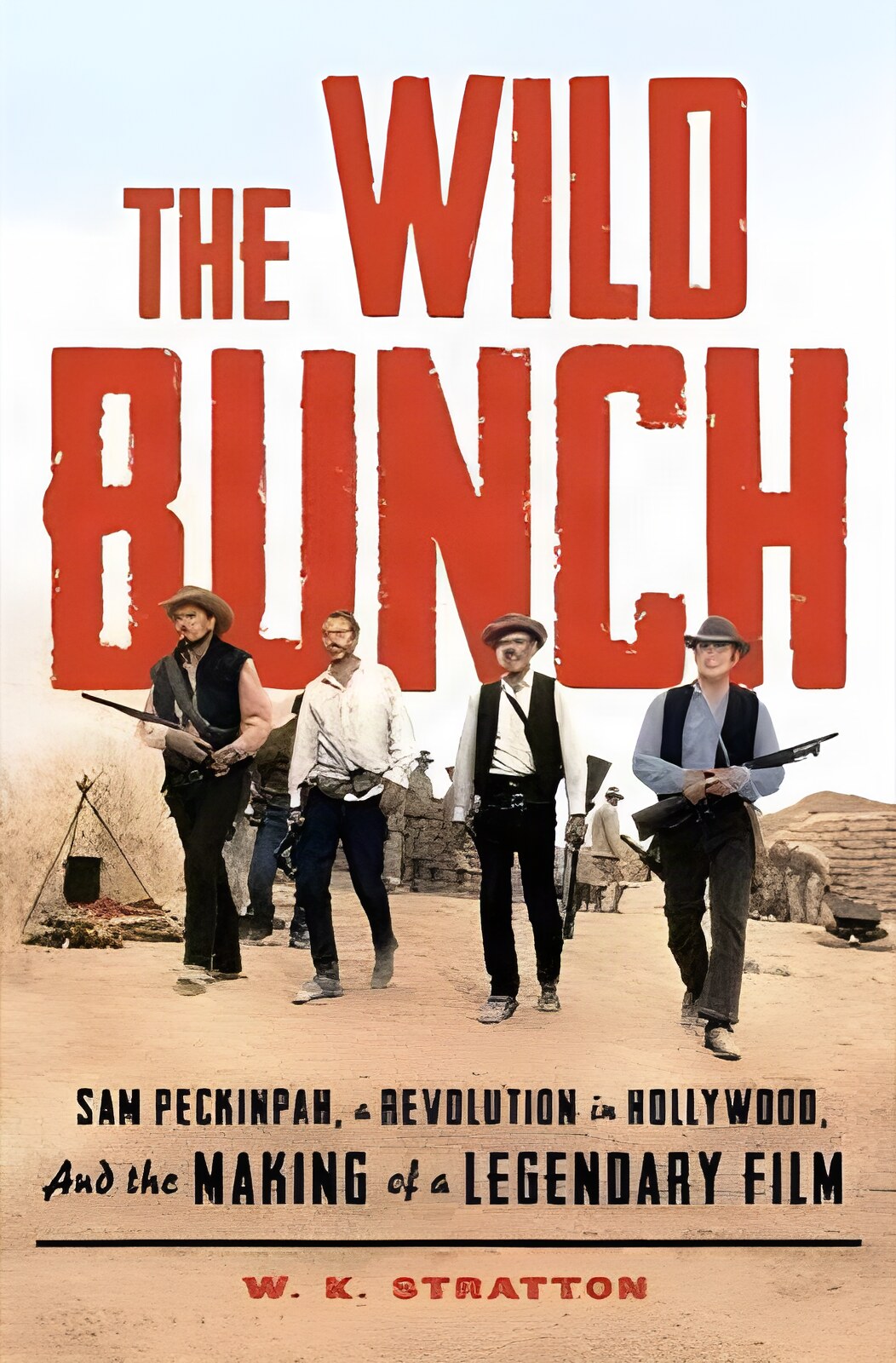
Hardcover. NY, Bloomsbury Publishing, 1st, 2019, Book: Very Good, Dust Jacket: Very Good, Hardcover in a bright dust jacket, 336 pages, b&w illustration. INSCRIBED BY STRATTON on the title page. For the fiftieth anniversary of the film, W.K. Stratton's definitive history of the making of The Wild Bunch, named one of the greatest Westerns of all time by the American Film Institute. Sam Peckinpah's film The Wild Bunch is the story of a gang of outlaws who are one big steal from retirement. When their attempted train robbery goes awry, the gang flees to Mexico and falls in with a brutal general of the Mexican Revolution, who offers them the job of a lifetime. Conceived by a stuntman, directed by a blacklisted director, and shot in the sand and heat of the Mexican desert, the movie seemed doomed. Instead, it became an instant classic with a dark, violent take on the Western movie tradition. In The Wild Bunch, W.K. Stratton tells the fascinating history of the making of the movie and documents for the first time the extraordinary contribution of Mexican and Mexican-American actors and crew members to the movie's success. Clean copy.
Hardcover. NY, Fordham University Press, 1st, 2006, Book: Very Good, Dust Jacket: Very Good, Hardcover in a bright dust jacket, 309 pages. Barolini profiles six gifted women transformed by Italy's mythic appeal. Unlike Barolini herself, they were not daughters of the great Italian diaspora. Rather, they were drawn to an idea of "Italy" and its gifts-in whose welcome a new self could be created. Or discovered. Emily Dickinson traveled to Italy only in the imaginative genius of her verse. Margaret Fuller struggled alongside her Italian lover in the political revolutions that gave birth to the Italian Republic, while the novelist and short-story writer Constance Fennimore Woolson found her home in Venice and Florence. Here, too, is the flamboyant artist Mabel Dodge Luhan, entertaining at her villa near Florence; and Marguerite Chapin of Connecticut, who married an Italian prince and in Rome founded the premier literary review of the mid-century, Botteghe Oscure. Finally, here is Iris Cutting Origo, the Anglo-American heiress who, with her Italian nobleman husband, built a Tuscan estate, where she wrote acclaimed biographies-and created a refuge from Mussolini's fascism. Clean copy.
Hardcover. London, Hard Case Crime, 1st thus, 2015, Book: Very Good, Dust Jacket: None, Hardcover, colorful dust jacket with a retro-style illustration by Glen Orbik. The year is 1977, and America is finally getting over the nightmares of Watergate and Vietnam and the national hangover that was the 1960s. But not everyone is ready to let it go. Not aging comedian Koo Davis, friend to generals and presidents and veteran of countless USO tours to buck up American troops in the field. And not the five remaining members of the self-proclaimed People's Revolutionary Army, who've decided that kidnapping Koo Davis would be the perfect way to bring their cause back to life. Remainder dot on bottom edge otherwise like new.
NY, Da Capo Press , 1st, 2019, Book: Very Good, Dust Jacket: Very Good, Hardcover in a bright, unclipped dust jacket. Thomas Paine's words were like no others in history: they leaped off the page, inspiring readers to change their lives, their governments, their kings, and even their gods. In an age when spoken and written words were the only forms of communication, Paine's aroused men to action like no one else. The most widely read political writer of his generation, he proved to be more than a century ahead of his time, conceiving and demanding unheard-of social reforms that are now integral elements of modern republican societies. Among them were government subsidies for the poor, universal housing and education, pre- and post-natal care for women, and universal social security. An Englishman who emigrated to the American colonies, he formed close friendships with Benjamin Franklin, Thomas Jefferson, and James Madison, and his ideas helped shape the Declaration of Independence and the Bill of Rights.
Hardcover. Glendale CA, Arthur H. Clark Co., 1st, 1951, Book: Very Good, Dust Jacket: None, Hardcover, dark blue cloth with gilt lettering on the spine, 340 pages. A biography of Thomas Pownall (1757 - 1760) who was governor of the Massachusetts Bay colony during the French and Indian War and later a member of Parliament (1767 - 1780). Pownall had sympathies for the colonial grievances and institutions. This biography is based on a study of widely scattered documentary materials and provides insight into a man of complex and contradictory ideas and actions during the pre-Revolutionary period. Includes bibliography and index. Stamping to endpapers, from an academic library.
Hardcover. NY, Knopf, 1st, 2003, Book: Very Good, Dust Jacket: Very Good, Hardcover in a bright dust jacket. 185 pages, color and b&w illustrations. With these character sketches of key figures of the American Revolution and illuminating probes of its circumstances, Bernard Bailyn reveals the ambiguities, complexities, and uncertainties of the founding generation as well as their achievements. Using visual documentation--portraits, architecture, allegorical engravings--as well as written sources, Bailyn, one of our most esteemed historians, paints a complex picture of that distant but still remarkably relevant world. He explores the powerfully creative effects of the Founders' provincialism and lays out in fine detail the mingling of gleaming utopianism and tough political pragmatism in Thomas Jefferson's public career, and the effect that ambiguity had on his politics, political thought, and present reputation. And Benjamin Franklin emerges as a figure as cunning in his management of foreign affairs and of his visual image as he was amiable, relaxed, and amusing in his social life. Bailyn shows, too, why it is that the Federalist papers--polemical documents thrown together frantically, helter-skelter, by Alexander Hamilton, James Madison, and John Jay in a fierce political battle two hundred years ago--have attained canonical status, not only as a penetrating analysis of the American Constitution but as a timeless commentary on the nature of politics and constitutionalism.
Hardcover. NY, Oxford University Press, 4th pr., 2000, Hardcover in a bright dust jacket. 670 pages, b&w illustrations. Written by the most prominent of the new generation of historians, this superb volume offers the most up-to-date and authoritative account available of African-American history, ranging from the first Africans brought as slaves into the Americas, to today's black filmmakers and politicians. Here is a panoramic view of African American life, rich in gripping first-person accounts and short character sketches that invite readers to relive history as African Americans experienced it. We begin in Africa, with the growth of the slave trade, and follow the forced migration of what is estimated to be between ten and twenty million people, witnessing the terrible human cost of slavery in the colonies of England and Spain. We read of the Haitian Revolution, which ended victoriously in 1804 with the birth of the first independent black nation in the New World, and of slave rebellions and resistance in the United States in the years leading up to the Civil War. There are vivid accounts of the Civil War and Reconstruction years, the backlash of notorious "Jim Crow" laws and mob lynchings, and the founding of key black educational institutions. The contributors also trace the migration of blacks to the major cities, the birth of the Harlem Renaissance, the hardships of the Great Depression and the service of African Americans in World War II, the struggle for Civil Rights in the 1950s and '60s, and the emergence of today's black middle class. From Harriet Tubman and Frederick Douglass to Martin Luther King, Jr., and Louis Farrakhan, To Make Our World Anew is an unforgettable portrait of a people. Clean copy.
Hardcover. Westport CT, Greenwood Press, 1st, 2003, Book: Very Good, Dust Jacket: None, Hardcover, maroon cloth covers stamped in silver, 242 pages. Previous owner's inscription on front fly leaf, otherwise clean. Over the course of the American Occupation of Japan, the U.S. attitude toward the Japanese Communist Party (JCP) gradually shifted from one of friendly cooperation to one of mutual opposition. This new study examines the initial approach toward communism in Japan; internal and external factors that affected American attitudes; the various phases of the relationship; and how Japan ultimately became a democratic nation. Oinas-Kukkonen investigates American information gathering techniques used at the time to determine possible links with the Soviet Union. He also discusses the possibility that Nosaka Sanzo, one of the main leaders of the JCP, was an American spy. Using previously secret records of General MacArthur's intelligence staff and plentiful archival materials on the Occupation, this study explores how the United States originally sought to utilize the JCP to assist in the democratization process. It identifies the perceived threat of a revolution in March 1947 as a key turning point in U.S. attitudes. Involved in a delicate balancing act with multiple Japanese interests, some American officials feared that elements of the extreme left might even evolve into extreme right-wing terrorists. In this comprehensive account, Oinas-Kukkonen includes information on the indirect role of the Europeans in this affair, as well as the roles of outsider groups such as the outcaste burakumin and the Koreans residing in Japan.
Hardcover. NY, The Century Co., 1st, 1892, Book: Very Good, Dust Jacket: None, Hardcover, original decorated two-part blue and mustard cloth, front and rear covers stamped in black, spine panel stamped in gold. 254 pages, b&w illustrations by W.A. Rogers. Boys' fiction set in New York City of a hunt for gold coins stolen during the American Revolution. Mild soil to covers, no markings
Hardcover. Princeton NJ, Princeton University Press, 1st, 1965, Book: Very Good, Dust Jacket: Very Good, Hardcover in a bright dust jacket, 463 pages with index. This study considers the subtle and frequently confused relationship of armed force and political control in the British Empire before the American Revolution. It also clarifies a number of points of controversy and uncertainty about the causes of the American Revolution. A crisp copy of the 1965 1st edition. Name on front fly leaf, price clipped otherwise clean.
Hardcover. Boston, Houghton Mifflin Company, 1st, 1928, Book: Good, Dust Jacket: None, Hardcover, 500 pages, with illustrations. Corner and edge wear and fade, scuff mark on spine, some red spots on back cover, two small watermarks on front cover and black ink stains on bottom edge. Overall in good condition with clean pages and tight binding.
Hardcover. New Haven, CT, Yale University Press, 1st, 2014, Book: Very Good, Dust Jacket: Very Good, 232 pages. Hardcover with dust jacket. Very clean, unmarked copy still in shrink wrap. Black & white and color photographs throughout. City scenes have been chronicled in photographs since the early 1800s, but street photography as traditionally defined has captured a relatively narrow field of these images. Revolutionizing the history of street photography, Unfamiliar Streets explores the work of Richard Avedon (1923-2004), Charles Moore (1931-2010), Martha Rosler (b. 1943), and Philip-Lorca diCorcia (b. 1951), four American photographers whose careers in fashion, photojournalism, conceptual art, and contemporary art are not usually associated with the genre. Bussard's lively and engaging text, a timely response to a growing interest in urban photography, challenges the traditional understanding of street photography and makes original and important connections among urban culture, social history, and the visual arts, constructing a new historical model for understanding street photography. Illustrated with more than one hundred images, this book provides an interpretation of a compelling genre that is as fresh as its consideration of the city streets themselves, sites of commerce, dispossession, desire, demonstration, power, and spectacle.
Hardcover. New York, Macmillan Pub Co, 1st US, 1975, Book: Good, Dust Jacket: Good, Hardcover, 228 pages, illustrations in color and b&w. Light edgewear, creasing and rubbing to dust jacket. Clean, tight copy.
Hardcover. NY, Henry Holt and Co., 3rd pr., 2004, Book: Very Good, Dust Jacket: Very Good, Hardcover in a bright dust jacket, 350 pages. In 1780, George Washington's army lay idle for want of supplies, food, and money. All hope seemed lost until a powerful French force landed at Newport in July. Then, under Washington's directives, Nathanael Greene began a series of hit-and-run operations against the British. The damage the guerrilla fighters inflicted would help drive the enemy to Yorktown, where Greene and Lafayette would trap them before Washington and Rochambeau, supported by the French fleet, arrived to deliver the coup de grace. Richard M. Ketchum illuminates, for the first time, the strategies and heroic personalities-American and French-that led to the surprise victory, only the second major battle the Americans would win in almost seven horrific years. Relying on good fortune, daring, and sheer determination never to give up, American and French fighters-many of whom walked from Newport and New York to Virginia-brought about that rarest of military operations: a race against time and distance, on land and at sea. Ketchum brings to life the gripping and inspirational story of how the rebels defeated the world's finest army against all odds. Clean, like new.
Hardcover. New York, Alfred A. Knopf, 1st, 1986, Book: Very Good, Dust Jacket: Very Good, 668 pages. Hardcover. B/w illustrations throughout. Gilt title on spine. Dust jacket unclipped. Front cover board slightly splayed. Dust jacket has a touch of agewear. In good shape for its age.
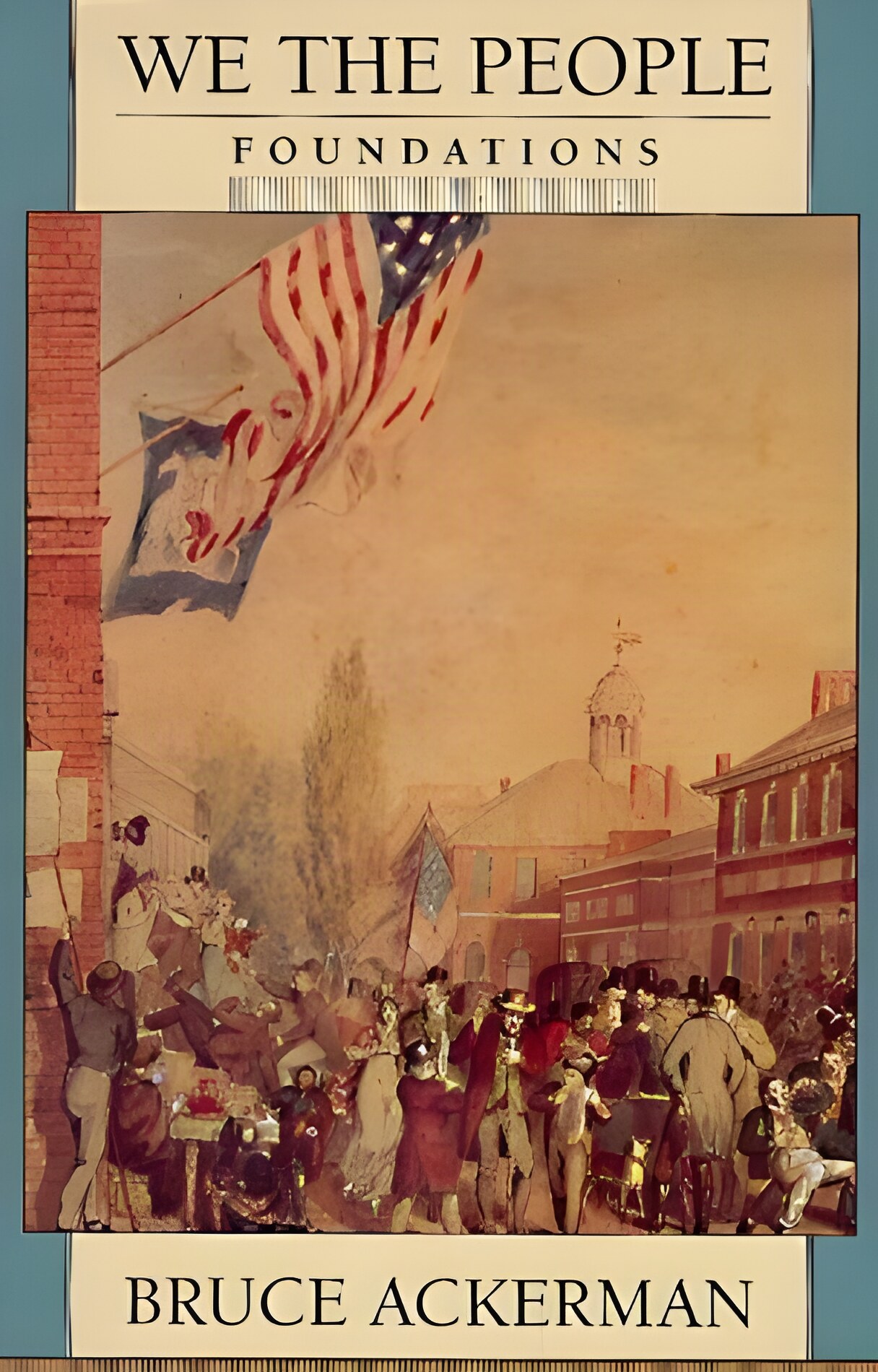
Hardcover. Cambridge MA, Harvard University Press, 1st, 1991, Book: Very Good, Dust Jacket: Very Good, Hardcover in a lightly worn dust jacket. Bruce Ackerman offers a sweeping reinterpretation of our nation's constitutional experience and its promise for the future. Integrating themes from American history, political science, and philosophy, We the People confronts the past, present, and future of popular sovereignty in America. Only this distinguished scholar could present such an insightful view of the role of the Supreme Court. Rejecting arguments of judicial activists, proceduralists, and neoconservatives, Ackerman proposes a new model of judicial interpretation that would synthesize the constitutional contributions of many generations into a coherent whole. The author ranges from examining the origins of the dualist tradition in the Federalist Papers to reflecting upon recent, historic constitutional decisions. The latest revolutions in civil rights, and the right to privacy, are integrated into the fabric of constitutionalism. Today's Constitution can best be seen as the product of three great exercises in popular sovereignty, led by the Founding Federalists in the 1780s, the Reconstruction Republicans in the 1860s, and the New Deal Democrats in the 1930s.
Softcover. Chapel Hill, University of North Carolina, reprint, 2002, Book: Very Good, Dust Jacket: None, Softcover, 378 pages. Namias shows that visual, literary, and historical accounts of the capture of Euro-Americans by Indians are commentaries on the uncertain boundaries of gender, race, and culture during the colonial Indian Wars, the American Revolution, and the Civil War. She compares the experiences and representations of male and female captives over time and on successive frontiers and examines the narratives of captives Jane McCrea, Mary Jemison, and Sarah Wakefield. Clean copy.
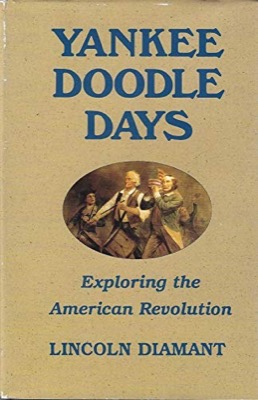
Hardcover. Fleischmanns NY, Purple Mountain Press, 1st, 1996, Book: Very Good, Dust Jacket: Very Good, Hardcover in a bright, unclipped dust jacket. 178 pages.Award-winning biographer and historian Lincoln Diamant introduces a diverse group of men and women who contributed in unique ways to the eight-year American Revolution. . . . Among them are soldiers and civilians, veteran generals and three-week militiamen, patriots and spies, a host of Native American and African-American volunteers, and more than a few courageous women. Clean copy.

 "The Warren Court and American Politicsby: Lucas A. Powe Jr.")
 "THIEVES FALL OUTby: Gore Vidal")
 "Thomas Paine and the Clarion Call for American Independenceby: Unger, Harlow Giles")

 "To Begin the World Anew: The Genius and Ambiguities of the American Foundersby: Bernard Bailyn")
 "To Make Our World Anew: A History of African Americansby: Kelley, Robin D. G./ Lewis, Earl (Editor)")
 "Tolerance, Suspicion, and Hostility: Changing U.S. Attitudes toward the Japanese Communist Movement, 1944-1947by: Oinas-Kukkonen, Henry")
 "Tom Paulding. The Story of a Search for Buried Treasure in the Streets of New Yorkby: Matthews, Brander")
 "Unfamiliar Streets: The Photographs of Richard Avedon, Charles Moore, Martha Rosler, and Philip-Lorca DiCorciaby: Bussard, Katherine A.")
 "Uniforms of the American Revolution in Colorby: McGregor, Malcolm")
 "Voyagers to the West: A Passage in the Peopling of America on the Eve of the Revolutionby: Bailyn, Bernard")