Hardcover. Westport CT, Negro Universities Press , reprint, 1970, Book: Very Good, Dust Jacket: None, Hardcover, brown cloth with gilt lettering on the spine. Originally published in 1852 this is an in depth study of the African people , both in Africa and in America. A great deal of material on slavery and the South, as well as early material on Liberia. Presented in a series of "conversations", this is an in-depth history of the African continent's peoples, the colonization of Africa, and subsequent African American slavery in the United States. Clean copy.
Hardcover. NY, St Martins Press, 1st, 1998, Book: Very Good, Dust Jacket: Very Good, Hardcover in a bright, unclipped dust jacket. 707 pages, b&w illustrations. Born in poverty, and self-educated while working in a print shop, William Lloyd Garrison was one of the United States' greatest crusading editors, putting out a weekly anti-slavery newspaper, The Liberator, for 35 years, beginning in 1831. A product of the rough and tumble political journalism of the day, Garrison wrote with extreme passion and from an uncompromising point of view. Yet the man who emerges from the pages of All on Fire is a deeply thoughtful person who, despite barely escaping lynch mobs himself, had a great sense of humor and a very polite demeanor. Historians have tended to minimize Garrison's impact on America, and some consider him a fringe character. But Henry Meyer, in this hefty biography, places Garrison at the center of his century, noting that Garrison's thought and tactics influenced not only the country's changing view of slavery, but also inspired the incipient feminist movement. The Lincoln administration noted Garrison's influence by inviting him to help raise the flag over the recaptured Fort Sumter. All on Fire goes into great detail on Garrison's life and work, providing the close and copious examination this activist's life fully deserves. Clean copy.
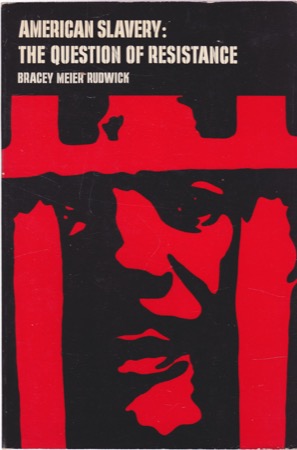
Softcover. NY, International Publishers, 7th pr., 1968, Book: Very Good, Dust Jacket: None, Softcover, 409 pages. Years ago, the controlling view held that the response of the slaves in the United States to their bondage 'was one of passivity and docility'. That opinion, so decisive a part of the chauvinism afflicting the nation, is shown to be false in this book and in the material accumulated since its initial appearance has further substantiated this thesis; namely, that the African-American people, in slavery, forged a record of discontent and of resistance comparable to that marking the history of any other oppressed people. Name on front fly leaf otherwise clean.
Softcover. Belmont CA, Wadsworth Publishing, 1st, 1971, Book: Very Good, Dust Jacket: None, Softcover, 202 pages. A collection of essays focusing on African American resistance, specifically (from the introduction) "on the nature and extent of the resistance of blacks to slavery in the United States." Name on front fly leaf, otherwise clean.
Softcover. University Park, Pennsylvania State University Press, 2nd pr., 2023, Book: Very Good, Dust Jacket: None, Softcover, 266 pages, b&w illustrations. INSCRIBED BY KELLEY on the title page. Lydia Hamilton Smith (1813-1884) was a prominent African American businesswoman in Lancaster, Pennsylvania, and the longtime housekeeper, life companion, and collaborator of the state's abolitionist congressman Thaddeus Stevens. In his biography of this remarkable woman, Mark Kelley reveals how Smith served the cause of abolition, managed Stevens's household, acquired property, and crossed racialized social boundaries. In the last years of Stevens's life, as his declining health threatened to short-circuit his work, Smith risked her own well-being to keep him alive while he led the drive to end slavery, impeach Andrew Johnson, and push for the ratification of the Thirteenth, Fourteenth, and Fifteenth Amendments. Clean copy.
Hardcover. Indianapolis/NY, Bobbs-Merrill, 1st, 1971, Book: Very Good, Dust Jacket: Good, Hardcover in a worn dust jacket, 490 pages, b&w frontis. Rush, the Philadelphia doctor who signed the Declaration of Independence, was an energetic, ambitious man given to devising reforms and, as the author puts it, meddling in politics. He studied medicine in Edinburgh and London, meeting Hume, Goldsmith, Samuel Johnson, et al. and, Hawke thinks, solidifying his republican disposition. Back in Pennsylvania he agitated for independence, made friends with John Adams, urged Paine to write Common Sense, and entered Congress. Apart from the recurrent epidemics of the age, the practice of military medicine and propaganda for resuming debt payments occupied Rush during the war; afterwards he turned to progressive education, speculated in land, fought paper money, equivocally supported the abolition of slavery, declared that tobacco is unhealthful, and boosted the Constitution before it was even written. Dust jacket chipped, faded in parts, clean internally.
Hardcover. Five Continents, 1st, 2018, Book: Very Good, Dust Jacket: None, Hardcover in pictorial boards. Born into slavery around 1853-4 on a cotton plantation in Benton, Alabama, Traylor has become one of the most important self-taught artists of the twentieth century, and certainly one of the most celebrated African-American artists, along with Thorton Dial and William Edmondson. The story of Bill Traylor's life and work is a remarkable one. It is a story that deserves attention both nationally and internationally. This publication, generously illustrated with full-page high-quality reproductions, provides a close examination of Traylor's recurrent themes, composition schemes, favored iconography, and contextual information related to the artist's biography, creative process and tools, visual environment, and artistic mindset. Each artwork is considered in a context beyond that of an isolated image and in response to one another, forming a series of intricate and consistent narratives, intriguingly cinematic in its development. The elements of Traylor's biography are the anchors of an individual mythology. Instead of merely being a basic depiction, the subject becomes a visual statement structuring Traylor's mind, bringing together hidden symbols from Kongo Vodou, Hoodoo, Southern Baptist, Freemasonry, and Blues sources, as well as layers of references: slavery, uncensored violence in the Jim Crow era, and turbulence within the black enclave known as 'Dark Town' in Montgomery, Alabama. Bilingual edition in French and English. Still in publisher's shrinkwrap.
Hardcover. NY, Amistad/HarperCollins, 3rd pr., 2005, Book: Very Good, Dust Jacket: Very Good, Hardcover in a bright, unclipped dust jacket. 540 pages, b&w illustrations, index. An important book of epic scope on America's first racially integrated, religiously-inspired political movement for change-The Underground Railroad, a movement peopled by daring heroes and heroines, and everyday folk For most, the mention of the Underground Railroad evokes images of hidden tunnels, midnight rides, and hairsbreadth escapes. Yet the Underground Railroad's epic story is much more morally complex and politically divisive than even the myths suggest. Against a backdrop of the country's westward expansion,which brought together Easterners who had engaged in slavery primarily in the abstract alongside slaveholding Southerners and their slaves, arose a clash of values that evolved into a fierce fight for nothing less than the country's soul. Beginning six decades before the Civil War, freedom-seeking blacks and pious whites worked together to save tens of thousands of lives, often at the risk of great physical danger to themselves. Not since the American Revolution had the country engaged in an act of such vast and profound civil disobedience that not only subverted federal law but also went against prevailing mores.
New York, John S. Taylor, 1st, 1836, Book: Good, Hardcover, 296 pages plus 8 pages of publisher's ads in rear. Original black boards with embossed design, gilt lettering and design with number ! on spine. Folding chart/map tipped in at page 196 with short tears. Illustrated title page. The first of three anti-slavery books published by John Taylor, a staunch abolitionist. A few brief notations on prlim pages, otherwise clean.
Softcover. Chapel Nill NC, University of North Carolina Press , 1st, 2002, Book: Very Good, Dust Jacket: None, Softcover, 419 pages. This sweeping, richly evocative study examines the origins and legacies of a flourishing captive exchange economy within and among native American and Euramerican communities throughout the Southwest Borderlands from the Spanish colonial era to the end of the nineteenth century. Indigenous and colonial traditions of capture, servitude, and kinship met and meshed in the borderlands, forming a "slave system" in which victims symbolized social wealth, performed services for their masters, and produced material goods under the threat of violence. Slave and livestock raiding and trading among Apaches, Comanches, Kiowas, Navajos, Utes, and Spaniards provided labor resources, redistributed wealth, and fostered kin connections that integrated disparate and antagonistic groups even as these practices renewed cycles of violence and warfare. Always attentive to the corrosive effects of the "slave trade" on Indian and colonial societies, the book also explores slavery's centrality in intercultural trade, alliances, and "communities of interest" among groups often antagonistic to Spanish, Mexican, and American modernizing strategies. The extension of the moral and military campaigns of the American Civil War to the Southwest in a regional "war against slavery" brought differing forms of social stability but cost local communities much of their economic vitality. Clean copy.
Softcover. Urbana IL, University of Illinois Press, 1st, 2015, Book: Very Good, Dust Jacket: None, Softcover, 295 pages, b&w illustrations. INSCRIBED BY BECK on the title page. A daughter of freed African American slaves, Daisy Turner became a living repository of history. The family narrative entrusted to her--"a well-polished artifact, an heirloom that had been carefully preserved"--began among the Yoruba in West Africa and continued with her own century and more of life. In 1983, folklorist Jane Beck began a series of interviews with Turner, then one hundred years old and still relating four generations of oral history. Beck uses Turner's storytelling to build the Turner family saga, using at its foundation the oft-repeated touchstone stories at the heart of their experiences: the abduction into slavery of Turner's African ancestors; Daisy's father Alec Turner learning to read; his return as a soldier to his former plantation to kill his former overseer; and Daisy's childhood stand against racism. Other stories re-create enslavement and her father's life in Vermont--in short, the range of life events large and small, transmitted by means so alive as to include voice inflections. Beck, at the same time, weaves in historical research and offers a folklorist's perspective on oral history and the hazards--and uses--of memory. Clean copy.
Hardcover. New York, Abbeville Press, 1st, 1985, Book: Near Fine, Dust Jacket: Near Fine, 276 pages illustrated throughout in color and b&w. Gray cloth with dark green title to spine. Pictorial dust jacket. Beautiful copy. Like new. Edward Hicks (1780-1849), itinerant Quaker preacher and painter of coaches, signs and his own pictures, viewed Paine and Spinoza as devils, considered slavery a moral but not a political issue, and abhorred the temperance movement. When not torturing himself with guilt for being an artist or for leaving his wife and children in order to preach, he produced some masterpiecesnotably The Peaceable Kingdom, whose 50 or so variants dramatize Isaiah's biblical prophecies. Fifty color plates and 100 halftones show Hicks's folk renditions of William Penn, Noah's ark, David and Jonathan, along with his pastoral landscapes.
Hardcover. 2013, Alfred A. Knopf, First Edition, 2013, Book: Very Good, Dust Jacket: Very Good, 632 pages. Hardcover. Grey & navy cloth boards with gilt titles to spine. Illustrations in bw throughout. Bright dust jacket in very good condition. Clean & unmarked.
Hardcover. NY, G.P. Putnam's Sons, 1st, 1874, Book: Very Good, Dust Jacket: None, Hardcover, 256 pages. Fold-out frontis, b&w Illustrations, very nice, clean copy. Written by "two of its teachers." Includes "Fifty Cabin and Plantation Songs" arranged by Thomas P. Fenner. Illustrated with a four-fold engraved frontispiece, depicting several of the school's buildings as seen from the water, and many other engravings. An interesting account of the school, including a brief history of Virginia and of slavery and its aftermath in that state, and one of the earliest publications of slave music.
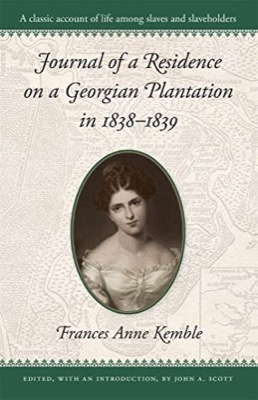
Softcover. Athens GA, University of Georgia Press, reprint, 2001, Softcover, clean, unmarked pages. 415 pages, followed by a short Index. Fanny Kemble offers a gripping, first-hand account of life on a Southern plantation before the Civil War. Combining a keen observational style with a candid narrative voice, Kemble lays bare the complexities of plantation life, including the stark realities of slavery and the socio-economic hierarchies of antebellum Georgia. The journal entries provide an intimate glimpse into the daily lives of both the enslaved and the plantation owners, reflecting her deep moral convictions and growing abolitionist sentiments against a backdrop of genteel Southern culture. Fanny Kemble, a British actress and writer, was thrust into the world of the Southern elite through her marriage to a plantation owner, which provided her with unprecedented access to the intricacies of plantation management and its social fabric.
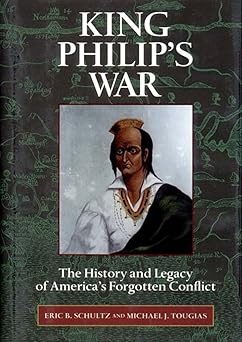
Hardcover. Woodstock VT, Countryman Press, 4th pr., 1999, Book: Very Good, Dust Jacket: Very Good, Hardcover in a bright, price-clipped dust jacket, 416 pages, b&w illustrations. Now largely forgotten, the massacres of 1675 to 1676, known as King Philip's War, ended the harmonious relations that had existed between native Americans and the colonists since their arrival at Plymouth Rock in 1620. Tensions had been rising as the number of settlers grew, and the pillaging of an outlying farm by affronted young braves escalated into open hostilities. Pitched battles were fought from Rhode Island to Maine. Hundreds of English died as farmers fled and cowered behind stockades or in the few port towns. Thousands of natives were slaughtered and the rest dispersed or sold into slavery in the West Indies. The savagery resulted in the clearing of the native populations from southern New England and the unopposed expansion of the New England colonies. It also became the brutal model on which the United States came to deal with its native peoples. King Philip's War tells the story with such close attention to detail that each ambush, each burned-out farm, becomes a vivid image. The authors make abundant use of maps and photographs of old sites to enable the reader to follow the course of the war: the book forms an exhaustive guide for the armchair historian or anyone wishing to visit the monuments and battlefields today. Clean copy.
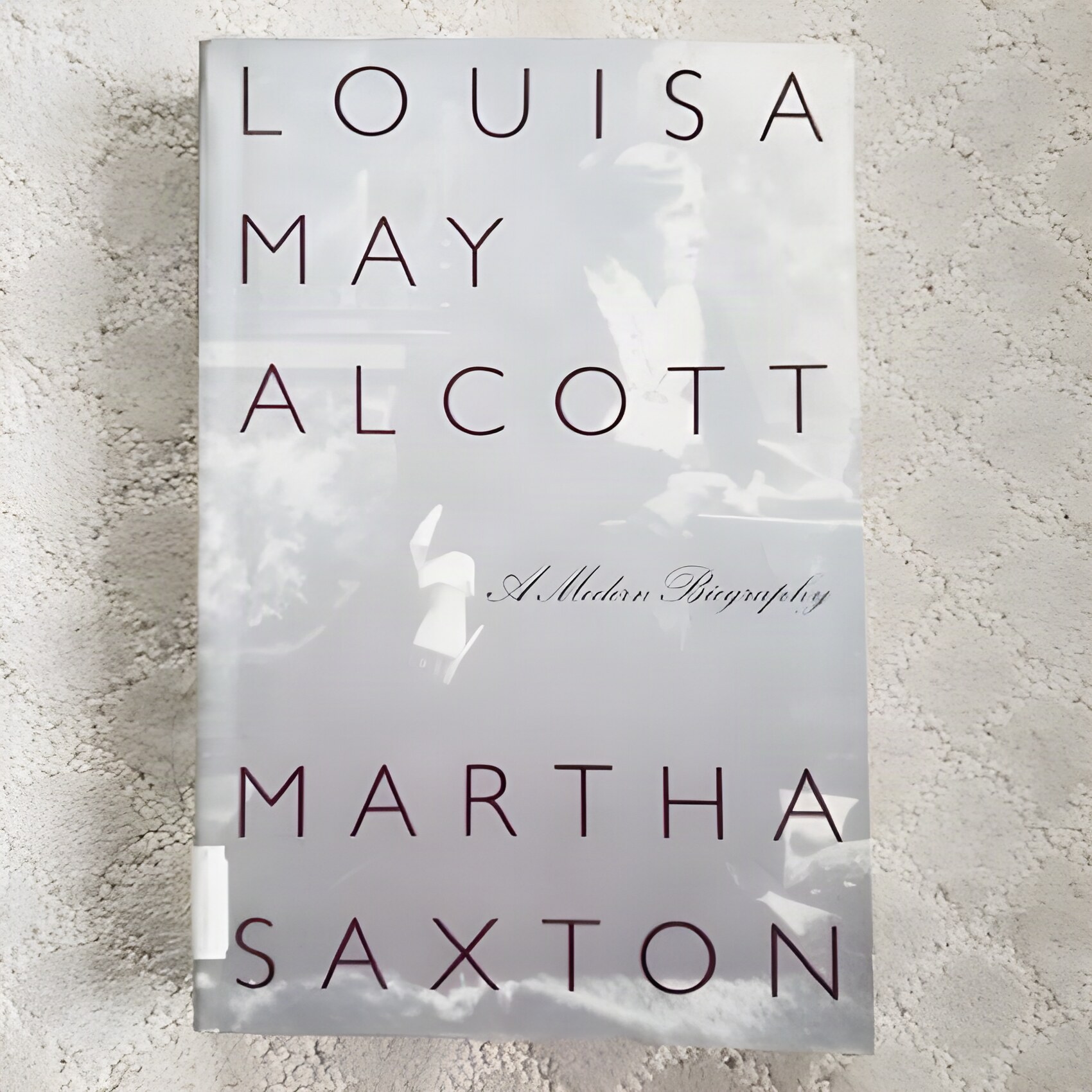
Hardcover. NY, Farrar, Straus and Giroux, Revised Ed., 1995, Book: Very Good, Dust Jacket: Very Good, Hardcover in a bright, unclipped dust jacket, 428 pages. While most readers know her only from her beloved classic Little Women and its sequels Little Men and Jo's Boys, her journey to become one of American's best known authors was full of twists and turns. Daughter of a prominent educator, her early life was filled with encounters with such notables and Henry David Thoreau, Ralph Waldo Emerson, and other prominent intellectuals of the day. But her rise to literary fame marred by poverty and war, and hindered by her unconventional ideas about slavery, women's rights and politics. Author Martha Saxton shows how her transendentalist father, activist mother, and three sisters not only influenced her world view, but became the basis for stories of the March family, beloved the world over. Clean copy.
Hardcover. NY, Knopf, 1st, 1993, Book: Very Good, Dust Jacket: Very Good, Hardcover in a bright, unclipped dust jacket. Black & white illustrations by Leo and Diane Dillon. A history of slavery in America, written for children, and focusing on those who escaped slavery and on the Underground Railroad. Includes stories of Harriet Tubman, Frederick Douglass, Josiah Henson, and others.
Softcover. Bowie MD, Heritage Books, reprint, 2001, Book: Very Good, Dust Jacket: None, Two softcover volumes 391 & 392 pages. Volumes 1 and 2 complete, a facsimile reprint of the 1897 edition by Lippincott. This two-volume series takes the reader on a journey through the colonies of Virginia, Massachusetts, Connecticut, Rhode Island, New Hampshire, Pennsylvania, New Jersey, New York, Maryland, Carolina, and Georgia. The charm of the journey is in its variety, as the reader passes through communities of such striking individuality that they assume the character of different nations. Each colony has a set of opinions and laws peculiar to itself, and it is not uncommon to find the laws of one in contradiction with the laws of another. This text explores the settlement and history of each colony prior to the American Revolution. Topics include development of the colonies' government, laws, religion, schools, boundaries, industries, layout of the cities, fashions, homes, social activities, slavery, architecture, interaction with the Indians, and customs. At least one prominent person from each colony is discussed, amongst them, William Penn of Pennsylvania, John Smith of Virginia, George Calvert of Maryland, and General Oglethorpe of Georgia. Light sunning ti spines.Clean copies.
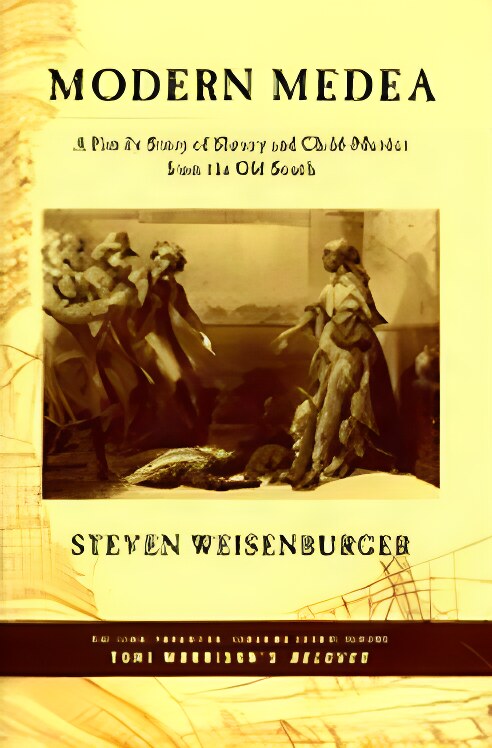
Hardcover. NY, Hill and Wang, BC Ed., 1998, Book: Very Good, Dust Jacket: Very Good, Hardcover, 352 pages, with illustrations. Minor dust jacket edge wear, otherwise, very clean and tight copy. In the middle of a frigid Sunday night in January 1856, a twenty-two-year-old Kentucky slave named Margaret Gamer gathered up her family and raced north, toward Cincinnati and freedom. But Margaret's master followed just hours behind and soon had the fugitives surrounded. Thinking all was lost, Margaret seized a butcher knife and nearly decapitated her two-year-old daughter, crying out that she would rather see her children dead than returned to slavery. She was turning on her other three children when slave catchers burst in and subdued her.Margaret Garner's child-murder electrified the United States, inspiring the longest, most spectacular fugitive-slave trial in history. Abolitionists and slaveholders fought over the meaning of the murder, and the case came to symbolize the ills of the Union in those last dark decades before the Civil War.
Hardcover. NY, Random House, 1st, 2011, Book: Very Good, Dust Jacket: Very Good, Hardcover, color illustrations by the Dillons. SIGNED BY THE DILLONS on title page.This gorgeous picture book by Newbery Honor winner Patricia C. McKissack and two-time Caldecott Medal-winning husband-and-wife team Leo and Diane Dillon is sure to become a treasured keepsake for African American families. Set in West Africa, this a lyrical story-in-verse is about a young black boy who is kidnapped and sold into slavery, and his father who is left behind to mourn the loss of his son. Here's a beautiful, powerful, truly unforgettable story about family, memory, and freedom.
Hardcover. NY, Random House, 1st, 2011, Book: Very Good, Dust Jacket: Very Good, Hardcover, color illustrations by the Dillons. SIGNED BY THE DILLONS on title page.This gorgeous picture book by Newbery Honor winner Patricia C. McKissack and two-time Caldecott Medal-winning husband-and-wife team Leo and Diane Dillon is sure to become a treasured keepsake for African American families. Set in West Africa, this a lyrical story-in-verse is about a young black boy who is kidnapped and sold into slavery, and his father who is left behind to mourn the loss of his son. Here's a beautiful, powerful, truly unforgettable story about family, memory, and freedom.
Hardcover. Columbus OH, Follett, Foster and Company, 1st, 1860, Book: Good, Dust Jacket: None, Hardcover, embossed brown cloth, 268 pages. Not first issue but an early printing with a "2" on page 13, line above publisher on copyright page, 2 leaves/4 pages of ads at front for The Life and Public Services of Abraham Lincoln and Hannibal Hamlin, The Exiles of Florida; Adela the Octoroon; then a letter from Mr. Lincoln opposite title page. Contemporary transcripts of perhaps the most consequential campaign debates in American history. While campaigning against each other for the Senate seat for Illinois, Douglas and Lincoln engaged in a series of public debates on slavery that earned nationwide attention. Lincoln and the young Republican Party capitalized on the attention, partly by having the debate transcripts published-laying the foundation for his successful presidential campaign. Page 1, 104, and 105 with pencil marking, light water stain to bottom corner of some pages, 1 X 1/4" chip to spine cloth. Otherwise clean.
Hardcover. NY, Basic Books, 1st, 1968, Book: Very Good, Dust Jacket: Very Good, Hardcover in a bright, unclipped dust jacket, 172 pages. This study examines the realities that the Free North held a substantial population who opposed the abolition of slavery, describing the history of this phenomenon and the attendant aspects of racism towards Black Americans during this period. Name on front fly leaf, otherwise clean.


 "An Uncommon Woman: The Life of Lydia Hamilton Smith (INSCRIBED COPY)by: Kelley, Mark")
 "Benjamin Rush: Revolutionary Gadfly by: David Freeman Hawke")

 "Bound for Canaan: The Underground Railroad and the War for the Soul of America by: Bordewich, Fergus")
 "Cabinet of Freedom, The: Volume 1by: Jay, William and others")


 "Daisy Turner's Kin: An African American Family Saga (INSCRIBED COPY)by: Beck, Jane C.")
 "Edward Hicks: His Life and Artby: Ford, Alice")
 "Gettysburg - The Last Invasionby: Guelzo, Allen C.")
 "Hampton and Its Students by Two of Its Teachers with 50 Cabin and Plantation Songsby: Armstrong, Mrs. M.I. and Helen W. Ludlow")
 "Many Thousand Gone: African Americans from Slavery to Freedomby: Virginia Hamilton/Leo and Diane Dillon")


 "Never Fogotten (SIGNED BY ILLUSTRATORS)by: McKissack/ Leo and Diane Dillon, Patricia")
 "Never Fogotten (SIGNED BY ILLUSTRATORS)by: McKissack/ Leo and Diane Dillon, Patricia")