Hardcover. Philadelphia, Chilton Company, 2nd pr., 1959, Book: Very Good, Dust Jacket: Very Good, Hardcver in a bright, unclipped dust jacket with $4.95 on the flap. This is the fascinating story of a naval squadron, a study in depth and in action of DesRon-23, of Arleigh Burke's tremendously significant doctrine of faith, and of the mystique which it produced to make this the greatest destroyer squadron in the history of the U. S. Navy. Included are authentic, minute-by-minute details, the scalp-tingling stories of the slashing naval battles of Tassafaronga, Savo Island, Rmpress Augusta Bay, and Cape St. George , battles fought against the Japanese in World War II. ' ... Six pages of maps. Index. Mild wear to dj, clean copy.
Hardcover. Baltimore, Johns Hopkins University Press, 1st, 1998, Book: Very Good, Dust Jacket: Very Good, Hardcover in a dust jacket with light fading to spine, 96 pages, 50 color photographs. Since the end of the Cold War, the U.S. government has been quietly focusing on how to utilize the vast tracks of land that were sequestered as munitions plants during WWII. In Joliet, Illinois, Terry Evans has photographed one such plant, and it's surrounding landscape, creating a gentle sense of irony in these beautiful color landscapes, many of which are low altitude aerial photographs. Part of the Center for American Places Series. Clean copy.
Hardcover. New York, Coward, McCann & Geoghegan, Inc. , 1st Edition, 1975, Book: Good, Dust Jacket: Fair, 510 pages. Hardcover. Decorated endpapers. Red cover boards, white quarter cloth, gilt title on spine and front cover board, agewear to covers. Dust jacket has edgewear (see image). Binding good. Spine straight. Pages unmarked. A historical narrative about WWI in the United States.
Hardcover. NY, W. W. Norton, 1st, 1967, Book: Very Good, Dust Jacket: Very Good, Hardcover in a worn, chipped dust jacket, 119 pages, maps, index. As WWII ground to a close, whose forces would be the first to reach Berlin? General Dwight David Eisenhower, supreme commander of the British and American armies, chose to halt at the Elbe River and leave Berlin to the Red Army. Could he have beaten the Russians to Berlin? If so, why didn't he? If he had, would the Berlin question have arisen? Would Germany have been divided as it was? Name on front fly leaf, otherwise clean.
Hardcover. Chicago, The Disabled Veterans of the World War, reprint, 1939, Book: Very Good, Dust Jacket: None, Two volumes complete, 496 pages total. INSCRIBED BY MACKEY on title page. Matching hardcover volumes in blue striped moire cloth boards with silvered title and ornament on front; silvered ornament on spine. No dust jackets, as issued. Both books are crisp and clean and almost as new, with barely any wear at all. Interior pages are in fine condition, with page after page of photos and maps documenting the First World War and its aftermath. Produced by the Disabled Veterans of the World War, Department of Rehabilitation. Folio. The two volumes are numbers sequentially. Volume 2 concludes with a Pronouncing Dictionary of War Names and a bibliography. Very heavy-- about 12 pounds; will require substantial additional postage if shipped outside the U.S.
Hardcover. NY, Oxford University Press, 2nd pr., 1980, Book: Very Good, Dust Jacket: Very Good, Hardcover in a bright, unclipped dust jacket, 657 pages. Robert Dallek vigorously and convincingly defends Roosevelt's foreign policy. He emphasizes how Roosevelt operated as a master politician in maintaining a national consensus for his foreign policy throughout his presidency and how he brilliantly achieved his policy and military goals. Name on half-title page otherwise a clean copy.
Hardcover. Boston, Houghton Mifflin, 1st, 1994, Book: Very Good, Dust Jacket: Very Good, Hardcover on a lightly worn dust jacket, 641 pages, b&w illustrations. This is the first full-length biography of the man historian Michael Beschloss calls the keystone figure in the history of American intelligence. Allen Dulles (1893-1969) served in the Office of Strategic Services in Europe during WWII and was named director of the Central Intelligence Agency in 1953, serving under Eisenhower and Kennedy. In an overlong, sometimes tedious narrative, Grose (Israel in the Mind of America) describes how Dulles oversaw the firm establishment of the CIA in the Washington power structure during the Eisenhower years (his older brother, John Foster Dulles, was then the Secretary of State), only to be forced out after the CIA's failure in the 1961 Bay of Pigs invasion. Later appointed to the Warren Commission to investigate the assassination of President Kennedy, Dulles became its most diligent member, according to Grose, and a supporter of the view that Lee Harvey Oswald acted alone. Other controversial issues explored include Dulles's exploitation of ex-Nazi Reinhard Gehler's spy network in the early years of the Cold War, and whether JFK authorized, or even knew about, CIA attempts to liquidate Castro. Grose delves unenlighteningly into Dulles's shortcomings as husband and father; he kept a mistress or two and spent little time at home.
Hardcover. Washington DC, Brassey's , 1st, 2003, Book: Very Good, Dust Jacket: Very Good, Hardcover in a bright, unclipped dust jacket, b&w illustrations, 293 pages. The 369th became one of the few U.S. units that American commanding general John J. Pershing agreed to let serve under French command. Donning French uniforms and taking up French rifles, the men of the 369th fought valiantly alongside French Moroccans and held one of the widest sectors on the Western Front. The entire regiment was awarded the Croix de Guerre, the French government's highest military honor. Clean copy.
Hardcover. New York, The 77th Division Association, 1st, 1919, Book: Good, Dust Jacket: None, 228 pages, hardcover. History of famed military division. Designed and written in the Field (France). Beautifully illustrated with b&w and color plates. Moderate rubbing and edgewear to boards, as well as some light soiling. Bumping to corners, slightly flayed. Spotting/yellowing to half title page and rear flyleaf. Unmarked. A tight copy.
Hardcover. New York, Allston & Depew, 1st, 1939, Book: Good, Dust Jacket: None, 184 pages, hardcover. SIGNED BY AUTHOR on front flyleaf. Illustrated blue boards. Illustrations by George R. Depew throughout. Moderate age toning to all edges. Spotting and soiling to panels, much less so to front panel. Fore and bottom edges rough-cut. Scarce. A tight copy.
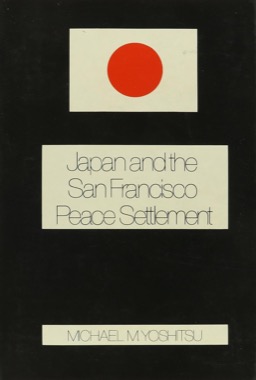
Hardcover. NY, Columbia University Press, 1st, 1983, Book: Very Good, Dust Jacket: Very Good, Hardcover in a bright dust jacket, 120 pages. This book probes the origins of Japanese-American postwar relations by looking closely at the people and the thinking that surrounded the final contract for peace.
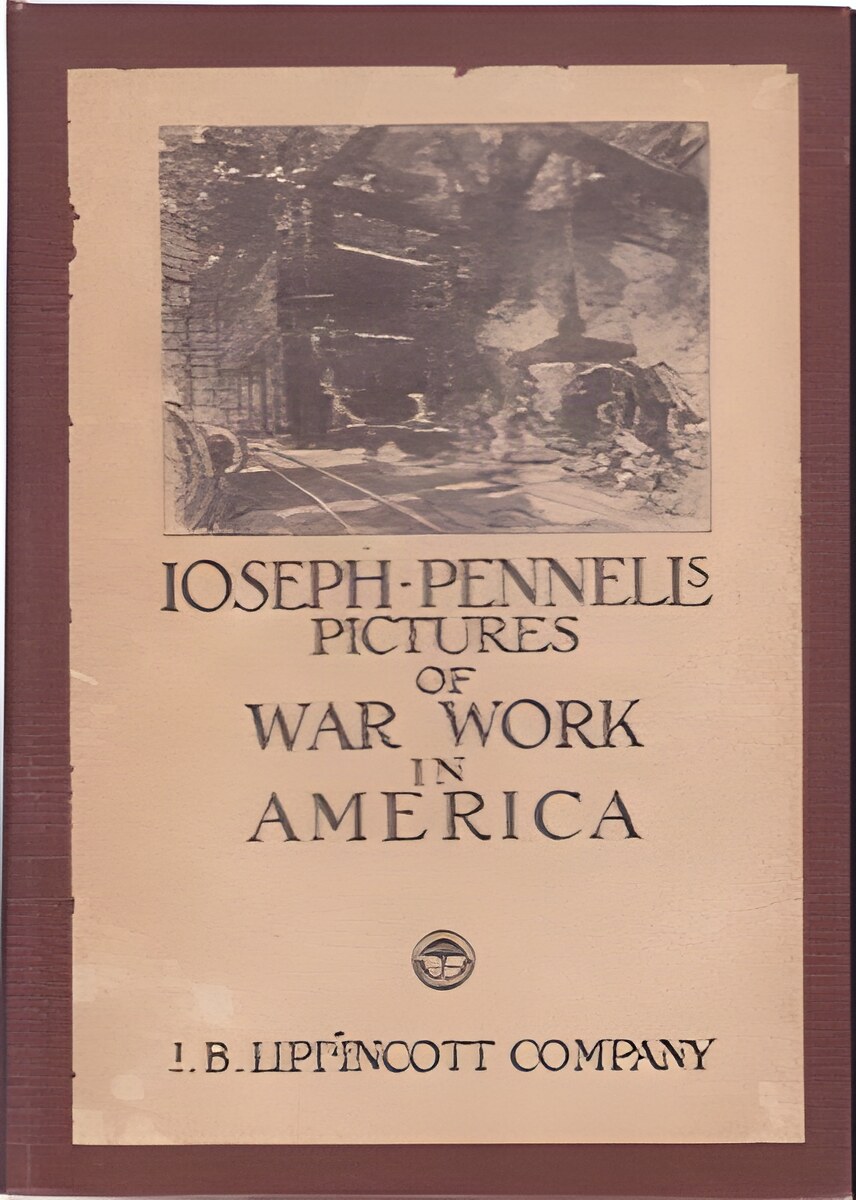
Hardcover. Philadelphia, J.B. Lippincott, 1st, 1918, Book: Very Good, Dust Jacket: None, Hardcover, brown cloth with a pastedown on front cover with title and illustration. Offers a powerful visual record of the United States' contribution to World War I. This collection of lithographs by renowned artist Joseph Pennell provides a unique glimpse into the nation's war effort, focusing on the crucial role of American industry. Previous owner's note on the front fly leaf, otherwise clean.
Hardcover. Boston, Little, Brown and Company, 1st, 1958, Book: Very Good, Dust Jacket: None, Hardcover, blue cloth with gilt lettering on spine. Volume XII in The History of United States Naval Operations in World War II. 445 pages, illustrated with maps (one fold-out) and b&w photos. Gilt on spine with light fading, light paper residue to front covers, lacks dust jacket, dj flaps pasted onto front endpapers, otherwise clean, tight copy.
Hardcover. NY, Farrar, Straus and Giroux, 1st, 1971, Hardcover in a bright dust jacket, 378 pages. From dust jacket notes: "For most Americans, the Second World War started on December 7, 1941, and much of the fighting took place in strange, faraway places. For the British, the war started on September 3, 1939, and much of the action took place in the skies over England. In the spring of 1940, after months of uneasy calm, Germany invaded the Lowlands and conquered France within a few days, leaving England without her only meaningful ally on the Continent. A year would pass before the Soviet Union was drawn into the war, and eighteen months before the Japanese attacked Pearl Harbor. The United Kingdom, with a land area about the size of Wyoming, was alone, all alone, with only the Straits of Dover separating the island from Hitler's war machine. For six years Mollie Panter-Downes covered the war for The New Yorker magazine from her native England. Even at the height of the air war over London, when 'all that is best in the good life of civilized effort appears to be slowly and painfully keeling over,' she continued to file her fortnightly reports in an understated but dramatic fashion that reflected the fortitude of her fellow countrymen: 'The announcements of the first air-raid deaths are beginning to appear in the obituary columns of the morning papers. No mention is made of the cause of death, but the conventional phrase "very suddenly" is always used.' William Shawn, editor of The New Yorker, has assembled Miss Panter-Downes' 'Letter from London' columns into a consecutive, on-the-spot chronicle of the war in England."
Hardcover. New York , Cowles, 1st, 1967, Book: Very Good, Dust Jacket: Very Good, Hardcover, 202 pages. The book consists of Saroyan's commentary on Rothstein's photographs of typical American life, and includes many of the photographer's most famous images including "Dust Storm, Cimarron County, Oklahoma." Rothstein was one of America's foremost photographers, and among many other positions, was Director of Photography for *Look* magazine. Saroyan and Rothstein were friends beginning during their G.I. service in WWII. SIGNED BY ROTHSTEIN.
Hardcover. Bloomington, IN, Indiana University Press, 1st, 2016, Book: Very Good, Dust Jacket: Very Good, 152 pages. Hardcover with dust jacket. A very clean, unmarked copy with only minor wear to dust jacket edges. A tight copy. As a photographer for Life and Fortune magazines, Margaret Bourke-White traveled to Russia in the 1930s, photographed the Nazi takeover of Czechoslovakia in 1938, and recorded the liberation of Buchenwald at the end of WWII. In 1949, Life sent her to South Africa to take photographs in a country that was becoming racially polarized by white minority rule. Life published two photo-essays highlighting Bourke-White's photographs, but much of her South African work remained unpublished until now. Here, these stunning photographs collected by Alex Lichtenstein and Rick Halpern offer an unparalleled visual record of white domination in South Africa during the early days of apartheid. In addition to these powerful and historically significant photographs, Lichtenstein and Halpern include two essays that explore Bourke-White's artistic and political formation and provide background material about the cultural, political, and economic circumstances that produced the rise and triumph of Afrikaner nationalism in South Africa. This richly illustrated book brings to light a large body of photography from a major American photographer and offers a compelling history of a reprehensible system of racial conflict and social control that Bourke-White took such pains to document.
Hardcover. NY, David McKay Company, 1st US, 1959, Book: Very Good, Dust Jacket: None, Hardcover, black cloth covers with gilt lettering on spine. Autobiography of Britain's noted forensic examiner, highlighting his work in Egypt before & after WWI, work as professor of forensic medicine at Edinburgh University, & court battles with the renowned Sir Bernard Spilsbury. Foreword by Erle Stanley Gardner (Perry Mason author). In 318 pgs + Index, with lots of black & white crime scene photos. Orig. published in Britain, this is the FIRST AMERICAN EDITION, same year (1959). Clean copy.
Hardcover. Boston, Little, Brown and Company, 4th pr., 1953, Book: Very Good, Dust Jacket: None, Hardcover, blue cloth with gilt lettering on spine. Volume VIII in The History of United States Naval Operations in World War II. 435 pages, illustrated with maps (one fold-out) and b&w photos. Gilt on spine with light fading, lacks dust jacket, Dust jacket flaps pasted on front endpapers otherwise clean, tight copy.
Softcover. New Haven CT, Yale University Press, 1st, 2009, Book: Very Good, Dust Jacket: None, Softcover, 283 pages. An examination of the pioneering Caribbean and Latin American artists who resided in New York prior to WWII and shaped the American avant-garde Between 1900 and 1942, New York City was the site of extraordinary creative exchange where artists could share ideas in a global context. The swiftly changing urban landscape before and between the World Wars inspired the erosion of artistic boundaries and fostered a new climate of modernist experimentation. Nexus New Yorkfocuses on key artists from the Caribbean and Latin America who entered into dynamic cultural and social dialogues with the American-based avant-garde and participated in the development of a new modern discourse. Featuring both celebrated and little-known figures of this period, including Carlos Enriquez, Alice Neel, Marius de Zayas, Francis Picabia, Joaquin Torres-Garcia, Jose Clemente Orozco, Matta, and Robert Motherwell, contributing authors also discuss the specific environments in which they flourished, including the Art Students League, the Siqueiros Experimental Workshop, and the New School for Social Research. A fascinating look at 20th-century modernism, this book provides the first view of the important encounters between artists of the Americas.
NY, The Press of the American Institute of Architects., 1st, 1925, Book: Good, Dust Jacket: None, Hardcover. Complete with 24 watercolor prints and 44 plates. Loosely bound in case with cloth ties which has cracking along spine. Interior very good. Number 677 of 1000. Elephant folio 23" tall. "A Series of Historical Examples from Roman Times to the End of the XVIIIth Century." An appreciation of historic French infrastructure that survived WWI. Beautiful large color reproductions of original watercolors of bridges by Pierre Vignal; 35 black and white drawings by Louis C. Rosenberg & Samuel Chamberlain; 44 measured drawings, photographs, diagrams, and maps. DUE TO SIZE & WEIGHT, DOMESTIC SHIPPING ONLY.
Hardcover. Boston, Little, Brown and Company, 1st, 1947, Book: Very Good, Dust Jacket: None, Hardcover, blue cloth with gilt lettering on spine. Volume VI in The History of United States Naval Operations in World War II. 297 pages, illustrated with maps (one fold-out) and b&w photos. This volume covers the operations of the United States Navy in North African waters, both on the Atlantic coast and in the Mediterranean, from the beginning of World War II through the capture of Pantelleria in June 1943. More than half the volume is devoted to the capture of bases in French Morocco, which was an all-American operation and in many respects one of the most remarkable of the war. Gilt on spine with light fading, lacks dust jacket, otherwise clean, tight copy.
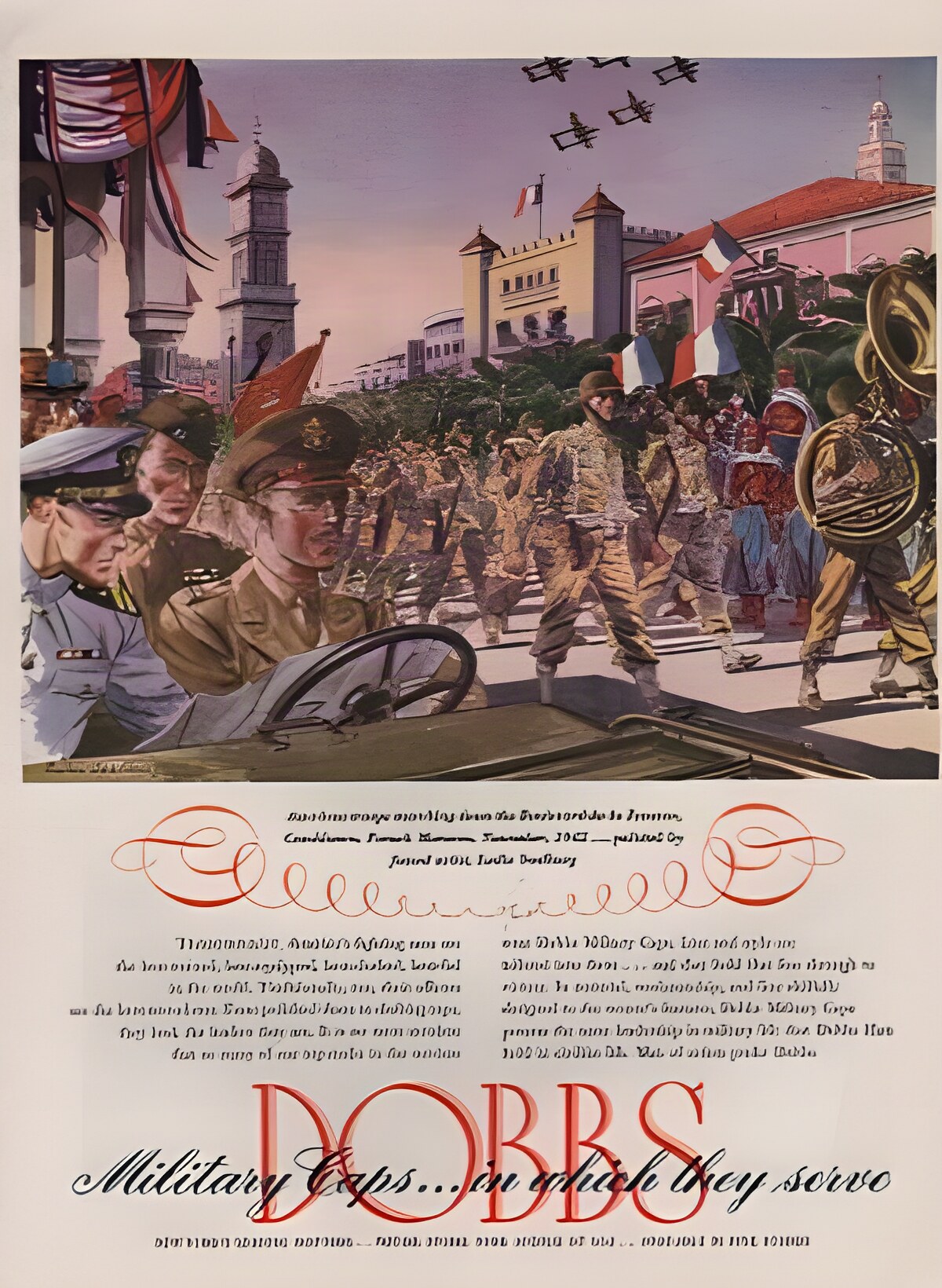
Book: Very Good, Dust Jacket: None, Art "American troops marching ... November 1942", color art by Leslie Saalburg. PLEASE NOTE: The image shown is a scan of the actual product you are purchasing. What you see is what you get. The sheet may have some imperfections beyond the cropped area shown. You are buying THIS PAGE ONLY- not the entire magazine. Your order will be placed carefully between stiff paper and an acetate overlay, then packed in a rigid cardboard sleeve to prevent bending.


 "Echoes of Distant Thunder: Life in the United states 1914-1918by: Ellis, Edward Robb")


 "Forward-March!: The Photographic Record of America in the World War and the Post War Social Upheaval (Volumes 1 and 2) SIGNED COPYby: Mackey, Frank J. and Marcus Wils")



 "Gentleman Spy: The Life of Allen Dullesby: Peter Grose")
 "Harlem's Hell Fighters: The African-American 369th Infantry in World War I by: Stephen L. Harris")
 "History of the Seventy Seventh Divisionby: Adler (Editor), Major J.O.")
 "Horrors of Moonlight (SIGNED COPY)by: Pattullo, George")
 "How to Know the Rank of a U. S. Soldierby: Paulsen, Valdemar")
 "Leyte: June 1944-January 1945 (History of United States Naval Operations in World War Ii, Volume 12)by: Morison, Samuel Eliot")
 "London War Notes 1939-1945by: Mollie Panter Downes")
 "Look at Us; Let's See; Here We Are; Look Hard, Speak Soft; I See, You See, We All See; Stop, Look, Listen; Beholder's Eye; Don't Look Now, But Isn't That You? (Us? U.S.) (SIGNED BY ROTHSTEIN)by:")
 "Margaret Bourke-White and the Dawn of Apartheidby: Lichtenstein, Alex")
 "Mostly Murderby: Smith, Sydney, Sir")
 "New Guinea and the Marianas: March 1944-August 1944 (History of United States Naval Operations in World War Ii, Volume 8) by: Morison, Samuel Eliot")
 "Nexus New York: Latin/American Artists in the Modern Metropolisby: Deborah Cullen, Antonio Saborit, et al.")
 "Old Bridges of France by: Emerson William and Georges Gromort")
 "Operations in North African Waters: October 1942-June 1943 - (History of the United States Naval Operations in World War II; Vol. 2)by: Morison, Samuel Eliot")