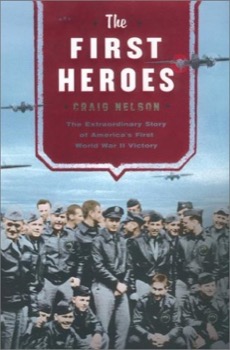
Hardcover. NY, Viking Press, 2nd pr., 2002, Book: Very Good, Dust Jacket: Very Good, Hardcover in a bright, unclipped dust jacket, 430 pages. Immediately after Japan's attack on Pearl Harbor, President Franklin D. Roosevelt sought to restore the honor of the United States with a dramatic act of a retaliatory bombing raid on Tokyo. On April 18, 1942, eighty brave young men, led by the famous daredevil Jimmy Doolittle, took off from a navy carrier in the mid-Pacific on what everyone regarded as a suicide mission but instead became a resounding American victory and helped turn the tide of the war. The First Heroes is the story of that mission. Meticulously researched and based on interviews with twenty of the surviving Tokyo Raiders, this is a true account that almost defies belief, a tremendous human drama of great personal courage, and a powerful reminder that ordinary people, when faced with extraordinary circumstances, can rise to the challenge of history. Clean copy.
Hardcover. NY, Viking, 1st, 2018, Book: Very Good, Dust Jacket: Very Good, Hardcover in a bright, unclipped dust jacket. 294 pages, b&w photos. Sam Kleiner's The Flying Tigers uncovers the hidden story of the group of young American men and women who crossed the Pacific before Pearl Harbor to risk their lives defending China. Led by legendary army pilot Claire Chennault, these men left behind an America still at peace in the summer of 1941 using false identities to travel across the Pacific to a run-down airbase in the jungles of Burma. In the wake of the disaster at Pearl Harbor this motley crew was the first group of Americans to take on the Japanese in combat, shooting down hundreds of Japanese aircraft in the skies over Burma, Thailand, and China. At a time when the Allies were being defeated across the globe, the Flying Tigers' exploits gave hope to Americans and Chinese alike. Clean copy.
Hardcover. NY, New York University Press, 1st, 2002, Book: Very Good, Dust Jacket: Very Good, Hardcover in a bright dust jacket, pages. The GI War Against Japan recounts the harrowing experiences of American soldiers in Asia and the Pacific. Based on countless diaries and letters, it sweeps across the battlefields, from the early desperate stand at Guadalcanal to the tragic sinking of the U.S.S. Indianapolis at war's very end. From the daunting spaces of the China-India theater to the fortress islands of Iwo Jima and Okinawa, Schrijvers brings to life the GIs' struggle with suffocating wilderness, devastating diseases, and Japanese soldiers who preferred death over life. Amidst the frustration and despair of this war, American soldiers abandoned themselves to an escalating rage that presaged Hiroshima and Nagasaki.
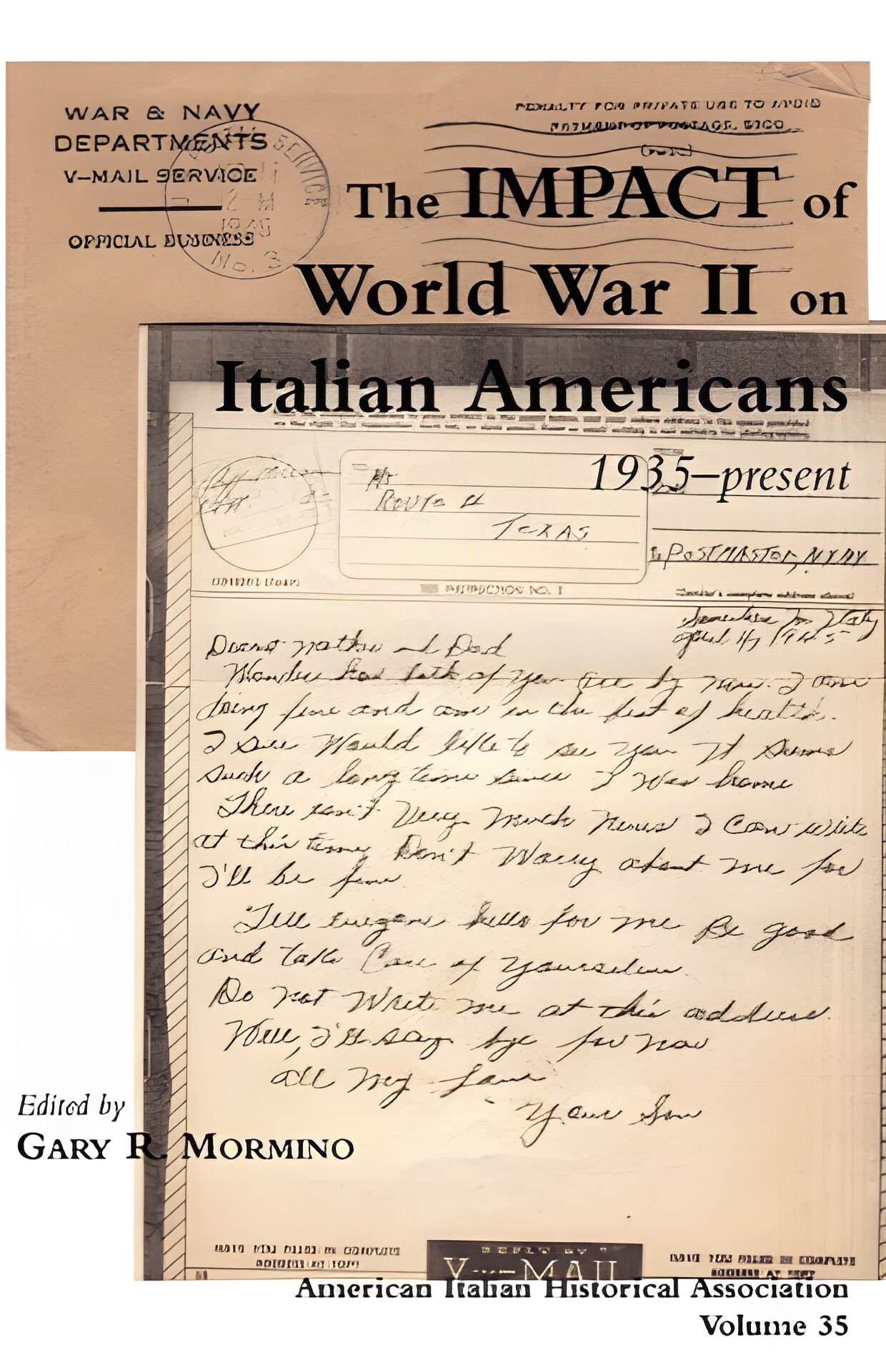
Softcover. NY, American Italian Historical Association, 1st, 2007, Book: Very Good, Dust Jacket: None, Softcover, 244 pages, 35th Conference of the American Italian Historical Association . "'Italian Americans and World War II, ' explores many facets of the dynamic period of the 1940s and the consequences of war and peace. Scholars within AIHA and outside the academy have been slow to recognize the significance of World War II, now recognized as a seminal event in Italian-American life and culture. . . . "This volume is dedicated to all Italian Americans who lived and died, fought and prayed during World War II." Clean copy.
Hardcover. Boston, Little, Brown and Company, 1st, 1957, Book: Very Good, Dust Jacket: None, Hardcover, blue cloth with gilt lettering on spine. Volume XI in The History of United States Naval Operations in World War II. 360 pages, illustrated with maps (one fold-out) and b&w photos. Gilt on spine with light fading, lacks dust jacket, dj flap copy pasted inside front cover, otherwise clean, tight copy.
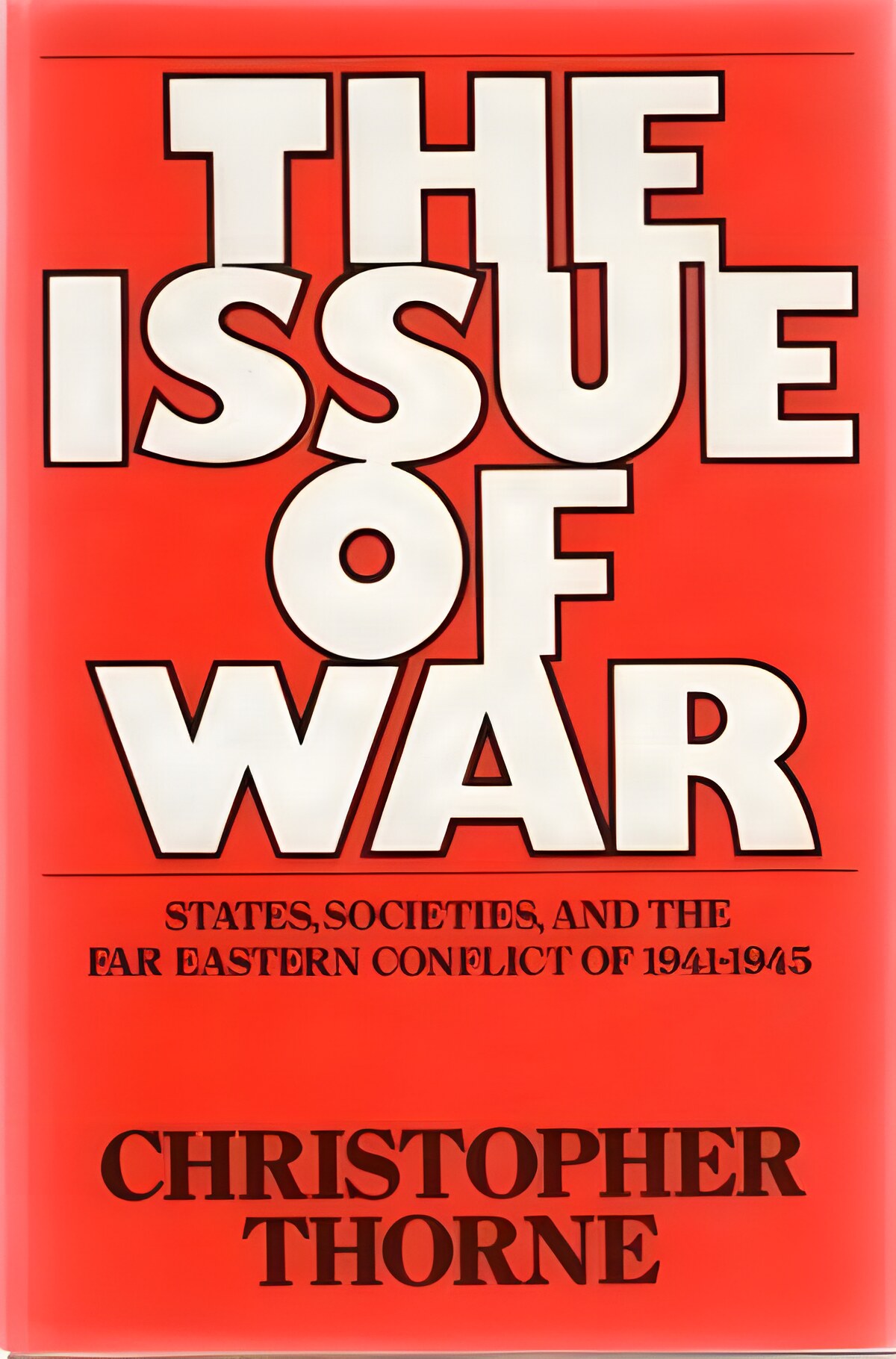
Hardcover. NY, Oxford University Press, 1st, 1985, Book: Very Good, Dust Jacket: Very Good, Hardcover in a bright, unclipped dust jacket, 364 pages. The Second World War's Pacific conflict was one of the most complex in history. It embrioled peoples from opposite sides of the globe; it was fought in China, across the expanses of the Pacific, and in the jungles of Southeast Asia; and it was devastating in its consequences for civilians and servicemen alike. It saw the first use of atomic weapons, hastened the end of the Western empires in Asia, and marked America's rise to the position of the most powerful nation in the world. Christopher Thorne, whose previous studies of the war in the Pacific have become landmarks in the field, here weaves together both the entire network of international relations surrounding the war and the impact the war had on all the societies involved--Indian as well as American; Australian and New Zealand as well as Japanese; Korean, Chinese, and Southeast Asian as well as British, French, and Dutch. The Issue of War draws on material gathered over many years in the Far East, Western Europe, and the U.S.--material including wartime films, broadcasts, and newspapers,as well as countless private and offical papers. Representing a synthesis of military, diplomatic, economic, intellectual, and social history, it not only places the war in the context of developments before 1941, but illuminates various patterns that cut across the familiar distinctions between Asia and the West or between Japan and the Allies. Name on front fly leaf, otherwise clean.
Hardcover. NY, Simon & Schuster, Book Club Ed., 1955, Book: Very Good, Dust Jacket: Good, Hardcover in a lightly worn and chipped dust jacket, 695 pages. Journal/diary kept by cabinet member Ickes during the beginning of the outbreak of WWII. He wrote of quiet changes that shifted the United States and the American people from a position of neutrality bordering on isolationism to one of deep and committed involvement with the foreign world. Name on front fly leaf otherwise clean.
Softcover. Washington DC, The Infantry Journal, reprint, 1944, Book: Very Good, Dust Jacket: None, Small softcover, 335 pages. "The primary purpose of this book is to provide a guide to the main forces, institutional and ideological, in the Nazi system." Published for the American servicemen. Name on front cover,mild wear to covers.
Hardcover. NY, The Century Co., 1st, 1917, Book: Good, Dust Jacket: None, Hardcover, green cloth stamped in gilt. 346 pages. Frontis. portrait, illustrated with b&w plates and folding facsimile documents. "Authoritative information as to how the soldiers of the Allies are transported, housed and trained, how a battle is prepared for in advance, etc. " Author observed British Postal Censorship and war, including trench-fighting, during WWI. Eric Fisher Wood, Sr. (1889 1962) was an American civil engineer, architect, author, and officer in the United States Army, retiring with the rank of Brigadier General. Book shows mild shelf wear, name and stamp to front endpapers, otherwise clean. Good plus.
Hardcover. NY, Norton, 1st US, 1985, Book: Very Good, Dust Jacket: Very Good, Hardcover in a bright dust jacket, 192 pages. The photos are breathtaking not necessarily for their quality - many are washed out and most of the subject matter is routine day to day military stuff - but for their rarity. While the Germans seem to have been at least as far advanced in the use of color photography as the Americans, there is still a paucity of color photography in the public record. That is being addressed by the various nations who took large amounts of color film in an official capacity, including the US, UK, Germany and Canada. The book's captions are adequate to the task, and there are good historical sections, as well as an introduction by Max Hastings as well as commentary by an actual German war correspondent. The strength of the book is in its ability to bring the participants of the subject campaign - the German invasion of Russia up to and including Stalingrad - to life. The use of a large format allows one to note small details of the photos, and relate to the subject matter on a personal level. Despite the lack of "action" shots, there is much to see in facial expressions, uniform details, and especially geography as the Russian steppe is shown in summer and winter, as well as the famous Russian mud (Rasputitsa) about which so much has been written.
Hardcover. Boston, Little, Brown and Company, reprint, 1950, Book: Very Good, Dust Jacket: None, Hardcover, blue cloth with gilt lettering on spine. Volume III in The History of United States Naval Operations in World War II. 411 pages, illustrated with maps and b&w photos. Gilt on spine with light fading, lacks dust jacket, otherwise clean, tight copy.
Hardcover. Boston, Little, Brown and Company, reprint, 1950, Book: Very Good, Dust Jacket: None, Hardcover, blue cloth with gilt lettering on spine. Volume V in The History of United States Naval Operations in World War II. 389 pages, illustrated with maps (one fold-out) and b&w photos. Gilt on spine with light fading, lacks dust jacket, otherwise clean, tight copy.
Hardcover. NY, E. P. Dutton, reprint, 1977, Book: Very Good, Dust Jacket: Very Good, Hardcover in a bright dust jacket. David Irving's The Trail of the Fox is the best work on Rommel ever written. The circumstances around Rommel's involvement with the attempt on Hitler's life, which is the most speculated aspect of Rommel's life, and how the Gestapo came to believe Rommel was involved, have not been made clear in most of the historiography on Rommel. Irving pieces together what really happened most effectively. There are so many strengths of this book, of which the greatest is probably the fact Irving had access to Rommel's dairy and many of his letters, which he got permission from the family to view. Other items he found in collections in the United States, England, and Germany. Since he worked on this in the 1970's he also was able to interview a number of German officers who were still alive that knew and served with Rommel. The whole work is the way historical research should be done; totally reliant on primary source material, and ignores secondary sources that often use conjecture or just repeat incorrect narratives from earlier books. Every source is from people who fought the war; Germans, Italians, British, French and American officers who were in these campaigns and had either first hand observation of Rommel or were major participants like Eisenhower, Churchill, Goebbels, etc. Clean copy.
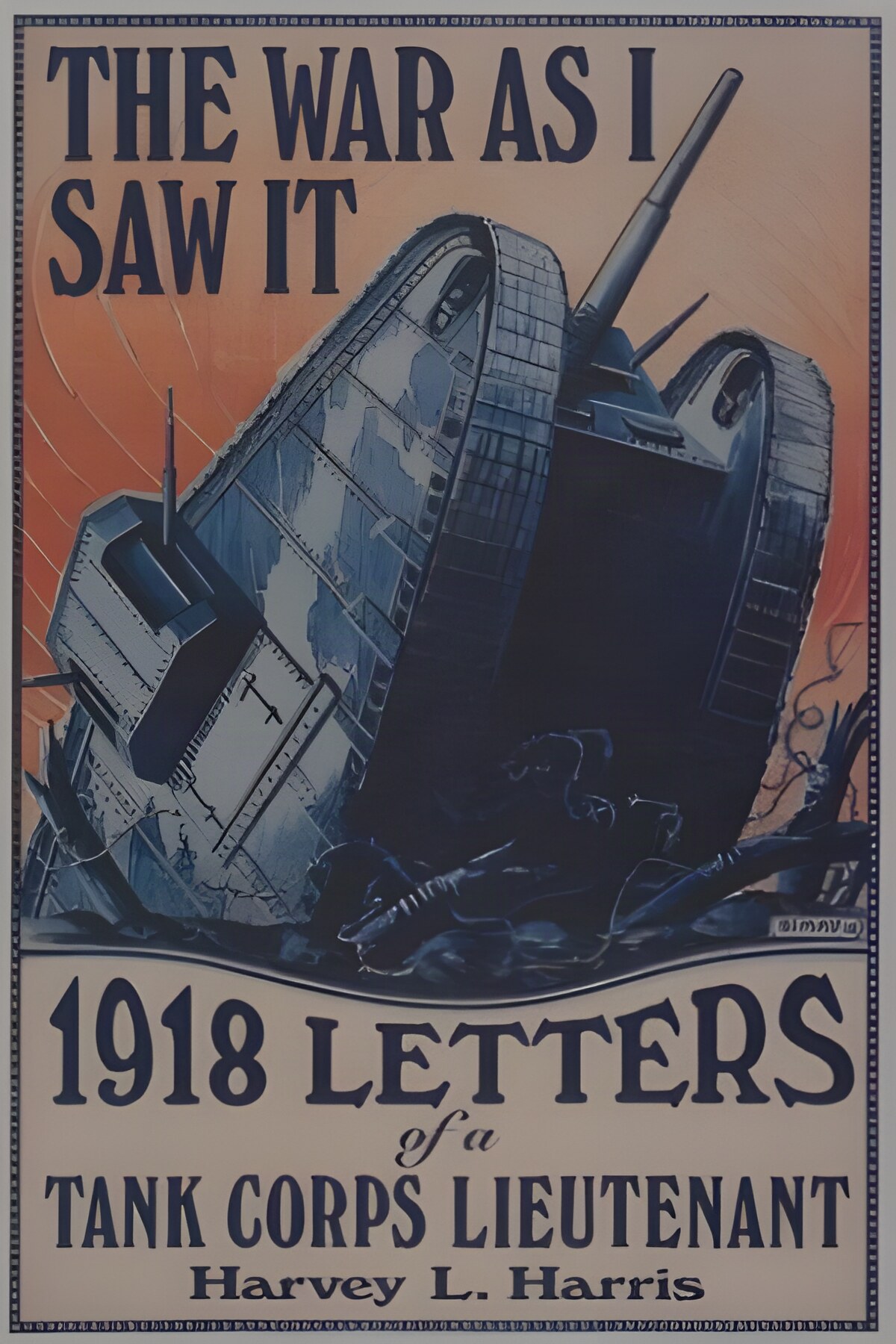
Softcover. St. Paul MN, Pogo Press, 1st, 1998, Book: Very Good, Dust Jacket: None, Softcover, 158 pages, b&w illustrations. During World War I, soldiers in the American Expeditionary Force rarely fought in the newly developed tank, and those who did manned British and French tanks since American models did not become available until after the war. Harris joined the Tank Corps because it was considered the elite unit of the ground forces and had a certain amount of romance connected with it. Initially assigned as a driving instructor, he later saw action at the St. Mihiel salient and on the Meuse-Argonne front. This book, which offers an extensive preface, summarizing Harris's life before, during, and after the war, along with some penetrating insights into his character, collects 46 letters he wrote home while in service. As they show, Harris saw war as a game not unlike the football games he played in his youth. Although he spent only 18 months in Europe, he looked upon it as a bold adventure, surviving the bad periods and enjoying the better moments. He returned from war apparently unscathed in both body and mind. The letters provide an entertaining if hardly probing portrayal of World War I from a tank officer's point of view. Clean copy.
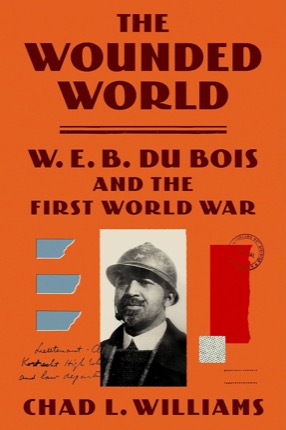
Hardcover. NY, Farrar Straus Giroux, 1st, 2023, Book: Very Good, Dust Jacket: Very Good, Hardcover in a bright, unclipped dust jacket. 530 pages, b&w illustrations. The dramatic story of W. E. B. Du Bois's reckoning with the betrayal of Black soldiers during World War I-and a new understanding of one of the great twentieth-century writers. When W. E. B. Du Bois, believing in the possibility of full citizenship and democratic change, encouraged African Americans to "close ranks" and support the Allied cause in World War I, he made a decision that would haunt him for the rest of his life. Seeking both intellectual clarity and personal atonement, for more than two decades Du Bois attempted to write the definitive history of Black participation in World War I. His book, however, remained unfinished. In The Wounded World, Chad Williams offers the dramatic account of Du Bois's failed efforts to complete what would have been one of his most significant works. The surprising story of this unpublished book offers new insight into Du Bois's struggles to reckon with both the history and the troubling memory of the war, along with the broader meanings of race and democracy for Black people in the twentieth century. Drawing on a broad range of sources, most notably Du Bois's unpublished manuscript and research materials, Williams tells a sweeping story of hope, betrayal, disillusionment, and transformation, setting into motion a fresh understanding of the life and mind of arguably the most significant scholar-activist in African American history. In uncovering what happened to Du Bois's largely forgotten book, Williams offers a captivating reminder of the importance of World War I, why it mattered to Du Bois, and why it continues to matter today. Remainder mark on top edhge, otherwise clean.
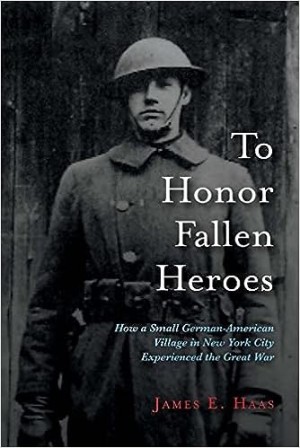
Softcover. self-published, 1st, 2017, Softcover, 238 pages, b&w illustrations. SIGNED BY AUTHOR on the title page. An historical and biographical study of the men from College Point, Queens, New York who rendered valuable service to their country in World War One. More than six hundred fifty served in the Army, the Navy, the Marine Corps and the Merchant Marine. Twenty-eight died. What gives the book its relatively unique character is that the hamlet was basically German in origin, primarily industrial, and in the late 19th and early 20th centuries, a destination place for large numbers of entertainment-seeking New Yorkers. The book includes an overview of these elements, illustrating how each played its role before, during and, to a limited extent, after the war. These subjects are woven into a detailed analysis of how College Point, and its people weathered movements and events; labor strife, anti-German sentiment, espionage, the influenza epidemic, and a host of other forces that impacted American culture in general, and their lives in particular. Also told in chronological order, and brief vignettes are the stories of the twenty-eight men who went willingly to war, and died. Clean copy.
Hardcover. NY, Simon & Schuster, 1st, 2002, Book: Very Good, Dust Jacket: Very Good, Hardcover in a bright dust jacket, 352 pages. Alfred Lee Loomis (1887-1975) made his fortune in the 1920s by investing in public utilities, but science was his first love. In 1928, he established a premier research facility in Tuxedo Park, N.Y., that attracted such brilliant minds as Einstein, Bohr and Fermi and became instrumental in the Allies' WWII victory. Conant, a magazine writer, draws on studies, family papers and interviews with Loomis's friends, family and colleagues (she's a relative of two scientists who worked with Loomis) to trace the story of the tycoon's professional and social life (the latter fairly racy). At the Tuxedo Park lab, Loomis attracted top-flight scientists who experimented with sound, time measurement and brain waves. During WWII, he established a laboratory at MIT (the "rad lab") where radar was developed. He also served as a conduit between civilian scientists and Roosevelt's military establishment. Although he lost some of his top people to the Manhattan Project, the "rad lab" was a major contributor to the allies' defense. In his well-publicized personal life, Loomis angered family members by trying to have his emotionally unstable wife institutionalized while he pursued an affair with another woman. Through Conant's spare, unobtrusive prose and well-paced storytelling, Loomis emerges as a contradictory man who craved scientific accomplishment and influence, but rarely took credit for himself.
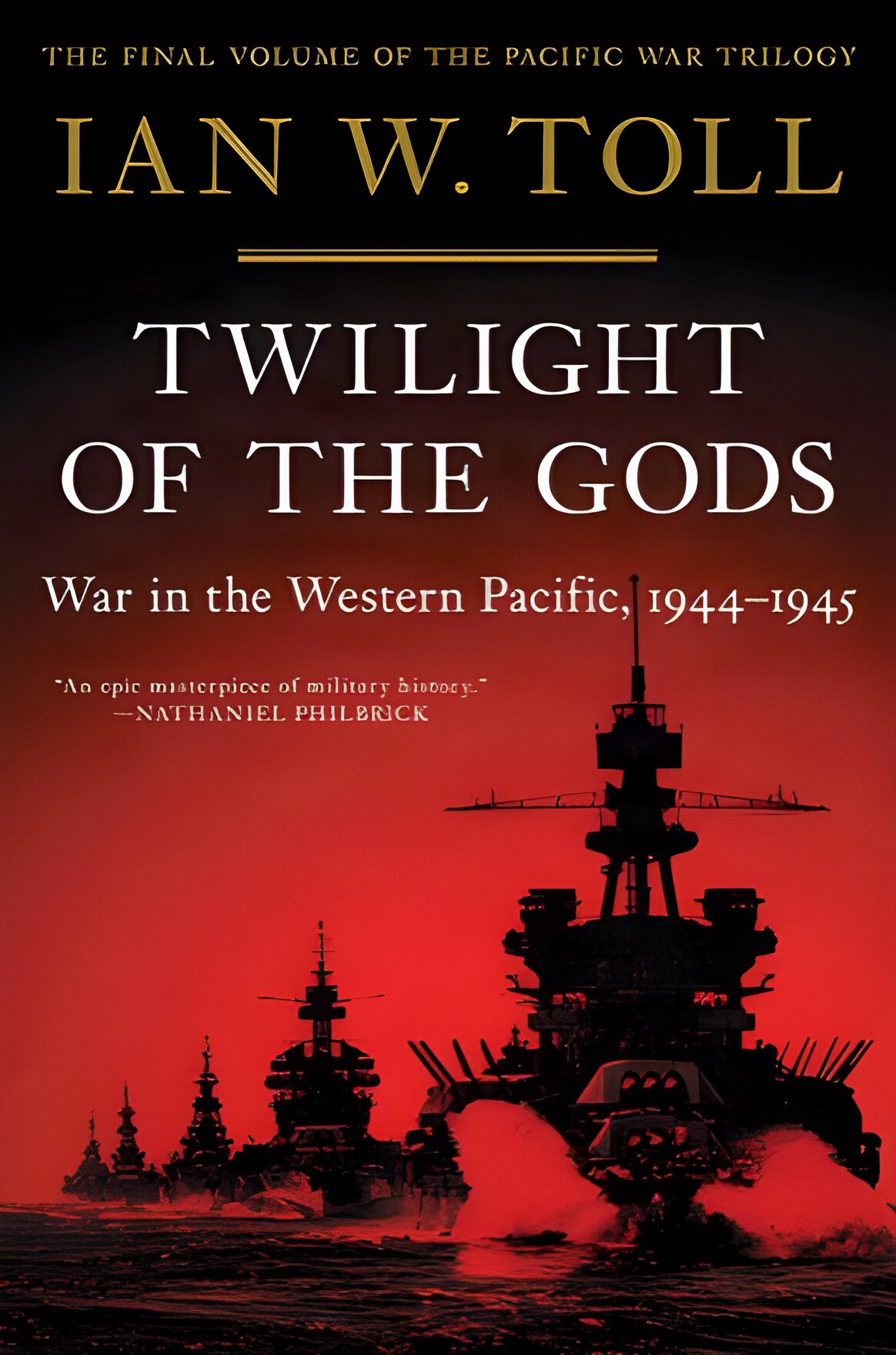
Hardcover. NY, W. W. Norton & Company, 2nd pr., 2020, Book: Very Good, Dust Jacket: Very Good, Hardcover in a bright dust jacket, 926 pages, illustrations. In June 1944, the United States launched a crushing assault on the Japanese navy in the Battle of the Philippine Sea. The capture of the Mariana Islands and the accompanying ruin of Japanese carrier airpower marked a pivotal moment in the Pacific War. No tactical masterstroke or blunder could reverse the increasingly lopsided balance of power between the two combatants. The War in the Pacific had entered its endgame. Beginning with the Honolulu Conference, when President Franklin Delano Roosevelt met with his Pacific theater commanders to plan the last phase of the campaign against Japan, Twilight of the Gods brings to life the harrowing last year of World War II in the Pacific, when the U.S. Navy won the largest naval battle in history; Douglas MacArthur made good his pledge to return to the Philippines; waves of kamikazes attacked the Allied fleets; the Japanese fought to the last man on one island after another; B-29 bombers burned down Japanese cities; and Hiroshima and Nagasaki were vaporized in atomic blasts. Ian W. Tolls narratives of combat in the air, at sea, and on the beaches are as gripping as ever, but he also reconstructs the Japanese and American home fronts and takes the reader into the halls of power in Washington and Tokyo, where the great questions of strategy and diplomacy were decided. Clean copy.
Hardcover. NY, Hurst & Company, 1st, 1916, Book: Very Good, Dust Jacket: None, 314 pages. Hardcover. Light green fabric covered boards with color decoration. Previous owner signature. Some age wear to covers: light soil, fraying. pages lightly yellow with age. In good condition.
Hardcover. Boston, Little, Brown and Company, 2nd pr., 1960, Book: Very Good, Dust Jacket: None, Hardcover, blue cloth with gilt lettering on spine. Volume XIV in The History of United States Naval Operations in World War II. 407 pages, illustrated with maps (one fold-out) and b&w photos. Gilt on spine with light fading, lacks dust jacket, dj flap pasted to inside front cover, otherwise clean, tight copy.
Hardcover. NY, Houghton Mifflin Harcourt, 1st, 2019, Book: Very Good, Dust Jacket: Very Good, Hardcover in a bright, unclipped dust jacket. Nigel Hamilton's celebrated trilogy culminates with a story of triumph and tragedy. Just as FDR was proven right by the D-day landings he had championed, so was he found to be mortally ill in the spring of 1944. He was the architect of a victorious peace that he would not live to witness. Using hitherto unpublished documents and interviews, Hamilton rewrites the famous account of World War II strategy given by Winston Churchill in his memoirs. Seventy-five years after the D-day landings we finally get to see, close-up and in dramatic detail, who was responsible for rescuing, and insisting upon, the great American-led invasion of France in June 1944, and why the invasion was led by Eisenhower. As FDR's D-day triumph turns to personal tragedy, we watch with heartbreaking compassion the course of the disease, and how, in the months left him as US commander in chief, the dying president attempted at Hawaii, Quebec, and Yalta to prepare the United Nations for an American-backed postwar world order. Now we know: even on his deathbed, FDR was the war's great visionary.
Hardcover. New Haven CT, Yale University Press, 1st thus, 1950, Book: Very Good, Dust Jacket: None, Hardcover. The Chronicles of America Vol. 54. 364 pages, b&w illustrations. Red gilt-decorated cloth, top edge gilt, no dust jacket as issued. Details the campaigns of the U.S. Armed Forces in all theaters of World War II, including Tunisia, France, Italy, the Philippines, and Guadalcanal. A very nice, tight, clean copy in excellent condition.
Hardcover. Mechanicsburg PA, Stackpole Books, 1st, 2010, Book: Very Good, Dust Jacket: Very Good, Hardcover, 227 pages, b&w photos. Light scratching to dust jacket front cover. Clean, tight copy. They shot some of the most iconic footage of World War II while risking their lives, yet the stories--and sheer guts--of the U.S. Marine Corps combat cameramen have been overshadowed by the heroism of the men with the rifles. War Shots brings these photographers into sharp focus through the career of Norm Hatch, a true American character whose skill with a camera and knack for being in the right place at the right time thrust him to the fore of the effort to record the Marines at war in the Pacific.
Hardcover. Mechanicsburg PA, Stackpole Books, 1st, 2010, Book: Very Good, Dust Jacket: Very Good, Hardcover, 227 pages, b&w photos. Light scratching to dust jacket front cover. Clean, tight copy. They shot some of the most iconic footage of World War II while risking their lives, yet the stories--and sheer guts--of the U.S. Marine Corps combat cameramen have been overshadowed by the heroism of the men with the rifles. War Shots brings these photographers into sharp focus through the career of Norm Hatch, a true American character whose skill with a camera and knack for being in the right place at the right time thrust him to the fore of the effort to record the Marines at war in the Pacific.

 "The Flying Tigers: The Untold Story of the American Pilots Who Waged a Secret War Against Japanby: Sam Kleiner")

 "The Invasion of France and Germany, 1944-1945: History of United States Naval Operations in World War II, Volume 11 by: Morison, Samuel Eliot")



 "The Onslaught: The German Drive to Stalingrad : Documented in 150 Unpublished Colour Photographs by: Heinrich Von Einsiedel")
 "The Rising Sun in Pacific, 1931-April 1942: History of United States Naval Operations in World War II, Volume 3 by: Morison, Samuel Eliot")
 "The Struggle for Guadalcanal: August 1942-February 1943 (History of United States Naval Operations in World War Ii, Volume 5) by: Morison, Samuel Eliot")
 "The Trail of the Fox: The Search for the True Field Marshal Rommel by: David Irving")



 "Two American Boys in the French War Trenchesby: Crockett, Major Sherman")
 "Victory in the Pacific 1945; History of United States Naval Operations in World War II, Volume 14 by: Morison, Samuel Eliot")
 "War And Peace: FDR's Final Odyssey: D-Day to Yalta, 1943")

 "War Shots: Norm Hatch and the U.S. Marine Corps Combat Cameramen of World War IIby: Jones, Charles")
 "War Shots: Norm Hatch and the U.S. Marine Corps Combat Cameramen of World War IIby: Jones, Charles")