Hardcover. Library of American Comics, 1st, 2014, Book: Very Good, Dust Jacket: None, Oblong hardcover, 336 pages. In Alley Oop, Hamlin created a unique concept, marrying his fascination with dinosaurs and prehistoric times to a rollicking style of storytelling and drawing that was simultaneously serious, fantastic, and loaded with slapstick. The series was set in the kingdom of Moo and starred Alley Oop, the club-wielding caveman, his girlfriend Ooola, friends Dinny the dinosaur and Foozy (who speaks in rhyme), plus Oop's rival, King Guz, and Guz's Queen Umpateedle. Yet Hamlin knew that the strip's horizons in Moo were limited. So it was, in early 1939, that Alley Oop and Ooola see a mysterious box and, to the utter amazement of Guz and his minions, promptly fade from view, followed by the caption: "Dear Reader: you must now say goodbye to Moo...if you are to follow Alley Oop in this strangest of many strange adventures. --V. T. Hamlin". Oop and Ooola had entered a time machine and were now living in the modern-day 20th Century! Their host was the inventor of the time machine, Dr. Elbert Wonmug! No change of such magnitude had ever occurred in a continuing newspaper strip, and readers responded enthusiastically. With every time period in history available as a backdrop, Alley Oop became even more popular. This volume features Oop's final Moo adventure, followed by his trips to the 20th Century and ancient Greece, where he and Ooola share adventures with brave Ulysses, the lovely Helen of Troy, and the mighty Hercules. V.T. Hamlin would send his characters everywhere and everywhen--but the classic Alley Oop begins with the stories contained in this volume. The book is introduced by Michael T. Price, who first met V. T. Hamlin in the 1960s and remained friendly with him for the rest of the cartoonist's life. Price also composed the musical score for Hip Pocket Theatre's production, Alley Oop.
Hardcover. UK, Oxford University Press, 1st, 2013, Book: Very Good, Dust Jacket: Very Good, Hardcover in a bright dust jacket, 326 pages. Lucretius' didactic masterpiece De Rerum Natura (On the Nature of Things) is one of the most brilliant and powerful poems in the Latin language, a passionate attempt at dispelling humanity's fear of death and its enslavement by false beliefs about the gods, and a detailed exposition of Epicurean atomist physics. For centuries, it has raised the question of whether it is primarily a poem or primarily a philosophical treatise, which also presents scientific doctrine. The current volume seeks to unite the three disciplinary aspects -- poetry, philosophy, and science -- in order to offer a holistic response to an important monument in cultural history. With ten original essays and an analytical introduction, the volume aims not only to combine different approaches within single covers, but to offer responses to the poem by experts from all three scholarly backgrounds. Philosophers and scholars of ancient science look closely at the artistic placement of individual words, while literary critics explore ethical matters and the contribution of Lucretius' poetry to the argument of the poem. Topics covered include death and grief, evolution and the cosmos, ethics and politics, perception, and epistemology.Name and date on front fly leaf, light pencil marking to about 25 pages.
Hardcover. Boston, Massachusetts, Harry N. Abrams, 1st, 1992, Book: Very Good, Dust Jacket: Very Good, 470 pages. Brown cloth cover, color illustrated dust jacket, 113 color and 206 illustrations. Still in original shrink wrap; book in excellent condition. American artists have been inspired by Italy since the 1760s, when Benjamin West, the first American painter to travel there, was drawn to the ancient Roman ruins and magnificent Renaissance architecture, statuary, and frescoes. This intriguing, superbly illustrated book is the first to explore the fascination Italy held for the American artist from West's time to the eve of World War I.The unique sense of the past found in Italy, where tangible evidence exists of a continual civilization from antiquity to the present, lured countless American artists to its cities, towns, and countryside. Painters from West and Copley in the eighteenth century to Cole, Inness, Whistler, Sargent, and Prendergast in the nineteenth century were inspired to create many of their finest works in Italy, as were American sculptors such as Hiram Powers and Harriet Hosmer and writers from Washington Irving to Henry James. This in-depth study includes 319 illustrations, of which 113 are reproduced in full color, many of works that have not previously been published. Theodore E. Stebbins, Jr., John Moors Cabot Curator of American Paintings at the Museum of Fine Arts, Boston, and Professor of Art History at Boston University, provides a broad overview of the American perception of Italy and the unique role that Italy played in the formation of American art.
Hardcover. Boston, Massachusetts, Harry N. Abrams, 1st, 1992, Book: Very Good, Dust Jacket: Very Good, 470 pages. Brown cloth cover, color illustrated dust jacket, 113 color and 206 illustrations. Still in original shrink wrap; book in excellent condition. American artists have been inspired by Italy since the 1760s, when Benjamin West, the first American painter to travel there, was drawn to the ancient Roman ruins and magnificent Renaissance architecture, statuary, and frescoes. This intriguing, superbly illustrated book is the first to explore the fascination Italy held for the American artist from West's time to the eve of World War I.The unique sense of the past found in Italy, where tangible evidence exists of a continual civilization from antiquity to the present, lured countless American artists to its cities, towns, and countryside. Painters from West and Copley in the eighteenth century to Cole, Inness, Whistler, Sargent, and Prendergast in the nineteenth century were inspired to create many of their finest works in Italy, as were American sculptors such as Hiram Powers and Harriet Hosmer and writers from Washington Irving to Henry James. This in-depth study includes 319 illustrations, of which 113 are reproduced in full color, many of works that have not previously been published. Theodore E. Stebbins, Jr., John Moors Cabot Curator of American Paintings at the Museum of Fine Arts, Boston, and Professor of Art History at Boston University, provides a broad overview of the American perception of Italy and the unique role that Italy played in the formation of American art.
Softcover. Tuscaloosa, University of Alabama Press, 1st, 1999, Book: Very Good, Dust Jacket: None, Softcover. This collection of Ford's works focuses on the development of ceramic chronology-a key tool in Americanist archaeology. When James Ford began archaeological fieldwork in 1927, scholars divided time simply into prehistory and history. Though certainly influenced by his colleagues, Ford devoted his life to establishing a chronology for prehistory based on ceramic types, and today he deserves credit for bringing chronological order to the vast archaeological record of the Mississippi Valley. This book collects Ford's seminal writings showing the importance of pottery styles in dating sites, population movements, and cultures. These works defined the development of ceramic chronology that culminated in the major volume Archaeological Survey in the Lower Mississippi Alluvial Valley, 1940-1947, which Ford wrote with Philip Phillips and James B. Griffin. In addition to Ford's early writings, the collection includes articles written with Griffin and Gordon Willey, as well as other key papers by Henry Collins and Fred Kniffen. Clean copy in publisher's shrinkwrap.
Hardcover. Limpsfield UK, Paper Tiger, 1st, 1981, Book: Very Good, Dust Jacket: Very Good, Hardcover in a bright, price-clipped dust jacket, 70 pages. 30 fables collected by the mysterious Marie de France, lavishly illustrated by Jason Carter and with new translations from original manuscripts. Carter's ancient-look, colorful artwork adds to the appeal. (The publisher has added `pre-foxed' pages.) Three of the tales are : The Bitch and Her Litter, The King of the Frogs, and The Crow Who Found Peacock Feathers. Each has an attached moral. Previous owner's inscription on front fly leaf, otherwise clean.
Softcover. Cincinnati OH, Contemporary Art Center, 1st, 1987, Book: Very Good, Dust Jacket: None, Softcover, 102 pages, b&w and color illustrations. Very light edge wear, else a clean, tight copy. Publication documenting renowned post-modern architect Michael Graves and the summer pavilion for the Cincinnati Symphony Orchestra. Written by architecture historian and critic Jayne Merkel, the book begins with a history of other outdoor music structures and the decision to build on the river site. Merkel discusses Graves' development as a leader of the post-modern movement and draws upon his sources in ancient amphitheaters, as well as his other structures in Portland, Louisville, and San Juan Capistrano. The book also includes an in-depth interview with Graves and a chapter on the "state of the art" acoustics and the collaboration between architect Graves and artist Ted Schmidt which resulted in the unique cut-out sculptures adorning the roof line of Riverbend.
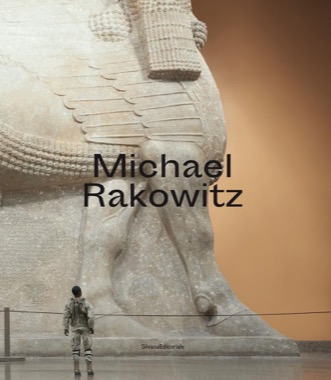
Hardcover. Milan, Silvana Editoriale, 1st, 2020, Book: Very Good, Dust Jacket: Very Good, Hardcover in a bright dust jacket. Iraqi-American artist Michael Rakowitz's (b. 1973, USA) first major European survey presents a sequence of installations drawing on architecture, cultural artifacts and cuisine to tell stories of social ritual, conflict and loss. It encompasses work considering the citizen visionaries of post Soviet Hungary, Middle Eastern Beatles fans and the stonecarvers of Afghanistan, with Rakowitz's casts of players and objects revealing the legacy of colonization, modernism and globalism. The artist's life-size replica of the gigantic lamassu, one of two monumental winged bulls that once guarded the gates of Nineveh in Iraq, currently features on Trafalgar Square's Fourth Plinth. This recreation of an ancient mythological creature is made from everyday date syrup cans and is part of an epic endeavour to recreate all 7,000 objects looted from the Iraq Museum in 2003, as well as those destroyed more recently at archaeological sites like Nimrud, also presented here. Text in English and Italian. Short closed tear to dj corner. otherwise like new. DOMESTIC SHIPPING ONLY.
Hardcover. Washington D. C, National Geographic Society, 1st, 1930, Book: Very Good, Dust Jacket: None, Original magazines January - June 1930, in a green hardcover cloth binding. Magazines are dated and paged, with photographs and maps, but do not have covers, advertisements, etc. Several pages of color plates. 784 pages, 2 color maps. Numerous articles including: 'Seeking the Mountains of Mystery' by Joseph F. Rock; 'Among the Hill Tribes of Sumatra by W. Robert Moore; 'Hunting for Plants in the Canary Islands' by David Fairchild; and 'New Light on Ancient Ur' by M.E. L. Mallowan. Clean, bright volume.
Hardcover. Marg Foundation , 1st, 2011, Book: Very Good, Dust Jacket: Very Good, Hardcover, 128 pages. Various expressions of art manifested through painting, sculpture, architecture, dance, and even drama, issues of nostalgia and modernity are juxtaposed to examine the art of Nepal from new viewpoints. The style of art we call Nepali is produced by the Newars, the original inhabitants of the Kathmandu Valley, who shaped it from ancient to modern times. The present volume celebrates various artistic expressions of the Newars as well as other ethnic groups that have contributed to the rich cultural heritage of the country. Various traditions, including the Kumari cult and street theater are illustrated along with contemporary art and architecture.
Softcover. Bloomington IN, Indiana University Press, reprint, 1995, Book: Very Good, Dust Jacket: None, Softcover in pictorial wrappers, 852 pages. The life and art, the folklore, history, and common work of a rural community in Northern Ireland-through the eyes and pen of gifted folklorist Henry Glassie. Glassie regards the people of Ballymenone with respect and affection, allowing them to describe their ideas, life-ways, and values on their own terms, not his. Recognizing that theirs is a mindset and lifestyle that must be seen as an integrated whole, Glassie studies everything about Ballymenone from traditional songs to entertainment to religious beliefs to architecture, liberally quoting from the people who welcomed him into their homes over his extended stays. Some of his insights are pure brilliance, such as recognizing the way the poets and storytellers of a rural Irish district have adapted ancient Gaelic metrics to the English they use today. You will learn more about Ireland and its people in this one book than in a host of others. Clean copy.
Hardcover. Cambridge MA, Harvard University Press, 1st, 2001, Book: Very Good, Dust Jacket: Very Good, Hardcover in a very good dust jacket with light fading to spine, 342 pages. The Platonic Theology is a visionary work and the philosophical masterpiece of Marsilio Ficino (1433-1499), the Florentine scholar-philosopher-magus who was largely responsible for the Renaissance revival of Plato. A student of the Neoplatonic schools of Plotinus and Proclus, he was committed to reconciling Platonism with Christianity, in the hope that such a reconciliation would initiate a spiritual revival and return of the golden age. His Platonic evangelizing was eminently successful and widely influential, and his Platonic Theology, translated into English for the first time in this edition, is one of the keys to understanding the art, thought, culture, and spirituality of the Renaissance.
Hardcover. Cambridge MA, Harvard University Press, 1st, 2002, Book: Very Good, Dust Jacket: Good, Hardcover in a dust jacket with fading to spine and front cover, 397 pages. The Platonic Theology is a visionary work and the philosophical masterpiece of Marsilio Ficino (1433-1499), the Florentine scholar-philosopher-magus who was largely responsible for the Renaissance revival of Plato. A student of the Neoplatonic schools of Plotinus and Proclus, he was committed to reconciling Platonism with Christianity, in the hope that such a reconciliation would initiate a spiritual revival and return of the golden age. His Platonic evangelizing was eminently successful and widely influential, and his Platonic Theology, translated into English for the first time in this edition, is one of the keys to understanding the art, thought, culture, and spirituality of the Renaissance. Clean copy.
Hardcover. Cambridge MA, Harvard University Press, 1st, 2003, Book: Very Good, Dust Jacket: Very Good, Hardcover in a very good dust jacket with light fading to spine, 362 pages. The Platonic Theology is a visionary work and the philosophical masterpiece of Marsilio Ficino (1433-1499), the Florentine scholar-philosopher-magus who was largely responsible for the Renaissance revival of Plato. A student of the Neoplatonic schools of Plotinus and Proclus, he was committed to reconciling Platonism with Christianity, in the hope that such a reconciliation would initiate a spiritual revival and return of the golden age. His Platonic evangelizing was eminently successful and widely influential, and his Platonic Theology, translated into English for the first time in this edition, is one of the keys to understanding the art, thought, culture, and spirituality of the Renaissance. Name on front fly leaf otherwise clean.
Hardcover. New York , Phaidon, 1st, 1957, Book: Very Good, Dust Jacket: Very Good, Hardcover, 286 pages, original rust colored cloth with gilt design. 270 illustrations, many in color including fold-out plates. Tipped-in color frontispiece, endpaper maps and charts in rear. Clear acetate dust jacket in very good condition. Slipcase is worn and cracked.
Hardcover. US, Prestel USA, 1st, 2012, Book: Very Good, Dust Jacket: Very Good, 264 pages. Hardcover in slipcase. Like new in publisher's shrink-wrap. This elegant volume is the first comprehensive published study in English of the finely carved wooden covers designed to protect fragile Tibetan Buddhist texts. From the 11th through 14th centuries, Tibetan monks worked tirelessly to transcribe the life and teachings of the Buddha onto paper. Highly skilled craftsmen then covered these pages with wooden boards that had been elaborately and painstakingly carved, gilded, and painted. The MacLean Collection, based in Chicago, has significant holdings of these extremely rare and ornately decorated objects. The first and most comprehensive of its kind, this lavishly produced, oversize volume features numerous illustrations of magnificent book covers from Tibet as well as several examples from other cultures. The volume tells the fascinating history of these objects, examines the materials from which they were carved, and traces stylistic influences from Kashmir, India, Nepal, and China.
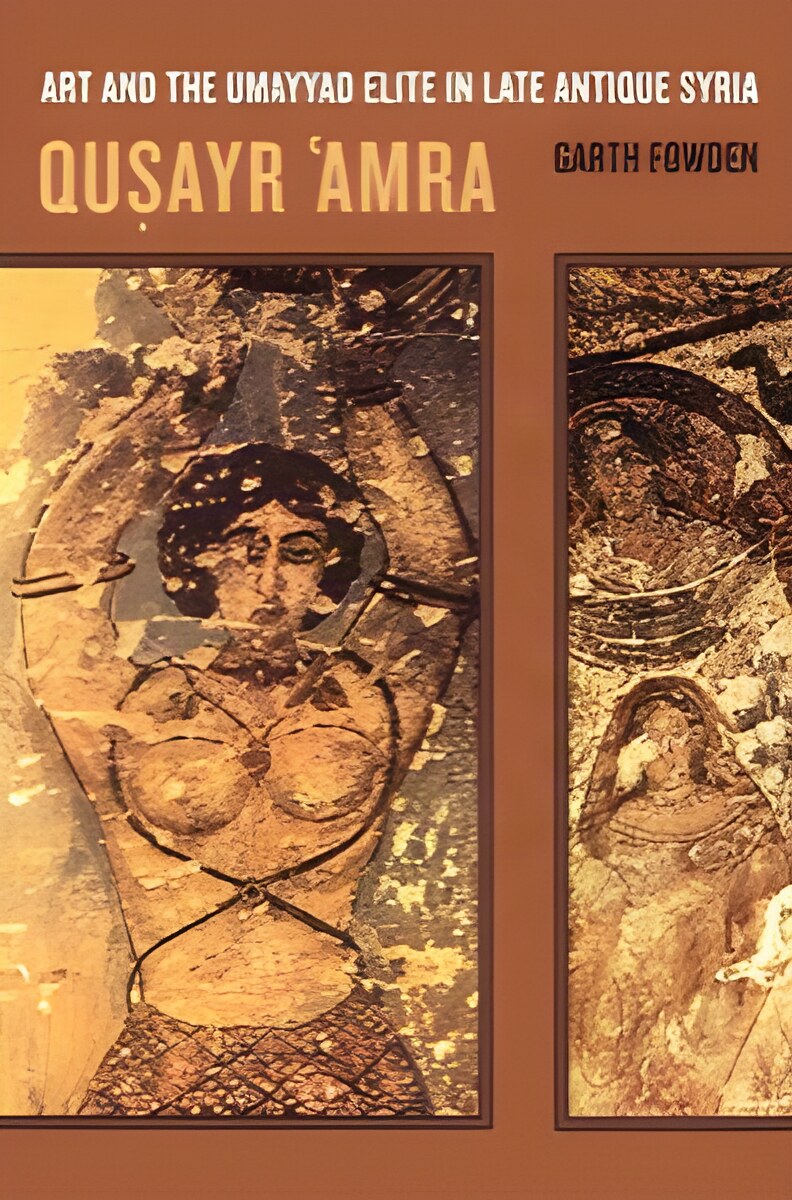
Hardcover. Berkeley, University of California Press, 1st, 2004, Book: Very Good, Dust Jacket: Very Good, Hardcover in a bright dust jacket, 390 pages, b&w illustrations. From the stony desolation of Jordan's desert, it is but a step through a doorway into the bath house of the Qusayr 'Amra hunting lodge. Inside, multicolored frescoes depict scenes from courtly life and the hunt, along with musicians, dancing girls, and naked bathing women. The traveler is transported to the luxurious and erotic world of a mid-eighth-century Muslim Arab prince. For scholars, though, Qusayr 'Amra, probably painted in the 730s or 740s, has proved a mirage, its concreteness dissolved by doubts about date, patron, and meaning. This is the first book-length contextualization of the mysterious monument through a compelling analysis of its iconography and of the literary sources for the Umayyad period. It illuminates not only the way of life of the early Muslim elite but also the long afterglow of late antique Syria. Clean copy.
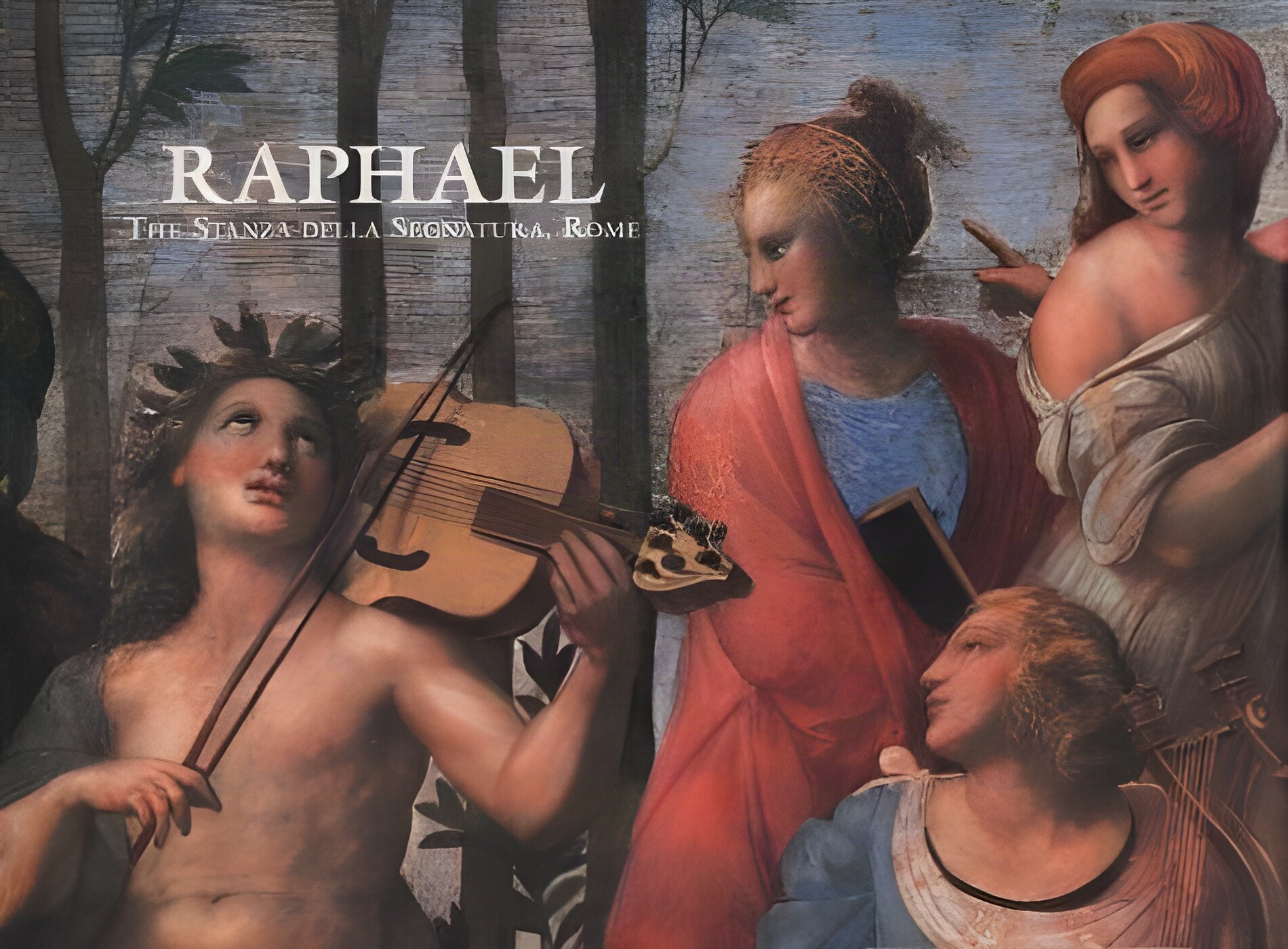
Hardcover. NY, George Braziller , 1st, 1993, Book: Very Good, Dust Jacket: Very Good, Hardcover in a bright dust jacket, 95 pages. Oblong format. 33 color plates of the artist's fresco in the Vatican. Other b&w illustrations. Recognizing the precocious talent of Raphael, then age twenty-six, Pope Julius II commissioned the artist in 1509 to paint four monumental murals and numerous smaller scenes that gave visual form to the enlightened world of the Renaissance. Guided by the leading scholars of his day, Raphael chose themes that glorified the four branches of learning required for a general education, particularly that of a pope: Theology, Poetry, Jurisprudence, and Philosophy. The painting of the latter, perhaps best known today as "The School of Athens," shows Plato and Aristotle striding through a vast, open hallway and flanked by scientists and philosophers of the ancient world; rediscovered in the Renaissance, they hold a convention where they discuss issues that will inspire a new age. Short inscription on front fly leaf, otherwise clean.
Hardcover. NY, Asia Society, 1st, 1975, Book: Very Good, Dust Jacket: Good, Hardcover, 121 pages, illustrated in b&w, some color. Dust with light edgewear, minor fade to spine. Previous owner's embossed stamp on front fly leaf. Errata pamphlet laid in.
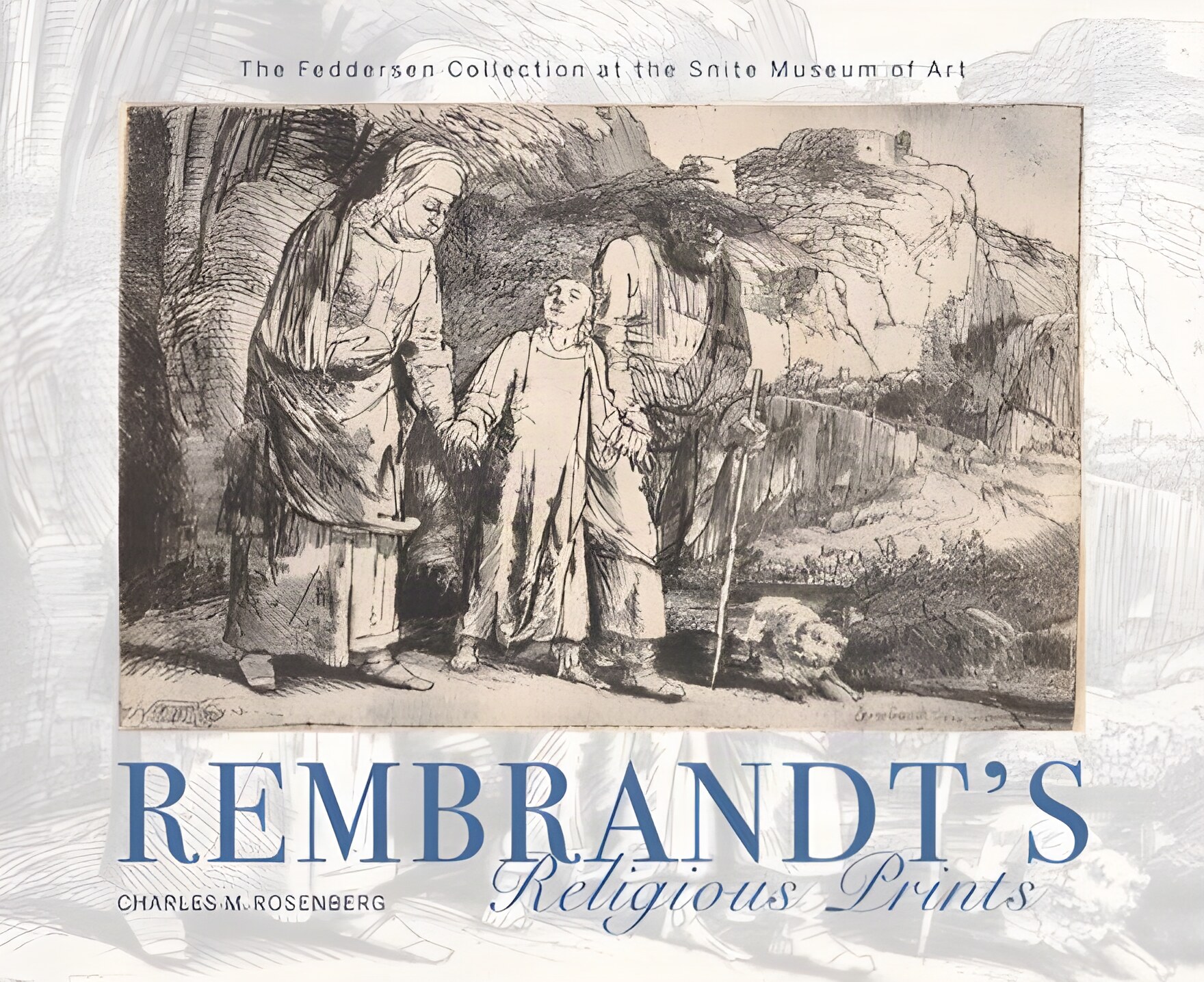
Hardcover. Indiana University Press, 1st, 2017, Book: Very Good, Dust Jacket: Very Good, Hardcover in a bright dust jacket, 475 pages. Rembrandt's stunning religious prints stand as evidence of the Dutch master's extraordinary skill as a technician and as a testament to his genius as a teller of tales. Here, several virtually unknown etchings, collected by the Feddersen family and now preserved for the ages at the University of Notre Dame, are made widely available in a lavishly illustrated volume. Building on the contributions of earlier Rembrandt scholars, noted art historian Charles M. Rosenberg illuminates each of the 70 religious prints through detailed background information on the artist's career as well as the historical, religious, and artistic impulses informing their creation. Readers will enjoy an impression of the earliest work, The Circumcision (1625-26); the famous Hundred Guilder Print; the enigmatic eighth state of Christ Presented to the People; one of a handful of examples of the very rare final posthumous state of The Three Crosses; and an impression and counterproof of The Triumph of Mordecai. From the joyous epiphany of the coming of the Messiah to the anguish of the betrayal of a father (Jacob) by his children, from choirs of angels waiting to receive the Virgin into heaven to the dog who defecates in the road by an ancient inn (The Good Samaritan), Rembrandt's etchings offer a window into the nature of faith, aspiration, and human experience, ranging from the ecstatically divine to the worldly and mundane. Ultimately, these prints? modest, intimate, fragile objects?are great works of art which, like all masterpieces, reward us with fresh insights and discoveries at each new encounter. Clean copy.
Hardcover. London, VIVAYS, 1st, 2012, Book: Very Good, Dust Jacket: Very Good, 200 pages. Hardcover with dust jacket. Like new in publisher's shrink-wrap. "This volume, based on rarely seen Russian archives, traces the history of the silent film poster in Russia, starting with a poster designed by Paul Assaturov ("Stenka Razin", 1908) in the style of ancient naive Russian imagery to the latest advertise- ment for a silent movie by Yuri Pimenov from 1934. Full-page reproductions of 161 Russian silent film posters are presented here in chronological order - from the very beginning of the 20th century until the 1930s.
Hardcover. Chicago, University of Chicago Press, 1st, 2005, Book: Very Good, Dust Jacket: Very Good, Hardcover, 284 pages. In Rustic Cubism, Bruce Adams tells the fascinating story of Moly-Sabata, an art colony founded in the Rhone Valley during the height of French modernism by Cubist pioneer Albert Gleizes. Following his social and spiritual agenda of earthly labor and a Celtic-medievalist view of Christianity, Gleizes' disciples worked to fuse Cubism with a revival of ancient agrarian, artisanal traditions. The most important and committed member of this experimental commune was ceramicist Anne Dangar (1885-1951). Generously illustrated with photographs of the art and social milieu of the period, this captivating and original narrative makes a considerable contribution to our understanding of French modernism and early twentieth-century cultural politics as well as of the life of a most talented and intriguing female artist.
Hardcover. Editions Dromadaire, 1st, 1992, Book: Very Good, Dust Jacket: Very Good, Hardcover in a bright dust jacket, 140 pages with b&w photos. Gomot was a local photographer in the ancient and picturesque French village of Saint Paul. The town became a favored vacation spot for artists, movie personalities and other celebrities in the 1950s and 60s. Many French stars like Simone Signoret, Jean BelMondo, as well as other film stars like Sophia Loren, David Niven, Kirk Douglas and Paul Newman are pictured drinking, eating and dancing at local gathering spots.Text in French and English. Clean copy. Limited to 3000 copies.
Softcover. NY/Oxford, Osprey Publishing, 1st, 2005, Book: Very Good, Dust Jacket: None, Softcover, 64 pages illustrated in color and b&w. An unrivaled illustrated reference source on fighting men and commanders of the period. The Sassanians ruled the last great imperial Empire of Persia before the Arab conquests of the 7th century. Rome's only equal in the classical world, the Sassanian Empire had an enormous impact on the development of architecture, mythology, arts, music, military tactics and technology. Within the Sassanian military, the cavalry was the most influential element, and Sassanian cavalry tactics were adopted by the Romans, Arabs, and Turks. Clean copy.



 "Lure of Italy, The: American Artists and The Italian Experience, 1760 - 1914by: Stebbins, Theodore E. Et al.")
 "Lure of Italy, The: American Artists and The Italian Experience, 1760 - 1914by: Stebbins, Theodore E. Et al.")
 "Measuring the Flow of Time: The Works of James A. Ford, 1935-1941by: Ford, James A., Foreword: Willey, Gordon R./ Editor: Lyman, R. Lee/ Editor: O'Brien, Professor Mi")

 "Michael Graves & Riverbend Music Center: A Summer Pavillion for the Cincinnati Symphony Orchestraby: Merkel, Jayne")


 "National Geographic Magazine. January-June 1930. Six Issuesby: National Geographic Society")
 "Nepal: Nostalgia and Modernityby: Deepak Shimkhada")


 "Platonic Theology, Volume 2: Books V-VIII (The I Tatti Renaissance Library)by: Ficino, Marsilio/ Editor: Hankins, James / Translator: Allen, Michael")

 "Pre-Columbian Art: Robert Woods Bliss Collectionby: Lothrop, S.K.")
 "Protecting Wisdom: Tibetan Book Covers from the MacLean Collectionby: Brown, Kathryn H. Selig")
 "Rarities Of The Musee Guimetby: Jeannine Auboyer")
 "Russian Film Posters: 1900-1930by: Boerner, Maria-Christina")

 "Saint Paul de Vence: Paul, Jacques, Yves et les autresby: Gomot, Jacques (photog.) Verdet, Andr")