Softcover. Athens, Greek Ministry of Culture, 1st, 1987, Book: Very Good, Dust Jacket: None, Softcover, 183 pages. Richly illustrated catalog for an exhibition in Washington on art from the Geometric, Orientalizing and Archaic periods. With a preface by Melina Mercouri. The chapters are: life in early Greece; the alphabet of history; the art of the Greek dark ages; geometric art; chart of vase shapes; vase painting; terracottas; bronzes; sculpture in stone. Clean copy.
Hardcover. NY, Benjamin Blom, reprint, 1972, Book: Very Good, Dust Jacket: None, Hardcover, 271 pages. Originally published 1928, this is the 1972 re-issue. Introduction by Wallace Rice and illustrations by Norman Lindsay. 271 pages. Blue cloth with gold spine titles in darker blue title window, with light shelf-wear. Spine square. Binding sound. No jacket,
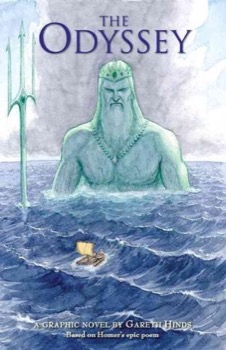
Hardcover. Somerville MA, Candlewick Press, 1st, 2010, Book: Very Good, Dust Jacket: Very Good, Hardcover in a bright dust jacket, 251 pages in color. With bold imagery and an ear tuned to the music of Homers epic poem, Gareth Hinds reinterprets the ancient classic as its never been told before. Retells, in graphic novel format, Homer's epic tale of Odysseus, the ancient Greek hero who encounters witches and other obstacles on his journey home after fighting in the Trojan War. Clean copy.
Hardcover. Berkeley, University of California Press, 1993, Book: Very Good, Dust Jacket: None, Hardcover, brick-red cloth, 477 pages, b&w illustrations. Offers an illustrated history of sexual politics in ancient Athens. This work examines the ideology and practices that underlay the reign of the phallus. It demonstrates that classical Athens was more sexually polarized and repressive of women than any other culture in Western history. The phallus was pictured everywhere in ancient Athens: painted on vases, sculpted in marble, held aloft in gigantic form in public processions, and shown in stage comedies. This obsession with the phallus dominated almost every aspect of public life, influencing law, myth, and customs, affecting family life, the status of women, even foreign policy. This is the first book to draw together all the elements that made up the "reign of the phallus"--Men's blatant claim to general dominance, the myths of rape and conquest of women, and the reduction of sex to a game of dominance and submission, both of women by men and of men by men. In her elegant and lucid text Eva Keuls not only examines the ideology and practices that underlay the reign of the phallus, but also uncovers an intense counter-movement--the earliest expressions of feminism and antimilitarism. Clean, bright copy, lacks dust jacket.
Hardcover. UK, Cambridge University Press, 1st, 1999, Book: Very Good, Dust Jacket: Very Good, Hardcover in a bright dust jacket, 346 pages. Dr. Notomi presents a new interpretation of one of Plato's most important dialogues, the Sophist, addressing both historical context and philosophical content. He shows how important the issues concerning the sophist (professional teacher and rhetorician in ancient Greece) are to the possibility of philosophy. His new approach to the whole dialogue reveals that Plato struggles with difficult philosophical issues in a single line of inquiry; and that Plato shows, in defining the sophist, his conception of the authentic philosopher. Name, date on front fly leaf, otherwise clean.
Hardcover. Boston, Houghton Mifflin, 1st, 2002, Book: Very Good, Dust Jacket: Very Good, Hardcover in a bright, unclipped dust jacket. Color illustrations by Rumford. According to Herodotus, an Ancient Greek historian, a Phoenician named Cadmus brought the alphabet to Greece. In the ancient myths, Cadmus was a hero who fought a ferocious monster and founded the city of Thebes. Cadmus was so famous that his deeds were told and retold throughout the ancient world. In this modern retelling, James Rumford uses the alphabet that Cadmus brought to Greece to recount the hero's own story. Part truth, part fancy, this different kind of alphabet book takes its reader on a journey to the distant past, when our letters were not just marks to record sounds but were pictures of eyes and hands, doors and fences, giant teeth and . . . monsters.

![The Human Figure in Early Greek Artby: Jane Sweeney, Tam Curry & Yannis Tzedakis [editors]](https://www.browsingisarousing.com/shop/images/The-Human-Figure-in-Early-Greek-Art_by_Jane-Sweeney-Tam-Curry-Yannis-Tzedakis-editors396773-447670.jpg "The Human Figure in Early Greek Artby: Jane Sweeney, Tam Curry & Yannis Tzedakis [editors]")

 "The Reign of the Phallus: Sexual Politics in Ancient Athens by: Eva C. Keuls")

 "There's a Monster in the Alphabetby: James Rumford")