Hardcover. NY, Oxford University Press, 1st, 1998, Book: Very Good, Dust Jacket: Very Good, Hardcover in a very good dust jacket with fading to spine, 403 pages. The concept of the atom is very near scientific bedrock, touching first causes, fundamental principles, our conception of the nature of reality. This book is a translation from the French of a history of atomic thought and theory, from ancient Greece to the present day. Pullman grounds his coverage of scientific theory always in the religious and philosophical context of the times, covering the whole period of Western civilization, including in passing the major scientific philosophies of the Muslim world and India. The transition of atomism from a philosophical position to an experimental science, in the mid-19th century, is well handled, and the coverage is nicely rounded out by a treatment of the first visual proof of atoms' material existence by direct microscopic imaging of individual atoms about 10 years ago. Name on front fly leaf otherwise clean.
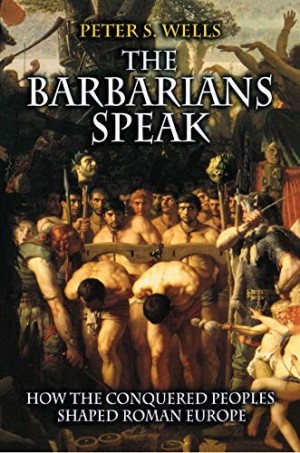
Hardcover. Princeton NJ, Princeton University Press, 1st, 1999, Book: Very Good, Dust Jacket: Very Good, Hardcover in a bright dust jacket, 335 pages with b&w illustrations. Re-creates the story of Europe's indigenous people who were nearly stricken from historical memory even as they adopted and transformed aspects of Roman culture. The Celts and Germans inhabiting temperate Europe before the arrival of the Romans left no written record of their lives and were often dismissed as "barbarians" by the Romans who conquered them. Accounts by Julius Caesar and a handful of other Roman and Greek writers would lead us to think that prior to contact with the Romans, European natives had much simpler political systems, smaller settlements, no evolving social identities, and that they practiced human sacrifice. A more accurate, sophisticated picture of the indigenous people emerges, however, from the archaeological remains of the Iron Age. Here Peter Wells brings together information that has belonged to the realm of specialists and enables the general reader to share in the excitement of rediscovering a "lost people." Clean copy.
Softcover. UK, Cambridge University Press, 4th pr., 2008, Book: Very Good, Dust Jacket: None, Softcover, 745 pages. Beginning with Homer and ending in late antiquity with Christian and pagan reflections on divine and human order, this volume is the first general and comprehensive treatment of Rome ever to be published in English. Its international team of distinguished scholars includes historians of law, politics, culture and religion, as well as philosophers. The volume will long remain an accessible and authoritative guide to Greek and Roman thinking about government and community. Remainder line on bottom edge otherwise clean.
Hardcover. Cambridge UK/NY, Cambridge University Press/Macmillan, 1st, 1942, Book: Very Good, Dust Jacket: None, Hardcover, red cloth with gilt lettering on spine. 241 pages, b&w frontis. Clean copy. Essays include: The Challenge of the Greek, Purpose in Classical Studies, The Greek Farmer, The Gastronomers, Homer and his Readers, Virgil & Erasmus etc.
Hardcover. NY, Verso, 1st, 2021, Book: Very Good, Dust Jacket: Very Good, Hardcover in a bright dust jacket, 241 pages. In essays that range from ancient Greece to the end of the Anthropocene, Bull addresses questions central to contemporary political theory in novel readings of texts by Aristotle, Machiavelli, Marx, and Arendt, and shows how classic philosophical problems have a bearing on issues like political protest and climate change. The result is an entirely original account of political agency for the twenty-first century in which uncertainty and idleness are limned with utopian promise. Clean, bright copy.
Hardcover. Boston, Houghton Mifflin, 2nd pr., 1926, Book: Very Good, Dust Jacket: None, Hardcover in dark blue cloth with light blue lettering. No dust jacket. A young English scholar is driven by recurring dreams to become a classical scholar, which later enables him to save a woman in Greece who, during a revival of ancient pagan rites and beliefs, is falsely accused of witchcraft. Mild shelf wear, spine shows fading, clean.
Hardcover. Leiden/Boston, Brill, 1st, 2002, Book: Very Good, Dust Jacket: None, Hardcover, decorated cloth, 482 pages. This book explores the dynamics of the commentary and textbook traditions in Aristotelian natural philosophy under the headings of doctrine, method, and scientific and social status. It inquires what the evolution of the Aristotelian commentary tradition can tell us about the character of natural philosophy as a pedagogical tool, as a scientific enterprise, and as a background to modern scientific thought. In a unique attempt to cut old-fashioned historiographic divisions, it brings together scholars of ancient, medieval, Renaissance and seventeenth-century philosophy. The book covers a remarkably broad range of topics: it starts with the first Greek commentators and ends with Leibniz. Small ink stamp on front fly leaf, otherwise clean.
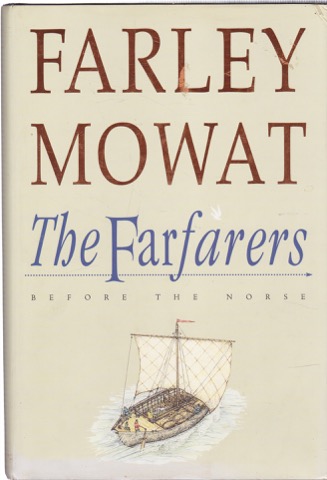
Hardcover. Toronto, Key Porter Books, 2nd pr., 1998, Book: Very Good, Dust Jacket: Very Good, Hardcover in a lightly worn dust jacket, 377 pages. SIGNED BY MOWAT on the title page. Blue endpaper maps, b&w photo illustrations. chronology. notes. After years of research, sparked by his discovery of roofless ruins in Hudson Bay, Farley Mowat presents a speculative history of the first Europeans in North America and a challenge to the presently held notion that the Vikings were the first to inhabit northern Canada. Carbon dating placed these ruins hundreds of years before the Vikings landed in Newfoundland, but the conventional accepted historical theory could offer no explanation for them. Mowat`s search led him to Scotland and the Northern Isles where he discovered ruins that resembled those he had seen on the other side of the Atlantic. He painstakingly researched early historical accounts from Roman and pre-Roman times for answers and was able to reconstruct the story of a forgotten people.
Hardcover. London, Rider & Co., 1st, 1928, Book: Very Good, Dust Jacket: None, Hardcover, green cloth covers, black lettering on spine, 143 pages. A spiritual guidebook that explores the four major initiations of the human soul. The book delves into the spiritual journey of the soul and its evolution through the four initiations: Birth, Baptism, Transfiguration, and Resurrection. Conroy draws on the teachings of ancient wisdom traditions and modern spiritual practices to provide readers with a comprehensive understanding of these initiations and their significance in the spiritual path. The book is written in a clear and accessible language and provides practical exercises and meditations to help readers deepen their spiritual practice. Name on front fly leaf, inscription on dedication page. Otherwise a clean, tight copy.
Hardcover. Dublin, Brett Smith, 1st thus, 1788, Book: Very Good, Dust Jacket: None, Hardcover, leather bound. 553 pages plus Index of Proper Names. Uncommon translation from Ireland. Hawkey was a Reverend and Master of the Free-School in Dundalk. "The Commentaries of his Wars in Gaul" is Julius Caesar's firsthand account of the Gallic Wars, written as a third-person narrative. In it Caesar describes the battles and intrigues that took place in the nine years he spent fighting the Germanic peoples and Celtic peoples in Gaul that opposed Roman conquest. The Gallic Wars were a series of military campaigns waged by the Roman proconsul Julius Caesar against several Gallic tribes. Rome's war against the Gallic tribes lasted from 58 BC to 50 BC and culminated in the decisive Battle of Alesia in 52 BC, in which a complete Roman victory resulted in the expansion of the Roman Republic over the whole of Gaul (mainly present-day France and Belgium). "His Commentaries of the Civil War" is an account written by Julius Caesar of his war against Gnaeus Pompeius and the Senate. It covers the events of 49-48 BC, from shortly before Caesar's invasion of Italy to Pompey's defeat at the Battle of Pharsalus and flight to Egypt with Caesar in pursuit. It closes with Pompey assassinated, Caesar attempting to mediate rival claims to the Egyptian throne, and the beginning of the Alexandrian War. Prelim pages gone so the book opens on the title page. Interior pages bright with no foxing, firm binding. Light wear to covers, front cover with partial split along spine, Otherwise clean.
Hardcover. Geneva, Albert Skira, 1st, 1959, Book: Very Good, Dust Jacket: Very Good, Hardcover in a bright, unclipped dust jacket. Green cloth boards with gilt lettering. Clean, bright copy with tipped-in color plates throughout, 193 pages.
Softcover. Cleveland OH, Jontzen Printing Co, 1st, 1929, Book: Very Good, Dust Jacket: None, Softcover, printed gray card wrappers, 189 pages, b&w photos. A publication relating to the public tour of the Australian museum ship "Success" which, following a somewhat checkered history in the 1890s, toured North America continually from 1918 until the mid-1930s, offering patrons a sensationalized history of the British convict system. She was destroyed by fire in Lake Erie in 1946 . Though billed by its managers as a former British convict ship and as the "oldest ship afloat," neither was true although she had seen brief service as a prison hulk in the 1850s. Clean copy.
Hardcover. Princeton NJ, Princeton University Press, 4th pr., 2007, Book: Very Good, Dust Jacket: Very Good, Hardcover in a bright dust jacket, 553 pages including index, b&w illustrations. Roughly half the world's population speaks languages derived from a shared linguistic source known as Proto-Indo-European. But who were the early speakers of this ancient mother tongue, and how did they manage to spread it around the globe? Until now their identity has remained a tantalizing mystery to linguists, archaeologists, and even Nazis seeking the roots of the Aryan race. The Horse, the Wheel, and Language lifts the veil that has long shrouded these original Indo-European speakers, and reveals how their domestication of horses and use of the wheel spread language and transformed civilization. Clean, bright copy.
Softcover. Athens, Greek Ministry of Culture, 1st, 1987, Book: Very Good, Dust Jacket: None, Softcover, 183 pages. Richly illustrated catalog for an exhibition in Washington on art from the Geometric, Orientalizing and Archaic periods. With a preface by Melina Mercouri. The chapters are: life in early Greece; the alphabet of history; the art of the Greek dark ages; geometric art; chart of vase shapes; vase painting; terracottas; bronzes; sculpture in stone. Clean copy.
Hardcover. NY, Benjamin Blom, reprint, 1972, Book: Very Good, Dust Jacket: None, Hardcover, 271 pages. Originally published 1928, this is the 1972 re-issue. Introduction by Wallace Rice and illustrations by Norman Lindsay. 271 pages. Blue cloth with gold spine titles in darker blue title window, with light shelf-wear. Spine square. Binding sound. No jacket,
Softcover. Berkeley CA, Wingbow Press, 1st, 1974, Book: Very Good, Dust Jacket: None, Softcover, 140 pages, b&w illustrations. Drawing from his great respect for the ancient traditions surrounding these three great therapeutic medicinal plants, Bill Drake offers the reader broad, bold insights into worldwide traditional cultivation practices and medicinal uses of Coca, Opium and Hashish that they will find nowhere else. Clean copy.
Hardcover. San Francisco, Chronicle Books, 1st, Book: Very Good, Dust Jacket: Very Good, Hardcover in a bright, unclipped dust jacket, 200 pages, large format. Profusley illustrated with color photographs of trees. Trees are vital- without them we simply wouldn't be here. Not only essential, they have been an inspiration throughout our history. In breathtaking photographs and stories we are taken on a journey from the boreal forest at the edge of the Arctic to the rainforests girdling the planet; from ancient bristlecones to fresh-leaved seedlings; from the charming and familiar to the scary and rare. An elegantly written and highly accessible text is complemented by an extraordinary collection of images created by some of the world's leading nature photographers.
Hardcover. Chicago, University of Chicago Press, 1st, 2011, Book: Very Good, Dust Jacket: Very Good, Hardcover in a bright dust jacket, 250 pages. With The Lucretian Renaissance, Gerard Passannante offers a radical rethinking of a familiar narrative: the rise of materialism in early modern Europe. Passannante begins by taking up the ancient philosophical notion that the world is composed of two fundamental opposites: atoms, as the philosopher Epicurus theorized, intrinsically unchangeable and moving about the void; and the void itself, or nothingness. Passannante considers the fact that this strain of ancient Greek philosophy survived and was transmitted to the Renaissance primarily by means of a poem that had seemingly been lost--a poem insisting that the letters of the alphabet are like the atoms that make up the universe. Name and date on front fly leaf, light pencil marginalia and a few underlinings.
Softcover. NY, Penguin Classic, reprint, 2016, Book: Very Good, Dust Jacket: None, Softcover, 412 pages. Full of pungency and wit, this luminous work is Bulgakov's crowning achievement, skilfully blending magical and realistic elements, grotesque situations and major ethical concerns. Written during the darkest period of Stalin's repressive reign and a devastating satire of Soviet life, it combines two distinct yet interwoven parts, one set in contemporary Moscow, the other in ancient Jerusalem, each brimming with incident and with historical, imaginary, frightful and wonderful characters. Clean, bright copy.
Hardcover. The Hague, Martinus Nijhoff, 3rd pr., 1971, Book: Very Good, Dust Jacket: None, Hardcover, red cloth stamped in gilt, 532 pages. Translated by John Carman. Monumental work by the Norwegian professor on ancient religion, cosmology, and anthropology. Spine cloth lightly faded. Clean copy.
Hardcover. New York, Thames & Hudson, 1st, 2001-12-01, Book: Very Good, Dust Jacket: Very Good, Hardcover. Like new in publishers shrink-wrap. Contains 136 illustrations, 126 in color. A collection of photographs of the ancient and spiritual lands of Indochina: Vietnam, Laos and Cambodia taken during a lifetime of traveling and living there by Tim Page. They provide an account of a deeply religious society whose age-old Buddhist principles have endured to this day. The book also represents a personal passage for Page himself, drawing a line beneath the loss of many friends and colleagues in the Vietnam War.
Hardcover. New York, Thames & Hudson, 1st, 2001-12-01, Book: Very Good, Dust Jacket: Very Good, Hardcover. Like new in publishers shrink-wrap. Contains 136 illustrations, 126 in color. A collection of photographs of the ancient and spiritual lands of Indochina: Vietnam, Laos and Cambodia taken during a lifetime of traveling and living there by Tim Page. They provide an account of a deeply religious society whose age-old Buddhist principles have endured to this day. The book also represents a personal passage for Page himself, drawing a line beneath the loss of many friends and colleagues in the Vietnam War.
Softcover. NY, Archipelago Books, 1st, 2004, Book: Very Good, Dust Jacket: None, Softcover in pictorial wrappers, 79 pages. The first full flowering of Chinese poetry occurred in the illustrious T'ang Dynasty, and at the beginning of this renaissance stands Meng Hao-jan (689-740 c.e.), esteemed elder to a long line of China's greatest poets. Deeply influenced by Ch'an (Zen) Buddhism, Meng was the first to make poetry from the Ch'an insight that deep understanding lies beyond words. The result was a strikingly distilled language that opened new inner depths, non-verbal insights, and outright enigma. This made Meng Hao-jan China's first master of the short imagistic landscape poem that came to typify ancient Chinese poetry. And as a lifelong intimacy with mountains dominates Meng's work, such innovative poetics made him a preeminent figure in the wilderness (literally rivers-and-mountains) tradition, and that tradition is the very heart of Chinese poetry. This is the first English translation devoted to the work of Meng Hao-jan. Meng's poetic descendents revered the wisdom he cultivated as a mountain recluse, and now we too can witness the sagacity they considered almost indistinguishable from that of rivers and mountains themselves. Clean, bright copy.



 "The Challenge of the Greek and other Essays by: T. R. Glover")
 "The Concept of the Social: Scepticism, Idleness and Utopiaby: Malcolm Bull")
 "The Dancing Floorby: Buchan, John")
![The Dynamics of Aristotelian Natural Philosophy from Antiquity to the Seventeenth Centuryby: Herausgeber: Leijenhorst, C., Herausgeber: L]thy, C., Herausgeber: Thijss](https://www.browsingisarousing.com/shop/images/383974.jpg "The Dynamics of Aristotelian Natural Philosophy from Antiquity to the Seventeenth Centuryby: Herausgeber: Leijenhorst, C., Herausgeber: L]thy, C., Herausgeber: Thijss")



 "The Gallic and Civil Wars of Caesarby: Rev. John Pullein Hawkey(transl.)")
 "The Great Centuries of Painting - Greek Painting by: Martin Robertson")


 "The History Of The Ancient Australian Convict Ship Success And The Story Of The Transportation Of Prisoners From England To Australia by: N/A")

![The Human Figure in Early Greek Artby: Jane Sweeney, Tam Curry & Yannis Tzedakis [editors]](https://www.browsingisarousing.com/shop/images/The-Human-Figure-in-Early-Greek-Art_by_Jane-Sweeney-Tam-Curry-Yannis-Tzedakis-editors396773-447670.jpg "The Human Figure in Early Greek Artby: Jane Sweeney, Tam Curry & Yannis Tzedakis [editors]")
 "The Life & Love Of Treesby: Blackwell, Lewis")



 "The Mindful Momentby: Page, Tim")
 "The Mindful Momentby: Page, Tim")