Softcover. Tempe AZ, Original Falcon Press, 1st, 2014, Book: Very Good, Dust Jacket: None, Softcover, 216 pages. Serpents have always been both venerated and feared throughout the world, but perhaps none so much as the Naga in Hindu, Tantric and Buddhist traditions. What are the Naga? They are the Serpent Lords of ancient times, more akin to the Orishas of Santeria than to the remote gods of Olympus. And, like the Orishas, they are far more accessible. B&w illustrations. Clean copy/
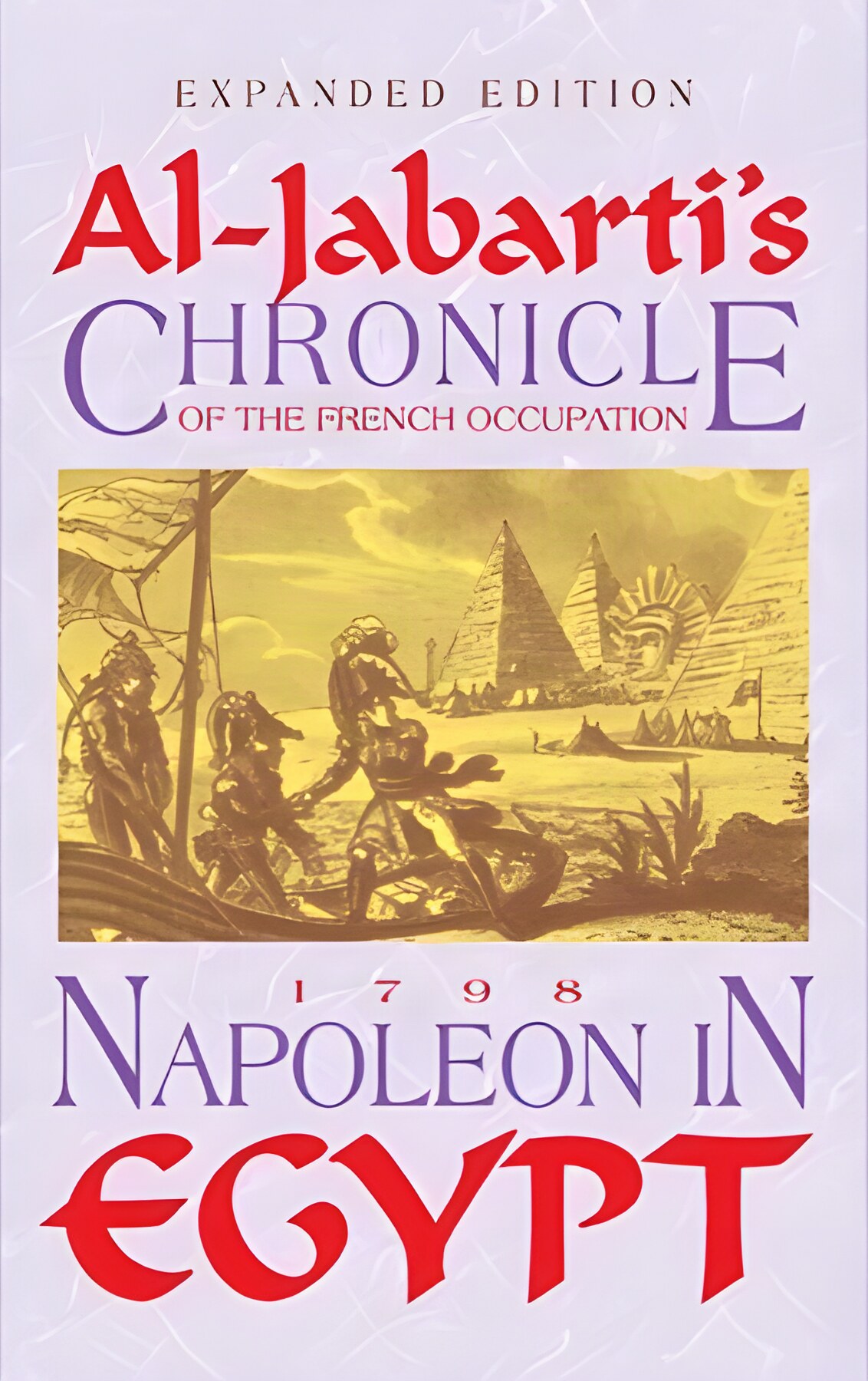
Softcover. Princeton/New York, Markus Wiener, reprint, 1993, Book: Very Good, Dust Jacket: None, Softcover, 186 pages, b&w illustrations. Napoleon's conquest of Egypt in 1798 was the first contact between a Western power with imperial goals and an ancient regime of an African society. Sheik Al-Jabarti's chronicle is a unique combination of historical narration and reflection combined with daily observations about the atmosphere in Cairo and the mood among the local population. The book is an Arab view of a turning point in modern history.
Hardcover. Washington D. C, National Geographic Society, 1st, 1930, Book: Very Good, Dust Jacket: None, Original magazines January - June 1930, in a green hardcover cloth binding. Magazines are dated and paged, with photographs and maps, but do not have covers, advertisements, etc. Several pages of color plates. 784 pages, 2 color maps. Numerous articles including: 'Seeking the Mountains of Mystery' by Joseph F. Rock; 'Among the Hill Tribes of Sumatra by W. Robert Moore; 'Hunting for Plants in the Canary Islands' by David Fairchild; and 'New Light on Ancient Ur' by M.E. L. Mallowan. Clean, bright volume.
Hardcover. Marg Foundation , 1st, 2011, Book: Very Good, Dust Jacket: Very Good, Hardcover, 128 pages. Various expressions of art manifested through painting, sculpture, architecture, dance, and even drama, issues of nostalgia and modernity are juxtaposed to examine the art of Nepal from new viewpoints. The style of art we call Nepali is produced by the Newars, the original inhabitants of the Kathmandu Valley, who shaped it from ancient to modern times. The present volume celebrates various artistic expressions of the Newars as well as other ethnic groups that have contributed to the rich cultural heritage of the country. Various traditions, including the Kumari cult and street theater are illustrated along with contemporary art and architecture.
Hardcover. Seattle, University of Washington Press, 1st, 1991, Book: Very Good, Dust Jacket: Very Good, 388 pages, hardcover. B&w plates. INSCRIBED BY ECKERT. Light foxing to edge and light wear to bottom edges of cover. According to conventional interpretations, the Japanese annexation of Korea in 1910 destroyed a budding native capitalist economy on the peninsula and blocked the development of a Korean capitalist class until 1945. In this expansive and provocative study, now available in paperback, Carter J. Eckert challenges the standard view and argues that Japanese imperialism, while politically oppressive, was also the catalyst and cradle of modern Korean industrial development. Ancient ties to China were replaced by new ones to Japan - ties that have continued to shape the South Korean political economy down to the present day. Eckert explores a wide range of themes, including the roots of capitalist development in Korea, the origins of the modern business elite, the nature of Japanese colonial policy and the Japanese colonial state, the relationship between the colonial government and the Korean economic elite, and the nature of Korean collaboration. He conveys a clear sense of the human complexity, archival richness, and intellectual challenge of the historical period. His documentation is thorough; his arguments are compelling and often strikingly innovative.
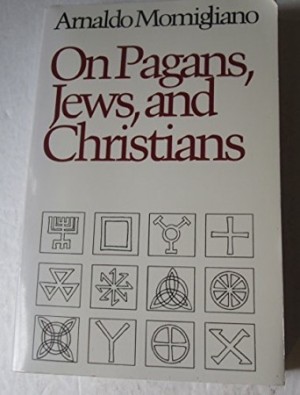
Softcover. Hanover NH, Wesleyan University Press, 3rd pr., 1987, Book: Very Good, Dust Jacket: None, Softcover in pictorial wraps, 343 pages. The focus of this book is the secular cultures of pagan Greece and imperial Rome, and the religious cultures of Judaism and Christianity which, in turn, grew from and influenced them and the modern world. For Momigliano, religion, secular ideology, and politics live in and illuminate the present. Brings together nineteen essays written over five years from sources such as The New York Review of Books, The American Scholar, and the Annali della Scuola Normale Superiore di Pisa. Clean copy.
Hardcover. NY, Bloomsbury USA, 1st, 2013, Book: Very Good, Dust Jacket: Very Good, Hardcover in a bright, unclipped dust jacket, 509 pages. The relationship between man and horse on the Eurasian steppe gave rise to a succession of rich nomadic cultures. Among them were the Mongols of the thirteenth century - a small tribe, which, under the charismatic leadership of Genghis Khan, created the largest contiguous land empire in history. Inspired by the extraordinary life nomads lead, Tim Cope embarked on a journey that hadn't been successfully completed since those times: to travel on horseback across the entire length of the Eurasian steppe, from Karakorum, the ancient capital of Mongolia, through Kazakhstan, Russia, Crimea and the Ukraine to the Danube River in Hungary. From horse-riding novice to spending months in the saddle, he learnt to fend off wolves and would-be horse-thieves, and grapple with the haunting extremes of the steppe as he crossed sub-zero plateaux, the scorching deserts of Kazakhstan and the high-mountain passes of the Carpathians. As he travelled he formed a close bond with his horses and especially his dog Tigon, and encountered essential hospitality - the linchpin of human survival on the steppe - from those he met along the way. Cope bears witness to how the traditional ways hang in the balance in the post-Soviet world - an era that has brought new-found freedom, but also the perils of corruption and alcoholism, and left a world bereft of both the Communist system upon which it once relied, and the traditional knowledge of the nomadic forefathers.
Hardcover. Princeton NJ, Princeton University Press, 1st, 2015, Book: Very Good, Dust Jacket: Very Good, Hardcover in a bright dust jacket, 354 pages. From the turn of the fifth century to the beginning of the eighteenth, Christian writers were fascinated and troubled by the "Problem of Paganism," which this book identifies and examines for the first time. How could the wisdom and virtue of the great thinkers of antiquity be reconciled with the fact that they were pagans and, many thought, damned? Related questions were raised by encounters with contemporary pagans in northern Europe, Mongolia, and, later, America and China. Pagans and Philosophers explores how writers-philosophers and theologians, but also poets such as Dante, Chaucer, and Langland, and travelers such as Las Casas and Ricci-tackled the Problem of Paganism. Augustine and Boethius set its terms, while Peter Abelard and John of Salisbury were important early advocates of pagan wisdom and virtue. University theologians such as Aquinas, Scotus, Ockham, and Bradwardine, and later thinkers such as Ficino, Valla, More, Bayle, and Leibniz, explored the difficulty in depth. Meanwhile, Albert the Great inspired Boethius of Dacia and others to create a relativist conception of scientific knowledge that allowed Christian teachers to remain faithful Aristotelians. At the same time, early anthropologists such as John of Piano Carpini, John Mandeville, and Montaigne developed other sorts of relativism in response to the issue. Clean copy.
Softcover. Bloomington IN, Indiana University Press, reprint, 1995, Book: Very Good, Dust Jacket: None, Softcover in pictorial wrappers, 852 pages. The life and art, the folklore, history, and common work of a rural community in Northern Ireland-through the eyes and pen of gifted folklorist Henry Glassie. Glassie regards the people of Ballymenone with respect and affection, allowing them to describe their ideas, life-ways, and values on their own terms, not his. Recognizing that theirs is a mindset and lifestyle that must be seen as an integrated whole, Glassie studies everything about Ballymenone from traditional songs to entertainment to religious beliefs to architecture, liberally quoting from the people who welcomed him into their homes over his extended stays. Some of his insights are pure brilliance, such as recognizing the way the poets and storytellers of a rural Irish district have adapted ancient Gaelic metrics to the English they use today. You will learn more about Ireland and its people in this one book than in a host of others. Clean copy.
Hardcover. New Haven CT, Yale University Press, 1st, 2016, Book: Very Good, Dust Jacket: Very Good, Hardcover in a bright dust jacket. 528 pages, b&w illustrations. A groundbreaking and comprehensive history of the Roman Peace from one of the leading historians of the ancient world, Clean copy
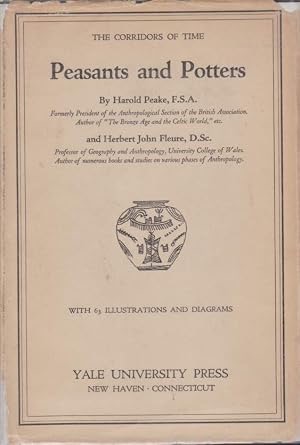
Hardcover. New Haven CT, Yale University Press, 1st, 1927, Book: Very Good, Dust Jacket: Good, Hardcover in a worn dust jacket, 152 pages, b&w illustrations. Explores the relationship between peasant society and pottery production in ancient times. The book delves into the history of pottery-making, from its earliest origins to its development as a vibrant industry that sustained many rural communities. The author examines the various techniques and materials used by potters, as well as the social and economic factors that influenced the production and distribution of pottery. Peasants and Potters also provides insight into the daily lives of peasants who worked in the pottery industry, highlighting the challenges and rewards of their work.
Hardcover. Philadelphia, American Philological Association, 1st, 1941, Book: Very Good, Dust Jacket: None, Hardcover, green cloth covers with gilt lettering on spine, 200 pages. The Greek text with facing translation runs from pages 22-199. The rest of the book is discussions chapters discussing the polemics between Stoic and Epicureans and the ways the Philodemus arguments might be improvements on Early Modern empiricism. Classic scholarly treatise presents a detailed study of the manner in which the problem of method was expressed by the empirically oriented philosophy of the Epicureans and Sceptics, and by their rationalistic opponents, the Stoics. Each of these schools developed a theory of signs, as the basis for both epistemological and logical speculations. Philodemus' treatise is a defense of Epicurean empirical method, and simultaneously an attack on the rival Stoic rationalistic method. This is first English translation of this work. Clean, bright copy.
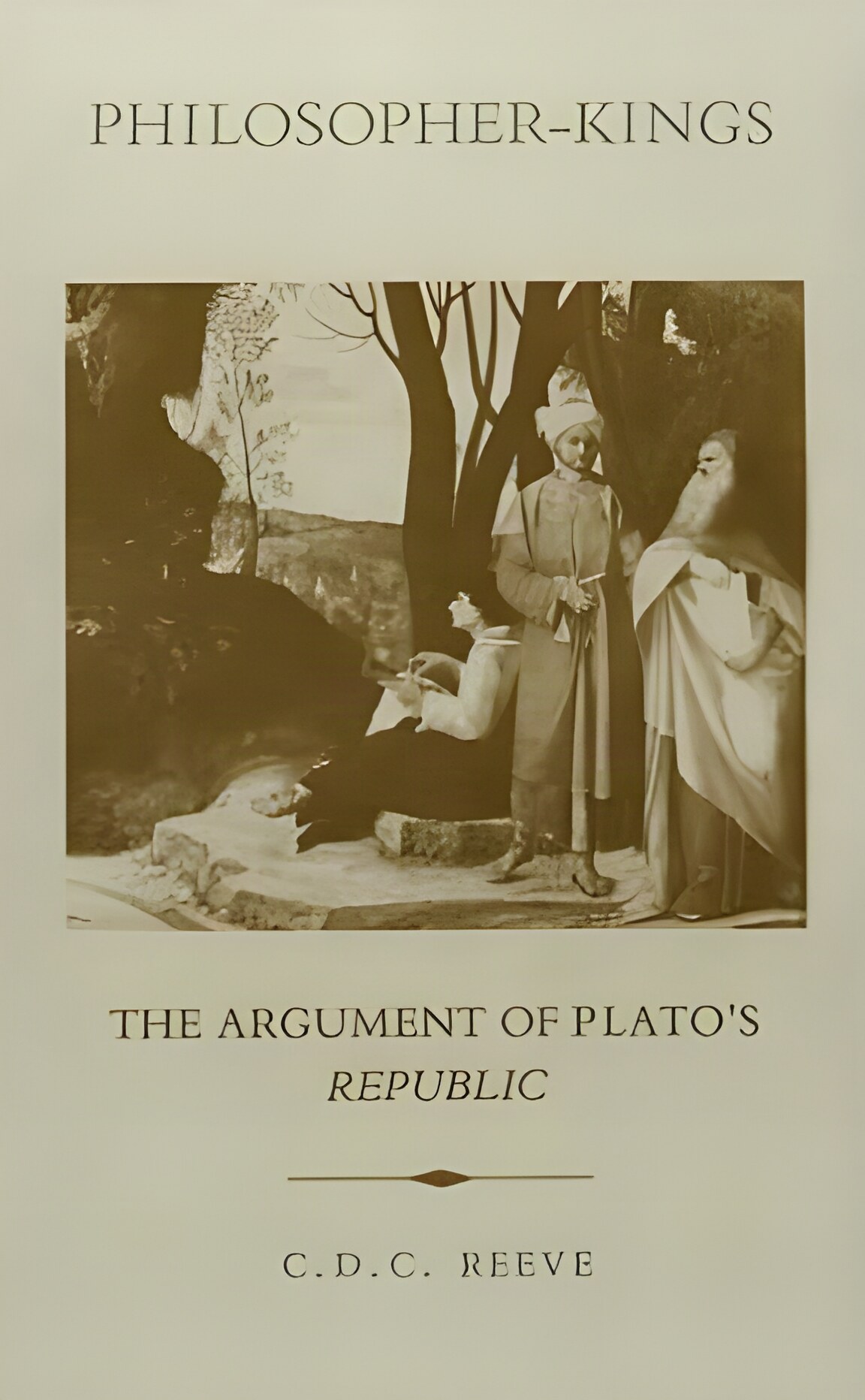
Hardcover. Princeton NJ, Princeton University Press, 1st, 1988, Book: Very Good, Dust Jacket: Very Good, Hardcover in a dust jacket, dark green cloth covers with gilt title on spine. 350 pages. The distinctive aim of Philosopher-Kings is to show, by giving a rational reconstruction of its overall argument, that the Republic is not the flawed patchwork it is usually made out to be by interpreters, but a deeply consistent and systematic work, which raises fundamental problems for philosophy and develops powerful and probing solutions to them. The book's central innovative thesis is that Plato's psychology, more specifically his theory of desires, holds the key to this, his most ambitious work. "Although the Republic has come to seem frazzled from too much use in introductory courses, in Reeve's hands it is new and refreshing".--Paul Woodruff, Ancient Philosophy "Although the philosopher-kings of Reeve's title are central to the argument of this handsomely produced book, it is in reality nothing less than a complete reinterpretation of the Republic. Name on front fly leaf, otherwise clean.
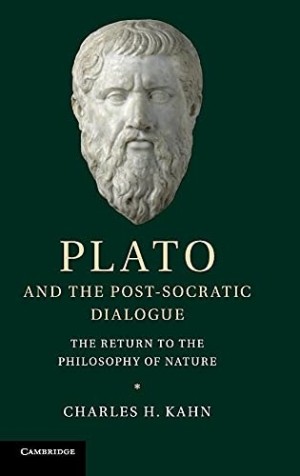
Hardcover. UK, Cambridge University Press, 1st, 2013, Book: Very Good, Dust Jacket: Very Good, Hardcover in a bright dust jacket, 249 pages. Plato's late dialogues have often been neglected because they lack the literary charm of his earlier masterpieces. Charles Kahn proposes a unified view of these diverse and difficult works, from the Parmenides and Theaetetus to the Sophist and Timaeus, showing how they gradually develop the framework for Plato's late metaphysics and cosmology. The Parmenides, with its attack on the theory of Forms and its baffling series of antinomies, has generally been treated apart from the rest of Plato's late work. Kahn shows that this perplexing dialogue is the curtain-raiser on Plato's last metaphysical enterprise: the step-by-step construction of a wider theory of Being that provides the background for the creation story of the Timaeus. This rich study, the natural successor to Kahn's earlier Plato and the Socratic Dialogue, will interest a wide range of readers in ancient philosophy and science. Name and date on front fly leaf otherwise clean.
Softcover. Souix City IA, Parnassos Press, 1st, 2019, Book: Very Good, Dust Jacket: None, Softcover, 312 pages. This book is born from a desire to understand how Plato influenced and was influenced by the intellectual culture of Western Greece, the ancient Hellenic cities of Sicily and Southern Italy. In 2018, a seminar on Plato at Syracuse was organized, in which a small group of scholars discussed a new translation of the Seventh Letter and several essays on the topic. The essays consider the historical, political, and philosophical implications of Plato's involvement in Syracuse. They also look at the reception of his voyage among fellow philosophers, ancient and modern. Clean copy.
Hardcover. UK, Oxford University Press, 1st, 2008, Book: Very Good, Dust Jacket: Very Good, Hardcover in a bright dust jacket, 238 pages. The Laws is Plato's last and longest dialogue. Although it has been neglected (compared to such works as the Republic and Symposium), it is beginning to receive a great deal of scholarly attention. Book 10 of the Laws contains Plato's fullest defence of the existence of the gods, and his last word on their nature, as well as a presentation and defence of laws against impiety (e.g. atheism). Plato's primary aim is to defend the idea that the gods exist and that they are good - this latter meaning that they do not neglect human beings and cannot be swayed by prayers and sacrifices to overlook injustice. As such, the Laws is an important text for anyone interested in ancient Greek religion, philosophy, and politics generally, and the later thought of Plato in particular. Robert Mayhew presents a new translation, with commentary, of Book X of the Laws. His primary aim in the translation is fidelity to the Greek. His commentary focuses on philosophical issues (broadly understood to include religion and politics), and deals with philological matters only when doing so serves to better explain those issues. Knowledge of Greek is not assumed, and the Greek that does appear has been transliterated. It is the first commentary in English of any kind on Laws X for nearly 140 years. Light pencil notations to about 15 pages.
Softcover. NY, Oxford University Press, reprint, 2011, Book: Very Good, Dust Jacket: None, Softcover, 384 pages. Plato is the best known and most widely studied of all the ancient Greek philosophers. Malcolm Schofield, a leading scholar of ancient philosophy, offers a lucid and accessible guide to Plato's political thought, enormously influential and much discussed in the modern world as well as the ancient. Schofield discusses Plato's ideas on education, democracy and its shortcomings, the role of knowledge in government, utopia and the idea of community, money and its grip on the psyche, and ideological uses of religion. Clean, bright copy.
Hardcover. Cambridge MA, Harvard University Press, 1st, 2001, Book: Very Good, Dust Jacket: Very Good, Hardcover in a very good dust jacket with light fading to spine, 342 pages. The Platonic Theology is a visionary work and the philosophical masterpiece of Marsilio Ficino (1433-1499), the Florentine scholar-philosopher-magus who was largely responsible for the Renaissance revival of Plato. A student of the Neoplatonic schools of Plotinus and Proclus, he was committed to reconciling Platonism with Christianity, in the hope that such a reconciliation would initiate a spiritual revival and return of the golden age. His Platonic evangelizing was eminently successful and widely influential, and his Platonic Theology, translated into English for the first time in this edition, is one of the keys to understanding the art, thought, culture, and spirituality of the Renaissance.
Hardcover. Cambridge MA, Harvard University Press, 1st, 2002, Book: Very Good, Dust Jacket: Good, Hardcover in a dust jacket with fading to spine and front cover, 397 pages. The Platonic Theology is a visionary work and the philosophical masterpiece of Marsilio Ficino (1433-1499), the Florentine scholar-philosopher-magus who was largely responsible for the Renaissance revival of Plato. A student of the Neoplatonic schools of Plotinus and Proclus, he was committed to reconciling Platonism with Christianity, in the hope that such a reconciliation would initiate a spiritual revival and return of the golden age. His Platonic evangelizing was eminently successful and widely influential, and his Platonic Theology, translated into English for the first time in this edition, is one of the keys to understanding the art, thought, culture, and spirituality of the Renaissance. Clean copy.
Hardcover. Cambridge MA, Harvard University Press, 1st, 2003, Book: Very Good, Dust Jacket: Very Good, Hardcover in a very good dust jacket with light fading to spine, 362 pages. The Platonic Theology is a visionary work and the philosophical masterpiece of Marsilio Ficino (1433-1499), the Florentine scholar-philosopher-magus who was largely responsible for the Renaissance revival of Plato. A student of the Neoplatonic schools of Plotinus and Proclus, he was committed to reconciling Platonism with Christianity, in the hope that such a reconciliation would initiate a spiritual revival and return of the golden age. His Platonic evangelizing was eminently successful and widely influential, and his Platonic Theology, translated into English for the first time in this edition, is one of the keys to understanding the art, thought, culture, and spirituality of the Renaissance. Name on front fly leaf otherwise clean.
Softcover. UK, Cambridge University Press, 1st pbk, 2019, Book: Very Good, Dust Jacket: None, Softcover, 931 pages. Greek glossary, English glossary, bibliography of Principal editions of secondary sources. Octavo. Glossy burgunday soft covers with gold and white titles. Covers have minimal shelf wear, a small bump at top left front, interior clean and fresh, a few pages have very slight sign of storage bend at the top corner, otherwise very good. Heavy for international shipping. The Enneads is a work central to the history of philosophy in late antiquity. This volume is the first complete edition in English for 75 years and also includes Porphyry's Life of Plotinus. Led by Gerson, a team of experts present up to date translations which are based on the best available text, the editio minor of Henry and Schwyzer and its corrections.... They also offer extensive annotation to assist the reader, together with cross-references and citations. Clean, bright copy.
Hardcover. UK, Cambridge University Press , 1st, 1972, Book: Very Good, Dust Jacket: Very Good, Hardcover in a bright orange dust jacket, 336 pages. This book is a commentary on the surviving testimonia and fragments of Posidonius' work collected in Volume I of this edition. Posidonius was one of the most important philosophers and intellectuals writing in the first century BC Graeco-Roman world. The purpose of this commentary is to assess the fragmentary evidence and reports of Posidonius found in the writings of about sixty ancient authors, and to separate what Posidonius himself actually said from the interpretations and distortions of his reporters. Since Posidonius also wrote at length on the sciences and on geography, and composed a large History, Kidd assesses his work against the philosophical, scientific, and historical writings of Posidonius' predecessors and contemporaries. Each fragment is explored through detailed examination of its context, philosophical and scientific content, and its relationship to Posidonius' whole thought and to contemporary ideas. VOLUME 1 ONLY. The fragments are in the original Greek and Latin (mostly Greek). The Introduction is in English. Previous owner's name on front fly leaf, embossed stamp, otherwise a clean copy.
Softcover. UK, Cambridge University Press, reprint, 2004, Book: Very Good, Dust Jacket: None, Softcover, orange wrappers, 341 pages. Classic scholarly text contains a collection of the surviving attested fragments of Posidonius, the leading stoic philosopher of his time in the first half of the first century, B.C. This exhaustive work was begun by Prof. Edelstein, a preeminent authority on Posidonius, and subsequently completed and edited after his death by Ian Kidd. There are some sixty different ancient reporters represented in this volume. First published in 1972, this re-issue contains 60 new readings, nearly eighty alterations to the apparatus criticus and corrections of errors. GREEK AND LATIN TEXT. Name on front fly leaf, otherwise, clean.
Hardcover. New York , Phaidon, 1st, 1957, Book: Very Good, Dust Jacket: Very Good, Hardcover, 286 pages, original rust colored cloth with gilt design. 270 illustrations, many in color including fold-out plates. Tipped-in color frontispiece, endpaper maps and charts in rear. Clear acetate dust jacket in very good condition. Slipcase is worn and cracked.

 "Naga Magick: The Wisdom of the Serpent Lordsby: Denny Sargent")
 "National Geographic Magazine. January-June 1930. Six Issuesby: National Geographic Society")
 "Nepal: Nostalgia and Modernityby: Deepak Shimkhada")
 "Offspring of Empire: The Koch'ang Kims and the Colonial Origins of Korean Capitalism 1876-1945 (SIGNED COPY)by: Eckert, Carter J.")
 "On the Trail of Genghis Khan: An Epic Journey Through the Land of the Nomads by: Tim Cope")


 "Pax Romana: War, Peace and Conquest in the Roman World by: Goldsworthy, Adrian")
 "Philodemus: on Methods of Inference. A Study in Ancient Empiricism by: Philodemus, Philip Howard De Lacey, Estelle Allan De Lacey")


 "Platonic Theology, Volume 2: Books V-VIII (The I Tatti Renaissance Library)by: Ficino, Marsilio/ Editor: Hankins, James / Translator: Allen, Michael")

 "Pre-Columbian Art: Robert Woods Bliss Collectionby: Lothrop, S.K.")