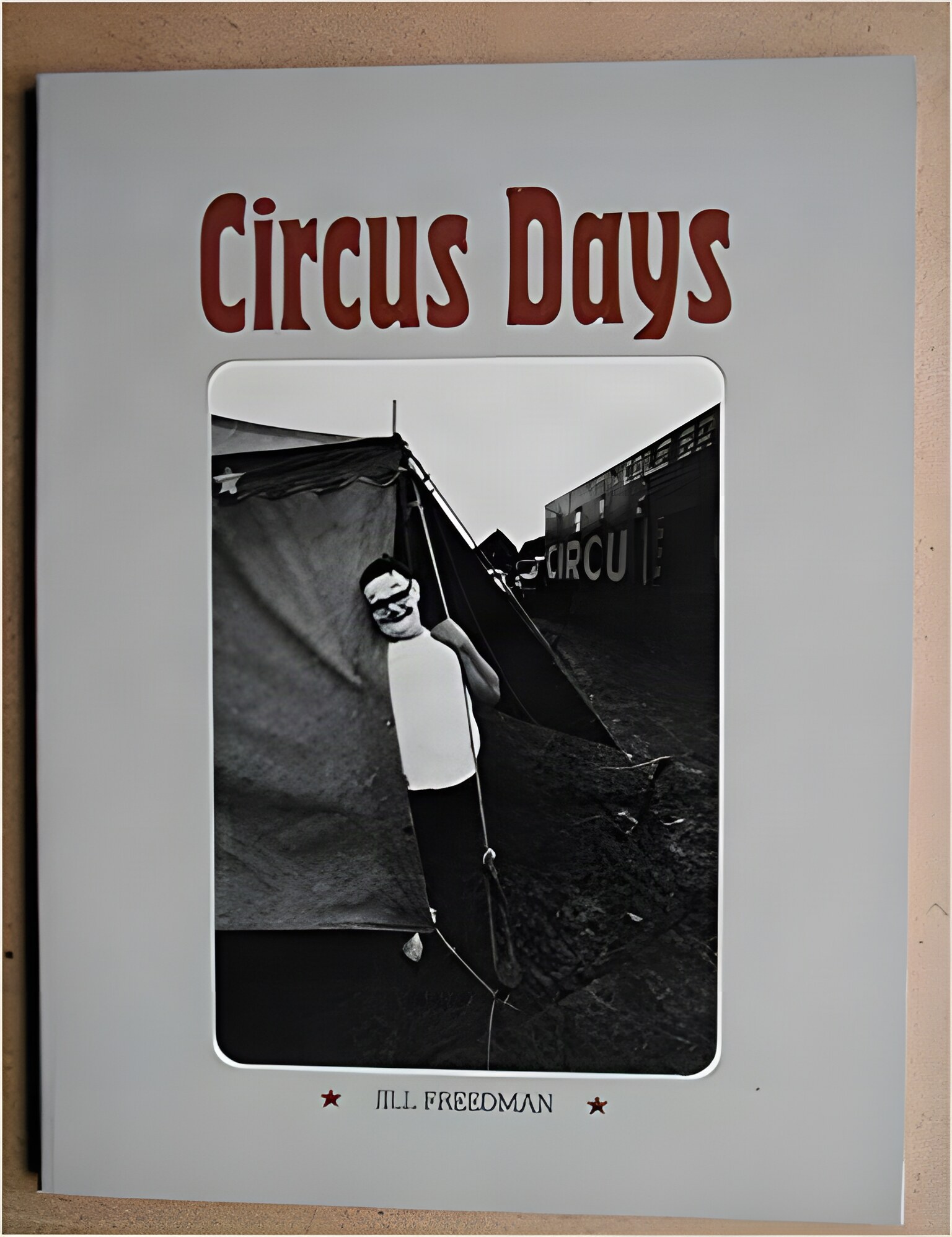
Softcover. NY, Harmony Books, 1st, 1975, Book: Very Good, Dust Jacket: None, Softcover, 128 pages. A photographic documentation of the Beatty-Cole Circus, recording and portraying the customs, activities, animals, and singular personalities of an endangered way of life. "I wanted to document the backstage everyday life of this ancient closed society and the people who live in it." Full-page b/w photos. Wrappers with light wear.
Hardcover. Bloomington IN, Indiana University Press, 1st, 1999, Book: Very Good, Dust Jacket: Very Good, Hardcover in a bright, unclipped dust jacket. 199 pages, scattered maps & drawings & figures. The authors selected five reasonably well excavated settlements in southern and central Greece to stand as the exemplars for the contemporary situation and the ongoing transformations of Greek society between 1200 and 700 B.C. (?) Thus, for the late-thirteenth to twelfth centuries there is Mycenae; Nichoria for the eleventh; Athens for the tenth; Lefkandi for the ninth; Corinth for the eight; and Ascra for the early seventh. Each settlement?s particular situation provides them with an opportunity to expand on how this is similar or not to the situations of other, contemporary settlements as well as to the larger picture and trends of cultural transformation. Clean copy.
Hardcover. Princeton NJ, Princeton University Press, 1st, 2018, Book: Very Good, Dust Jacket: Very Good, Hardcover in a bright dust jacket, 358 pages, color and b&w illustrations. What we call classical art did not simply appear in ancient Rome, or in the Renaissance, or in the eighteenth-century Academy. Endlessly repackaged and revered or rebuked, Greek and Roman artifacts have gathered an amazing array of values, both positive and negative, in each new historical period, even as these objects themselves have reshaped their surroundings. Vout shows how this process began in antiquity, as Greeks of the Hellenistic period transformed the art of fifth-century Greece, and continued through the Roman empire, Constantinople, European court societies, the neoclassical English country house, and the nineteenth century, up to the modern museum. Clean copy.
Hardcover. NY, The MacMillan Co., 3rd pr., 1945, Book: Very Good, Dust Jacket: Very Good, Hardcover in a bright dust jacket, 200 pages. Endpaper maps, b&w illustrations by the author. Inns and colorful personalities of Groton, Hanover and Old Boston Post Road. Five of the principal routes of New England's earlier days are the focus of this book. With these routes, the writer recalls much of the romance of these ancient highways over which our ancestors jogged on horseback with saddlebags, in jolting stage-wagons, or in the later Concord coach. Clean copy.
Softcover. NY, Oxford University Press, 2nd pr., 1995, Book: Very Good, Dust Jacket: Very Good, Hardcover in a bright, unclipped dust jacket. George Schuyler, a renowned and controversial black journalist of the Harlem Renaissance, and Josephine Cogdell, a blond, blue-eyed Texas heiress and granddaughter of slave owners, believed that intermarriage would "invigorate" the races, thereby producing extraordinary offspring. Their daughter, Philippa Duke Schuyler, became the embodiment of this theory, and they hoped she would prove that interracial children represented the final solution to America's race problems. Able to read and write at the age of two and a half, a pianist at four, and a composer by five, Philippa was often compared to Mozart. During the 1930s and 40s she graced the pages of Time and Look magazines, the New York Herald Tribune, and The New Yorker. Philippa grew up under the adoring and inquisitive eyes of an entire nation and soon became the role model and inspiration for a generation of African-American children. But as an adult she mysteriously dropped out of sight, leaving America to wonder what had happened to the "little Harlem genius." Suffering the double sting of racism and gender bias, Philippa had been rejected by the elite classical music milieu in the United States and forced to find an audience abroad, where she flourished as a world-class performer and composer. She traveled throughout South America, Europe, Africa, and Asia performing for kings, queens, and presidents. By then Philippa had added a second career as an author and foreign correspondent reporting on events around the globe--from Albert Schweitzer's leper colony in Lamberene to the turbulent Asian theater of the 1960s. She would give a command performance for Queen Elisabeth of Belgium one day, and hide from the Viet Cong among the ancient graves of the Annam kings another.
Hardcover. New Haven CT, Yale University Press, 1st, 2016, Book: Very Good, Dust Jacket: Very Good, Hardcover in a bright, unclipped dust jacket. 1176 pages. We live in an age of disenchantment. The number of self-professed "atheists" continues to grow. Yet many still feel an intense spiritual longing for a connection to what Aristotle called the "eternal and divine." For those who do, but demand a God that is compatible with their modern ideals, a new theology is required. This is what Anthony Kronman offers here, in a book that leads its readers away from the inscrutable Creator of the Abrahamic religions toward a God whose inexhaustible and everlasting presence is that of the world itself. Kronman defends an ancient conception of God, deepened and transformed by Christian belief--the born-again paganism on which modern science, art, and politics all vitally depend. Brilliantly surveying centuries of Western thought--from Plato to Augustine, Aquinas, and Kant, from Spinoza to Nietzsche, Darwin, and Freud--Kronman recovers and reclaims the God we need today. Clean copy.
Hardcover. NY, John Day, 1st, 1949, Book: Good, Dust Jacket: Good, Hardcover in a bright, edgeworn and chipped dust jacket. Explores the life and teachings of the ancient Chinese philosopher, Confucius. The book delves into Confucius' background, upbringing, and the cultural and political context in which he lived. It also examines the various interpretations of Confucianism throughout history and how his teachings have influenced Chinese society and beyond. The author offers a critical analysis of Confucius' philosophy and challenges some of the popular myths and misconceptions that have surrounded him. Mild musty smell, clean copy.
Hardcover. NY, The Overlook Press, 1st, 2010, Book: Very Good, Dust Jacket: Very Good, Hardcover in a bright dust jacket. 358 pages, Illustrated with three sections of color plates. b&w maps, illustrations. Clean copy. A fascinating survey of the life and enduring legacy of perhaps the greatest and most unjustly ignored of the Roman emperors-written by a richly gifted historian. In 312 A.D., Constantine-one of four Roman emperors ruling a divided empire-marched on Rome to establish his control. On the eve of the battle, a cross appeared to him in the sky with an exhortation, "By this sign conquer." Inscribing the cross on the shields of his soldiers, Constantine drove his rivals into the Tiber and claimed the imperial capital for himself. Under Constantine, Christianity emerged from the shadows, its adherents no longer persecuted. Constantine united the western and eastern halves of the Roman Empire. He founded a new capital city, Constantinople. Thereafter the Christian Roman Empire endured in the East, while Rome itself fell to the barbarian hordes.
Softcover. Austin, University of Texas Press, 1st, 1993, Book: Very Good, Dust Jacket: None, Softcover, yellow wrappers, 287 pages. Light fading to spine. In ancient Mediterranean cultures, diamonds were thought to endow their owners with invincibility. In contemporary United States culture, a foreign-made luxury car is believed to give its owner status and prestige. Where do these beliefs come from In this study of craft production and long-distance trade in traditional, nonindustrial societies, Mary W. Helms explores the power attributed to objects that either are produced by skilled artisans and/or come from 'afar.' She argues that fine artisanship and long-distance trade, both of which are more available to powerful elites than to ordinary people, are means of creating or acquiring tangible objects that embody intangible powers and energies from the cosmological realms of gods, ancestors, or heroes. Clean copy.
Hardcover. New York, Bramhall House, 2nd Printing, 1958, Book: Good, Dust Jacket: Fair, Hardcover. Illustrations throughout, with a treatise on The Balista and Catapult of the Ancients and an appendix on The Catapult, Balista and the Turkish Bow. Dust jacket soiled and worn, foxing on top edge, otherwise, very clean and tight.
Hardcover. NY, Oxford University Press, 1st, 1986, Book: Very Good, Dust Jacket: Very Good, Hardcover in a bright dust jacket, 166 pages. Pindar (c. 518-438 B.C.), one of ancient Greece's most famous lyric poets, is perhaps best known for his victory (epinicean) odes, written to honor the winners at various sets of games, such as the Olympiad. In Crown of Song, Deborah Steiner's study of these odes, she writes "If Pindar is remote from us in genre, his style strikes the reader as vivid and immediate. And in my reading of the epinicean odes, it is the poet's use of metaphor that accounts for the dynamic quality of his verse." Steiner begins her analysis by exploring both ancient and modern theories of metaphor, and then turns to specific imagery employed by the poet--plant life, athletics, minerals and numerous others--as a way of understanding how these metaphoric complexes function in the poet's praise of the victor, his assertion of his own place as perpetuator of the victor's immortal fame, and in his vision of human achievement and glory in the context of mortal life and immortal gods. Written in a lively, readable style, Crown of Song opens up the sometimes difficult verse of this celebrated ancient poet to modern readers. Name on front fly leaf, otherwise clean.
Softcover. Ausyin TX, University of Texas Press, 1st, 1997, Book: Very Good, Dust Jacket: None, Softcover, 282 pages, b&w illustrations. The simple question "How did the Maya come up with a calendar that had only 260 days?" led Vincent Malmstrom to discover an unexpected "hearth" of Mesoamerican culture. In this boldly revisionist book, he sets forth his challenging, new view of the origin and diffusion of Mesoamerican calendrical systems--the intellectual achievement that gave rise to Mesoamerican civilization and culture. Malmstrom posits that the 260-day calendar marked the interval between passages of the sun at its zenith over Izapa, an ancient ceremonial center in the Soconusco region of Mexico's Pacific coastal plain. He goes on to show how the calendar developed by the Zoque people of the region in the fourteenth century B.C. gradually diffused through Mesoamerica into the so-called "Olmec metropolitan area" of the Gulf coast and beyond to the Maya in the east and to the plateau of Mexico in the west. Clean copy.
Hardcover. London, Frederick Muller Limited, 1st, 1964, Book: Very Good, Dust Jacket: Good, 194 pages. Hardcover with dust jacket. Previous owner's signature on front fly leaf. Illustrated by Harry and Isle Toothill. Light bumping to bottom cover boards, light soiling.
Softcover. Durham NC, Duke University Press , 2002, Book: Very Good, Dust Jacket: None, Softcover, 309 page, b&w and color illustrations. Light pencil marking in text. On the little-known and darker side of shamanism there exists an ancient form of sorcery called kanaima, a practice still observed among the Amerindians of the highlands of Guyana, Venezuela, and Brazil that involves the ritual stalking, mutilation, lingering death, and consumption of human victims. At once a memoir of cultural encounter and an ethnographic and historical investigation, this book offers a sustained, intimate look at kanaima, its practitioners, their victims, and the reasons they give for their actions.
Hardcover. University of Notre Dame Press, 1st, 1995, Book: Very Good, Dust Jacket: None, Hardcover, maroon cloth stamped in gilt and silver, 271 pages. This volume is the result of an international conference held at the University of Notre Dame in 1991 in which leading scholars, classicists, medievalists, theologians, philologists, rhetoricians, literary critics, and philosophers-gathered to focus on one of the most remarkable and influential books of late antiquity, Augustine's De doctrina christiana. Contributors to this volume place the historical setting of De doctrina christiana within the context of contemporary scholarship and explore in detail its theological meaning and impact on western culture and Christian education. The essays cover the entire field of current Augustinian studies starting with the historic setting of late antiquity in which De doctrina christiana was written. They then examine the work itself, its literary structure and interpretive and theological significance, how it was received by later patristic writers, and how it has been used as an authoritative source in contemporary times. An extensive bibliography facilitates further study.
Hardcover. Cambridge, Mass., Harvard University Press, 1st thus, 1951, Book: Very Good, Dust Jacket: None, 4 volume set of Geldner's German translation from the original Sanskrit, GERMAN TEXT, Volumes 33-36 of the Harvard Oriental Series edited by Charles Rockwell Lanman. Volume 4 has publication date of 1957. Previous owner's signature on front fly leaf, otherwise, unmarked, bright, and crisp copies. The Rigveda or Rig Veda is an ancient Indian collection of Vedic Sanskrit hymns (suktas). It is one of the four sacred canonical Hindu texts (sruti) known as the Vedas. DOMESTIC SHIPPING ONLY.
Hardcover. New York, Aperture, 1st, 1998, Book: Very Good, Dust Jacket: Very Good, Hardcover in a bright, unclipped dust jacket. 96 pages, color photographs, Like new in publisher's shrinkwrap. Doors of the Kingdom is a unique collection of photographs depicting the ancient and disappearing craft of doormaking in Arabia. The Islamic concept of hurma, or sanctity of a place of dwelling or worship, is recurrent throughout Arabic poetry and literature. The door (bab), preserver of sanctity, becomes symbolic of the boundary between public and private space, and between the profane and the sacred. In 1995, Haajar Gouverneur traveled throughout the Arabian Peninsula photographing each region's distinctive doorways and the remaining artisans who make them. The doors of Arabia, painstakingly hand-carved from the wood of the Al-Athel trees, last in their exquisite variety for hundreds of years. This ancient craft, passed down from generation to generation in the central and northern regions of Saudi Arabia, is now nearly extinct. Modern materials, technology, and changing priorities threaten the continuity of the sacred and artisanal tradition of doormaking.
Softcover. New York, Universe Pub, 1st, 1993, Book: Very Good, Dust Jacket: None, 138 pages. Softcover. Color photographs. Light edgewear to wrappers otherwise clean, unmarked copy. Hotchkiss (1833-69), an American painter and intimate of Asher B. Durand and Elihu Vedder, is the quintessential delicate artist who dies, underappreciated, at a young age. The title refers not only to his romantic landscapes but also to his sketchy career. This catalog accompanies an exhibition that opens this fall at the National Academy of Design. Novak, a premier art historian of the Hudson River School, provides a provocative essay on Hotchkiss as the fragile, poetic artist fixated on capturing evocative images of the ancient past. Felker, the exhibition curator, provides an insightful catalog of works arranged by subject matter. Appendixes include an exhibition checklist, a chronology of the artist's life, and transcriptions of selected manuscript material. Recommended for academically oriented art history collections.
Hardcover. Oxford UK, Oxford University Press, 1st, 2016, Book: Very Good, Dust Jacket: Very Good, Hardcover in a bright dust jacket, 382 pages. This study addresses the need for a more current understanding of Cartesian philosophy by considering the different constructions of Descartes's thought that emerged in the Calvinist United Provinces (Netherlands) and Catholic France, the two main centers for early modern Cartesianism, during the period dating from the last decades of his life to the century or so following his death in 1650. It turns out that we must speak not of a single early modern Cartesianism rigidly defined in terms of Descartes's own authorial intentions, but rather of a loose collection of early modern Cartesianisms that involve a range of different positions on various sets of issues. Though more or less rooted in Descartes's somewhat open-ended views, these Cartesianisms evolved in different ways over time in response to different intellectual and social pressures. Chapters of this study are devoted to: the early modern Catholic and Calvinist condemnations of Descartes and the incompatible Cartesian responses to these; conflicting attitudes among early modern Cartesians toward ancient thought and modernity; competing early modern attempts to combine Descartes's views with those of Augustine; the different occasionalist accounts of causation within early modern Cartesianism; and the impact of various forms of early modern Cartesianism on both Dutch medicine and French physics. Name on front fly leaf, otherwise clean.
Softcover. London, Hard Case Crime, 1st thus, 2013, Book: Very Good, Dust Jacket: None, Softcover, colorful wraps with a retro-style illustration by Glen Orbik. Beneath the sands of the Egyptian desert lies treasure beyond imagining. And when a professor of archaeology finds clues to the location of a Pharaoh's lost tomb in ancient hieroglyphs, he hatches a plan to find the burial site--and plunder it. But can a five-man team of smugglers and thieves uncover what the centuries have hidden? And even if they find it, can they escape with it...and with their lives? Like new.
Hardcover. Baltimore, John Hopkins University Press, 1st, 1989, Book: Very Good, Dust Jacket: Very Good, Hardcover in a bright dust jacket, 432 pages. Biography of Edward Gibbon, who wrote arguably the most famous work of history ever, The Decline and Fall of the Roman Empire (1776-1789). Clean copy.
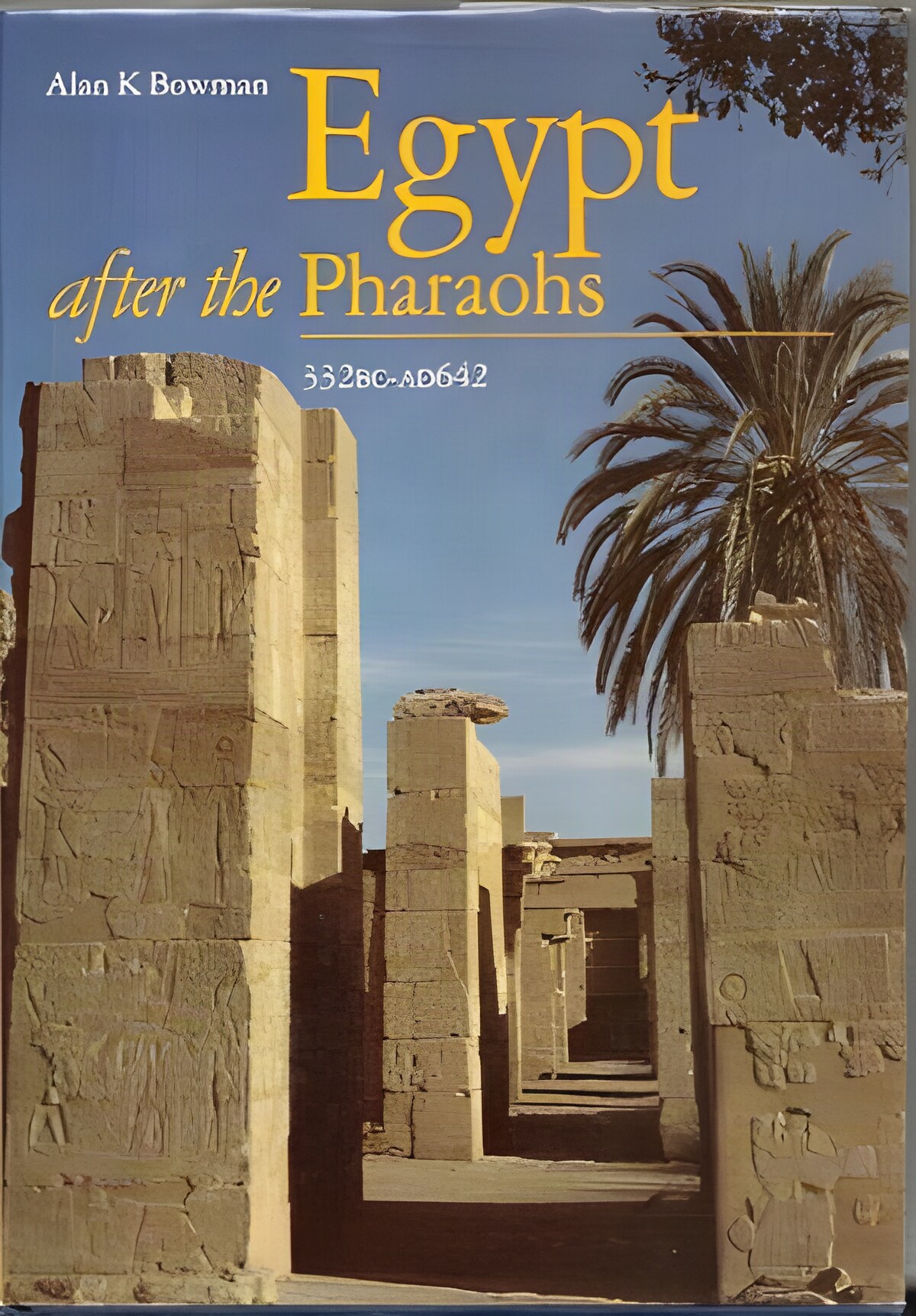
Hardcover. Berkeley CA, University of California Press, 1st, 1986, Book: Very Good, Dust Jacket: Very Good, Hardcover in a bright dust jacket, 264 pages, photographs throughout. Egypt After the Pharoahs treats the period which witnessed the arrival of the Greeks and Hellenistic culture in Egypt, the reign of the Ptolemies from Ptolemy I to Cleopatra, the conquest by Rome, the scientific and cultural achievements of Alexandria, and the rise of Christianity. The rich social, cultural, and intellectual ferment of this period comes alive in Alan Bowman's narrative. Clean copy.
Hardcover. London, Grant Richards, 1st, 1909, Book: Good, Dust Jacket: None, Hardcover, green cloth stamped in white, 294 pages, illustrated with 32 b&w photos. Back hinge partially cracked, otherwise clean. Light fraying to spine cloth at top.
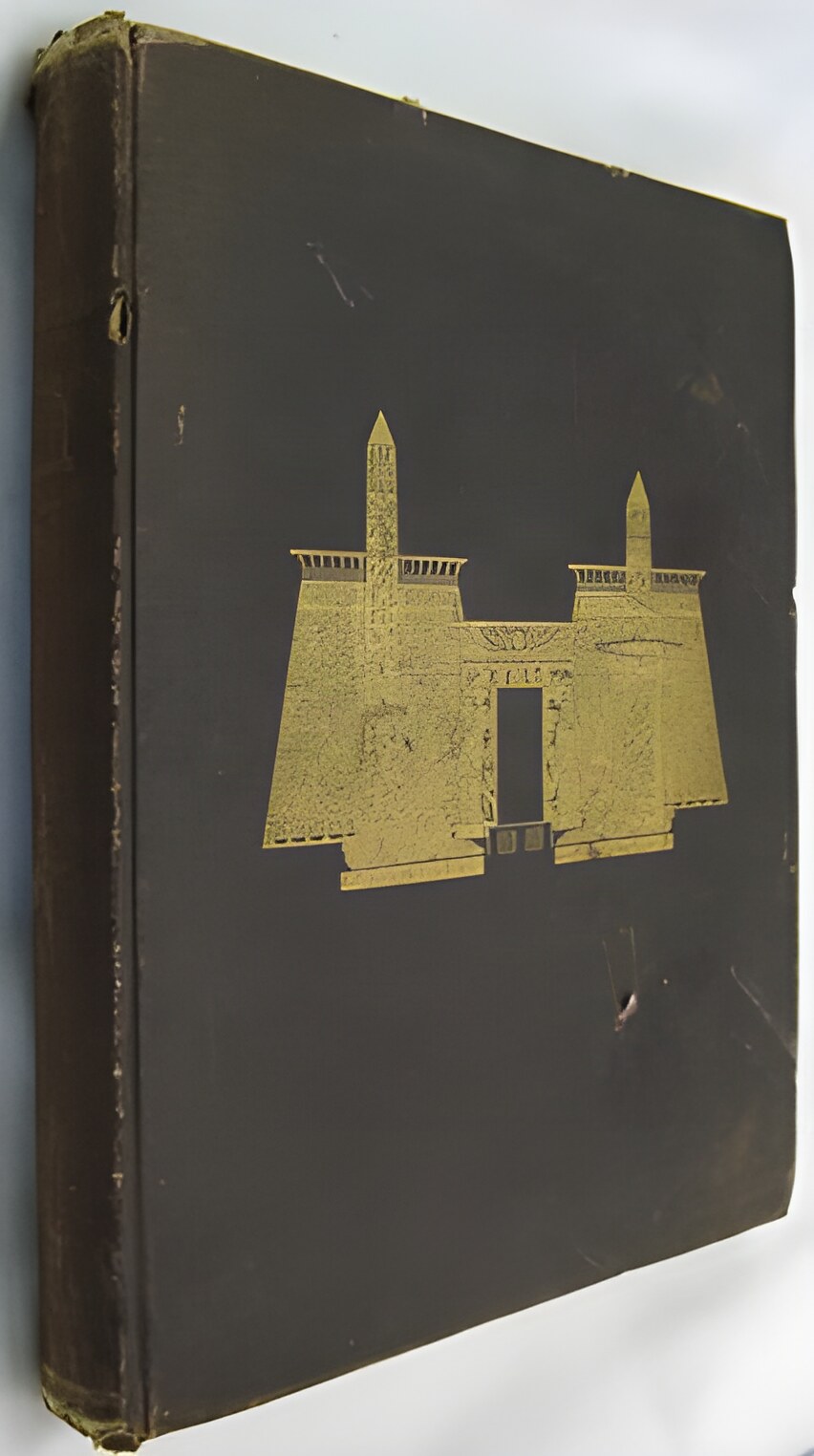
Hardcover. New York , privately printed, 1st, 1882, Book: Good, Dust Jacket: None, Hardcover. large folio, maroon cloth with gilt stamping. Covers worn, especially corners. Internally clean. 187 pages plus 51 full-page plates: 32 artotypes, 18 engravings, 1 chromo-lithograph. Some plates with light foxing, small water stains to some margins.In 1879, Gorringe won the contract to move the obelisk of Thutmosis III from Alexandria to Central Park for $75,000. This book is about the expedition to retrieve the obelisk and a study of the other standing obelisks in Paris and London. Frontispiece portrait of William Vanderbilt who financed the acquisition of the monument. Scarce in original printing.

 "Citadel to City-State: The Transformation of Greece, 1200-700 BCEby: Thomas, Carol G.; Conant, Craig;")

 "Composition in Black and White: The Life of Philippa Schuyler by: Talalay, Kathryn")
 "Confessions of a Born-Again Paganby: Anthony T. Kronman")

 "Craft and the Kingly Ideal: Art, Trade, and Powerby: Helms, Mary W.")
 "Crossbow, The: Mediaeval and Modern, Military and Sporting, It's Construction, History & Managementby: Payne-Gallwey, Sir Ralph")


 "Danish Fairy Talesby: Hack, Inge")

 "De Doctrina Christiana: A Classic of Western Cultureby: N/A")

 "Doors of the Kingdomby: Gouverneur/Khaled Azzam (Author), Mohamed Zakariya , Haajar")
 "Dreams and Shadows: Thomas H. Hotchkiss in Nineteenth-Century Italyby: Novak, Barbara")

 "EASY GOby: Michael Crichton writing as John Lange")

 "Egypt of Yesterday and To-Dayby: Withers, Percy")