Hardcover. New York, Guggenheim Museum, 1st, 1998, Book: Very Good, Dust Jacket: None, 544 pages, illustrated in color and b&w. Essays by various scholars on over 100 artists working in France, bibliography. Illustrated boards. In publisher's shrinkwrap.
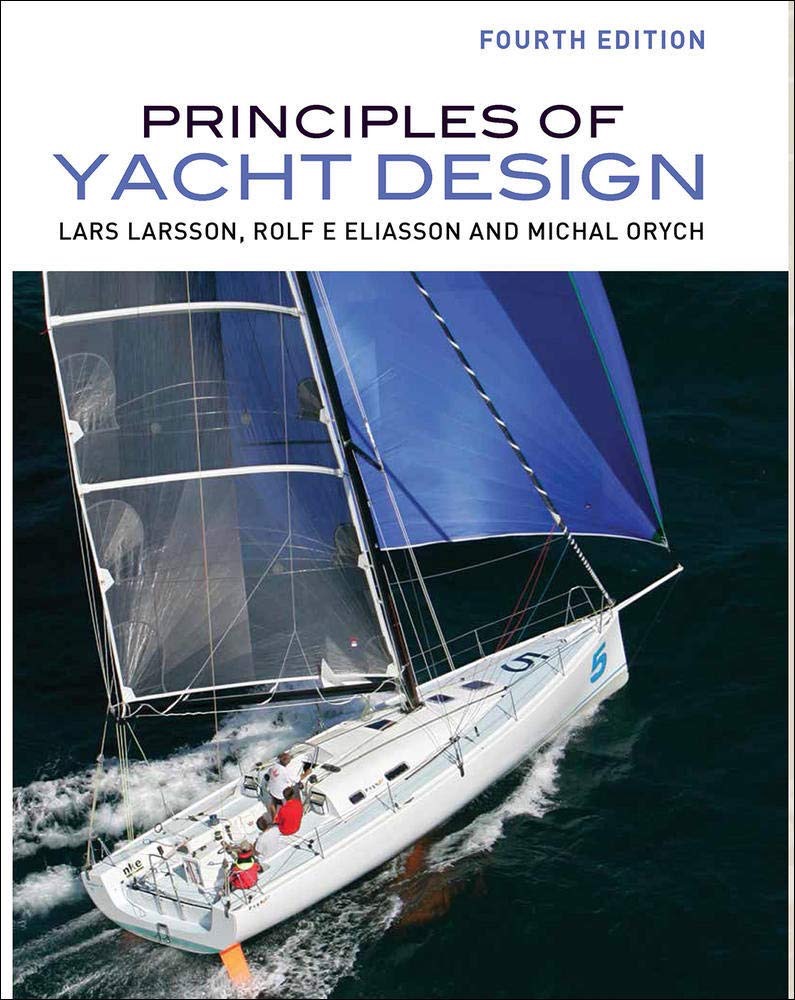
Hardcover. International Marine/McGraw Hill, 4th Ed., 2014, Book: Very Good, Dust Jacket: Very Good, Hardcover in a bright dust jacket, 352 page, illustrated throughout. A comprehensive guide covering all aspects of designing and creating your dream yacht, from hull geometry to sail rigging and performance evaluation. Principles of Yacht Design has established itself as the standard book on the subject for practicing designers, naval architecture students, discerning boat owners as well as the boatbuilding industry as a whole. The fourth edition is completely revised and expanded and follows the design from scratch of a completely new yacht including all new computer-generated explanatory illustrations. As such, it examines every aspect of the process of yacht and powerboat design. The authors have used a newly designed 41 foot performance cruiser to demonstrate the practical application of yacht design theory. Name on front fly leaf, otherwise clean, like new.
Softcover. NY, Columbia University Press, reprint, 1991, Book: Very Good, Dust Jacket: None, Softcover, 351 pages, profusely illustrated in b&w. Name on front fly leaf, otherwise a bright, clean copy.
Hardcover. NY, Rizzoli, 1st, 2023, Book: Very Good, Dust Jacket: Very Good, Hardcover in a bright dust jacket. This special volume presents a visual timeline of Ralph Lauren's remarkable history as a lifestyle innovator. Lauren's unparalleled ability to seamlessly blend fashion and the home is illustrated with the groundbreaking designs and innovative use of materials that have distinguished the home collection since its inception in 1983: menswear-inspired Oxford Cloth bedding that required the creation of special looms and took two years to refine; the sleek RL-CF1 chair, crafted of carbon fiber and inspired by Lauren's McLaren F1 racecar; and an appreciation for a timeworn, weathered aesthetic, as exemplified in the iconic Writer's Chair with its hand-burnished leather and rich patina. Historic achievements such as the opening of his first New York City flagship on Madison Avenue - which invited guests to experience the complete World of Ralph Lauren in a residential environment - and his renowned restaurants that offer the epitome of gracious hospitality, demonstrate the magnitude of Ralph Lauren's influence on the worlds of lifestyle design and hospitality. The timeline is complete with quotes from distinguished members of the design world and prominent figures of our culture including Oprah Winfrey, Hillary Rodham Clinton, and architecture critic Paul Goldberger. Ralph Lauren's signature ability to create transportive environments begins with his private homes that inspire his iconic lifestyle collections. Ralph Lauren: A Way of Living offers an in-depth look at all the places Lauren calls home, from a sprawling ranch in Colorado and an island retreat in Jamaica, to a Fifth Avenue penthouse overlooking Manhattan's Central Park, a seaside home in Montauk and a country estate in Bedford. Lauren's homes are deeply personal expressions of his vision for living; captivating imagery is complemented by essays and descriptions written in his own words that intimately express the meaning of home and share inspiration and anecdotes for each residence. The photos of Lauren's captivating homes are followed by a celebration of Ralph Lauren Home's lifestyle collections - cinematic worlds that are brought to life with iconic imagery showcasing Lauren's pioneering lifestyle approach and all-encompassing home collection. DUE TO WEIGHT. DOMESTIC SHIPPING ONLY.
Hardcover. Germany, Hatje Cantz Publishers, 1st, 2006, Book: Very Good, Dust Jacket: Very Good, Hardcover, 159 pages. Like new in publishers shrink-wrap. The prominent Genovese architect Renzo Piano--recipient of the 1998 Pritzker Award and architect of the Whitney Museum of American Art and Morgan Library renovations, as well as the new New York Times building--has just completed a new and unusual museum building--the Zentrum Paul Klee on the outskirts of Bern. The center, says Piano, is dedicated to the "poet of silence," and thus it was fitting to consider building a museum that would speak softly. The Zentrum Paul Klee rises upward in the form of three hills connected by a 150-meter-long thoroughfare, the "Museum Street" serving as a path within the complex. The three structures make up a harmonious yet prominent landscape sculpture whose roofs are supported by innovative steel construction. Includes photographs, design sketches, plans and models--a living image of a magnificent building.
Hardcover. Germany, Hatje Cantz Publishers, 1st, 2006, Book: Very Good, Dust Jacket: Very Good, Hardcover, 159 pages. Like new in publishers shrink-wrap. The prominent Genovese architect Renzo Piano--recipient of the 1998 Pritzker Award and architect of the Whitney Museum of American Art and Morgan Library renovations, as well as the new New York Times building--has just completed a new and unusual museum building--the Zentrum Paul Klee on the outskirts of Bern. The center, says Piano, is dedicated to the "poet of silence," and thus it was fitting to consider building a museum that would speak softly. The Zentrum Paul Klee rises upward in the form of three hills connected by a 150-meter-long thoroughfare, the "Museum Street" serving as a path within the complex. The three structures make up a harmonious yet prominent landscape sculpture whose roofs are supported by innovative steel construction. Includes photographs, design sketches, plans and models--a living image of a magnificent building.
Hardcover. London, Laurence King Publishers, 1st, 2008, Book: Very Good, Dust Jacket: None, Hardcover, 192 pages. A pictorial tour of unique loos of the world. No dj issued.
Hardcover. Koln GR, Taschen, 1st, 2000, Book: Very Good, Dust Jacket: None, Hardcover, 464 pages. Original publisher's faux wood boards, lettered orange at the spine and front cover. Copiously illustrated in color and black and white throughout. Text in English, German and French. Many photographs By Julius Shulman. Originally from Vienna, Richard Neutra came to America early in his career, settling in California. His influence on post-war architecture is undisputed, the sunny climate and rich landscape being particularly suited to his cool, sleek modern style. Neutra had a keen appreciation for the relationship between people and nature; his trademark plate glass walls and ceilings which turn into deep overhangs have the effect of connecting the indoors with the outdoors. Neutra's ability to incorporate technology, aesthetic, science, and nature into his designs brought him to the forefront of Modernist architecture. For the first time, all of Neutra's works (nearly 300 private homes, schools, and public buildings) are gathered together in one volume.
Hardcover. Hatje Cantz, 1st, 2019, Book: Very Good, Dust Jacket: None, Hardcover, pictorial boards, 304 pages illustrated in b&w and color. At the first mention of his name, one can easily picture them: light-flooded bungalows that are lavishly composed into nature and that characterize the architectural style of the American West Coast surrounding Los Angeles. But it is sometime overlooked that the career of Richard Neutra (1892-1970) began in Berlin-Zehlendorf. And yet these houses in Zehlendorf represent a fascinating phase in Neutra's work. With their complex color schemes and extravagant interior design, they reveal themselves to be more than just an experimental and radically innovative design. Indeed, these lesser-known aspects already hint at elements that will be taken up again in future projects. The present publication finally provides for a rightful appreciation of Neutra's early works and, alongside historical sources, it collects countless new and unpublished documents about the houses and their first residents. Clean, still in publisher's shrink wrap.
Softcover. Cambridge MA, The MIT Press , 1st, 2021, Book: Very Good, Dust Jacket: None, Softcover, 373 pages. A history of New York subway passengers as they navigated the system's constraints while striving for individuality, or at least a smooth ride. When the subway first opened with much fanfare on October 27, 1904, New York became a city of underground passengers almost overnight. In this book, Stefan Hohne examines how the experiences of subway passengers in New York City were intertwined with cultural changes in urban mass society throughout the twentieth century. Hohne argues that underground transportation--which early passengers found both exhilarating and distressing--changed perceptions, interactions, and the organization of everyday life. Clean copy.
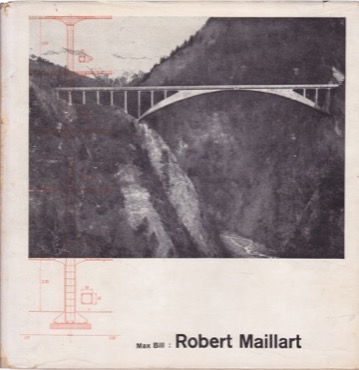
Hardcover. Zurich, Verlag fur Architektur], 1st, 1949, Book: Very Good, Dust Jacket: Fair, Hardcover in a worn, lightly soiled dust jacket with a chunk missing from the rear panel. 180 pages. Text in German, French and English, illustrated in black and white throughout. History of Robert Maillart bridges. Previous owner's signature on inside front cover, otherwise clean.
New York , Princeton Architectural Press, 2001, Book: Very Good, Dust Jacket: Very Good, Hardcover, 330 pages, color, b&w illustrations. Like-new condition. The first architect trained in America, Robert Mills is best known as the designer of many iconic buildings in our nation's capital: the Washington Monument, the Department of Treasury headquarters, the Patent Office Building (now National Portrait Gallery) , and the Post Office Headquarters.Beautifully illustrated with never-before-published watercolors and renderings and new color photography commissioned for the book.
Softcover. New Haven CT, Yale University Press, 1st, 2011, Book: Very Good, Dust Jacket: None, Softcover, 202 pages. color and b&w illustrations. Italian couturier Roberto Capucci (b. 1930) is revered by contemporary fashion designers for his innovative silhouettes and masterful use of color and materials. Capucci refers to his creations as "studies in form," and draws inspiration from a multitude of sources, including art, architecture, and nature. This beautifully illustrated book, the companion to the first exhibition of Capucci's work in the United States, examines his career from the 1950s to the present in the context of the rise of Italian fashion.
Hardcover. New York, Henry Holt & Co, 1st, 1991, Book: Very Good, Dust Jacket: Good, Hardcover, 205 pages, illustrated throughout. Minor dust jacket edge wear, otherwise, very clean and tight copy. An examination of rooftop designs for living spaces, conservatories, studios, conference rooms, tea houses, and pool rooms includes floor plans and discusses building and zoning codes
Hardcover. Chicago, American Planning Association, 1994, Book: Very Good, Dust Jacket: None, Hardcover, pictorial boards, 441 pages. Illustrated in b&w and color. Conventional planning techniques just aren't working in many rural and suburbanizing areas. Developments where people merely exist have replaced neighborhoods where people once thrived. Strip malls and checkerboard subdivisions prevail. Randall Arendt argues convincingly that this scenario is not inevitable. In Rural by Design he advocates creative, practical land-use planning techniques to preserve open space and community character. He shows how developments all across America have used these techniques successfully. This book examines a broad spectrum of nitty-gritty design topics in a lively, readable style. Topics range from sewage disposal and farmland preservation to greenway planning for interconnected open space and the design of rural subdivision streets. The book includes numerous case examples of residential, commercial, and mixed-use projects that have used these innovative design techniques. And it takes an in-depth look at the design elements of the traditional town--and how to reinvent those elements in today's communities. Names on front fly leaf, otherwise clean.
Hardcover. Moscow, Sovietsky Khudozhnik, 1st, 1990, Book: Very Good, Dust Jacket: Very Good, 359 pages. Hardcover with dust jacket. Russian text only. Profusely illustrated in full color and black & whiite. A survey of Russia's brief Art Nouveau movement in architecture. Bright, clean copy in a similar dust jacket. In a plain cardboard slipcase.
Softcover. Santa Barbara CA, UCSB Art Museum, 2nd pr., 1979, Book: Very Good, Dust Jacket: None, Softcover, 105 pages illustrated with b&w photos and architectural drawings. Clean, crisp copy of this exhibition catalog.
Softcover. Saratoga Springs NY, Lyrical Ballad Book Store, 1st, 1991, Book: Very Good, Dust Jacket: None, Softcover, 183 pages. Conceiving of the City of Saratoga Springs as a museum in which the exteriors of buildings are the works of art, many key examples of architecture are carefully placed within the context of local and national history and of architectural style. Illustrated with many black and white photos. Clean copy
Softcover. Flammarion, 1st, 1995, Book: Very Good, Softcover, 223 pages, illustrated in color and b&w. Tracing the origins of Americanism back to the late nineteenth century, Scenes of the World to Come focuses on the European discovery of the American city--with its grand hotels, skyscrapers, and massive industrial plants, its new-found sense of efficiency and mobility, and its infatuation with domestic appliances and mechanization. The book analyzes the global structures and thematic strategies according to which American architectural forms and urban models migrated to Europe, bringing the promise of a new architecture and, along with it, the threat of a dissolution of European identity. Clean copy.
Hardcover. Taschen, 1st, 2011, Book: Very Good, Dust Jacket: None, Hardcover, 332 pages. Since 2000, the Serpentine Gallery in London's Kensington Gardens has called on some of the world's top architects to design summer pavilions - temporary structures that are erected next to the Gallery itself for a three-month period. The Serpentine, which was built in 1934 as a tea pavilion, opened in 1970 as a showplace for exhibitions of modern and contemporary artists ranging from Matthew Barney to Dan Flavin, Ellsworth Kelley, Louise Bourgeois or Rachel Whiteread. It is the only public modern and contemporary art gallery in central London, which maintains free admission and is open seven days a week. The pavilions are the work of international architects or design teams who at the time of the Serpentine's invitation have not completed a building in England. A maximum of six months from invitation to completion is allotted. The only architecture program of its type in the world, the Serpentine Gallery Pavilions attract up to 250,000 visitors each summer. The architect Richard Rogers has stated, This is a heavy and oversized book and will require extra shipping. International customers please ask for a shipping quote before purchasing.
Hardcover. Cologne GR, Taschen, 1st, 2007, Book: Very Good, Dust Jacket: Very Good, Hardcover in a bright dust jacket, 245 pages, illustrated in color and b&w. An extensive collection of hand-illustrated shop window designs from 1938 to 1950. These spectacular, often grandiose plans for grocery stores, shoe shops, beauty salons, bakeries, and more are reminders of a time when stores were sacred shrines for the congregation of American shoppers - impressive and even slightly intimidating, just like the future itself.
Hardcover. Cambridge MA, The MIT Press, 1st, 2009, Book: Very Good, Dust Jacket: Very Good, Hardcover in a bright dust jacket, 329 pages. The chapters include: the social economic & political life of sidewalks; construction & evolution of sidewalks; parades festivals & celebrations; disruption & confrontation; the right to the sidewalk; sidewalk as space of dissent; sidewalk as shelter; sidewalk as urban forest. Clean copy.
Hardcover. London, Thames and Hudson, 1st, 2015, Book: Very Good, Dust Jacket: Very Good, Hardcover in a bright dust jacket, 144 pages, Color photos by Ara Guller. Sinan was the greatest architect of the Ottoman Golden Age of the sixteenth century when the Ottoman Empire reached its zenith of power and magnificence. His style marks the apogee of Turkish art. Under Sleyman the Magnificent and his succcessor Selmi II, Sinan designed hundreds of buildings: mosques, palaces, tombs, mausolea, hospitals, schools, caravanserai, bridges, aqueducts and baths, many of them presented and analysed in this book. In his greatest works, he adapted Byzantine and Islamic styles to produce something quite new: a centralized organization of absolute space unhindered by pillars or columns and covered by a soaring dome. An architect of genius in a dynamic new empire expanding into both Asia and Europe, he was a true man of the Renaissance. Clean, bright copy.
Hardcover. London, Hodder & Stroughton, 1st, 1923, Book: Very Good, Dust Jacket: Very Good, Hardcover, 280 pages, blue cloth covers with gilt design. Color frontispiece portrait of the famous English architect. Illustrated with 12 color plates, 91 b&w plates (some fold-outs). Top edge gilt, clean copy with the scarce light blue dust jacket that has light edgewear with coat-of-arms on front panel, title on spine.

 "Premises: Invested Spaces in Visual Arts, Architecture, & Design from France 1958-1998by: Buchloh, Benjamin H.D.")


 "Renzo Piano: Zentrum Paul Klee, Bern, The Architectureby: Piano, Renzo")
 "Renzo Piano: Zentrum Paul Klee, Bern, The Architectureby: Piano, Renzo")


 "Restroom: Contemporary Designby: Hudson, Jennifer")
 "Richard Neutra : Complete Worksby: Barbara Mac Lamprecht, (Photography) Julius Shulman, (Editor) Peter Goessel")




 "Robert Mills: America's First Architectby: Bryan, John M.")
 "Roberto Capucci: Art into Fashionby: Dilys E. Blum")
 "Rooftop Architecture: The Art of Going Through the Roofby: Busch, Akiko")

 "Russia's Art Nouveauby: Borisova, Elena and Grigory Sternin")

 "Saratoga Springs: An architectural history, 1790-1990 by: Kettlewell, James K")

 "Serpentine Gallery Pavilionsby: Jodidio, Philip")
![Shop America: Midcentury Storefront Design 1938-1950 by: Heimann, Jim [editor]; Heller, Steven [essay]](javascript:largeIMTop('https://www.browsingisarousing.com/shop/images/Shop-America-Midcentury-Storefront-Design-1938-1950_by_Heimann-Jim-editor-Heller-Steven-essay360856-415894.jpg','https://www.browsingisarousing.com/shop/images/Shop-America-Midcentury-Storefront-Design-1938-1950_by_Heimann-Jim-editor-Heller-Steven-essay360856-415894.jpg',0,'360856',0,'') "Shop America: Midcentury Storefront Design 1938-1950 by: Heimann, Jim [editor]; Heller, Steven [essay]")
 "Sinan:Architect of Suleyman the Magnificent and the Ottoman Golden Ageby: Freely, John; Burelli, Augusto Romano")
 "Sir Christopher Wren A.D. 1632-1723: Bicentenary Memorial Volumeby: Royal Institute of British Architects")