Hardcover. Graphis Press, 1st, 2002, Book: Very Good, Dust Jacket: Very Good, 256 pages, 250 color plates featuring the best poster art of the year from all over the world. Like new in publisher's shrinkwrap. Outstanding creative works by world-renowned designers, selected from thousands of entries and reproduced in full-color, large format reproductions. As a contemporary reference and source of inspiration for successful promotional graphic design, Poster Annual 2002 is conveniently organized into a range of client categories ? from sports, film, architecture, and fashion, to festivals, museums, retail, public service, competitions, and corporate communications. This edition features extensive captions, detailed indexes, and informative credits, making it a valuable resource for designers, art directors, and clients.
Hardcover. NY, Whitney Library of Design, 1st, 1990, Book: Very Good, Dust Jacket: Very Good, Hardcover, 175 pages, color plates. A collection of fine color illustrations and text describing conversions of a variety of structures (a barn, firehouse, power station, martello tower...) to residential use. Exciting and refreshingly different homes. Great ideas in a charming book.
Hardcover. NY, Harmony Books, 1wt, 1983, Book: Very Good, Dust Jacket: Very Good, Hardcover, 152 pages. full blue cloth, silver lettering on spine. Illustrated with B&W and color photographs and reproductions. A visual tour of the great country English houses through the ages. Clean copy.
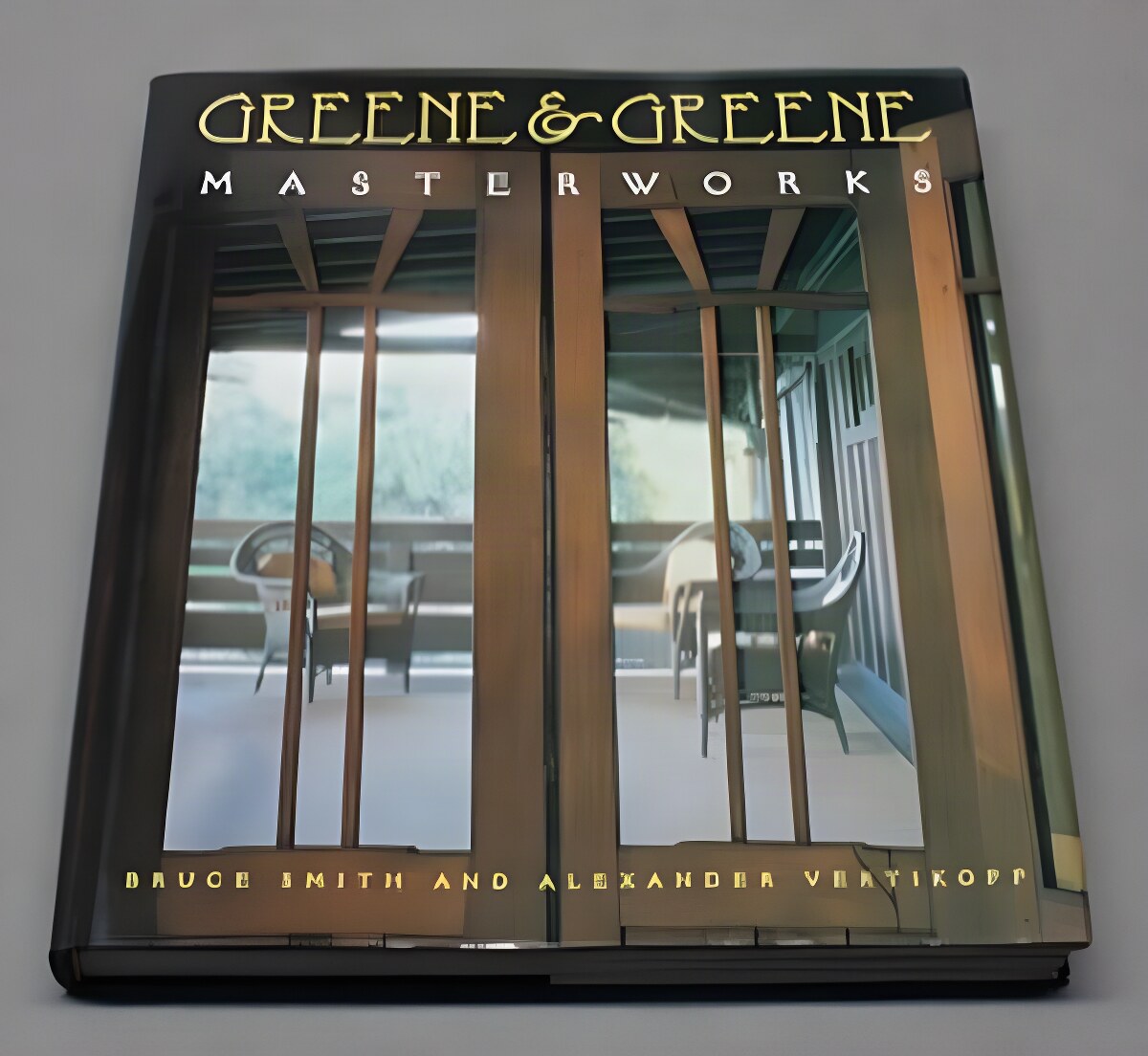
Hardcover. San Francisco, Chronicle Books, 1st, 1986, Book: Very Good, Dust Jacket: Good, Hardcover in a bright. lightly worn dust jacket. 240 pages illustrated in color. A full-color survey of the architectural firm of Greene & Greene that almost single-handedly defined the Arts & Crafts aesthetic in America in the first decades of the 20th century. An in-depth tour of 25 magnificent homes examines the creative evolution of their style as well as surveying their greatest works. Light tape repair to spine of dust jacket.
Hardcover. Syracuse NY, Syracuse University Press, 1st, 1983, Book: Very Good, Dust Jacket: Very Good, Hardcover in a bright dust jacket. 186 pages, 116 illustrations. "The first serious study of the totality of Stickley's accomplishments, especially his architecture", and as a central figure in the American Arts and Crafts Movement as founder of The Craftsman and of the Stickley Workshops. Bibliographical references, pages 169-181. Clean copy.
Hardcover. NY, Delano Greenidge Editions, 1st, 2003, Book: Very Good, Dust Jacket: Very Good, Hardcover, 396 pages, lavishly illustrated throughout in color and b&w. Light shelf-wear to dust jacket, else a clean, tight copy. Guimard is the pre-eminent architect of Art Nouveau in France. He influenced French architecture and design in the first half of the 20th century. He was also the architect of a number of Paris Metro entrances. He was regarded as an architect who wielded the greatest influence on the popular imagination in Paris during the late 19th- and early 20th centuries.
Softcover. Santa Monica CA, Arts & Architecture Press, 1st, 1990, Book: Very Good, Dust Jacket: None, Softcover, 172 pages. Building in the hills is an enterprise full of unpleasant surprises and traps just waiting to snare the inexperienced. Arthur Levin, a structural engineer and architect who has been involved in more than 2,000 hillside projects, offers a distillation of his 35 years of experience that will help the uninitiated to avoid the otherwise inevitable pitfalls and traps. The book has many real life examples of the unexpected encounters with unstable land, surface drainage problems, subterranean water, demanding owners, uncooperative building inspectors, inexperienced contractors, and other examples of the author's triumphs and occasional enlightening failures. All of these brief histories are instructive and guaranteed to be of invaluable help to the first or second time hillside designer and builder. More than 110 line drawings illuminate the text.
Hardcover. Gloucester, MA, Quarry Books, 1st, 2004, Book: Near Fine, Dust Jacket: Near Fine, 144 pages. Hardcover. Color and b/w illustrations throughout. Dust jacket unclipped, glossy, excellent. Black cover boards, gilt title on spine. Pages clean and unmarked. Binding tight, spine straight. In beautiful, nearly new condition. This book guides readers through all the aspects of creating a beautiful and comfortable home that elegantly takes advantage of media-related furnishings and emerging technologies.
Hardcover. NY, Monacelli, 1st, 2006, Book: Very Good, Dust Jacket: Very Good, Hardcover, 160 pages. Driving the glossy shelter magazines -- Architectural Digest, House and Garden, and many more -- is an enduring fascination with other people's lives and houses. But the pristine photographs in these publications do not represent reality. In his "Households" series, artist and architect Mark Robbins has invented the "flip side" of interior design magazines: a compelling series of photographs of actual people in actual homes. A young family at a writers retreat, a gay couple in a Long Island beach house, a husband and wife in a family compound, a single parent in a city apartment: Robbins has photographed residents and environments that comment on contemporary life and relationships. Robbins's design and photography work, which bridges the fields of art and architecture, has long focused on the complex social and political forces that contribute to the built environment. The thoughtfully arranged compositions reinforce, undermine, and even confuse stereotypes; the collection as a whole comments on present-day customs and ways of life in all their complexity.
Hardcover. NY, D. Appleton-Century Co,, 1st, 1939, Book: Very Good, Dust Jacket: None, Hardcover, brown cloth with light blue lettering, 420 pages. Many b&w illustrations and photos. A resource for new home owners (circa 1930s) covering all aspects: financing, design, furnishings, improvements, household labor, etc. A nice visual resource for the time period. Name on front fly leaf otherwise clean.
Hardcover. NY, powerHouse, 1st, 2005, Book: Very Good, Dust Jacket: Very Good, Hardcover, 96 pages. In 1999, photographer Thomas Roma found himself within the walls of Philadelphia's Holmesburg Prison, one of the most notorious prisons in the United States, doing a special photographic project for Steve Buscemi's Animal Factory. During downtime Roma wandered through this nineteenth-century fortress, walking in and out of many of its seven hundred or so cells. After Holmesburg's inception in 1896--on the occasion of which one Philadelphia reporter warned, "Abandon all hope all ye who enter here"--it quickly became the prison for Philadelphia's worst criminals, eventually packing up to five prisoners into six by eight foot cells designed for single-occupancy. After leaving the site, Roma found his mind often inhabiting the space of the prison with its halls of flaking paint and graffiti-covered cells. Overwhelmed by the evidence of the lives spent inside those small rooms, Roma returned to photograph on his own, creating the images now collected for In Prison Air: The Cells of Holmesburg Prison.
Softcover. Durham NC, Duke University Press, 5th pr., 1999, Book: Very Good, Dust Jacket: None, Softcover, 250 pages, b&w illustrations. This entertaining and playful book views Disney World as much more than the site of an ideal family vacation. Blending personal meditations, interviews, photographs, and cultural analysis, Inside the Mouse looks at Disney World's architecture and design, its consumer practices, and its use of Disney characters and themes. This book takes the reader on an alternative ride through "the happiest place on earth" while asking "What makes this forty-three-square-mile theme park the quintessential embodiment of American leisure?" Turning away from the programmed entertainment that Disney presents, the authors take a peek behind the scenes of everyday experience at Disney World. In their consideration of the park as both private corporate enterprise and public urban environment, the authors focus on questions concerning the production and consumption of leisure. Featuring over fifty photographs and interviews with workers that strip "cast members" of their cartoon costumes, this captivating work illustrates the high-pressure dynamics of the typical family vacation as well as a tour of Disney World that looks beyond the controlled facade of themed attractions. Clean copy.
Hardcover. Layton UT, Gibbs Smith, 1st, 2006, Book: Very Good, Dust Jacket: Very Good, Hardcover, 230 pages, illustrated in color and b&w. Like new condition in a bright dust jacket.
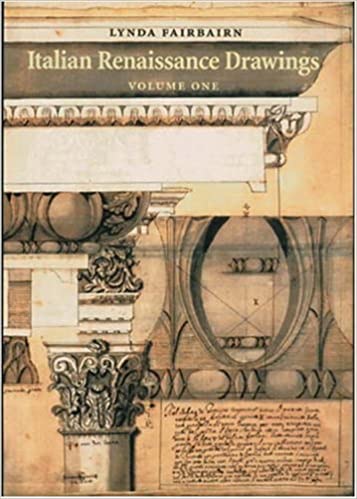
Hardcover. London, Oxford University Press, 1st, 1999, Book: Very Good, Dust Jacket: Very Good, 401 pages. VOLUME 2 ONLY. Hardcover with dust jacket. Clean, unmarked copy with only minor wear to dust jacket. Include ornamental designs from the circle of Giorgio Vasari, Renaissance machinery, and the ancient brick tombs of the Roman Campagna as drawn by Giovanni Battista Montano, etc.PLEASE NOTE: DUE TO WEIGHT, DOMESTIC SHIPPING ONLY.
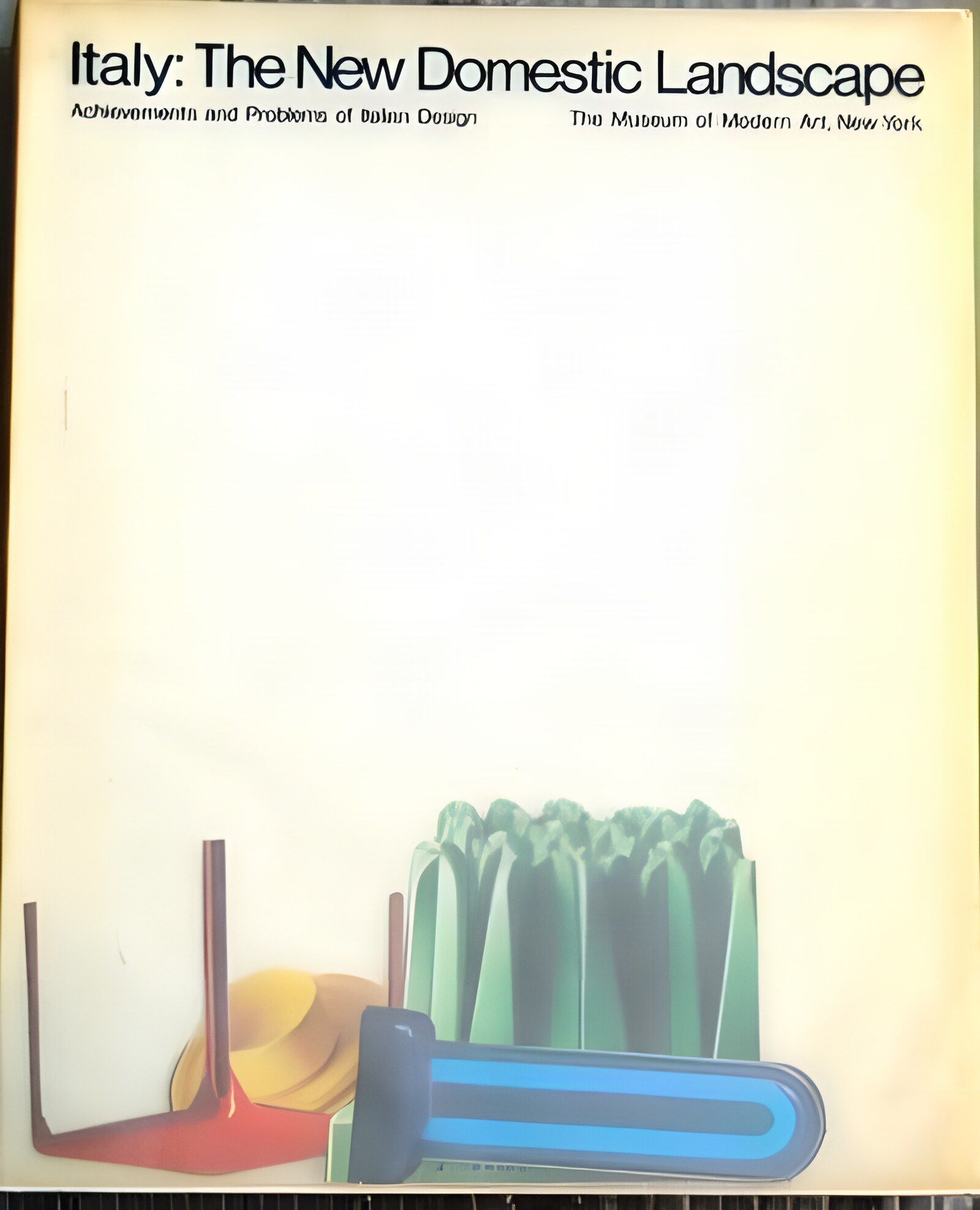
Hardcover. NY, The Museum of Modern Art, 1st, 1972, Book: Very Good, Dust Jacket: Very Good, Hardcover in a translucent dust jacket with 5 cut-outs enclosed (as called for), jacket with the usual darkening to edges and spine; The catalog for the 1972 major exhibition at MOMA, providing an excellent survey of modern Italian design and associated radical architectural movements. With articles on the history of modern Italian design by Portoghesi, Benevolo, and Gregotti, and articles on architecture by Celant and Tafuri. 430 pages with 520 photographic images and illustrations of which 124 are in color offering a kaleidescopic yet comprehensive vision of Italian design, objects and environments. Clean copy.
Hardcover. Washington DC, Dumbarton Oaks Research Library, 1st, 1998, Book: Very Good, Dust Jacket: Very Good, Hardcover in a bright dust jacket, 310 pages. John Evelyn (1620-1706), an English virtuoso and writer, was a pivotal figure in seventeenth-century intellectual life in England. He left an immensely rich literary heritage, which is of great significance for scholars interested in garden history and the histories of intellectual life and architecture. Evelyn is perhaps best known for Sylva, a compilation of thoughts on practical estate management, gardening, and philosophy, and the first book published by the Royal Society in London. As one of the group of learned men who founded the Royal Society in 1660 to promote scientific research, discussion, and publications, John Evelyn was at the center of many of the vital intellectual currents of the time. "Elysium Britannicum," Evelyn's unpublished manuscript of almost a thousand pages of densely packed drafts, rewrites, and projects, was perhaps something of an enigma to his contemporaries, who nevertheless urged its publication. It remains for scholars today a treasure-trove of fascinating insights on Evelyn and his milieu. Clean copy.
Hardcover. Ostfildern GR, Hatje Cantz, 1st, 2008, Book: Very Good, Dust Jacket: Very Good, Hardcover, 288 pages 231 illustrations 60 in color with 274 plans and drawings. Biography. Like new in publisher's shrink-wrap. Josef Paul Kleihues (1933-2004) was one of the most prolific architects of postwar Germany, famous both as the Director of the International Building Exhibition Berlin in 1987 and for his design for the Museum of Contemporary Art in Chicago. He was also known for his sensitive interventions into older buildings, an instance of which is the former Hamburger Bahnhof--now the Museum fur Gegenwart--in Berlin, where Kleihues intermixed glass walls and light installations by the American Minimalist Dan Flavin with the building's original nineteenth-century Neoclassical design. (His reconstruction was widely deemed to rival or even surpass Gae Aulenti's overhaul of the interior of the Musee d'Orsay in Paris.) This first volume of a three-part monograph presents projects up to 1980, including the highly acclaimed Berlin Sanitation Department and the Neukolln Hospital. Even in these early works, Kleihues' practical, problem-solving approach is already evident, indicating his readiness to reflect on the traditional approaches of Modern architecture and his capacity to expand them in interesting ways. This very generously illustrated volume was designed by Kleihues himself, just before his death in 2004.
Hardcover. New York, Harry N. Abrams, 1st, 2010, Book: Very Good, Dust Jacket: Very Good, 224 pages. Hardcover with dust jacket. 200 illustrations in color. Foreword by Jennifer B. Lee, Performing Arts Curator, Rare Book and Manuscript Library, Columbia University. Index. Clean, unmarked copy with only minor wear to dust jacket. Joseph Urban is a lavish celebration of this prolific artist, architect, and designer, whose accomplishments include magnificent Art Deco buildings, spectacular Ziegfeld Follies productions, and dramatic sets for the Metropolitan Opera. Joseph Urban (1872-1933) began his career as an architect and artist in Vienna before moving to America in 1911. In 1914 he moved to New York, where he ultimately signed on as set designer of the Metropolitan Opera. He also became immersed in an astonishing array of outside projects, designing nightclubs, hotel lounges, skyscrapers, theaters, stage and film sets, and even children's books. Though his creative output was immense, little remains of his work except the Mar-a-Lago in Palm Beach, and the New School and the base of the Hearst Tower in New York.
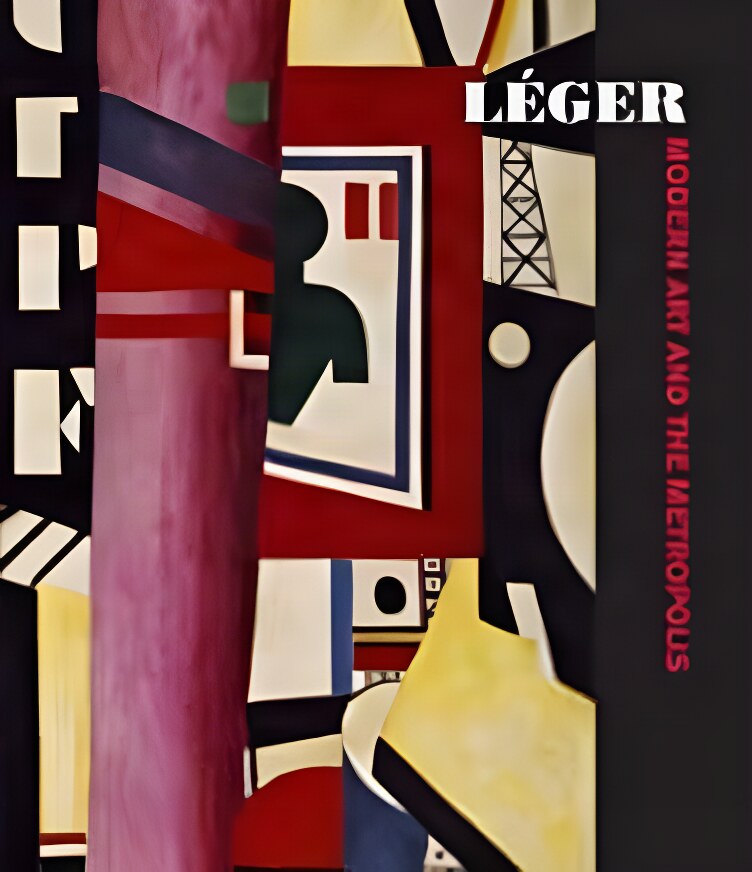
Hardcover. New Haven CT, Yale University Press, 1st, 2013, Book: Very Good, Dust Jacket: None, Hardcover, 292 pages. No dj issued. An insightful look at the dynamic relationship between modern art and modern urban life in 1920s Paris through the lens of Fernand Léger's masterpiece The City. With his landmark 1919 painting The City, Fernand Léger (1881-1955) inaugurated a vitally experimental decade during which he and others redefined the practice of painting in confrontation with the forms of cultural production that were central to urban life, ranging from graphic and advertising design to theater, dance, film, and architecture. This catalogue casts new light on the painting (reproducing all of its studies together for the first time), the avant-garde use of print media, and Léger's fascination with cinema and architecture, and contextualizes a network of international avant-gardes--including Blaise Cendrars, Le Corbusier, Jean Epstein, Piet Mondrian, Amédée Ozenfant, Francis Picabia, and Theo van Doesburg--in relation to Léger. Featuring nearly 250 images of paintings, architectural designs, models, posters, set designs, and film stills and an anthology of relevant historical texts not previously published in English, this handsome volume conveys the spirit of experimentation of the 1920s. Scholars in the fields of art, architecture, and film history offer a deeper understanding of the relationship between art and the modern urban experience that defined this significant chapter in the history of modern art.
Softcover. London, Reaktion Books,, 1st, 2004, Book: Very Good, Dust Jacket: None, Softcover, 223 pages, 144 illistrations, most in color. An exploration of the cult and celebration of death, loss and memory. Tracing the history and design of burial places throughout Europe and the USA, Ken Worpole ranges from village churchyards to tightly packed cities of the dead, such as the Jewish Cemetery in Prague and Pere Lachaise in Paris.
Hardcover. NY, Phaidon Press, 1st, 2008, Book: Very Good, Dust Jacket: None, This slip-cased, oversized book, weighing 20 pounds and containing over 2000 illustrations, summarizes the life and work of the most important modern architect of the 20th century: the legendary, controversial, and confrontational Le Corbusier. Le Corbusier was not exclusively an architect but an artist (painter and sculptor), urbanist, author, furniture designer, world traveler, and media figure. What is most impressive in this volume are the huge-scale photographs drawn from the Le Corbusier archives at the Fondation Le Corbusier in France. These photographs are personal, professional, indicative, anecdotal, illustrative, and symbolic of the entire saga of Le Corbusier's life and career over 60 years. They make this book an absolute gold mine for anyone wanting to understand and steep themselves in the spirit and character of this greatest modern architect of the last century. The written material is also first-rate: Jean-Louis Cohen, France's best-known historian of modern architecture, contributes an informative introduction, and Tim Benton, a well-known British architectural historian, writes opening texts for individual chapters. Recommended for architecture and art libraries as well as public libraries with serious art collections.--Peter S. Kaufman, Boston Architectural Ctr. NOTE; DUE TO SIZE AND WEIGHT THIS VOLUME CANNOT BE SHIPPED OUTSIDE THE U.S.
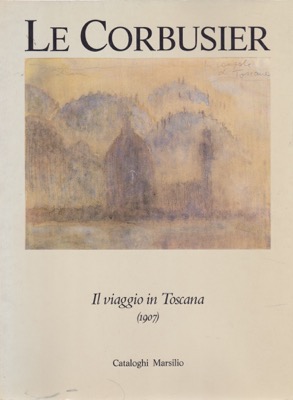
Softcover. Venice, Cataloghi Marsilio, 1st, 1987, Book: Very Good, Dust Jacket: None, Softcover, 140 pages. TEXT IN ITALIAN. A catalog of drawings and architectural watercolor sketches done by Le Corbusier on a trip to Italy in 1907. His career spanned five decades, with his buildings constructed throughout Europe, India, and America. He was a pioneer in studies of modern high design and was dedicated to providing better living conditions for the residents of crowded cities. (1907) - Catalogo della Mostra. Clean copy.
Hardcover. Chicago, University of Chicago Press, 1st, 1987, Book: Very Good, Dust Jacket: Very Good, Hardcover, 200 pages. The City of Refuge complex--commissioned by the Salvation Army as part of its program to transform social outcasts into spiritually renewed workers--represents a significant confluence of design principles, technological experiments, and attitudes on reform. It also provides rare insights into the work of one of the twentieth century's greatest architects, Le Corbusier. Brian Brace Taylor draws on extensive archival research to reconstruct each step of the architect's attraction to the commission, his design process and technological innovations, the social and philosophical compatibility of the Salvation Army with Le Corbusier's own ideas for urban planning, and finally, the many modifications required, first to eliminate defects and later to accommodate changes in the services the building provided. Throughout, Taylor focuses on Le Corbusier's environmental, technological, and social intentions as opposed to his strictly formal intentions. He shows that the City of Refuge became primarily a laboratory for the architect's own research and not simply a conventional solution to residents' requirements or the Salvation Army's program.

 "Graphis Poster Annual 2002by: Porciello (Ed.), Michael")
 "Great Adaptations: New Residential Uses for Older Buildingsby: Jill Herbers")
 "Great English Housesby: Chamberlin, Russell")
 "Gropius: An Illustrated Biography of the Creator of the Bauhausby: Isaacs, Reginald")
 "Gustav Stickley, The Craftsmanby: Smith, Mary Ann")
 "Hector Guimard: Architect, Designer (1867-1942)by: Vigne, Georges")
 "Hillside Building: Design and Constructionby: Levin, Arthur")
 "Home Theater Design: Planning and Decorating Media-Savvy Interiorsby: Rushing, Krissy")


 "Householdsby: Robbins, Mark")



 "In Prison Air: The Cells of Holmesburg Prisonby: John Szarkowski and Thomas Roma")
 "Inside The Mouse: Work and Play at Disney World by: The Project on Disney")
 "Irving J. Gill: Architect 1870-1936by: Rand McNally, Marvin")

 "Josef Paul Kleihuesby: Kleihues, Josef Paul, Andrea Mesecke and Thorsten Scheer")
 "Joseph Urbanby: Loring, John")
 "Last Landscapes: The Architecture of the Cemetery in the West by: Worpole, Ken")
 "Le Corbusier Le Grandby: Jean-Louis Cohen (Editor), Tim Benton (Contributor)")


 "Le Corbusier: The City of Refuge, Paris 1929/33by: Taylor, Brian Brace")