Hardcover. Baltimore, John Hopkins University Press, 1st, 2000, Book: Very Good, Dust Jacket: Very Good, Hardcover in a bright dust jacket. Starkly beautiful photos of abandoned and converted movie theaters with new essays by Peter Bogdanovich, Molly Haskell, Andrew Sarris, and Chester H. Liebs. The single-screen movie theaters that punctuated small-town America's main streets and city neighborhoods since the 1920s are all but gone. The well-dressed throng of moviegoers has vanished; the facades are boarded. In Silent Screens, photographer Michael Putnam captures these once prominent cinemas in decline and transformation. His photographs of abandoned movie houses and forlorn marquees are an elegy to this disappearing cultural icon.
Hardcover. Baltimore, Johns Hopkins University Press, 1st, 2000, Book: Very Good, Dust Jacket: Very Good, Hardcover in a bright dust jacket, oblong format. Starkly beautiful photos of abandoned and converted movie theaters with new essays by Peter Bogdanovich, Molly Haskell, Andrew Sarris, and Chester H. Liebs. The single-screen movie theaters that punctuated small-town America's main streets and city neighborhoods since the 1920s are all but gone. The well-dressed throng of moviegoers has vanished; the facades are boarded. In Silent Screens, photographer Michael Putnam captures these once prominent cinemas in decline and transformation. Clean copy.
Softcover. Santa Fe NM, Museum of New Mexico Press, 2nd pr, 1988, Book: Very Good, Dust Jacket: None, Softcover in pictorial wraps. Foreword by George Kubler. Profusely illustrated in color and black and white. 127 pages. 81 artists interpret this masterpiece of 19th century Spanish Franciscan architecture. Map of Taos laid in. Clean copy.
Hardcover. Cambridge, The MIT Press, 1st Edition, 1977, Book: Very Good, Dust Jacket: Very Good, 220 pages. Hardcover. Black & white illustrations throughout.Light foxing to edges, pen markings on a couple pages. Dust jacket with shelf wear, small tears to edges. Previous owner's signature to front flyleaf. Otherwise clean, tight copy.
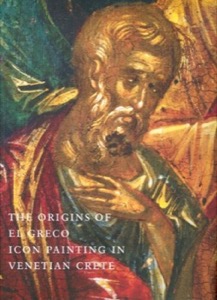
Softcover. NY, Onassis Foundation, 1st, 2009, Book: Very Good, Dust Jacket: None, Softcover, 131 pages illustrated in color. The Origins of El Greco focuses on the evolution of the multifaceted relationship of Cretan painters with Western art during this rich period. The icon painters in the workshops on Crete in the 15th and 16th centuries-the setting in which El Greco was trained-were renowned for their skill in painting impeccable panels not only in the traditional Byzantine manner but also in a style inspired by Western models. The Origins of El Greco presents an extraordinary group of 15th and 16th century paintings, including works by El Greco. The color-illustrated catalogue features detailed descriptions of all 46 masterpieces included in the exhibition, some of them published for the first time, as well as 3 informative essays: Anastasia Drandaki, Curator, Byzantine Collection, Benaki Museum, Athens writes on "Between Byzantium and Venice: Icon Painting in Venetian Crete in the Fifteenth and Sixteenth Centuries", Olga Gratziou, Professor of Byzantine Art and Archaeology, University of Crete writes on "Cretan Architecture and Sculpture in the Venetian Period" and Nicos Hadjinicolaou, Professor Emeritus in Art History, University of Crete, and Honorary Fellow of the Institute for Mediterranean Studies, writes on "Early and Late El Greco". Clean, bright copy.
Softcover. Boston, Shambhala, 1st, 1981, Softcover, 160 pages. The Power of Limits was inspired by those simple discoveries of harmony. The author went on to investigate and measure hundreds of patterns--ancient and modern, minute and vast. His discovery, vividly illustrated here, is that certain proportions occur over and over again in all these forms. Patterns are also repeated in how things grow and are made--by the dynamic union of opposites--as demonstrated by the spirals that move in opposite directions in the growth of a plant.
Hardcover. NY, Dodd, Mead & Co., reprint, 1902, Book: Very Good, Dust Jacket: None, Hardcover, green cloth covers with elaborate gilt decoration to front cover and spine, top edge gilt. Design by Alice Cordelia Morse. 317 pages with 48 b&w plates. Selections from Dickens, Hugo, Ruskin, and many others. Originally published in 1898. Hinges cracked, Small ownership sticker to front fly leaf, otherwise a clean, tight copy.
Hardcover. Princeton NJ, Princeton University Press, 2nd pr., 2021, Book: Very Good, Dust Jacket: Very Good, Hardcover in a bright dust jacket. 372 pages, color plates throughout. Dust jacket protected with a mylar covering.A comprehensive survey of the work of this most influential Florentine artist and teacher Andrea del Verrocchio (c. 1435-1488) was one of the most versatile and inventive artists of the Italian Renaissance. He created art across media, from his spectacular sculptures and paintings to his work in goldsmithing, architecture, and engineering. His expressive, confident drawings provide a key point of contact between sculpture and painting. He led a vibrant workshop where he taught young artists who later became some of the greatest painters of the period, including Leonardo da Vinci, Sandro Botticelli, Lorenzo di Credi, and Domenico Ghirlandaio. This beautifully illustrated book presents a comprehensive survey of Verrocchio's art, spanning his entire career and featuring some fifty sculptures, paintings, and drawings, in addition to works he created with his students. Through incisive scholarly essays, in-depth catalog entries, and breathtaking illustrations, this volume draws on the latest research in art history to show why Verrocchio was one of the most innovative and influential of all Florentine artists.Published in association with the National Gallery of Art, Washington, Small white sticker on dj spine, otherwise like new. DUE TO WEIGHT, DOMESTIC SHIPPING ONLY.
Hardcover. Zurich, Scheidegger and Spiess, 1st, 2016, Book: Very Good, Dust Jacket: None, Hardcover in pictorial cloth, 210 pages, 164 color and 76 b/w illustrations. Le Corbusier (1887-1965) is one the most influential architects of the twentieth century. In the Scandinavian countries, his influence is arguably most pronounced in the writings and art of the Danish experimentalist Asger Jorn (1914-1973). Their collaboration on Le Corbusier's pavilion for the 1937 Paris World Exhibition sparked Jorn's lifelong fascination with the great architect and with architecture more broadly as an inherently public form of art. At the same time, Le Corbusier started working in the visual arts and began to move from a rational, technological approach to architecture towards a more poetic, materialist approach. Published in collaboration with the Museum Jorn, Silkeborg, What Moves Us? focuses specifically on the reception of Le Corbusier in Scandinavia, with the relationship between Jorn and Le Corbusier as a thematic thread. The book first highlights the architect's change of direction and subsequently takes readers through his influence on the young artist. The book's distinguished contributors explore the relationships that emerged among their artistic theories and practices, including Jorn's later critique of Le Corbusier. Essays also explore the wider influence of Le Corbusier on Scandinavian architecture and urbanization and consider Le Corbusier alongside the Danish architect Jorn Oberg Utzon and the Aarhus Brutalism movement.
Hardcover. NY, Reynal and Hitchcock, 1st, 1947, Book: Very Good, Dust Jacket: Poor, Hardcover in a tattered and chipped dust jacket. Off-white cloth with black spine title. 217 pages, b&w drawings by the author. Translated from the French, Quand les Cathedrales Etaient Blanches, by Francis E. Hyslop, Jr. Dj is poor with tape repair to the reverse side. Book has a small stamp to the front fly leaf, otherwise clean.

 "Silent Screens the Decline and Transformation of the American Movie Theater by: Putnam, Michael")
 "Silent Screens: The Decline and Transformation of the American Movie Theaterby: Michael Putnam")
 "Spirit and Vision: Images of Ranchos De Taos Churchby: D'Emilio, Sandra; Campbell, Suzan; & Kessell, John L. (essays)")
 "Studies in Italian Renaissance Architectureby: Lotz, Wolfgang")
 "The Power of Limits: Proportional Harmonies in Nature, Art, and Architectureby: Doczi, Gyorgy")

![Verrocchio: Sculptor and Painter of Renaissance Florence by: Butterfield, Andrew [Editor]](https://www.browsingisarousing.com/shop/images/Verrocchio-Sculptor-and-Painter-of-Renaissance-Florence_by_Butterfield-Andrew-Editor386083-437822.jpg "Verrocchio: Sculptor and Painter of Renaissance Florence by: Butterfield, Andrew [Editor]")

![When the Cathedrals Were White: A Journey to the Country of Timid Peopleby: Le Corbusier [Charles-Edouard Jeanneret]](https://www.browsingisarousing.com/shop/images/NoImage.jpg "When the Cathedrals Were White: A Journey to the Country of Timid Peopleby: Le Corbusier [Charles-Edouard Jeanneret]")