Hardcover. NY, Harry N. Abrams, 1st, 2000, Book: Very Good, Dust Jacket: Very Good, Hardcover, 300 pages. This book accompanies a major traveling exhibition that showcases works by some of the most visionary designers and architects, from chairs and tables to jewelry and entire buildings.
Hardcover. New York, Museum of Art New York, 1st, 1998, Book: Very Good, Dust Jacket: Very Good, 320 pages. Hardcover. Dust jacket unclipped. Color and b/w illustrations throughout. In excellent condition, clean inside and out.
Hardcover. North Hollywood CA, National Association of Theatre Owners, 1st, 1993, Book: Very Good, Dust Jacket: Very Good, Hardcover, 256 pages, color and b&w illustrations. Lavish and marvelous pictorial on movie theatres and how movies were presented including the publicity and all the hoopla that surrounded the movie going experience from the first nickelodeons to the majestic movie palaces and all the wonderful small neighborhood theatres. Loaded with 100's of b&w photos publicity material and more with many color photos.
Softcover. NY, Universe Publishing, 2nd pr., 2006, Book: Very Good, Dust Jacket: None, Softcover, 272 pages illustrated in color and b&w. The first book to capture the philosophy and spirit behind the work of Charles and Ray Eames, An Eames Primer offers an in-depth look at the couple's prolific legacy--one that has placed them among the most important American designers of the twentieth century. Those who know one or two aspects of the Eameses' work are often surprised to learn just how far and vast their range extended. Yet throughout their myriad works, from architecture and furniture to exhibition and design and filmmaking, their core philosphy prevails. An Eames Primer is the first book to illuminate this seamless connection. Author Eames Demetrios explores the rich energy of the Eameses' world from a unique perspective, informed by his close relationship with Charles and Ray. He shares personal anecdotes, previously unpublished photos, and his extensive interviews with former friends and colleagues of the Eameses to make connections between the Eameses' influential philosophy and their widely admired work. For those unacquainted with the designers, the stories behind the design process will inform, entertain, and inspire, while readers with an extensive knowledge of the Eameses' work gain a deeper level of understanding their process.
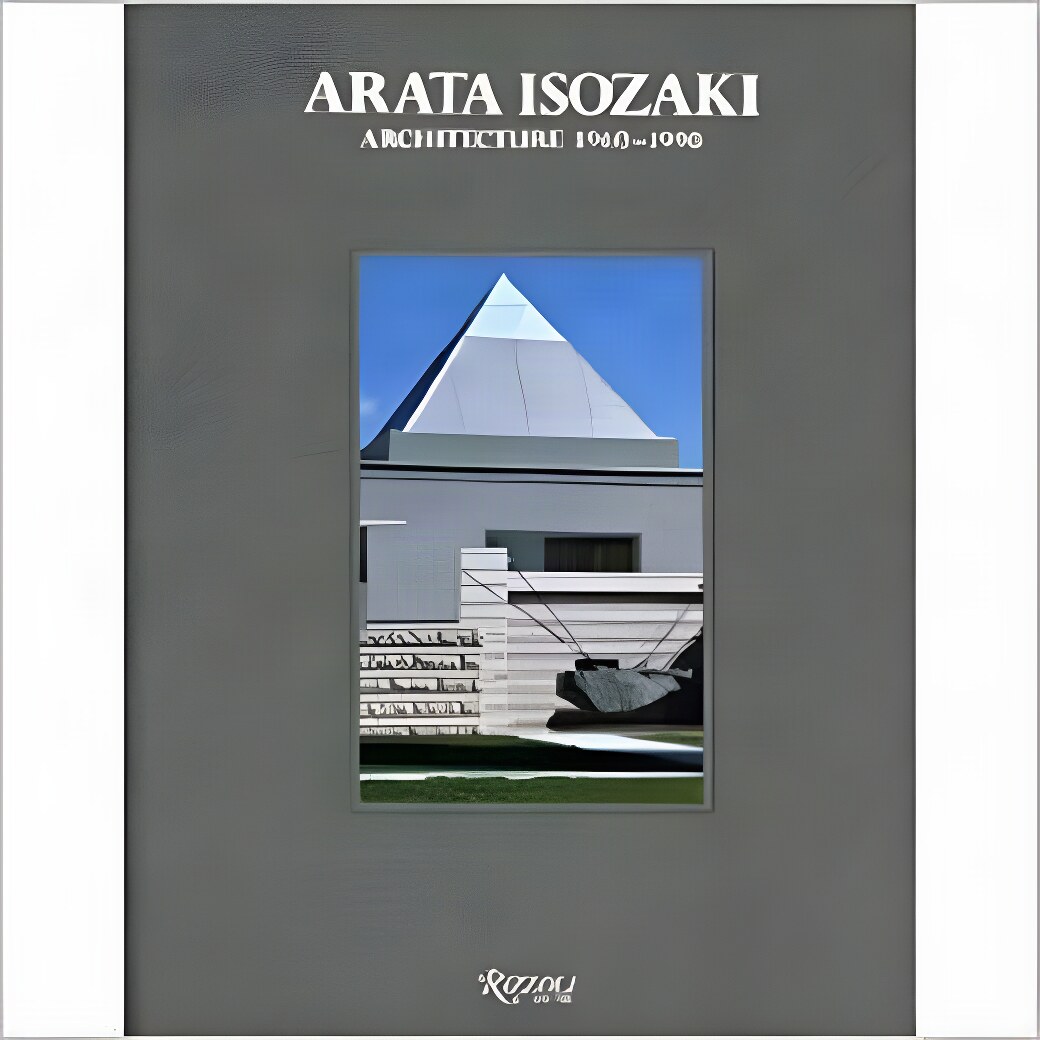
Softcover. New York, Rizzoli, 1st, 1990, Book: Very Good, Dust Jacket: None, 304 pages. Softcover. Color and b/w illustrations throughout. Price tag residue on front cover. Yellow dot sticker on front flyleaf. Clean inside. In very good condition.
Softcover. New Haven, Yale University Press, 1st, 2000, Book: Very Good, Dust Jacket: None, Softcover. This gorgeous volume was published in conjunction with the Metropolitan Museum of Art exhibition "Art and the Empire City: New York, 1825-1861." Its 636 pages include a stunning array of prints and photographs. A painted overlook of New York City wraps around the front and back cover. The front cover has a small crease at the top left edge. On page 240, type is slightly out of register but remains readable.
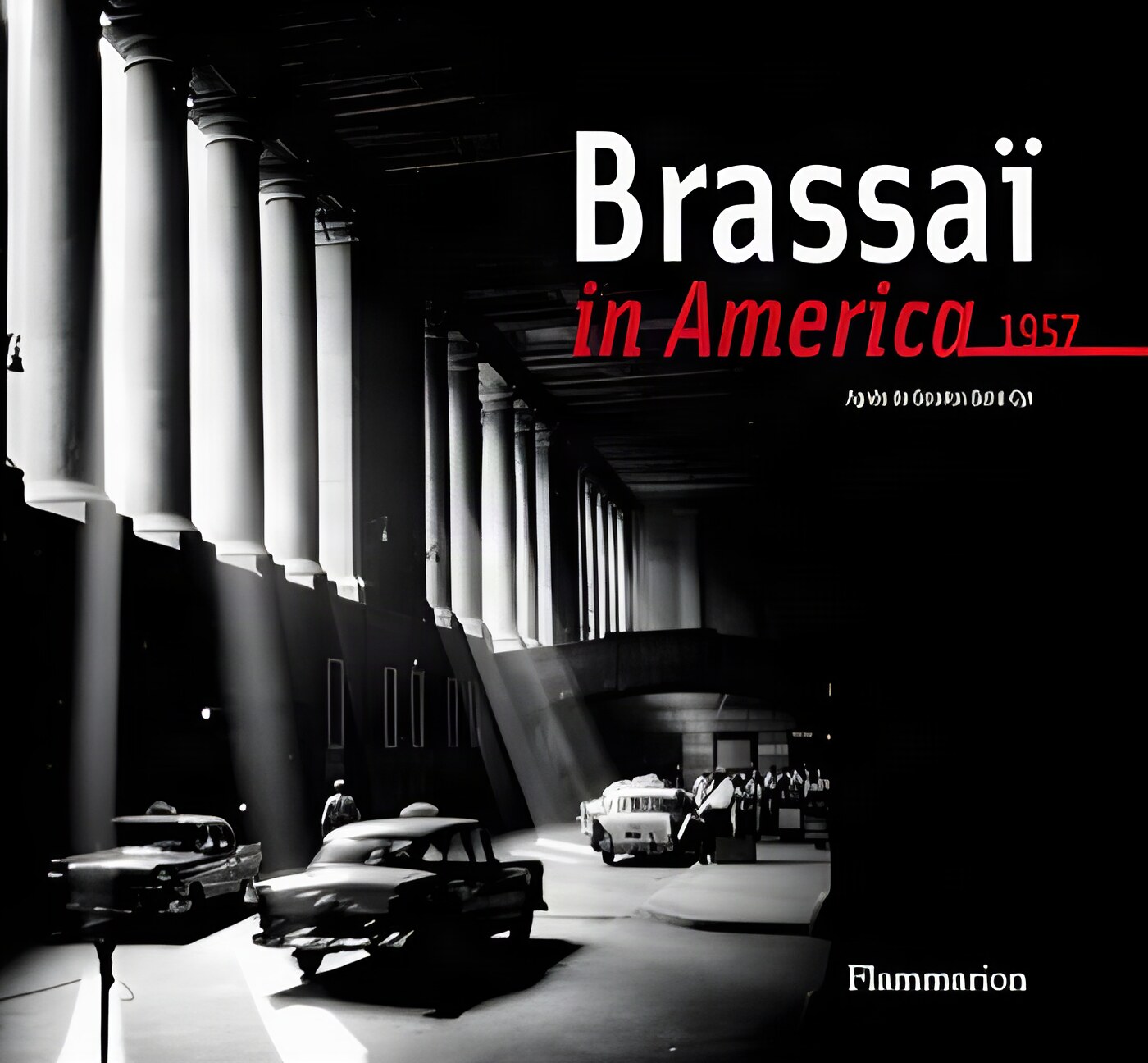
Hardcover. Paris, Flammarion, 1st, 2011, Book: Very Good, Dust Jacket: Very Good, Hardcover in a lightly worn dust jacket, 167 pages, illustrated in color and b&w. A rare discovery of more than 150 previously unpublished photographs in black and white and in color, from a legendary photographer. Despite strong personal and professional ties in the U.S.--Henry Miller, Harper's Bazaar's Carmel Snow, and Edward Steichen, who featured Brassai's work in many MoMA exhibitions--Brassai remained reticent about travel to the U.S. until 1957 when Holiday magazine offered generous compensation (and artistic freedom) to photograph New York and Louisiana. From the first symbolic image of this voyage--the Statue of Liberty appearing over the ship's prow--Brassai came under the spell of America and his photographs innately captured his new perspective. In New York, he was captivated by the graphic skyscrapers and the rhythmic to-ing and fro-ing of the crowds. Unlike his static photographs of Paris--posing prostitutes, embracing lovers, sleeping street people--here he captured sequences of movement--children playing, fashionable women parading by, or the effects of light filtering through the urban architecture. In Louisiana, he continued to photograph more languorous sequences, but here he reveled in color--the copper skin of sunbathers, the pastel tones of prom dresses, the vibrant neon of amusement park attractions. The New Orleans music halls, nightlife, women, and exotic vegetation recall scenes from 1930s Paris. This exuberant study of 1950s America offers the reader unprecedented access to Brassai's work, including previously unpublished color photography. Front dj flap with mild wear otherwise a clean, bright copy.
Softcover. Brattleboro VT, Brattleboro Museum & Art Center, 1st, 1986, Book: Very Good, Dust Jacket: None, Softcover, 59 pages with bibliography. B&w photos, 5 landscape planns laid in rear pocket. Traveling exhibition featuring the work of Beatrix Farrand; Fletcher Steele; James Rose; A. E. Bye; and Dan Kiley.
Softcover. New York, Rizzoli, 1st, 1993, Book: Very Good, Dust Jacket: None, 305 pages, illustrated throughout in color and b&w. Light edgewear and sun-fade to spine. Previous owner's signature on front end paper. Clean, tight copy. Briefly traces the career of this contemporary American architect and shows examples of his houses, apartment buildings, libraries, museums, schools, hotels, churches, and conference centers.
Softcover. Munich, Prestel/Art Institute of Chicago, 1st, 1987, Book: Very Good, Dust Jacket: None, Softcover, 480 pages, b&w and color illustrations. Published in association with the Art Institute of Chicago and in conjunction with an exhibition presented there in the summer of 1988, as well as in Paris and Frankfurt-am-Main in 1987-88. Contributors to the text include Robert Bruegmann, Sally Chappell, Meredith L. Clausen, Joan E. Draper and others.
Hardcover. New York, National Gallery of Art/Harry N. Abrams, 1st, 2002, Book: Very Good, Dust Jacket: Very Good, 144 pages. Hardcover with dust jacket. Clean, tight copy with mniior wear to edges. Color photos throughout. Christo and Jeanne-Claude have created some of the most visually breathtaking works of the twentieth century. From early wrapped objects to monumental outdoor projects such as The Umbrellas, Japan-U.S.A., 1984-91 and Wrapped Reichstag, Berlin, 1971-95, the artists have used fabric - wrapped, draped, and folded over, around, and through natural and constructed forms - to transcend the traditional bounds of painting, drawing, sculpture, and architecture. This volume spanning forty years of Christo and Jeanne-Claude's remarkable career accompanies an exhibition at the National Gallery of Art of sixty-one works from the collection of Dorothy and Herbert Voqel, whose relationship with the artists dates to 1971. The wonderful breadth of works presented in color and discussed here includes several early packages, models for large-scale public works, preparatory drawings and collages for projects in urban and rural sites, and photographs of the completed projects.
Softcover. Facts on File, 1st pbk, 1983, Book: Very Good, Dust Jacket: None, Softcover, 192 pages illustrated in b&w and color. Based on an exhibition at the Centre Georges Pompidou-with 303 illustrations, 65 in color. Clean copy.
Softcover. Cambridge, MIT Press, 1st, 1996, Book: Very Good, Dust Jacket: None, Softcover, exhibition catalogue featuring the famed architect's travel sketches along with photographs of the buildings he encountered and essays on their influence on his work. 11'' x 8.5''. In original dark orange pictorial wrappers. Illustrated throughout in black and white, some color, 136 pages. Spine sun faded.
Softcover. Berkeley CA, University of California Press, 1st, 2001, Book: Near Fine, Dust Jacket: Near Fine, Still wrapped in plastic. Accompanied the exhibition "Expressionist Utopias" at the Los Angeles County Museum in 1993. In great condition. Color illustrations throughout. A nice, tight copy.The notion of utopia exists in every culture, capturing shared dreams and common goals. This book--prepared to accompany the exhibition Expressionist Utopias mounted at the Los Angeles County Museum in 1993--explores how the optimistic themes of utopia and fantasy sustained faith among artists and architects in the power of art to shape a better world during the tumultuous World War I era in Germany. The exhibition's curator, Timothy O. Benson along with David Frisby, Reinhold Heller, Anton Kaes, Wolf Prix, and Iain Boyd White present the diverse manifestations of the utopia metaphor in its progression throughout Expressionism from Arcadian to manmade utopias.
Softcover. Berkeley CA, University of California Press, 1st, 2001, Book: Very Good, Dust Jacket: None, Still wrapped in plastic. Accompanied the exhibition "Expressionist Utopias" at the Los Angeles County Museum in 1993. In great condition. Color illustrations throughout. A nice, tight copy.
Softcover. Denver/Boulder CO, Johnson Books, 1st, 2005, Book: Very Good, Dust Jacket: None, Softcover, 272 pages, illustrated in color and b&w. Chanzit explores Herbert Bayer's stunning artistic legacy, which includes painting, photography, typography, sculpture, architecture, exhibition design, and graphic design.
Hardcover. Portland, OR, Nazraeli Press, 1st, 2010, Book: Very Good, Dust Jacket: None, 108 pages. This printing limited to 1000 copies. Hardcover with no dust jacket. Creasing to a few pages. An otherwise clean, unmarked copy with only minor edgewear. In the mid-1980s, Stu Levy began making 'grid-portraits' in order to overcome his his frustration with traditional portraiture's limited point of view. These constructs of photographs, consisting of twelve to twenty-five individual images, scan the architecture and flow of time in a subject's living or working environment. The resulting portraits, usually of artists, craftspeople and musicians, are made in the subjects' studios or living spaces and serve as a backstage tour of the artist s mind and creative process. Levy is fascinated by the artifacts that fill these spaces the possessions by which the subjects are themselves possessed. Rather than confining himself to a single 'decisive' moment, Levy explore its antithesis, a maze of scrambled time. These are made with a view camera using 4 x 5-inch negatives to allow for precision of detail. The sections are printed together to form the illusion of glancing through a window at a 'snapshot' of an event, which in reality might consist of fragmentary views made months apart and in totally separate rooms or environments. Among the subjects included in this important new monograph are Dr. Stanley Burns, Linda Connor, Barbara Crane, Jay Dusard, David Hockney, Graham Nash, and Jerry Uelsmann. Beautifully printed in duotone on matt art paper and bound in black Japanese cloth, this first printing of Grid-Portraits is limited to 1,000 copies.
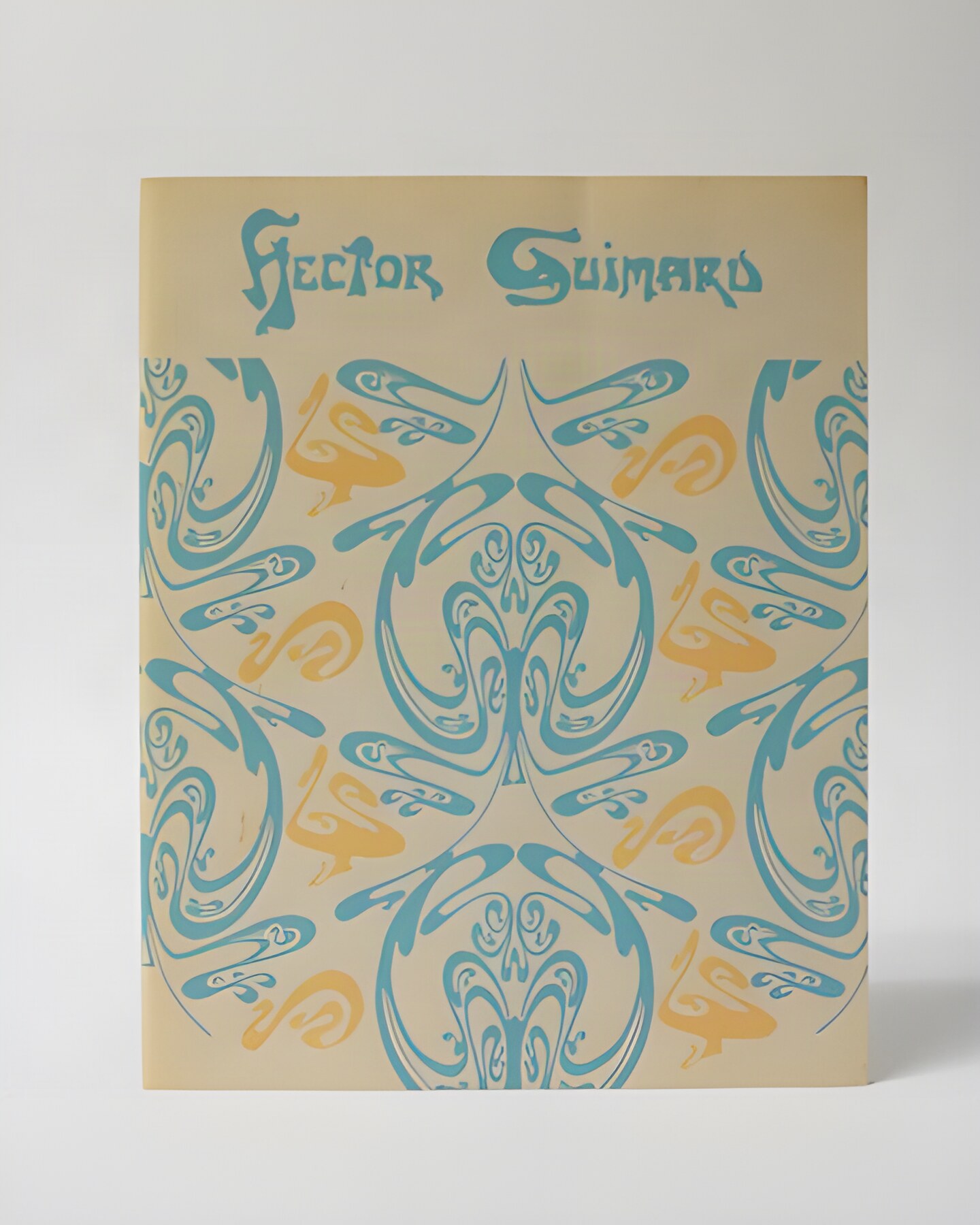
Softcover. NY, Museum of Modern Art, 1st, 1970, Book: Very Good, Dust Jacket: None, Softcover, 36 pages illustrated in b&w. Printed card wrappers, staple bound. Exhibition shown from March to May 1970. Architect Hector Guimard is the best-known representative of the French Art Nouveau style of the late nineteenth and early twentieth centuries. Clean copy.
Hardcover. New York, Doubleday, Page, and Company, 1st, 1925, Book: Fair, Dust Jacket: None, Volume to accompany the American Wing of the Metropolitan Museum of Art in New York. 302 pp. Features 20 color plates in addition to 217 other black/white illustrations (mostly photographs). Covers beginnings of New England through the Early Days of the Republic. Development of Interior Architecture and House Decoration from craftsmen influenced by old world style and the evolution.Shows significant wear due to age and water damage. Discoloration throughout, though text still entirely legible and color still vivid in the plates. Edges show significant wear as well. Prior owner's name and date (1929) written in ink twice inside the cover.
Hardcover. NY/Boston, Bulfinch Press, 1st, 1997, Book: Very Good, Dust Jacket: Very Good, Hardcover in a bright dust jacket, 203 pages. Introduction by Alan Trachtenberg. 170 duotone illustrations, chronology. Published in conjunction with a series of retrospective exhibitions chronicling forty years of the author's photographs of industrial and rural landscapes. Clean copy.
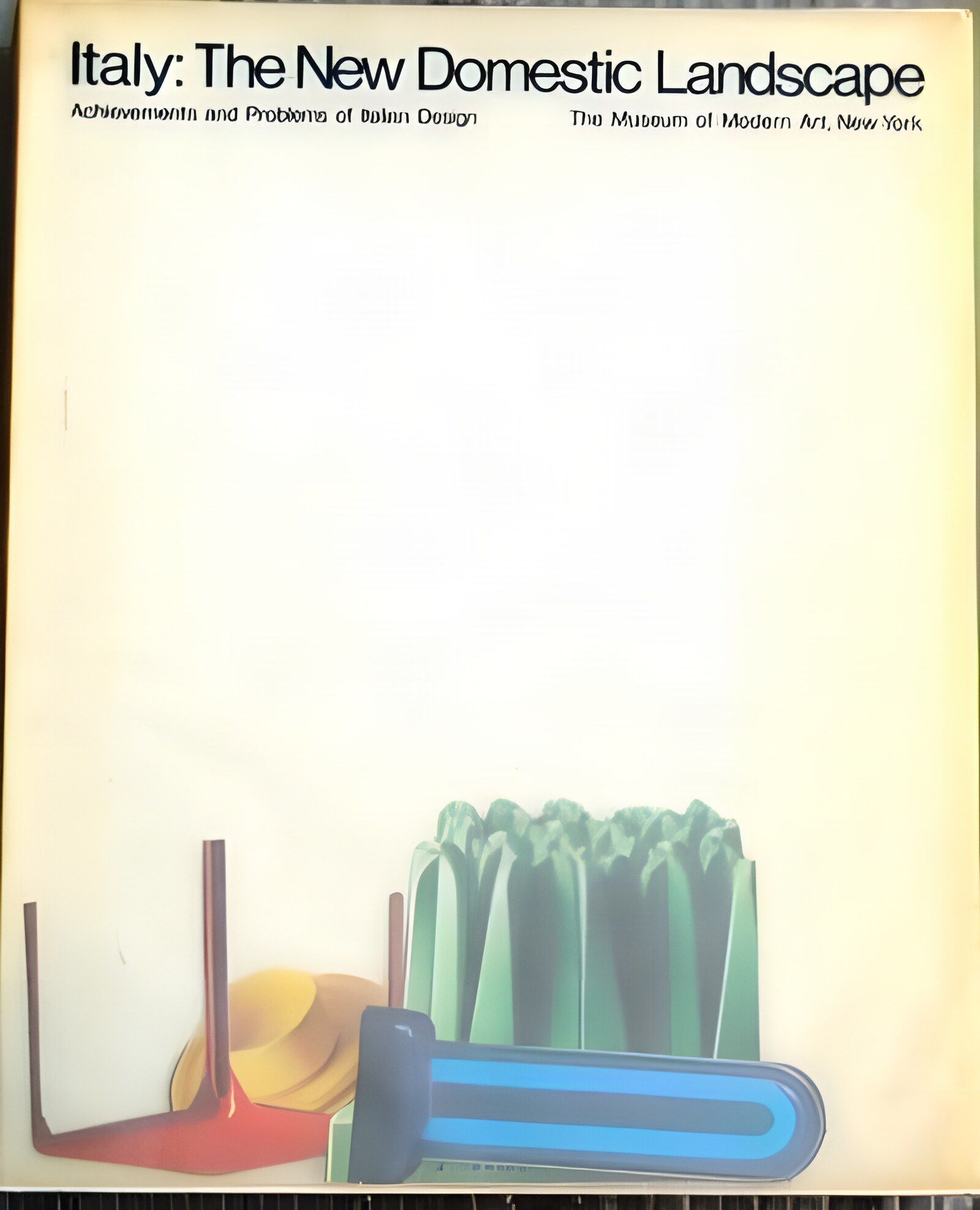
Hardcover. NY, The Museum of Modern Art, 1st, 1972, Book: Very Good, Dust Jacket: Very Good, Hardcover in a translucent dust jacket with 5 cut-outs enclosed (as called for), jacket with the usual darkening to edges and spine; The catalog for the 1972 major exhibition at MOMA, providing an excellent survey of modern Italian design and associated radical architectural movements. With articles on the history of modern Italian design by Portoghesi, Benevolo, and Gregotti, and articles on architecture by Celant and Tafuri. 430 pages with 520 photographic images and illustrations of which 124 are in color offering a kaleidescopic yet comprehensive vision of Italian design, objects and environments. Clean copy.
Softcover. New York, New-York Historical Society, 1st, 1987, Book: Very Good, Dust Jacket: None, Softcover, 172 pages, illustrated in b&w and color. Clean, unmarked copy with only minor wear to wrappers. Nearly sixty-five years ago the New-York Historical Society acquired its first landscape painting by Jasper F. Cropsey. Since then additional works by the distinguished Hudson River school painter have supplemented the Society's holdings. Published on the occasion of a special exhibition.
Hardcover. Ostfildern GR, Hatje Cantz, 1st, 2008, Book: Very Good, Dust Jacket: Very Good, Hardcover, 288 pages 231 illustrations 60 in color with 274 plans and drawings. Biography. Like new in publisher's shrink-wrap. Josef Paul Kleihues (1933-2004) was one of the most prolific architects of postwar Germany, famous both as the Director of the International Building Exhibition Berlin in 1987 and for his design for the Museum of Contemporary Art in Chicago. He was also known for his sensitive interventions into older buildings, an instance of which is the former Hamburger Bahnhof--now the Museum fur Gegenwart--in Berlin, where Kleihues intermixed glass walls and light installations by the American Minimalist Dan Flavin with the building's original nineteenth-century Neoclassical design. (His reconstruction was widely deemed to rival or even surpass Gae Aulenti's overhaul of the interior of the Musee d'Orsay in Paris.) This first volume of a three-part monograph presents projects up to 1980, including the highly acclaimed Berlin Sanitation Department and the Neukolln Hospital. Even in these early works, Kleihues' practical, problem-solving approach is already evident, indicating his readiness to reflect on the traditional approaches of Modern architecture and his capacity to expand them in interesting ways. This very generously illustrated volume was designed by Kleihues himself, just before his death in 2004.

 "Aluminum By Designby: Nichols, Sarah")
 "Alvar Aalto: Between Humanism and Materialismby: Reed (Ed.), Peter")
 "America Goes to the Movies: 100 Years of Motion Picture Exhibitionby: Stones, Barbara")

 "Art and the Empire City: New York, 1825-1861by: Voorsanger, Catherine, and John Howat")

 "Charles Moore: Buildings and Projects 1949-1986by: Johnson, Eugene J.")
 "Chicago Architecture 1872-1922 Birth of a Metropolisby: Zukowsky (Ed.), John")
 "Christo and Jeanne-Claude in the Vogel Collectionby: Donovan, Molly")



 "Expressionist Utopias: Paradise, Metropolis, Architectural Fantasyby: Benson, Timothy O.")
 "Expressionist Utopias: Paradise, Metropolis, Architectural Fantasyby: Benson, Timothy O.")
 "From Bauhaus To Aspen: Herbert Bayer And Modernist Design In Americaby: Chanzit, Gwen F.")
 "Grid-Portraits (SIGNED)by: Levy, Stu")
 "Homes of Our Ancestors, Theby: Halsey & Tower, R. T. H. & Elizabeth")

 "Jasper F. Cropsey: Artist and Architectby: Brennecke, Mishoe")
 "Josef Paul Kleihuesby: Kleihues, Josef Paul, Andrea Mesecke and Thorsten Scheer")