Hardcover. Cambridge MA, MIT Press, 1st, 2001, Book: Very Good, Dust Jacket: Very Good, 406 pages, Hardcover with dust jacket. B&w illustrations. Clean, tight copy. How Le Corbusier's first trip to the United States shaped his critique of the country and affected both his work and the diffusion of his ideas. Le Corbusier's first trip to the United States in 1935 is generally considered a failure because it produced no commissions. The experience nevertheless had a profound effect on him, both personally and professionally. Sponsored by the Museum of Modern Art in New York, Le Corbusier promoted his ideas through a lecture tour, exhibition, and press conferences, as well as in meetings with industrialists, housing reformers, New Deal technocrats, and editors. His lectures were watershed events that advanced the cause of European modernism. Yet he returned to France empty-handed and published a bittersweet account, Quand les Cathedrales etaient blanches: Voyage au Pays des Timid Personnes (When the Cathedrals Were White: Journey to the Country of Timid People), which faulted America for lacking the courage to adopt his ideas.
Hardcover. Monteal, Montreal Museum of Fine Art, 1st, 1987, Book: Very Good, Dust Jacket: Very Good, 345 pages plus 8 pages in rear. Large, hardcover exhibition catalog profusely illustrated with DaVinci's drawings. Some color fade to the dust jacket spine otherwise very good.
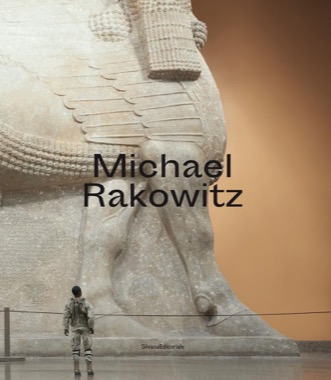
Hardcover. Milan, Silvana Editoriale, 1st, 2020, Book: Very Good, Dust Jacket: Very Good, Hardcover in a bright dust jacket. Iraqi-American artist Michael Rakowitz's (b. 1973, USA) first major European survey presents a sequence of installations drawing on architecture, cultural artifacts and cuisine to tell stories of social ritual, conflict and loss. It encompasses work considering the citizen visionaries of post Soviet Hungary, Middle Eastern Beatles fans and the stonecarvers of Afghanistan, with Rakowitz's casts of players and objects revealing the legacy of colonization, modernism and globalism. The artist's life-size replica of the gigantic lamassu, one of two monumental winged bulls that once guarded the gates of Nineveh in Iraq, currently features on Trafalgar Square's Fourth Plinth. This recreation of an ancient mythological creature is made from everyday date syrup cans and is part of an epic endeavour to recreate all 7,000 objects looted from the Iraq Museum in 2003, as well as those destroyed more recently at archaeological sites like Nimrud, also presented here. Text in English and Italian. Short closed tear to dj corner. otherwise like new. DOMESTIC SHIPPING ONLY.
Softcover. Hanover NH, Dartmouth College, 1st, 1996, Book: Very Good, Dust Jacket: None, Softcover, 24 pages illustrated with color and b&w photos. An overview of recent projects, both small scale and large architectural commissions. Clean, bright copy.
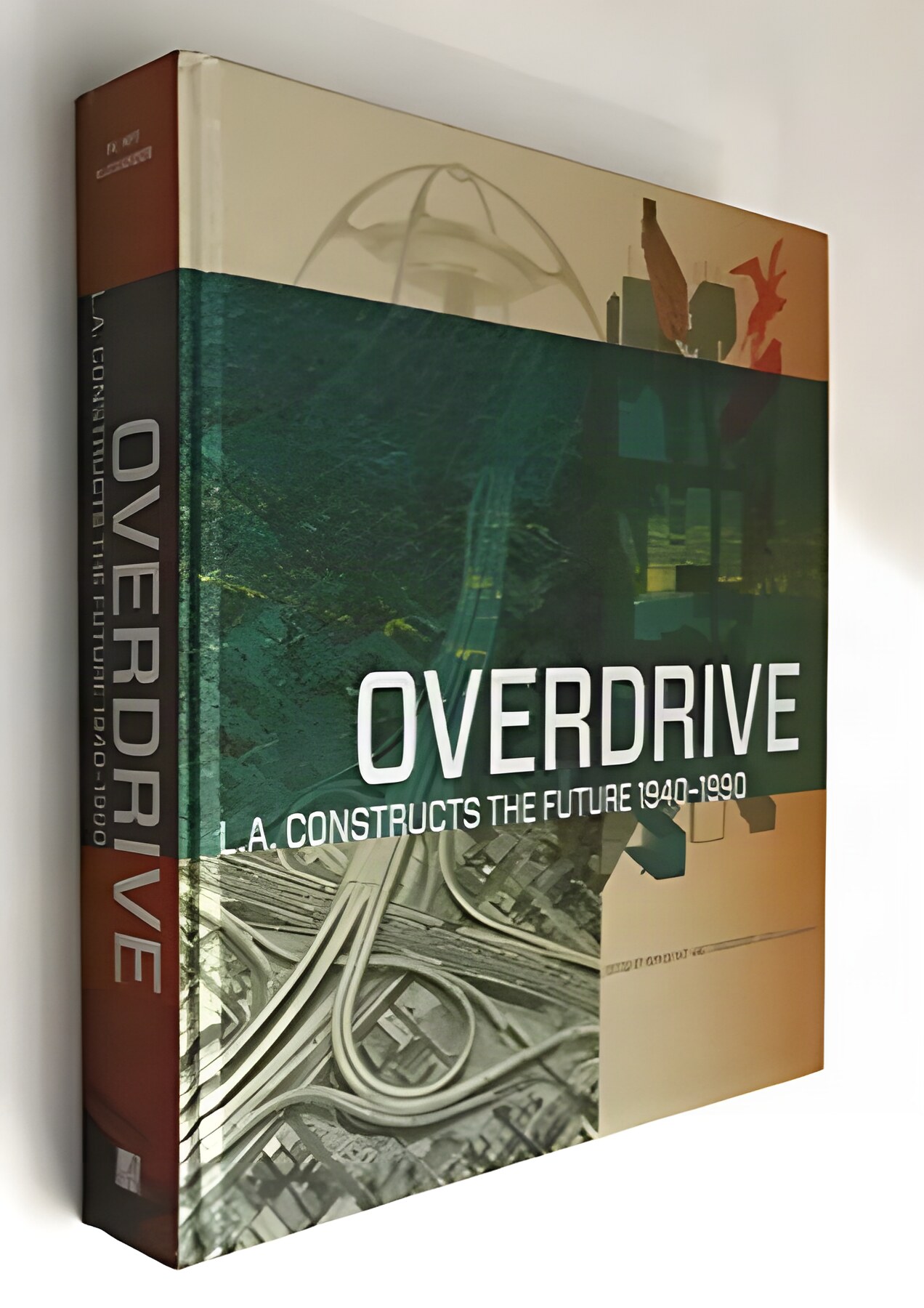
Hardcover. Los Angeles, Getty Research Institute, 1st, 2013, Book: Very Good, Dust Jacket: None, Hardcover in pictorial boards. From 1940 to 1990, Los Angeles rapidly evolved into one of the most populous and influential industrial, economic, and creative capitals in the world. During this era, the region was transformed into a laboratory for cutting-edge architecture. Overdrive: L. A. Constructs the Future, 1940 - 1990 examines these experiments and their impact on modern design, reframes the perceptions of Los Angeles's dynamic built environment, and amplifies the exploration of the city's vibrant architectural legacy. The drawings, models, and images highlighted in the Overdrive exhibition and catalogue reveal the complex and often under-appreciated facets of Los Angeles and illustrate how the metropolis became an internationally recognized destination with a unique design vocabulary, canonical landmarks, and a coveted lifestyle. Clean copy. In publisher's shrinkwrap.
Hardcover. New York , Thames and Hudson, 1st, 2015, Book: Very Good, Dust Jacket: Very Good, 112 pages. Hardcover with dust jacket. Very clean, like new in publishers shrink-wrap. Louis Stettner is one of the last living members of the avant-garde New York School of photography of the 1950s, which challenged many of the long-accepted foundations of art form. His Penn Station series of the late 1950s represents some of his most important work, gathered here in a single form for the first time. The series is less a portrait of the building than a study of people at once in transit and in suspension.
Hardcover. Montreal, Canada, Canadian Centre for Architecture, 1st, 1982, Book: Very Good, Dust Jacket: Very Good, 282 pages. Hardcover. B/w illustrations throughout. Dust jacket front flap price clipped. Tan colored fabric covered. Clean copy, Dust jacket shows some light age wear. From the front flap: "...presents works that show aspects of the history of architecture seen through photography and the history of photography through architecture."
Softcover. Los Angeles, University of California Press , 1st, 1982, Book: Very Good, Dust Jacket: Very Good, Large softcover, 100 pages; many illustrations. Clean and tight; fairly unblemished. Stiff card wraps with wraparound jacket. Following the publication of the 3-volume Plan of St. Gall an exhibition was mounted which used selected text, drawings, models, etc. that were used to produce the large work This shorter volume grew out of that exhibition.
Softcover. New Haven CT, Yale University Press, 1st, 2011, Book: Very Good, Dust Jacket: None, Softcover, 202 pages. color and b&w illustrations. Italian couturier Roberto Capucci (b. 1930) is revered by contemporary fashion designers for his innovative silhouettes and masterful use of color and materials. Capucci refers to his creations as "studies in form," and draws inspiration from a multitude of sources, including art, architecture, and nature. This beautifully illustrated book, the companion to the first exhibition of Capucci's work in the United States, examines his career from the 1950s to the present in the context of the rise of Italian fashion.
Softcover. Santa Barbara CA, UCSB Art Museum, 2nd pr., 1979, Book: Very Good, Dust Jacket: None, Softcover, 105 pages illustrated with b&w photos and architectural drawings. Clean, crisp copy of this exhibition catalog.
Hardcover. Taschen, 1st, 2011, Book: Very Good, Dust Jacket: None, Hardcover, 332 pages. Since 2000, the Serpentine Gallery in London's Kensington Gardens has called on some of the world's top architects to design summer pavilions - temporary structures that are erected next to the Gallery itself for a three-month period. The Serpentine, which was built in 1934 as a tea pavilion, opened in 1970 as a showplace for exhibitions of modern and contemporary artists ranging from Matthew Barney to Dan Flavin, Ellsworth Kelley, Louise Bourgeois or Rachel Whiteread. It is the only public modern and contemporary art gallery in central London, which maintains free admission and is open seven days a week. The pavilions are the work of international architects or design teams who at the time of the Serpentine's invitation have not completed a building in England. A maximum of six months from invitation to completion is allotted. The only architecture program of its type in the world, the Serpentine Gallery Pavilions attract up to 250,000 visitors each summer. The architect Richard Rogers has stated, This is a heavy and oversized book and will require extra shipping. International customers please ask for a shipping quote before purchasing.
Hardcover. Santa Monica, CA, Hennessey & Ingalls, 1st, 2001, Book: Very Good, Dust Jacket: Very Good, 162 pages. Hardcover with dust jacket. A very clean, unmarked copy with only minor edgewear to dust jacket. Marston was instrumental in establishing Pasadena as a winter resort and then as a thriving community. He and his firm designed 1000 projects, many of which still survive, including cottages and additions to resort hotels, notable commercial and civic buildings such as the Pacific Asia Museum, and the earliest bungalow court. His residential designs span the range of styles from the Arts and Crafts through English Tudor and Monterey Colonial to, most importantly, Mediterranean Revival. This is an important addition to the literature of California's Golden Age of architecture.
Hardcover. New York, D. Appleton, 1st, 1895, Book: Very Good, Dust Jacket: None, 2 Volumes. Elephant Folios. 3/4 leather. Raised bands on spines. Titles in gilt. Designed by Stanford White, a.e.g. with marbled end papers. Set is 16 5/8 inches tall. Profusely illustrated with textual illustrations with fifty photogravures in color on heavy stock. There are also one hundred and twenty full-page typogravures in black and white. One plate with chipped edges - E. L. Weeks - "Three Beggars of Cordova". Rubbing to corner covers and along spines. Interiors clean and unmarked. Both volumes Very Good. Combined volumes weigh approximately 30 lbs - please contact us concerning shipping costs.
Softcover. New York, Brooklyn Museum, 1st, 1983, Book: Very Good, Dust Jacket: None, 180 pages, b&w and color photography. Very light edge wear, else a very clean, tight copy. Wonderful book on the great Brooklyn Bridge. Includes much historical material, chapters on the design of the bridge with several beautiful fold-outs, and many full color repros. of the many paintings and artwork that have been inspired by the beauty of one of the wonders of the modern world. Even includes a small filmog. of films that have used the Bridge as a background or a major location/set. Published on the 100th anniversary of the opening of the bridge and an exhibition celebrating it, held at The Brooklyn Museum.
Softcover. NY, Onassis Foundation, 1st, 2009, Book: Very Good, Dust Jacket: None, Softcover, 131 pages illustrated in color. The Origins of El Greco focuses on the evolution of the multifaceted relationship of Cretan painters with Western art during this rich period. The icon painters in the workshops on Crete in the 15th and 16th centuries-the setting in which El Greco was trained-were renowned for their skill in painting impeccable panels not only in the traditional Byzantine manner but also in a style inspired by Western models. The Origins of El Greco presents an extraordinary group of 15th and 16th century paintings, including works by El Greco. The color-illustrated catalogue features detailed descriptions of all 46 masterpieces included in the exhibition, some of them published for the first time, as well as 3 informative essays: Anastasia Drandaki, Curator, Byzantine Collection, Benaki Museum, Athens writes on "Between Byzantium and Venice: Icon Painting in Venetian Crete in the Fifteenth and Sixteenth Centuries", Olga Gratziou, Professor of Byzantine Art and Archaeology, University of Crete writes on "Cretan Architecture and Sculpture in the Venetian Period" and Nicos Hadjinicolaou, Professor Emeritus in Art History, University of Crete, and Honorary Fellow of the Institute for Mediterranean Studies, writes on "Early and Late El Greco". Clean, bright copy.
Hardcover. NY, The Monacelli Press, 1st, 2008, Book: Very Good, Dust Jacket: None, Hardcover, 208 pages. Debate and banter between the irascible Philip Johnson and the equally articulate and opinionated Robert A. M. Stern generates a provocative combination of astute commentary and personal observation on the state of architecture in the twentieth century. Philip Johnson's multifaceted career as an architect, curator, and collector extended from the early 1920s to his death in 2005. Captivated by the work of the European modernists Gropius, Le Corbusier, and Mies van der Rohe, Johnson assembled the seminal exhibition "Modern Architecture--International Exhibition" at the Museum of Modern Art in 1932. Among his most notable achievements are the famous Glass House in Connecticut, designed for his own use, and the Seagram Building in New York, in association with Mies van der Rohe. Recognized as the dean of American architecture, Johnson had a profound influence on the next generation of architects, including Robert A. M. Stern. Stern has conducted a series of ten interviews with Johnson, each covering a decade of his life, that provide an illuminating assessment of a significant period of American architecture. No dj issued.
Softcover. Paris, ACAER/GPC, 1st, 1994, Book: Very Good, Dust Jacket: None, 68 pages. Softcover. Exhibition catalog. French and English text. Black & white photographs. From the introduction: "This catalogue has been re-edited by advanced reading copy wraps en reve architecture centre with the Georges Pompidou Centre, for the presentation in France of the exhibition "Warchitecture-Sarajevo, a wounded city". The exhibition and the catalogue were prepared by the architects of the Sarajevo association, members of the associations of Architects of Bosnia-Herzegovina DAS-SABIH". Light rubbing to cover edges, minor creases at corners. Clean, unmarked text.
Softcover. New York, The Museum of Modern Art, 1st, 1986, Book: Very Good, Dust Jacket: None, 264 pages. Softcover. A very clean, unmarked copy with minor foxing to textblock edges. Color photographs throughout.
Hardcover. Zurich, Scheidegger and Spiess, 1st, 2016, Book: Very Good, Dust Jacket: None, Hardcover in pictorial cloth, 210 pages, 164 color and 76 b/w illustrations. Le Corbusier (1887-1965) is one the most influential architects of the twentieth century. In the Scandinavian countries, his influence is arguably most pronounced in the writings and art of the Danish experimentalist Asger Jorn (1914-1973). Their collaboration on Le Corbusier's pavilion for the 1937 Paris World Exhibition sparked Jorn's lifelong fascination with the great architect and with architecture more broadly as an inherently public form of art. At the same time, Le Corbusier started working in the visual arts and began to move from a rational, technological approach to architecture towards a more poetic, materialist approach. Published in collaboration with the Museum Jorn, Silkeborg, What Moves Us? focuses specifically on the reception of Le Corbusier in Scandinavia, with the relationship between Jorn and Le Corbusier as a thematic thread. The book first highlights the architect's change of direction and subsequently takes readers through his influence on the young artist. The book's distinguished contributors explore the relationships that emerged among their artistic theories and practices, including Jorn's later critique of Le Corbusier. Essays also explore the wider influence of Le Corbusier on Scandinavian architecture and urbanization and consider Le Corbusier alongside the Danish architect Jorn Oberg Utzon and the Aarhus Brutalism movement.

 "Le Corbusier in America: Travels in the Land of the Timidby: Bacon, Mardges")
 "Leonardo Da Vinci: Engineer and Architectby: Theberge, Pierre")


 "Penn Station, New Yorkby: Stettner, Louis")
 "Photography and Architecture 1839-1939by: Pare, Richard")
 "Plan of St. Gall, The: In Brief by: Price, Lorna")
 "Roberto Capucci: Art into Fashionby: Dilys E. Blum")

 "Serpentine Gallery Pavilionsby: Jodidio, Philip")
 "Sylvanus Marston: Master Architect in Pasadena's Golden Ageby: Tuttle, Kathleen")

 "The Great East River Bridge, 1883-1983by: No Author (Brooklyn Museum)")


 "The Philip Johnson Tapes: Interviews by Robert A. M. Sternby: Robert A.M. Stern")
 "Urbicide - Sarajevo - Sarajevo, Une Ville Blesseeby: Curic, Borislav/Nedzad Delija/Igor Grozdanic/Nazif Hasanbegovic/Boran Hrelja/Nedzad Hrelja/Aida Kalauzovic-Mandic")
 "Vienna 1900: Art, Architecture, and Designby: Varnedoe, Kirk")
