Softcover. Dallas TX, Southern Methodist University, reprint, 2001, Book: Very Good, Dust Jacket: None, Softcover, 221 pages, 202 b&w plates, 20 in color. Historical and cultural history of religious, popular and folk architecture of colonial New Spain. Clean copy.
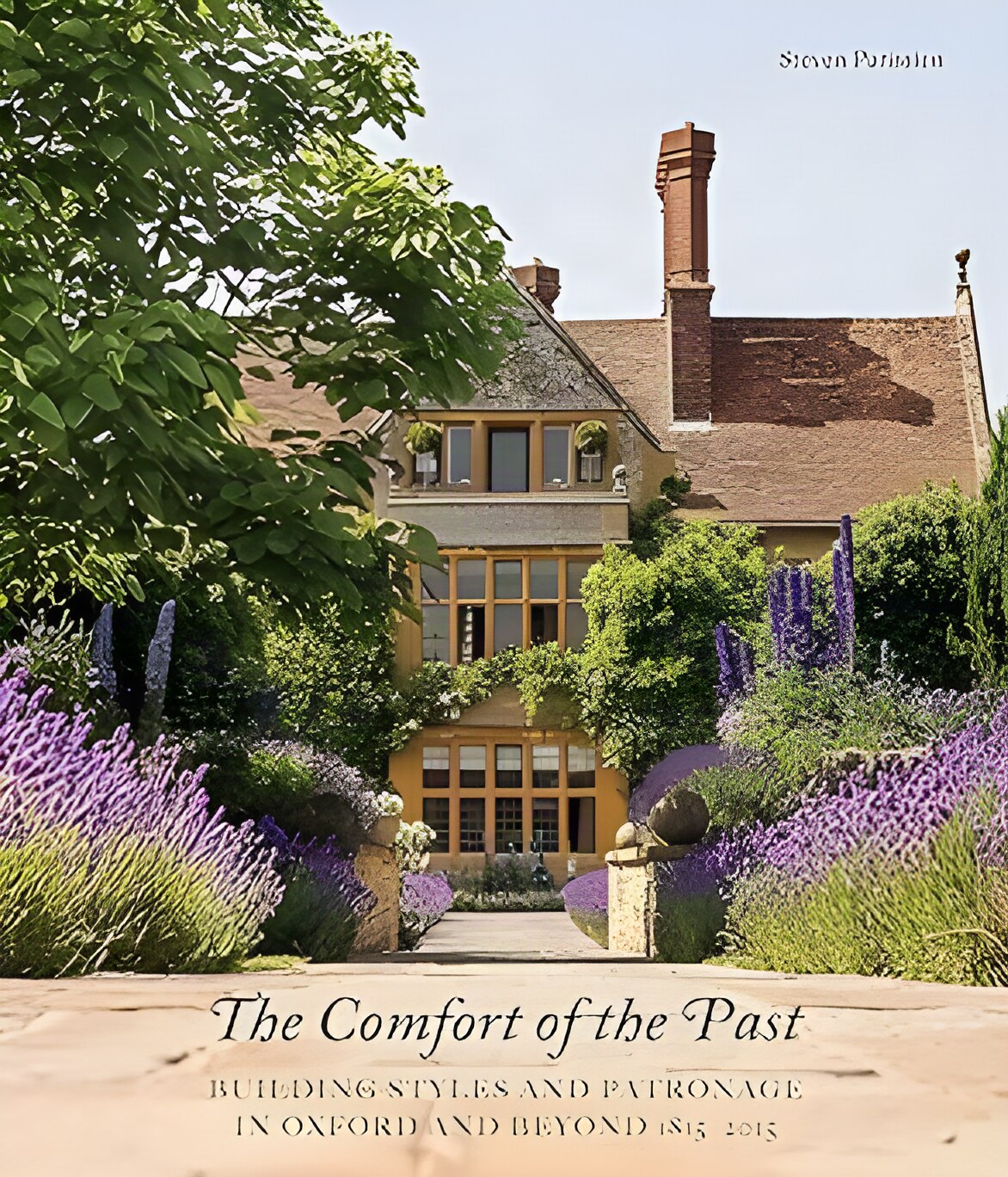
Hardcover. London, Paul Holberton Publishing, 1st, 2015, Book: Very Good, Dust Jacket: Very Good, Hardcover in a bright dust jacket, 197 pages. Color and b&w plates throughout. This groundbreaking architectural history examines what people actually wanted in their institutional and private patronage over the last two centuries as opposed to what architects and theorists thought they should want - as seen through the prism of Oxford's principal building contractor and craft practitioner, Symm & Company. Clean, bright copy.
Hardcover. University Park PA, Pennsylvania State University Press, 1st, 2010, Book: Very Good, Dust Jacket: Very Good, Hardcover in a bright dust jacket, 295 pages illustrated in b&w and color. Beginning in the 1730s, Heather Minor tells us, Rome "began to resemble one huge construction site," with a series of ambitious and expensive new building campaigns that transformed the face and substance of the city. From renovations of the Santa Maria Maggiore and San Giovanni in Laterano and the restoration of the Arch of Constantine to the creation of the Capitoline Museum and the establishment of the papacy's Calcografia, the push for reform not only renewed papal and Church identity but also revived Italian culture as a whole. Based on extensive archival research and full of fascinating stories about the often stormy theological and intellectual debates central to the attempts at reform, The Culture of Architecture in Enlightenment Rome brings to life the personalities of architects, theologians, and intellectuals and links the extensive architectural programs with powerful shifts in the intellectual climate of the time. Clean, bright copy.
Hardcover. NY, Princeton Architectural Press, 1st, 2015, Book: Very Good, Dust Jacket: Very Good, Hardcover in a bright, unclipped dust jacket, 224 pages. The Dakota is arguably the best-known residential address in the world, home to dozens of New York City's most famous artists, performers, and successful executives. The rare sale of an apartment there, usually at jaw-dropping prices, is newsworthy, as is the financial and architectural health of the building itself, a landmark in every sense of the word. The first true luxury apartment house built in New York City, more than 130 years ago, the Dakota is still the gold standard against which all other apartment buildings are weighed. Historian Andrew Alpern tells the fascinating story of how the Dakota came to be, how Singer sewing magnate Edward Clark dared to build an apartment building luxurious enough to coax the city's wealthy from their mansions downtown for ultra-modern living on what was then the swamplands of the Upper West Side. Redrawn plans of the entire building, published here for the first time, show how Clark created apartments glamorous enough that they made living under a shared roof as acceptable in Manhattan as it already was in Europe's grand capitals, forever revolutionizing apartment life in New York City.
Softcover. Notre Dame IN, Theatre Historical Society, 1st, 1986, Book: Very Good, Dust Jacket: None, Softcover, stapled wrappers, 40 pages. Profusely illustrated in b&w. A visual history of the design and building of the Earle Theatre in Philadelphia. Some of the world's biggest stars performed there in it's heyday. Old price sticker on rear cover, otherwise clean, very good.
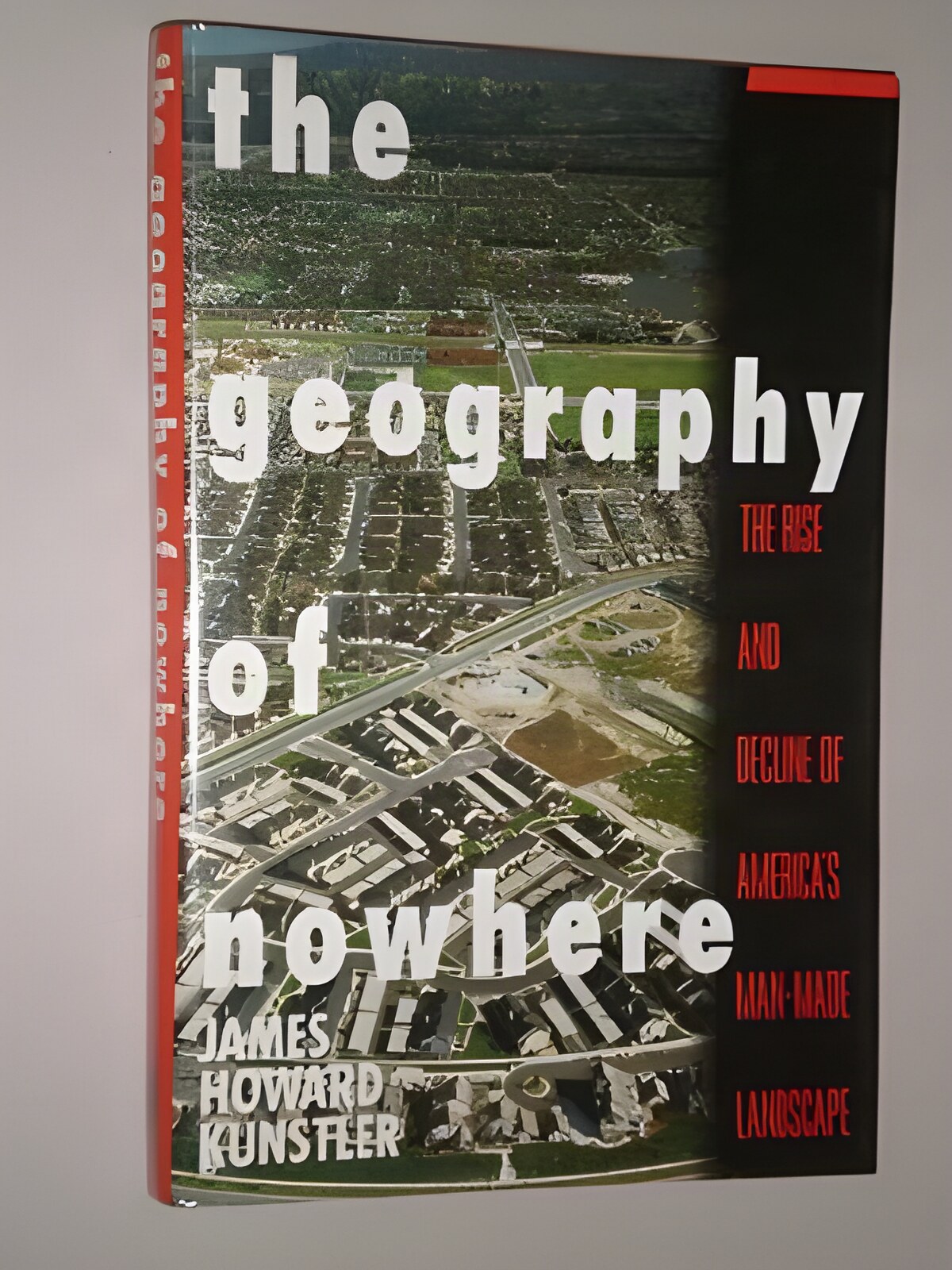
Hardcover. NY, Simon & Schuster, 1st, 1993, Book: Very Good, Dust Jacket: Very Good, Hardcover in a bright, unclipped dust jacket, 303 pages. Eighty percent of everything ever built in America has been built since the end of World War II. This tragic landscape of highway strips, parking lots, housing tracts, mega-malls, junked cities, and ravaged countryside is not simply an expression of our economic predicament, but in large part a cause. It is the everyday environment where most Americans live and work, and it represents a gathering calamity whose effects we have hardly begun to measure. In The Geography of Nowhere, James Howard Kunstler traces America's evolution from a nation of Main Streets and coherent communities to a land where everyplace is like noplace in particular, where the city is a dead zone and the countryside a wasteland of cars and blacktop. Now that the great suburban build-out is over, Kunstler argues, we are stuck with the consequences: a national living arrangement that destroys civic life while imposing enormous social costs and economic burdens. Kunstler explains how our present zoning laws impoverish the life of our communities, and how all our efforts to make automobiles happy have resulted in making human beings miserable. Name on front fly leaf, otherwise like new.
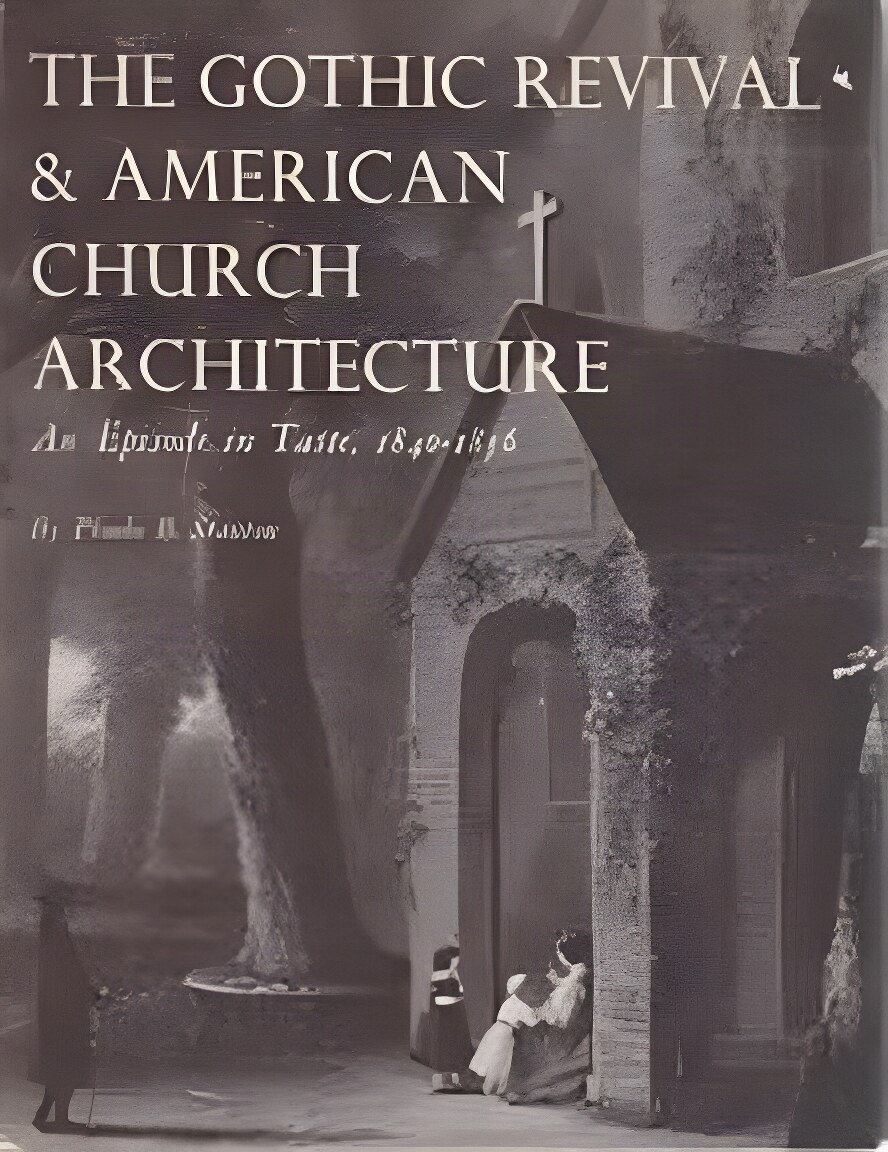
Hardcover. Baltimore, Johns Hopkins University, 1st, 1968, Book: Very Good, Dust Jacket: Very Good, Hardcover in a lightly worn, unclipped dust jacket, 350 pages, b&w illustrations. This illustrated account of the impact of the English Gothic revival on American church architecture in the mid-nineteenth century finds that this fundamentally conservative movement provided the foundation for a new, influential aesthetic. Clean copy.
Softcover. New York, Brooklyn Museum, 1st, 1983, Book: Very Good, Dust Jacket: None, 180 pages, b&w and color photography. Very light edge wear, else a very clean, tight copy. Wonderful book on the great Brooklyn Bridge. Includes much historical material, chapters on the design of the bridge with several beautiful fold-outs, and many full color repros. of the many paintings and artwork that have been inspired by the beauty of one of the wonders of the modern world. Even includes a small filmog. of films that have used the Bridge as a background or a major location/set. Published on the 100th anniversary of the opening of the bridge and an exhibition celebrating it, held at The Brooklyn Museum.
Hardcover. Princeton Architectural Press , 1st, 2004, Book: Very Good, Dust Jacket: Very Good, Hardcover, 144 pages. With photos taken in the mid 1980s the author takes us on a pictorial trip along the former Iron Curtain from the Baltic sea coast at Travemunde (West-East Germany) to the Adriatic sea coast at Trieste (Italy-Yugolsalvia [today Slovenia]); with a separate chapter on the Berlin Wall. They are superb photos full of (sad) atmosphere, poignancy and historical importance.
Softcover. NY, Thames & Hudson, 1st pbk., 1988, Book: Very Good, Dust Jacket: None, Softcover in pictorial wrappers, 304 pages. Profusely illustrated in b&w. Piranesi has a powerful appeal for our time. His brilliance as a graphic artist, his transformation of the European vision of Classical antiquity, and his themes of fantasy have been the focus of considerable study in recent years. But though these aspects are important for an appreciation of Piranesi's visual significance, they have tended to obscure other factors essential for a complete understanding of his unique achievement. In this copiously illustrated study, John Wilton-Ely - one of the world's foremost authorities on Piranesi - offers a full reappraisal of the complex personality of an astonishingly versatile artist. His book covers every aspect of Piranesi's life and work, emphasizing especially his importance as a pioneer of Roman archaeology, the high quality of his technical illustrations, and his role in the great Graeco-Roman debate of the 1760s. The author brings to life the Enlightenment world of the artist's ideas - fundamentally bound up with the birth of Neo-Classicism - and the search for an appropriately modern form of expression; and he shows the practical and influential form taken by these ideas in Piranesi's architectural projects, his designs for furniture and decorative schemes and his imaginative restoration of antiquities. Clean copy.
Hardcover. Princeton Architectural Press, 1st, 2005, Book: Very Good, Dust Jacket: Very Good, Hardcover, 224 pages. Daring, bold, dramatic, towering, impossibly glamorous: this is how we imagine New York in its golden age, and this is how Samuel H. Gottscho, the preeminent architectural photographer of his generation, captured it. Through his lens, New York of the 1930s became the quintessential modern metropolis, a round-the-clock city in which night was as charismatic as day. Rigorously editing out the Depression-weary city's more seamy aspects--its tenement slums, breadlines, and soup kitchens--Gottscho presented a dreamlike Gotham of skyscrapers and penthouse luxury that literally and figuratively glowed with glamour's sheen. His gimlet eye focused on the bold interplay of sun and shadow, dramatizing the chiseled forms of Manhattan's signature skyline and bridges. The Empire State and Chrysler buildings, Rockefeller Center, the Plaza, the George Washington Bridge--Gottscho brought them all to sparkling life. In this beautifully produced, landmark book, historian Donald Albrecht presents 175 of Gottscho's extraordinary images of the city, from the Battery to Harlem. An introductory essay tells the story of this legendary photographer, describing his working methods and philosophy, while placing his work in the broader context of photographic history.
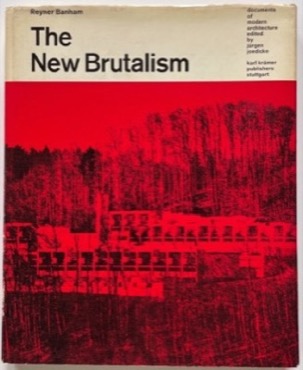
Hardcover. London, The Architectual Press, 1st, 1966, Book: Very Good, Dust Jacket: Good, Hardcover in a bright, lightly edgeworn dust jacket. First edition of Reyner Banham's foundational disquisition on Brutalist architecture presenting, per the liner notes, a scholarly history of the documentable facts on Brutalism, an eye-witness account of the period and personalities that produced it, and a comparative critique of numerous buildings regarded rightly or wrongly as examples of Brutalist architecture. Explores texts and buildings by an international roster of architects including Le Corbusier, Mies van der Rohe, James Stirling, Sir Owen Williams, Louis Kahn, Johannes van den Broke, Vladimir Bodiansky, William G. Howell, Richard Llewelyn-Davies, Denys Lasdun, Sir Basil Spence, Peter Moro, Andre Wogenscky, Atelier 5, Walter Forderer, Sverre Fehn, Oswald Mathias Ungers, Sir Leslie Martin, Vittorio Vigano, Aldo van Eyck, Paul Rudolph, Kiyonori Kikutake, Kunio Mayekawa, and not least, the architects regarded by Banham as the founders of the New Brutalism, Peter and Alison Smithson. 196 pages, illustrated throughout in black-and-white. Clean copy.
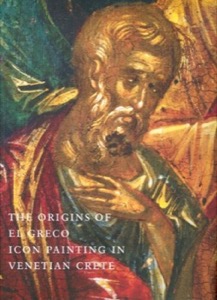
Softcover. NY, Onassis Foundation, 1st, 2009, Book: Very Good, Dust Jacket: None, Softcover, 131 pages illustrated in color. The Origins of El Greco focuses on the evolution of the multifaceted relationship of Cretan painters with Western art during this rich period. The icon painters in the workshops on Crete in the 15th and 16th centuries-the setting in which El Greco was trained-were renowned for their skill in painting impeccable panels not only in the traditional Byzantine manner but also in a style inspired by Western models. The Origins of El Greco presents an extraordinary group of 15th and 16th century paintings, including works by El Greco. The color-illustrated catalogue features detailed descriptions of all 46 masterpieces included in the exhibition, some of them published for the first time, as well as 3 informative essays: Anastasia Drandaki, Curator, Byzantine Collection, Benaki Museum, Athens writes on "Between Byzantium and Venice: Icon Painting in Venetian Crete in the Fifteenth and Sixteenth Centuries", Olga Gratziou, Professor of Byzantine Art and Archaeology, University of Crete writes on "Cretan Architecture and Sculpture in the Venetian Period" and Nicos Hadjinicolaou, Professor Emeritus in Art History, University of Crete, and Honorary Fellow of the Institute for Mediterranean Studies, writes on "Early and Late El Greco". Clean, bright copy.
Hardcover. Gretna LA, Pelican Publishing, 1st, 2014, Book: Very Good, Dust Jacket: Very Good, Hardcover in a bright dust jacket, 128 pages, color illustrations. A study of early Creole architecture and history in New Orleans. Clean, like new.
Softcover. Boston, Shambhala, 1st, 1981, Softcover, 160 pages. The Power of Limits was inspired by those simple discoveries of harmony. The author went on to investigate and measure hundreds of patterns--ancient and modern, minute and vast. His discovery, vividly illustrated here, is that certain proportions occur over and over again in all these forms. Patterns are also repeated in how things grow and are made--by the dynamic union of opposites--as demonstrated by the spirals that move in opposite directions in the growth of a plant.
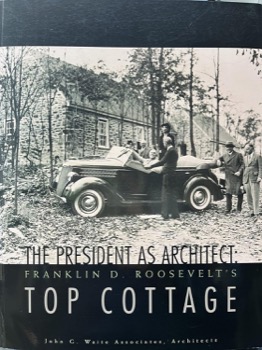
Softcover. Albany NY, Mount Ida Press, 1st, 2001, Book: Very Good, Dust Jacket: None, Softcover, B&w photos and plans; 11" - 13" tall; 160 pages. Traces the history of Roosevelt?s long-forgotten retreat near Hyde Park? from the president?'s original drawings for the modest, two-bedroom cottage to its recent preservation by the Open Space Institute, the Franklin and Eleanor Roosevelt Institute and the National Park Service. Examines Top Cottage as a symbol of Roosevelt?s love of the Hudson Valley and as one of the country?s first barrier-free buildings. Top Cottage joins Thomas Jefferson?s Monticello and Poplar Forest as the only homes designed by a U. S. President while in office. Clean copy.
Hardcover. Singapore, Times Editions-Marshall Cavendish, 1st, 2005, Book: Very Good, Dust Jacket: Very Good, Hardcover, 335 pages. The Temples of Lhasa is a comprehensive survey of historic Buddhist sites in the Tibetan capital of Lhasa. The study is based on the Tibetan Heritage Fund`s official five-year architectural conservation project in Tibet, during which the author and his team had unlimited access to the buildings studied. The documented sites span the entire known history of Tibetan Buddhist art and architecture from the 7th to the 21st centuries The book is divided into thirteen chapters, covering all the major and minor temples in historic Lhasa.
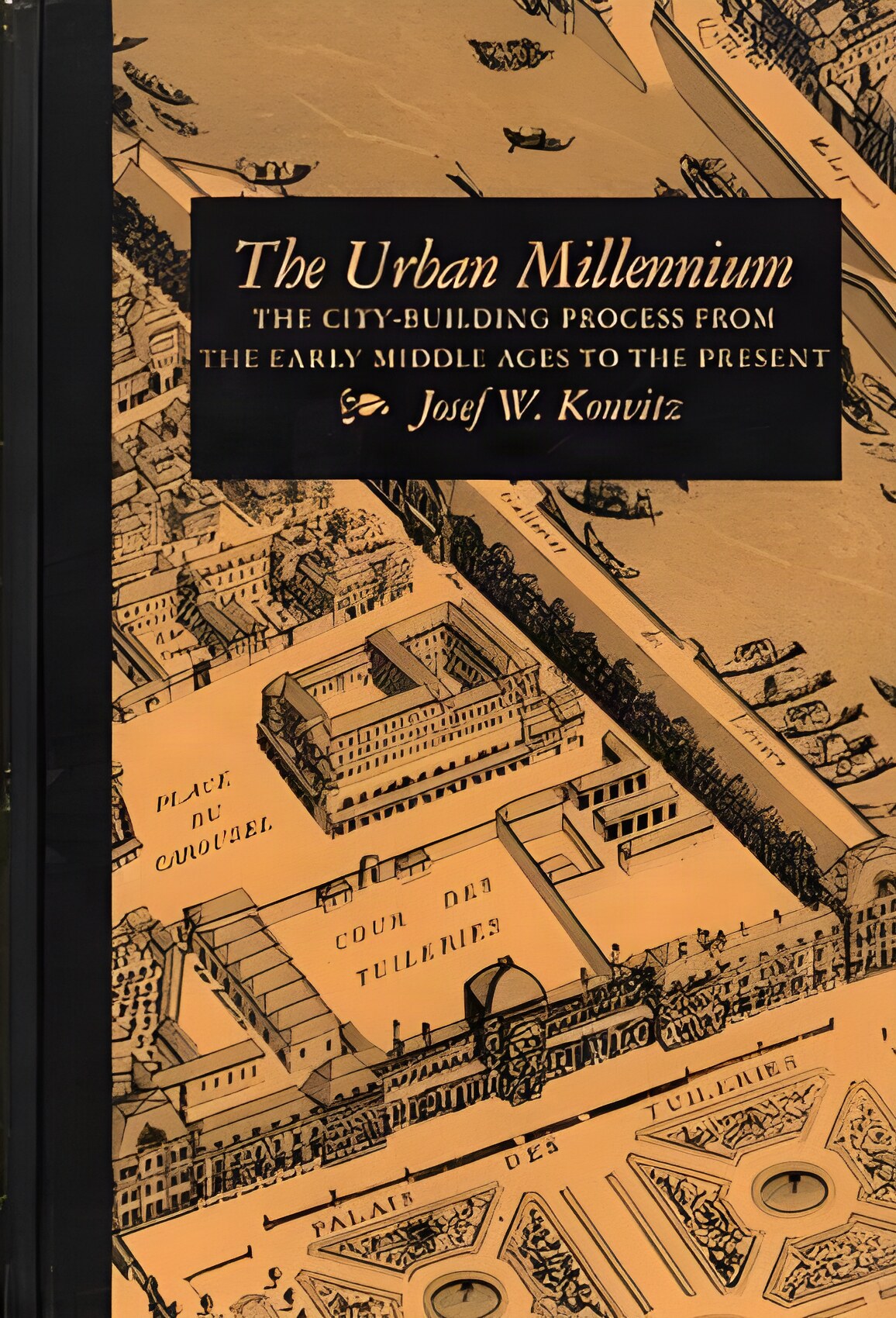
Hardcover. Carbondale IL, Southern Illinois University Press, 1st, 1985, Book: Very Good, Dust Jacket: None, Hardcover, pictorial cloth, 265 pages, b&w illustrations. The Urban Millennium focuses upon the spatial adaptation of cities as a factor in urbanization. Konvitz explores how the evolution of city building strategies has accompanied and facilitated other aspects of urban development. By taking a long historical perspective, he shows that cities were more easily adapted to changing circumstances before and dur-ing the industrialization. Konvitz also draws out the implica-tions of his analysis for contemporary urban problems. He challenges many contemporary assumptions of architec-ture and city planning and suggests that we should learn to appreciate an ap-proach to building which allows for the continual modification of individual structures and districts, and which places more control over the environ-ment in the hands of the users. Blacked out name on front fly leaf, otherwise clean.
Hardcover. NY, Museum of Modern Art , 1st, 1981, Book: Very Good, Dust Jacket: Very Good, Hardcover in a bright, price-clipped dust jacket. Volume One Only. First Edition. 180 pages,121 plates with 83 b&w photo illustrations, slight edgewear to jacket, else a very nice, clean copy. Atget was a groundbreaking photographer, documenting three decades of rapid urban transition in Paris from the late 19th to early 20th centuries. His works depict the architecture, streets, gardens, and people of the city.
Hardcover. NY, Knopf, 1st, 2003, Book: Very Good, Dust Jacket: Very Good, Hardcover in a bright dust jacket. 185 pages, color and b&w illustrations. With these character sketches of key figures of the American Revolution and illuminating probes of its circumstances, Bernard Bailyn reveals the ambiguities, complexities, and uncertainties of the founding generation as well as their achievements. Using visual documentation--portraits, architecture, allegorical engravings--as well as written sources, Bailyn, one of our most esteemed historians, paints a complex picture of that distant but still remarkably relevant world. He explores the powerfully creative effects of the Founders' provincialism and lays out in fine detail the mingling of gleaming utopianism and tough political pragmatism in Thomas Jefferson's public career, and the effect that ambiguity had on his politics, political thought, and present reputation. And Benjamin Franklin emerges as a figure as cunning in his management of foreign affairs and of his visual image as he was amiable, relaxed, and amusing in his social life. Bailyn shows, too, why it is that the Federalist papers--polemical documents thrown together frantically, helter-skelter, by Alexander Hamilton, James Madison, and John Jay in a fierce political battle two hundred years ago--have attained canonical status, not only as a penetrating analysis of the American Constitution but as a timeless commentary on the nature of politics and constitutionalism.
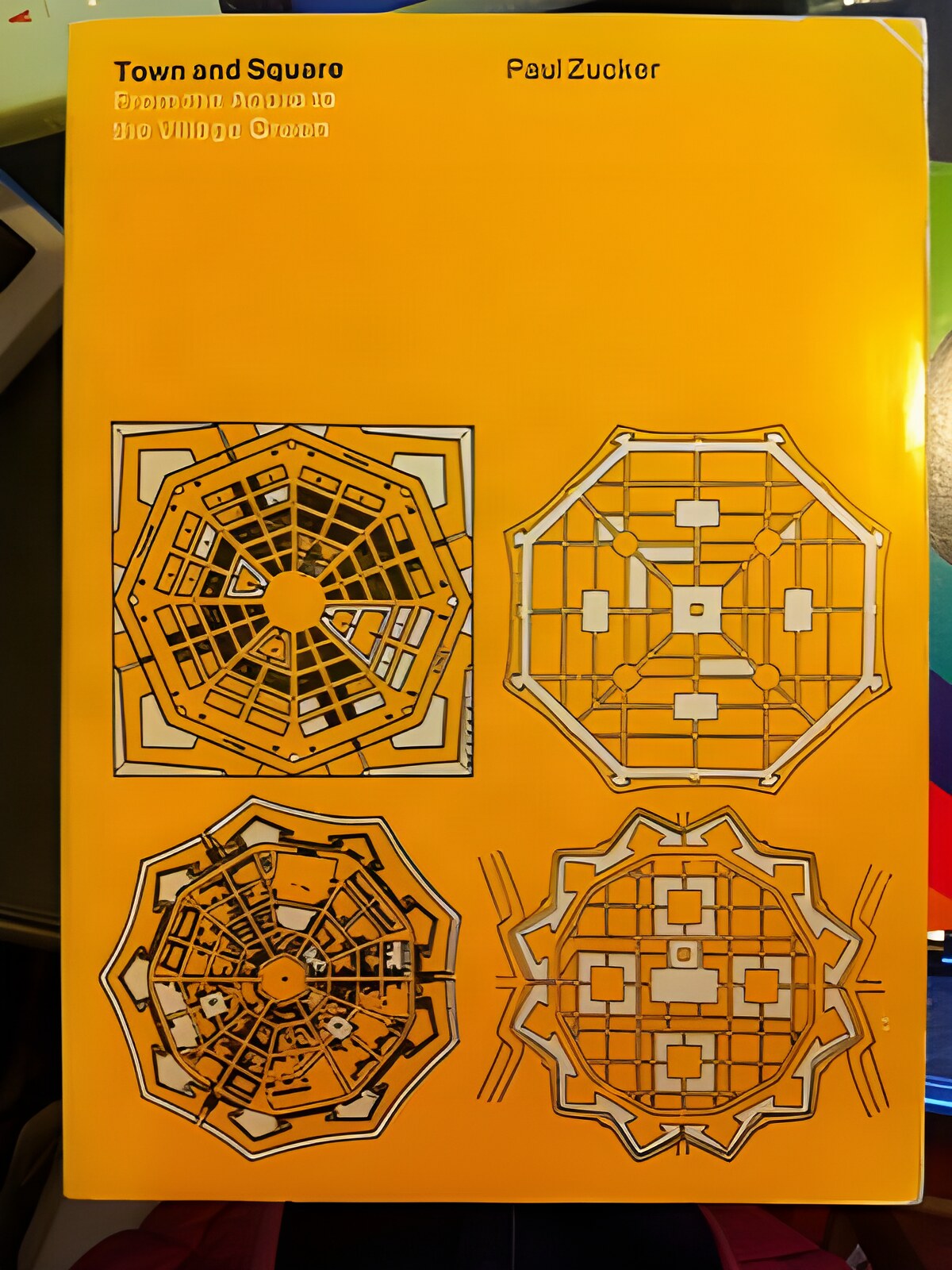
Softcover. Cambridge MA, MIT Press, 1st pbk, 1970, Book: Very Good, Dust Jacket: None, Softcover, yellow card wraps with b&w designs and black lettering. 287 pages with 55 b/w line drawings and 96 b/w plates. The first publication in English that gives a general survey of the development of the inner structure of the town from a dual point of view: that of the function of the square in the life of the community and that of its conception in purely aesthetic terms. Zucker shows a continuous development from Greece and Rome, through the Middle Ages and Renaissance, to the creative heights of the 17th and 18th centuries, periods which he considers the culmination of this development. The concluding chapter surveys the role of the square in early American life. Clean copy.
Hardcover. NY, Dodd, Mead & Co., reprint, 1902, Book: Very Good, Dust Jacket: None, Hardcover, green cloth covers with elaborate gilt decoration to front cover and spine, top edge gilt. Design by Alice Cordelia Morse. 317 pages with 48 b&w plates. Selections from Dickens, Hugo, Ruskin, and many others. Originally published in 1898. Hinges cracked, Small ownership sticker to front fly leaf, otherwise a clean, tight copy.
Hardcover. NY, McGraw-Hill, 4th pr., 1965, Book: Very Good, Dust Jacket: Very Good, Hardcover in a bright dust jacket, 241 pages illustrated in b&w. Foreword by Charles A. Blessing. Voluminously illustrated by the author with drawings and plans. Bibliography. Index. This book traces the history of urban design to date. The monograph has become a classic.


 "The Dakota: A History of the World's Best-Known Apartment Buildingby: Andrew Alpern/Christopher Gray/Kenneth Grant (Photos)")


 "The EARLE THEATRE, Philadelphia, Penna., Hoffman & Henon, Architects, Opened: March 24, 1924. Theatre Historical Society Annual for 1986by: Irvin R. Glazer")


 "The Great East River Bridge, 1883-1983by: No Author (Brooklyn Museum)")


 "The Lost Border: The Landscape of the Iron Curtainby: Brian Geoffrey Rose")
 "The Mind and Art of Giovanni Battista Piranesi by: John Wilton-Ely")


 "The Mythic City: Photographs of New York by Samuel H. Gottscho, 1925-1940by: Donald Albrecht")



 "The Power of Limits: Proportional Harmonies in Nature, Art, and Architectureby: Doczi, Gyorgy")
 "The Temples of Lhasa: Tibetan Buddhist Architecture from the 7th to the 21st Centuriesby: Alexander, Andre")
![The Work of Atget, Vol. I, Old Franceby: [Eugene Atget] Szarkowski, John and Hambourg, Maria](https://www.browsingisarousing.com/shop/images/The-Work-of-Atget-Vol.-I-Old-France_by_Eugene-Atget-Szarkowski-John-and-Hambourg-Maria398317-451719.jpg "The Work of Atget, Vol. I, Old Franceby: [Eugene Atget] Szarkowski, John and Hambourg, Maria")
 "To Begin the World Anew: The Genius and Ambiguities of the American Foundersby: Bernard Bailyn")
 "Town House, The by: Smith, Gwenda")

 "Urban Design: The Architecture of Towns and Cities by: Paul D. Spreiregen")