Softcover. NY, McGraw-Hill , 3rd pr., 1992, Book: Very Good, Dust Jacket: None, Softcover, 205 pages. 191 b&w figures. An in-depth look at the history of ornamental ironwork and ironworkers in American architecture. Well illustrated with many photos. Clean copy.
Hardcover. Boston, David R. Godine, 1st, 1978, Book: Very Good, Dust Jacket: Very Good, Hardcover, 202 pages, b&w photographs by Charles C. Withers. Very good copy in a clean, bright, unclipped dust jacket.
Softcover. Allworth Press, 1st, 2000, Book: Very Good, Dust Jacket: None, Softcover, 224 pages. Ranging from earthworks to conceptual art, this illuminating read offers an integrated view of all the significant artistic developments of one crucial decade, the extraordinary explosion that occurred between 1965 and 1975. The author, a leading art critic, focuses a new lens on this radical movement, showing the nuances that defined Minimalism in its various phases, as characterized by the inflected object, the disintegrated object, the ironic object -then the transition from the object to architecture, space, landscape, cityscape, body, performance, and conceptual art. No other account has documented in such detail the scope and impact of this artistic revolution, which the author argues spanned all mediums and pushed every aesthetic possibility of Minimalism to an extreme.
Hardcover. New York, Rizzoli, 1st, 2006, Book: Very Good, Dust Jacket: Very Good, 275 pages, color illustrations throughout. In publisher's shrinkwrap. Owen Jones was, and still remains, a highly influential force in the world of architecture and design. His prolific and impressive work--captured here in its various stages through drawings, architectural plans, and photographs--is as current, imaginative, and important now as when it first emerged more than 125 years ago. Owen Jones: Design, Ornament, Architecture & Theory in an Age in Transition fills a serious gap in the history of Victorian design. In his early career Jones was recognized as an authority on Oriental design. In the 1850s he was commissioned to decorate the interior of Joseph Paxton's magnificent World's Fair Crystal Palace in London. Other signature projects include St. James' Hall, the Crystal Palace Bazaar, Osler's Glass Shop, and Eynsham Hall at Oxford. In 1856 he completed his monumental Grammar of Ornament, which remains one of the most influential works on design ever published and is a source for many artists and designers today. More than just an architect, Jones' skills were applied to designing interiors, books, textiles, furniture, and carpet. His philosophy can most accurately be expressed in his words, "Form without color is like a body without a soul."
Hardcover. New York, Rizzoli, 1st, 2006, Book: Very Good, Dust Jacket: Very Good, 275 pages, color illustrations throughout. In publisher's shrinkwrap. Owen Jones was, and still remains, a highly influential force in the world of architecture and design. His prolific and impressive work--captured here in its various stages through drawings, architectural plans, and photographs--is as current, imaginative, and important now as when it first emerged more than 125 years ago. Owen Jones: Design, Ornament, Architecture & Theory in an Age in Transition fills a serious gap in the history of Victorian design. In his early career Jones was recognized as an authority on Oriental design. In the 1850s he was commissioned to decorate the interior of Joseph Paxton's magnificent World's Fair Crystal Palace in London. Other signature projects include St. James' Hall, the Crystal Palace Bazaar, Osler's Glass Shop, and Eynsham Hall at Oxford. In 1856 he completed his monumental Grammar of Ornament, which remains one of the most influential works on design ever published and is a source for many artists and designers today. More than just an architect, Jones' skills were applied to designing interiors, books, textiles, furniture, and carpet. His philosophy can most accurately be expressed in his words, "Form without color is like a body without a soul."
Hardcover. NY, Prestel, 1st, 2018, Book: Very Good, Dust Jacket: None, Hardcover in pictorial boards. While sheets of paper are disappearing from our homes and offices, the medium is experiencing a renaissance in the worlds of art, design, and architecture. Suddenly, paper is everywhere--but not only in the old familiar places or forms. This fascinating book looks at every aspect of paper: its history, composition, production, application, and trade. Beginning with the anatomy of paper and its earliest forms, this book looks at paper as a symbol of political and economic importance and as a carrier of ideas, from literature to art, design, and music. It looks at the different surfaces, opacities, weights and volumes of paper and how it is used for printing, typography, graphics, and maps as well as a vehicle for origami, architecture, and fashion. Sumptuously illustrated with photographs and drawings, this book includes a variety of papers for readers to examine and feel, highlighting the sensual aspects of this seemingly ordinary product. Engaging, entertaining, and informative, this book contains a wealth of useful and surprising information on every printed, colored, and textured page
Hardcover. Paris, Editions de Lodi, 1st, 2001, Book: Very Good, Dust Jacket: Very Good, Hardcover, glossy boards in a matching bright dust jacket. Large format, 484 pages, FRENCH TEXT. A collection of over 500 historical photos of old Paris printed in sepia tone. Around 1832 Parisian-born Charles-Francois Bossu (1813-1879) shed his unfortunate last name (bossu means hunchback in French) and adopted the pseudonym Marville. After achieving moderate success as an illustrator of books and magazines, Marville shifted course in 1850 and took up photography, a medium that had been introduced 11 years earlier. His poetic urban views, detailed architectural studies, and picturesque landscapes quickly garnered praise.By the end of the 1850s, Marville had established a reputation as an accomplished and versatile photographer. From 1862, as official photographer for the city of Paris, he documented aspects of the radical modernization program that had been launched by Emperor Napoleon III and his chief urban planner, Baron Georges-Eugene Haussmann. In this capacity, Marville photographed the city's oldest quarters, and especially the narrow, winding streets slated for demolition. Even as he recorded the disappearance of Old Paris, Marville turned his camera on the new city that had begun to emerge. Many of his photographs celebrate its glamour and comforts, while other views of the city's desolate outskirts attest to the unsettling social and physical changes wrought by rapid modernization. Taken as a whole, Marville's photographs of Paris stand as one of the earliest and most powerful explorations of urban transformation on a grand scale. Clean, bright copy.
Softcover. Bloomington IN, Indiana University Press, reprint, 1995, Book: Very Good, Dust Jacket: None, Softcover in pictorial wrappers, 852 pages. The life and art, the folklore, history, and common work of a rural community in Northern Ireland-through the eyes and pen of gifted folklorist Henry Glassie. Glassie regards the people of Ballymenone with respect and affection, allowing them to describe their ideas, life-ways, and values on their own terms, not his. Recognizing that theirs is a mindset and lifestyle that must be seen as an integrated whole, Glassie studies everything about Ballymenone from traditional songs to entertainment to religious beliefs to architecture, liberally quoting from the people who welcomed him into their homes over his extended stays. Some of his insights are pure brilliance, such as recognizing the way the poets and storytellers of a rural Irish district have adapted ancient Gaelic metrics to the English they use today. You will learn more about Ireland and its people in this one book than in a host of others. Clean copy.
Softcover. Washington and Lee University, 1st, 2005, Book: Very Good, Dust Jacket: None, Softcover, 100 pages. The 2005 issue, Volume 12, of Perspectives in Vernacular Architecture: The Journal of the Vernacular Architecture Forum contains the articles: "Selling Domestic Space: The Boarding House in the Southern Mountains" by Michael Ann Williams; "La Casa Alamense: The Mexican Hacienda as Urban Dwelling" by John Messina; "Unraveling the Benjamin Deyerle Legend: An Analysis of Mid-Nineteenth-Century Brickwork in the Roanoke Valley of Virginia" by Michael J. Pulice; "Orson S. Fowler and a Home for All: The Octagon House in the Midwest" by Rebecca Lawin McCarley; and "Roadside Shrines and Granite Sketches: Diversifying the Vernacular Landscape of Memory" by David Charles Sloane.
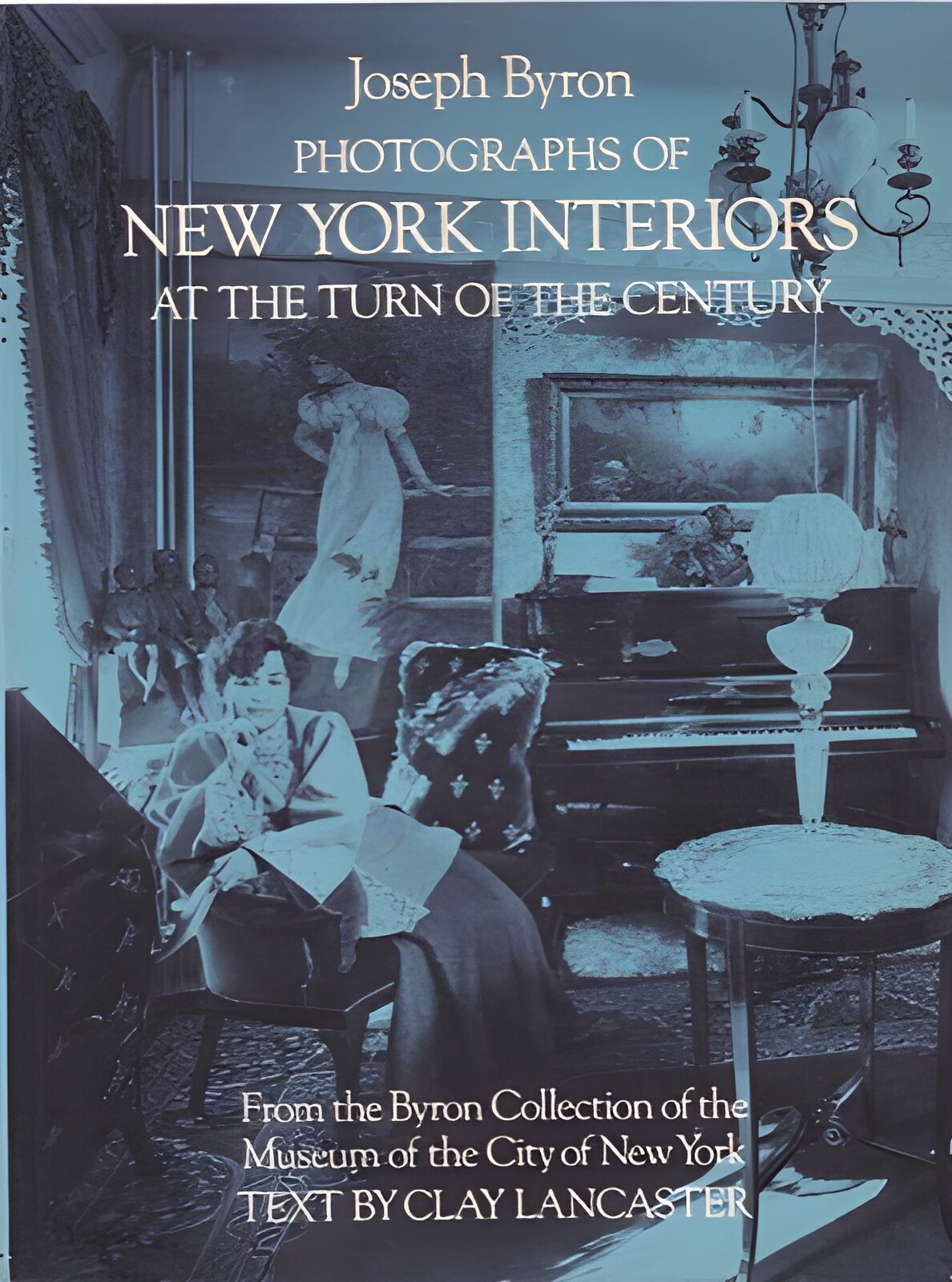
Softcover. NY, Dover, 1st, 1978, Book: Very Good, Dust Jacket: None, Softcover, 154 pages. 131 rare photographs capture some of the most remarkable Victorian-Edwardian interiors ever created. Extraordinary furnished drawing rooms, dining rooms, studies, libraries, bedrooms, music rooms, kitchens, and bathrooms in the homes of well-to-do New Yorkers recall turn-of-the-century charm. Text by Clay Lancaster. Clean copy.
Hardcover. Montreal, Canada, Canadian Centre for Architecture, 1st, 1982, Book: Very Good, Dust Jacket: Very Good, 282 pages. Hardcover. B/w illustrations throughout. Dust jacket front flap price clipped. Tan colored fabric covered. Clean copy, Dust jacket shows some light age wear. From the front flap: "...presents works that show aspects of the history of architecture seen through photography and the history of photography through architecture."
Hardcover. New York, William Morrow and Company, Inc., 1st, 1994, Book: Very Good, Dust Jacket: Very Good, 128 pages. Hardcover. Color and b/w illustrations throughout. Dust jacket unclipped. Gilt title on spine. Dust jacket has a little bit of chipping at top of spine, patched with tape. Otherwise great. Clean and unmarked inside. Gilt endpapers.
Hardcover. New York, D.T. Valentine, N/A, 1856, Book: Very Good, Dust Jacket: None, B&w lithographic print of New York street scene for a proposed pedestrian overpass on Broadway, allowing horse-drawn vehicles to pass underneath. Image size 9 1/2" X 6 1/2", with matte 10 X 12". Two vertical creases where it was once folded. Matte has light soiling.
Softcover. Los Angeles, University of California Press , 1st, 1982, Book: Very Good, Dust Jacket: Very Good, Large softcover, 100 pages; many illustrations. Clean and tight; fairly unblemished. Stiff card wraps with wraparound jacket. Following the publication of the 3-volume Plan of St. Gall an exhibition was mounted which used selected text, drawings, models, etc. that were used to produce the large work This shorter volume grew out of that exhibition.
Hardcover. Baton Rouge LA, Louisiana State University Press., reprint, Book: Very Good, Dust Jacket: Very Good, Hardcover, large oblong book. Contains 134 printed pages of text with color photographs throughout. From the Greek Revival grandeur of Belle Helene, to the Moorish fantasy of Longwood, to the simplicity of Rosella, the plantation homes of Louisiana and the Natchez was powerfully recall the brief flowering of the unique civilization of the Old South. Clean copy in a bright dust jacket.
Hardcover. NY, Abbeville Press, 1st, 2010, Book: Very Good, Dust Jacket: Very Good, Hardcover in a bright dust jacket. 336 pages illustrated in color. This authoritative yet accessible study begins with an overview of the aesthetics, meanings, functions, and techniques of Mesoamerican architecture, and then proceeds to survey the historical development of the builder's art in each of the region's cultural areas. As readers travel from the Maya heartland of Guatemala and the Yucatan to the Aztec stronghold of the Valley of Mexico, and all the way to the northern hinterlands of Mesoamerica, they will gain an appreciation of both the unity and the diversity of the region's architecture. Clean copy. DOMESTIC SHIPPING ONLY.
Hardcover. Philadelphia , John Wanamaker, 1st, 1899, Book: Very Good, Dust Jacket: None, Hardcover, green cloth with gilt and black decoration, 147 illustrations by Joseph Pennell and others. Folded Map laid In. Covers with light edgewear and chipping. Top edge gilt.
hardcover. London, Turnberry Consulting , reprint, 2013, Book: Very Good, Dust Jacket: Very Good, 271 pages. Hardcover. Extensive color and b&w photographs throughout. Silver gilt titles on spine. Includes extensive glossary. Like new in publisher's shrink-wrap.
Hardcover. NY, Rizzoli, 1st, 2023, Book: Very Good, Dust Jacket: Very Good, Hardcover in a bright dust jacket. This special volume presents a visual timeline of Ralph Lauren's remarkable history as a lifestyle innovator. Lauren's unparalleled ability to seamlessly blend fashion and the home is illustrated with the groundbreaking designs and innovative use of materials that have distinguished the home collection since its inception in 1983: menswear-inspired Oxford Cloth bedding that required the creation of special looms and took two years to refine; the sleek RL-CF1 chair, crafted of carbon fiber and inspired by Lauren's McLaren F1 racecar; and an appreciation for a timeworn, weathered aesthetic, as exemplified in the iconic Writer's Chair with its hand-burnished leather and rich patina. Historic achievements such as the opening of his first New York City flagship on Madison Avenue - which invited guests to experience the complete World of Ralph Lauren in a residential environment - and his renowned restaurants that offer the epitome of gracious hospitality, demonstrate the magnitude of Ralph Lauren's influence on the worlds of lifestyle design and hospitality. The timeline is complete with quotes from distinguished members of the design world and prominent figures of our culture including Oprah Winfrey, Hillary Rodham Clinton, and architecture critic Paul Goldberger. Ralph Lauren's signature ability to create transportive environments begins with his private homes that inspire his iconic lifestyle collections. Ralph Lauren: A Way of Living offers an in-depth look at all the places Lauren calls home, from a sprawling ranch in Colorado and an island retreat in Jamaica, to a Fifth Avenue penthouse overlooking Manhattan's Central Park, a seaside home in Montauk and a country estate in Bedford. Lauren's homes are deeply personal expressions of his vision for living; captivating imagery is complemented by essays and descriptions written in his own words that intimately express the meaning of home and share inspiration and anecdotes for each residence. The photos of Lauren's captivating homes are followed by a celebration of Ralph Lauren Home's lifestyle collections - cinematic worlds that are brought to life with iconic imagery showcasing Lauren's pioneering lifestyle approach and all-encompassing home collection. DUE TO WEIGHT. DOMESTIC SHIPPING ONLY.
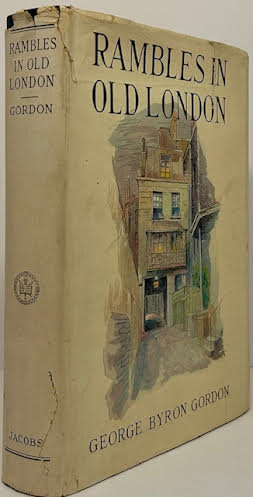
Hardcover. Philadelphia, PA, George W. Jacobs & Company, 1st Edition, 1924, Book: Very Good, Dust Jacket: Fair, 334 pages. Hardcover. Color frontispiece and b/w illustrations throughout. Previous owner's bookplate, stamp, and pencil markings on front endpapers. Some pages untrimmed. Blue leather cover boards, gilt title on spine and front cover boards with two color decoration. Boards are excellent. Dust jacket has agewear, but present. binding very good. Pages and edges have some tanning. Top edge dyed. Dr. Gordon brings an artist's eye as well as the knowledge of a historian to the beautiful city of London and her historic landmarks.
Softcover. Cambridge MA, The MIT Press , 1st, 2021, Book: Very Good, Dust Jacket: None, Softcover, 373 pages. A history of New York subway passengers as they navigated the system's constraints while striving for individuality, or at least a smooth ride. When the subway first opened with much fanfare on October 27, 1904, New York became a city of underground passengers almost overnight. In this book, Stefan Hohne examines how the experiences of subway passengers in New York City were intertwined with cultural changes in urban mass society throughout the twentieth century. Hohne argues that underground transportation--which early passengers found both exhilarating and distressing--changed perceptions, interactions, and the organization of everyday life. Clean copy.
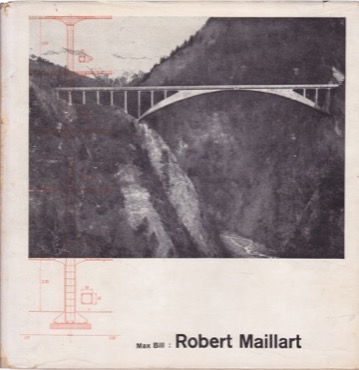
Hardcover. Zurich, Verlag fur Architektur], 1st, 1949, Book: Very Good, Dust Jacket: Fair, Hardcover in a worn, lightly soiled dust jacket with a chunk missing from the rear panel. 180 pages. Text in German, French and English, illustrated in black and white throughout. History of Robert Maillart bridges. Previous owner's signature on inside front cover, otherwise clean.
New York , Princeton Architectural Press, 2001, Book: Very Good, Dust Jacket: Very Good, Hardcover, 330 pages, color, b&w illustrations. Like-new condition. The first architect trained in America, Robert Mills is best known as the designer of many iconic buildings in our nation's capital: the Washington Monument, the Department of Treasury headquarters, the Patent Office Building (now National Portrait Gallery) , and the Post Office Headquarters.Beautifully illustrated with never-before-published watercolors and renderings and new color photography commissioned for the book.
Hardcover. NY, Universe Books, 1st, 1971, Book: Very Good, Dust Jacket: None, Hardcover, red cloth with gilt titles. 196 pages, illustrated throughout in color and b&w. Discusses the history of the movement and shows examples of architecture, sculpture, metalwork, ivories, stained glass, wall paintings, and book illuminations. Clean, tight copy.

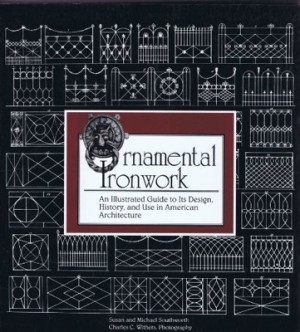
 "Ornamental Ironwork: An Illustrated Guide to Its Design, History, & Use in American Architectureby: Southworth, Susan & Michael")
 "Out of the Box: The Reinvention of Art: 1965-1975by: Carter Ratcliff")
 "Owen Jones: Design, Ornament, Architecture, and Theory in an Age in Transitionby: Flores, Carol A. Hrvol")
 "Owen Jones: Design, Ornament, Architecture, and Theory in an Age in Transitionby: Flores, Carol A. Hrvol")
 "Paper: Material, Medium, Magicby: Nicola Von Velsen (Editor), Neil Holt (Editor)")
 "Paris sens dessus-dessous (Marville photographies 1852-1870)by: Mellot, Philippe")

 "Perspectives in Vernacular Architecture: The Journal of the Vernacular Architecture Forum - Volume 12by: Pamela Simpson (editors) Jennings, Jan (Author)")
 "Photography and Architecture 1839-1939by: Pare, Richard")

 "Plan for the Relief of Broadway Presented to the Common Council October 4th 1852 by John T. Dodge Street Commissioner (PRINT)by: Hayward, G.")
 "Plan of St. Gall, The: In Brief by: Price, Lorna")
 "Plantation Homes of Louisiana and the Natchez Areaby: Gleason, David King")

 "Quaint Corners in Philadelphia by: N.A.")
 "Racecourse Architectureby: Roberts, Paul")





 "Robert Mills: America's First Architectby: Bryan, John M.")