Hardcover. Boston, Houghton Mifflin, 1st US, 1993, Book: Very Good, Dust Jacket: Very Good, 64 pages. Hardcover with dust jacket. Color illustrations by the author. Illustrated end papers. Tight copy.
Hardcover. Gloucester, Rockport Publishers, 1st, 1999, Book: Very Good, Dust Jacket: Very Good, 132 pages. Scarce hardcover. Features full color photography and illustrations. Fold-out pages. Clean, bright copy.
Hardcover. New Brunswick NJ, Rutgers University, 1st, 2002, Book: Very Good, Dust Jacket: Very Good, Hardcover, 114 pages, color and b&w photos by Pietropaolo.
Softcover. New York, Monacelli Press, 1st, 2004, Book: Very Good, Dust Jacket: None, Softcover, 183 pages, illustrated in color and b&w.Since 1988, New York-based architect Michael Bell has created a series of projects and essays that explore architectural and urban design for California, New York, and Texas -- the three most populous regions of the United States and, coincidentally, the three states in which he has lived and practiced. The first monograph on the architect, Michael Bell: Space Replaces Us; Essays and Projects on the City, includes both design work and writings.Bell has organized and designed two important installations, both of which include his work: "Endspace: Michael Bell and Hans Hofmann," at the University Art Museum, Berkeley, and "16 Houses: Owning a House in the City," at DiverseWorks in Houston, which featured his seminal Glass House @ 2 Degrees. Other projects included are an urban renewal scheme for a huge site in Far Rockaway, New York, and a series of residential projects, including the Ghent House, a modernist glass house currently under construction in upstate New York. Complementing the design projects are three major essays: "Having Heard Mathematics: The Topologies of Boxing," "Eyes in the Heat: RSE," and "New York City."
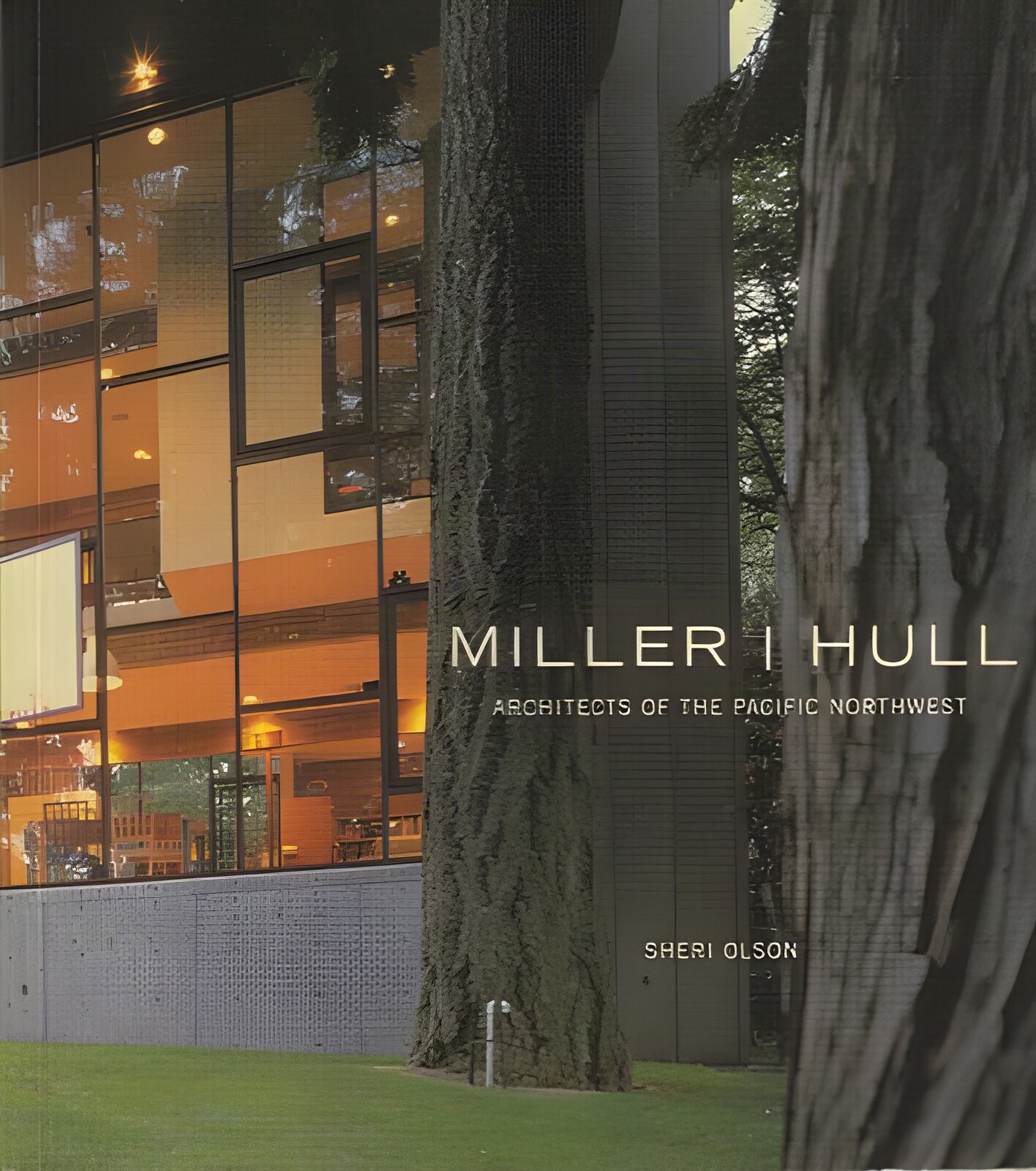
Softcover. Princeton Architectural Press, 1st, 2001, Book: Very Good, Dust Jacket: None, Softcover, 234 pages, color illustrations. David Miller and Robert Hull created the Pacific Northwest style which is energy-conscious, structural expressive and uses local materials. This book has 29 projects. Miller/Hull's energy-conscious designs combine with a love of local materials and structural expressiveness to define the essence of the Pacific Northwest style. Here, where climate plays such a critical role, each Miller/Hull building responds with simple but inventive forms, straightforward plans, sensible siting, and careful detailing. Miller/Hull is the only comprehensive monograph of the architects' practice, which spans civic buildings, office and retail structures, educational and institutional projects, and their award-winning houses. Clean copy.
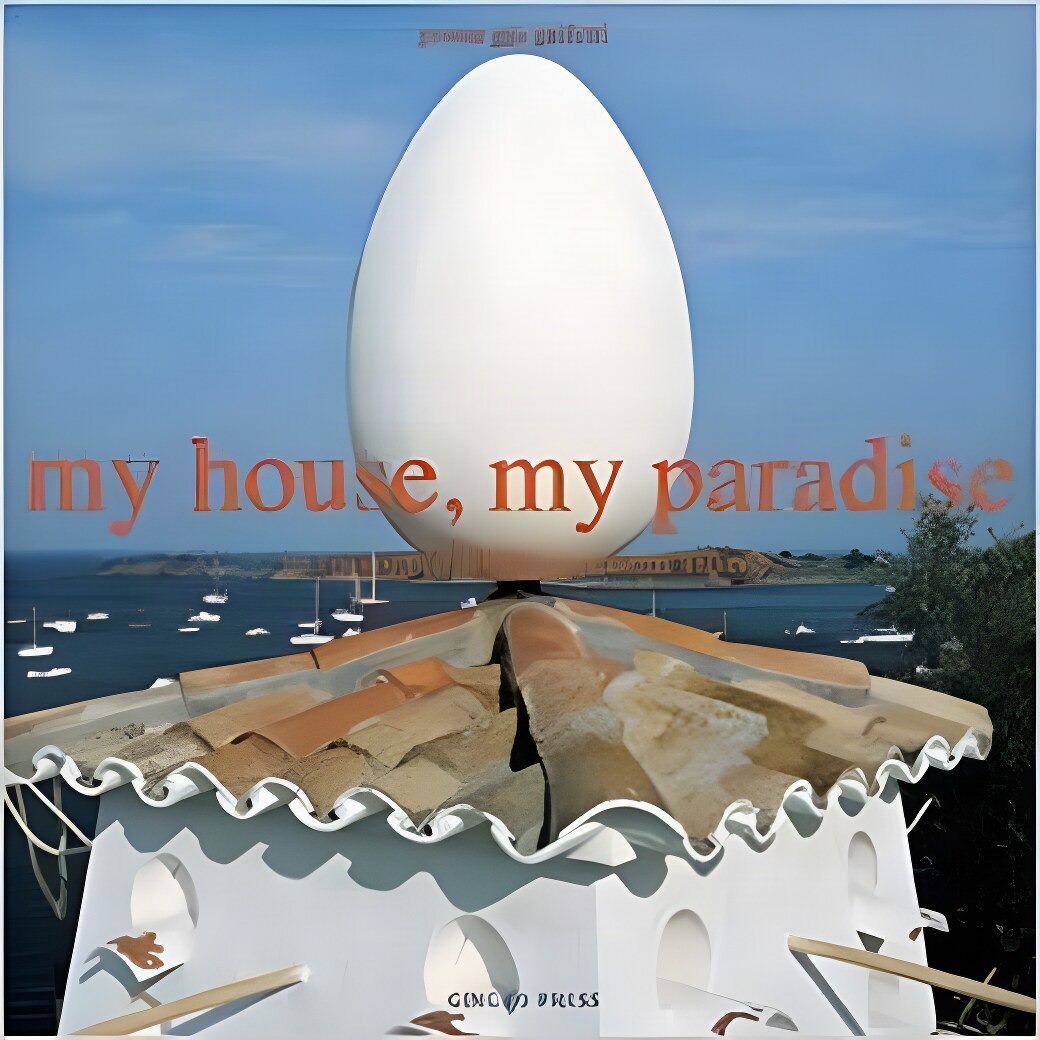
Hardcover. Editorial Gustavo Gili, SA, 1st, 1999, Book: Very Good, Dust Jacket: Very Good, 191 pages. Hardcover. Color and b/w illustrations throughout. Previous owners initials on upper right endpapers. front dust cover has former bookstore price tag residue. Very clean inside and out. In excellent condition. A collection of houses in which the 'residents-cum-creators' have devoted all of their ingenuity, energy and determination into constructing what they perceive to be the ideal domestic universe. They include Ludwig II of Bavaria's Linderhof, the Cesar Manrique Villa in Lanzarote, Salvador Dali's villa in Spain, Edward James' villa in Mexico, Grandma Prisbrey's Bottle Village, Ian Hamilton Finlay's Little Sparta, Alex Jordan's house on the rock and William Randolph Hearst's Xanadu.
Softcover. New York , Watson-Guptill, 1st, 1999, Book: Very Good, Dust Jacket: None, Square 4to, stiff pictorial wrappers. 228 pages, over 400 color photographs and b/w plans and drawings.
Hardcover. Harrisburg PA, National Historical Society, reprint, 1987, Book: Very Good, Dust Jacket: None, Hardcover, glossy green pictorial boards. No DJ as issued. A like new copy, no marks. Volume 3 of the Architectural Treasures of Early America. From material originally published as White Pine Series of Architectural Monographs edited by Russell F. Whitehead and Frank Chouteau Brown. 248 page book with historic photographs and home plans. Clean copy.
Hardcover. New York , Watson-Guptill/Whitney, 1st, 1997, Book: Very Good, Dust Jacket: Very Good, 208 pages. Large Hardcover. Color photos. Text by Richard Lewis Rees. Near fine dust jacket. Bright, tight and clean. A variety of houses are explained and described in detail by the actual architects and interior designers. This is an extensively illustrated work with more than 350 full color photographs, construction plans, and architectural and distribution drawings displaying the diverse locations in a technical way.
Hardcover. NY, powerHouse Books, 1st, 2002, Book: Very Good, Dust Jacket: Very Good, Hardcover, 120 pages. An insightful and unbiased account of a much-maligned and rapidly growing culture around the world, taken in perhaps the one place in the world where all manifestations of religious adherents live and work: New York City. The book features photographs, essays, and interviews documenting the mosques that New York's Muslim communities have built at their center, revealing the ways these buildings reflect and create identities for Muslims within a dense and diverse urban fabric. "... Mr. Grazda's penetrating black-and-white photographs and Ms. Dodd's insightful commentaries reveal the range of the city's Islamic houses of worship and their ethnic congregations...." --The New York Times
Hardcover. New York, Rizzoli, 1st, 1989, Book: Very Good, Dust Jacket: Very Good, Hardcover, 228 pages. B&w and color illustrations throughout. Text and photos tells the stories behind the numerous homes and public buildings of Newport R.I. Brand new copy, still in original shrink wrapping. In mint condition.
Hardcover. Gibbs Smith, 1st, 2005, Book: Very Good, Dust Jacket: Very Good, Hardcover, 160 pages. Off the Grid confronts the ecological and cultural problems associated with the way we get and use energy, and explains how it is possible to live in a beautifully designed home using much less--no matter where your home is located. Our homes are connected by a nearly invisible grid of infrastructure that binds us together. It is a system of electrical poles, wire, substations, hydroelectric dams, telecommunication towers, and water extraction and sewage systems. From within this system we work, play, and raise families. We have also created one of the greatest environmental challenges known to modern civilization. The signs of our impact upon the world can be recognized in the reports of environmental changes occurring across the earth, and they can also be seen in the growing failures of the energy grids across the world as the current system is stressed beyond its capacity. Off the Grid beautifully illustrates that this is not just a concept for rural living; examples of homes that are "off the grid" to varying degrees are found in New York City; Ontario, Canada; Stuttgart, Germany; Belmont, California; Pipe Creek, Texas; Clyde Park, Montana; Twin Lakes, Minnesota; Laytonville, California; Venice, California; and New South Wales, Australia.
Softcover. New York, E.P. Dutton, 1st, 1978, Book: Very Good, Dust Jacket: None, 80 pages. Softcover. Color illustrations throughout. In excellent condition. Covers still very shiny, like new. Very clean inside and out. Photographs of the colorful and eccentric Victorian architecture of San Francisco.
Hardcover. London, Cartago, 1st UK, 1999, Book: Very Good, Dust Jacket: Very Good, Hardcover, 224 pages. Color and black & white photography by Nicholas Sapieha. By studying a period of nearly four centuries and examining houses over the entire region of Goa, this lavishly illustrated book, with architectural drawings, attempts to define the specific identity of Indo-Portuguese architecture. It is possible to observe, particularly during the 17th and 18th centuries, a progressive cross-influencing of Indian and Portuguese aesthetic tastes: the resulting mixture has produced a fascinating style of architecture, which this text has captured with more than 200 color photographs.
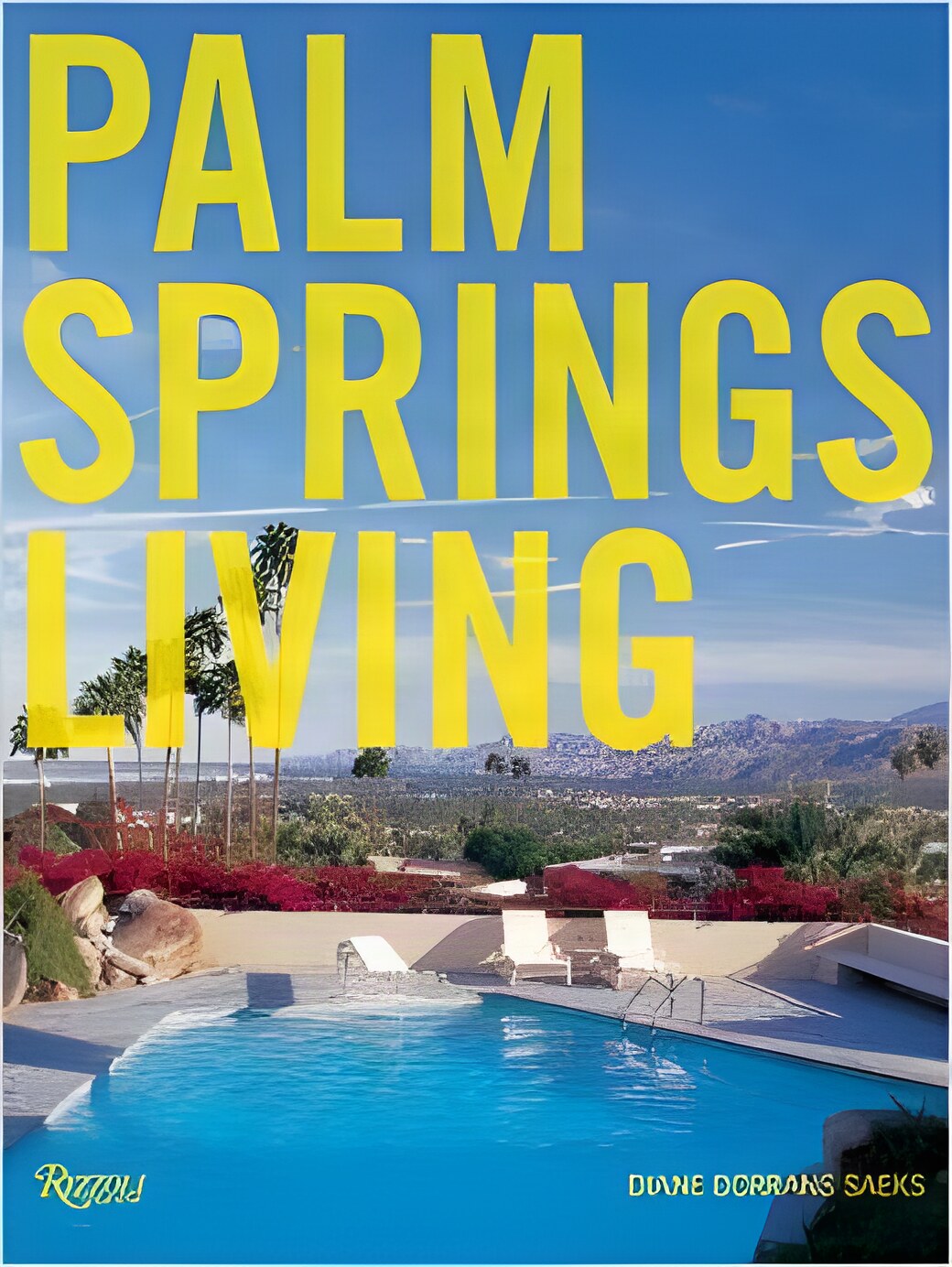
Hardcover. New York , Rizzoli, 1st, 2007, Book: Very Good, Dust Jacket: Very Good, Hardcover, 224 pages, color illustrations. Like new in publisher's shrink-wrap. Drawing from a rich and influential heritage that spans the 20th century, design in Palm Springs runs the gamut from Spanish hacienda-style architecture and interiors to classic mid-century constructions and contemporary experimentations. Its recent rediscovery by trend-setters like Tom Ford, Jonathan Adler, and Bruce Weber has made Palm Springs superhot again-as a destination and for design inspiration. This desert laboratory of avant-garde architecture, interior decorating, and freewheeling experimentation is now a focus for design and fashion fanatics around the world. Palm Springs Living showcases the inspiring, diverse range of exteriors and interiors in Palm Springs. Included are intimate peeks into the private homes of celebrity residents and brand-new photography of the legendary Modernist houses by Richard Neutra, Albert Frey, and many others.
Hardcover. Baton Rouge LA, Louisiana State University Press., reprint, Book: Very Good, Dust Jacket: Very Good, Hardcover, large oblong book. Contains 134 printed pages of text with color photographs throughout. From the Greek Revival grandeur of Belle Helene, to the Moorish fantasy of Longwood, to the simplicity of Rosella, the plantation homes of Louisiana and the Natchez was powerfully recall the brief flowering of the unique civilization of the Old South. Clean copy in a bright dust jacket.
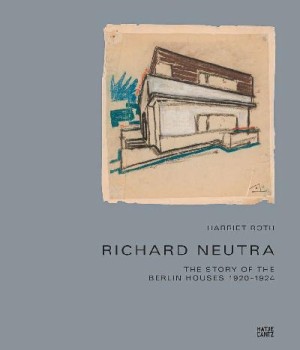
Hardcover. Hatje Cantz, 1st, 2019, Book: Very Good, Dust Jacket: None, Hardcover, pictorial boards, 304 pages illustrated in b&w and color. At the first mention of his name, one can easily picture them: light-flooded bungalows that are lavishly composed into nature and that characterize the architectural style of the American West Coast surrounding Los Angeles. But it is sometime overlooked that the career of Richard Neutra (1892-1970) began in Berlin-Zehlendorf. And yet these houses in Zehlendorf represent a fascinating phase in Neutra's work. With their complex color schemes and extravagant interior design, they reveal themselves to be more than just an experimental and radically innovative design. Indeed, these lesser-known aspects already hint at elements that will be taken up again in future projects. The present publication finally provides for a rightful appreciation of Neutra's early works and, alongside historical sources, it collects countless new and unpublished documents about the houses and their first residents. Clean, still in publisher's shrink wrap.
Hardcover. New York, Henry Holt & Co, 1st, 1991, Book: Very Good, Dust Jacket: Good, Hardcover, 205 pages, illustrated throughout. Minor dust jacket edge wear, otherwise, very clean and tight copy. An examination of rooftop designs for living spaces, conservatories, studios, conference rooms, tea houses, and pool rooms includes floor plans and discusses building and zoning codes
Hardcover. Baltimore, John Hopkins University Press, 1st, 2000, Book: Very Good, Dust Jacket: Very Good, Hardcover in a bright dust jacket. Starkly beautiful photos of abandoned and converted movie theaters with new essays by Peter Bogdanovich, Molly Haskell, Andrew Sarris, and Chester H. Liebs. The single-screen movie theaters that punctuated small-town America's main streets and city neighborhoods since the 1920s are all but gone. The well-dressed throng of moviegoers has vanished; the facades are boarded. In Silent Screens, photographer Michael Putnam captures these once prominent cinemas in decline and transformation. His photographs of abandoned movie houses and forlorn marquees are an elegy to this disappearing cultural icon.
Hardcover. San Francisco, Chronicle Books, 1st, 2000, Book: Very Good, Dust Jacket: None, Hardcover, gray boards with a dark brown cloth spine and a pictorial label on the cover. No dust jacket issued. Legendary for his massive photographic undertaking, The North American Indian, Edward Sheriff Curtis (1868-1952) recorded much more than portraits of Native American tribespeople. Among his huge body of work are numerous images of all manner of native dwellings: tipis, hogans, huts, cliff houses, adobes, and many more that are far less familiar to the public eye. Though people are largely absent from these photographs, each image speaks volumes about the lives and lifestyles of the tribes to which they belonged. Other structures such as tombs, religious buildings, granaries, and totem poles are also featured prominently, further glimpses into ways of life that were in the process of disappearing. Taken from the Dan and Mary Solomon collection,Sites & Structures: The Architectural Photographs of Edward S. Curtis is the first book of Curtis photographs to explore these dwellings and structures, faithfully reproduced from the original prints and gravures.
Hardcover. Harrisburg PA, National Historical Society, reprint, 1988, Book: Very Good, Dust Jacket: None, Hardcover, glossy green pictorial boards. No DJ as issued. Volume 16 of the Architectural Treasures of Early America. From material originally published as the Georgian Period edited by Professor William Rotch Ware. 224 page book with historic photographs and home plans. Clean copy.
Hardcover. Harrisburg PA, National Historical Society, reprint, 1988, Book: Very Good, Dust Jacket: None, Hardcover, glossy green pictorial boards. No DJ as issued. A like new copy, no marks. Volume 13 of the Architectural Treasures of Early America. From material originally published as the Georgian Period edited by Professor William Rotch Ware. 223 page book with historic photographs and home plans. Clean copy.
Hardcover. Harrisburg PA, National Historical Society, reprint, 1987, Book: Very Good, Dust Jacket: None, Hardcover, glossy green pictorial boards. No DJ as issued. A like new copy, no marks. Volume 1 of the Architectural Treasures of Early America. From material originally published as White Pine Series of Architectural Monographs edited by Russell F. Whitehead and Frank Chouteau Brown. 243 page book with historic photographs and home plans. Clean copy.

 "Houses - Structures, Methods, and Ways Of Livingby: Ventura, Piero")
 "Ledge House - Bohlin Cywinski Jackson - Single Building Series - Process of an Architectural Workby: Ojeda, Oscar Riera/William P. Bruder/Karl A. Backus")
 "Making Home in Havanaby: Cececilia Lawless , Vincenzo Pietropaolo (Photog)")
 "Michael Bell: Space Replaces Us - Essays and Projects on the Cityby: Bell, Michael")
 "New American Cottage, The - Innovations in Small-Scale Residential Architectureby: Trulove, James Grayson and Il Kim")
 "New England by the Sea (Architectural Treasures of Early America-Vol. 3) by: Mullins, Lisa C. (editor)")
 "New International House, Theby: Cerver, Francisco Asensio")
 "New York Masjid / Mosques Of New Yorkby: Jerrilynn Denise Dodds and Edward Grazda")
 "Newport Housesby: Mulvagh, Jane , Mark A. Weber")

 "Old Homes of Roxbury Township - Third in a Series of Books on the History of Roxbury Townshipby: Seraly, Ruthann/Frances Lyman")
 "Painted Ladies: San Francisco's Resplendent Victoriansby: Baer (photography), Morley, Elizabeth Pomada, Michael Larsen (Text)")
 "Palaces of Goa - Models and Types of Indo-Portugese Civil Architectureby: Carita, Helder")
 "Plantation Homes of Louisiana and the Natchez Areaby: Gleason, David King")
 "Rooftop Architecture: The Art of Going Through the Roofby: Busch, Akiko")
 "Silent Screens the Decline and Transformation of the American Movie Theater by: Putnam, Michael")
 "Sites and Structures: The Architectural Photographs of Edward S. Curtis by: Solomon, Mary/Slemmons, Rod")


 "Spirit of New England (Architectural Treasures of Early America, Vol. 16) by: Mullins, Lisa C. (editor)")
 "Styles of the Emerging Nation (Architectural Treasures of Early America, Vol. 13) by: Mullins, Lisa C. (editor)")
 "Survey of Early American Design (Architectural Treasures of Early America Vol. 1) by: Mullins, Lisa C. (editor)")