Hardcover. Thistle Hill Publications & Vermont Folklife Center, 1st, 2001, Book: Very Good, Dust Jacket: Very Good, Hardcover in a bright dust jacket, 108 pages, 68 b&w photographs. SIGNED BY BOTH MOSHER AND MILLER on the half-title page. Granite and Cedar represents an unusual collaboration between a documentary photographer and a writer of fiction to produce a haunting portrait of the people and the land of Vermont's most rural area, often referred to as the "Northeast Kingdom." Veteran photographer JOHN M. MILLER uses his brilliant collection of elegiac, but unsentimental, images dating from the 1970s to evoke the disappearing folkways, the rugged people, and the desolate and abandoned landscape of his native corner of the Green Mountain State. Miller's austere, black-and-white photos richly detail the erosion and the breakup of the small farms of the region and of the families who worked those farms. While they emphasize the stark beauty of the land, they also pay homage to the innate dignity and fierce pride of the people who live in such hardscrabble circumstances.
Hardcover. Thistle Hill Publications & Vermont Folklife Center, 1st, 2001, Book: Very Good, Dust Jacket: Very Good, Hardcover in a bright dust jacket, 108 pages, 68 b&w photographs. Granite and Cedar represents an unusual collaboration between a documentary photographer and a writer of fiction to produce a haunting portrait of the people and the land of Vermont's most rural area, often referred to as the "Northeast Kingdom." Veteran photographer JOHN M. MILLER uses his brilliant collection of elegiac, but unsentimental, images dating from the 1970s to evoke the disappearing folkways, the rugged people, and the desolate and abandoned landscape of his native corner of the Green Mountain State. Miller's austere, black-and-white photos richly detail the erosion and the breakup of the small farms of the region and of the families who worked those farms. While they emphasize the stark beauty of the land, they also pay homage to the innate dignity and fierce pride of the people who live in such hardscrabble circumstances.
Hardcover. Chicago, University Of Chicago Press, 1st, 2013, Book: Very Good, Dust Jacket: Very Good, Hardcover, 364 pages, illustrated throughout in color. Clean, unmarked copy with only minor wear to dust jacket. Wandering the streets of Harlem for the past forty years, Camilo Vergara has noticed and miraculously recorded those moments of great human invention that have been largely overlooked by the official chronicles of architecture and urban history. For this reason, his photographs are unique and indispensable.
Hardcover. US, Steidl, 1st, 2012, Book: Very Good, Dust Jacket: None, 32 pages. Like new in publisher's shrink-wrap. Harry Callahan was one of the most respected and influential American photographers of the modern era. He was a master of traditional genres such as portraiture, landscape, architecture and nature studies, but also experimented with new ways of using the medium. One of Callahan's favorite themes was the repeating pattern, whether in multiple reeds reflected on a lake's surface or the rows of windows on a building's facade. While lesser known than some of his other work, Callahan's collages demonstrate an intense interest in and profound understanding of the process of photographic seeing. His collages are rigorous yet playful explorations of a visual world created in his studio. The subject is either faces cut from magazines or rectangles cut from black or white paper. Callahan then photographed the collages pinned to his studio wall on his 8x10-inch view camera, one leading to the next to create this never before published series.
Hardcover. NY/Boston, Bulfinch Press, 1st, 1997, Book: Very Good, Dust Jacket: Very Good, Hardcover in a bright dust jacket, 203 pages. Introduction by Alan Trachtenberg. 170 duotone illustrations, chronology. Published in conjunction with a series of retrospective exhibitions chronicling forty years of the author's photographs of industrial and rural landscapes. Clean copy.
Hardcover. NY, The Museum of Modern Art, 1st, 1972, Book: Very Good, Dust Jacket: Very Good, Hardcover in a translucent dust jacket with 5 cut-outs enclosed (as called for), jacket with the usual darkening to edges and spine; The catalog for the 1972 major exhibition at MOMA, providing an excellent survey of modern Italian design and associated radical architectural movements. With articles on the history of modern Italian design by Portoghesi, Benevolo, and Gregotti, and articles on architecture by Celant and Tafuri. 430 pages with 520 photographic images and illustrations of which 124 are in color offering a kaleidescopic yet comprehensive vision of Italian design, objects and environments. Clean copy.
Softcover. New York, New-York Historical Society, 1st, 1987, Book: Very Good, Dust Jacket: None, Softcover, 172 pages, illustrated in b&w and color. Clean, unmarked copy with only minor wear to wrappers. Nearly sixty-five years ago the New-York Historical Society acquired its first landscape painting by Jasper F. Cropsey. Since then additional works by the distinguished Hudson River school painter have supplemented the Society's holdings. Published on the occasion of a special exhibition.
Hardcover. Washington DC, Dumbarton Oaks Research Library, 1st, 1998, Book: Very Good, Dust Jacket: Very Good, Hardcover in a bright dust jacket, 310 pages. John Evelyn (1620-1706), an English virtuoso and writer, was a pivotal figure in seventeenth-century intellectual life in England. He left an immensely rich literary heritage, which is of great significance for scholars interested in garden history and the histories of intellectual life and architecture. Evelyn is perhaps best known for Sylva, a compilation of thoughts on practical estate management, gardening, and philosophy, and the first book published by the Royal Society in London. As one of the group of learned men who founded the Royal Society in 1660 to promote scientific research, discussion, and publications, John Evelyn was at the center of many of the vital intellectual currents of the time. "Elysium Britannicum," Evelyn's unpublished manuscript of almost a thousand pages of densely packed drafts, rewrites, and projects, was perhaps something of an enigma to his contemporaries, who nevertheless urged its publication. It remains for scholars today a treasure-trove of fascinating insights on Evelyn and his milieu. Clean copy.
Hardcover. San Francisco, CA, Chronicle Books, 1st, 1997, Book: Very Good, Dust Jacket: Very Good, 298 pages. Dark blue cloth covers, embossed titles to spine, dark blue dust jacket with photographic illustration, profusely illustrated with gorgeous color photographs. Light rubbing to dust jacket, small nick to dust jacket at mid-spine, pages crisp and unmarked, clean boards; a beautiful book in great condition. Author Harvey H. Kaiser spent ten years exploring the historic architecture of the Western National Parks, from the rain forrests of the Olympic Peninsular to the awesome wonder of the Grand Canyon, and from rough-hewn travelers' cabins to Yosemite's spectacular Ahwahnee Hotel and Mount Hood's Timberline Lodge. Organized by region and park, and rich with historic detail.
Softcover. London, Reaktion Books,, 1st, 2004, Book: Very Good, Dust Jacket: None, Softcover, 223 pages, 144 illistrations, most in color. An exploration of the cult and celebration of death, loss and memory. Tracing the history and design of burial places throughout Europe and the USA, Ken Worpole ranges from village churchyards to tightly packed cities of the dead, such as the Jewish Cemetery in Prague and Pere Lachaise in Paris.
Softcover. New Haven CT, Yale School of Architecture/Norton, 1st, 2010, Book: Very Good, Dust Jacket: None, Softcover, 194 pages illustrated in color and b&w. The fifth in a series documenting the Edward P. Bass Visiting Fellowship in Architecture at Yale, this book chronicles the collaboration of Fellow Chuck Atwood, the former vice chairman of Harrah's board of directors, with Davenport Visiting Professor David M. Schwarz, assisted by Brook Denison and Darin Cook. Focusing on Las Vegas's lack of pedestrianism, they asked the students to investigate vital urban sites around the world and then apply theses lessons learned to the automobile-centric Strip. The students met with Las Vegas Mayor Oscar Goodman, Harrah's CEO Gary Loveman, and private-equity managers David Bonderman and Marc Rowman as they devised ways to transform the world's premiere themed playground into a livable and pedestrian-oriented city. Documents the development of plans for a campus of resorts on the Las Vegas Strip by a studio of ten Yale students. Clean copy.
Hardcover. NY, D.A.P./Distributed Art Publishers, 1st, 2008, Book: Very Good, Dust Jacket: None, Hardcover, 89 pages, large format. Tipped-on front board. Slight bump to bottom right corner. In publisher shrink wrap. A natural chronicler of all things uniquely American, photographer Lee Friedlander here puts his lens to the work of Frederick Law Olmsted (1822-1903), designer of many of this country's most iconic public landscapes and the father of North American landscape architecture. Olmsted was responsible for a staggering number of America's greatest parks, including the Niagara reservation (North America's oldest state park), Washington Park, the Biltmore Estate, the U.S. Capitol building landscape and entire parkway systems in Buffalo and Louisville. His most famous work remains New York City's Central Park, a pioneering egalitarian gesture that, at the time, was very unusual for its ready accessibility. No dust jacket issued. DOMESTIC SHIPPING ONLY.
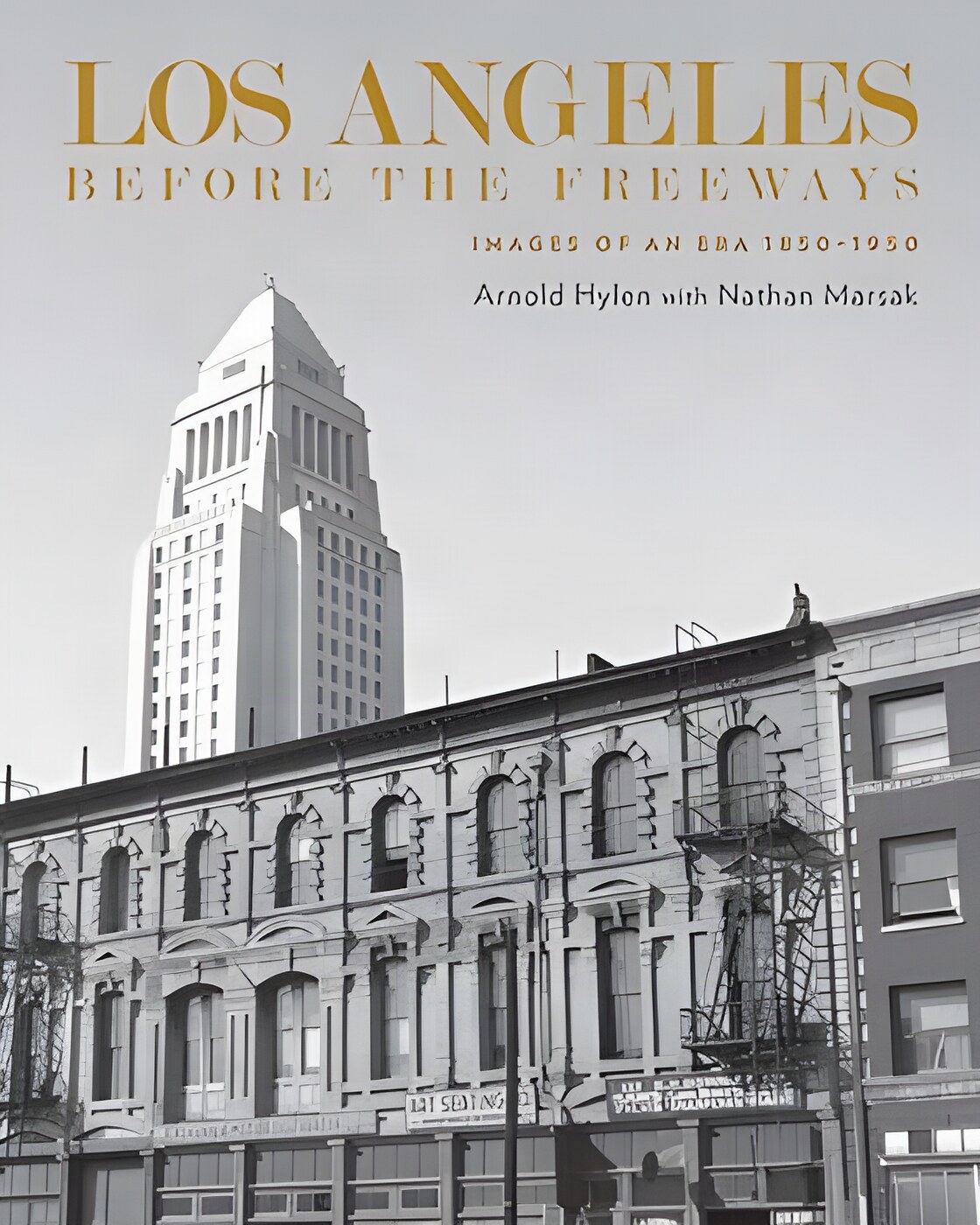
Hardcover. Santa Monica CA, Angel City Press, Book: Very Good, Dust Jacket: None, Hardcover, pictorial boards. Gives a lush, visual tour of a Los Angeles that no longer exists--one of elegant office buildings and stately mansions that were razed in the name of "progress" to build the city's famous freeways. Featuring stunning black-and-white photography from Arnold Hylen that captures a lost era, the book contains an original essay by the photographer that provides historical background and context for the time period. This new edition contains additional, never-before-seen photographs from Hylen and newly unearthed information from historian Nathan Marsak on these lost architectural treasures. Arnold Hylen (1908-1987) was a commercial and architectural photographer based in Los Angeles. Between the late 1940s and the late 1960s, Hylen traversed the streets of Los Angeles, photographing it's vanishing landscape. Still in publisher's shrinkwrap.
Hardcover. New York/Milano, Skira, 1st, 2003, Book: Very Good, Dust Jacket: Very Good, 224 pages, duotone photographs taken between 1904 and 1914 by a missionary working in China. In publisher's shrinkwrap. Leone Nani (1880-1935) lived in central China from 1904 to 1914. His missionary work took him to remote villages where he captured a world beyond the reach of other Westerners. Working in large format (mostly on glass plates he developed and printed himself in his mobile studio), Nani portrayed young couples, dignitaries, peasants and artisans. Equally gifted as an observer and reporter, he recorded everyday life scenes, religious ceremonies, architecture, and landscapes.
Hardcover. NY, Prestel, 1st, 2017, Book: Very Good, Dust Jacket: None, Hardcover, 160 pages. This photographic homage to Los Angeles presents a timeless depiction of the great city. In his book New York Sleeps, Christopher Thomas traveled the empty streets of New York City shooting dreamy cityscapes with a large-format Polaroid camera. For this new book he focuses his lens on Los Angeles, capturing in duotone images of the iconic buildings and spaces in the city: the Chinese Theatre without tourists, the Griffith Observatory peacefully alone, the Hollywood Boulevard without celebrities or onlookers. Around the city's artdeco buildings and mid-century drive-ins, sidewalks, and parking lots are vacant. Shot in the early morning, with the sun's rays just hinting between buildings, or at dusk, when the light is inchoate and mournful, these pictures are a tender valentine to Los Angeles. Fans of New York Sleeps will be thrilled to encounter another sublime project by Thomas. And residents and lovers of Los Angeles will be awestruck at this new interpretation of the City of Angels.
Softcover. Baltimore, Johns Hopkins University Press, 1st, 1995, Book: Very Good, Dust Jacket: None, Softcover in pictorial wraps, 259 pages with bibliography, index. Illustrated with vintage and contemporary photographs. First published in 1985, author Liebs' work established the 20th Century roadside landscape as a subject for serious study. Liebs traces the transformation of commercial development as it moved from centralized town main streets outward along street car line and highways (with old gas stations, small restaurants, motels, and truck stops) to the "miracle miles" and shopping malls of today. This, the first softcover edition, contains new commentary by the author. Clean copy.
Hardcover. Penn State Press, 1st, 2012, Book: Very Good, Dust Jacket: Very Good, Hardcover, 324 pages. The name of the architect Victor Baltard is inseparable from the Halles Centrales of Paris, the complex of iron-and-glass pavilions built between 1854 and 1874 in the historic heart of the city. Making Modern Paris is the only comprehensive study to address systematically not only the role Baltard played in the markets' design and construction but also how the markets relate to the rest of Baltard's work and professional practice. Christopher Curtis Mead interprets the Central Markets as a cogent expression of Baltard's professional experience as he adjusted his academic training to new criteria of municipal administration, urban planning, and building technology. Considering his entire career over the three decades he worked for the Prefecture of the Seine, this investigation of how architectural and urban practice came together in Baltard's work offers a case study of the historical process that produced modern Paris between 1840 and 1870.
Hardcover. Edition Stemmle, 1st, 2001, Book: Very Good, Dust Jacket: Very Good, Hardcover, 136 pages. Bauhaus photography is well served by this first monograph on Max Baur, with many of the previously unpublished photographs also serving as a new source for Bauhaus studies. Working in Germany, at first providing images for postcards, Baur expanded his efforts to encompass landscape, portrait, and architectural images. In each of these genres, his work reflects the cool, objective approach of the Bauhaus style combined with the artist's elegant handling of light and perspective. In photos of stairways and colonnades, factories, and everyday objects, Baur was able to eliminate the extraneous and offer the essential nature of his subject. The book covers a period of vast changes in the world and in the life of the artist, but throughout there is a consistency of vision. An essay by William Ewing, director of the Mus e de l'Elys e (which specializes in photography), gives a brief description of the life and career of Baur with enthusiasm and warmth, while Edelmann-Pomplitz writes movingly about her experience as his student. In a letter to her, Baur expresses his credo most eloquently: "it is with light alone that we create images." This lovely work is a fine example of excellent printing and composition in harmony with content.
Hardcover. New Haven CT, Yale University Press, 1st, 2012, Book: Very Good, Dust Jacket: Very Good, Hardcover, 288 pages. As a prolific photographer for House Beautiful, Better Homes and Gardens, Architectural Digest, and Sunset magazine, Maynard L. Parker (1900-1976) was a pioneer in documenting residential spaces and landscapes for postwar America. His extensively published, sun-kissed brand of photography made him a critical contributor to domestic design culture from the 1940s into the 1960s. Parker's lens revealed the homes and lifestyles of affluent Americans and celebrities, including Judy Garland, Clark Gable, and Bing Crosby, as well as the interiors, gardens, and built works of Samuel Marx, Frank Lloyd Wright, Thomas Church, and Cliff May, offering an alluring template for living in a new consumer age. Maynard L. Parker: Modern Photography and the American Dream is the first monograph to consider Parker and his work. Lavishly illustrated essays by leading scholars set Parker's photography against the backdrop of an unprecedented demographic shift, the Cold War, and a suburban society increasingly fixated on consumption.
Softcover. Hanover NH, Dartmouth College, 1st, 1996, Book: Very Good, Dust Jacket: None, Softcover, 24 pages illustrated with color and b&w photos. An overview of recent projects, both small scale and large architectural commissions. Clean, bright copy.
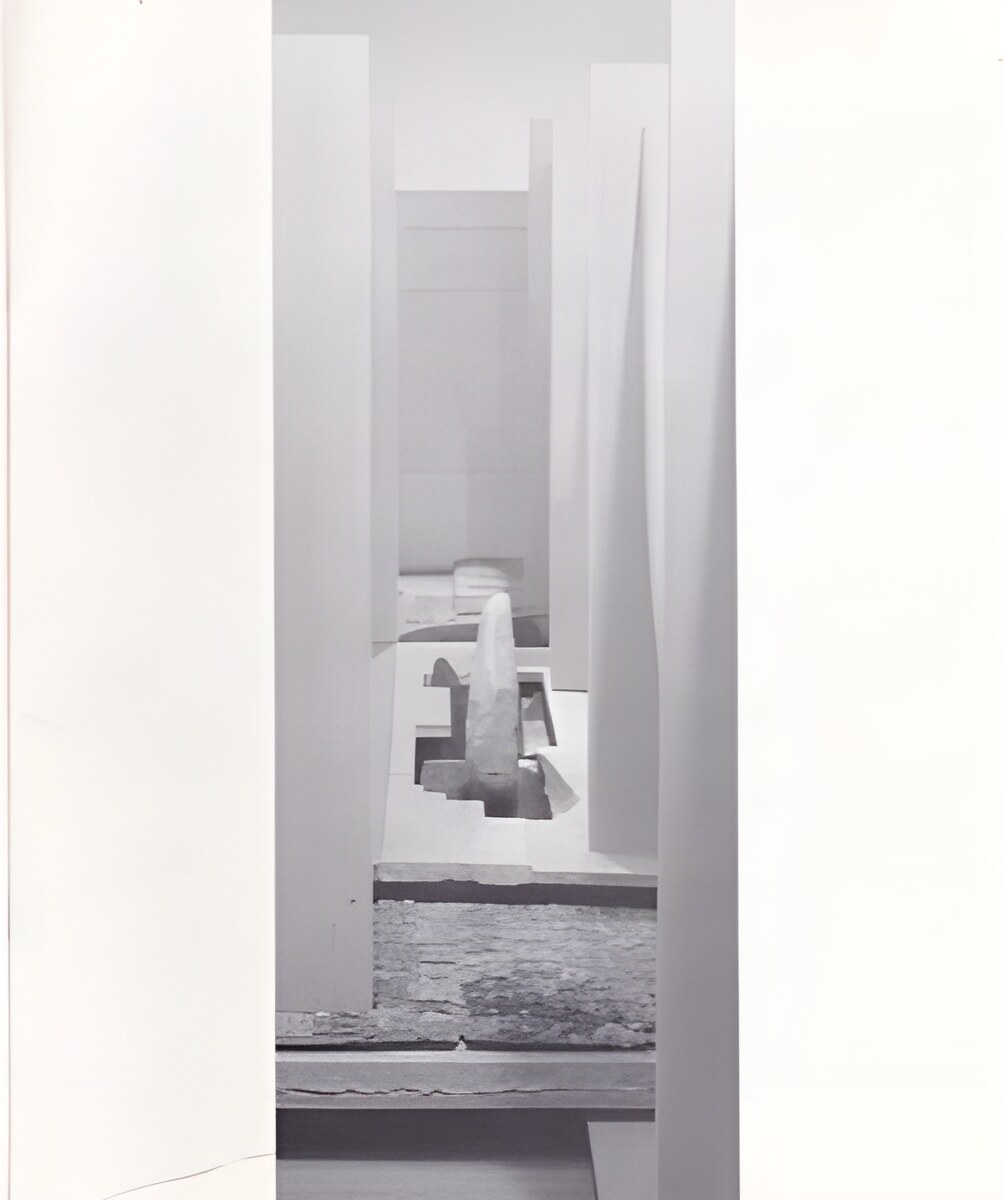
Hardcover. NY, Harry N. Abrams/Hood Museum of Art, 1st, 1988, Book: Very Good, Dust Jacket: Very Good, Hardcover in a bright, unclipped dust jacket. A beautiful and intimate treatment of the architecture of the early industrialization of New England. 108 pages of color plates. Essays by Noel Perrin & Kenneth Breisch. Clean copy.
Softcover. Englewood Cliffs, Prentice-Hall, Inc., 2nd Ed., 1987, Book: Very Good, Dust Jacket: None, 431 pages. Softcover. Tight copy. Profusely illustrated with black & white photographs & architectural illustrations. One interior section includes full page, full color photographs. Clean, bright copy.
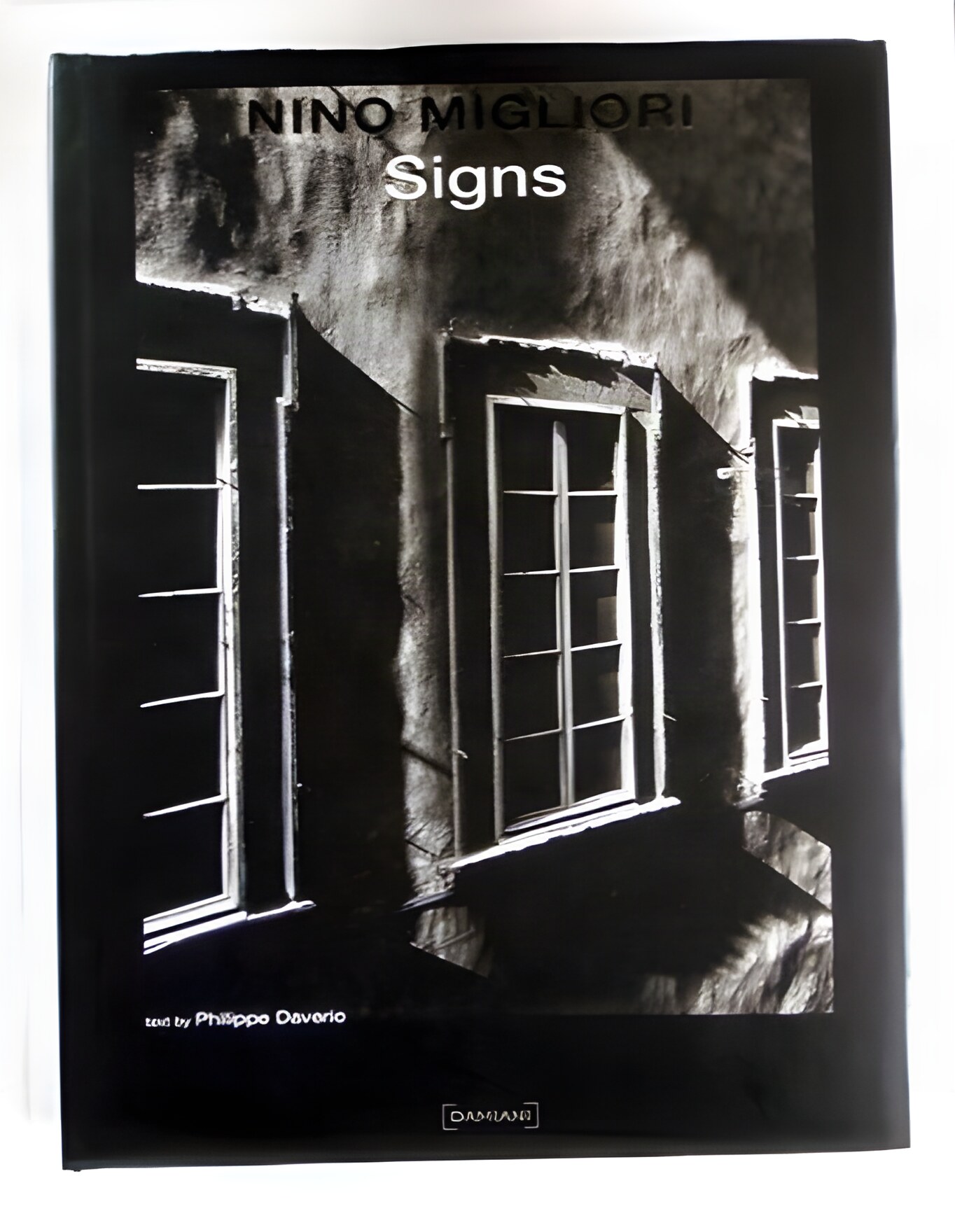
Hardcover. Damiani, 1st, 2005, Book: Very Good, Dust Jacket: Very Good, Hardcover in a lightly worn dust jacket, 300 pages. This monograph, Signs, is dedicated to Nino Migliori, one of the old masters of photography who had a significant effect on the history of Italian imagery after World War II. Signs presents a broad range of his production which has always been marked by creativity, versatility, and innovation. Included here are Miglori's portraits, landscapes, architecture, street scenes, abstract imagery, and polaroids. DOMESTIC SHIPPING ONLY.
Hardcover. New Haven CT, Yale University Press, 1st, 2018, Book: Very Good, Dust Jacket: None, Hardcover, 156 pages, no dj issued. An insightful new look at two renowned photographers, their interconnected legacies, and the vital documents of urban transformation that they created. In this comprehensive study, Kevin Moore examines the relationship between Eugene Atget (1857-1927) and Berenice Abbott (1898-1991) and the nuances of their individual photographic projects. Abbott and Atget met in Man Ray's Paris studio in the early 1920s. Atget, then in his sixties, was obsessively recording the streets, gardens, and courtyards of the 19th-century city--old Paris--as modernization transformed it. Abbott acquired much of Atget's work after his death and was a tireless advocate for its value. She later relocated to New York and emulated Atget in her systematic documentation of that city, culminating in the publication of the project Changing New York.

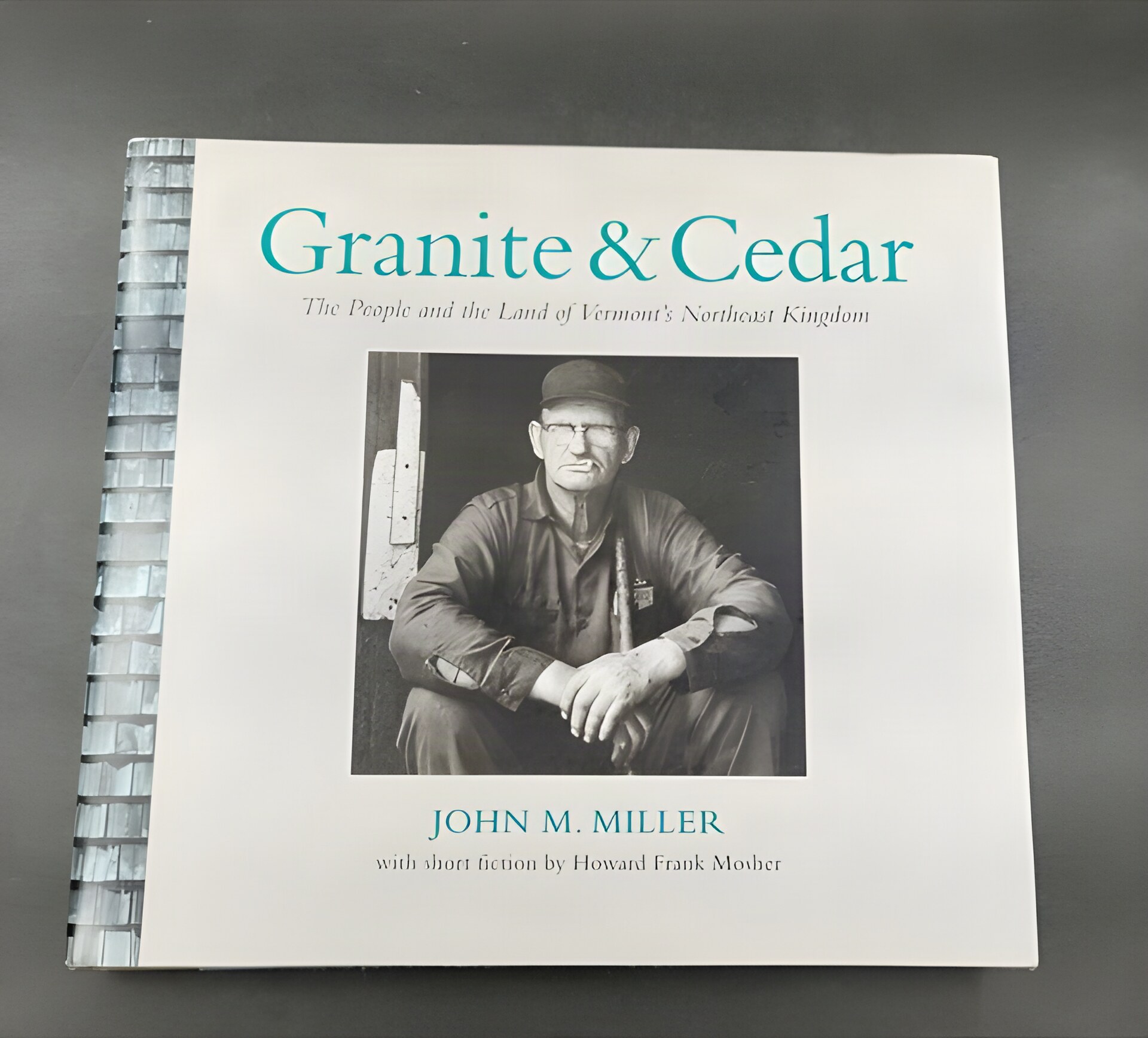
 "Granite and Cedar: The People and the Land of Vermont's Northeast Kingdom by: Miller/Howard Frank Mosher, John M.")
 "Harlem: The Unmaking of a Ghetto (Historical Studies of Urban America)by: Vergara, Camilo Jose")
 "Harry Callahan: Seven Collagesby: Callahan, Harry (Photographer)")

 "Jasper F. Cropsey: Artist and Architectby: Brennecke, Mishoe")

 "Landmarks in the Landscapeby: Kaiser, Harvey H.")
 "Last Landscapes: The Architecture of the Cemetery in the West by: Worpole, Ken")

 "Lee Friedlander: Photographs, Frederick Law Olmsted: Landscapesby: Lee Friedlander")
 "Lost China: The Photographs of Leone Naniby: Nani/ Clara Bulfoni (Author), Anna Pozzi (Author), Lina")
 "Lost in L.A.by: Christopher Thomas")


 "Making Modern Paris: Victor Baltard's Central Markets and the Urban Practice of Architecture (Buildings, Landscapes, and Societies) by: Mead, Christopher Curtis")
 "Max Baur: In the Bauhaus Spirit: Photographs 1925-1960by: Stephan Steins")
 "Maynard L. Parker: Modern Photography and the American Dreamby: Jennifer A. Watts")
 "Mills and Factories of New England by: Hambourg, Serge/Perrin Noel & Kenneth Breisch (essays)")
 "Modern Architecture Since 1900by: Curtis, William J. R.")
 "Old Paris and Changing New York: Photographs by Eugene Atget and Berenice Abbottby: Kevin Moore")