Softcover. Tokyo, Japan, A.D.A. Edita, 1st, 1989, Book: Very Good, Dust Jacket: None, 358 pages. Softcover with French flaps. (Japanese to English Text) Color and b/w illustrations throughout. Illustrations consist of photographs and drawings of completed buildings and relevant projects. A touch of age-yellowing throughout. Soil on bottom edge. Spine is slightly faded. Complete with no pages missing, binding still tight. Rare.
Softcover. Tokyo, Japan, A.D.A. Edita, 1st, 1988, Book: Very Good, Dust Jacket: None, 390 pages. Softcover with French flaps. (Japanese to English Text) Color and b/w illustrations throughout. Illustrations consist of photographs and drawings of completed buildings and relevant projects. A touch of age-yellowing throughout. Soil on bottom edge. Spine is slightly faded. Complete with no pages missing, binding still tight. Rare.
Hardcover. Chicago, University Of Chicago Press, 1st, 1994, Book: Very Good, Dust Jacket: Very Good, Hardcover, 397 pages, illustrated throughout in b&w. Slight crease to dust jacket front flap, slight dent to rear cover upper corner, else a clean, unmarked copy in excellent condition.
Hardcover. New York, Rizzoli, 1st Edition, 1993, Book: Very Good, Dust Jacket: Very Good, 312 pages. Hardcover. Color illustrations throughout including interiors and exteriors of projects, as well as blue prints. Red endpapers. Cover boards bound in charcoal cloth, gilt title on spine, all excellent. Dust jacket unclipped, very good. Pages clean and unmarked. Top edge has some light soil. Binding tight, spine straight. In beautiful condition. This extraordinary book presents thirty-eight of the most renowned and significant buildings of America's premier architect, from his early Prairie work in Oak Park, IL, in the 1890's to his daring creations of the 1940's and 1950's.
Hardcover. New York, Monacelli, 1st, 1997, Book: Very Good, Dust Jacket: Very Good, Hardcover, 616 pages, profusely illustrated in color and b&w. In a bright, unclipped dust jacket. 10.2 x 2 inches. Profusely illustrated with stunning photos, plans, sketches, models of his complete works and projects, project register, biography, exhaustive bibliography, and illustration credits. This first major monograph on Gehry's work contains more than 250 buildings and projects designed throughout his 40-year career.
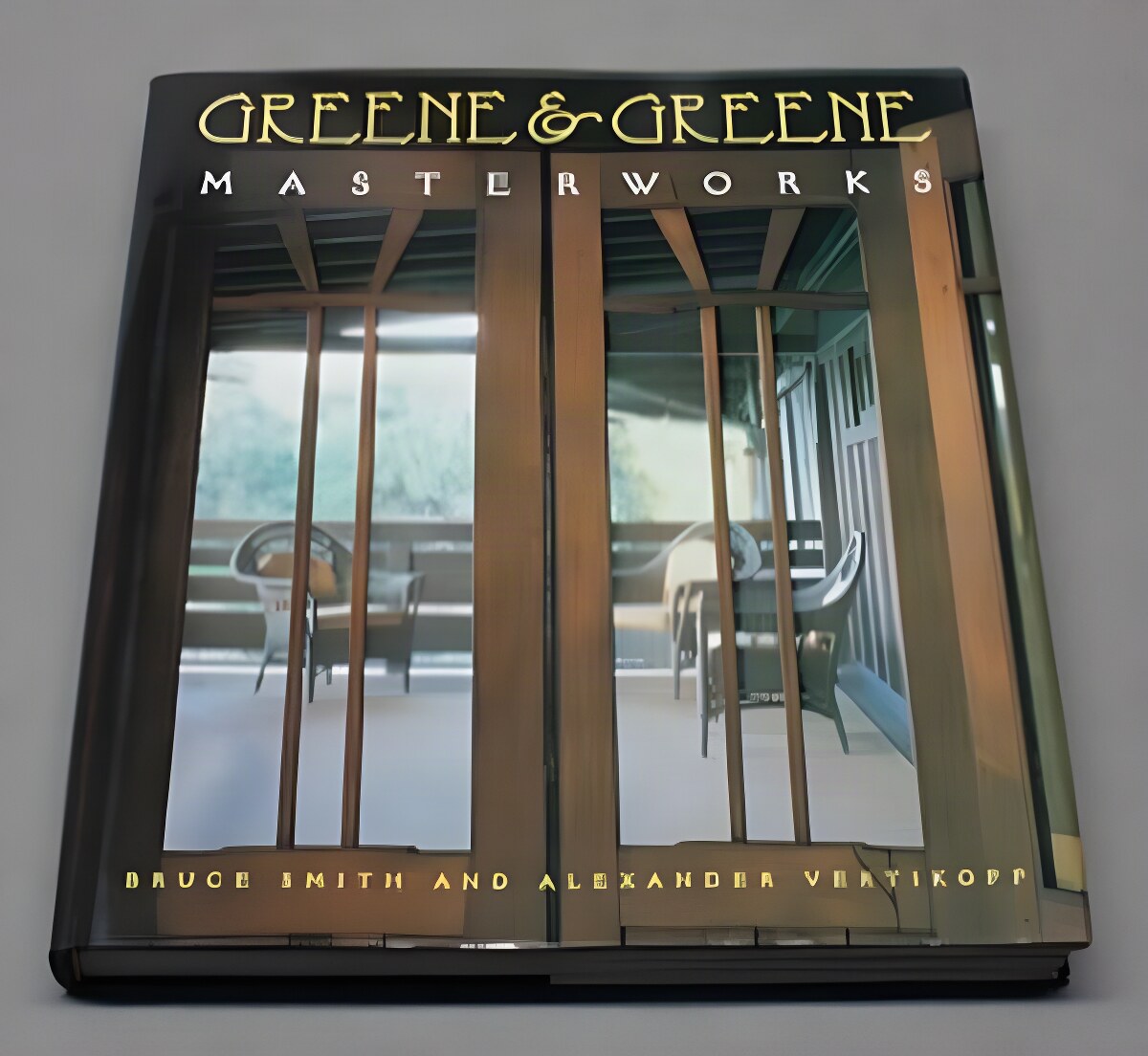
Hardcover. San Francisco, Chronicle Books, 1st, 1986, Book: Very Good, Dust Jacket: Good, Hardcover in a bright. lightly worn dust jacket. 240 pages illustrated in color. A full-color survey of the architectural firm of Greene & Greene that almost single-handedly defined the Arts & Crafts aesthetic in America in the first decades of the 20th century. An in-depth tour of 25 magnificent homes examines the creative evolution of their style as well as surveying their greatest works. Light tape repair to spine of dust jacket.
Hardcover. Portland, OR, Nazraeli Press, 1st, 2010, Book: Very Good, Dust Jacket: None, 108 pages. This printing limited to 1000 copies. Hardcover with no dust jacket. Creasing to a few pages. An otherwise clean, unmarked copy with only minor edgewear. In the mid-1980s, Stu Levy began making 'grid-portraits' in order to overcome his his frustration with traditional portraiture's limited point of view. These constructs of photographs, consisting of twelve to twenty-five individual images, scan the architecture and flow of time in a subject's living or working environment. The resulting portraits, usually of artists, craftspeople and musicians, are made in the subjects' studios or living spaces and serve as a backstage tour of the artist s mind and creative process. Levy is fascinated by the artifacts that fill these spaces the possessions by which the subjects are themselves possessed. Rather than confining himself to a single 'decisive' moment, Levy explore its antithesis, a maze of scrambled time. These are made with a view camera using 4 x 5-inch negatives to allow for precision of detail. The sections are printed together to form the illusion of glancing through a window at a 'snapshot' of an event, which in reality might consist of fragmentary views made months apart and in totally separate rooms or environments. Among the subjects included in this important new monograph are Dr. Stanley Burns, Linda Connor, Barbara Crane, Jay Dusard, David Hockney, Graham Nash, and Jerry Uelsmann. Beautifully printed in duotone on matt art paper and bound in black Japanese cloth, this first printing of Grid-Portraits is limited to 1,000 copies.
Hardcover. Chicago, University of Chicago Press , 1st, 2013, Book: Very Good, Dust Jacket: Very Good, Hardcover, 364 pages, illustrated throughout in color. Clean, unmarked copy with only minor wear to dust jacket. Photographer Camilo Jose Vergara has been chronicling the neighborhood for forty-three years, and Harlem: The Unmaking of a Ghetto is an unprecedented record of urban change. Vergara began his documentation of Harlem in the tradition of such masters as Helen Levitt and Aaron Siskind, and he later turned his focus on the neighborhood's urban fabric, both the buildings that compose it and the life and culture embedded in them. By repeatedly returning to the same locations over the course of decades, Vergara is able to show us a community that is constantly changing--some areas declining, as longtime businesses give way to empty storefronts, graffiti, and garbage, while other areas gentrify, with corporate chain stores coming in to compete with the mom-and-pops. He also captures the ever-present street life of this densely populated neighborhood, from stoop gatherings to graffiti murals memorializing dead rappers to impersonators honoring Michael Jackson in front of the Apollo, as well as the growth of tourism and racial integration. Woven throughout the images is Vergara's own account of his project and his experience of living and working in Harlem. Taken together, his unforgettable words and images tell the story of how Harlem and its residents navigated the segregation, dereliction and slow recovery of the closing years of the twentieth century and the boom and racial integration of the twenty-first century. A deeply personal investigation, Harlem will take its place with the best portrayals of urban life.
Hardcover. US, Steidl, 1st, 2012, Book: Very Good, Dust Jacket: None, 32 pages. Like new in publisher's shrink-wrap. Harry Callahan was one of the most respected and influential American photographers of the modern era. He was a master of traditional genres such as portraiture, landscape, architecture and nature studies, but also experimented with new ways of using the medium. One of Callahan's favorite themes was the repeating pattern, whether in multiple reeds reflected on a lake's surface or the rows of windows on a building's facade. While lesser known than some of his other work, Callahan's collages demonstrate an intense interest in and profound understanding of the process of photographic seeing. His collages are rigorous yet playful explorations of a visual world created in his studio. The subject is either faces cut from magazines or rectangles cut from black or white paper. Callahan then photographed the collages pinned to his studio wall on his 8x10-inch view camera, one leading to the next to create this never before published series.
Hardcover. NY, Delano Greenidge Editions, 1st, 2003, Book: Very Good, Dust Jacket: Very Good, Hardcover, 396 pages, lavishly illustrated throughout in color and b&w. Light shelf-wear to dust jacket, else a clean, tight copy. Guimard is the pre-eminent architect of Art Nouveau in France. He influenced French architecture and design in the first half of the 20th century. He was also the architect of a number of Paris Metro entrances. He was regarded as an architect who wielded the greatest influence on the popular imagination in Paris during the late 19th- and early 20th centuries.
Hardcover. Harrisburg PA, National Historical Society, reprint, 1988, Book: Very Good, Dust Jacket: None, Hardcover, glossy green pictorial boards. No DJ as issued. A like new copy, no marks. Volume 5 of the Architectural Treasures of Early America. From material originally published as White Pine Series of Architectural Monographs edited by Russell F. Whitehead and Frank Chouteau Brown. 254 page book with black and white photos of the finer houses in New York and Connecticut.
Hardcover. Ostfildern GR, Hatje Cantz, 1st, 2008, Book: Very Good, Dust Jacket: Very Good, Hardcover, 288 pages 231 illustrations 60 in color with 274 plans and drawings. Biography. Like new in publisher's shrink-wrap. Josef Paul Kleihues (1933-2004) was one of the most prolific architects of postwar Germany, famous both as the Director of the International Building Exhibition Berlin in 1987 and for his design for the Museum of Contemporary Art in Chicago. He was also known for his sensitive interventions into older buildings, an instance of which is the former Hamburger Bahnhof--now the Museum fur Gegenwart--in Berlin, where Kleihues intermixed glass walls and light installations by the American Minimalist Dan Flavin with the building's original nineteenth-century Neoclassical design. (His reconstruction was widely deemed to rival or even surpass Gae Aulenti's overhaul of the interior of the Musee d'Orsay in Paris.) This first volume of a three-part monograph presents projects up to 1980, including the highly acclaimed Berlin Sanitation Department and the Neukolln Hospital. Even in these early works, Kleihues' practical, problem-solving approach is already evident, indicating his readiness to reflect on the traditional approaches of Modern architecture and his capacity to expand them in interesting ways. This very generously illustrated volume was designed by Kleihues himself, just before his death in 2004.
Hardcover. New York, Harry N. Abrams, 1st, 2010, Book: Very Good, Dust Jacket: Very Good, 224 pages. Hardcover with dust jacket. 200 illustrations in color. Foreword by Jennifer B. Lee, Performing Arts Curator, Rare Book and Manuscript Library, Columbia University. Index. Clean, unmarked copy with only minor wear to dust jacket. Joseph Urban is a lavish celebration of this prolific artist, architect, and designer, whose accomplishments include magnificent Art Deco buildings, spectacular Ziegfeld Follies productions, and dramatic sets for the Metropolitan Opera. Joseph Urban (1872-1933) began his career as an architect and artist in Vienna before moving to America in 1911. In 1914 he moved to New York, where he ultimately signed on as set designer of the Metropolitan Opera. He also became immersed in an astonishing array of outside projects, designing nightclubs, hotel lounges, skyscrapers, theaters, stage and film sets, and even children's books. Though his creative output was immense, little remains of his work except the Mar-a-Lago in Palm Beach, and the New School and the base of the Hearst Tower in New York.
Hardcover. Cambridge MA, MIT Press, 1st, 1999, Book: Very Good, Dust Jacket: Very Good, 420 pages, illustrated with mostly b&w plates, 8 color pages. Small remainder stamp on bottom edge. "Tiege was at one and the same time both an agent provocateur and seismograph, at once provoking action and debate and yet simultaneously reacting with the utmost sensitivity to the shifting political spectrum of his time."--from the introduction by Kenneth FramptonKarel Teige (1900-1951), a leading figure of the avant-garde of the 1920s and 1930s, participated in every important argument and controversy of those turbulent years. He edited the most influential avant-garde journals on Czech and international cultural affairs and wrote profoundly original essays and books on the theory and criticism of art and architecture. He also produced paintings, collages, photomontages, film scripts, book covers, and typefaces and participated in theatrical performances.
Hardcover. NY, Phaidon Press, 1st, 2008, Book: Very Good, Dust Jacket: None, This slip-cased, oversized book, weighing 20 pounds and containing over 2000 illustrations, summarizes the life and work of the most important modern architect of the 20th century: the legendary, controversial, and confrontational Le Corbusier. Le Corbusier was not exclusively an architect but an artist (painter and sculptor), urbanist, author, furniture designer, world traveler, and media figure. What is most impressive in this volume are the huge-scale photographs drawn from the Le Corbusier archives at the Fondation Le Corbusier in France. These photographs are personal, professional, indicative, anecdotal, illustrative, and symbolic of the entire saga of Le Corbusier's life and career over 60 years. They make this book an absolute gold mine for anyone wanting to understand and steep themselves in the spirit and character of this greatest modern architect of the last century. The written material is also first-rate: Jean-Louis Cohen, France's best-known historian of modern architecture, contributes an informative introduction, and Tim Benton, a well-known British architectural historian, writes opening texts for individual chapters. Recommended for architecture and art libraries as well as public libraries with serious art collections.--Peter S. Kaufman, Boston Architectural Ctr. NOTE; DUE TO SIZE AND WEIGHT THIS VOLUME CANNOT BE SHIPPED OUTSIDE THE U.S.
Hardcover. San Francisco, Chronicle Books, 1st, 1989, Book: Very Good, Dust Jacket: Very Good, Hardcover in a bright dust jacket, More than 200 illustrations in color and in black & white. 224 pages. Analyzes in detail Scottish architect Charles Rennie Macintosh's greatest work, the Glasgow School of Art, with commentaries discussing the school's place in the development of architecture. Clean copy.
Hardcover. Edition Stemmle, 1st, 2001, Book: Very Good, Dust Jacket: Very Good, Hardcover, 136 pages. Bauhaus photography is well served by this first monograph on Max Baur, with many of the previously unpublished photographs also serving as a new source for Bauhaus studies. Working in Germany, at first providing images for postcards, Baur expanded his efforts to encompass landscape, portrait, and architectural images. In each of these genres, his work reflects the cool, objective approach of the Bauhaus style combined with the artist's elegant handling of light and perspective. In photos of stairways and colonnades, factories, and everyday objects, Baur was able to eliminate the extraneous and offer the essential nature of his subject. The book covers a period of vast changes in the world and in the life of the artist, but throughout there is a consistency of vision. An essay by William Ewing, director of the Mus e de l'Elys e (which specializes in photography), gives a brief description of the life and career of Baur with enthusiasm and warmth, while Edelmann-Pomplitz writes movingly about her experience as his student. In a letter to her, Baur expresses his credo most eloquently: "it is with light alone that we create images." This lovely work is a fine example of excellent printing and composition in harmony with content.
Hardcover. New Haven CT, Yale University Press, 1st, 2012, Book: Very Good, Dust Jacket: Very Good, Hardcover, 288 pages. As a prolific photographer for House Beautiful, Better Homes and Gardens, Architectural Digest, and Sunset magazine, Maynard L. Parker (1900-1976) was a pioneer in documenting residential spaces and landscapes for postwar America. His extensively published, sun-kissed brand of photography made him a critical contributor to domestic design culture from the 1940s into the 1960s. Parker's lens revealed the homes and lifestyles of affluent Americans and celebrities, including Judy Garland, Clark Gable, and Bing Crosby, as well as the interiors, gardens, and built works of Samuel Marx, Frank Lloyd Wright, Thomas Church, and Cliff May, offering an alluring template for living in a new consumer age. Maynard L. Parker: Modern Photography and the American Dream is the first monograph to consider Parker and his work. Lavishly illustrated essays by leading scholars set Parker's photography against the backdrop of an unprecedented demographic shift, the Cold War, and a suburban society increasingly fixated on consumption.
Softcover. New York, Monacelli Press, 1st, 2004, Book: Very Good, Dust Jacket: None, Softcover, 183 pages, illustrated in color and b&w.Since 1988, New York-based architect Michael Bell has created a series of projects and essays that explore architectural and urban design for California, New York, and Texas -- the three most populous regions of the United States and, coincidentally, the three states in which he has lived and practiced. The first monograph on the architect, Michael Bell: Space Replaces Us; Essays and Projects on the City, includes both design work and writings.Bell has organized and designed two important installations, both of which include his work: "Endspace: Michael Bell and Hans Hofmann," at the University Art Museum, Berkeley, and "16 Houses: Owning a House in the City," at DiverseWorks in Houston, which featured his seminal Glass House @ 2 Degrees. Other projects included are an urban renewal scheme for a huge site in Far Rockaway, New York, and a series of residential projects, including the Ghent House, a modernist glass house currently under construction in upstate New York. Complementing the design projects are three major essays: "Having Heard Mathematics: The Topologies of Boxing," "Eyes in the Heat: RSE," and "New York City."
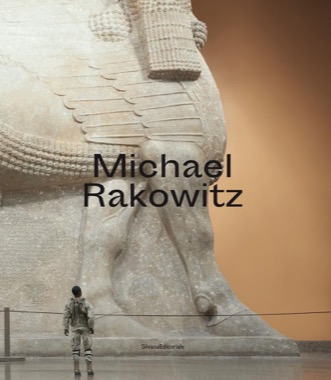
Hardcover. Milan, Silvana Editoriale, 1st, 2020, Book: Very Good, Dust Jacket: Very Good, Hardcover in a bright dust jacket. Iraqi-American artist Michael Rakowitz's (b. 1973, USA) first major European survey presents a sequence of installations drawing on architecture, cultural artifacts and cuisine to tell stories of social ritual, conflict and loss. It encompasses work considering the citizen visionaries of post Soviet Hungary, Middle Eastern Beatles fans and the stonecarvers of Afghanistan, with Rakowitz's casts of players and objects revealing the legacy of colonization, modernism and globalism. The artist's life-size replica of the gigantic lamassu, one of two monumental winged bulls that once guarded the gates of Nineveh in Iraq, currently features on Trafalgar Square's Fourth Plinth. This recreation of an ancient mythological creature is made from everyday date syrup cans and is part of an epic endeavour to recreate all 7,000 objects looted from the Iraq Museum in 2003, as well as those destroyed more recently at archaeological sites like Nimrud, also presented here. Text in English and Italian. Short closed tear to dj corner. otherwise like new. DOMESTIC SHIPPING ONLY.
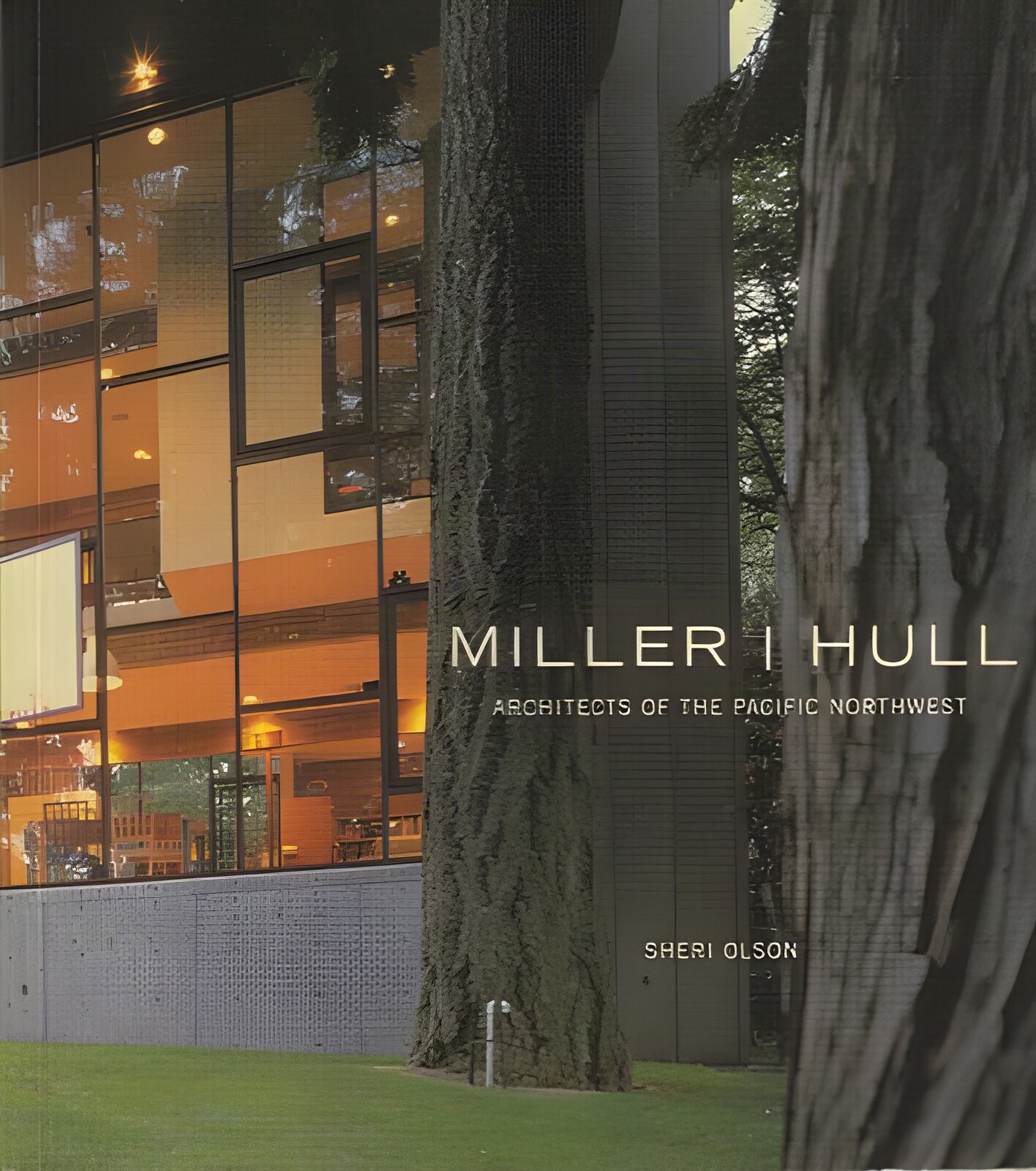
Softcover. Princeton Architectural Press, 1st, 2001, Book: Very Good, Dust Jacket: None, Softcover, 234 pages, color illustrations. David Miller and Robert Hull created the Pacific Northwest style which is energy-conscious, structural expressive and uses local materials. This book has 29 projects. Miller/Hull's energy-conscious designs combine with a love of local materials and structural expressiveness to define the essence of the Pacific Northwest style. Here, where climate plays such a critical role, each Miller/Hull building responds with simple but inventive forms, straightforward plans, sensible siting, and careful detailing. Miller/Hull is the only comprehensive monograph of the architects' practice, which spans civic buildings, office and retail structures, educational and institutional projects, and their award-winning houses. Clean copy.
Hardcover. Ontario CA, Vanwell Publishing St. Catherines, Ontario, 1st, 1996, Book: Very Good, Dust Jacket: Very Good, Hardcover, 344 pages, illustrated throughout in color and b&w. Clean, unmarked copy with only minor wear to dust jacket.
Hardcover. Harrisburg PA, National Historical Society, reprint, 1987, Book: Very Good, Dust Jacket: None, Hardcover, glossy green pictorial boards. No DJ as issued. A like new copy, no marks. Volume 3 of the Architectural Treasures of Early America. From material originally published as White Pine Series of Architectural Monographs edited by Russell F. Whitehead and Frank Chouteau Brown. 248 page book with historic photographs and home plans. Clean copy.
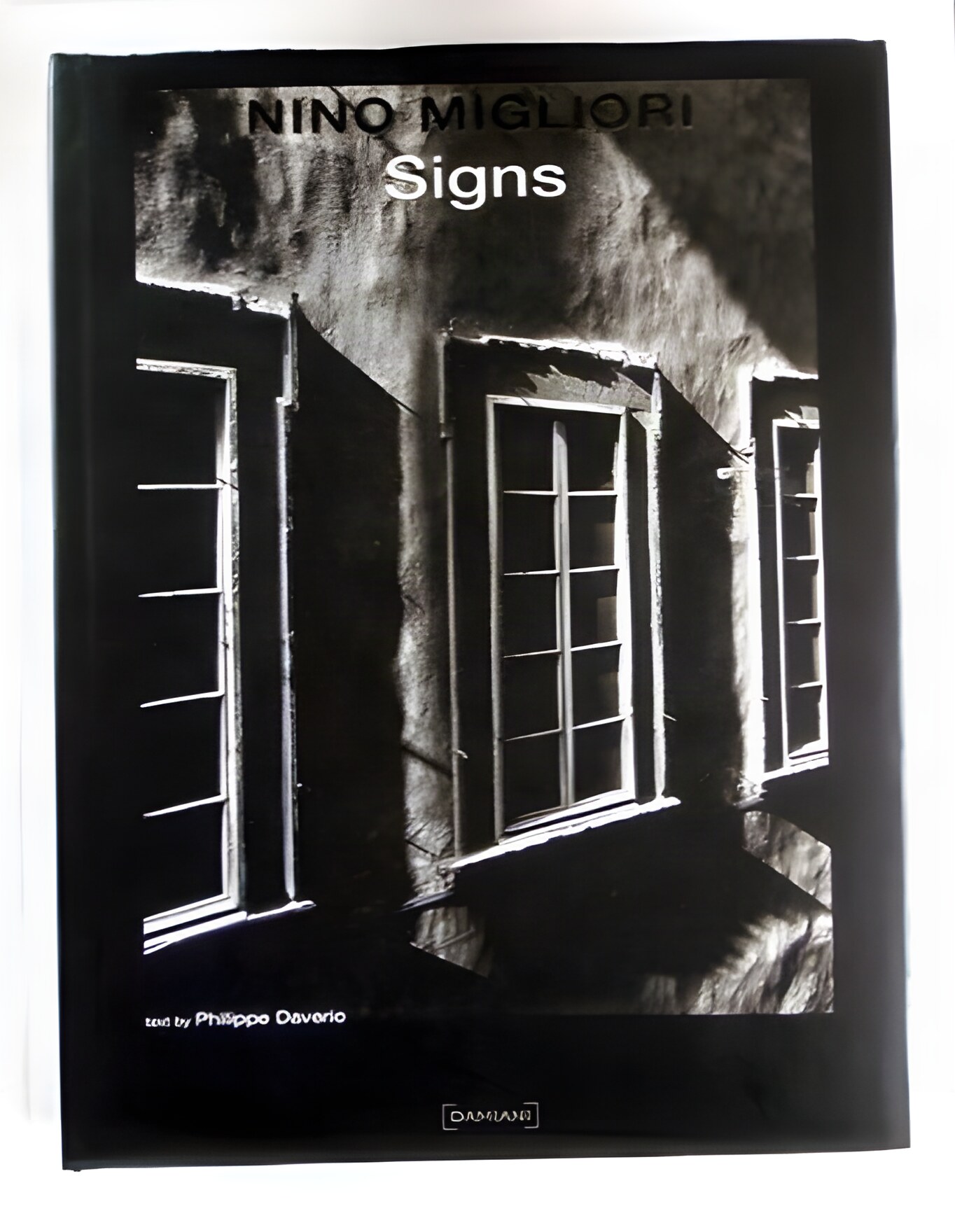
Hardcover. Damiani, 1st, 2005, Book: Very Good, Dust Jacket: Very Good, Hardcover in a lightly worn dust jacket, 300 pages. This monograph, Signs, is dedicated to Nino Migliori, one of the old masters of photography who had a significant effect on the history of Italian imagery after World War II. Signs presents a broad range of his production which has always been marked by creativity, versatility, and innovation. Included here are Miglori's portraits, landscapes, architecture, street scenes, abstract imagery, and polaroids. DOMESTIC SHIPPING ONLY.

 "Frank Lloyd Wright Monograph 1942-1950 Volume 7 (Japanese to English Text)by: Futagawa (Editor, Photography), Yukio, Bruce Brooks Pfeiffer (Text)")
 "Frank Lloyd Wright Monograph 1951-1959 Volume 8 (Japanese to English Text)by: Futagawa (Editor, Photography), Yukio, Bruce Brooks Pfeiffer (Text)")
 "Frank Lloyd Wright-The Lost Years, 1910-1922: A Study of Influenceby: Alofsin, Anthony")
 "Frank Lloyd Wright: The Masterworksby: Bruce Brooks Pfeiffer (Text/Editor), David Larkin (Editor)")


 "Frank O. Gehry: The Complete Worksby: Co, Francesco Dal and Kurt Forster")
 "Grid-Portraits (SIGNED)by: Levy, Stu")
 "Harlem: The Unmaking of a Ghettoby: Vergara, Camilo Jose")
 "Harry Callahan: Seven Collagesby: Callahan, Harry (Photographer)")
 "Hector Guimard: Architect, Designer (1867-1942)by: Vigne, Georges")
 "Homes of New York and Connecticut [Architectural Treasures of Early America, Vol 5by: Mullins, Lisa C. (editor)")
 "Josef Paul Kleihuesby: Kleihues, Josef Paul, Andrea Mesecke and Thorsten Scheer")
 "Joseph Urbanby: Loring, John")
 "Karel Teige/1900-1951: L'Enfant Terrible of the Czech Modernist Avant-Gardeby: Dluhosch (Ed.), Eric and Rostislav Svacha")
 "Le Corbusier Le Grandby: Jean-Louis Cohen (Editor), Tim Benton (Contributor)")


 "Max Baur: In the Bauhaus Spirit: Photographs 1925-1960by: Stephan Steins")
 "Maynard L. Parker: Modern Photography and the American Dreamby: Jennifer A. Watts")
 "Michael Bell: Space Replaces Us - Essays and Projects on the Cityby: Bell, Michael")


 "Moshe Safdieby: Kohn, Wendy")
 "New England by the Sea (Architectural Treasures of Early America-Vol. 3) by: Mullins, Lisa C. (editor)")