Hardcover. Boston, Massachusetts, Harry N. Abrams, 1st, 1992, Book: Very Good, Dust Jacket: Very Good, 470 pages. Brown cloth cover, color illustrated dust jacket, 113 color and 206 illustrations. Still in original shrink wrap; book in excellent condition. American artists have been inspired by Italy since the 1760s, when Benjamin West, the first American painter to travel there, was drawn to the ancient Roman ruins and magnificent Renaissance architecture, statuary, and frescoes. This intriguing, superbly illustrated book is the first to explore the fascination Italy held for the American artist from West's time to the eve of World War I.The unique sense of the past found in Italy, where tangible evidence exists of a continual civilization from antiquity to the present, lured countless American artists to its cities, towns, and countryside. Painters from West and Copley in the eighteenth century to Cole, Inness, Whistler, Sargent, and Prendergast in the nineteenth century were inspired to create many of their finest works in Italy, as were American sculptors such as Hiram Powers and Harriet Hosmer and writers from Washington Irving to Henry James. This in-depth study includes 319 illustrations, of which 113 are reproduced in full color, many of works that have not previously been published. Theodore E. Stebbins, Jr., John Moors Cabot Curator of American Paintings at the Museum of Fine Arts, Boston, and Professor of Art History at Boston University, provides a broad overview of the American perception of Italy and the unique role that Italy played in the formation of American art.
Softcover. NY, Metropolitan Museum of Art, 1st, 2016, Book: Very Good, Dust Jacket: None, Softcover, stapled wrappers, 48 pages illustrated in color and b&w.
Softcover. New York, Monacelli Press, 1st, 2004, Book: Very Good, Dust Jacket: None, Softcover, 183 pages, illustrated in color and b&w.Since 1988, New York-based architect Michael Bell has created a series of projects and essays that explore architectural and urban design for California, New York, and Texas -- the three most populous regions of the United States and, coincidentally, the three states in which he has lived and practiced. The first monograph on the architect, Michael Bell: Space Replaces Us; Essays and Projects on the City, includes both design work and writings.Bell has organized and designed two important installations, both of which include his work: "Endspace: Michael Bell and Hans Hofmann," at the University Art Museum, Berkeley, and "16 Houses: Owning a House in the City," at DiverseWorks in Houston, which featured his seminal Glass House @ 2 Degrees. Other projects included are an urban renewal scheme for a huge site in Far Rockaway, New York, and a series of residential projects, including the Ghent House, a modernist glass house currently under construction in upstate New York. Complementing the design projects are three major essays: "Having Heard Mathematics: The Topologies of Boxing," "Eyes in the Heat: RSE," and "New York City."
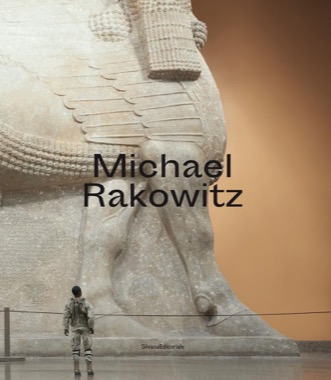
Hardcover. Milan, Silvana Editoriale, 1st, 2020, Book: Very Good, Dust Jacket: Very Good, Hardcover in a bright dust jacket. Iraqi-American artist Michael Rakowitz's (b. 1973, USA) first major European survey presents a sequence of installations drawing on architecture, cultural artifacts and cuisine to tell stories of social ritual, conflict and loss. It encompasses work considering the citizen visionaries of post Soviet Hungary, Middle Eastern Beatles fans and the stonecarvers of Afghanistan, with Rakowitz's casts of players and objects revealing the legacy of colonization, modernism and globalism. The artist's life-size replica of the gigantic lamassu, one of two monumental winged bulls that once guarded the gates of Nineveh in Iraq, currently features on Trafalgar Square's Fourth Plinth. This recreation of an ancient mythological creature is made from everyday date syrup cans and is part of an epic endeavour to recreate all 7,000 objects looted from the Iraq Museum in 2003, as well as those destroyed more recently at archaeological sites like Nimrud, also presented here. Text in English and Italian. Short closed tear to dj corner. otherwise like new. DOMESTIC SHIPPING ONLY.
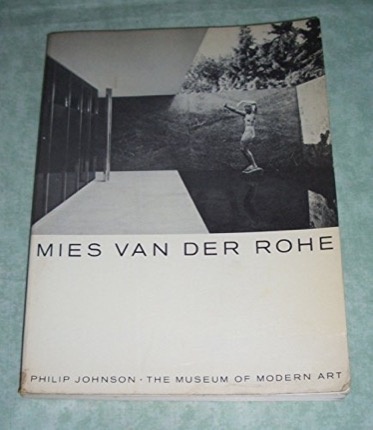
Softcover. NY, Museum of Modern Art, 3rd Ed., 1978, Book: Very Good, Dust Jacket: None, Softcover, 229 pages, illustrated with 210 photographs, drawings, and plans; bibliography. Clean copy.
Hardcover. NY, Harry N. Abrams/Hood Museum of Art, 1st, 1988, Book: Very Good, Dust Jacket: Very Good, Hardcover in a bright, unclipped dust jacket. A beautiful and intimate treatment of the architecture of the early industrialization of New England. 108 pages of color plates. Essays by Noel Perrin & Kenneth Breisch. Clean copy.
Hardcover. Munch/London/NY, Prestel, 1st, 2022, Book: Very Good, Dust Jacket: Very Good, Hardcover in a bright dust jacket. Still in publisher's shrinkwrap. 656 pages. Published on the twentieth anniversary of the founding of Neue Galerie New York, this stunning volume celebrates the varied achievements of modern art history in the German-speaking world by examining historical developments in Austria and Germany from 1890 to 1940. Illustrated throughout with exquisite reproductions of the museum's holdings, this book considers the influence of Friedrich Nietzsche and his writings on the fine arts and examines the founding of the Secessionist artists' organizations in Germany and Austria. Insightful essays trace the emergence of Expressionism and abstraction, as well as the development of such movements as Dada and New Objectivity. Evolutions in architecture and design are appraised through the legacy of the Arts and Crafts movement, as well as the establishment of the Darmstadt Artists' Colony and the Wiener Werkstatte. The book also examines the role of the German Werkbund and the founding of the Bauhaus school. Finally, the book briefly addresses the horrific impact of the National Socialists' degenerate art campaign, which resulted in incalculable damage and led to the exile and death of artists and designers of the era. From well-known artists such as Otto Dix, Josef Hoffmann, Vasily Kandinsky, Gustav Klimt, and Egon Schiele, to lesser recognized but equally important figures, including Albert Birkle, Alfred Kubin, Felix Nussbaum, and Dagobert Peche, this book offers an authoritative and kaleidoscopic look at a crucial moment in history and a portrait of radical thought that changed forever the way we experience art in our lives. DOMESTIC SHIPPING ONLY.
Hardcover. Prestel, 1st, 2008, Book: Very Good, Dust Jacket: None, Hardcover, 566 pages. "Norman Foster Works 3" focuses on projects realised from the mid-1980s to the early 1990s, including Stansted Airport outside London, Bilbao's subway system, and the Millennium Tower in Tokyo. This volume examines each project in depth, featuring numerous photographs, original sketches and computer-generated drawings. From airports to underground transit stations, from museums to office towers, every building designed by Foster and Partners is a study in the synthesis of a structure's individual elements: its foundation and use, the quality of its materials, and its relation to the skyline or cityscape. Students of architecture, professionals in the field, and enthusiasts of Foster's work will find much to inspire and educate them in this substantial and attractive volume. DOMESTIC SHIPPING ONLY.
Hardcover. Lawrence KS, University Press of Kansas, 1st, 1994, Book: Very Good, Dust Jacket: Very Good, Hardcover with a bright dust jacket. B&w vintage photos throughout. The Midwest's one-room schools were, Fuller observes, the most democratic in the nation. Located in small, independent school districts, these schools virtually wiped out illiteracy, promoted democratic values, and opened up new vistas beyond the borders of their students' lives. Entire communities, Fuller shows, revolved around these schools. At various times they were used as churches, polling places, sites of political caucuses, and meeting halls for local organizations. But as America urbanized and the movement to consolidate took hold in rural counties, these little centers of learning were left at the margins of the educational system. Some were torn down, some left to weather away, some sold at auction, and still others transformed into museums.
Softcover. Cambridge MA, MIT Press, 1st, 1980, Book: Very Good, Dust Jacket: None, Softcover, 144 pages, b&w illustrations throughout. This periodical issue contains an article by Vincent Scully about Frank Lloyd Wright; Recycling New York; interview with Cesar Pelli; Thirty museum plans, etc. Includes a fold-out sheet of various plans, 24x36 inches. Beige card covers with French flaps. Clean copy.
Hardcover. Montreal, Canada, Canadian Centre for Architecture, 1st, 1982, Book: Very Good, Dust Jacket: Very Good, 282 pages. Hardcover. B/w illustrations throughout. Dust jacket front flap price clipped. Tan colored fabric covered. Clean copy, Dust jacket shows some light age wear. From the front flap: "...presents works that show aspects of the history of architecture seen through photography and the history of photography through architecture."
Hardcover. New York, Guggenheim Museum, 1st, 1998, Book: Very Good, Dust Jacket: None, 544 pages, illustrated in color and b&w. Essays by various scholars on over 100 artists working in France, bibliography. Illustrated boards. In publisher's shrinkwrap.
Hardcover. Germany, Hatje Cantz Publishers, 1st, 2006, Book: Very Good, Dust Jacket: Very Good, Hardcover, 159 pages. Like new in publishers shrink-wrap. The prominent Genovese architect Renzo Piano--recipient of the 1998 Pritzker Award and architect of the Whitney Museum of American Art and Morgan Library renovations, as well as the new New York Times building--has just completed a new and unusual museum building--the Zentrum Paul Klee on the outskirts of Bern. The center, says Piano, is dedicated to the "poet of silence," and thus it was fitting to consider building a museum that would speak softly. The Zentrum Paul Klee rises upward in the form of three hills connected by a 150-meter-long thoroughfare, the "Museum Street" serving as a path within the complex. The three structures make up a harmonious yet prominent landscape sculpture whose roofs are supported by innovative steel construction. Includes photographs, design sketches, plans and models--a living image of a magnificent building.
Hardcover. Germany, Hatje Cantz Publishers, 1st, 2006, Book: Very Good, Dust Jacket: Very Good, Hardcover, 159 pages. Like new in publishers shrink-wrap. The prominent Genovese architect Renzo Piano--recipient of the 1998 Pritzker Award and architect of the Whitney Museum of American Art and Morgan Library renovations, as well as the new New York Times building--has just completed a new and unusual museum building--the Zentrum Paul Klee on the outskirts of Bern. The center, says Piano, is dedicated to the "poet of silence," and thus it was fitting to consider building a museum that would speak softly. The Zentrum Paul Klee rises upward in the form of three hills connected by a 150-meter-long thoroughfare, the "Museum Street" serving as a path within the complex. The three structures make up a harmonious yet prominent landscape sculpture whose roofs are supported by innovative steel construction. Includes photographs, design sketches, plans and models--a living image of a magnificent building.
Softcover. Santa Barbara CA, UCSB Art Museum, 2nd pr., 1979, Book: Very Good, Dust Jacket: None, Softcover, 105 pages illustrated with b&w photos and architectural drawings. Clean, crisp copy of this exhibition catalog.
Softcover. Saratoga Springs NY, Lyrical Ballad Book Store, 1st, 1991, Book: Very Good, Dust Jacket: None, Softcover, 183 pages. Conceiving of the City of Saratoga Springs as a museum in which the exteriors of buildings are the works of art, many key examples of architecture are carefully placed within the context of local and national history and of architectural style. Illustrated with many black and white photos. Clean copy
Softcover. Santa Fe NM, Museum of New Mexico Press, 2nd pr, 1988, Book: Very Good, Dust Jacket: None, Softcover in pictorial wraps. Foreword by George Kubler. Profusely illustrated in color and black and white. 127 pages. 81 artists interpret this masterpiece of 19th century Spanish Franciscan architecture. Map of Taos laid in. Clean copy.
Hardcover. Santa Monica, CA, Hennessey & Ingalls, 1st, 2001, Book: Very Good, Dust Jacket: Very Good, 162 pages. Hardcover with dust jacket. A very clean, unmarked copy with only minor edgewear to dust jacket. Marston was instrumental in establishing Pasadena as a winter resort and then as a thriving community. He and his firm designed 1000 projects, many of which still survive, including cottages and additions to resort hotels, notable commercial and civic buildings such as the Pacific Asia Museum, and the earliest bungalow court. His residential designs span the range of styles from the Arts and Crafts through English Tudor and Monterey Colonial to, most importantly, Mediterranean Revival. This is an important addition to the literature of California's Golden Age of architecture.
Softcover. Philadelphia, Philadelphia Museum of Art, 1st, 1973, Book: Very Good, Dust Jacket: None, Softcover in bright pictorial wrappers, 212 pages. With a catalogue of selected buildings and a checklist of the architecture and projects of Frank Furness. Illustrated with b&w photos and plans. Small ink notation on title apge otherwise clean.
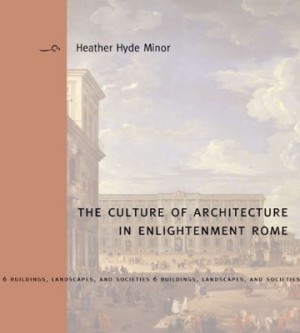
Hardcover. University Park PA, Pennsylvania State University Press, 1st, 2010, Book: Very Good, Dust Jacket: Very Good, Hardcover in a bright dust jacket, 295 pages illustrated in b&w and color. Beginning in the 1730s, Heather Minor tells us, Rome "began to resemble one huge construction site," with a series of ambitious and expensive new building campaigns that transformed the face and substance of the city. From renovations of the Santa Maria Maggiore and San Giovanni in Laterano and the restoration of the Arch of Constantine to the creation of the Capitoline Museum and the establishment of the papacy's Calcografia, the push for reform not only renewed papal and Church identity but also revived Italian culture as a whole. Based on extensive archival research and full of fascinating stories about the often stormy theological and intellectual debates central to the attempts at reform, The Culture of Architecture in Enlightenment Rome brings to life the personalities of architects, theologians, and intellectuals and links the extensive architectural programs with powerful shifts in the intellectual climate of the time. Clean, bright copy.
Softcover. New York, Brooklyn Museum, 1st, 1983, Book: Very Good, Dust Jacket: None, 180 pages, b&w and color photography. Very light edge wear, else a very clean, tight copy. Wonderful book on the great Brooklyn Bridge. Includes much historical material, chapters on the design of the bridge with several beautiful fold-outs, and many full color repros. of the many paintings and artwork that have been inspired by the beauty of one of the wonders of the modern world. Even includes a small filmog. of films that have used the Bridge as a background or a major location/set. Published on the 100th anniversary of the opening of the bridge and an exhibition celebrating it, held at The Brooklyn Museum.
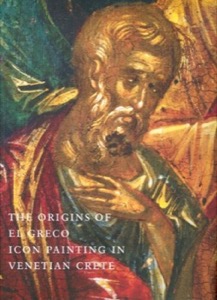
Softcover. NY, Onassis Foundation, 1st, 2009, Book: Very Good, Dust Jacket: None, Softcover, 131 pages illustrated in color. The Origins of El Greco focuses on the evolution of the multifaceted relationship of Cretan painters with Western art during this rich period. The icon painters in the workshops on Crete in the 15th and 16th centuries-the setting in which El Greco was trained-were renowned for their skill in painting impeccable panels not only in the traditional Byzantine manner but also in a style inspired by Western models. The Origins of El Greco presents an extraordinary group of 15th and 16th century paintings, including works by El Greco. The color-illustrated catalogue features detailed descriptions of all 46 masterpieces included in the exhibition, some of them published for the first time, as well as 3 informative essays: Anastasia Drandaki, Curator, Byzantine Collection, Benaki Museum, Athens writes on "Between Byzantium and Venice: Icon Painting in Venetian Crete in the Fifteenth and Sixteenth Centuries", Olga Gratziou, Professor of Byzantine Art and Archaeology, University of Crete writes on "Cretan Architecture and Sculpture in the Venetian Period" and Nicos Hadjinicolaou, Professor Emeritus in Art History, University of Crete, and Honorary Fellow of the Institute for Mediterranean Studies, writes on "Early and Late El Greco". Clean, bright copy.
Hardcover. NY, The Monacelli Press, 1st, 2008, Book: Very Good, Dust Jacket: None, Hardcover, 208 pages. Debate and banter between the irascible Philip Johnson and the equally articulate and opinionated Robert A. M. Stern generates a provocative combination of astute commentary and personal observation on the state of architecture in the twentieth century. Philip Johnson's multifaceted career as an architect, curator, and collector extended from the early 1920s to his death in 2005. Captivated by the work of the European modernists Gropius, Le Corbusier, and Mies van der Rohe, Johnson assembled the seminal exhibition "Modern Architecture--International Exhibition" at the Museum of Modern Art in 1932. Among his most notable achievements are the famous Glass House in Connecticut, designed for his own use, and the Seagram Building in New York, in association with Mies van der Rohe. Recognized as the dean of American architecture, Johnson had a profound influence on the next generation of architects, including Robert A. M. Stern. Stern has conducted a series of ten interviews with Johnson, each covering a decade of his life, that provide an illuminating assessment of a significant period of American architecture. No dj issued.
Hardcover. NY, Museum of Modern Art , 1st, 1981, Book: Very Good, Dust Jacket: Very Good, Hardcover in a bright, price-clipped dust jacket. Volume One Only. First Edition. 180 pages,121 plates with 83 b&w photo illustrations, slight edgewear to jacket, else a very nice, clean copy. Atget was a groundbreaking photographer, documenting three decades of rapid urban transition in Paris from the late 19th to early 20th centuries. His works depict the architecture, streets, gardens, and people of the city.

 "Lure of Italy, The: American Artists and The Italian Experience, 1760 - 1914by: Stebbins, Theodore E. Et al.")
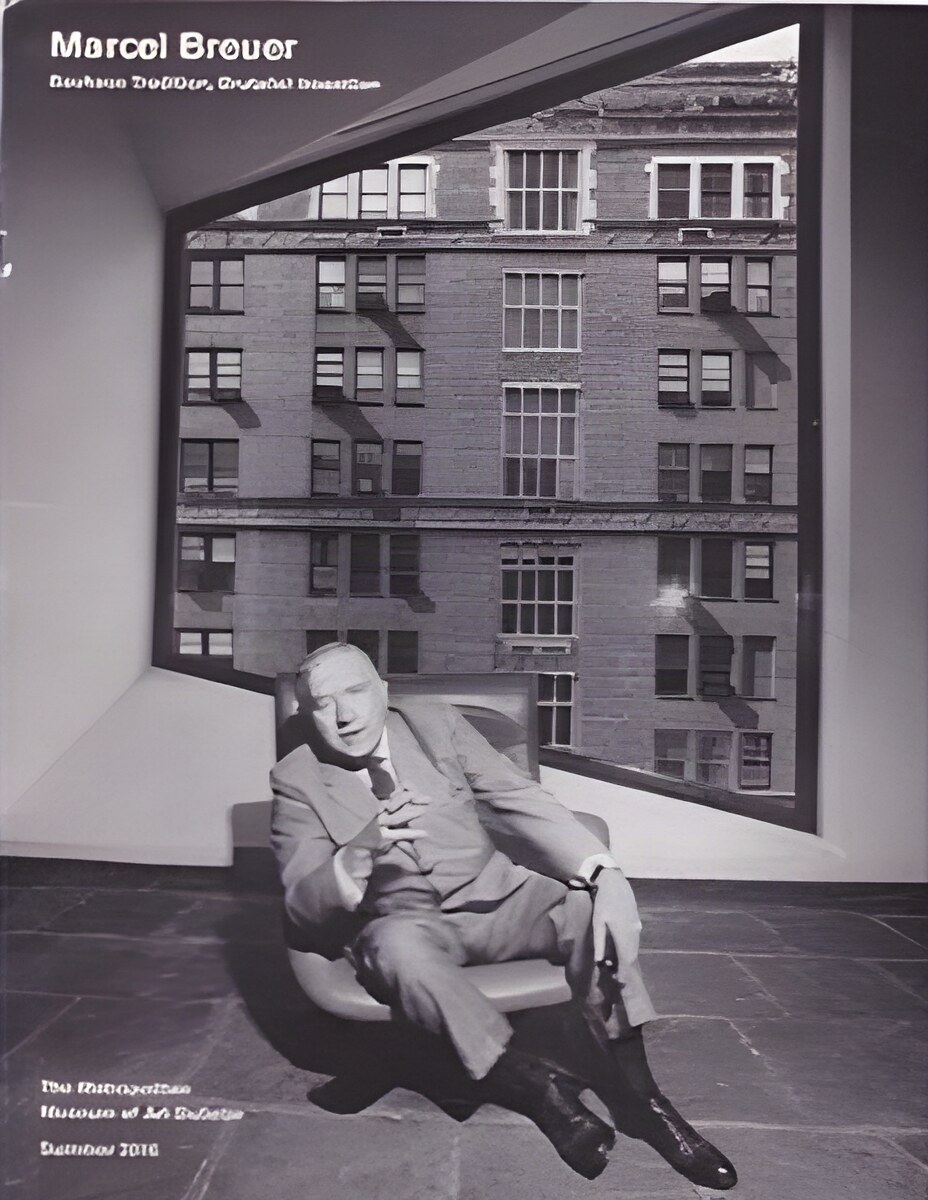
 "Michael Bell: Space Replaces Us - Essays and Projects on the Cityby: Bell, Michael")




 "Mills and Factories of New England by: Hambourg, Serge/Perrin Noel & Kenneth Breisch (essays)")
 "Modern Worlds: Austrian and German Art, 1890-1940by: Price, Renee / Lauder, Ronald S./Peters, Olaf/ Staggs, Janis")


 "One-Room Schools of the Middle West: an Illustrated History by: Fuller, Wayne E.")
 "Perspecta 16: The Yale Architectural Journal by: Kirk Train, David Spiker & Robert Jensen (Eds.)")
 "Photography and Architecture 1839-1939by: Pare, Richard")
 "Premises: Invested Spaces in Visual Arts, Architecture, & Design from France 1958-1998by: Buchloh, Benjamin H.D.")
 "Renzo Piano: Zentrum Paul Klee, Bern, The Architectureby: Piano, Renzo")
 "Renzo Piano: Zentrum Paul Klee, Bern, The Architectureby: Piano, Renzo")



 "Saratoga Springs: An architectural history, 1790-1990 by: Kettlewell, James K")
 "Spirit and Vision: Images of Ranchos De Taos Churchby: D'Emilio, Sandra; Campbell, Suzan; & Kessell, John L. (essays)")
 "Sylvanus Marston: Master Architect in Pasadena's Golden Ageby: Tuttle, Kathleen")
 "The Architecture of Frank Furness by: O'Gorman, James F.; Thomas, George E.")
 "The Great East River Bridge, 1883-1983by: No Author (Brooklyn Museum)")


 "The Philip Johnson Tapes: Interviews by Robert A. M. Sternby: Robert A.M. Stern")
![The Work of Atget, Vol. I, Old Franceby: [Eugene Atget] Szarkowski, John and Hambourg, Maria](https://www.browsingisarousing.com/shop/images/The-Work-of-Atget-Vol.-I-Old-France_by_Eugene-Atget-Szarkowski-John-and-Hambourg-Maria398317-451719.jpg "The Work of Atget, Vol. I, Old Franceby: [Eugene Atget] Szarkowski, John and Hambourg, Maria")