Hardcover. Woodstock, NY, WoodstockArts, 2nd, 2012, Book: Very Good, Dust Jacket: Very Good, 192 pages. Hardcover with dust jacket. Clean, unmarked copy with only minor wear to dust jacket. Color and black and white pictures throughout.
Hardcover. Athens GA, University of Georgia Press, 1st, 1995, Book: Very Good, Dust Jacket: Very Good, Hardcover, 464 pages, b&w photographs. Light edge wear to dust jacket. Else a very clean, tight copy. This biography offers the most complete and accurate portrait to date of the writer Caroline Gordon (1895-1981). Viewing Gordon's life in the context of female literary tradition, Nancylee Novell Jonza reclaims Gordon's integrity, individuality, and artistic vision from beneath a self-effacing, sometimes detractive, public image carefully fostered by the artist herself. Gordon's nine novels and three short-story collections are a major contribution in their own right to the southern literary renaissance. Despite an enduring readership, however, she still remains in the shadow of her husband, Allen Tate, the Fugitive Poet and Agrarian critic, partially due to her contrived persona of a traditional southern lady turned artist under the tutelage of a gifted, benevolent male writer. Drawing on manuscript drafts, unpublished works, letters, and a significant body of her journalistic writing, Jonza investigates fully the causes and effects of Gordon's self-mythologizing and covers substantially more ground than the thirty years during which she was closest to Tate.
Hardcover. San Francisco, Chronicle Books, 1st, 2008, Book: Very Good, Dust Jacket: Very Good, Hardcover in a bright dust jacket, 208 pages, illustrated in color and b&w. This is the first career-spanning monograph from one of the foremost contemporary realist painters. New York-based artist Harvey Dinnerstein creates hauntingly penetrating portraits and allegorical street scenes. His work over the course of five decades remains fresh and apt for our time, depicting New York as a microcosm of our society's rich pluralism, struggle, and resilience.
Hardcover. Essex, VT, Battenkill River Press, 2nd printing, 2009, Book: Very Good, Dust Jacket: Very Good, 288 pages. Hardcover with dust jacket. Very clean, unmarked copy with only minor wear to dust jacket edges. Black and white images throughout. SIGNED AND INSCRIBED BY AUTHORS ON TITLE PAGE.
Hardcover. Essex Junction VT, Battenkill River, 1st, 2009, Book: Very Good, Dust Jacket: Very Good, 278 pages, hardcover with dust jacket. An intimate look at the life of Norman Rockwell and his Arlington, Vermont neighbors, the Edgertons. Foreword by Dick Clark. Black-and-white photographs throughout. Bright and clean. A tight copy.
NY, Simon & Schuster, 1st, 2001, Book: Very Good, Dust Jacket: Very Good, Hardcover in a bright, unclipped dust jacket. Uphill with Archie is a beautifully written and deeply involving look at the life and the world of the great literary icon, poet Archibald MacLeish, by his youngest son. Partly an homage, partly an attempt to come to terms with the man (and the legend), Uphill with Archie speaks to all sons and daughters who have never completely resolved their feelings about powerful parents. Young William MacLeish grew up both captivated and cowed by the fame of a father who won Pulitzer Prizes for his poetry and comparable honors for his work as a lawyer, playwright, teacher, and government official. William's mother, Ada, began her marriage as a successful concert singer in Paris but later felt compelled to give up her art for her family. When Archie was working for Henry Luce and Fortune magazine, his younger children, watched over by a governess, stayed with their grandfather in Connecticut. But it is of the time spent with his family at Uphill Farm, a beautiful old house above a Massachusetts hilltown, that MacLeish has his fondest and most telling memories: "Archie and Ada gave me great gifts: music, the sound of the language beautifully spoken, the draw of knowledge, the arts of humor," William writes. "I learned to perform for them, and in time found myself addicted to getting a nice tan from Archie's sun. And the more I bathed in his light, the harder I found it to go looking for my own."
Hardcover. New York, Farrar Straus & Giroux, 3rd Printing, 1997, Book: Very Good, Dust Jacket: Very Good, 426 pages. Hardcover with dust jacket. Sunfading to dust jacket. Light soiling to textblock edges. Otherwise a very clean, unmarked copy with only minor dust jacket wear. A tight copy. Black and white illustrations throughout.
Hardcover. New York, Rizzoli , 1st, 2009, Book: Very Good, Dust Jacket: Very Good, Hardcover, 280 pages. Like new in publisher's shrink-wrap. Valentina was the twentieth century's first American fashion designer celebrity, working and living on equal social footing with the clientele she dressed (Greta Garbo, Gloria Swanson, Katharine Hepburn, Millicent Rogers, and Audrey Hepburn, among others). One of the few designers who proved that America could live without the Parisian haute couture, her career is a much needed missing link in the history of American fashion. Beyond merely turning out show-stopping evening gowns, Valentina's exotic beauty, dramatic personality, and incomparable style earned her a legendary reputation. Kohle Yohannan explores the carefully constructed persona and lore of this designer who helped define American Couture. Published in association with the Museum of the City of New York's exhibition Valentina: New York Couture and the Cult of Celebrity, this book includes photographs, never-before-seen personal ephemera, sketches, and original platinum prints from master photographers such as Cecil Beaton, Horst P. Horst, and George Hoyningen-Huene.
Hardcover. US, Rizzoli, 1st, 2013, Book: Very Good, Dust Jacket: None, 110 pages, illustrated throughout in color. Light shelf-wear to boards, else a clean, tight copy. Valentino: Master of Couture is an exhibition at the Somerset House co-organized by Valentino himself, who selected over 130 dresses for the exhibition. The book focues as much on Valentino and his glamorous lifestyle as it does on his legendary dressmaking techniques and atelier.
Hardcover. New York, Taschen, 1st, 2014, Book: Very Good, Dust Jacket: Very Good, Hardcover, 416 pages, color illustrated, large format. This catalog raisonne brings together Velazquez's complete works--jaw-dropingly reproduced in extra-large format with a selection of delicious enlarged details--with insightful commentary on how his paintings give equal attention to all that they contain. To him, an old woman frying eggs or a buffoon was as important as a Pope or a King. For him, form was subservient to light and color; the brushstrokes were markers to help the viewers reconstruct each picture mentally--concepts adopted vehemently by the Impressionists. Velazquez's greatest talent was creating beauty from the grotesque, imbuing each subject with a human liveliness rarely seen on canvas. In its extensive detail and comparisons, Jose Lopez-Rey's book reveals the development of this vision. NOTE: DUE TO SIZE AND WEIGHT, DOMESTIC SHIPPING ONLY.
Hardcover. Berkeley CA, University of California, 1st, 2001, Book: Very Good, Dust Jacket: Very Good, Hardcover, 275 pages, b&w photos. In a bright, unclipped dust jacket. Lawyer, educator, novelist, radio and television scriptwriter, film director and screenwriter, wartime intelligence operative, and full-time radical romantic, Abraham Lincoln Polonsky was blacklisted in Hollywood for refusing to be an informer. This biography helps us understand the relationship between art and politics in American culture.
Hardcover. Princeton NJ, Princeton University Press, 1st, 2005, Book: Very Good, Hardcover, 208 pages. Like new in publisher's shrink-wrap. This lavishly illustrated book establishes the towering influence of the scientist Victor Regnault (1810-1878) in the earliest decades of photography, a period of experimentation ripe with artistic, commercial, and scientific possibility. Regnault has a double significance to the early history of photography, as the first leader of the Societe Francaise de Photographie (S.F.P.) and as the maker of more than two hundred calotype (paper negative) portraits and landscapes. His photographic and scientific careers intersected a third field with his appointment in 1852 as director of the Sevres porcelain works. Readers are treated to Regnault's own beguiling pastoral, garden, and forest scenes; striking portraits of the scientists and artists in his circle of friends; quirky images of acoustic experiments; and an insider's view of the Sevres porcelain works. Regnault's richly varied photographs also encompass perhaps the most extensive group of family portraits in early photography, and his romanticized landscapes reflect a moment when the rural outskirts of Paris were being aggressively suburbanized and industrialized.
Hardcover. Columbia OH, Ohio State University Press, 1st, 2008, Book: Very Good, Dust Jacket: None, 368 pages. Hardcover with no dust jacket. Clean, unmarked copy with only minor wear to corners. While "freaks" have captivated our imagination since well before the nineteenth century, the Victorians flocked to shows featuring dancing dwarves, bearded ladies, "missing links," and six-legged sheep. Indeed, this period has been described by Rosemarie Garland-Thomson as the epoch of "consolidation" for freakery: an era of social change, enormously popular freak shows, and taxonomic frenzy. Victorian Freaks: The Social Context of Freakery in Britain, edited by Marlene Tromp, turns to that rich nexus, examining the struggle over definitions of "freakery" and the unstable and sometimes conflicting ways in which freakery was understood and deployed. As the first study centralizing British culture, this collection discusses figures as varied as Joseph Merrick, "The Elephant Man"; Daniel Lambert, "King of the Fat Men"; Julia Pastrana, "The Bear Woman"; and Laloo "The Marvellous Indian Boy" and his embedded, parasitic twin. The Victorian Freaks contributors examine Victorian culture through the lens of freakery, reading the production of the freak against the landscape of capitalist consumption, the medical community, and the politics of empire, sexuality, and art. Collectively, these essays ask how freakery engaged with notions of normalcy and with its Victorian cultural context.
Softcover. SelfMadeHero, 1st US, 2015, Softcover, 142 pages illustrated in color by Stok. Translated from the Dutch by Laura Watkinson. This graphic biography documents the brief and intense period of creativity Vincent van Gogh (1853-1890) spent in Arles, Provence, in southern France. Here van Gogh dreams of setting up an artists' studio--a haven where he and his friends can paint together. But attacks of mental illness leave the painter confused and disoriented. When his friend and fellow artist Paul Gauguin refuses to reside permanently at the Yellow House, a distraught van Gogh cuts off part of his own ear. Throughout this period of intense emotion and hardship, Vincent's brother, Theo, stands by him, offering constant and unconditional support. Writer and illustrator Barbara Stok breathes riveting new life into a fascinating episode of art history, creating a vivid portrait of one of the world's most beloved and legendary artists. Clean copy.
Hardcover. New York, Rizzoli, 1st, 1990, Book: Very Good, Dust Jacket: Very Good, Two volume set. Hardcovers with dust jackets. Both in beautifully illustrated slipcase. Minor fraying to slipcase edges. Hardcovers both clean and unmarked. Color illustrations throughout.
Hardcover. Boston, Houghton Mifflin Books for Children, 1st, 2002, Book: Very Good, Dust Jacket: Very Good, Hardcover, 136 pages, color and b&w illustrations. Elleman examines the artist's early work and investigates the genesis of each of her seven picture books, from Choo Choo (1937) to the epic, carefully researched Life Story (1962, both Houghton) . Very good in a bright dust jacket.
Hardcover. New York, Thames & Hudson, 1st, 2006, Book: Very Good, Dust Jacket: Very Good, Hardcover, 408 pages. Like new in publisher's shrink-wrap. Containing uncensored and on-the-spot observations of Picasso at home and in company, Visiting Picasso is a wonderfully vivid, spontaneous and lively record of Roland Penroses many encounters with the artist and his family, friends and associates, from their first meeting in 1936 to the artists death in 1973. Over 70 photographs, many by Penroses wife Lee Miller, illustrate the colorful cast of characters.
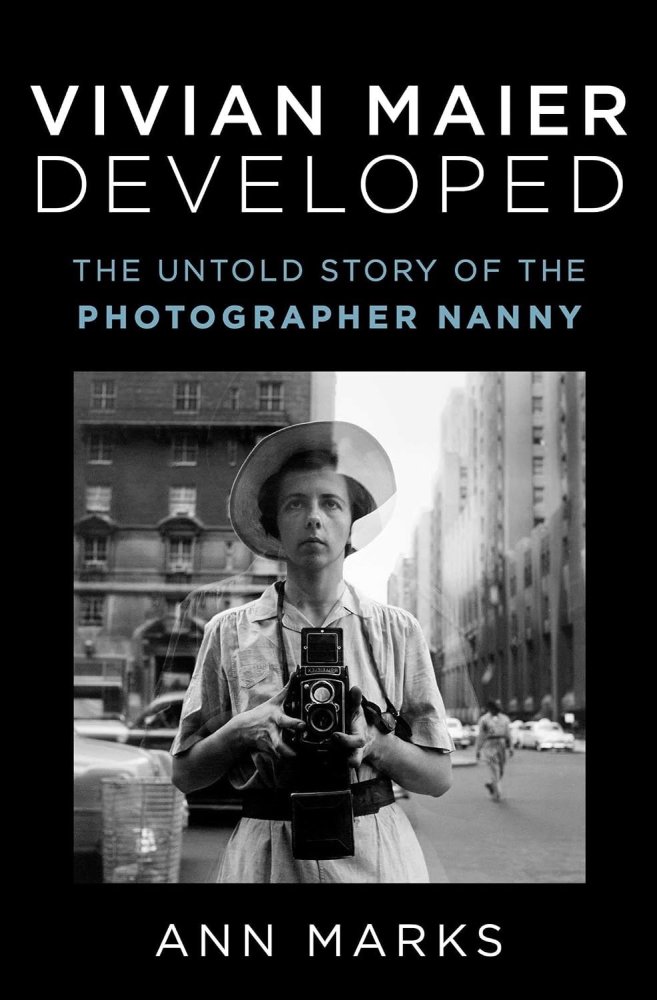
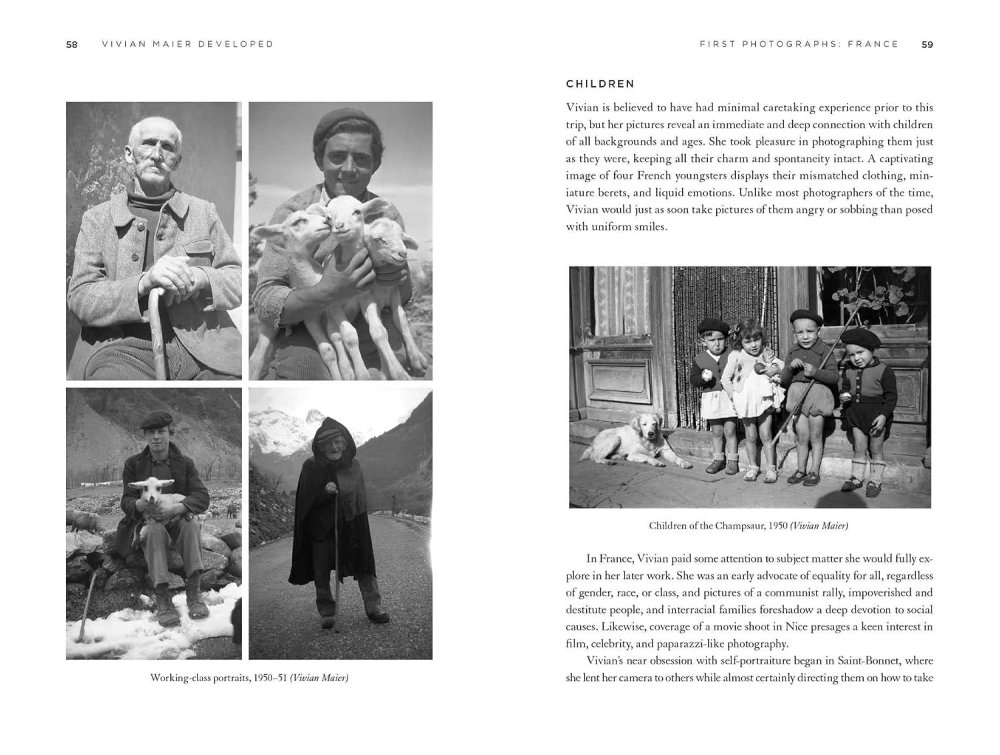
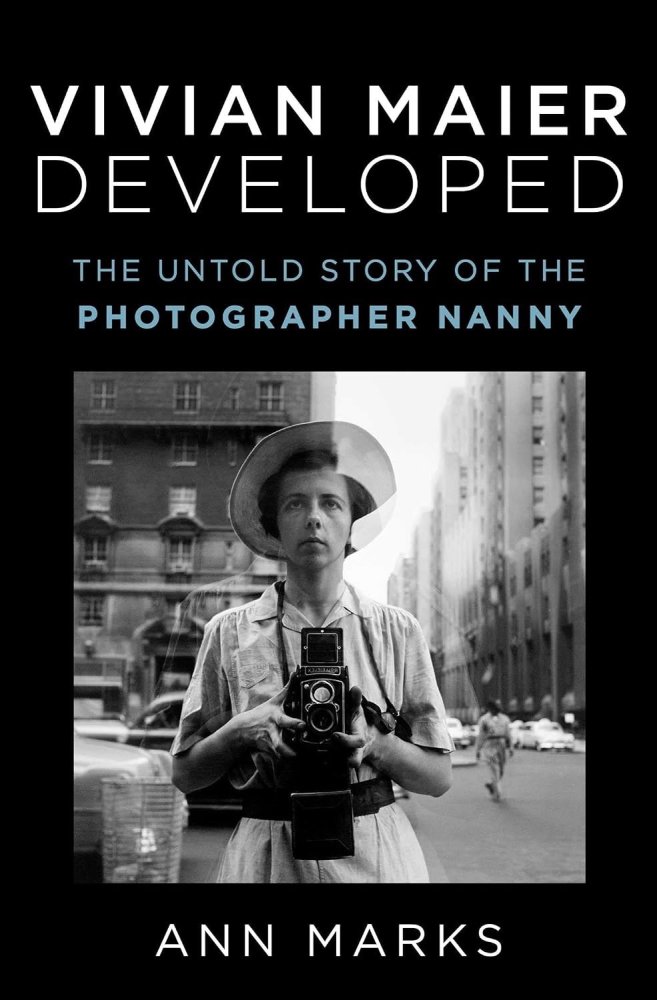
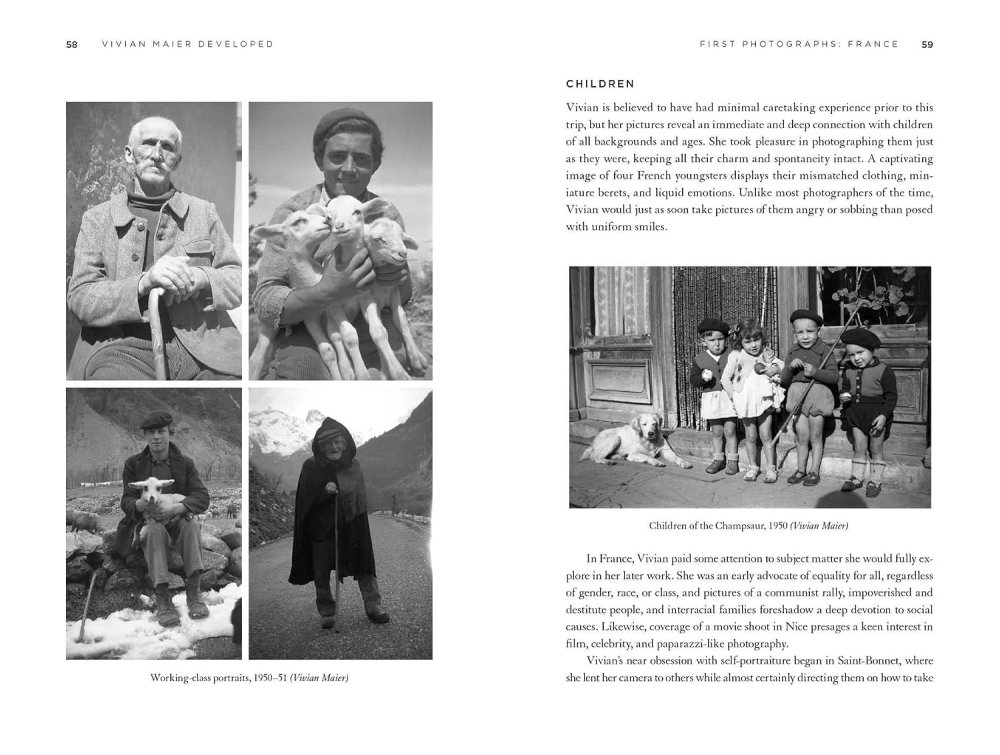
Softcover. NY, Atria Books, 1st pbk., 2021, Book: Very Good, Dust Jacket: None, Softcover, 355 pages, b&w and color illustrations. Vivian Maier, the photographer nanny whose work was famously discovered in a Chicago storage locker, captured the imagination of the world with her masterful images and mysterious life. Before posthumously skyrocketing to global fame, she had so deeply buried her past that even the families she lived with knew little about her. No one could relay where she was born or raised, if she had parents or siblings, if she enjoyed personal relationships, why she took photographs and why she didn't share them with others. Now, in this "thorough, fascinating overview of an artist working for art's sake" (The New York Times), Ann Marks uses her complete access to Vivian's personal records and archive of 140,000 photographs to reveal the full story of her extraordinary life. Clean, bright copy.
Softcover. NY, Atria Books, 1st pbk., 2021, Book: Very Good, Dust Jacket: None, Softcover, 355 pages, b&w and color illustrations. Vivian Maier, the photographer nanny whose work was famously discovered in a Chicago storage locker, captured the imagination of the world with her masterful images and mysterious life. Before posthumously skyrocketing to global fame, she had so deeply buried her past that even the families she lived with knew little about her. No one could relay where she was born or raised, if she had parents or siblings, if she enjoyed personal relationships, why she took photographs and why she didn't share them with others. Now, in this "thorough, fascinating overview of an artist working for art's sake" (The New York Times), Ann Marks uses her complete access to Vivian's personal records and archive of 140,000 photographs to reveal the full story of her extraordinary life. Clean, bright copy.
Hardcover. New York, Harry N. Abrams, 1st, 2015, Book: Very Good, Dust Jacket: None, 160 pages. Hardcover with no dust jacket. Clean, unmarked copy with only minor wear to boards. Color and black and white pictures throughout. Originally born in Algeria, Yves Saint Laurent moved to Paris when he was 18, and only three years later he was handpicked by Christian Dior to take the reins as designer of his fashion house. Over time, Saint Laurent resurrected haute couture from the casual mores that predominated in the 1960s, but also offered chic cachet to ready-to-wear clothing. He was among the earliest of designers to incorporate non- European references into his work, and in 1983 he became the first living designer to be feted with a solo exhibition at The Metropolitan Museum of Art in New York. Vogue on Yves Saint Laurent is a stellar volume in the series from the editors of British Vogue, featuring 20,000 words of original biography and history and studded with more than 80 images from their unique archive of images taken by leading photographers.
Hardcover. NY, Grove Press, 1st US, 2005, Book: Very Good, Dust Jacket: Very Good, Hardcover in a bright, unclipped dust jacket. In 1753, Voltaire -- playwright, poet, philosopher, and one of the most feted figures in Europe -- was forced by Louis XV into exile, where he remained for the last twenty-five years of his life. These years heralded a startling new beginning for this remarkable man. Voltaire carved out a new and vibrant world in his isolation, becoming a successful entrepreneur and writing his masterpiece Candide. In Voltaire in Exile, Ian Davidson re-creates this period in the life of one of the giants of the Enlightenment. By painstakingly translating the rich correspondence between Voltaire and his family, members of the Court at Versailles, and the French intellectual elite, Davidson allows us to discover Voltaire the artist, the campaigner, the aesthete, the lover, the humorist. The result is a wonderfully vivid portrait of this extraordinarily funny, iconoclastic, complex, and, above all, ferociously intelligent individual. Clean copy.
Hardcover. MI, Clarke Historical Library, 1st, 1976, Book: Very Good, Dust Jacket: None, 225 pages. Hardcover with orange fabric covers. Clean, tight copy with minor rubbign to edges. Black and white pictures throughout.
Hardcover. New York, Norton, 1st, 2015, Book: Very Good, Dust Jacket: Very Good, Hardcover, 458 pages, b&w illustrations. Sam Wagstaff, the legendary curator, collector, and patron of the arts, emerges as a cultural visionary in this groundbreaking biography. Even today remembered primarily as the mentor and lover of Robert Mapplethorpe, the once infamous photographer, Wagstaff, in fact, had an incalculable-and largely overlooked-influence on the world of contemporary art and photography, and on the evolution of gay identity in the latter part of the twentieth century. Born in New York City in 1921 into a notable family, Wagstaff followed an arc that was typical of a young man of his class. He attended both Hotchkiss and Yale, served in the navy, and would follow in step with his Ivy League classmates to the "gentleman's profession," as an ad executive on Madison Avenue. With his unmistakably good looks, he projected an aura of glamour and was cited by newspapers as one of the most eligible bachelors of the late 1940s. Such accounts proved deceiving, for Wagstaff was forced to live in the closet, his homosexuality only revealed to a small circle of friends. Increasingly uncomfortable with his career and this double life, he abandoned advertising, turned to the formal study of art history, and embarked on a radical personal transformation that was in perfect harmony with the tumultuous social, cultural, and sexual upheavals of the 1960s.
Hardcover. Princeton NJ, Princeton University Press, 1st, 2020, Book: Very Good, Dust Jacket: Very Good, Hardcocer in a bright dust jacket, 257 pages plus 143 b&w pages of photographs in the front of the book. Walker Evans (1903-75) was a great American artist photographing people and places in the United States in unforgettable ways. He is known for his work for the Farm Security Administration, addressing the Great Depression, but what he actually saw was the diversity of people and the damage of the long Civil War. In Walker Evans, renowned art historian Svetlana Alpers explores how Evans made his distinctive photographs. Delving into a lavish selection of Evans's work, Alpers uncovers rich parallels between his creative approach and those of numerous literary and cultural figures, locating Evans within the wide context of a truly international circle. Alpers demonstrates that Evans's practice relied on his camera choices and willingness to edit multiple versions of a shot, as well as his keen eye and his distant straight-on view of visual objects. Illustrating the vital role of Evans's dual love of text and images, Alpers places his writings in conversation with his photographs. She brings his techniques into dialogue with the work of a global cast of important artists--from Flaubert and Baudelaire to Elizabeth Bishop and William Faulkner--underscoring how Evans's travels abroad in such places as France and Cuba, along with his expansive literary and artistic tastes, informed his quintessentially American photographic style.