Hardcover. Rutland VT, Chas. E. Tuttle Co., reprint, 1936, Book: Very Good, Dust Jacket: Good, Hardcover in a lightly worn and chipped dust jacket. Fine green textured cover with gilt to front and spine. Foreword by Arthur Schomburg, Robinson biography by Mary Robinson Perkins. A collection of tales capturing the essence of 19th-century rural life, primarily set in Vermont. These stories explore themes of freedom, community, and the challenges of everyday existence with a distinct American voice. Robinson's vivid descriptions and engaging characters provide a window into a bygone era, making this collection a valuable contribution to American literature. Clean copy.
Softcover. New York , Fireside Book/Simon & Schuster, 1st, 1987, Book: Very Good, Dust Jacket: None, 223 pages. Clean, unmarked copy with only minor wear to wrappers.
Hardcover. NY, Pegasus Books, 1st, Book: Very Good, Dust Jacket: Very Good, Hardcover in a bright, price-clipped dust jacket. Inspired by the twenty-three 'tales', Matthew Dennison takes a selection of quotations from Potter's stories and uses them to explore her multi-faceted life and character: repressed Victorian daughter; thwarted lover; artistic genius; formidable countrywoman. They chart her transformation from a young girl with a love of animals and fairy tales into a bestselling author and canny businesswoman, so deeply unusual for the Victorian era in which she grew up. Embellished with photographs of Potter's life and her own illustrations, this biography will delight anyone who has been touched by Beatrix Potter's work. Clean copy.
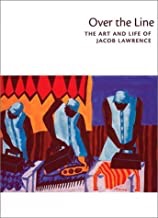
Hardcover. University of Washington Press, 1st, 2001, Book: Very Good, Dust Jacket: Very Good, Hardcover in a bright dust jacket, 285 pages. Over the Line: The Art and Life of Jacob Lawrence includes essays by eight distinguished art historians examining the ways in which Jacob Lawrence's art speaks so powerfully to different audiences. It is the first multi-author, in-depth probe of the artist's entire career: the nature of his work, his education, the critical climate in which he worked, and his use of materials and techniques. It reproduces, in full color, more than 200 works, most of which have not been published in color, or at all, in other books on the artist.
Hardcover. NY, Thomas Y Crowell, 1st, 1974, Book: Very Good, Dust Jacket: Good, Hardcover in a lightly worn dust jacket, 193 pages including index, illustrated with 34 reproductions, some in color. George Caleb Bingham (1811-1879) who painted his world as it really was, everyday people in their everyday lives. His family was one of the early pioneer settlers, moving to the frontier in 1819. George began is art career painting tavern signs, later graduating to portraits, views of everyday life and "river paintings". He also was a Missouri politician, holding several important offices. Clean copy.
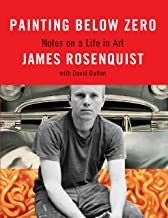
Hardcover. NY, Knopf, 1st, 2009, Hardcover, 384 pages. Ronsequist writes about growing up in a tight-knit community of Scandinavian farmers in North Dakota and Minnesota in the late 1930s and early 1940s; about his mother, who was not only an amateur painter but, along with his father, a passionate aviator; and about leaving that flat midwestern landscape in 1955 for New York, where he had won a scholarship to the Art Students League. George Grosz, Edwin Dickinson, and Robert Beverly Hale were among his teachers, but his early life was a struggle until he discovered sign painting. He describes days suspended on scaffolding high over Broadway, painting movie or theater billboards, and nights at the Cedar Tavern with Willem de Kooning, Franz Kline, and the poet LeRoi Jones. His first major studio, on Coenties Slip, was in the thick of the new art world. Among his neighbors were Ellsworth Kelly, Robert Indiana, Agnes Martin, and Jack Youngerman, and his mentors Robert Rauschenberg and Jasper Johns.
Hardcover. London, Jupiter Books, First Edition, 1978, Book: Very Good, Dust Jacket: Good, 31 pages text followed by 130 plates. Hardcover. Blue cloth boards with gilt titles to spine. Frontis photograph of the artist, L. S. Lowry, Stockport, Winter 1962. Full page, full color & bw plates throughout. Dust jacket with wear & toning to edges. Clean, unmarked copy.
Hardcover. Italy, Massimiliano Boni, 1st, 1974, Book: Very Good, Dust Jacket: Good, 128 pages, plus plates. ITALIAN TEXT. INSCRIBED. Color frontispiece, B/w illustrations/plates throughout. Dust jacket unclipped, has some age wear. Covers good, bound in blue fabric. Foxing on edges and endpapers, but pages clean. In very good condition.
Softcover. University of Washington Press, 2004, Book: Very Good, Dust Jacket: None, Softcover, 335 pages. "Known for his blending of philosophy, spirituality, humor, and a rollicking good story, Charles Johnson is one of the most important novelists writing today. From his magical first novel, Faith and the Good Thing, to his decidedly philosophical Oxherding Tale; from his swashbuckling indictment of the slave trade in the National Book Award-winning Middle Passage, to his more recent imaginative treatment of Martin Luther King Jr. in Dreamer, Johnson has continually surprised, instructed, and entertained his many avid readers. As this collection of interviews suggests, the novelist is as multifaceted and complex as his novels. Trained in cartooning and philosophy, martial arts and meditation, and producing teleplays, photobiographies, and literary criticism in addition to fiction, Charles Johnson represents a model of what he calls "life as art." Clean copy.
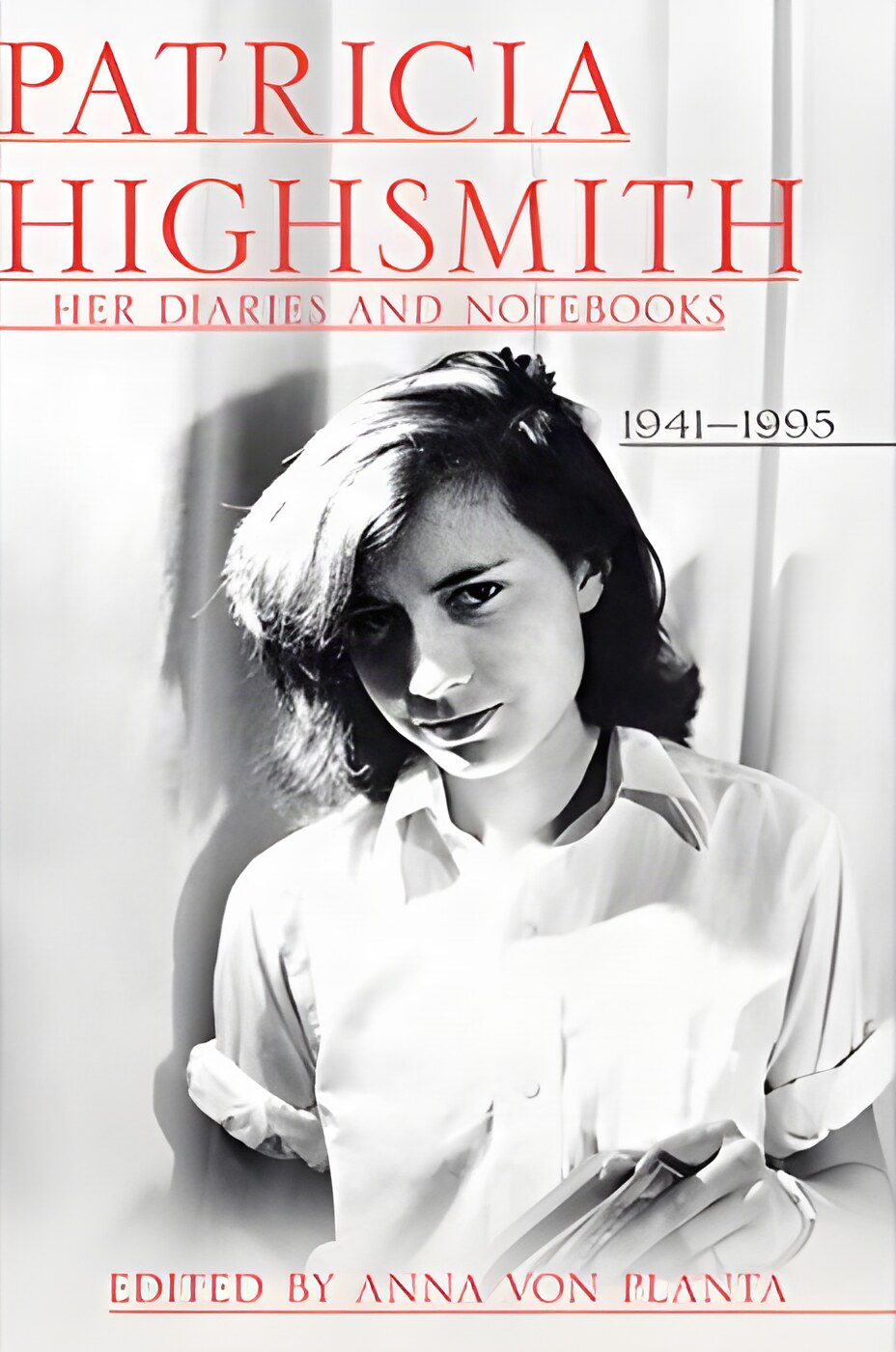
Hardcover. NY, Liveright Publishing , 1st, 2021, Book: Very Good, Dust Jacket: Very Good, Hardcover in a bright, unclipped dust jacket. Published on the centenary of her birth, Patricia Highsmith's diaries "offer the most complete picture ever published" of the canonical author. Relegated during her lifetime to the pulpy genre of mystery, Patricia Highsmith has emerged since her death in 1995 as one of "our greatest modernist writers" (Gore Vidal). Presented for the first time, this one-volume assemblage of her diaries and notebooks -- posthumously discovered behind Highsmith's linens and culled from more than 8,000 pages by her devoted editor, Anna von Planta--traces the mesmerizing double-life of an artist who "[worked] like mad to be something." Beginning in 1941 during her junior year at Barnard, the diaries exhibit the intoxicating "atmosphere of nameless dread" (Boston Globe) that permeates classics such as Strangers on a Train and the Ripley series. In her skewering of McCarthy-era America, her prickly disparagement of contemporary art, her fixation on love and writing, and ever-percolating prejudices, the famously secretive Highsmith reveals the roots of her psychological angst and acuity. In one of the most compulsively readable literary diaries to publish in generations. Remainder dot to top edge, otherwise like new.
Hardcover. NY, Liveright Publishing , 1st, 2021, Book: Very Good, Dust Jacket: Very Good, Hardcover in a bright, unclipped dust jacket. Published on the centenary of her birth, Patricia Highsmith's diaries "offer the most complete picture ever published" of the canonical author. Relegated during her lifetime to the pulpy genre of mystery, Patricia Highsmith has emerged since her death in 1995 as one of "our greatest modernist writers" (Gore Vidal). Presented for the first time, this one-volume assemblage of her diaries and notebooks -- posthumously discovered behind Highsmith's linens and culled from more than 8,000 pages by her devoted editor, Anna von Planta -- traces the mesmerizing double-life of an artist who "[worked] like mad to be something." Beginning in 1941 during her junior year at Barnard, the diaries exhibit the intoxicating "atmosphere of nameless dread" (Boston Globe) that permeates classics such as Strangers on a Train and the Ripley series. In her skewering of McCarthy-era America, her prickly disparagement of contemporary art, her fixation on love and writing, and ever-percolating prejudices, the famously secretive Highsmith reveals the roots of her psychological angst and acuity. In one of the most compulsively readable literary diaries to publish in generations. Remainder dot to top edge, otherwise like new.
Hardcover. New York, New York Review Books, 1st, 2012, Book: Very Good, Dust Jacket: Very Good, 448 pages. Hardcover with dust jacket. SIGNED BY AUTHOR ON TITLE PAGE. Black and white photos in center. Two pages wrinkled and stuck together in the middle of picture pages. Otherwise tight.
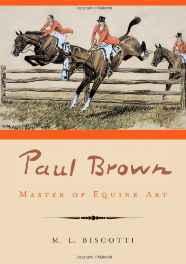
Hardcover. Lanham MD, Derrydale Press, 1st, 2010, Book: Very Good, Dust Jacket: None, 149 pages. Hardcover. Extensive b&w and color illustrations throughout. Clean, unmarked copy with only minor wear to wrappers. The definitive book on an artist who is widely regarded as the preeminent American illustrator of equestrian subjects. Based on extensive interviews with Brown's family, friends, and artistic contemporaries, Paul Brown includes a biography of the man and contains a complete listing of all the published works that include Brown's art as well as listings of all of Brown's prints, items sometimes attributed to Brown, and methods of identifying first editions of Paul Brown's art. Although Brown is primarily known for his wonderful paintings, drawings and sketches of horses and equestrian sports, he is also well known for his elegant and prolific illustrations for Brooks Brothers catalogs over three decades.
Hardcover. NY, Albert & Charles Boni , 1st, 1931, Book: Very Good, Dust Jacket: None, Hardcover, original light gray cloth hardcover with gilt & green lettering on the spine and the front cover. 340 pages, 8 b&w plates including frontis self-portrait. No dust jacket, otherwise a clean, tight copy.
Softcover. Montreal , Drawn & Quarterly, 1st, 2003, Book: Very Good, Dust Jacket: None, Non paginated. Softcover. Extensive b&w illustrations by Michel Rabagliati throughout. Clean, unmarked copy with only minor wear to wrappers. Rabagliati`s strip "Paul: Apprentice Typographer" was one of the highlights of 1999`s Drawn & Quarterly anthology, and his first comic book Paul in the Country won the 2000 Harvey award for Best New Talent. This, his first graphic novel, is a sweet, unsentimental story about being a teenager and Rabagliati's crisp retro-modern 1950s drawing style. Paul Has a Summer Job continues the story of Paul, a Quebecois teenager in the 1970s, as he experiences the first conflicts of responsibility with his desire to be free.
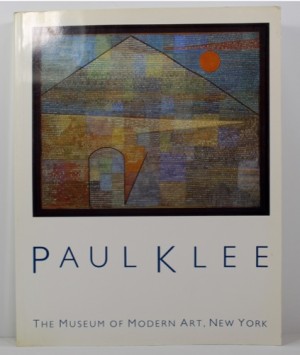
Softcover. New York, Museum of Modern Art, First Edition, 1987, Book: Very Good, Dust Jacket: None, 344 pages. Softcover published on occasion of the exhibition by the same title, touring various locations including the Museum of Modern Art, February 12 - May 5, 1987. Full page, full color and bw illustrations throughout. Frontis illustration, Twittering Machine, 1922. Light toning to spine. Otherwise clean, unmarked copy.
Hardcover. Los Angeles, J. Paul Getty Museum, 1st, 2009, Book: Very Good, Dust Jacket: Very Good, Hardcover, 164 pages. "With assistant curator of photographs Paul Martineau's intriguing biographical essay (based, in part, on the Getty's archive of Outerbridge papers), 104 stunningly beautiful plates, a chronology, checklist, and index, this catalog offers a highly visual and seductive overview. A section featuring selected photographs from Outerbridge's California years, a period missing from earlier books, makes this publication of interest to specialists as well."--ARLIS/NA Reviews
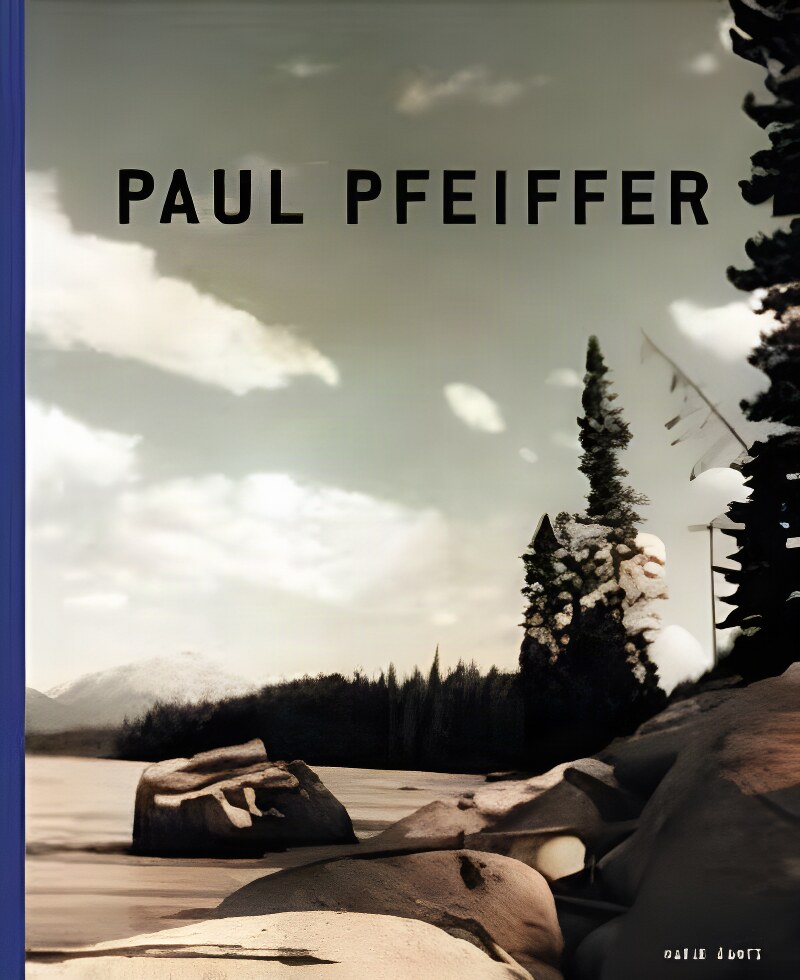
Hardcover. Ostfildern GR, Hatje Cantz, 1st, 2004, Book: Very Good, Dust Jacket: None, Hardcover, illustrated paper-covered boards; no dust jacket as issued. Photographs by Paul Pfeiffer. 80 pages with 35 four-color plates and 2 black-and-white plates. Essays (in German and English) by Valeria Liebermann and Stefano Basilico. Conversation with the artist (in German and English) by Thomas Ruff. Includes a list of works, biography, list of awards, exhibition history and publications. Clean copy.
Softcover. Boston, The Paul Revere Memorial Association, 1st pbk, 1988, Book: Very Good, Dust Jacket: None, Hardcover, pictorial black wrappers, 191 pages. Issued in conjunction with a 1988-1989 exhibition featuring the silver work of Paul Revere (1735-1818). With illustrated essays by Patrick M. Leehey, Janine E. Skerry, Deborah A. Federhen, Edgard Moreno, and Edith J. Steblecki. Includes a bibliography and many views of Revere's silversmithing capabilities. 236 b&w illustrations. Clean copy.
Hardcover. Urbana IL, University of Illinois Press, 1st revised, 1997, Book: Very Good, Dust Jacket: Very Good, Hardcover in a bright dust jacket, 410 pages. The book that re-established Peckinpah's reputation--now thoroughly revised and updated! When critics hailed the 1995 re-release of Sam Peckinpah's masterpiece, The Wild Bunch, it was a recognition of Paul Seydor's earlier claim that this was a milestone in American film, perhaps the most important since Citizen Kane. Peckinpah: The Western Films first appeared in 1980, when the director's reputation was at low ebb. The book helped lead a generation of readers and filmgoers to a full and enduring appreciation of Peckinpah's landmark films, locating his work in the central tradition of American art that goes all the way back to Emerson, Hawthorne, and Melville. In addition to a new section on the personal significance of The Wild Bunch to Peckinpah, Seydor has added to this expanded, revised edition a complete account of the successful, but troubled, efforts to get a fully authorized director's cut released. He describes how an initial NC-17 rating of the film by the Motion Picture Association of America's ratings board nearly aborted the entire project. He also adds a great wealth of newly discovered biographical detail that has surfaced since the director's death and includes a new chapter on Noon Wine, credited with bringing Peckinpah's television work to a fitting resolution and preparing his way for The Wild Bunch. This edition stands alone in offering full treatment of all versions of Peckinpah's Westerns. It also includes discussion of all fourteen episodes of Peckinpah's television series, The Westerner, and a full description of the versions of Pat Garrett and Billy the Kid now (or formerly) in circulation, including an argument that the label "director's cut" on the version in release by Turner is misleading. Additionally, the book's final chapter has been substantially rewritten and now includes new information about Peckinpah's background and sources.
Hardcover. New York, Regan Arts, 1st, 2016, Book: Very Good, Dust Jacket: Very Good, 304 pages. Hardcover with dust jacket. Very clean, unmarked copy with only minor wear to dust jacket. Color and black & white illustrations throughout. Tight copy.
Hardcover. New York, Regan Arts, 1st, 2016, Book: Very Good, Dust Jacket: Very Good, 304 pages. Hardcover with dust jacket. Clean, unmarked copy. Black and white pictures throughout.


 "Paintbox on the Frontier: The Life and Times of George Caleb Binghamby: Alberta Wilson Constant")

 "Paolo Uccello ITALIAN TEXT, INSCRIBEDby: Parronchi, Alessandro")
![Passing the Three Gates: Interviews with Charles Johnsonby: McWilliams, Jim [Editor]](https://www.browsingisarousing.com/shop/images/Passing-the-Three-Gates-Interviews-with-Charles-Johnson_by_McWilliams-Jim-Editor-380915-422736.jpg "Passing the Three Gates: Interviews with Charles Johnsonby: McWilliams, Jim [Editor]")
 "Pasternak on Art & Creativityby: Livingstone, Angela")




 "Paul Has a Summer Jobby: Rabagliati, Michel")