Hardcover. Taschen, 1st, 2004, Book: Very Good, Dust Jacket: Very Good, Hardcover, 368 pages. To many, Andres Serrano is the man responsible for "Piss Christ" and a national debate over government funding of controversial art. For those who look deeper, he's a highly-accomplished, ever-evolving photographic artist. This collection reveals three years of work that produced over 100 portraits of cultural diversity in America, as filtered through the critical lens of one of America's most mythologized contemporary artists.
Hardcover. London, Goodman Books, 1st, 20091st, Book: Very Good, Dust Jacket: None, 128 pages, 300 color/b&w photographs plus over 20 pieces of memorabilia. One of the world's best-known artists, Andy Warhol (1928-1987) still exerts influence on contemporary art and culture. Packed with information about Warhol's prolific creativity, as well as his other cultural interests, the project follows the arc of his life. This beautifully illustrated publication reveals Warhol's rags-to-riches life from his early years in Depression-era Pittsburgh to his success as an illustrator in New York City in the 1950s and his transformation into a notorious Pop Artist, underground filmmaker, author, publisher, collector, recorder and iconic celebrity. With 21 beautifully produced removable facsimile documents help give an unprecedented insight into Warhol's life and work in this unique and authoritative guide to this celebrated modern artist.
Hardcover. New Haven CT, Yale University Press, 1st, 2008, Book: Very Good, Dust Jacket: Very Good, Hardcover, 400 pages, color and b&w cartoon art. Brunetti focuses on very recent works by contemporary artists engaged in presenting a world of rapid and unpredictable change. The book presents contemporary art comics produced by 75 artists, along with some classic comic strips and other related fine art and historical materials. Very good in a bright dust jacket.
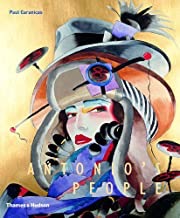
Softcover. NY, Thames & Hudson, 1st, 2004, Book: Very Good, Dust Jacket: None, Softcover, 176 pages. An unparalleled virtuoso, he captured the pulse of style from the 1960s to the 1980s, and is still revered as the most inspiring illustrator by today's practitioners. Recording and predicting contemporary style trends, Antonio also used his immense versatility to adopt a broad range of art movements, from Pop Art to Surrealism. The man himself, his life and friendships, particularly with Juan Ramos, his constant collaborator, define his oeuvre. For Antonio, life-bestial and sublime-surpassed any fiction. His illustrations and photographs capture the beautiful people who are part of celebrity folklore, and who were more often than not his friends: Jerry Hall (to whom he was engaged), Grace Jones, Mick Jagger, Audrey Hepburn, Andy Warhol (with whom he worked on Interview magazine), Paloma Picasso and Marlene Dietrich. Packed with previously unpublished material, this is a thrilling retrospective about an artist who is represented in major collections from the Metropolitan to the Louvre. Even posthumously, Antonio has not relinquished his grip on the fashion world: his style and quest for beauty live on. 230 illustrations, 155 in color
Softcover. NY, Aperture Foundation, 1997, Book: Very Good, Dust Jacket: None, Softcover, 80 pages. A large, beautifully designed photography publication with many full page photographs in black and white and color. Glossy wraps. Guest edited by W.M. Hunt, this issue of Aperture features work by photographers and scientists in their efforts to capture delirium on paper. Images ranging from contemporary through 19th Century show how delirium, clinical or colloquial, has been documented, analyzed, codified, worked over, and wondered about for the last 150 years, together creating a psychic agitation that can be as dark as it is witty. Artists included Nancy Burson, Debbie Fleming Caffrey, Ellen Carey, Henri Cartier-Bresson, Sally Mann, Robert Mapplethorpe, Eugene Richards, Weegee and many others .
Softcover. Aperture, 1st, 1997, Book: Very Good, Dust Jacket: None, 80 pages, b&w and color photographs throughout. Very good. Guest edited by W.M. Hunt, this issue of Aperture features work by photographers and scientists in their efforts to capture delirium on paper. Images ranging from contemporary through 19th Century show how delirium, clinical or colloquial, has been documented, analyzed, codified, worked over, and wondered about for the last 150 years, together creating a psychic agitation that can be as dark as it is witty. Artists included Nancy Burson, Debbie Fleming Caffrey, Ellen Carey, Henri Cartier-Bresson, Sally Mann, Robert Mapplethorpe, Eugene Richards, Weegee and many others.
Softcover. NY, Aperture Foundation, 1999, Book: Very Good, Dust Jacket: None, Softcover, 80 pages. A large, beautifully designed photography publication with many full page photographs in black and white and color. Glossy wraps. Aperture's second Explorations issue presents heretofore undiscovered images by photographers whose work is bound to become widely known. They probe the metaphysical through ritual, invoke dark metaphors in circus performance, find religion in nocturnal deserts, and study the ties that bind. The convergence of these uniquely powerful images and the artists' personal stories provokes an examination of the ever expanding boundaries of contemporary photography. Artists included are Stephen Barker, Neil Folberg, Jill Graham, Kimberly Gremillion, Jan van Leeuwen, Anne Arden McDonald, Andreas Rentsch, Maruch Santiz Gomez, and Dayanita Singh.
Softcover. New York , Aperture, 1st, 2009, Book: Very Good, Dust Jacket: None, Softcover. 88 pages, Winter 2009. Feature articles on Carrie Mae Weems, Raymond Cauchetier, Contemporary Iranian Photography, Andrew Moore and urban archaeology, Robert Adams on editing, Maira Kalman, and Nick Knight, and more. A clean, tight issue.
Softcover. New York , Aperture, 1st, 2009, Book: Very Good, Dust Jacket: None, Softcover. 88 pages, Winter 2009. Feature articles on Carrie Mae Weems, Raymond Cauchetier, Contemporary Iranian Photography, Andrew Moore and urban archaeology, Robert Adams on editing, Maira Kalman, and Nick Knight, and more. A clean, tight issue.
Softcover. Russia, Contemporary Art Museum, 1st, 2007, Book: Very Good, Dust Jacket: None, 514 pages. Only 2000 copies printed. Softcover. A very clean, unmarked copy with only minor edgewear. Color illustrations throughout.
Softcover. Williamstown MA, Sterling & Francine Clark Art Institute/Yale University Press., 1st, 2002, Book: Very Good, Dust Jacket: None, Softcover, 271 pages. Art history, aesthetics, and visual studies today find themselves in contested new philosophical and institutional circumstances. This fascinating and challenging volume explores the connections and differences among these three methods of investigating visual representation. What are the dominant aesthetic assumptions underlying art historical inquiry? How have these assumptions been challenged by visual studies? Are questions of quality, form, content, meaning, and spectatorship culturally specific? Can we still define the parameters of what should properly constitute the objects of the history of art? Fifteen distinguished scholars answer these and other questions, critically examining the relationships among these three scholarly fields from their founding moments through their contemporary practices. Clean copy.
Softcover. University of Chicago Press, 1st, 2005, Book: Very Good, Dust Jacket: None, Softcover, 228 pages, b&w illustrations. Art has the power to affect our thinking, changing not only the way we view and interact with the world but also how we create it. In Art in Mind, Ernst van Alphen probes this idea of art as a commanding force with the capacity to shape our intellect and intervene in our lives. Rather than interpreting art as merely a reflection of our social experience or a product of history, van Alphen here argues that art is a historical agent, or a cultural creator, that propels thought and experience forward. Examining a broad range of works, van Alphen--a renowned art historian and cultural theorist--demonstrates how art serves a socially constructive function by actually experimenting with the parameters of thought. Employing work from artists as diverse as Picasso, Watteau, Francis Bacon, Marlene Dumas, and Matthew Barney, he shows how art confronts its viewers with the "pain points" of cultural experience-genocide, sexuality, diaspora, and transcultural identity-and thereby transforms the ways in which human existence is conceived. Clean, like new.
Hardcover. Trumbull, CT, Greenwich Workshop Press Inc., 1st, 1993, Book: Very Good, Dust Jacket: Very Good, 160 pages. Hardcover with dust jacket. A very clean, unmarked copy with only minor wear to dust jacket. Includes a bonus colored print with publishers note. Color illustrations throughout. A tight copy. James Bama is one of the best contemporary artists working today. His portraits - of people from the smallest child to the greatest hero - have garnered the respect and captured the imagination of art collectors and critics around the world. The Art of James Bama is a new, comprehensive collection of his finest work, showing real people of the new West recreating their history, and descendants of the Old West paying homage to their heritage. Bama's ability to convey their emotion gives his paintings a resonance like no other.
Hardcover. Antique Collectors Club , reprint, 1997, Book: Very Good, Dust Jacket: Very Good, Hardcover in a bright dust jacket 272 pages. This charming book, first published in 1912 as Gardens for Small Country Houses by Country Life at a time when both Jekyll and Weaver were writing for the magazine, contains the substance of a legend. It embodies the period when the Arts and Crafts Movement had evolved into country house architecture and then found its most delightful expression in the making of gardens. This new edition, which has been re-titled to distinguish it from the original book, is now illustrated with color photographs and reproductions of contemporary paintings and watercolors which bring new color and light to a vanished world. In their collaboration on this book, the authors found common ground and reveled in their mutual intuitive approach to artistic and historic gardening ideas. Arts and Crafts Gardens is a practical handbook with invaluable information on garden restoration, insights into craftsmanship and planting relationships, and provides a fascinating classic text on garden design.
Hardcover. San Francisco, Chronicle Books, 1st, 2007, Book: Near Fine, Dust Jacket: Near Fine, 244 pages illustrated in color. Scholarly essays accompany this monograph on the Japanese-American artist. In publisher's shrinkwrap. Published to coincide with a series of major exhibitions extending beyond 2007, Ascending Chaos is the first major retrospective of Japanese-American artist Masami Teraoka's prolific and acclaimed work thus far. In Teraoka's paintings which have evolved from his wry mimicry of Japanese woodblock prints to much larger and complex canvasses reminiscent of Bosch and Brueghel the political and the personal collide in a riot of sexually frank tableaux. Populated by geishas and goddesses, priests, and politicians, and prominent contemporary figures, these paintings are the spectacular next phase of a wildly inventive career. With essays by renowned art critics who discuss how Teraoka's work inventively marries east and west, sex and religion, Ascending Chaos is a critical overview of this cultural trickster.
Softcover. Bright Mountain Books , 1st, 2007, Book: Very Good, Dust Jacket: None, Softcover, 358 pages, b&w illustrations throughout, Sometimes called the Paris of the South, Asheville, North Carolina, is known for its grand mountain views, rich and diverse culture, deep-rooted artistic heritage, historic architecture, and the legendary Biltmore Estate. Asheville: Mountain Majesty is an excellent source for discovering, or rediscovering, these and other facets of the city and its history.A lifelong resident of Asheville and regional historian, author Lou Harshaw offers a firsthand look at the history and development of this magnificent city by drawing upon a host of historical sources as well as an extensive oral tradition. She follows the development of Asheville from village to town to city, always reflecting the feeling of the times. The result is a journey through time, documenting the evolution of one of the most intriguing cities in the United States.Asheville: Mountain Majesty is enhanced by a wealth of period images, complemented by the author's contemporary photography.
Hardcover. University of Nebraska, 1st, 1996, Book: Very Good, Dust Jacket: Very Good, Hardcover in a dust jacket with minor fading to edges, b&w illustrations, 179 pages. Contemporary feminist critics have often described Surrealism as a misogynist movement. In Automatic Woman, Katharine Conley addresses this issue, confirming some feminist allegations while qualifying and overturning others. Through insightful analyses of works by a range of writers and artists, Conley develops a complex view of Surrealist portrayals of Woman. Conley begins with a discussion of the composite image of Woman developed by such early male Surrealists as Andre Breton, Francis Picabia, and Paul Eluard. She labels that image "Automatic Woman"--a term that comprises views of Woman as provocative and revolutionary but also as a depersonalized object largely devoid of individuality and volition. This analysis largely confirms feminist critiques of Surrealism. The heart of the book, however, examines the writings of Leonora Carrington and Unica Zurn, two women in the Surrealist movement whose works, Conley argues, anticipate much contemporary feminist art and theory. In concluding, Conley shows how Breton's own views on women evolved in the course of his long career, arriving at last at a position far more congenial to contemporary feminists.
Hardcover. London, Peter Owen , 1st, 2003, Book: Very Good, Dust Jacket: Very Good, Hardcover in a bright dust jacket, 256 pages. An acclaimed and most unusual biography of Baudelaire, showing him ensnared by his passions for poetry, prostitutes, and drugs. A crucial link between romanticism and modernism, Charles Baudelaire is a pivotal figure in European literature and thought. His influence on modern poetry is immense. In the English language, where his literary reputation is less well known, it is his link with drug culture that gives him contemporary resonance. It is commonly known that Baudelaire used opium. Many writers have described him as being addicted to the drug, but none of his biographers, Frank Hilton argues, has fully understood the effect of opiate addiction on the personality and, in the case of Baudelaire, the extent to which it damaged his life and work. In this original contribution to Baudelaire studies Hilton contends that the drug is at the root of all Baudelaire's problems and in particular--something that constantly tormented him--his chronic inability to apply himself to any prolonged creative work. Unquestionably, there is significantly more to Baudelaire than his opium addiction. But a proper awareness of what it did to the poet helps to illuminate those puzzling aspects of his life and behavior that were not previously understood. Written with the general reader in mind, Baudelaire in Chains will give those who know little or nothing about him a comprehensive picture of his life. To those who know a great deal it will present him in an unexpected light.
Softcover. Berkeley CA, University of California Press, 1st, Book: Very Good, Dust Jacket: None, Softcover, 232 pages. "Professor DeNora's achievement in placing Beethoven, and the reception of Beethoven's music, in social context is all the more impressive because it goes so much against the grain of conventional habits of thought. In illuminating how changing social institutions created opportunities for Beethoven to gain contemporary and posthumous recognition, and, in so doing, created new forms for thinking and talking about musical achievement-the author at once provides fresh insights into the institutional origins of 'classical' music and offers an exemplary contribution to the sociological study of the arts." Clean copy.
Hardcover. Seattle WA, Fantagraphics Books, 1st thus, 2002, Book: Very Good, Dust Jacket: Very Good, Originally released as Minimum Wage Book One and a subsequent series of the Minimum Wage comics with new material added. Bob Fingerman tells the story of Rob and Sylvia, two twentysomethings navigating the labyrinth of contemporary life in New York From pandering and peddling porn, to battling bellicose Brooklyn bozos, grappling with unsatisfactory careers, potential parenthood, nuptials and vicissitudes aplenty."
Hardcover. Museum of American Art and University of New Mexico Press, 1st, 1992, Book: Very Good, Dust Jacket: Very Good, Hardcover in a bright dust jacket, 176 pages. Numerous color and black and white plates. Essays by Merry A. Foresta, Stephen Jay Gould and Karal Ann Marling. Published on the occasion of the traveling exhibition, 1992-1993. Bar code sticker on rear of dust jacket, otherwise clean, bright copy. Uncommon in hardcover.
Hardcover. Washington DC, National Portrait Gallery/Princeton University Press, 1st, 2018, Book: Very Good, Dust Jacket: Very Good, Hardcover in a bright dust jacket, Accompanied exhibition at the National Portrait Gallery. Illustrated. First major publication to focus on the development of silhouettes, gathers leading experts to shed light on the surprisingly complex historical, political, and social underpinnings of this ostensibly simple art form. This richly illustrated volume explores likenesses of everyone from presidents and celebrities to everyday citizens and enslaved people. Ultimately, the book reveals how silhouettes registered the paradoxes of the unstable young nation, roiling with tensions over slavery and political independence. Primarily tracing the rise of the silhouette in the decades leading up to the Civil War, Black Out also considers the ubiquity of the genre today, particularly in contemporary art. Historical research and four contemporary artists: Kara Walker, Kristi Malakoff, Kumi Yamashita, and Camille Utterback. Still in publisher's shrinkwrap.
Softcover. Hanover NH, Hood Museum of Art, Dartmouth College , 1st, 2008, Book: Very Good, Dust Jacket: None, Softcover, 374 pages illustrated in b&w and color. Issued in connection with an exhibition held March 8 to September 7, 2008, Hood Museum of Art, Dartmouth College. Black Womanhood examines an especially charged icon - the black female body - and contemporary artists' interventions upon historical images of black women as exotic Others, erotic fantasies, and supermaternal Mammies. This book presents icons of the black female body as seen from three separate but intersecting perspectives: the traditional African, the colonial, and the contemporary global. The display and contemplation of such iconic images addresses complex and often competing forces of self-presentation and the representation of others. Clean, like new. DOMESTIC SHIPPING ONLY.
Softcover. Seattle, Fantagraphics, reprint, 2013, Book: Very Good, Dust Jacket: None, Softcover, A comic-book classic with timely resonance: Blazing Combat was an American war-comics magazine published by Warren Publishing from 1965 to 1966. Written and edited by Archie Goodwin , with artwork by such industry notables as Gene Colan , Frank Frazetta , John Severin , Alex Toth , Al Williamson, Russ Heath, Reed Crandall, and Wally Wood , it featured war stories in both contemporary and period settings, unified by a humanistic theme of the personal costs of war, rather than by traditional men's adventure motifs. What proved to be the most controversial were stories set during the then-contemporary Vietnam War; one such story caused key distributors to stop selling the title. Fantagraphics softcover edition of the sold-out 2011 hardcover, magnificently printed and bound, of these stories, superbly reproduced from the original printer's film negatives.

 "Andres Serrano America: And Other Workby: Dian Hanson , Julie Ault , et al.")
 "Andy Warhol Treasuresby: Huxley, Geralyn")
 "Anthology of Graphic Fiction, Cartoons, and True Stories, An: Volume 2by: Brunetti, Ivan (Editor)")
 "Aperture 148: Delirium - Summer 1997(Aperture Magazine)by: Aperture Foundation Inc. Staff")
 "Aperture 148: Deliriumby: Staff, Aperture Foundation Inc.")
 "Aperture 154: Explorations: Nine Portfolios (Aperture Magazine)by: Aperture Foundation Inc. Staff")
 "Aperture 197 Winter 2009by: Harris, Melissa (Ed.)")
 "Aperture 197 Winter 2009by: Harris, Melissa (Ed.)")
 "Art 4: Contemporary Art Museum by: Markin, Igor")

 "Art of James Bamaby: Kelton, Elmer")
 "Arts and Crafts Gardensby: Gertrude Jekyll & Lawrence Weaver")
 "Ascending Chaos: The Art of Masami Teraoka 1966-2006by: Bing, Alison and others")
 "Asheville: Mountain Majestyby: Harshaw Lou")
 "Automatic Woman:The Representation of Women in Surrealism by: Katharine Conley")
 "Baudelaire in Chains: A Portrait of the Artist as a Drug Addictby: Hilton, Frank")
 "Beethoven and the Construction of Genius: Musical Politics in Vienna, 1792-1803by: Tia DeNora")
 "Beg the Question (Minimum Wage)by: Fingerman, Bob")


 "Blazing Combatby: Goodwin, Archie")