Hardcover. NY, Abrams, 1st, 2012, Book: Very Good, Dust Jacket: Very Good, Hardcover, 128 pages. Francoise Mouly takes us behind the scenes at the New Yorker and reveals how the magazine creates its signature covers commenting on the most urgent political and cultural events of the day. She shows the shocking and hilarious sketches that didn't make the cut and explains how these are essential stages in the evolution of a cover that stands the test of time but retains its edge. Her book captures contemporary history--from the farce of Monica Lewinsky to the adventures of Michelle and Barack to nuclear meltdown in Japan--in images that are as acute as they are outrageous. More than that, it shows how the magazine that exemplifies journalistic excellence in America also dares to cultivate a sense of humor when grappling with complex moral and political issues.
Hardcover. New York, Scalo Verlag , 1st, 2001, Book: Very Good, Dust Jacket: Very Good, 144 pages. Hardcover with dust jacket. Very clean, unmarked copy still in publishers shrink-wrap. Thisbook contains a never-before published series of work from the early 1980s: Mikhailov photographed ''The Dancers'' in his hometown in the Ukraine during a period when the former Soviet Union was a reality, before the appearance of Gorbachov and "perestroika". We observe the open-air dancing scene with great astonishment; seeing older and younger people enjoy themselves in a way that might be contradictory to the images we might have about everyday life in the old Soviet Union. These cheerful images remind us how little women and men need to have a good time. An essay by Russian art critic Boris Groys and an exhaustive interview make this volume a must have for readers and libraries interested in contemporary art and photography. 65 duotone illustrations.
Hardcover. New York, Scalo Verlag , 1st, 2001, Book: Very Good, Dust Jacket: Very Good, 144 pages. Hardcover with dust jacket. Very clean, unmarked copy still in publishers shrink-wrap. This book contains a never-before published series of work from the early 1980s: Mikhailov photographed ''The Dancers'' in his hometown in the Ukraine during a period when the former Soviet Union was a reality, before the appearance of Gorbachov and "perestroika". We observe the open-air dancing scene with great astonishment; seeing older and younger people enjoy themselves in a way that might be contradictory to the images we might have about everyday life in the old Soviet Union. These cheerful images remind us how little women and men need to have a good time. An essay by Russian art critic Boris Groys and an exhaustive interview make this volume a must have for readers and libraries interested in contemporary art and photography. 65 duotone illustrations.
Softcover. US, Stichting Kunstboek, 1st, 2005, Book: Very Good, Dust Jacket: None, Softcover, 160 pages with 120 color plates. Like new in publishers shrink-wrap. Founded in Berlin in 1989, Buro Kiefer is one of today's most important, innovative and respected international landscape design firms. Combining both a mathematic and aesthetic logic, Buro Kiefer's work responds to the ever-expanding responsibilities of landscape design: interaction with the fields of architecture, urban and regional development, and even the cultural tradition of garden art. Presented in this book are many of the firm's important projects, each of which shows a seamless blending of town and landscape, and a contemporary understanding of urban space.
Softcover. US, Stichting Kunstboek/DAP, 1st, 2005-03-15, Book: Very Good, Dust Jacket: None, Softcover, 160 pages with 120 color plates. Like new in publishers shrink-wrap. Founded in Berlin in 1989, Buro Kiefer is one of today's most important, innovative and respected international landscape design firms. Combining both a mathematic and aesthetic logic, Buro Kiefer's work responds to the ever-expanding responsibilities of landscape design: interaction with the fields of architecture, urban and regional development, and even the cultural tradition of garden art. Presented in this book are many of the firm's important projects, each of which shows a seamless blending of town and landscape, and a contemporary understanding of urban space.
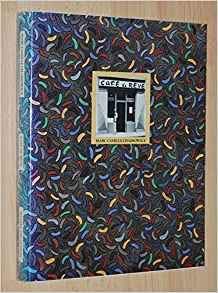
Softcover. London, Thames & Hudson, 1st, 1985, Book: Very Good, Dust Jacket: None, Softcover with color dust jacket., 181 pages, color and b&w illustrations. Text, art and photographs by Chaimowicz, Marc Camille Chaimowicz is a London-based contemporary artist whose works are in the Museum of Modern Art, Tate Modern, and Victoria and Albert Museum collections. His cross-disciplinary work in painting, drawing, collage, sculpture, installation, furniture, lighting, ceramics, textiles, and wallpaper challenges the categorical divisions between art and design. Clean, bright copy.
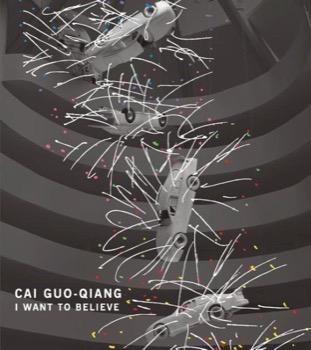
Softcover. NY, Guggenheim Museum, 1st, 2008, Book: Very Good, Dust Jacket: None, Softcover, 315 pages illustrated in color. This volume accompanies the most comprehensive exhibition to date of the innovative body of work by Chinese-born artist Cai Guo-Qiang--best known for his spectacular artworks using gunpowder and fireworks. It presents a chronological and thematic survey that charts the artist's creation of a distinctive visual and conceptual language across four mediums: drawings made from gunpowder fuses and explosive powders laid on paper and ignited; explosion events, documented by videos, photographs and preparatory drawings; large-scale installations; and social projects, wherein the artist works with local communities to create an art event or exhibition site, documented by photographs. Featuring works from the 1980s to the present, this volume illuminates Cai's significant formal and conceptual contributions to contemporary international art practices and social activism. Generously illustrated more than 368 pages, this volume includes essays by Alexandra Munroe, David Joselit, Miwon Kwon and Wang Hui--along with some 60 documented plate entries. Clean copy. Extra postage will be required if shipped overseas.
Hardcover. Stichting Kunstboak , 1st, 2014, Book: Very Good, Dust Jacket: Very Good, Hardcover, 144 pages. Like new in publisher's shrink-wrap. Photography offers a thousand possible ways of looking at the society we live in. Foremost among the talents that have brought Calvin Dondo international recognition is the ability to put into his work all the respect he has for the individual identities of those he captures on film. This artist who reveals the nature of Zimbabwe today freely tells us of his country and the history concealed within it. This book presents a new world in which images are an essential component. This first monograph to be devoted to a contemporary Zimbabwean photographer will encourage others, for the excellent reason that it is time to look at Africa through the clearsighted viewfinder of those working on its development. Text in English, French, Dutch and German.
Hardcover. Cambridge MA, Belknap Press/Harvard, 1st, 2020, Book: Very Good, Dust Jacket: Very Good, Hardcover in a bright, unclipped dust jacket, 1104 pages. The epic successor to one of the most important books of the century: at once a retelling of global history, a scathing critique of contemporary politics, and a bold proposal for a new and fairer economic system. Clean copy.
Hardcover. New York, Thames and Hudson, 1st, 2000, Book: Very Good, Dust Jacket: Very Good, Hardcover, 299 pages, 193 illustrations, 150 in color. Clean copy in a bright dust jacket with a mild crease to the dust jacket. Werner Hofmann vividly demonstrates Caspar David Friedrich's extraordinary ability to reproduce the natural world in faithful detail, while at the same time imbuing it with spiritual and religious significance. Caught between the near and the distant, the finite and the infinite, his human figures find a space in which to engage in the thoughtful contemplation of nature and the divine. Carefully placing the artist in a wider context, Hofmann examines contemporary judgments and influences on Friedrich's work. The beautiful illustrations include many of Friedrich's drawings and watercolors as well as over ninety of his works in oils.
Hardcover. New York, Aperture Foundation, 1st, 1996, Book: Very Good, Dust Jacket: Very Good, 128 pages. Hardcover with dust jacket. Black and white photographs. Clean, unmarked copy with only minor wear to dust jacket. Small abrasion on rear end paper. Covering performance art since is nasence at the East Village's Pyramid Club, the WOW Cafe, 8BC, and other clubs in the early eighties McAdams became the in-house photo archivist at the infamous performance space, P.S. 122, the home of cutting-edge theater that eschews convention as it draws energy and inspiration from all media. At P.S. 122 and other alternative performance spaces such as The Kitchen and Dance Theater Workshop, McAdams developed her long-term relationships with many performers.
Hardcover. London, Merrell Publishers, 1st, 2002, Book: Very Good, Dust Jacket: Very Good, Hardcover in a bright dust jacket, 224 pages, 200+ color illustrations. The first of a three-part series that explores the creativity and productivity of Native American artists. This volume "focuses on the work of nearly ninety of the most exciting and innovative artists of the region, working in a variety of media, from clay to glass, from fiber to jewelry, and from metal to wood, as well as mixed media." (flap).
Softcover. New York, Rizzoli, 1st, 1993, Book: Very Good, Dust Jacket: None, 305 pages, illustrated throughout in color and b&w. Light edgewear and sun-fade to spine. Previous owner's signature on front end paper. Clean, tight copy. Briefly traces the career of this contemporary American architect and shows examples of his houses, apartment buildings, libraries, museums, schools, hotels, churches, and conference centers.
Hardcover. New York, Museum of Contemporary Art, 1st, 1998, Book: Very Good, Dust Jacket: None, Hardcover, 119 pages, mostly illustrated in color. Essays by Paul Schimmel and Lisa Phillips. Illustrated boards, no dust jacket issued.
Softcover. NY, Rizzoli, 1st, 2005, Book: Very Good, Dust Jacket: None, Softcover, large oblong format, 304 pages. Described as "the closest thing to a rock star" in graphic design today (USA Today), Chip Kidd is universally recognized as an American master of contemporary book design. At the forefront of a revolution in publishing, Kidd's iconic covers, with their inventive marriage of type and found images, have influenced an entire generation of design practitioners in many fields.Chip Kidd: Book One collects all of his book covers and designs for the first time, as well as hundreds of developmental sketches and concepts-annotated by Kidd and by many of the best-selling authors he's worked with over the years. The result is an important contribution to the design canon today as well as a visually dazzling (and often hilarious) insider's look at the design and publishing process.The book also showcases Kidd's work with comics and graphic novels, including his collaborations with leading artists and writers in the field. Featured are projects for DC Comics, including Batman and Superman, as well as Kidd's award-winning exploration of the art of Charles M. Schulz. Chip Kidd: Book One is sure to enthrall design aficionados, book lovers, pop-culture fanatics, comics fans, and design students. DUE TO SIZE AND WEIGHT, DOMESTIC SHIPPING ONLY.
Softcover. New Haven CT, Yale University Press, 1st, 2003, Book: Very Good, Dust Jacket: None, 112 pages, softcover. Profusely illustrated in color. Chip Kidd is renowned and revered as a maverick graphic designer. Specifically, Kidd's book jacket designs for such major New York publishers as Alfred A. Knopf are among the most significant and innovative of our time. This richly illustrated book -- the first critical selection of Kidd's design work -- looks closely at this contemporary visual pioneer.
Softcover. NY, Thames & Hudson, reprint, 1997, Book: Very Good, Dust Jacket: None, Softcover, 220 pages. This comprehensive catalogue traces the career of Cindy Sherman, examining her achievements as one of the leading American artists of our time. By exploring the myriad constructions of female identity and the body in our culture, Sherman imitates and confronts assorted representational stereotypes, becoming for many an icon of the contemporary concerns of feminism and postmodernism. Essayists Amada Cruz, Elizabeth A. T. Smith, and Amelia Jones offer keen insight and observations from several distinct vantage points, demonstrating that Sherman's work is a lens through which to view contemporary art and its ongoing concern with the profound issues of the structures of the self. More than 200 images show the breadth of Sherman's body of work, from the Untitled Film Stills of the 1970s to series such as Centerfolds, Fashion, Disasters, Fairy Tales, and History Portraits, as well as photographs influenced by surrealist artists. Also included are intriguing excerpts from Sherman's notebooks, selections from her contact sheets, and numerous Polaroid studies, all of which shed light on the artist's process.
Softcover. NY, The Museum of Modern Art, 1st, 2012, Book: Very Good, Dust Jacket: None, Softcover, 264 pages. 153 color illustrations and 102 duotone. Published to accompany the first major survey of Cindy Sherman's work in the United States in nearly 15 years, this publication presents a stunning range of work from the groundbreaking artist's 35-year career. Showcasing approximately 180 photographs from the mid-1970s to the present, including new works made for the exhibition and never before published, the volume is a vivid exploration of Sherman's sustained investigation into the construction of contemporary identity and the nature of representation. The book highlights major bodies of work including her seminal Untitled Film Stills (1977-80); centerfolds (1981); history portraits (1989-90); head shots (2000-2002); and two recent series on the experience and representation of aging in the context of contemporary obsessions with youth and status. An essay by curator Eva Respini provides an overview of Sherman's career, weaving together art historical analysis and discussions of the artist's working methods, and a contribution by art historian Johanna Burton offers a critical re-examination of Sherman's work in light of her recent series. A conversation between Cindy Sherman and filmmaker John Waters provides an enlightening view into the creative process.
Softcover. NY, The Museum of Modern Art, 1st, 2012, Book: Very Good, Dust Jacket: None, Softcover, 264 pages. 153 color illustrations and 102 duotone. Published to accompany the first major survey of Cindy Sherman's work in the United States in nearly 15 years, this publication presents a stunning range of work from the groundbreaking artist's 35-year career. Showcasing approximately 180 photographs from the mid-1970s to the present, including new works made for the exhibition and never before published, the volume is a vivid exploration of Sherman's sustained investigation into the construction of contemporary identity and the nature of representation. The book highlights major bodies of work including her seminal Untitled Film Stills (1977-80); centerfolds (1981); history portraits (1989-90); head shots (2000-2002); and two recent series on the experience and representation of aging in the context of contemporary obsessions with youth and status. An essay by curator Eva Respini provides an overview of Sherman's career, weaving together art historical analysis and discussions of the artist's working methods, and a contribution by art historian Johanna Burton offers a critical re-examination of Sherman's work in light of her recent series. A conversation between Cindy Sherman and filmmaker John Waters provides an enlightening view into the creative process.
Hardcover. NY, Harper, 5th pr., 2022, Book: Very Good, Dust Jacket: Very Good, Hardcover in a bright, unclipped dust jacket, 391 pages with index. In addition to being among the most celebrated of contemporary filmmakers, Quentin Tarantino is possibly the most joyously infectious movie lover alive. For years he has touted in interviews his eventual turn to writing books about films. Now, with Cinema Speculation, the time has come, and the results are everything his passionate fans--and all movie lovers--could have hoped for. Organized around key American films from the 1970s, all of which he first saw as a young moviegoer at the time, this book is as intellectually rigorous and insightful as it is rollicking and entertaining. At once film criticism, film theory, a feat of reporting, and wonderful personal history, it is all written in the singular voice recognizable immediately as QT's and with the rare perspective about cinema possible only from one of the greatest practitioners of the art form ever.
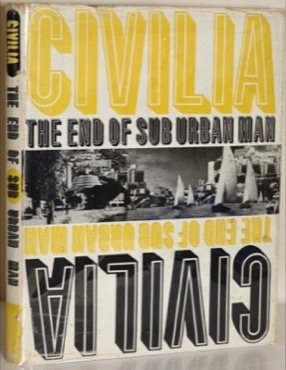
Hardcover. London, Architectural Press, 1st, 1971, Book: Very Good, Dust Jacket: Good, Hardcover in a lightly worn dust jacket, in yellow linen boards with titling in gold. 156 pages illustrated in b&w and color. Civilia: The End of Sub Urban Man, addresses "urban living" in the mid- to late twentieth century with reference to the impact of technology, new town planning, the death of the automobile, and a tongue-in- cheek attitude towards the then contemporary issues informing the development of urbanism in both academic and public imagination. At times bitingly critical, and at others erudite if not wholly 'politically correct' Civilia: The End of Sub Urban Man is a refreshing look back at 'cutting edge' developments in architecture and urbanism from the 1970s, and is surprisingly relevant given our current situation. An uncommon title by the great promoter of modernism. the author edited Architectural Review and wrote several articles for it as well as books under the pseudonym, Ivor De Wolfe. DOMESTIC SHIPPING ONLY.
Hardcover. NY, Funny Garbage Press, 1st, 2001, Hardcover, 212 pages. Legendary underground cartoonist Panter's comics are typically anarchic and fun, but they also delve deeper. First produced in 1983, Cola Madness is published here in book form for the first time. The work stars Jimbo, Panter's enduring punk everyman, sharing billing with a cast of idiosyncratic characters including Bob War; his calamitous brother, Uncle Garcia, a smart-talking dinosaur and beleaguered guardian in a bathrobe; and Kokomo, a native in an unspecified tropical land colonized by oil companies. Posited as the hallucinatory fever dream of Kokomo, Panter's farce follows Jimbo's misadventures as he tries to get a Moka Cola at the local Jack-in-the-McTacos, the whole zany affair culminating in an absurd, scatological climax at an automated fast food restaurant. Panter delivers a visionary response to contemporary American life viewed through the wrong end of some cosmic telescope. This delightfully inane story offers a selection of Panter's themes: humanity's troubled relationship with nature and technology; the tension between restraint and the uncontrollable urge; family relationships; and Jimbo's endearing, comical self-doubt. Panter's black and white "ratty line" drawing style offers great economy while suggesting a broad range of graphic style from art brut to bathroom graffiti, and calls to mind the works of legendary cartoonists Jack Kirby and Osamu Tezuka.
Hardcover. London, Black Dog Publishing, 1st, 2008, Book: Very Good, Dust Jacket: Very Good, Hardcover, Collage has a relatively short, but incredibly rich history. The popularity of collage is on the increase again, partly as a result of such postmodernist concerns as pluralism, multiplicity and hybridity. This book features works by international artists Picasso, Schwitters and Ernst, through to Hannah Hoch, Martha Rosler, John Stezaker, Richard Hamilton, Layla Curtis, David Salle, Eduardo Poalozzi, Javier Rodriguez, Robert Rauschenberg, Mimei Thompson, David Thorpe, Fred Tomaselli and many more.
Hardcover. NY/London, Tate Publishing, 1st, 2013, Book: Very Good, Dust Jacket: None, 144 pages, illustrated throughout in color and b&w. Clean, tight copy. In this richly illustrated and accessible survey, acclaimed author Paul Gravett considers the vast output of comics culture from the late 19th century to today, including syndicated comics, graphic novels, and contemporary art and illustration. From foundational masterpieces such as Rodolphe Topffer's and Wilhelm Busch's albums, George McManus's Art Deco "Bringing Up Father," and Alex Raymond's "Flash Gordon" to the later retro stylings of Robert Crumb, Gravett considers lines of influence from around the world and examines how comics have shifted from supporting the status quo to becoming the voice of alternative subcultures. Gravett traces the major themes taking place in contemporary comics, noting the rise of publications that function as questioning, transgressive outlets for outsider stories and ideas, and includes the ways that folk art traditions are reinvigorating the form.

 "Blown Covers: New Yorker Covers You Were Never Meant to Seeby: Mouly, Francoise")
 "Boris Mikhailov: The Hasselblad Award 2000by: Knape, Gunilla")
 "Boris Mikhailov: The Hasselblad Award 2000by: Knape, Gunilla")
 "Buro Kiefer: Landscape Designby: Schroder, Thies; Joosten, Hanns (Photographer)")
 "Buro Kiefer: Landscape Designby: Schroder, Thies; Joosten, Hanns (Photographer)")
 "Calvin Dondo: Hodhii Zimbabweby: Dondo, Calvin")
 "Capital and Ideologyby: Thomas Piketty and Arthur Goldhammer")
 "Caspar David Friedrichby: Hofmann, Werner")
 "Caught in the Act: A Look at Contemporary Multimedia Performanceby: McAdams, Dona Ann")

 "Charles Moore: Buildings and Projects 1949-1986by: Johnson, Eugene J.")
 "Charles Rayby: Schimmel, Paul")

 "Chip Kiddby: Vienne, Veronique")
 "Cindy Sherman Retrospectiveby: Amanda Cruz, Amelia Jones, et al.")




 "Collage: Assembling Contemporary Artby: Craig (Editor), Blanche")
 "Comics Artby: Gravett, Paul")