Hardcover. NY, Abrams, 1st, 1975, Book: Very Good, Dust Jacket: Very Good, Hardcover in a bright dust jacket, 301 pages. Fox was Editor-in-Chief of Harry N. Abrams, Inc. 6 color plates, 105 b/w photos. 301 pages, clean and clear. Blue endpapers, with previous owner's name and address on ffep. White cloth cover, with silver titles on the spine.
Softcover. NY, Harper & Row/Icon Editions, 1977, Book: Very Good, Dust Jacket: None, Softcover, 176 pages. Series of essays with b&w photographs throughout. CONTENTS: Artpolitics; The Size of Non-Size; What is Content?--Photography as Culture; Filmgoing -Videogoing; The Decline and Fall of Pop; The Idea of a Twenty-First Century Museum; Utopia; Post-Modern Form. Front cover in black and white with black, white, and red lettering. In very good condition, some rubbing to both covers but clean pages and tight binding.
Hardcover. New York, Walker and Company, 2nd pr., 1969, Book: Very Good, Dust Jacket: None, Hardcover, 91 pages, with illustrations throughout. Minor corner wear and previous owner's signature on front fly leaf. Otherwise, very clean and tight copy.
Softcover. Chicago, University of Chicago Press, reprint, 1982, Book: Very Good, Dust Jacket: None, Red card cover, with pages and covers in pristine condition. Like new, in shrinkwrap. Rosenberg's essays cover art's relationship with the media, pop art, art as thinking; Pollock's methods; Josph Cornell's boxes; Russian constructivism; big paintings; the artist's hand; action painting, Dada etc etc. First published in 1969.
Hardcover. New York, Harry N. Abrams, 1st US, 1998, Book: Very Good, Dust Jacket: Very Good, 224 pages. Hardcover with dust jacket. Sun fading to dust jacket spine. Light foxing to top edge of text block. An otherwise clean, unmarked copy with only minor wear to dust jacket edges. Beardsley's work is looked at alongside the work of contemporaries such as Oscar Wilde, Max Beerbohm and W.B. Yeats and against the backdrop of the artistic, literary and social life of fin-de-siecle London, Dieppe and Paris. In addition to the drawings, the book includes examples of Beardsley's innovative book binding, prints and posters, revealing a gallery of portraits and photographs from that decadent period, the "Naughty Nineties." It also explores the diverse influences, such as ancient Greek vase painting and Japanese prints, upon which the young artist freely drew in the formation of his own style.
Softcover. NY, Bloomsbury, reprint, 2013, Book: Very Good, Dust Jacket: None, Softcover, 454 pages. Via writings by philosophers, cultural theorists, and composers, Audio Culture explores the interconnections among such forms as minimalism, indeterminacy, musique concrete, free improvisation, experimental music, avant-rock, dub reggae, Ambient music, HipHop, and Techno. Instead of focusing on the putative "crossover" between "high art" and "popular culture," Audio Culture takes all of these musics as experimental practices on par with, and linked to, one another. While cultural studies has tended to look at music (primarily popular music) from a sociological perspective, the concern here is philosophical, musical, and historical. Audio Culture includes writing by some of the most important musical thinkers of the past half-century, among them John Cage, Brian Eno, Glenn Gould, Umberto Eco, Ornette Coleman, Jacques Attali, Simon Reynolds, Pauline Oliveros, Paul D. Miller, David Toop, John Zorn, Karlheinz Stockhausen, and many others. The book is divided into nine thematically-organized sections, each with its own introduction. Section headings include topics such as "Modes of Listening," "Minimalisms," and "DJ Culture." In addition, each essay has its own short introduction, helping the reader to place the essay within musical, historical, and conceptual contexts. The book concludes with a glossary, a timeline, and an extensive discography. Clean, bright copy.
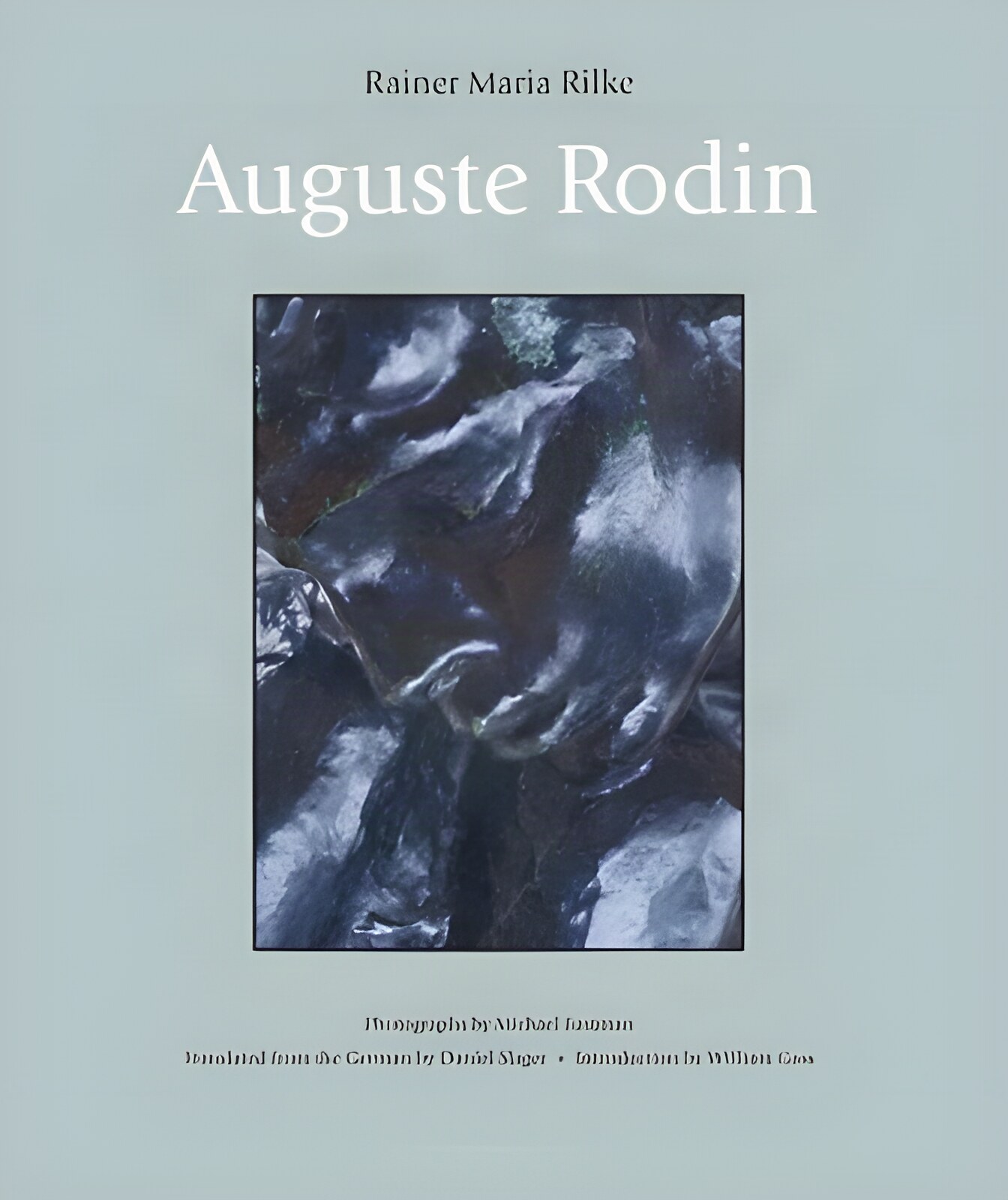
Hardcover. NY, Archipelago Books, 1st thus, 2004, Book: Very Good, Dust Jacket: Very Good, Hardcover in a bright, unclipped dust jacket, color illustrations, 88 pages. Sculptor Auguste Rodin was fortunate to have his secretary Rainer Maria Rilke, one of the most sensitive poets of our time. These two pieces discussing Rodin's work and development as an artist are as revealing of Rilke as they are of his subject. Written in 1902 and 1907, these essays mark the entry of the poet into the world of letters. Rilke's description of Rodin reveals the profound psychic connection between the two great artists, both masters of giving visible life to the invisible. Michael Eastman's evocative photographs of Rodin's sculptures shed light on both Rodin's art and Rilke's thoughts and catapult them into the 21st century. Clean copy.
Hardcover. NY, Charles Scribner's Sons, 1st, 1931, Book: Very Good, Dust Jacket: None, Hardcover, black cloth with spine label, 319 pages. First printing with 1931 on title page and Scribner's "A" on copyright page. Edmund Wilson's first book of literary criticism - a landmark book that explores the evolution of the French Symbolist movement and considers its influence on six major twentieth-century writers: William Butler Yeats, Paul Valery, T. S. Eliot, Marcel Proust, James Joyce, and Gertrude Stein. As Alfred Kazin later wrote, "Wilson was an original, an extraordinary literary artist . . . He could turn any literary subject back into the personal drama it had been for the writer." Light tanning to spine label, clean, tight copy.
Hardcover. London, Peter Owen , 1st, 2003, Book: Very Good, Dust Jacket: Very Good, Hardcover in a bright dust jacket, 256 pages. An acclaimed and most unusual biography of Baudelaire, showing him ensnared by his passions for poetry, prostitutes, and drugs. A crucial link between romanticism and modernism, Charles Baudelaire is a pivotal figure in European literature and thought. His influence on modern poetry is immense. In the English language, where his literary reputation is less well known, it is his link with drug culture that gives him contemporary resonance. It is commonly known that Baudelaire used opium. Many writers have described him as being addicted to the drug, but none of his biographers, Frank Hilton argues, has fully understood the effect of opiate addiction on the personality and, in the case of Baudelaire, the extent to which it damaged his life and work. In this original contribution to Baudelaire studies Hilton contends that the drug is at the root of all Baudelaire's problems and in particular--something that constantly tormented him--his chronic inability to apply himself to any prolonged creative work. Unquestionably, there is significantly more to Baudelaire than his opium addiction. But a proper awareness of what it did to the poet helps to illuminate those puzzling aspects of his life and behavior that were not previously understood. Written with the general reader in mind, Baudelaire in Chains will give those who know little or nothing about him a comprehensive picture of his life. To those who know a great deal it will present him in an unexpected light.
Hardcover. New York, Pantheon Books, 1st US, 1988, Book: Very Good, Dust Jacket: Very Good, 127 pages, hardcover with dust jacket. Preface by Jean Leymarie. Translated from the French by Sebastian Wormell. Vivid recollections of life at La Cannet and descriptions of the house and garden, accompanied by reproductions of related drawings and paintings. With 130 illustrations, 77 in color. Including 14 photographs by Henri Cartier-Bresson. Previous owner's signature to front flyleaf. Light fading to dust jacket top edge and spine. Mild rubbing to dust jacket as well. A tight and clean copy.
Hardcover. NY, Pantheon, 1st, 2003, Book: Very Good, Dust Jacket: Very Good, Hardcover in a bright, price-clipped dust jacket, 495 pages. Boogaloo--the synonym of choice among the cognoscenti for rhythm and blues--is a stylish and profound meditation on the art, influence, and commerce of black American popular music. At once deeply knowing and keenly observant, Arthur Kempton reveals the tensions between the sacred and the profane at the heart of "soul music," and the complex centrality of "Aframericans" in the evolution of our mass musical culture. What that culture is all about, who owns it, and who gets paid--these are issues of moment in his epic narrative. Kempton brilliantly traces the interconnections among a century's worth of signal personalities, events, and achievements: from Thomas A. Dorsey, the so-called Father of Gospel Music, whose career ("Got to Know How to Work Your Show") sheds light on Mahalia Jackson, Aretha Franklin, and James Brown, among others, to the rise of that "handsome Negro lad," Sam Cooke (perhaps the greatest of soul singers) and his definitive crossover dreams; from Berry Gordy Jr.'s infatuation with Doris Day and his sharp business plan to capture and exploit the sounds of young America through Motown ("It's What's in the Grooves That Counts") to the founding of Stax Records and Memphis Soul by a white farm kid who grew up dreaming of being a country fiddler; from the visionary funk of George Clinton to the ascendancy of hip hop ("Sharecropping in Wonderland"), the murders of Tupac Shakur and Biggie Smalls, and the story of Death Row Records. Clean copy.
Hardcover. New York , Pantheon, 1st thus, 2008, Book: Very Good, Dust Jacket: None, Hardcover, pictorial boards. no dust jacket issued. Originally published in a different form in 1977 by Belier Press, this collection of comics by Spiegelman, the Pulitzer Prize-winning author/artist of "Maus," presents the seminal works that changed how comics are made and appreciated today. Revised and re-issued in 2008, with an introduction that's almost as long as the book it introduces, and certainly autobiographically intimate and daring. Clean, very good.
Hardcover. NY, Pantheon, 1st thus, 2008, Hardcover, pictorial boards. no dust jacket issued. Originally published in a different form in 1977 by Belier Press, this collection of comics by Spiegelman, the Pulitzer Prize-winning author/artist of "Maus," presents the seminal works that changed how comics are made and appreciated today. Revised and re-issued in 2008, with an introduction that's almost as long as the book it introduces, and certainly autobiographically intimate and daring. Clean, very good.
Hardcover. New York, Skira Rizzoli, 1st, 2011, Book: Very Good, Dust Jacket: Very Good, 240 pages. Hardcover with dust jacket. Very clean, unmarked copy still in shrink wrap. Full color, full page photographs throughout. Dust jacket designed to look torn with trash underneath. Tight copy. The work of counterculture artists Tim Noble and Sue Webster, whose art is a complex punk-rock take on modern consumer culture. Enormous neon signs, intricate silhouette portraits constructed of trash heaps, and a work titled Instant Gratification: British artists Tim Noble and Sue Webster thrive on the thrills of illumination, love, language, shadows, garbage, and cash. British Rubbish showcases their work in all its splashy glory. Their art evokes both gaudy Vegas culture and down-and-dirty punk rock: a combination of cynical extravagance and a defiant, rebellious sensibility. Extravagant, irreverent, sometimes coarse, and always sharply clever, British Rubbish is both a paean to and sly denunciation of conspicuous consumption.
Hardcover. NY, Doubleday Page & Co., 1st, 1927, Book: Very Good, Dust Jacket: Fair, Hardcover in a worn dust jacket with chunks gone from spine. A witty drama critic from the New York Herald-Tribune offers opinions and gossip on the celebrities of the day. 186 pages. Name on inside front cover, otherwise clean.
Hardcover. New York, New York University Press, 1st, 1970, Book: Very Good, Dust Jacket: Very Good, 274 pages. Hardcover. Previous owners name at top right corner of front endpaper. Black & white illustrations. Faint foxing to edges. Includes Errata slip. Clean, tight copy.
Hardcover. New York, Asia Society/Creative Time, 1st, 2005, Book: Very Good, Dust Jacket: None, 24 pages. Hardcover with no dust jacket. Accordion binding. Very clean, unmarked copy with only minor edgewear. Commissioned to celebrate the 150th anniversary of Central Park, Cai's Light Cycle fireworks display lit the New York sky with a circle of explosions on a September night in 2003. This 24-page accordion book documents it all from planning to performance, executed by the famous Grucci fireworks family. Separating the book's hardbound cloth covers reveals a continuous folded sheet with reproductions of Cai's gunpowder drawings (made by burning scant gunpowder on paper) on one side and photographs of the event and text on the other. In an interview, the artist compares his drawings to "love-making" and explains some technical aspects of his displays, such as a computer chip in each explosive shell.
Hardcover. New York, Farrar, Straus and Giroux, 1st, 2017, Book: Very Good, Dust Jacket: Very Good, 272 pages. Hardcover with dust jacket. A very clean, unmarked copy with only minor dust jacket wear. Illustrated with never-before-seen photographs, cartoons, and drawings, Cartoon County brings the postwar American era alive, told through the relationship of a son to his father, an extraordinarily talented and generous man who had been trained by Norman Rockwell. Cartoon County gives us a glimpse into a very special community-and of an America that used to be.
Hardcover. Seattle, WA, Fantagraphics Books, 1st, 2015, Book: Very Good, Dust Jacket: None, 258 pages. Hardcover with no dust jacket. A very clean, unmarked copy with only minor wear to edges. A tight copy. Cartoons for Victory showcases wartime work by cartoonists such as Charles Addams, Harold Gray, Harvey Kurtzman, Will Eisner, and many others. Most of the cartoons and comics in this book have not been seen since their first publication.
Hardcover. Berkeey, University of California, 1st, 1997, Book: Very Good, Dust Jacket: Very Good, Hardcover, 305 pages, nearly 150 b&w photos accompany the text. A survey of photography in East Germany; from 1945 to 1989. In a very good dust jacket with light fade to spine. "Behind the Iron Curtain, against all odds, photography flourished as an art in the German Democratic Republic. The many images in this volume amply demonstrate that fact while also providing an illustrated social history of people 'caught' in the conflicting dictates of ideology, artistic oppression, a troubled national past, and basic human desires."
Hardcover. Washington, DC, Princeton University Press, 1st, 1989, Book: Very Good, Dust Jacket: Very Good, 352 pages. Hardcover with dust jacket. Tight copy with minor wear to edges. Previous owner's notes in pencil near rear end paper.
Hardcover. Brighton UK, Alpha Press, 1st, 1999, Book: Very Good, Dust Jacket: Very Good, Hardcover in a bright dust jacket, 127 pages, illustrated in color and b&w. This book examines the extraordinary metamorphosis that has occurred in the presentation of the human face during the twentieth century. A series of essays charts the portraits which are the "Milestones" to that change, while the discussion that follows - "Changing Perceptions" - endeavours to identify its nature, its causes, and to show the manner in which the artists reveal this transformation when painting their sitters. Clean copy.

 "Art studies for an editor: 25 essays in memory of Milton S. Fox by: N/A")

 "Artistic and Intellect Trends From Rubens to Daumierby: Benesch, Otto")

 "Aubrey Beardsleyby: Calloway, Stephen")


 "Baby Boomer Comics: The Wild, Wacky, Wonderful Comic Books of the 1960sby: Craig Shutt and Jim Mooney")
 "Baudelaire in Chains: A Portrait of the Artist as a Drug Addictby: Hilton, Frank")
 "Bonnard at Le Cannetby: Terrasse, Michel")

 "Breakdowns: Portrait of the Artist as a Young %@&*!by: Spiegelman, Art")
 "Breakdowns: Portrait of the Artist as a Young %@&*!by: Spiegelman, Art")
 "British Rubbishby: Noble, Tim/Sue Webster")

 "Byzantine Art and the West - The Wrightsman Lecturesby: Demus, Otto")
 "Cai Guo-Qiang: Light Cycle: Explosion Project for Central Parkby: Eleey, Peter")
 "Cartoon County: My Father and His Friends in the Golden Age of Make-Believeby: Murphy, Cullen")
 "Cartoons for Victoryby: Bernard, Warren")
 "Caught - The Art of Photography in the German Democratic Republicby: Kuehn, Karl Gernot")
 "Cezanne and America: Dealers, Collectors, Artist and Critics 1891-1921by: Rewald, John")

 "Changing Perceptions: Milestones in Twentieth-Century British Portraitureby: Elizabeth Cayzer")