Softcover. Allworth Press, 1st, 2000, Book: Very Good, Dust Jacket: None, Softcover, 224 pages. Ranging from earthworks to conceptual art, this illuminating read offers an integrated view of all the significant artistic developments of one crucial decade, the extraordinary explosion that occurred between 1965 and 1975. The author, a leading art critic, focuses a new lens on this radical movement, showing the nuances that defined Minimalism in its various phases, as characterized by the inflected object, the disintegrated object, the ironic object -then the transition from the object to architecture, space, landscape, cityscape, body, performance, and conceptual art. No other account has documented in such detail the scope and impact of this artistic revolution, which the author argues spanned all mediums and pushed every aesthetic possibility of Minimalism to an extreme.
Hardcover. NY, Metropolitan Museum of Art , 1st, 2004, Book: Very Good, Dust Jacket: Very Good, Hardcover, 272 pages. Painters of Reality, titled after an exhibition held in Milan more than fifty years ago, is the first study in English of this major aspect of Italian art. It builds on the work of the art historian Roberto Longhi. Reexamining the subject in light of copious subsequent scholarship, the authors of this volume contribute major essays that define and discuss naturalism as it appeared in both Lombard paintings and drawings. There is also a fresh consideration of the North Italian predecessors whose influence is apparent either directly or indirectly, in the paintings of Caravaggio. More detailed discussions of the subject center on the precise elements that constituted Leonardo's "hypernaturalism": the important schools of paintings that arose in Brescia, Bergamo, Cremona, and Milan; and Caravaggio's most notable successors in northern Italy, who kept Lombard realism alive into the eighteenth century. Among the 136 paintings and drawings, many never before seen outside of Italy, are influential drawings by Leonardo and major paintings by Caravaggio. Other acknowledged masters in the history of European art are represented, including Lorenzo Lotto, Giovanni Girolamo Savoldo, Giovanni Battista Moroni, and Giacomo Ceruti. Works also appear from significant but less widely known artists such as Sofonisba, Anguissola, Vincenzo Campi, Moretto da Brescia, and Fra' Galgario.
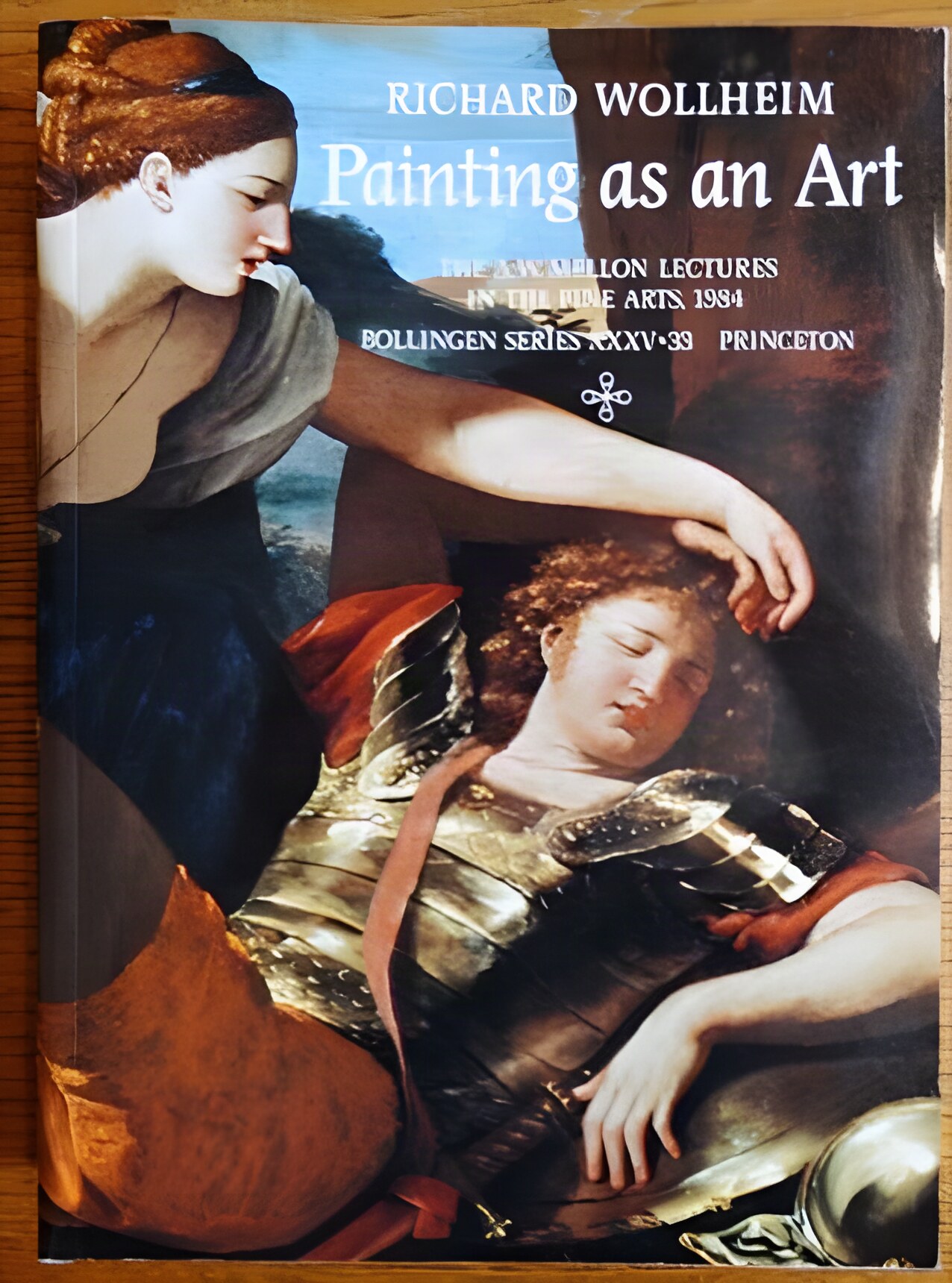
Hardcover. Princeton NJ, Princeton University Press, 1st, 1987, Book: Very Good, Dust Jacket: Very Good, Hardcover in a bright dust jacket, In Painting as an Art, which began as the 1984 Andrew Mellon Lectures at the National Gallery of Art in Washington, D.C., philosopher Richard Wollheim transcended the boundaries and habits of both philosophy and art history to produce a large, encompassing vision of viewing art. Wollheim had three great passions--philosophy, psychology, art--and his work attempted to unify them into a theory of the experience of art. He believed that unlocking the meaning of a painting involved retrieving, almost reenacting, the creative activity that produced it.In order to fully appreciate a work of art, Wollheim argued, critics must bring to the understanding of a work of art a much richer conception of human psychology than they have in the past: "Many [critics] . . . make do with a psychology that, if they tried to live their lives by it, would leave them at the end of an ordinary day without lovers, friends, or any insight into how this came about." Many reviewers have remarked on the insightfulness of the book's final chapter, in which Wollheim contended that certain paintings by Titian, Bellini, de Kooning, and others represent the painters' attempts to project fantasies about the human body onto the canvas. Light fading to dj spine. Name on front fly leaf, otherwise clean.
Hardcover. New Haven, CT, Yale University Press, 1st, 2015, Book: Very Good, Dust Jacket: None, 480 pages. Hardcover with no dust jacket. Very clean, unmarked copy still in shrink wrap. 378 color and 10 black & white illustrations. Tight copy. While European art forms were widely disseminated, copied, and adapted throughout Latin America, colonial painting is not a derivative extension of Europe. The ongoing debate over what to call it-mestizo, hybrid, creole, indo-hispanic, tequitqui-testifies to a fundamental yet unresolved question of identity. Comparing and contrasting the Viceroyalties of New Spain, with its center in modern-day Mexico, and Peru, the authors explore the very different ways the two regions responded to the influence of the Europeans and their art. A wide range of art and artists are considered, some for the first time.
Softcover. University of Washington Press, 2004, Book: Very Good, Dust Jacket: None, Softcover, 335 pages. "Known for his blending of philosophy, spirituality, humor, and a rollicking good story, Charles Johnson is one of the most important novelists writing today. From his magical first novel, Faith and the Good Thing, to his decidedly philosophical Oxherding Tale; from his swashbuckling indictment of the slave trade in the National Book Award-winning Middle Passage, to his more recent imaginative treatment of Martin Luther King Jr. in Dreamer, Johnson has continually surprised, instructed, and entertained his many avid readers. As this collection of interviews suggests, the novelist is as multifaceted and complex as his novels. Trained in cartooning and philosophy, martial arts and meditation, and producing teleplays, photobiographies, and literary criticism in addition to fiction, Charles Johnson represents a model of what he calls "life as art." Clean copy.
Hardcover. Boston, J. Paul Getty Museum, 1st, 2012, Book: Very Good, Dust Jacket: Very Good, 112 pages. Hardcover with dust jacket. Very clean, unmarked copy with only minor edgewear. Featuring eighty-seven photographs, all drawn from the collection of the J. Paul Getty Museum, that span nearly 150 years of image making.
Softcover. Duke University Press, 1st, 2017, Book: Very Good, Dust Jacket: None, Softcover, 381 pages, color and b&w illustrations. Photography is one of the principal filters through which we engage the world. The contributors to this volume focus on Walter Benjamin's concept of the optical unconscious to investigate how photography has shaped history, modernity, perception, lived experience, politics, race, and human agency. In essays that range from examinations of Benjamin's and Sigmund Freud's writings to the work of Kara Walker and Roland Barthes's famous Winter Garden photograph, the contributors explore what photography can teach us about the nature of the unconscious. They attend to side perceptions, develop latent images, discover things hidden in plain sight, focus on the disavowed, and perceive the slow. Of particular note are the ways race and colonialism have informed photography from its beginning. The volume also contains photographic portfolios by Zoe Leonard, Kelly Wood, and Kristan Horton, whose work speaks to the optical unconscious while demonstrating how photographs communicate on their own terms. The essays and portfolios in Photography and the Optical Unconscious create a collective and sustained assessment of Benjamin's influential concept, opening up new avenues for thinking about photography and the human psyche. Clean, bright copy.
Hardcover. Boston, J. Paul Getty Museum, 1st, 2011, Book: Very Good, Dust Jacket: Very Good, 112 pages. Hardcover with dust jacket. Very clean, unmarked copy still in publishers shrink-wrap. Photography as Fiction includes seventy-six color plates illustrating works from the J. Paul Getty Museum's collection that embrace theatricality and are unconcerned with documenting the world as it exists.
Hardcover. US, The MIT Press, 1st, 2000, Book: Very Good, Dust Jacket: Very Good, Like new in publisher's shrink-wrap. Remainder mark on top page block. Boston played a crucial role in the development of American photography, including criticism, collecting, and curating, in the second half of the twentieth century. This book accompanies a landmark exhibition at the DeCordova Museum that includes such important American artists as Berenice Abbott, Harry Callahan, Paul Caponigro, Marie Cosindas, Harold Edgerton, Nan Goldin, Jerome Liebling, Nicholas Nixon, Barbara Norfleet, Olivia Parker, Rosamond Purcell, Aaron Siskind, and Minor White.The period from 1955 to 1985 reflects photography's acceptance as an art form, the influence of modernism, and the coalescence of a unique constellation of educational institutions, museums, and technological development in the Boston area that directly influenced artistic options for photography. Minor White's arrival at the Massachusetts Institute of Technology in 1965 to run the Center for Creative Photography and the Polaroid Corporation's innovative support of photographic art suggest how developments built upon one another to create a regional critical mass in photography.The book contains twenty-five color plates, sixty duotones, and essays by A. D. Coleman, Rachel Rosenfield Lafo, Arno Rafael Minkkinen, and Kim Sichel.
Hardcover. US, The MIT Press, Book: Very Good, Dust Jacket: Very Good, Like new in publisher's shrink-wrap. Remainder mark on top page block. Boston played a crucial role in the development of American photography, including criticism, collecting, and curating, in the second half of the twentieth century. This book accompanies a landmark exhibition at the DeCordova Museum that includes such important American artists as Berenice Abbott, Harry Callahan, Paul Caponigro, Marie Cosindas, Harold Edgerton, Nan Goldin, Jerome Liebling, Nicholas Nixon, Barbara Norfleet, Olivia Parker, Rosamond Purcell, Aaron Siskind, and Minor White.The period from 1955 to 1985 reflects photography's acceptance as an art form, the influence of modernism, and the coalescence of a unique constellation of educational institutions, museums, and technological development in the Boston area that directly influenced artistic options for photography. Minor White's arrival at the Massachusetts Institute of Technology in 1965 to run the Center for Creative Photography and the Polaroid Corporation's innovative support of photographic art suggest how developments built upon one another to create a regional critical mass in photography.The book contains twenty-five color plates, sixty duotones, and essays by A. D. Coleman, Rachel Rosenfield Lafo, Arno Rafael Minkkinen, and Kim Sichel.
Softcover. NY/London, Routledge, reprint, 2007, Book: Very Good, Dust Jacket: None, Softcover, 470 pages. Forty of the world's most active art historians and theorists, including Victor Burgin, Joel Snyder, Rosalind Krauss, Alan Trachtenberg, Geoffrey Batchen, Carol Squiers, Margaret Iversen and Abigail Solomon-Godeau in animated debate on the nature of photography. Photography has been around for nearly two centuries, but we are no closer to understanding what it is. For some people, a photograph is an optically accurate impression of the world, for others, it is mainly a way of remembering people and places. Some view it as a sign of bourgeois life, a kind of addiction of the middle class, whilst others see it as a troublesome interloper that has confused people's ideas of reality and fine art to the point that they have difficulty even defining what a photograph is. For some, the whole question of finding photography's nature is itself misguided from the beginning. This provocative second volume in the Routledge The Art Seminar series presents not one but many answers to the question what makes a photograph a photograph? Clean copy.
Hardcover. NY, Rizzoli, 1st, 1996, Book: Very Good, Dust Jacket: Very Good, Hardcover, 208 pages. Pictorial photography is noted for its artistic expressiveness, careful design and composition, and muted focus. In 1914 Clarence White (1871-1925) left Alfred Stieglitz's Photo-Secession group, abandoned his ambitions to be a photographic illustrator, and opened the Manhatten-based Clarence H. White School of Photography. Lecturers at his school included Stieglitz, Paul Strand, and Edward Steichen. White's unique teaching skills, especially his encouragement of women students, nurtured the careers of such talented photographers as Margaret Bourke-White, Laura Gilpin, and Dorothea Lange. Presented by the Detroit Institute of Arts and the George Eastman House, this companion volume for a traveling exhibition contains the elegant photographic imagery of White and his students. The clear text by two photography curators imparts how the revered teacher's romantic pictorialism became the foundation for the student's avant-garde modernism. By far the most substantial review of White's work and influence in print.
Hardcover. Preinceton NJ, Princeton University Press, 2nd pr., 2006, Book: Very Good, Dust Jacket: Very Good, Hardcover in a bright, unclipped dust jacket. "What is abstract art good for? What's the use-for us as individuals, or for any society-of pictures of nothing, of paintings and sculptures or prints or drawings that do not seem to show anything except themselves?" In this invigorating account of abstract art since Jackson Pollock, eminent art historian Kirk Varnedoe, the former chief curator of painting and sculpture at the Museum of Modern Art, asks these and other questions as he frankly confronts the uncertainties we may have about the nonrepresentational art produced in the past five decades. He makes a compelling argument for its history and value, much as E. H. Gombrich tackled representation fifty years ago in Art and Illusion, another landmark A. W. Mellon Lectures volume. Realizing that these lectures might be his final work, Varnedoe conceived of them as a statement of his faith in modern art and as the culminating example of his lucidly pragmatic and philosophical approach to art history. He delivered the lectures, edited and reproduced here with their illustrations, to overflowing crowds at the National Gallery of Art in Washington in the spring of 2003, just months before his death. 297 pages; approx. 250 color and bw figures. Remains a nice, sharp and bright copy.
Hardcover. US, Univ of New Mexico Press, 1st, 1995-10-01, Book: Very Good, Dust Jacket: Very Good, 227 pages. Minor edgewear to dust jacket, else a clean, tight copy. A in depth study of the exhibition held at the Museum of Modern Art in 1955, and its influence, with a final chapter on "Edward Steichen, Robert Frank and American Modernism".
Hardcover. London, Tate, 1st, 2010, Book: Very Good, Dust Jacket: Very Good, 208 pages. Hardcover with dust jacket. A very clean, unmarked copy like new in publishers shrink-wrap. Provocative and entertaining, Pop Life examines how artists since the 1980s have cultivated their public persona as a product, and conjured a dazzling mix of media, commerce, and glamour to build their own "brands."
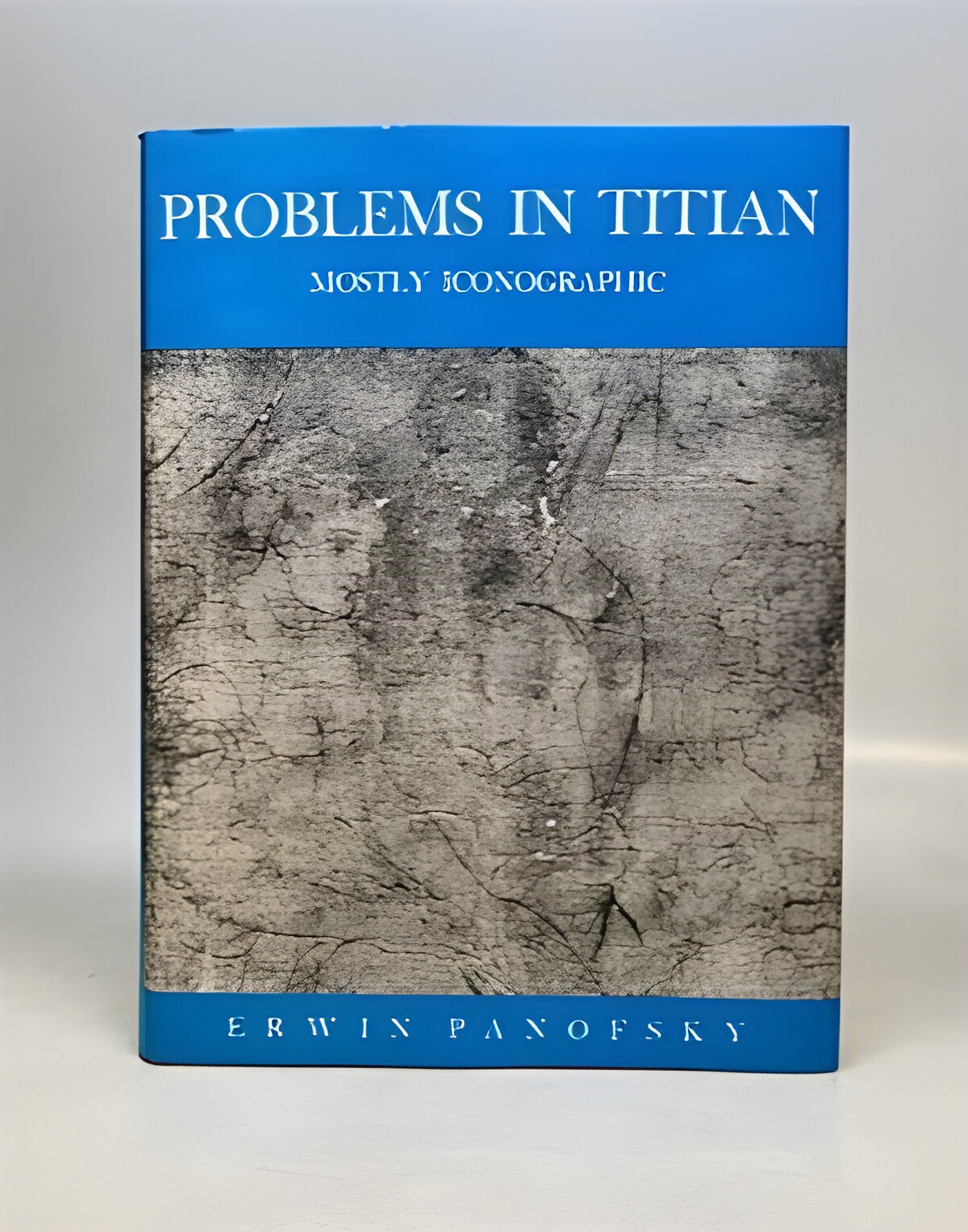
Hardcover. New York, NYUP, 1st, 1969, Book: Very Good, Dust Jacket: Very Good, Hardcover. 208 pages of text followed by a ection of corresponding black & white illustrations. Titian's fame as the greatest colorist in the history of painting has led students of his art to concentrate on problems of style and authenticity rather than on problems of content and meaning. Dr. Panofsky treats this neglected aspect of the Venetian master's work with a wealth of humanistic scholarship, exploring such varied topics as Titian's relationship to the philosophy and literature of his time, his attitude toward the antique, and the reasons behind his unrivaled acclaim as a portraitist. These studies show Titian to have been a man of far richer and more complex culture than hitherto assumed, possessed not only of the supremely gifted hand but of a subtle and poetic mind.Light wear. Clean, tight copy.
Softcover. Cambridge MA, Boatner Norton Press, 1st, 1981, Book: Very Good, Dust Jacket: None, Softcover, Illustrated with black & white examples of works by Robert Crumb - 4 pages in full color.
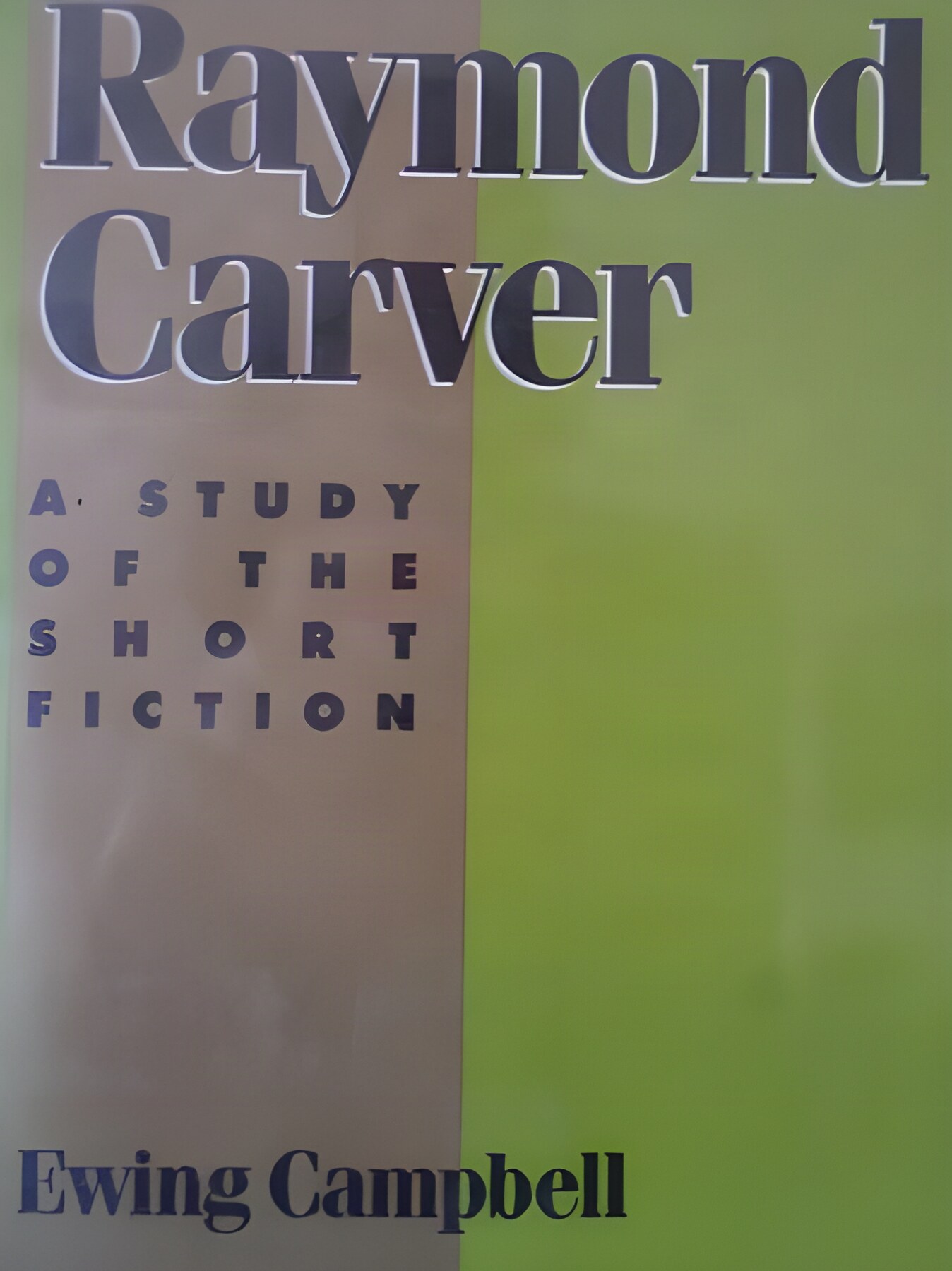
Hardcover. Twayne Publishers, 1st, 1992, Book: Very Good, Dust Jacket: Very Good, Hardcover in a bright, unclipped dust jacket, 177 pages. Perhaps the most significant and influential figure in this century's wave of American realism, Raymond Carver (1938-1988) is credited not only with reviving the short story as an artistically legitimate form, but also with perfecting minimalist fiction. Moving chronologically through Carver's complete short fiction canon and examining key stories in depth, Ewing Campbell traces the author's development through and beyond literary minimalism, into the tradition of tragic allegory. He explores Carvers persistent use of myth and archetype; motifs of the grotesque; religious iconography; and oppressed, spiritually paralyzed characters. From the earliest stories through the latest, Campbell illuminates Carvers constant fascination with the way individuals connect or fail to connect with one another. Clean copy.
Softcover. Germany, Steidl, 1st, 2015, Book: Very Good, Dust Jacket: None, 224 pages. Softcover. Very clean, unmarked copy still in publishers shrink-wrap. Adieu Saigon covers a varied range of imagery from Saigon, where Depardon photographed two wars and, on visits as recent as 2014, the unrecognizable, globalized city now called Ho Chi Minh. Depardon's work bears witness to a city in transition.
Softcover. Germany, Steidl, 1st, 2015, Book: Very Good, Dust Jacket: None, 224 pages. Softcover. Very clean, unmarked copy still in publishers shrink-wrap. Adieu Saigon covers a varied range of imagery from Saigon, where Depardon photographed two wars and, on visits as recent as 2014, the unrecognizable, globalized city now called Ho Chi Minh. Depardon's work bears witness to a city in transition.
Hardcover. US, Fantagraphics Books, 1st, 2003, Book: Very Good, Dust Jacket: Very Good, 292 pages. Hardcover with dust jacket. Clean, unmarked copy with only minor wear to dust jacket. Black and white pictures throughout.
Softcover. NY, Museum of Modern Art, 1st, 1983, Book: Very Good, Dust Jacket: None, 222 pages. Softcover. B/w illustrations throughout. Wrapper and pages have some tanning due to age, otherwise clean. Front cover has a crease. In very good condition, no rips or tears. Binding tight.
Hardcover. Berkeley, CA , University of California Press, 1st, 2002, Book: Very Good, Dust Jacket: Very Good, 283 pages. Hardcover with dust jacket. A very clean, unmarked copy with only minor wear to dust jacket edges. A tight copy. Black and white illustrations throughout. This richly detailed study reconceptualizes a striking but enigmatic moment in Rembrandt's art from the 1650s--one of the artist's most prolific and creative periods. Michael Zell identifies a significant theological shift in Rembrandt's use of religious imagery and interprets this shift in light of the unique religious and social conditions of seventeenth-century Amsterdam. Rembrandt's biblical art has generally been regarded as the embodiment of a Protestant aesthetic. By looking closely at the artist's relationship with his patron Rabbi Menasseh ben Israel and the ideas of a group of "philosemitic" Protestants with whom the rabbi was engaged in an apologetic dialogue, Zell deepens and complicates our understanding of Rembrandt's sacred art from this period.
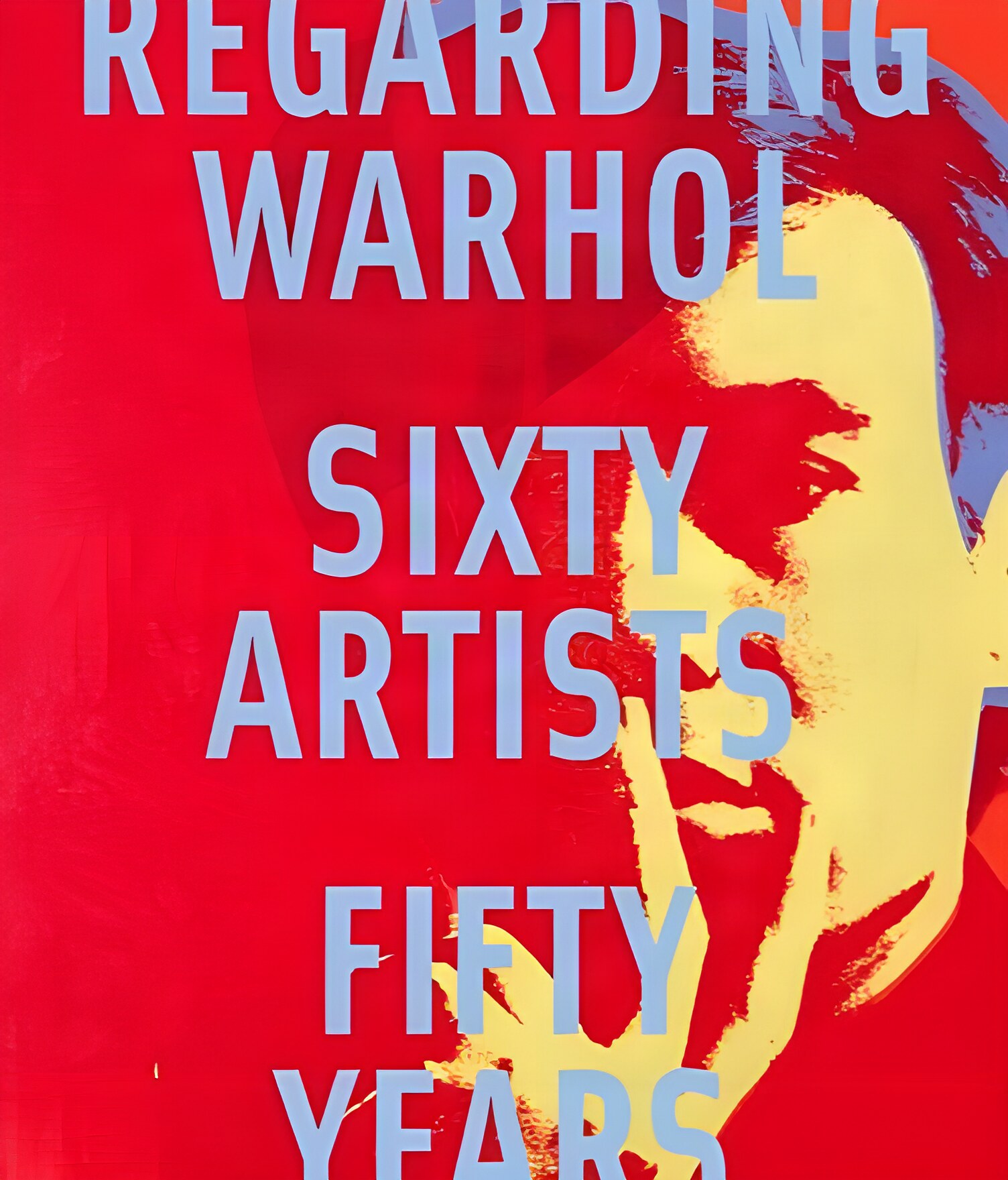
Hardcover. London, Tate Publishing, 1st, 2012, Book: Very Good, Dust Jacket: Very Good, Hardcover, pictorial boards with an acetate dust wrapper, 304 pages. Warhol brought to the art world a unique awareness of the relationship that art might have with popular consumer culture and tabloid news, with celebrity, and with sexuality. Each of these themes is explored through visual dialogues between warhol and some sixty artists, among them John Baldessari, Vija Celmins, Gilbert & George, Felix Gonzalez-Torres, Robert Gober, Nan Goldin, Damien Hirst, Alfredo Jaar, Deborah Kass, Alex Katz, Jeff Koons, Barbara Kruger, Glenn Ligon, Robert Mapplethorpe, Vik Muniz, Takashi Murakami, Bruce Nauman, Cady Noland, Elizabeth Peyton, Sigmar Polke, Richard Prince, Gerhard Richter, Ed Ruscha, Cindy Sherman and Luc Tuymans. Clean copy. DOMESTIC SHIPPING ONLY.

 "Out of the Box: The Reinvention of Art: 1965-1975by: Carter Ratcliff")
 "Painters of Reality: The Legacy of Leonardo and Caravaggio in Lombardy (Metropolitan Museum of Art Series)by: Andrea Bayer and Mina Gregori")
 "Painting in Latin America, 1550-1820: From Conquest to Independenceby: Alcala, Luisa Elena")
![Passing the Three Gates: Interviews with Charles Johnsonby: McWilliams, Jim [Editor]](javascript:largeIMTop('https://www.browsingisarousing.com/shop/images/Passing-the-Three-Gates-Interviews-with-Charles-Johnson_by_McWilliams-Jim-Editor-380915-422736.jpg','https://www.browsingisarousing.com/shop/images/Passing-the-Three-Gates-Interviews-with-Charles-Johnson_by_McWilliams-Jim-Editor-380915-422736.jpg',0,'380915',0,'') "Passing the Three Gates: Interviews with Charles Johnsonby: McWilliams, Jim [Editor]")
 "Photography and Playby: Garcia, Erin C.")

 "Photography as Fictionby: Garcia, Erin C.")
 "Photography in Boston: 1955-1985by: Nagler, Gillian (Editor)/Rachel Rosenfield Lafo")
 "Photography in Boston: 1955-1985by: Nagler, Gillian (Editor)")
 "Photography Theoryby: James Elkins")
 "Pictorialism into Modernism: The Clarence H. White School of Photographyby: Marianne Fulton")
 "Pictures of Nothing: Abstract Art since Pollock (The A. W. Mellon Lectures in the Fine Arts, 38)by: Kirk Varnedoe , Adam Gopnik, et al.")
 "Picturing an Exhibition: The Family of Man and 1950s Americaby: Sandeen, Eric J.")
 "Pop Life: Art in a Material Worldby: Gingeras, Alison (Editor)")
 "R. Crumb, Checklist of Work and Criticism: With a Biographical Supplement and a Full Set of Indexes by: Fiene, Donald M.")
 "Raymond Depardon: Adieu Saigonby: Depardon, Raymond")
 "Raymond Depardon: Adieu Saigonby: Depardon, Raymond")
 "Rebel Visions: Underground Comixby: Rosenkranz, Patrick")
 "Rediscovering French Filmby: Bandy, Mary Lea (Editor), Raud, Richard (Introduction)")


 "Reframing Rembrandt: Jews and the Christian Image in Seventeenth-Century Amsterdamby: Zell, Michael")