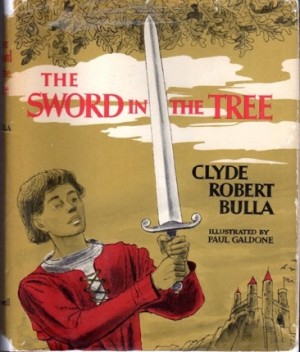
Hardcover. NY, Thomas Y. Crowell, reprint, Book: Very Good, Dust Jacket: Good, Hardcover in a lightly worn and chipped dust jacket, 114 pages. Illustrated with b&w drawings by Paul Galdone. In the days of King Arthur there stood a mighty oak tree within the walls of a castle. Peace reigned in the castle until the fearsome night when Lionel, longlost brother of Lord Weldon, returned to cause trouble and unhappiness. It was then that Shan, the son of Lord Weldon, took on the duties of a knight and hid the sword in the hollow of the giant oak. The days that followed were filled with adventures that tried the courage of the young boy. Shan was surprised by bearded robbers in the woods. He met noble knights in plumed helmets, and eventually he even made a trip to high-towered Camelot. His story is filled with the pageantry and color of England in King Arthur's time. It creates a vivid picture of the Knights of the Round Table and the wisdom of King Arthur himself.
Hardcover. Boston, David R. Godine, 1st, 2009, Hardcover, 192 pages. The photography of Angus McBean encompasses more than three decades of the history of British theater. His work includes most of the memorable productions of the Old Vic Company and of what is now the Royal Shakespeare Company; opera productions at Glyndebourne and the Royal Opera House, Covent Garden; ballet and operetta at Sadler's Wells; and West End productions of plays and musicals both old and new -- hundreds of productions in all. He was the favorite photographer of Vivien Leigh, Laurence Olivier, and Edith Evans, and he photographed countless plays starring John Gielgud, Ralph Richardson, and Alec Guinness, not to mention younger stars such as Audrey Hepburn, Richard Burton, and Elizabeth Taylor. In fact, McBean photographed virtually every great actor of his era, perhaps the most brilliant years in the annals of British theater. His studio was active and eclectic; among his patrons were not only actors, singers, and dancers, but also playwrights, producers, composers, artists, and writers. In his early career, McBean had been a pioneer of surrealist photography, with a highly popular series of "surrealized" portraits that appeared in The Sketch, and, later, of montage and multiple-exposure photography in a long-running series for The Tatler. In 1969, McBean approached Harvard University to initiate the sale of his collection, and in the following year his archive of glass plate negatives, index prints, and programs, together with the copyrights, became a part of the Harvard Theatre Collection, where it remains the most often-requested collection of visual material. The photographs in this book, selected and captioned by the archive's curator, Fredric Woodbridge Wilson, have been carefully reproduced from the original negatives.
Hardcover. NY, Viking, 1st US, 2009, Book: Very Good, Dust Jacket: Very Good, Hardcover in a bright, unclipped dust jacket. 522 pages, b&w illustrations. By the end of World War I, Britain had become a laboratory for modernity. Intellectuals, politicians, scientists, and artists-among them Arnold Toynbee, Aldous Huxley, and H. G. Wells-sought a vision for a rapidly changing world. Coloring their innovative ideas and concepts, from eugenics to Freud's unconscious, was a creeping fear that the West was staring down the end of civilization. In The Twilight Years, award-winning historian Richard Overy examines the paradox of this period and argues that the coming of World War II was almost welcomed by Britain's leading thinkers, who saw it as an extraordinary test for the survival of civilization- and a way of resolving their contradictory fears and hopes about the future. Clean copy.
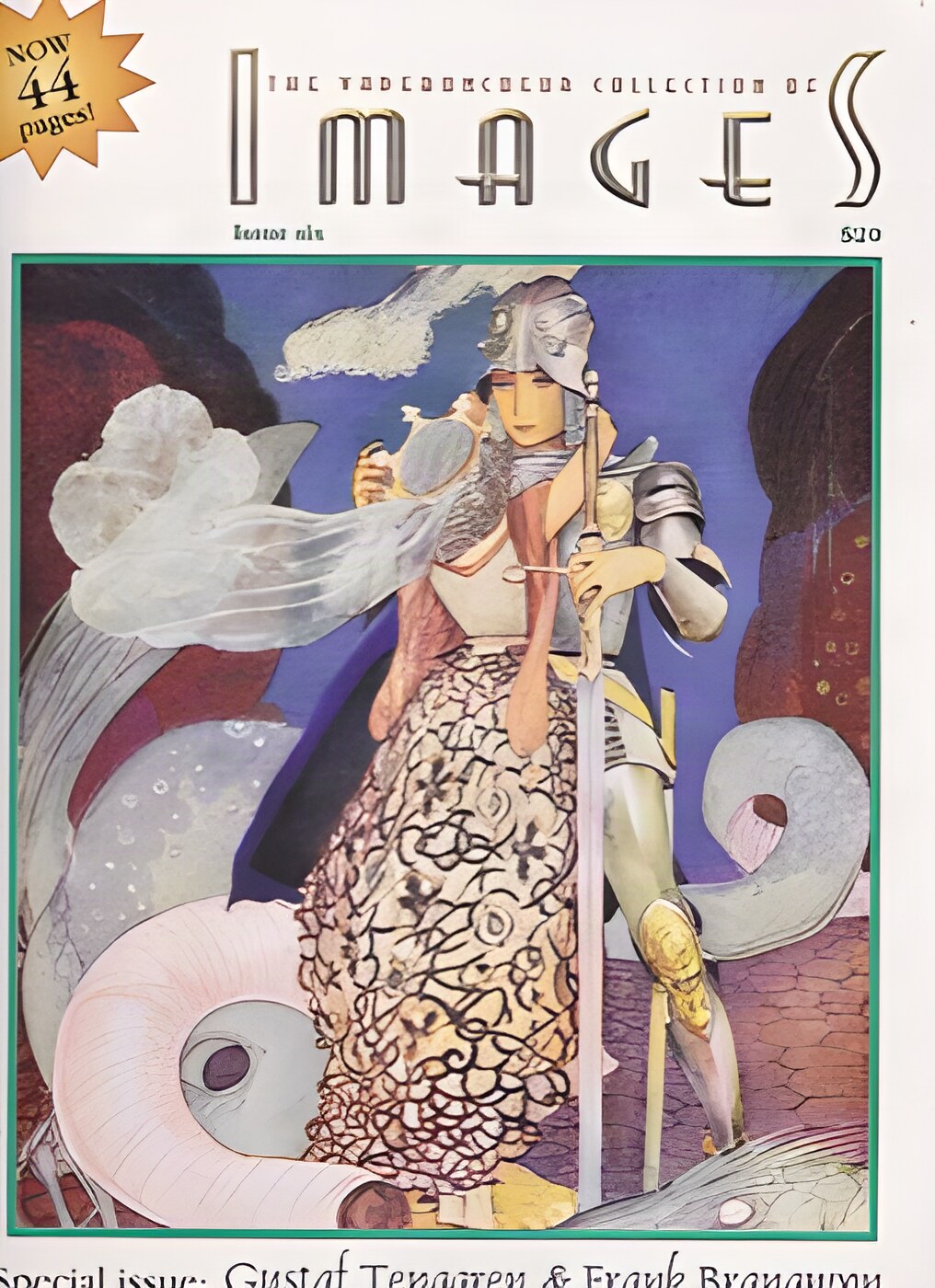
Softcover. Palo Alto CA, Jim Vadeboncoeur, 1st, 2003, Book: Very Good, Dust Jacket: None, Softcover magazine, 44 pages, features many rare color illustrations and lavish production. This issue concentrates on the work of just two artists, Gustaf Tenggren (1896-1970) & Frank Brangwyn (1967-1956). Tenggren originated in Sweden but emigrated to the USA in 1920, where he continued to provide illustrations for Swedish illustrated editions. Frank Brangwyn hailed from Bruges, Belgium. He moved to England with his English family to complete his education. Both artists work is illustrated with detailed texts to accompany the many illustrations. Clean copy.
Hardcover. NY, Houghton Mifflin Harcourt, 1st, 2021, Book: Very Good, Dust Jacket: Very Good, Hardcover in a bright, unclipped dust jacket. From a New York Times best-selling historian and Pulitzer Prize finalist, a sweeping epic of how the Vikings and their descendants have shaped history and America. Scandinavia has always been a world apart. For millennia Norwegians, Danes, Finns, and Swedes lived a remote and rugged existence among the fjords and peaks of the land of the midnight sun. But when they finally left their homeland in search of opportunity, these wanderers--including the most famous, the Vikings--would reshape Europe and beyond. Their ingenuity, daring, resiliency, and loyalty to family and community would propel them to the gates of Rome, the steppes of Russia, the courts of Constantinople, and the castles of England and Ireland. But nowhere would they leave a deeper mark than across the Atlantic, where the Vikings' legacy would become the American Dream. Clean copy.
Hardcover. UK, Pi Global Publishing Limited, 1st, 2005, Book: Very Good, Dust Jacket: None, Hardcover, large format pictorial boards, Drawn from Opie''s unrivalled collection, this scrapbook illustrates song sheets, magazine covers, comic postcards, fashion and food, games, propaganda posters and a wealth of British wartime ephemera whose very survival is remarkable. Due to size (10 1/2 X 15"), DOMESTIC SHIPPING ONLY.
Hardcover. NY, Edward W. Sweetman, reprint, 1963, Book: Very Good, Dust Jacket: None, Hardcover, tan cloth covers, 124 pages. First published in 1808, this is a facsimile reprint of the Second Edition from 1819 . The Young Sea Officer's Sheet Anchor became a standard guide throughout the 19th century in both England and the United States. Author Darcy Lever compiled the text for "a young gentleman whose inclinations at that time led him to the choice of a sea-faring life," and he later expanded its contents for the general use of young officers in the Royal Navy and East India Company. Starting with a precise explanation of the principles of rigging, the text proceeds to a well-defined account of a ship's operation through the effect of the wind on its sails. Tacking, use of a compass, the art of swinging a ship at single anchor, casting, and numerous other aspects of seamanship receive close attention and clear definitions. Detailed drawings accompany the ample directions for splicing ropes, making sails, and other practical measures; indeed, every other page of this book features clear, well-drawn illustrations of the procedure under discussion and its execution. Clean copy.
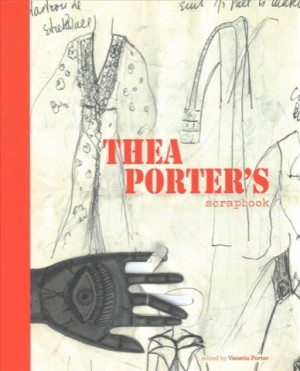
Hardcover. London, Unicorn Publishing Group, 1st, 2019, Book: Very Good, Dust Jacket: Very Good, Hardcover in a bright dust jacket. Starting in 1966, Thea Porter designed clothes for the rich and famous for nearly two decades. Her creations were made from sumptuous fabrics that drew inspiration from the Middle East, combining richly patterned silks with antique fabrics. Her clothes were a must for music and film stars such as Pink Floyd, Crystal Gayle, Elizabeth Taylor, and Barbra Streisand. Porter soon became a key member of an innovative group of British designers that included Ossie Clark, Zandra Rhodes, and Jean Muir, and her place in the history of British fashion was ensured when she was named Designer of the Year in 1972. Thea Porter's Scrapbook is her story in her own words, an unpublished autobiography she put together before her death in 2000. Edited by her daughter Venetia and with an essay by fashion historian Amy de la Haye, it reveals Porter's further talents as a keenly observant and descriptive writer. This book, which includes working drawings, sketches, snapshots, and manuscript notes, serves as a memoir of her early life and career, charting many memorable episodes, including the dramatic surge of American interest in her clothes and the opening of her shop in Paris as she pursued her ambition to create dresses "beyond trend and tat, that thirty years from today will still be beautiful."
Hardcover. NY, Macmillan, 1st, 1935, Book: Good, Dust Jacket: None, Hardcover, orange cloth stamped in black. 211 pages, black & white illustrations, endpapers art by Le Roy Appleton. Clean, bright copy.
Hardcover. NY, Macmillan, 1st, 1935, Book: Good, Dust Jacket: None, Hardcover, orange cloth stamped in black. 211 pages, black & white illustrations, endpapers art by Le Roy Appleton. Mild soil to covers. Name on front fly leaf, otherwise clean.
Softcover. London, Whitechapel Art Gallery, London, 1st, 1992, Book: Very Good, Dust Jacket: None, Softcover, 80 pages, illustrations in color and b&w. Clean, unmarked copy with only minor wear to wrappers. Published on the occasion of the exhibition held from December 11, 1992-February 28, 1993..
Softcover. London, Whitechapel Art Gallery, London, 1st, 1992, Book: Very Good, Dust Jacket: None, Softcover, 80 pages, illustrations in color and b&w. Clean, unmarked copy with only minor wear to wrappers. Published on the occasion of the exhibition held from December 11, 1992-February 28, 1993.
Hardcover. New York, Oxford University Press, 1st, 1950, Book: Very Good, Dust Jacket: Good, 248 pages. Hardcover with dust jacket. Wear to dust jacket edges. Clipping to dust jacket folds. Previous owners inscription and minor soiling to front flyleaf. Some rubbing to dust jacket front and rear covers. Light foxing to fore edge of text block. Inside clean and unmarked. A tight copy.
Hardcover. NY, E.P. Dutton , 1st, 1932, Book: Good, Dust Jacket: None, Hardcover, green cloth stamped in red, 235 pages. A masterpiece of humanism, Time Stood Still recounts Paul Cohen-Portheim's years of internment in England as an enemy alien during World War One. An artist and theatre designer, he at first viewed internment as a sort of holiday: 'Should I bring my bathing things and evening dress?' he asked the policeman taking him prisoner. Though confined in a 'gentleman's camp' near Wakefield, as Cohen-Portheim shows with grace, humor, and deep compassion, even under the best conditions, the simple act of being confined and placed in a sort of limbo is a form of torture: 'Where there is no aim, no object, no sense, there is no time.' Time Stood Still is a passionate but balanced argument against internment and its inherently dehumanizing effects. Paul Cohen-Portheim (1880-1932) was an Austrian artist, travel writer and linquist. When WWI broke out, he was painting in Devonshire, England and found himself interned for the length of the war. Flap copy pasted to front fly leaf, stamp to endpapers (Harvard Club of Boston), some light notations as well to endpapers.
Softcover. London, South Bank Centre, 1st, 2001, Book: Very Good, Dust Jacket: None, Softcover. 83 pages, mostly color illustrations. A National Touring Exhibition organized by the Hayward Gallery, London for the Arts Council of England. Artists Include: Martin Boyce, Willie Doherty, Kendell Geers, Felix Gonzalez-Torres, Johan Grimonprez, Guillermo Kuitca, Maria Lindberg, Tracey Moffatt, Lucia Nogueira, Anri Sala, Ann-Sofi Siden, and Christopher Wool.
Hardcover. Baton Rouge LA, Louisiana State University, 1st, 1972, Book: Very Good, Dust Jacket: Very Good, Hardcover in a lightly worn dust jacket, 294 pages. Name on front fly leaf otherwise clean.
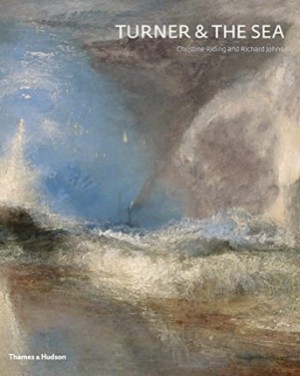
Hardcover. London, Thames and Hudson, 1st, 2013, Book: Very Good, Dust Jacket: Very Good, Hardcover in a bright dust jacket, blue cloth with bright silver titles to spine. Published to accompany 2013/14 Exhibition at National Maritime Museum. 288 pages with Foreword by Keven Fewster, Introduction, 7 Chapters, Notes, Bibliography, Credits and Index. Large collection of color plates. Clean copy.
Hardcover. Paris, Galerie Nationale du Jeu de Paume, 1st, 1996, Book: Very Good, Dust Jacket: None, 506 pages, hundreds of b&w and color illustrations featuring English sculptors and their work. Boards with die-cut to front cover revealing art on front fly leaf. FRENCH TEXT, clean and tight copy.
Hardcover. Birmingham UK, Washington Green Fine Art Publishing Company, 1st, 1996, Book: Very Good, Dust Jacket: Very Good, Hardcover, oblong,128 pages. Full color plates throughout. Clean, unmarked copy with only minor wear to dust jacket and slight rubbing on bottom spine of covers.
Hardcover. Salt Lake City, Peregrine Smith, Inc, 1st US, 1980, Book: Very Good, Dust Jacket: Very Good, Hardcover, 218 pages. Green cloth cover with gilt lettering to spine, color illustrated dust jacket, 256 b&w plates, some in color. Light wear to dust jacket; overall a tight, clean copy.
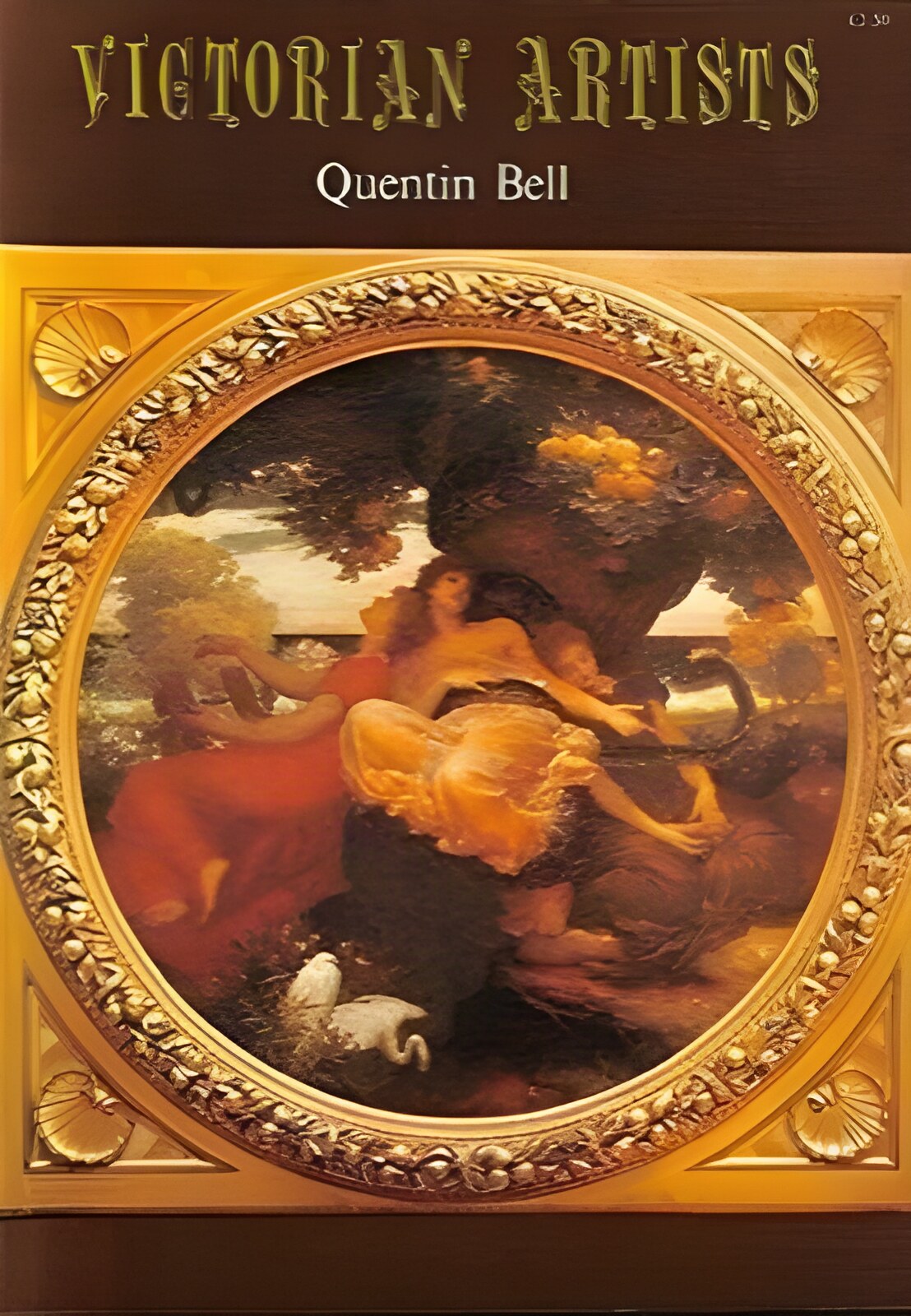
Softcover. London, Academy Editions, 1st pbk, 1975, Book: Very Good, Dust Jacket: None, Softcover, 130 pages, 8 color plates, 114 b&w illustrations. Quentin Bell justifies his study of Victorian painters and graphic artists not as a revivalist, but as an historian who feels the need to "exhibit the evidence" of a period not adequately covered by others. The chapters are: the age of fragmentation; the Teutonic influence; hard-edged Pre-Raphaelism; Academy notes; low art; from Rossetti to Art Nouveau; the New English Art Club; Sickett & the post-impressionists. Bookplate on inside front cover, small stamp on front fly leaf, otherwise clean, bright copy.
Hardcover. Stonehill Publishing/Chelsea House, 1st, 1983, Book: Very Good, Dust Jacket: Very Good, Hardcover, 184 pages. This book presents a representative selection of the best work produced for children during the great flowering of the illustrator's art that began in England in the 1860s. Beautifully crafted drawings of such illustrators as Caldecott, Walter Crane, Kate Greenaway, and Richard Doyle are reproduced with painstaking fidelity to the originals. Commentary by Maurice Sendak.
Hardcover. Columbia OH, Ohio State University Press, 1st, 2008, Book: Very Good, Dust Jacket: None, 368 pages. Hardcover with no dust jacket. Clean, unmarked copy with only minor wear to corners. While "freaks" have captivated our imagination since well before the nineteenth century, the Victorians flocked to shows featuring dancing dwarves, bearded ladies, "missing links," and six-legged sheep. Indeed, this period has been described by Rosemarie Garland-Thomson as the epoch of "consolidation" for freakery: an era of social change, enormously popular freak shows, and taxonomic frenzy. Victorian Freaks: The Social Context of Freakery in Britain, edited by Marlene Tromp, turns to that rich nexus, examining the struggle over definitions of "freakery" and the unstable and sometimes conflicting ways in which freakery was understood and deployed. As the first study centralizing British culture, this collection discusses figures as varied as Joseph Merrick, "The Elephant Man"; Daniel Lambert, "King of the Fat Men"; Julia Pastrana, "The Bear Woman"; and Laloo "The Marvellous Indian Boy" and his embedded, parasitic twin. The Victorian Freaks contributors examine Victorian culture through the lens of freakery, reading the production of the freak against the landscape of capitalist consumption, the medical community, and the politics of empire, sexuality, and art. Collectively, these essays ask how freakery engaged with notions of normalcy and with its Victorian cultural context.
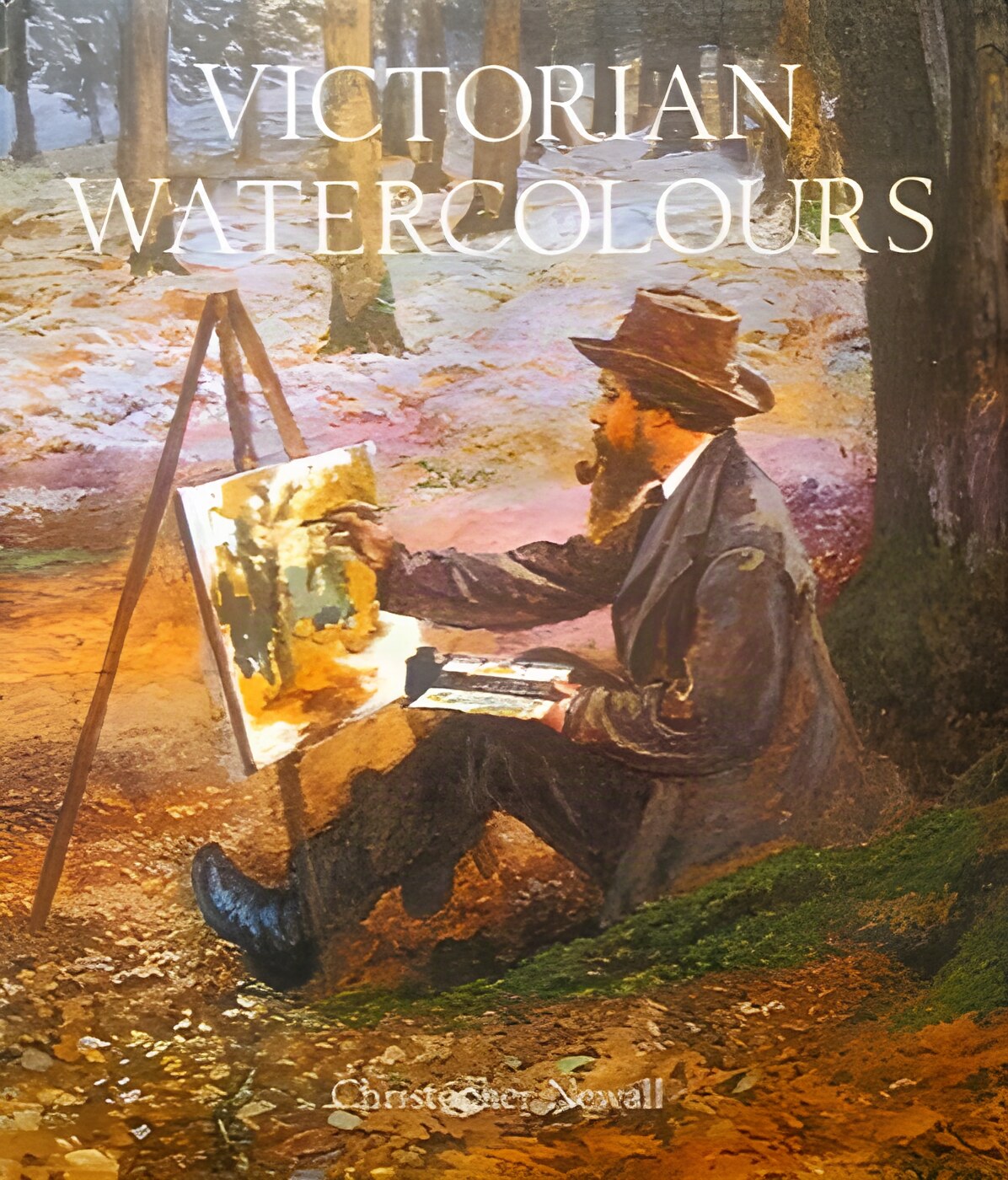
Hardcover. London, Phaidon Press, 1st, 1987, Book: Very Good, Dust Jacket: Very Good, Hardcover in a bright dust jacket, 143 pages. "The Victorian era gave rise to some of the most beautiful and extraordinary watercolors ever painted. With their meticulous technique and discreet purpose, they convey much about the romantic and moral temperament of the age. This volume is the first general introduction to what was a particularly popular medium in the Victorian era and was, in fact, the preferred form of expression for many artists. Through his discussion of subject matter and stylistic development, Christopher Newall provides a fascinating insight into the artistic sensibility of the period. Featuring full-colour masterworks by such major figures as Ruskin, Burne-Jones and Rossetti, along with many lesser-known but respected talents and analyses of both the individual works and the way in which they contributed to the stylistic development of the medium during the period, this is a valuable addition to the scholarship on Victorian art." Previous owner's inscription on front fly leaf, otherwise clean.

 "The Theatrical World of Angus McBean: Photographs from the Harvard University Theatre Collectionby: Fredric Woodbridge Wilson and Richard Traubner")
 "The Twilight Years: The Paradox of Britain Between the Wars by: Richard Overy")
 "The Viking Heart: How Scandinavians Conquered the Worldby: Arthur Herman")
 "The Wartime Scrapbook: The Home Front 1939-1945by: Opie, Robert")
 "Three Sides of Agiochook: A tale of the New England frontier in 1775by: Eric P. Kelly")


 "Three Sides of Agiochook: A tale of the New England frontier in 1775by: Eric P. Kelly")


 "Tim Headby: Catherine Lampert, Alastair Mowat, Marco Livingston")
 "Tim Headby: Catherine Lampert, Alastair Mowat, Marco Livingston")
 "Time in New England: 106 Photographs By Paul Strandby: Newhall, Nancy (Editor)")

 "Traumaby: Andrew (Curated by) Bradley, Fiona, and Brown, Katrina, and Nairne")
 "Un Siecle de Sculpture Anglaiseby: Bonnefoy, Francoise")
 "Under a Watercolour Sky: Britain's Rural Heritage Through the Paintings of Alan Inghamby: Ingham, Alan E.")
 "Utopian Craftsmen: The Arts and Crafts Movement from the Cotswolds to Chicagoby: Lambourne, Lionel")
 "Victorian Color Picture Booksby: Jonathan Cott and Maurice Sendak")
 "Victorian Freaks: The Social Context of Freakery in Britainby: Tromp, Ph.D. Marlene (editor)")