Hardcover. London, Collins, 1st , 1948, Book: Very Good, Dust Jacket: Very Good, Hardcover, translated from French by D.I. Wilton. 20 tipped-in color plates, 131 black & white plates. Front hinge cracked otherwise very good in a very good dust jacket.
Softcover. New York, Hastings House Publishers, 1st, 1976, Book: Near Fine, Dust Jacket: Near Fine, Beautifully illustrating the folk art of Europe in two parts, Part one containing textile such as fabrics, rugs and embroidery, while part two deals with ceramics, metals, wood and other materials. Color and b&w illustrations throughout. Brown cloth, gilt lettering to spine, nice pictorial dust jacket, all in very nice, clean and crisp condition. Plain cardboard slipcase.
Hardcover. Canberra/London, Australian Institute of Aboriginal Studies/Gerald Duckworth and Co., 1st, 1977, Book: Very Good, Dust Jacket: Very Good, Oblong hardcover in a lightly worn dust jacket. 486 pages with illustrations in b&w and color. From Papers presented to a symposium at the 1974 meeting of the Australian Institute of Aboriginal Studies. A look at the art works of Aboriginal Australia from the past & present, as seen in the context of the art of prehistoric Europe. An attempt at an ethnographic juxtaposition of prehistoric art. Clean copy.
Hardcover. New Haven, CT, Yale University Press, 1st, 2015, Book: Very Good, Dust Jacket: Very Good, 224 pages. Hardcover with dust jacket. Very clean, like new copy still in publishers shrink wrap. Over 200 duotone images throughout. Tight copy. Born in Cork, Ireland, Frank Browne (1880-1960) was both a distinguished Jesuit and an accomplished photographer. At age 17, before commencing his studies for the priesthood, he embarked on a tour of Europe armed with a camera. Browne quickly discovered a strong affinity for photography, and continued to take photographs throughout his life. It was not until 1985, however-when Father Edward O'Donnell SJ discovered a large trunk in the Irish Jesuit Provincial's House and found it packed with negatives and photographs-that Browne was catapulted to international fame. Father Browne's remarkable life is recorded in the superb selection of images presented in this book. With wit and a sharp eye, he observed 20th-century Ireland; life as a Jesuit priest; his experience as a passenger on the first leg of the voyage of the Titanic in 1912; and his later travels throughout Europe, Egypt, Yemen, Ceylon, and Australia. This handsome, copiously illustrated volume offers a complete survey of the photographic work of an exceptional man.
London, National Gallery, 1st, 2013, Book: Very Good, Dust Jacket: None, Softcover, 71 pages illustrated in color. A key member of the Hudson River School, Frederic Church (1826-1900) rose to fame as the creator of some of America's most iconic landscape paintings. He also traveled abroad extensively, making trips to Jamaica, South America, Europe, and the Middle East. At home and away, Church made numerous plein air oil sketches of the landscapes he saw, some magnificent, some humble, many of them later subjects for his full-scale paintings. Frederic Church and the Landscape Oil Sketch features some thirty sketches Church executed during his career. Many of these wonderful works come from Olana, the artist's magnificent home overlooking the Hudson River. As Andrew Wilton's essay explains, these informal and often spontaneous sketches played a vital role in the practice and pedagogy of landscape painting in American art just as they did in European art of the 19th century. Clean copy.
NY/Paris, Hachette/French & European Publications, 1st US, 1965, Book: Very Good, Dust Jacket: Very Good, Hardcover, 530 photos. 40 in color. 341 pages. This is the English translation of Verlets' 1963 masterpiece "Les Ebenistes du XVIIIe Siecle Francais". Written by the Chief Curator of decorative arts at the Louvre, this classic text discusses each of the known French cabinet-makers active during the 18th century. This involves over 30 individuals, who were influential in determining the styles of the Regency, through Louis XV & XVI. Sections on each figure or firm with numerous examples of their furniture. Excellent 12 page appendice on maker marks, with thumbnail sketches of individuals and firms, business locations, etc.
Hardcover. New Haven CT, Yale University Press, 1st, 2015, Book: Very Good, Dust Jacket: Very Good, Hardcover in a bright dust jacket. 282 pages, illustrated in b&w and color. Although Surrealism is usually associated with the 1920s and 1930s, it remained a vital force in Paris throughout the postwar period. This important book offers the first detailed account in English of the trajectory of the French Surrealists in the 1950s and 1960s, giving particular emphasis to the significance of myth for the group in its reception of science fiction and its engagement with fantastic art. Offering new readings of the art and writings of the later generation of Surrealists, Gavin Parkinson demonstrates how they were connected to the larger cultural and political debates of the time. Whereas earlier Surrealist art and writing drew on psychoanalytic practices, younger Surrealists engaged with contemporary issues, ideas, and themes of the period of the Cold War and Algerian War such as parapsychology, space travel, fantastic art, increasing consumerism in Europe, emerging avant-gardes such as Nouveau Realisme, and the rise of the whole genre of conspiracy theory, from Nazi occultism to flying saucers. Futures of Surrealism offers a unique perspective on this brave new world. Clean copy.
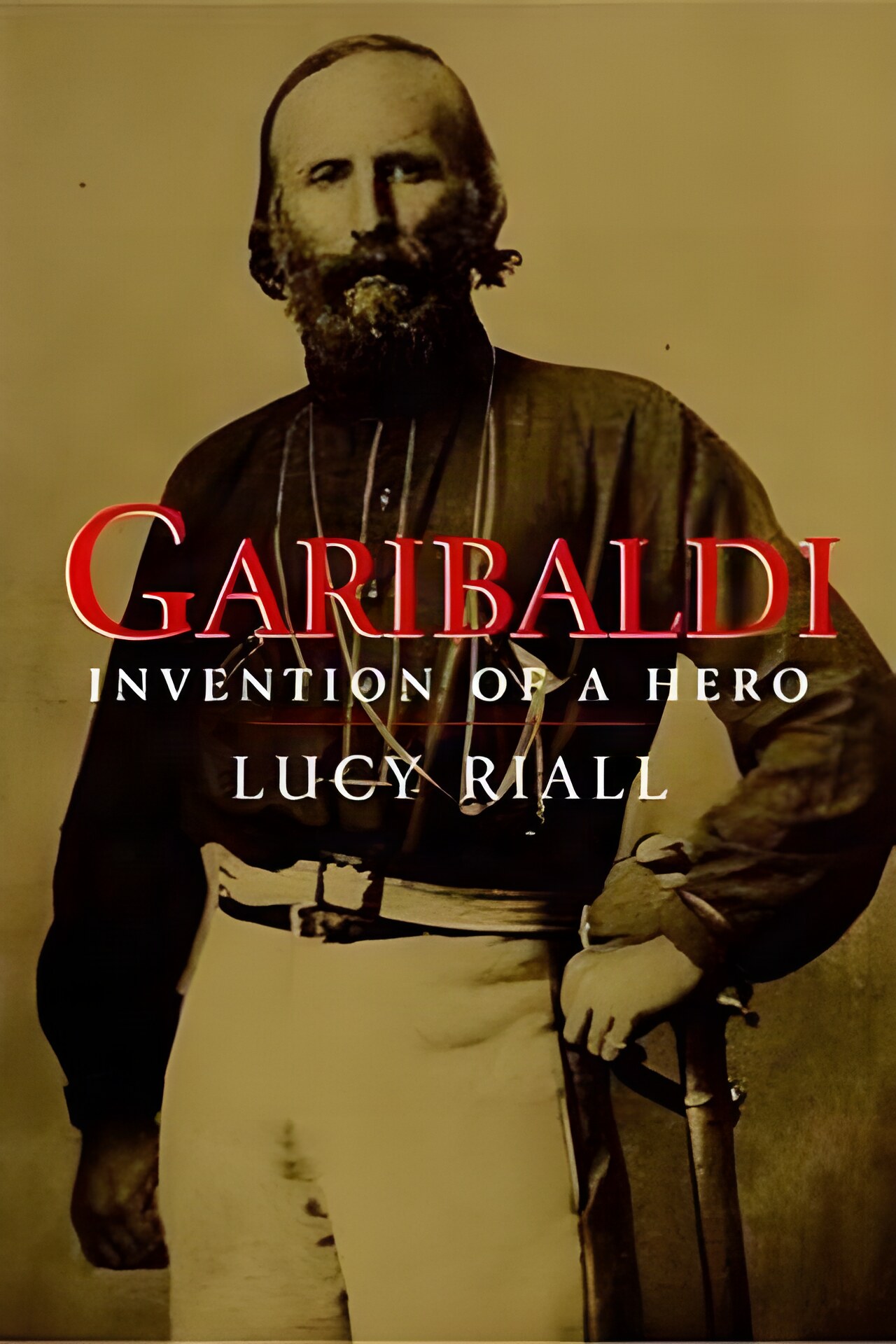
Hardcover. New Haven CT, Yale University Press, 1st, 2007, Book: Very Good, Dust Jacket: Very Good, Hardcover in a bright dust jacket, 482 pages with index. The first sustained analysis of the cult of the legendary Italian hero Giuseppe Garibaldi, the Italian revolutionary leader and popular hero, was among the best-known figures of the nineteenth century. This book seeks to examine his life and the making of his cult, to assess its impact, and understand its surprising success. For thirty years Garibaldi was involved in every combative event in Italy. His greatest moment came in 1860, when he defended a revolution in Sicily and provoked the collapse of the Bourbon monarchy, the overthrow of papal power in central Italy, and the creation of the Italian nation state. It made him a global icon, representing strength, bravery, manliness, saintliness, and a spirit of adventure. Handsome, flamboyant, and sexually attractive, he was worshiped in life and became a cult figure after his death in 1882. Lucy Riall shows that the emerging cult of Garibaldi was initially conceived by revolutionaries intent on overthrowing the status quo, that it was also the result of a collaborative effort involving writers, artists, actors, and publishers, and that it became genuinely and enduringly popular among a broad public. 33 b&w illustrations.
Softcover. Baltimore, Clearfield, reprint, 2000, Book: Very Good, Dust Jacket: None, Softcover, light gray wrappers, 278 pages. This volume consists of abstracts of genealogical data from four of New York's earliest newspapers--the New-York Gazette (1726-1744) and the New-York Weekly Journal (1733-1751), the two earliest city papers, and the New-York Mercury and the Weekly Mercury (1752-1783). These newspapers were originally produced as weeklies and usually consisted of four pages, with occasional supplementary issues. Their subject matter encompassed essays, treatises, parliamentary proceedings, governors' messages, European and West Indian news, shipping news, incidents culled from other newspapers, and many advertisements. In this volume of abstracts may be found items yielding information concerning marriage, birth, death, age, status, place of residence, and place of origin, covering, in all, the years 1726 through most of 1783. Treatment is not confined to New York, for among individuals mentioned are those from all the other colonies, especially New Jersey (which had no newspaper in the colonial period), New England, Pennsylvania, and Maryland.
Hardcover. New York, Kennedy Galleries, Inc., & Da Capo Press, reprint, 1969, Book: Very Good, Dust Jacket: None, Biography of painter Gilbert Stuart. Contains 7 black/white illustrations; 6 are reproductions of Stuart's work, and one is a portrait of the artists himself. Very good condition; brown cloth with gilt lettering, corner of the back cover bumped. This edition is an unabridged republication of the first edition published in Cambridged, Massachusetts, in 1932. It is reprinted by arrangement with Harvard University Press.
Hardcover. Dublin, Dolmen Editions, First Edition, 1977, Book: Very Good, Dust Jacket: None, 78 pages. Hardcover. Limited to 650 copies. Black cloth boards with white printed decoration & white titles to spine. Ink paintings by Louis le Brocquy in black & white throughout. Previous owner's bookplate to front endpaper. Clean, unmarked, tight copy. No dust jacket.
Hardcover. NY, Metropolitan Museum of Art, 1st, 1986, Book: Very Good, Dust Jacket: Very Good, Hardcover, 499 pages, profusely illustrated throughout with 562 plates, including 148 in full color. Previous owner's blind stamp on front end paper. Light shelf-wear to dust jacket, else a clean, tight copy.
Hardcover. New York, Harry N. Abrams, Inc., 1st English, 1972, Book: Very Good, Dust Jacket: Very Good, 527 pages. Hardcover. Previous owners name and brief inscription on front endpaper. Illustrated with black & white photographs. Dust jacket with light wear. Clean, tight copy.
Softcover. Zurich, Graphis Press, 1st, 1976, Book: Very Good, Dust Jacket: None, English, German and French text. B&w and color illustrations. Very good. Swiss Posters 1976. Kodak Colour Calender Contest, 1977. Fred Otnes. 1.international Animated Film Festival in Ottawa. Trends in Jewellery Design in Europe.
Hardcover. New York, Tim Duggan Books, 1st, 2017, Book: Very Good, Dust Jacket: Very Good, Hardcover, 248 pages, b&w illustrations. The first great portrait photographer, a pioneering balloonist, the first person to take an aerial photograph, and the prime mover behind the first airmail service, Nadar was one of the original celebrity artist-entrepreneurs. A kind of 19th-century Andy Warhol, he knew everyone worth knowing and photographed them all, conferring on posterity psychologically compelling portraits of Manet, Sarah Bernhardt, Delacroix, Daumier and countless others--a priceless panorama of Parisian celebrity. Born Gaspard-Felix Tournachon, he adopted the pseudonym Nadar as a young bohemian, when he was a budding writer and cartoonist. Later he affixed the name Nadar to the facade of his opulent photographic studio in giant script, the illuminated letters ten feet tall, the whole sign fifty feet long, a garish red beacon on the boulevard. Nadar became known to all of Europe and even across the Atlantic when he launched "The Giant," a gas balloon the size of a twelve-story building, the largest of its time. With his daring exploits aboard his humongous balloon (including a catastrophic crash that made headlines around the world), he gave his friend Jules Verne the model for one of his most dynamic heroes.
Softcover. Princeton NJ, Princeton University Press, 2nd pr., 1997, Book: Very Good, Dust Jacket: None, Softcover in pictorial wrappers, 255 pages. Color and black and white illustrations throughout. Second paperback printing. Bright and clean. Hans Holbein the Younger (1497/8-1543), one of the most versatile and admired painters of the Northern Renaissance, trained under his father in Augsburg and then worked for leading patrons in Switzerland before settling in England as Court Painter to Henry VIII. To commemorate the five-hundredth anniversary of the artist's birth, Oskar Batschmann and Pascal Griener offer this richly illustrated book the first comprehensive monograph on the artist to appear in more than forty years which is a major advance in our understanding of Holbein's contribution to European art.
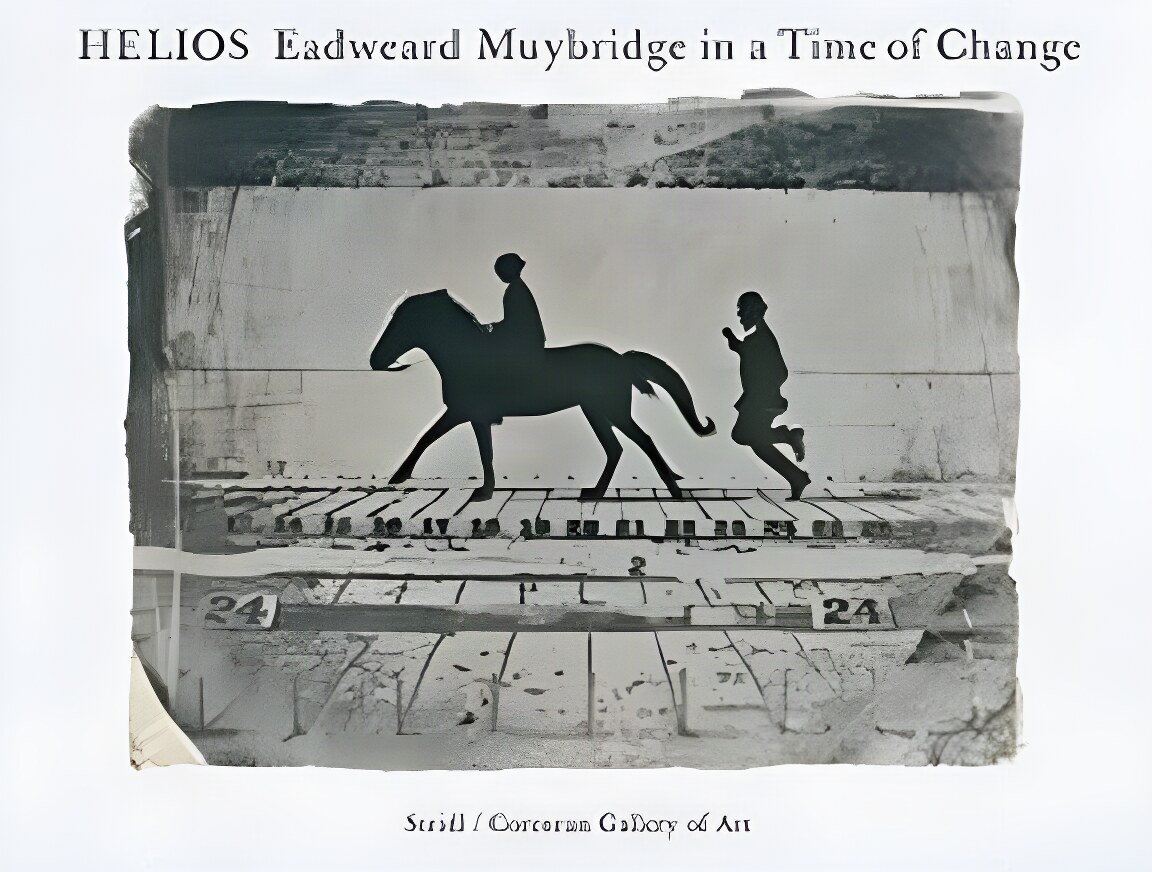
Hardcover. Steidl, 1st, 2010, Book: Very Good, Dust Jacket: Very Good, Hardcover, 360 pages. In 1878, the Photographic Times claimed that ten minutes provided sufficient exposure for photographing a landscape. Six years earlier, an English immigrant to the West Coast named Eadweard Muybridge, going by the commercial name of Helios, had already pushed photography far in the opposite direction: not to soak up time into pictures, but to divide time with the quickest exposures then imaginable. In 1872, the tycoon Leland Stanford had commissioned Muybridge to photograph his horse, Occident, to determine whether it ever lifted all four hooves off the ground at once. In proving that this was indeed the case, Muybridge achieved a five-hundredth-of-a-second exposure, and so began an anatomy of motion-in humans, horses, birds-that exploded the possibilities of photography and ultimately led to the development of the motion picture. Helios: Eadweard Muybridge in a Time of Change offers an opportunity to trace the life and art of the great photographer. In the wake of a wave of recent scholarship and renewed interest, it pitches his entire body of work against the backdrop of one of the most transformative periods of American and European history. Published to accompany a retrospective exhibition organized by the Corcoran Gallery of Art, Helios features essays by Philip Brookman, Marta Braun, Corey Keller and Rebecca Solnit that provide a variety of new approaches to Muybridge's art and influences.
Hardcover. Amsterdam, Ludion Ghent/Abrams, 1st, 2001, Book: Very Good, Dust Jacket: None, 208 pages with 282 color plates, 53 in b&w. No dust jacket. Published to coincide with a major exhibition of the artist's work in Europe, this loving tribute to one of the greatest, and most bizarre, of the medieval painters introduces readers to the often grotesque vision expressed in his work.
Hardcover. Geneva, Edito-Service, 1st English Ed., 1968, Book: Very Good, Dust Jacket: None, Hardcover, pebbled red cloth with gilt decoration and color label on front cover. Good general overview of painting in Western Europe during the later Medieval period. Illustrated in color and b&w. Clean copy.
Hardcover. New York, Abbeville Press, 1st, 1992, Book: Very Good, Dust Jacket: Very Good, 496 pages. Hardcover with dust jacket in slipcase. A very clean, unmarked copy with only minor wear to slipcase edges. A tight copy. Color illustrations throughout.
Hardcover. Boston, MFA Publications, Museum of Fine Arts, 1st, 2014, Book: Very Good, Dust Jacket: Very Good, Hardcover in a bright dust jacket, 256 pages, profusely illustrated. From the 1890s through the turn of the century, there was a flourishing of new, imaginative art and craft throughout Europe that we now know as Art Nouveau. The Netherlands experienced an inventive variant of this art and design phenomenon, but until now it has been largely overshadowed by its counterparts in other countries, especially France. This richly illustrated book is the first in English to celebrate the Dutch contribution to Art Nouveau through a tour of more than 100 works on paper--posters, decorative calendars and illustrated books, as well as prints and drawings. These innovative works of graphic design reveal the progressive Dutch artists' conscious reaction against the past, their inspiration in natural forms and exotic cultures, and their embrace of the principle that art should transform everyday life. They also show how the New Art--Nieuwe Kunst in Dutch--coexisted and sometimes intertwined in the Netherlands with other artistic strands, including persistent realist trends, Symbolism and the emergence of modernism. Included here are early drawings by well-known artists Vincent van Gogh and Bart van der Leck, as well as new discoveries from Jan Toorop, Theo Nieuwenhuis, Samuel Jessurun de Mesquita, Theo Hoytema, G. W. Dijsselhof and C. A. Lion Cachet. This beautifully illustrated book is the first in English to celebrate the Dutch contribution to Art Nouveau through a tour of over one hundred posters, decorative calendars, and illustrated books, as well as prints and drawings. With text by Clifford S. Ackley, one of the leading specialists on Dutch prints and drawings, Holland on Paper in the Age of Art Nouveau provides a fascinating and visually rewarding introduction to a rich and creative artistic era.
Hardcover. London, Oxford University Press, 1st UK, 1979, Book: Very Good, Dust Jacket: Very Good, Hardcover, 64 pages of text. 638 photographs. Beautifully illustrating the Hungarian folk art and gives insight into the customs and lore of Hungarian peasantry. Folio. Gray cloth, decorated end papers. Small stain to dust jacket spine. Minute crinkling to spine bottom edge. A very clean, attractive and well preserved copy.
Hardcover. Seattle, Fantagraphics Books, 1st, 2015, Book: Very Good, Dust Jacket: None, Hardcover, oblong format, pictorial boards, 319 pages illustrated in b&w. Royston Campbell Crane (1901-1977), who signed his work Roy Crane, created the comic-strip characters Wash Tubbs, Captain Easy, and Buz Sawyer. His work continues to inspire cartoonists today. A collection of his classic Captain Easy and Wash Tubbs. The very best of the indispensable daily comic strip adventures featuring Wash running a dinky railroad in a comic-opera version of Eastern Europe, the gripping narrative of Easy waging total war against The Phantom King, battles with pirates in the South Seas, and the harrowing story of Easy and Wash as prisoners on the infamous Devil's Island. Clean copy.
Softcover. Seattle, University of Washington Press, 1st, 2000, Book: Very Good, Dust Jacket: None, Softcover. Like new in publishers shrink-wrap. Chief Joseph's exhausted words of surrender, 'Hear me, my chiefs, I am tired; my heart is sick and sad. From where the sun now stands, I will fight no more forever', are the accepted end of the Nez Perce War of 1877, in which several bands of Nez Perce attempting to find a new home outside their diminished Idaho reservation clashed with the U.S. military (and occasionally other Indians) along the Clearwater and Big Hole Rivers, and finally at the foot of the Bear Paw Mountains. However, a number of Nez Perce escaped transportation to Indian Territory with Joseph and continued their flight to Canada, with perhaps a hundred eventually joining Sitting Bull's Lakota."I Will Tell of My War Story" reproduces, describes, and discusses a remarkable series of drawings by an anonymous Indian artist who fought with Chief Joseph and later reached Canada. The drawings, in red, blue, and black pencil, include portraits of principal participants in the war, battle scenes, and views of Nez Perce camp life and celebrations during the war and after. The drawings are preserved in a small pocket ledger labeled 'Cash Book' on the front, which was acquired by Indian Agent Charles D. Warner in the 1880s. It was willed by him to a family living in northern Idaho, and is now in the collection of the Idaho State Historical Society. Scott Thompson worked closely both with the owners and with members of the Nez Perce community in preparing his manuscript. Thompson's detective work and research methods to identify Nez Perce and other parties pictured in the Cash Book make fascinating reading. He is careful to point out what is speculation and what has been documented or attested to by experts on dress, weapons, ceremony, and other aspects of Native culture. The Cash Book drawings are unique in several ways. They are one of very few firsthand pictorial records of the Nez Perce War, representing an even scarcer record of this war as seen from the Indian viewpoint. They contain invaluable historical and ethnographic information not only explicit in the form of military and Native dress, regalia, and quite graphic battle scenes, but also implicit. The drawings reveal an important stage of cultural adaptation as shown by the mixture of white and Native goods combined in Nez Perce material culture during the 1870s and 1880s, and by the artist's assimilation of white/European drawing techniques such as texture and perspective. The artist combined these drawing techniques with Native art traditions to make exceptionally effective pictorial communications. Scott M. Thompson is an art teacher at Chase Middle School in Spokane, Washington.

 "Flemish Primitives, Theby: Van Puyvelde, Leo")
 "Folk Art of Europeby: Bossert, Helmut Th.")
 "Form in Indigenous Art. Schematisation in the art of Aboriginal Australia and prehistoric Europeby: Ucko, Peter J. (Ed.)")
 "Frank Browne: A Life through the Lensby: Davison, Edwin (Editor)")

 "French Cabinetmakers of the Eighteenth Centuryby: Verlet, Pierre")
 "Futures of Surrealism Myth, Science Fiction and Fantastic Art in France 1936-1969 by: Parkinson, Gavin")
 "Genealogical Data from Colonial New York Newspapers: A Consolidation of Articles from The New York Genealogical and Biographical Record by: Kenneth Scott (Compiler)")
 "Gilbert Stuartby: Whitley, William T.")
 "Gododdin, Theby: O'Grady, Desmond")


 "Gothic and Renaissance Art in Nuremberg, 1300-1550by: Metropolitan Museum of Art, New York.")
 "Gothic Sculpture in France 1140-1270by: Sauerlander, Willibald/Max Hirmer")
 "Graphis, No. 188, Volume 32by: Herdeg, Walter (Ed.)")
 "Great Nadar, The: The Man Behind the Cameraby: Begley, Adam")

 "Hieronymus Bosch: The Complete Paintings and Drawingsby: Koldeweij, Jos, Paul Vandenbroeck and Bernard Vermet")

 "History of Decorative Arts, The: Classicism and the Baroque in Europe by: Gruber, Alain (Editor)")
 "Holland on Paper: In the Age of Art Nouveauby: Clifford Ackley")


 "Hungarian Folk Artby: Hofer, Tamas")

 "I Will Tell of My War Story: A Pictorial Account of the Nez Perce War (Samuel and Althea Stroum Book)by: Thompson, Scott M.")