Hardcover. NY, Oxford University Press, 1st, 1986, Book: Very Good, Dust Jacket: Very Good, Hardcover in a bright, unclipped dust jacket. 453 pages, b&w illustrations. At the turn of the century, an unprecedented attack on women erupted in virtually every aspect of culture: literary, artistic, scientific, and philosophic. Throughout Europe and America, artists and intellectuals banded together to portray women as static and unindividuated beings who functioned solely in a sexual and reproductive capacity, thus formulating many of the anti-feminine platitudes that today still constrain women's potential. BramDijkstra's Idols of Perversity explores the nature and development of turn-of-the-century misogyny in the works of hundreds of writers, artists, and scientists, including Zola, Strindberg, Wedekind,Henry James, Rossetti, Renoir, Moreau, Klimt, Darwin, and Spencer. Clean, bright copy.
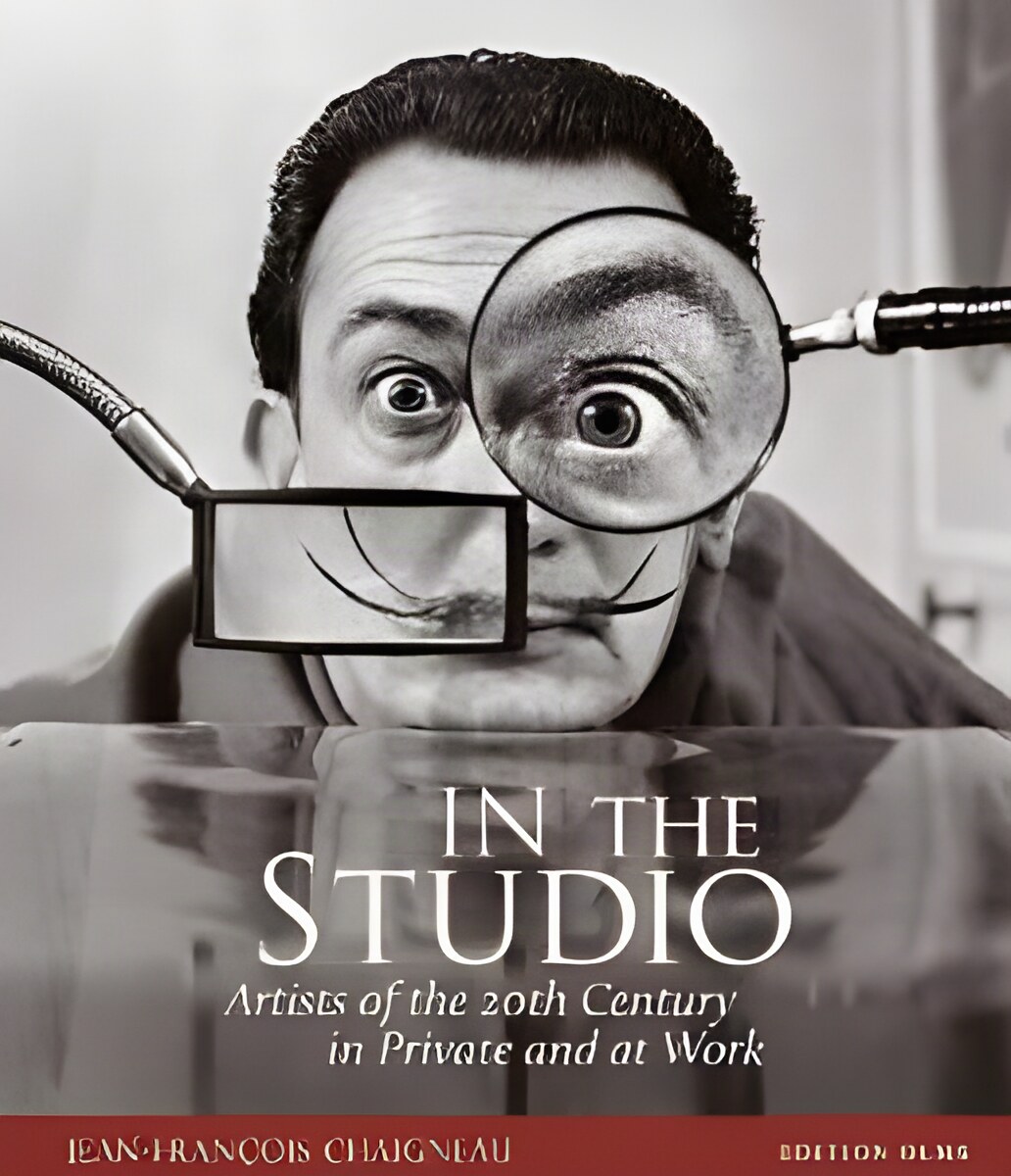
Hardcover. Zurich, Edition Olms, 1st, 2012, Book: Very Good, Dust Jacket: Very Good, Hardcover, 208 pages, with dust jacket. Like new in publisher's shrink-wrap. Delving into the photo archives of French magazine, Paris Match, where Chaigneau is an editor, and accompanied by several of the interviews and articles the magazine published, the author offers a glimpse into the working processes and personal lives of some of the 20th century's canonical visual artists . Focused mostly on European masters such as Pablo Picasso, Bernard Buffet, Rene Magritte, Marc Chagall, and Joan Miro, the book's highly accessible, if minimal, commentary and anecdotes allow the photos to take center stage. Georg Baselitz, for example, is pictured perched on a chair with his head in his arms, as if "haunted by invisible demons," with several large scale paintings in the background. In contrast, Salvador Dali, ever the "wily publicist," seems to relish the camera's presence: in one shot dressed as a Spanish nobleman with an expression of faux-seriousness. Elsewhere, as a testament to his creative drive, Henri Matisse is pictured in 1954, bedridden but still painting with a specially devised long brush mere months before his death. Moving beyond the studio, some attention is given to the private lives of the artists, adding a human element to these creative giants. Photographer Willy Rizzo captures Picasso in a rare candid and intimate moment, reading the comics of a newspaper while his boxer, Yan, looks on. But perhaps the most illuminating moments are when the artists, in interviews, talk about their creative process; there is something humble and brave, for instance, in Jacques Villon's quip, "I don't know what I've discovered... but I know that I'm still looking". Color and b&w photos.
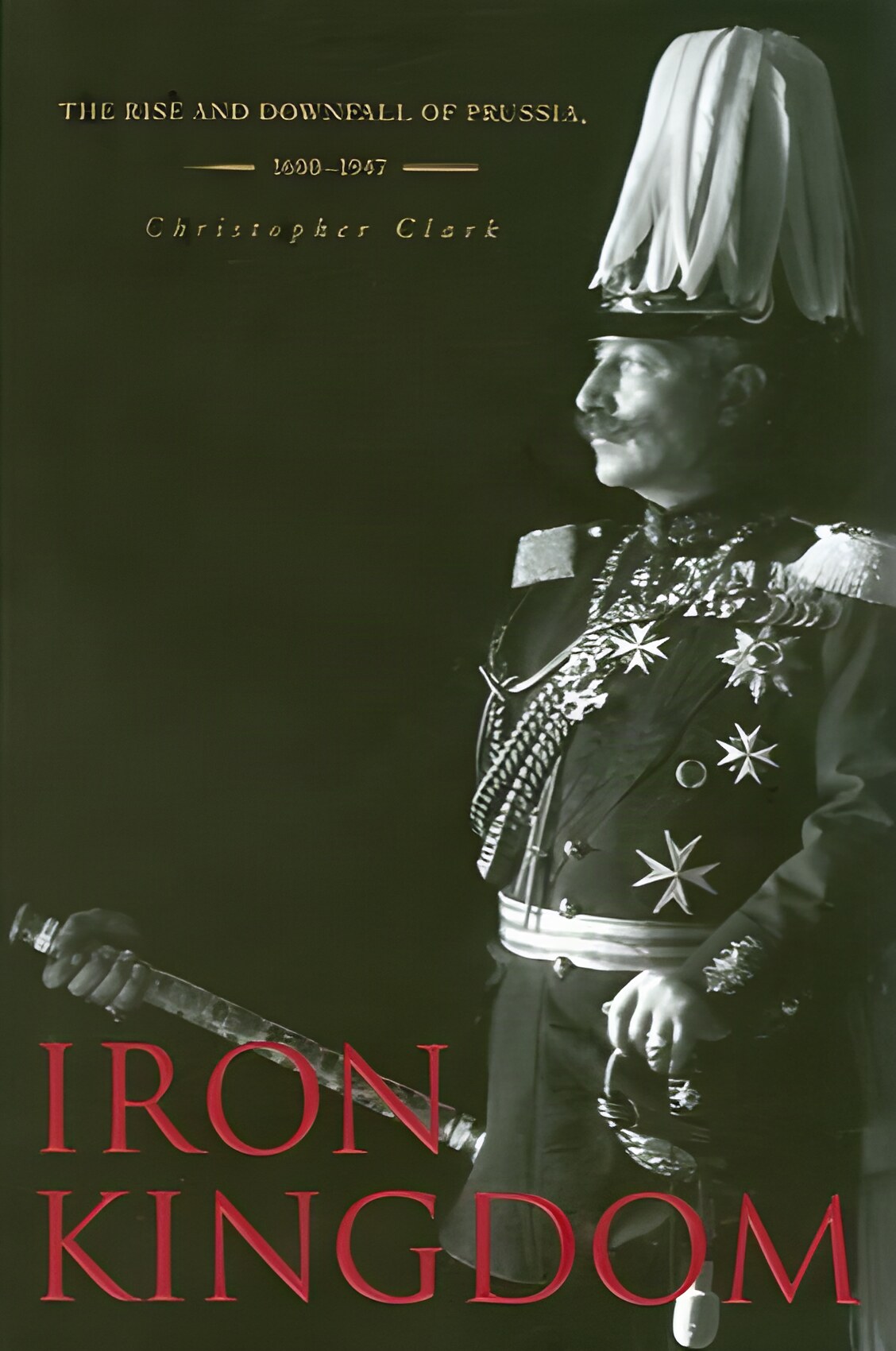
Softcover. Cambridge MA, Harvard University Press, reprint, 2008, Book: Very Good, Dust Jacket: None, Softcover, 776 pages. "Iron Kingdom, Christopher Clark's stately, authoritative history of Prussia from its humble beginnings to its ignominious end, presents a much more complicated and compelling picture of the German state, which is too often reduced to a caricature of spiked helmets and polished boots. Prussia and its army were inseparable, but Prussia was also renowned for its efficient, incorruptible civil service; its innovative system of social services; its religious tolerance; and its unrivaled education system, a model for the rest of Germany and the world. This too was Prussia-a tormented kingdom that, like a tragic hero, was brought down by the very qualities that raised it up. Mr. Clark, a senior lecturer in modern European history at Cambridge University, does an exemplary job. A lively writer, he organizes masses of material in orderly fashion, clearly establishing his main themes and pausing at crucial junctures to recapitulate and reconsider. Prussia, a self-invented artifact right down to its name, demands the kind of careful demythologizing that it receives from Mr. Clark, who gently but insistently exposes the flaws in most of the received wisdom about his subject. A result is an illuminating, profoundly satisfying work of history, brightened by vivid character sketches of the principals in his drama." Clean copy.
Hardcover. Boston, Little Brown, 1st, 1985, Book: Very Good, Dust Jacket: None, Hardcover, 287 pages, 442 b&w illustrations. The famous photojournalist presents, among other events, the abdication of Edward VIII; the Anschluss; the Warsaw ghetto, before and after its destruction; Tito's guerrilla war against the Nazis; and Isr'l's battle for independence. He recorded the fall of Hungary to the Communists; he was with Churchill at Teheran; and with Khrushchev at Belgrade. There are also exotic parties given by Cecil Beaton and Lady Juliet Duff. Portraits of the last glories of the English aristocracy and the old French Bourgeoisie; the industrialists and artists who made Italy's miraculous postwar recovery possible. In 60,000 words of text he captures the extraordinary adventures and bizarre characters that together made up the author's life. The combination of words and pictures provides a rich, powerful portrait of a fascinating career. Missing dust jacket.
Hardcover. NY, Ten Speed Press, 1st, 2020, Book: Very Good, Dust Jacket: None, Hardcover in pictorial boards, no dust jacket issued, 201 pages. This sweeping, full-color comic book biography tells the complete life story of Jack Kirby, co-creator of some of the most enduring superheroes and villains of the twentieth century for Marvel Comics, DC Comics, and more. Critically acclaimed graphic novelist Tom Scioli breathes visual life into Kirby's life story--from his days growing up in New York during the Great Depression and discovering a love for science fiction and cartoons to his time on the frontlines in the European theatre of World War II where he experienced the type of action and adventure he'd later imbue his comic pages with, and on to his world-changing collaborations at Marvel with Stan Lee, where the pair redefined comics as a part of pop culture.
Hardcover. East Lothian, Scotland, Tuckwell Press , reprint, 1998, Book: Very Good, Dust Jacket: Very Good, Hardcover in a bright dust jacket. 339 pages, 18 figures on 12 b/w plates, map, end notes, appendix, bibliography, index. James IV is the best-known of all the late medieval Scottish rulers. Widely praised by his contemporaries, he combined the qualities of successful medieval monarch with a wide interest in the arts and sciences, while remaining acutely conscious of the need to enhance the prestige of his dynasty throughout Europe. This excellent study examines all aspects of James IV's sovereignty, explains his popularity and his highly successful kingship and assesses reasons for the disastrous end to the reign when the king and a large population of the Scottish nobility were eliminated in a single afternoon in 1513 at Flodden. Clean copy.
Bologna, Damiani, 1st, 2017, Book: Very Good, Dust Jacket: None, Hardcover, 280 pages. American fashion photographer James Moore (1936-2006) was an influential voice in mid-20th-century fashion photography, working for Harper's Bazaar during its 1960s heyday under the leadership of legendary editor Carmel Snow. Shooting languid mod gamines and luxe bohemians in arresting, often surreal or cinematic compositions, Moore helped shape the visual vocabulary of '60s fashion alongside better-known colleagues such as art director Alexey Brodovitch (under whom Moore studied). Moore also directed television commercials and contributed photographs to European magazines in the 1980s and 1990s, and taught photography at the School of Visual Arts, New York, and the Rochester Institute of Technology. Every Moore photograph is an intricate exploration of space and beauty, with an attention to detail that betrays the photographer's peerless eye. Something of a "photographer's photographer," Moore influenced the next generation of great fashion photographers but has been somewhat neglected in histories of 1960s fashion and culture--until now. James Moore: Photographs 1962-2006 collects a half century of extraordinary photographs by Moore, the first time his work has been collected in a single monograph. Including texts from the leading editors, models, photographers and designers of the day, this volume takes stock of James Moore's astounding career and an extraordinary cultural moment.
Bologna, Damiani, 1st, 2017, Book: Very Good, Dust Jacket: None, Hardcover, 280 pages. American fashion photographer James Moore (1936-2006) was an influential voice in mid-20th-century fashion photography, working for Harper's Bazaar during its 1960s heyday under the leadership of legendary editor Carmel Snow. Shooting languid mod gamines and luxe bohemians in arresting, often surreal or cinematic compositions, Moore helped shape the visual vocabulary of '60s fashion alongside better-known colleagues such as art director Alexey Brodovitch (under whom Moore studied). Moore also directed television commercials and contributed photographs to European magazines in the 1980s and 1990s, and taught photography at the School of Visual Arts, New York, and the Rochester Institute of Technology. Every Moore photograph is an intricate exploration of space and beauty, with an attention to detail that betrays the photographer's peerless eye. Something of a "photographer's photographer," Moore influenced the next generation of great fashion photographers but has been somewhat neglected in histories of 1960s fashion and culture--until now. James Moore: Photographs 1962-2006 collects a half century of extraordinary photographs by Moore, the first time his work has been collected in a single monograph. Including texts from the leading editors, models, photographers and designers of the day, this volume takes stock of James Moore's astounding career and an extraordinary cultural moment.
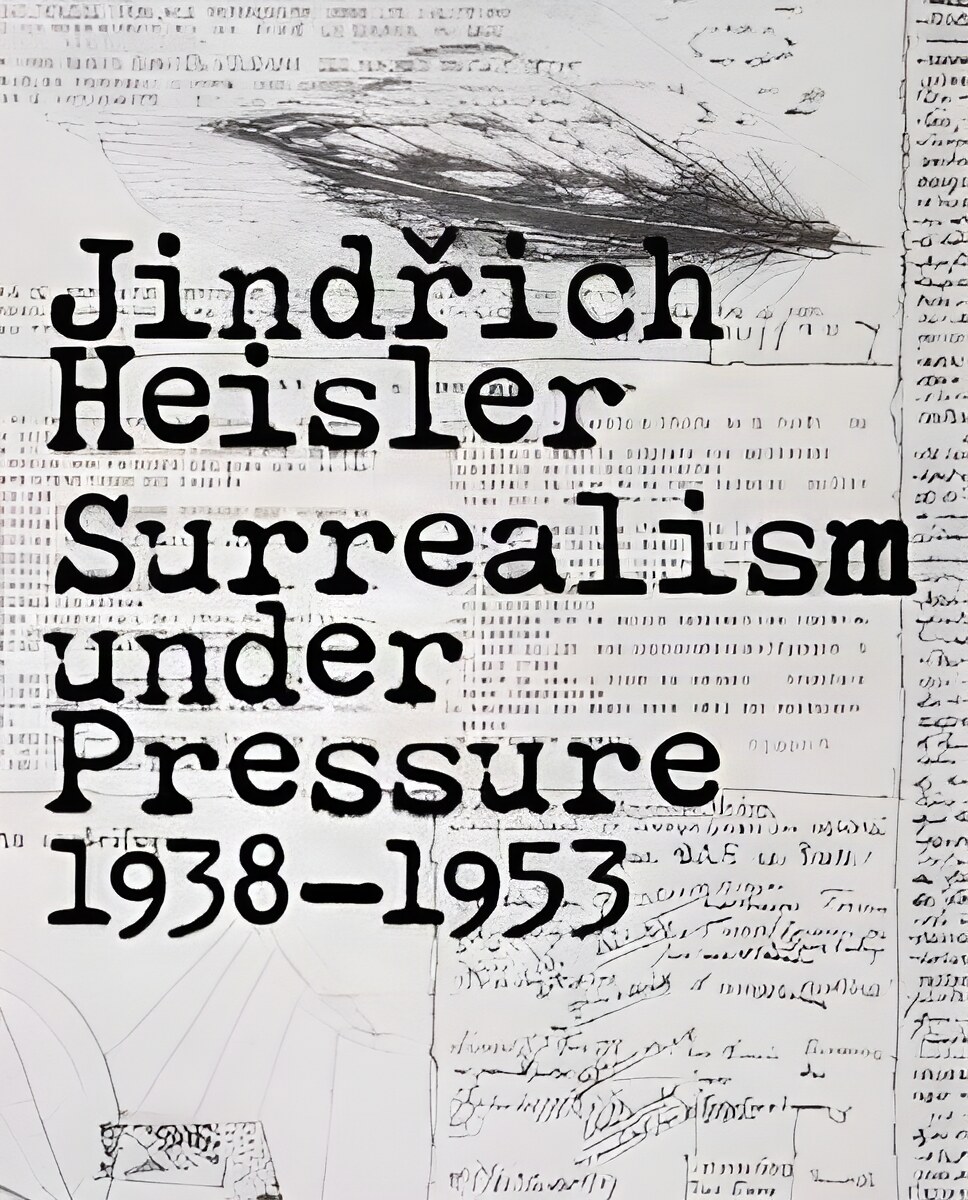
Hardcover. Chicago , Art Institute of Chicago ; New Haven, Conn. : Distributed by Yale University Press, 1st, 2012, Book: Very Good, Dust Jacket: Very Good, Hardcover with dust jacket. Like new in publisher's shrink-wrap. The story of Jindrich Heislter--a Jewish surrealist who remained in Czechoslovakia and continued to produce art during the Nazi occupation is fascinating. It's particularly worth comparing to many of the European surrealists, who fled to the safety of the United States for the duration. Heisler's art has moments of greatness, particularly his unique cliche-verres, but the vast majority of it is third-rate (if that) surrealist photo-tableaux, art school poetry, object assemblages, and horror vacui typography.
Hardcover. Boston/ New York , Bulfinch Press, 1st, 1993, Book: Very Good, Dust Jacket: Very Good, Hardcover, 533 pages, 431 works reproduced in color. Small remainder mark to bottom edge, otherwise a bright, clean copy in a similar dust jacket. The most comprehensive look at Miro's art available in book form. In honor of Miro's 100th birthday, 1993 has been designated Miro Year, which is being celebrated with great fanfare in Europe and the U.S. This book features full-color reproductions of the artist's work on canvas and paper, from his earliest sketch to his mature works of the 1980s.
Hardcover. Washington DC, Dumbarton Oaks Research Library, 1st, 1998, Book: Very Good, Dust Jacket: Very Good, Hardcover in a bright dust jacket, 310 pages. John Evelyn (1620-1706), an English virtuoso and writer, was a pivotal figure in seventeenth-century intellectual life in England. He left an immensely rich literary heritage, which is of great significance for scholars interested in garden history and the histories of intellectual life and architecture. Evelyn is perhaps best known for Sylva, a compilation of thoughts on practical estate management, gardening, and philosophy, and the first book published by the Royal Society in London. As one of the group of learned men who founded the Royal Society in 1660 to promote scientific research, discussion, and publications, John Evelyn was at the center of many of the vital intellectual currents of the time. "Elysium Britannicum," Evelyn's unpublished manuscript of almost a thousand pages of densely packed drafts, rewrites, and projects, was perhaps something of an enigma to his contemporaries, who nevertheless urged its publication. It remains for scholars today a treasure-trove of fascinating insights on Evelyn and his milieu. Clean copy.
Hardcover. New Haven, CT, Yale University Press, 1st, 2014, Book: Very Good, Dust Jacket: Very Good, 240 pages. Hardcover with dust jacket. Very clean, like new in publishers shrink-wrap. A tight copy. The American realist artist John Sloan is best known for his portrayals of daily life in early 20th-century New York and as a member of The Eight and the Ashcan School, alongside peers like Robert Henri, Everett Shinn, and George Luks. Sloan's artistic approach was shaped by his experience as a commercial illustrator, a type of work that inaugurated his professional career-at newspapers like the Philadelphia Press and later for mass-market magazines-and which he pursued even after he turned his focus to painting. In John Sloan: Drawing on Illustration, Michael Lobel explores the impact of Sloan's illustrating on his wider output, including his paintings, his drawings for the radical journal The Masses, and his response to the watershed 1913 Armory Show. Illuminating the interaction between art and popular culture, this book provides an important new framework for understanding the modern genre of illustration, and in so doing touches on major 20th-century currents, including the rise and expansion of the mass media and the visual legacy of European modernism.
Hardcover. New Haven, CT, Yale University Press, 1st, 2014, Book: Very Good, Dust Jacket: Very Good, 240 pages. Hardcover with dust jacket. Very clean, like new in publishers shrink-wrap. A tight copy. The American realist artist John Sloan is best known for his portrayals of daily life in early 20th-century New York and as a member of The Eight and the Ashcan School, alongside peers like Robert Henri, Everett Shinn, and George Luks. Sloan's artistic approach was shaped by his experience as a commercial illustrator, a type of work that inaugurated his professional career-at newspapers like the Philadelphia Press and later for mass-market magazines-and which he pursued even after he turned his focus to painting. In John Sloan: Drawing on Illustration, Michael Lobel explores the impact of Sloan's illustrating on his wider output, including his paintings, his drawings for the radical journal The Masses, and his response to the watershed 1913 Armory Show. Illuminating the interaction between art and popular culture, this book provides an important new framework for understanding the modern genre of illustration, and in so doing touches on major 20th-century currents, including the rise and expansion of the mass media and the visual legacy of European modernism.
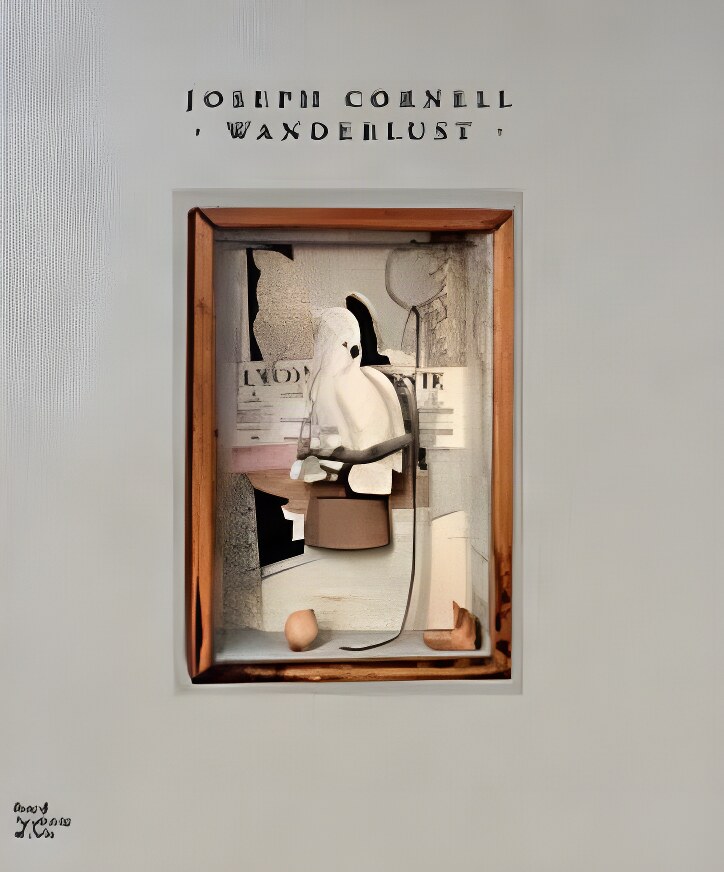
Hardcover. London , Royal Academy of Arts , 1st, 2015, Book: Very Good, Dust Jacket: None, Hardcover, 272 pages, without dust jacket. Like new in publisher's shrink-wrap. Joseph Cornell (1903-1972) was one of the 20th century's leading exponents of collage and assemblage. A connoisseur of an astonishing array of subjects, Cornell's captivation with bygone imagery encompassed astronomical charts and geographical maps, Italian and Spanish Old Master paintings, historical ballet, early film, literature, poetry and ornithology. Most iconic among his works are his box constructions-microcosmic curiosity cabinets-filled with once-precious fragments that he collected in thrift shops in his native New York. Joseph Cornell: Wanderlust is a landmark publication examining this remarkable work. It brings together some of Cornell's most compelling assemblages and box constructions (including Medici slot machines, soap-bubble sets and animal habitats). The contributors raise questions about Cornell's artistic processes while drawing parallels with historical modes of inquiry such as connoisseurship, exploration and classification.
Hardcover. Hatje Cantz, 1st, 2008-08-01, Book: Very Good, Dust Jacket: Very Good, Hardcover, pages. Like new in publisher's shrink-wrap. In the early 1950s, Berlin-born photographer Jurgen Schadeberg captured Nelson Mandela, (then a young attorney), singer Miriam Makeba and the nightlife in Sophiatown, a dynamic black neighborhood in Johannesburg. Revealing the poverty endemic to the majority of South Africa's black population became Schadeberg's chief focus. He arrived there in 1950, at the advent of apartheid, to work for Drum, the first magazine for black readers. In 1964, when Drum was banned, Schadeberg left South Africa for Europe and the United States, creating a body of portraits unique in their ability to cut across race, class and social standing. In 1994, Schadeberg created an iconic image of Nelson Mandela, by then the first black President of South Africa, standing at the window of his former prison cell on Robben Island, where he had been detained on charges of conspiracy from 1964-1982. Schadeberg, whose work has been highly influential to younger artists, now lives and works near Paris. This substantial volume collects 250 images from across his career.
Hardcover. Cambridge MA, MIT Press, 1st, 1999, Book: Very Good, Dust Jacket: Very Good, 420 pages, illustrated with mostly b&w plates, 8 color pages. Small remainder stamp on bottom edge. "Tiege was at one and the same time both an agent provocateur and seismograph, at once provoking action and debate and yet simultaneously reacting with the utmost sensitivity to the shifting political spectrum of his time."--from the introduction by Kenneth FramptonKarel Teige (1900-1951), a leading figure of the avant-garde of the 1920s and 1930s, participated in every important argument and controversy of those turbulent years. He edited the most influential avant-garde journals on Czech and international cultural affairs and wrote profoundly original essays and books on the theory and criticism of art and architecture. He also produced paintings, collages, photomontages, film scripts, book covers, and typefaces and participated in theatrical performances.
Hardcover. London, SelfMadeHero, 1st, 2018, Book: Very Good, Dust Jacket: None, Hardcover, pictorial boards, 128 pages. In the mid-1970s, Klimowski's fearlessly original artwork caught the eye of leading Polish theatre and film companies, for whom he designed some of the period's most influential and iconic posters. The London-born artist, who moved to Poland at a time when many East Europeans dreamed of going West, went on to create posters for works by filmmakers and playwrights from Scorsese to Altman, Beckett to Brecht. Drawing on folk art, Polish Surrealism and the work of his mentor at the Warsaw Academy, Henryk Tomaszewski, Klimowski uses techniques including photomontage and linocut to create posters that are filled with metaphor, drama and originality. The Klimowski Poster Book compiles the best of his Polish work, while also tracing his career after his return to London, where he remains Emeritus Professor of Illustration at the Royal College of Art. Clean, bright copy.
Hardcover. New York, Harry N. Abrams, 1st, 1984, Book: Very Good, Dust Jacket: Very Good, Hardcover, 256 pages. 330 illustrations, including 150 plates in full color. Black cloth, gilt lettering to spine. Beautiful pictorial dust jacket. A very clean, tight and crisp copy. Like New.
Hardcover. Cambridge MA, MIT Press, 1st, 2001, Book: Very Good, Dust Jacket: Very Good, 406 pages, Hardcover with dust jacket. B&w illustrations. Clean, tight copy. How Le Corbusier's first trip to the United States shaped his critique of the country and affected both his work and the diffusion of his ideas. Le Corbusier's first trip to the United States in 1935 is generally considered a failure because it produced no commissions. The experience nevertheless had a profound effect on him, both personally and professionally. Sponsored by the Museum of Modern Art in New York, Le Corbusier promoted his ideas through a lecture tour, exhibition, and press conferences, as well as in meetings with industrialists, housing reformers, New Deal technocrats, and editors. His lectures were watershed events that advanced the cause of European modernism. Yet he returned to France empty-handed and published a bittersweet account, Quand les Cathedrales etaient blanches: Voyage au Pays des Timid Personnes (When the Cathedrals Were White: Journey to the Country of Timid People), which faulted America for lacking the courage to adopt his ideas.
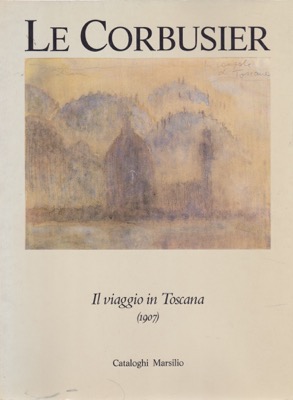
Softcover. Venice, Cataloghi Marsilio, 1st, 1987, Book: Very Good, Dust Jacket: None, Softcover, 140 pages. TEXT IN ITALIAN. A catalog of drawings and architectural watercolor sketches done by Le Corbusier on a trip to Italy in 1907. His career spanned five decades, with his buildings constructed throughout Europe, India, and America. He was a pioneer in studies of modern high design and was dedicated to providing better living conditions for the residents of crowded cities. (1907) - Catalogo della Mostra. Clean copy.
Hardcover. Paris, Editions Albert Morance, 1st, 1953, Book: Very Good, Dust Jacket: Fair, 320 pages. Hardcover. Text in French. Illustrated with black & white photographs and drawings of decorative cast iron. Previous owners name and date written on front interior hinge flap. Dust jacket worn with tape repair, chipping along edges - jacket now protected with clear plastic cover. Clean, tight copy.
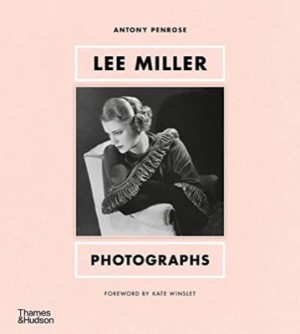
Hardcover. NY, Thames & Hudson, 1st, 2023, Book: Very Good, Dust Jacket: None, Hardcover, pale rose boards with photo label on front cover. Over one hundred of the most outstanding photographs taken by photographer, model, and surrealist muse Lee Miller, Introduced to photography at an early age, Lee Miller honed her craft in Paris, where she associated with the Surrealists and avant-garde artists including Jean Cocteau and Picasso. Together with Man Ray she accidentally discovered the distinctive technique of solarization to create mesmerizing halo effects. After establishing her own photographic studio in New York, where she became a prominent commercial photographer, she then moved to the Middle East and Europe before becoming the official war photographer for Vogue, a period during which she took many of her most iconic photographs. This evocative book collects Lee Miller's most famous documentary, fashion, and war works, as well as photographs of Miller, all carefully compiled by her son the photographer Antony Penrose, with a foreword by actress Kate Winslet, Cllean copy.
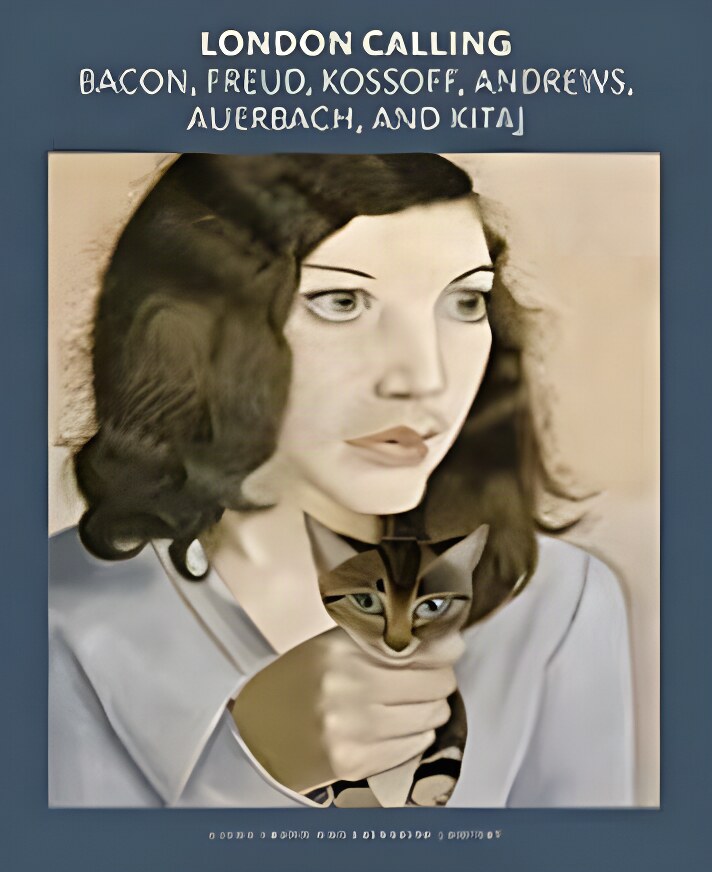
Hardcover. Loa Angeles, J. Paul Getty Museum, 1st, 2016, Book: Very Good, Dust Jacket: None, Hardcover, 136 pages. Offering a fresh account of developments that have since characterized postwar British painting, this catalogue focuses on Michael Andrews, Frank Auerbach, Francis Bacon, Lucian Freud, R. B. Kitaj, and Leon Kossoff-- artists who worked in close proximity as they were developing new forms of realism. If for many years their efforts seemed to clash with dominant tendencies, reassessment in recent decades has afforded their work a central position in a richer and more complex understanding of postwar British art and culture. Rigorous and gorgeously illustrated, the essays reflect on the parallel yet diverse trajectories of these artists, their friendships and mutual admiration, and the divergence of their practice from the discourse of high modernism. The authors seek to dispel the notion of their work as a uniquely British endeavor by highlighting the artists' international outlook and ongoing dialogue with contemporary European and American painters as well as masters from previous generations.


 "It Happened In Our Lifetime: A Memoir In Words and Pictures by: Phillips, John")
 "Jack Kirby: The Epic Life of the King of Comicsby: Tom Scioli")
 "James IV (The Stewart Dynasty In Scotland)by: Macdougall, Norman")
 "James Moore: Photographs 1962-2006by: Martin Harrison (Author), Holly Brubach (Author), Nicolas Moore (Editor), James Moore (Photographer)")


 "James Moore: Photographs 1962-2006by: Martin Harrison (Author), Holly Brubach (Author), Nicolas Moore (Editor), James Moore (Photographer)")


 "Joan Miro: 1893 - 1993by: Miro, Joan")

 "John Sloan: Drawing on Illustrationby: Lobel, Michael")
 "John Sloan: Drawing on Illustrationby: Lobel, Michael")
 "Jurgen Schadebergby: Schadeberg, Jurgen")
 "Karel Teige/1900-1951: L'Enfant Terrible of the Czech Modernist Avant-Gardeby: Dluhosch (Ed.), Eric and Rostislav Svacha")

 "Lacquer: An International History and Illustrated Surveyby: Scott, Rosemary, ET AL")
 "Le Corbusier in America: Travels in the Land of the Timidby: Bacon, Mardges")
 "Le Fer Forge - Documents Artistiques de Ferronnerie Ancienne - Du Moyen-Age a la Fin du XVIII Siecleby: Clouzot, Henri")