Hardcover. NY, W. W. Norton & Company, 1st, 2017, Book: Very Good, Dust Jacket: Very Good, Hardcover in a bright dust jacket, 606 pages. In this definitive biography of Chester B. Himes (1909-1984), Lawrence P. Jackson uses exclusive interviews and unrestricted access to Himes's full archives to portray a controversial American writer whose novels unflinchingly confront sex, racism, and black identity. Himes brutally rendered racial politics in the best-selling novel If He Hollers Let Him Go, but he became famous for his Harlem detective series, including Cotton Comes to Harlem. A serious literary tastemaker in his day, Himes had friendships-sometimes uneasy-with such luminaries as Ralph Ellison, Carl Van Vechten, and Richard Wright. Jackson's scholarship and astute commentary illuminates Himes's improbable life-his middle-class origins, his eight years in prison, his painful odyssey as a black World War II-era artist, and his escape to Europe for success. More than ten years in the writing, Jackson's biography restores the legacy of a fascinating maverick caught between his aspirations for commercial success and his disturbing, vivid portraits of the United States. Clean copy.
Hardcover. New York, Harry N. Abrams, Inc., 1st, 1969, Book: Near Fine, Dust Jacket: Near Fine, Exhibition catalogue for Bulgarian artist Christo. Illustrated with 71 reproductions of his often large-scale work, 3 of which are in shown in full color. Cloth bound book and dust jacket are in near fine condition; dust jacket has very slight wear some corners, book is very clean and new-looking.
Hardcover. Los Angeles, CA, Ward Ritchie Press, 1st, 1971, Book: Very Good, Dust Jacket: Good, Hardcover. Published to accompany an exhibition at the Pasadena Art Museum. Features writings by the artist, including his proposals for monuments, as well as illustrations (mostly black/white, few color) of his sculptures and drawings. Also contains chronology of the artist's life and work. Cloth bound book is in very good condition. Dust jacket has some scratches/wear.
Hardcover. Princeton NJ, Princeton University Press, 1st, 2018, Book: Very Good, Dust Jacket: Very Good, Hardcover in a bright dust jacket, 358 pages, color and b&w illustrations. What we call classical art did not simply appear in ancient Rome, or in the Renaissance, or in the eighteenth-century Academy. Endlessly repackaged and revered or rebuked, Greek and Roman artifacts have gathered an amazing array of values, both positive and negative, in each new historical period, even as these objects themselves have reshaped their surroundings. Vout shows how this process began in antiquity, as Greeks of the Hellenistic period transformed the art of fifth-century Greece, and continued through the Roman empire, Constantinople, European court societies, the neoclassical English country house, and the nineteenth century, up to the modern museum. Clean copy.
Hardcover. Boston, MA, University of Massachusetts Press, 1st, 2013, Book: Very Good, Dust Jacket: Very Good, 516 pages. Hardcover with dust jacket. A very clean, unmarked copy with only minor wear to dust jacket edges. This volume documents Fenn's prolific career from the 1860s until his death in 1911. Sue Rainey also recounts his adventurous sketching trips in the western United States, Europe, and the Middle East, which enhanced his reputation for depicting far-flung places at a time when the nation was taking a more prominent role on the world stage.
Hardcover. Boston, MA, University of Massachusetts Press, 1st, 2013, Book: Very Good, Dust Jacket: Very Good, 516 pages. Hardcover with dust jacket. A very clean, unmarked copy with only minor wear to dust jacket edges. This volume documents Fenn's prolific career from the 1860s until his death in 1911. Sue Rainey also recounts his adventurous sketching trips in the western United States, Europe, and the Middle East, which enhanced his reputation for depicting far-flung places at a time when the nation was taking a more prominent role on the world stage.
Hardcover. Amsterdam, Schetern & Giltay, 1st, 1915, Book: Very Good, Dust Jacket: None, Hardcover, color illustrated boards, 190 pages. A collection of b&w (a few 2-color) political cartoons preceding WW I. Dutch text. Scarce.
Hardcover. France, Editions du ChIne, 1st, 2002, Book: Very Good, Dust Jacket: Very Good, 167 pages. Hardcover with dust jacket. A very clean, unmarked copy with only minor wear to dust jacket edges. A tight copy. Black & white and color photographs throughout.
Softcover. Univ of Washington Press, 1st, 1997, Book: Very Good, Dust Jacket: None, Softcover, 111 pages. America between 1885 and 1905 was in the heat of a poster craze. The country's finest artists and illustrators were commissioned to design advertising posters whose popularity soon overshadowed the products they were meant to promote. Designed to Sell presents vintage posters by 45 artists, including Maxfield Parrish, Blanche McManus, and Maurice Prendergast. Essays describe innovations in printing, compare American and European posters, and explain the emergence of a new profession -- graphic design. Biographical notes on the artists include eight women. Special technical notes outline historic printing methods and explain how an artist's drawing becomes a poster.
Hardcover. Taschen, 1st, 2008, Book: Very Good, Dust Jacket: Very Good, Hardcover, 580 pages. 1940-1949: Destruction and Reconstruction. This volume covers the 1940s, when fascism came to a climax and World War II led to the extensive destruction of Europe. But the second half of this decade was also a time of reconstruction, democratization, and the related search for new social values. Unlike in Nazi Germany, in fascist Italy Modernism was able to advance in architecture and design - as proved impressively by the buildings and designs by Carlo Mollino, Gian Luigi Banfi, Franco Albini, and Giuseppe Terragni that are documented herein. After the war, Organic Design emerged alongside the International style. This edition reflects upon the economic, social, and cultural problems of the time, but also shows how the force of the avant-garde continued to thrive in Italy, Switzerland, Scandinavia and the USA. Reports and features on modern industrial design and furniture, as well as domestic and business interiors stand side by side with articles about novel prefabricated houses. In publisher's shrink wrap. Due to size and weight, DOMESTIC SHIPPING ONLY.
Hardcover. London, B. T. Batsford, 1st, 1984, Book: Very Good, Dust Jacket: Very Good, Hardcover in a bright, unclipped dust jacket. Many b&w plates, some color, 216 pages. In this beautiful book, Aileen Ribeiro surveys the clothing worn by the middle and upper classes throughout Europe in the eighteenth century and discusses what this meant in terms of social definition and identity. Ribeiro, one of the world's premier historians of dress, also looks at such subjects as developments in retailing and distribution, etiquette, the rise of the dress designer and couturier, the evolution of ready-made clothes, fancy dress and the masquerade. Clean copy.
Hardcover. New York, Praeger, 1st, 1967, Book: Very Good, Dust Jacket: Good, 117 pages of text followed by black & white plates. Minor age darkening along top edge. Dust jacket worn along edges - now protected with clear plastic cover. Clean, tight copy.
Hardcover. New Haven CT, Yale University Press, 1st, 2019, Book: Very Good, Dust Jacket: None, Hardcover, pictorial boards, 232 pages. The question "What is American art?" might conjure the hyperrealism of Raphaelle Peale and William Harnett, the bold graphic style of Stuart Davis and Jacob Lawrence, or the Precisionist forms of Charles Sheeler. Little known, however, is that such notions of American art are significantly owed to a Russian Jewish immigrant named Edith Halpert. The founder of the Downtown Gallery in New York, Halpert shaped an identity for American art, declaring that its thrilling heterogeneity and democratic values were what most distinguished it from the European avant-garde. For forty-plus years, Halpert's gallery brought recognition and market success to now-legendary American artists--among them Arthur Dove, Marsden Hartley, and Georgia O'Keeffe, in addition to the artists mentioned above. She relentlessly championed nonwhite, female, and unknown artists and was a formative advisor in the shaping of many of the nation's most celebrated art museums and collections, from San Francisco to Boston. Not content with those achievements, she also pioneered the appreciation and collecting of American folk art. Richly illustrated with works that passed through her groundbreaking gallery, this book tells the extraordinary and largely overlooked story of her career and legacy. The artists Halpert launched into the American canon are household names--and this book compellingly argues that hers should be, as well. In publisher's shrinkwrap.
Hardcover. Berkeley, University of California Press, 1st, 1990, Book: Very Good, Dust Jacket: Very Good, Hardcover in a bright dust jacket, 480 pages. Although he is referred to as a "genius" more often than any other scholar of his period, Edward Sapir has received no full-scale biography since his death in 1939. At long last, Regna Darnell provides a comprehensive assessment of the life, ideas, and wide-ranging interests of this remarkable man. Sapir, the foremost linguist and anthropologist of his generation, contributed substantially to the professionalization of linguistics as an independent discipline. He was the first to apply comparative Indo-European methods to the study of American Indian languages, on which he conducted extensive fieldwork. His theoretical work on the relationship of the individual personality to culture remains fundamental to culture theory in anthropology, as does his insistence on the symbolic nature of culture and the importance of culture as understood by its members, in their own words.Sapir became the first professional anthropologist in Canada and teacher of a whole generation of linguists and anthropologists at Chicago and Yale. Holding to a humanistic view of anthropology (his own work included poetry and literary criticism), he was the most articulate spokesman for the interdisciplinary social science of the late 1920s and 1930s. In both linguistics and anthropology Sapir is a revered master whose ideas continue to inspire discussion and research. A sixteen-volume Collected Works is now in progress. Clean copy.
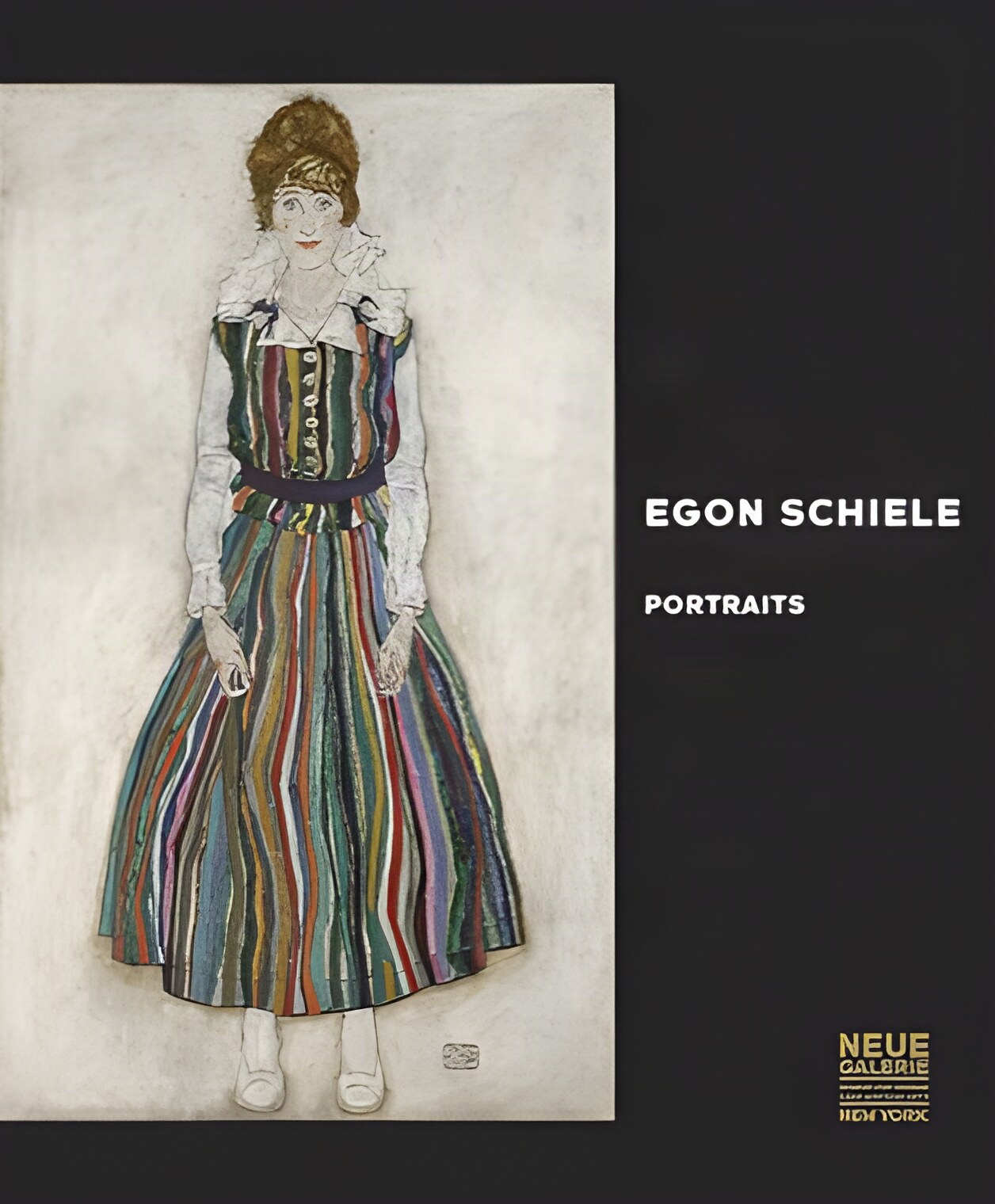
Hardcover. Munich/NY, Prestel, 1st, 2014, Book: Very Good, Dust Jacket: Very Good, Hardcover in a bright dust jacket, 296 pages, color illustrations and portraits throughout. Issued in conjunction with a 2014-2015 exhibition of portraiture rendered by Austrian painter Egon Schiele (1890-1918). "Despite a career that lasted less than a decade, Schiele is considered one of the most important artists of the twentieth century. A protege of Gustav Klimt, Schiele is celebrated for his singular style of draftsmanship, unusual use of color, and physically raw, often sexually provocative depictions of his sitters. Schiele's expressive style and controversial subject matter played an important role in the advancement of modernism in Europe. ... Both the catalogue and the exhibition are divided into six groupings of the artist's work: Family and Academy; Fellow Artists; Sitters and Patrons; Eros; Lovers; and Self-Portraits and Allegorical Self-Portraits. In addition, there is a section highlighting a traumatic and pivotal period in Schiele's life: his arrest and imprisonment during the spring of 1912. The color plates document the evolution of the artist's style, both pre- and post-imprisonment. Schiele's untimely death at the age of 28 adds a mythic quality to his abbreviated career." (dj) With five thematic and illustrated essays, and many illustrations. Clean copy.
Hardcover. Paris, Flammarion, 1st, 1977, Book: Very Good, Dust Jacket: Very Good, 167 pages. Hardcover. Text in French only. Illustrated in full color and black & white. Dust jacket with wear to edges - jacket now protected with clear plastic cover. Clean, tight copy.
Hardcover. Seattle, WA, University of Washington Press, 1st, 2016, Book: Very Good, Dust Jacket: None, 224 pages. Hardcover with no dust jacket. A very clean, unmarked copy with only minor edgewear. A tight copy. Contemporary portraits of key personalities aboard the ship, scale models and plans of the ship itself, scientific instruments taken on the voyage, commemorative medals and sketches, the objects (over 140) featured in this book tell the story of the Endeavour voyage and its impact ahead of the 250th anniversary in 2018 of the launch of this seminal mission. Artwork made both during and after the voyage will be seen alongside actual specimens. By comparing the voyage originals with the often stylized engravings later produced in London for the official account, Endeavouring Banks investigates how knowledge gained on the mission was gathered, revised, and later received in Europe. Items that had been separated in some cases for more than two centuries are brought together to reveal their fascinating history not only during but since that mission. Original voyage specimens are featured together with illustrations and descriptions of them, showing a rich diversity of newly discovered species and how Banks organized this material, planning but ultimately failing to publish it. In fact, many of the objects in the book have never been published before.
Hardcover. Hatje Cantz, 1st, 2009, Book: Very Good, Dust Jacket: Very Good, Hardcover, 224 pages. Erwin Blumenfeld (1897-1969) was born into a Jewish family in Berlin. In 1941, after being interned in a concentration camp, he left Europe for the United States, where he eventually became a citizen; during the 40s and 50s, he was to make his name here as one of the most sought-after fashion photographers in the world. But most people are unfamiliar with Blumenfeld's early work, the often bitingly satiric Dada photomontages and collages he produced between 1916 and 1933. This book, put together by Helen Adkins, renowned expert on the Berlin Dada movement, is the first to provide a study and a survey of these early works. Blumenfeld did not intend for these works to be shown publicly, as they were primarily personal gifts to his friends and acquaintance, or were enclosed in love letters to his fiancee. Nonetheless, they were conceived in the Dada spirit (Blumenfeld established the Dutch branch of Dada in 1918) and belong to its story. Approximately 100 works--including many previously unpublished, which Adkins discovered in the artist's family archives and in other public and private collections--are examined within the context of Blumenfeld's life, photographs, drawings and literary works.
Softcover. London, V & A Publications, 1st pbk, 1996, Book: Very Good, Dust Jacket: None, Softcover, 191 pages. Containing over 100 masterpieces from a major collection, this volume traces the history of European sculpture, from the early-Christian period through to the beginning of the 20th century. Highlights include the medieval ivories, works by many of the Italian Renaissance masters, English 18th-century pieces, such as Roubillac's statue of Handel and sculptures by Rodin. Clean, bright copy.
Softcover. Durham NC, Duke University Press, 2nd pr., 1994, Book: Very Good, Dust Jacket: None, Softcover, 342 pages. In Extended Play, one of the country's most innovative music writers conducts a wide-ranging tour through the outer limits of contemporary music. Over the course of more than twenty-five portraits, interviews, and essays, John Corbett engages artists from lands as distant as Sweden, Siberia, and Saturn. With a special emphasis on African American and European improvisers, the book explores the famous and the little known, from John Cage and George Clinton to Anthony Braxton and Sun Ra. Employing approaches as diverse as the music he celebrates, Corbett illuminates the sound and theory of funk and rap, blues and jazz, contemporary classical, free improvisation, rock, and reggae. Using cultural critique and textual theory, Corbett addresses a broad spectrum of issues, such as the status of recorded music in postmodern culture, the politics of self-censorship, experimentation, and alternativism in the music industry, and the use of metaphors of space and madness in the work of African American musicians. He follows these more theoretically oriented essays with a series of extensive profiles and in-depth interviews that offer contrasting and complementary perspectives on some of the world's most creative musicians and their work. Clean copy.
Softcover. London/NY, Bloomsbury, 1st, 2016, Book: Very Good, Dust Jacket: None, Softcover, 346 pages. This volume makes the key essays of 19th century French philosopher Felix Ravaisson available in English for the first time. In recent years, Ravaisson has emerged as an extremely important and influential figure in the history of modern European philosophy. The volume contains the classic 1838 dissertation Of Habit, studies of Pascal, Stoicism and the wider history of philosophy together with the Philosophical Testament that he left unfinished when he died in 1900. The volume also features Ravaisson's work in archaeology, the history of religions and art-theory, and his essay on the Venus de Milo, which occupied him over a period of twenty years after he noticed, when hiding the statue behind a false wall in a dingy Parisian basement during the Franco-Prussian war, that it had previously been presented in a way that deformed its original bearing and meaning. Clean copy.
Hardcover. New Haven, CT, Yale University Press, 1st, 2015, Book: Very Good, Dust Jacket: None, 440 pages. Hardcover in purple slipcase. Very clean, unmarked copy still in shrink wrap. Gilt lettering on spine. Profusely illustrated with over 200 color plates. Tight copy. Prior to the invention of photography, European and American magazines used colorful prints to depict the latest fashion trends. These illustrations, known as "fashion plates," conveyed the cutting-edge styles embraced by the fashion-conscious elite and proved inspirational to the upwardly mobile. This lavishly illustrated book provides a comprehensive survey of 200 color plates from publications dating from 1778 to the early 20th century, accompanied by authoritative and fascinating texts. Organized chronologically and featuring both men's and women's garments, these lively and colorful vignettes not only are beautiful, but also deftly illustrate the evolution of fashion over time.
Hardcover. London, Frances Lincoln, 1st, 2015, Book: Very Good, Dust Jacket: None, Hardcover, 10 x 12", 304 pages. Over 300 color plates. A comprehensive document of the talent and artistry that went into the design and making of European fashion images from the second half of the sixteenth century to the first half of the twentieth century. No dust jacket issued.
Hardcover. Montreal, Drawn & Quarterly, 1st, 2003, Book: Very Good, Dust Jacket: None, 140 pages. Hardcover NO dust jacket. Black and white comic. Clean, unmarked copy with minor wear to boards. Award-winning comix-journalist Joe Sacco goes behind the scene of war correspondence to reveal the anatomy of the big scoop. He begins by returning us to the dying days of Balkan conflict and introduces us to his own fixer; a man looking to squeeze the last bit of profit from Bosnia before the reconstruction begins. Thanks to a complex relationship with the fixer Joe discovers the crimes of opportunistic warlords and gangsters who run the countryside in times of war. But the west is interested in a different spin on the stories coming out of Bosnia. Almost ten years later, Joe meets up with his fixer and sees how the new Bosnian government has "dealt" with these criminals and Joe ponders who is holding the reins of power these days...


 "Christoby: Alloway, Lawrence")
 "Claes Oldenburg: Object Into Monumentby: Haskell, Barbara")

 "Creating a World on Paper: Harry Fenn's Career in Artby: Rainey, Sue")

 "De Oorlog In Prent / Karikaturen Uit De Versehillende Landenby: Feith, Jan")
 "Des Photographes Et Parisby: Paviot, Francoise")
 "Designed to Sell: Turn-Of-The Century American Posters in the Virginia Museum of Fine Artsby: Frederick R. Brandt , Robert Koch, et al.")

 "Dress in Eighteenth Century Europe 1715-1789by: Ribeiro, Aileen")

 "Edith Halpert: The Downtown Gallery and the Rose of American Artby: Shaykin, Rebecca")
 "Edward Sapir. Linguist Anthropologist Humanistby: Darnell, Regna")
 "Emile Galleby: Garner, Philippe")
 "Endeavouring Banks: Exploring Collections from the Endeavour Voyage 1768-1771by: Chambers, Neil")
 "Erwin Blumenfeld: Nothing but a Berliner: Dada Montages 1916-1933by: Helen Adkins, Erwin Blumenfeld, et al.")



 "Fashion Plates: 150 Years of Styleby: Calahan, April")
 "Fine Art of Fashion Illustration, The by: Robinson, Julian and Gracie Calvey")
 "Fixer, The: A Story from Sarajevo by: Sacco, Joe")