Hardcover. NY, DC Comics, 1st, 2017, Book: Very Good, Dust Jacket: Very Good, Hardcover in in a bright dust jacket., 764 pages. Superman continues to battle social injustice and political corruption, fighting for the common man. No wonder he remains America's favorite hero during World War II. While the Allies fought the Axis powers in Europe and the Pacific, Superman was dealing with threats at home like his old foe Lex Luthor, conman J. Wilbur Wolfingham, and that pesky imp from the fifth dimension, Mister Mxyzptlk! But the Man of Steel isn't the only one capturing the hearts and minds of America, as Lois Lane finally stars in her fist solo adventure and her niece Susan Tompkins makes her debut! These groundbreaking classic stories--which cemented Superman's place as the medium's most enduring hero--are gathered for the first time in this singular, expansive collection! SUPERMAN: THE GOLDEN AGE OMNIBUS VOL. 4 collects all of the Metropolis Wonder's tales from ACTION COMICS #66-85, SUPERMAN #25-33 and WORLD'S FINEST COMICS #11-18 and includes a foreword by legendary comics writer Roy Thomas. DUE TO WEIGHT, DOMESTIC SHIPPING ONLY.
Softcover. Paris, S.N.E.P., 1st, 1952, Book: Very Good, Dust Jacket: None, Softcover. very good. 116 tipped-in color plates, folio, printed beige boards. Paris: Editions SNEP, (1952). Very good (+). The evolution of painting in Europe, from the Middle Ages to the 18th century. PLEASE NOTE: DUE TO WEIGHT, DOMESTIC SHIPPING ONLY.
Hardcover. NY, MacMillan Company, 1st US, 1971, Book: Very Good, Dust Jacket: Very Good, Hardcover in a bright, unclipped dust jacket, 312 pages. Includes footnotes, bibliography, and index. Foreword by Stephen Spender. A narrative study of the troubling phenomenon why many European intellectuals and artists were drawn to and embraced Fascism during the period between the world wars. This conundrum may find expression today. Clean copy.
Softcover. London, Routledge, reprint, 1996, Book: Very Good, Dust Jacket: None, Softcover, 325 pages with index, b&w illustrations. An outstanding piece of scholarship and a fascinating read, The Body Emblazoned is a compelling study of the culture of dissection the English Renaissance, which informed intellectual enquiry in Europe for nearly two hundred years. In this outstanding work, Jonathan Sawday explores the dark, morbid eroticism of the Renaissance anatomy theatre, and relates it to not only the great monuments of Renaissance art, but to the very foundation of the modern idea of knowledge. Though the dazzling displays of the exterior of the body in Renaissance literature and art have long been a subject of enquiry, The Body Emblazoned considers the interior of the body, and what it meant to men and women in early modern culture. Clean, bright copy.
Hardcover. NY, Princeton Architectural Press, 1st, 2015, Book: Very Good, Dust Jacket: Very Good, Hardcover in a bright, unclipped dust jacket, 224 pages. The Dakota is arguably the best-known residential address in the world, home to dozens of New York City's most famous artists, performers, and successful executives. The rare sale of an apartment there, usually at jaw-dropping prices, is newsworthy, as is the financial and architectural health of the building itself, a landmark in every sense of the word. The first true luxury apartment house built in New York City, more than 130 years ago, the Dakota is still the gold standard against which all other apartment buildings are weighed. Historian Andrew Alpern tells the fascinating story of how the Dakota came to be, how Singer sewing magnate Edward Clark dared to build an apartment building luxurious enough to coax the city's wealthy from their mansions downtown for ultra-modern living on what was then the swamplands of the Upper West Side. Redrawn plans of the entire building, published here for the first time, show how Clark created apartments glamorous enough that they made living under a shared roof as acceptable in Manhattan as it already was in Europe's grand capitals, forever revolutionizing apartment life in New York City.
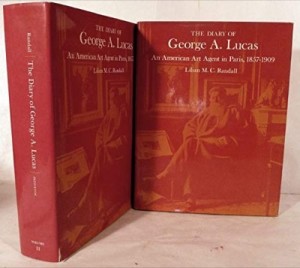
Hardcover. Princeton NJ, Princeton University Press, 1st, 1979, Book: Very Good, Dust Jacket: Very Good, Two volume set. Matching gold cloth boards with titles in gold on spine, in bright dust jackets. Transcribed and with Introduction by Lilian M.C. Randall. B&w illustrations of the sculptures, paintings, drawings and etchings that Lucas dealt with while in Europe. Double-column English text. Provides an extraordinary archive for historians and dealers. Provides a hugely empirical database for prices paid and commissions issued to artists, dealers, and craftsmen. George A. Lucas's acquaintances include Daumier, Cassatt, Whistler and Barye, among many, many others. Volume Two is given over wholly to Lucas's daily diary, which ran for an extraordinary length of time. Volume 1: xv [2], 3-148 pages.; Volume 2: iv [ii], 3-965 pages. DUE TO WEIGHT, DOMESTIC SHIPPING ONLY.
Softcover. Flesk, 1st, 2021, Book: Very Good, Dust Jacket: None, Softcover, 400 pages. Edwin Austin Abbey (1852-1911) was born just two years after the inaugural release of Harper's Monthly Magazine. Starting with his first published drawing in December 1870 at age 18, Abbey's life-long association with the publisher resulted in hundreds of drawings found within the pages of Harper's Monthly Magazine and Harper's Weekly as well as Harper & Brothers books. The resulting exposure throughout the U.S. and Europe secured an extensive level of recognition. Abbey had the rarefied appeal to everyone from the average reader to the most prestigious artists of the day. The inclusion of Abbey's illustrations in these periodicals helped to expand the reach of the poetry, stories and essays that they accompanied to a massive audience. This book focuses on Abbey's line art for the magazines and books published by Harper & Brothers, beginning with his earliest works as a new professional in the field. The collection contains over 350 drawings. These delineated the poetry of Robert Herrick and enhanced such books as The Deserted Village, Old Songs, She Stoops to Conquer and The Quiet Life. Drawings created for numerous short stories and poetry are displayed here as well. Also collected are Abbey's exquisite series of drawings done over the course of twenty years for The Comedies of William Shakespeare, followed by The Shakespeare Tragedies. His painstaking devotion to research while securing the appropriate costumes, props and models for his drawings was legendary. The results are some of the most revered illustrations ever created, which continue to astound aficionados and inspire artists generations after Abbey's last drawing was made. An extensive new essay by Alice A. Carter offers a fresh look at Edwin Austin Abbey, his life and career.
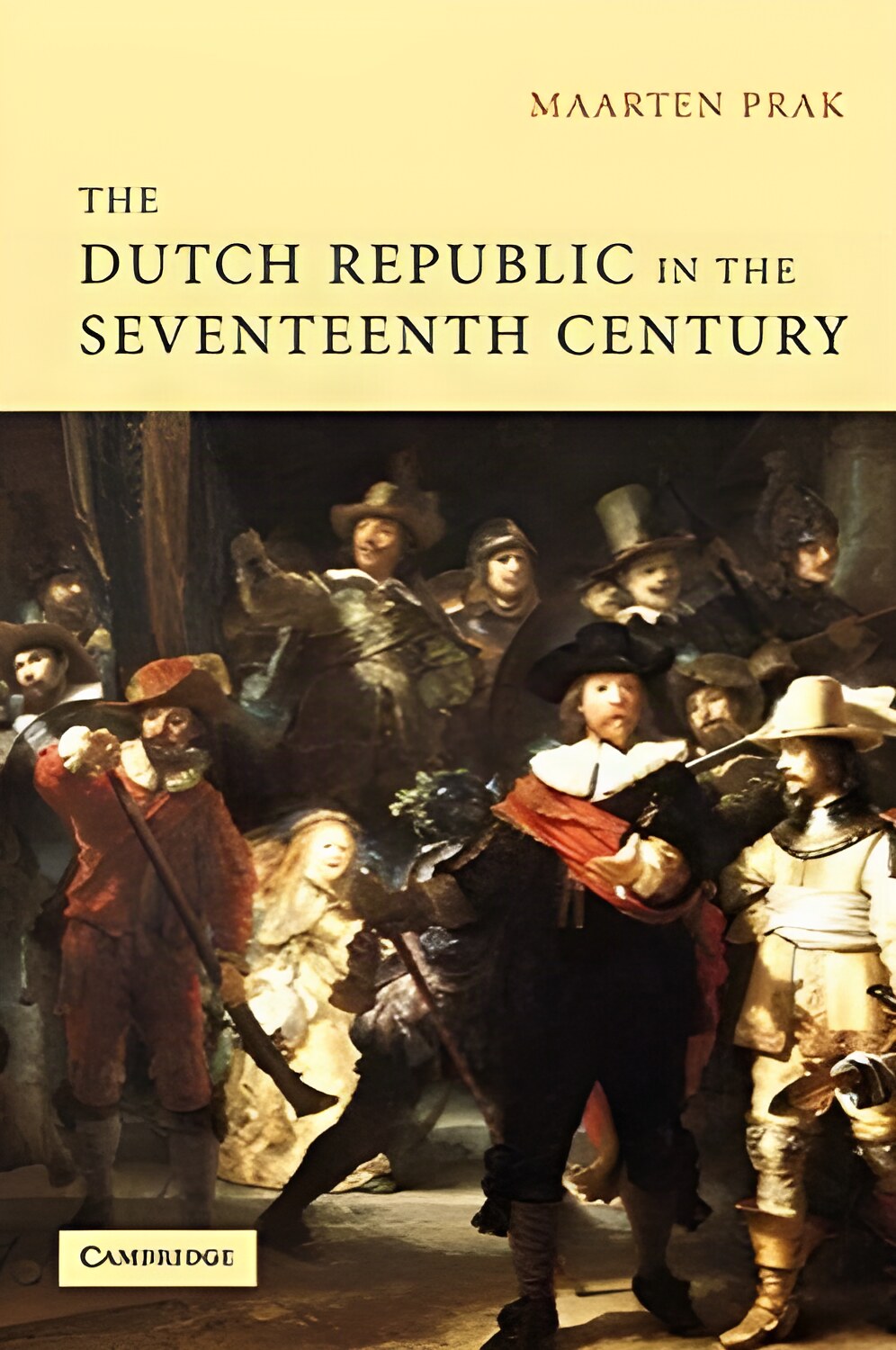
Softcover. UK, Cambridge University Press, 1st, 2005, Book: Very Good, Dust Jacket: None, Softcover, 317 pages, b&w illustrations. Translated from the Dutch by Diane Webb. "Rembrandt, Hals and Vermeer are still household names, even though they died over three hundred years ago. In their lifetimes they witnessed the extraordinary consolidation of the newly independent Dutch Republic and its emergence as one of the richest nations on earth. As one contemporary wrote in 1673: the Dutch were 'the envy of some, the fear of others, and the wonder of all their neighbours'. During the Dutch Golden Age, the arts blossomed and the country became a haven of religious tolerance. However, despite being self-proclaimed champions of freedom, the Dutch conquered communities in America, Africa and Asia and were heavily involved in both slavery and the slave trade on three continents." Clean copy.
Softcover. London, Penguin Books , reprint, 2020, Book: Very Good, Dust Jacket: None, Softcover, 553 pages. The Europeans is richly enthralling, panoramic cultural history of nineteenth-century Europe, told through the intertwined lives of three remarkable people: a great singer, Pauline Viardot, a great writer, Ivan Turgenev, and a great connoisseur, Pauline's husband Louis. Their passionate, ambitious lives were bound up with an astonishing array of writers, composers and painters all trying to make their way through the exciting, prosperous and genuinely pan-European culture that came about as a result of huge economic and technological change. This culture - through trains, telegraphs and printing - allowed artists of all kinds to exchange ideas and make a living, shuttling back and forth across the whole continent from the British Isles to Imperial Russia, as they exploited a new cosmopolitan age. Clean copy.
Softcover. Seattle, Fantagraphics, 1st, 2024, Book: Very Good, Dust Jacket: None, Softcover, 144 pages. The Farewell Song of Marcel Labrume is Fantagraphics' first entry in its planned Micheluzzi library, which will reprint all of his most significant works. Micheluzzi is one of the most iconic graphic stylists of the European comics scene known for his elegant line and stunning draftsmanship. He drew many graphic novels between 1974 and 1990, mostly of adventurous stories grounded in historical reality with a patina of romanticism, in the tradition of Milton Caniff and Hugo Pratt. Micheluzzi's artwork in these Fantagraphics editions have been meticulously and lovingly restored by the artist's daughter Agnese Micheluzzi and will be the finest reproductions in the artist's career. The first act of this thrilling two-part adventure tale takes place in Beirut in 1941, when renegade journalist Marcel Labrume crosses paths with the beautiful and mysterious American millionaire Carol Gibson, who the Germans suspect of being a spy. Clean copy.
Softcover. New Haven / Washington DC, Yale University Art Gallery/National Gallery of Art, 1984, Book: Very Good, Dust Jacket: None, Softcver, pictorial wraps, 312 pages. This is the catalog for an exhibition at Yale University Art Gallery, 1984, consisting of 43 folding screens designed by European and American artists from about 1870 to the present were on view. The exhibition was organized by Michael Komanecky of Yale University and by Virginia Butera. Mild sunning to edges of wrappers otherwise clean, tight copy.
Softcover. NY, Dover Publications, 1st, 1971, Book: Very Good, Dust Jacket: None, Softcover, 80 pages. "70 European and American posters of the 1890's in color". Clean copy.
Hardcover. NY/Oxford UK, Berghahn Books, 1st, 2003, Book: Very Good, Dust Jacket: None, Hardcover, 232 pages, pictorial boards. Milena Jesenska, born in Prague in 1896, is most famous as one of Franz Kafka's great loves. Although their relationship lasted only a short time, it won the attention of the literary world with the 1952 publication of Kafka's letters to Milena. Her own letters did not survive. Later biographies showed her as a fascinating personality in her own right. In the Czech Republic, she is remembered as one of the most prominent journalists of the interwar period and as a brave one: in 1939 she was arrested for her work in the resistance after the German occupation of Bohemia and Moravia, and died in Ravensbruck concentration camp in 1944. It is estimated that Jesenska wrote well over 1,000 articles but only a handful have been translated into English. In this book her own writings provide a new perspective on her personality, as well as the changes in Central Europe between the two world wars as these were perceived by a woman of letters. The articles in this volume cover a wide range of topics, including her perceptions of Kafka, her understanding of social and cultural changes during this period, the threat of Nazism, and the plight of the Jews in the 1930s. Clean copy.
Hardcover. Greenwich CT, New York Graphic Society, 1st, 1960, Book: Very Good, Dust Jacket: None, Hardcover, pebbles white cloth stamped in gilt. 170 pages. 83 tipped in color plates throughout. This enormous volume features full-color photography of art rarely seen in the West. From one of the most extensive - yet hidden - collections in Europe comes this treasury of works of art, statuary, tapestry, jewelry, and much, much more. Comprehensively annotated by one of the foremost art historians specializing in Russian artworks. Hairline crack to cover at spine, overall clean with tight binding. No dust jacket.
Softcover. NY, Thames & Hudson, 1st pbk., 1988, Book: Very Good, Dust Jacket: None, Softcover in pictorial wrappers, 304 pages. Profusely illustrated in b&w. Piranesi has a powerful appeal for our time. His brilliance as a graphic artist, his transformation of the European vision of Classical antiquity, and his themes of fantasy have been the focus of considerable study in recent years. But though these aspects are important for an appreciation of Piranesi's visual significance, they have tended to obscure other factors essential for a complete understanding of his unique achievement. In this copiously illustrated study, John Wilton-Ely - one of the world's foremost authorities on Piranesi - offers a full reappraisal of the complex personality of an astonishingly versatile artist. His book covers every aspect of Piranesi's life and work, emphasizing especially his importance as a pioneer of Roman archaeology, the high quality of his technical illustrations, and his role in the great Graeco-Roman debate of the 1760s. The author brings to life the Enlightenment world of the artist's ideas - fundamentally bound up with the birth of Neo-Classicism - and the search for an appropriately modern form of expression; and he shows the practical and influential form taken by these ideas in Piranesi's architectural projects, his designs for furniture and decorative schemes and his imaginative restoration of antiquities. Clean copy.
Hardcover. Algonquin Books, 1st, 2015, Book: Very Good, Dust Jacket: Very Good, Hardcover in a bright, unclipped dust jacket. SIGNED BY AUTHOR on title page. When Alizee Benoit, a young American painter working for the Works Progress Administration (WPA), vanishes in New York City in 1940, no one knows what happened to her. Not her Jewish family living in German-occupied France. Not her arts patron and political compatriot, Eleanor Roosevelt. Not her close-knit group of friends and fellow WPA painters, including Mark Rothko, Jackson Pollock, and Lee Krasner. And, some seventy years later, not her great-niece, Danielle Abrams, who, while working at Christie's auction house, uncovers enigmatic paintings hidden behind works by those now famous Abstract Expressionist artists. Do they hold answers to the questions surrounding her missing aunt? Entwining the lives of both historical and fictional characters, and moving between the past and the present, The Muralist plunges readers into the divisiveness of prewar politics and the largely forgotten plight of European refugees refused entrance to the United States. It captures both the inner workings of New York's art scene and the beginnings of the vibrant and quintessentially American school of Abstract Expressionism.
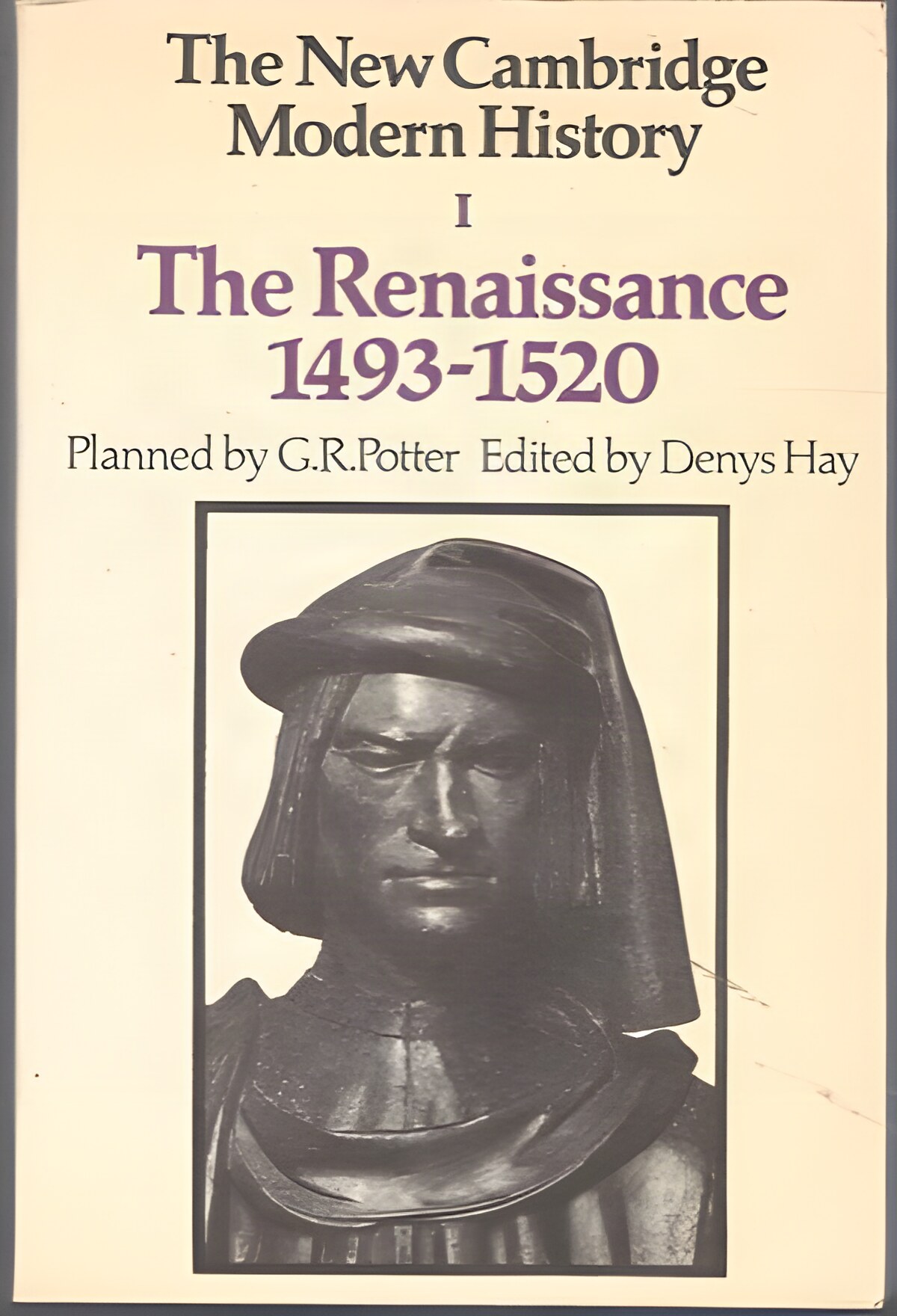
Softcover. Cambridge UK, Cambridge University Press, reprint, 1975, Book: Very Good, Dust Jacket: None, Softcover, 532 pages. In a preface written for this paperback edition, Professor Hay examines some of the changes in Renaissance scholarship since the first publication of this volume in 1957. Successive chapters examine the social and economic structure of a continent about to establish trade and colonies in the New World, the intellectual and artistic movements which made up the Renaissance, the position of the Church on the eve of the Reformation, the political inheritance of the Middle Ages, with its rising nation states, and the growth of the Ottoman Empire. Clean copy.
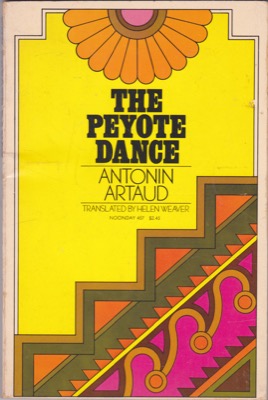
Softcover. NY, Farrar, Straus and Giroux, 1st, 1976, Book: Very Good, Dust Jacket: None, Softcover, 105 pages. Translated by Helen Weaver. Writings by Artaud about his experience with the Tarahumara Indians in 1936, their rituals and ceremonies, and his efforts to find alternatives to what he felt was an increasingly limited European view of the mind and consciousness. Clean copy.
Hardcover. NY, The Monacelli Press, 1st, 2008, Book: Very Good, Dust Jacket: None, Hardcover, 208 pages. Debate and banter between the irascible Philip Johnson and the equally articulate and opinionated Robert A. M. Stern generates a provocative combination of astute commentary and personal observation on the state of architecture in the twentieth century. Philip Johnson's multifaceted career as an architect, curator, and collector extended from the early 1920s to his death in 2005. Captivated by the work of the European modernists Gropius, Le Corbusier, and Mies van der Rohe, Johnson assembled the seminal exhibition "Modern Architecture--International Exhibition" at the Museum of Modern Art in 1932. Among his most notable achievements are the famous Glass House in Connecticut, designed for his own use, and the Seagram Building in New York, in association with Mies van der Rohe. Recognized as the dean of American architecture, Johnson had a profound influence on the next generation of architects, including Robert A. M. Stern. Stern has conducted a series of ten interviews with Johnson, each covering a decade of his life, that provide an illuminating assessment of a significant period of American architecture. No dj issued.
Hardcover. NY, Abrams, 1st, 2008, Book: Very Good, Dust Jacket: Very Good, Hardcover, 300 pages. In this lavishly produced volume, journalist Gaudriault accompanies photographer Rancinan to Africa, Asia, Europe and the United States to interview 23 masters of contemporary photography, paying homage to fashion photographers and photojournalists, traditional chroniclers of their times and conceptual artists. Rancinan's photographs record each encounter in portraits that encapsulate each subject's relationship with his shared discipline. Readers follow paparazzo Ron Galella fending off the camera; Martin Parr, the sardonic chronicler of middle-class British life, having tea in a cafe; Rankin, the creator of the hip magazine Dazed and Confused, hopping into a trashcan filled with his own cast-off images. Gaudriault's short essays quote liberally from her interviews and provide both biographical information and incisive commentary. Several of the older photographers strike an elegiac tone and confess to finding themselves at the end of the eras that gave birth to their visions, but optimism reigns among younger practitioners: David LaChapelle is reinventing himself in Hawaii; Rankin is bearing witness to an age that is still young; and Oliviero Toscani, the radical combination of journalist and marketer behind the Benetton campaigns, describes billboards as the church frescoes of today.
Hardcover. Boston, Bulfinch Press, 1st, 2002, Book: Very Good, Dust Jacket: Very Good, Hardcover in a bright dust jacket, 224 pages. Essays by leading authorities on the artist's work accompany a stunning collection of nearly two hundred photographs by modernist American photographer Charles Sheeler, offering a landmark retrospective of of the work of the influential master of twentieth-century photography. Sheeler visited Europe in 1929 and an important part of this trip was to photograph Chartres Cathedral, he called it "...one of the outstanding experiences of a lifetime". The book includes thirteen beautiful shots of the Cathedral and they look remarkably like his photos of the Ford Motor Rouge River blast furnaces and other exterior bits of the industrial plant which he took in 1927. After 1929 Sheeler concentrated on his paintings. The photos in the book for this period: 1929 to 1939, include house interiors and several for his Power series. One of these, the wheels of a Hudson steam loco was the basis of his famous super realist 1939 painting 'Rolling Power'. The images in the book are taken from Lane Collection, of the Museum of Fine Art, Boston, who own the Sheeler photographic estate and the book was originally published in conjunction with exhibitions in 2003/4. The 190 photos are printed as tritones with a 250 screen. Clean, bright copy. DOMESTIC SHIPPING ONLY.
Hardcover. NY, BlueBridge, 1st US, 2008, Book: Very Good, Dust Jacket: Very Good, Hardcover in a bright dust jacket, 246 pages. This narrative history masterfully weaves together the sweeping events surrounding what has become known as the "Babylonian captivity" of the popes into the broader story of 14th-Century Europe?one of the most turbulent times in the continent's history. It was a time of fear, ferocity, and religious agony, which saw the suppression of the Knights Templar and the Cathars, the first onslaught of the plague, and the beginning of the Hundred Years' War. The century also produced some of the greatest writers and artists in the western tradition, including Giotto, Boccaccio, Petrarch, and Chaucer. Central to this period was the movement of the papal seat from Rome to Avignon in the south of France, where seven successive popes held power from 1309 to 1377. The drama, intrigue, and tumult associated with the papacy in exile forms the perfect lens through which to clearly see a Europe making the transition from the Middle Ages to the Renaissance. Clean copy.
Softcover. Toronto CA, McClelland and Stewart, 1st, 1987, Book: Very Good, Dust Jacket: None, Softcover, 264 pages, 125 color, 135 black & white. Published in conjunction with an exhibition. "A major study of the artistic traditions of Canada's Native peoples and of their place in the cultures and belief systems in which they originated. Here, for the first time, is Native Canadian work from museums and private collections around the world. The works, and the essays that describe their contexts, bring to life the spiritual and aesthetic identity of the craftspeople and their societies. From richly ornamented costumes displaying the wealth of their owners to practical techologies that enabled the peoples to thrive in their environments, these treasures reflect Native life at the time of contact with Europeans." Clean copy.
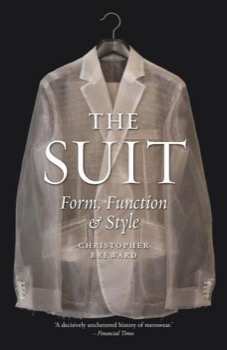
Hardcover. London, Reaktion Books, 1st, 2016, Book: Very Good, Dust Jacket: Very Good, Hardcover in a bright dust jacket, 240 pages, illustrated in color and b&w. The story of this most familiar garment, from its emergence in western Europe at the end of the seventeenth century to today. Suit-wearing figures such as the Savile Row gentleman and the Wall Street businessman have long embodied ideas of tradition, masculinity, power and respectability, but the suit has also been used to disrupt concepts of gender and conformity. Adopted and subverted by women, artists, musicians and social revolutionaries through the decades - from dandies and Sapeurs to the Zoot Suit and Le Smoking. Clean, bright copy.


 "Sur l'?©volution de la grande peinture ?©trangereby: Baschet, Roger")


 "The Dakota: A History of the World's Best-Known Apartment Buildingby: Andrew Alpern/Christopher Gray/Kenneth Grant (Photos)")







 "The Folding Image: Screens by western artists of the nineteenth and twentieth centuriesby: Komanecky Michael and Butera Virginia Fabbri/Adams Janet W. Introduction/Br")




 "The Mind and Art of Giovanni Battista Piranesi by: John Wilton-Ely")


 "The Muralist: A Novel (SIGNED COPY)by: B.A. Shapiro")
 "The Philip Johnson Tapes: Interviews by Robert A. M. Sternby: Robert A.M. Stern")
 "The Photographer by: Gerard Rancinan and Caroline Gaudriault")


 "The Spirit Sings Artistic Traditions of Canada's First Peoplesby: Glenbow Museum")