Hardcover. NY, Metropolitan Museum of Art, 1st, 1997, Book: Very Good, 406 pages. Hardcover published to accompany the exhibition bearing the same title and held at the Metropolitan Museum of Art from October 28, 1997 to January 11, 1998. Canvas cloth boards with grey embossed titles to spine. Full page, full color & bw illustrations throughout. Dust jacket with only light marginal wear. Tight binding, sharp corners, clean & unmarked pages throughout.
Hardcover. New Haven, CT, Yale University Press, 1st, 2015, Book: Very Good, Dust Jacket: None, 160 pages. Hardcover with no dust jacket. Very clean, like new in publishers shrink-wrap. This publication presents the first in-depth survey of the Conley Harris and Howard Truelove Collection of Indian Drawings, which was recently acquired by the Philadelphia Museum of Art. This exceptional collection, which has never previously been published, consists of 65 works on paper created between the 16th and 19th centuries.
Softcover. Cambridge, MIT Press, 1st, 1996, Book: Very Good, Dust Jacket: None, Softcover, exhibition catalogue featuring the famed architect's travel sketches along with photographs of the buildings he encountered and essays on their influence on his work. 11'' x 8.5''. In original dark orange pictorial wrappers. Illustrated throughout in black and white, some color, 136 pages. Spine sun faded.
Hardcover. NY, The Morgan Library & Museum, 1st, Book: Very Good, Dust Jacket: None, Hardcover, pictorial boards, 294 pages. Clean, bright copy. A sumptuous collection of master drawings from the Renaissance to the current era, all reproduced in color.
Hardcover. Philadelphia PA/New Haven CT, Philadelphia Museum of Art/Yale University Press, 1st, 2006, Book: Very Good, Dust Jacket: Very Good, 336 pages, hardcover with dust jacket. Published to commemorate the centenary of Levy's birth. With 300 photographs, including many unfamiliar works by well-known artists, the catalogue presents a stunning survey of this collection, long hidden from public view. Fading to dust jacket spine and fore edges. Unmarked. A clean and tight copy.
Softcover. New York, Universe Pub, 1st, 1993, Book: Very Good, Dust Jacket: None, 138 pages. Softcover. Color photographs. Light edgewear to wrappers otherwise clean, unmarked copy. Hotchkiss (1833-69), an American painter and intimate of Asher B. Durand and Elihu Vedder, is the quintessential delicate artist who dies, underappreciated, at a young age. The title refers not only to his romantic landscapes but also to his sketchy career. This catalog accompanies an exhibition that opens this fall at the National Academy of Design. Novak, a premier art historian of the Hudson River School, provides a provocative essay on Hotchkiss as the fragile, poetic artist fixated on capturing evocative images of the ancient past. Felker, the exhibition curator, provides an insightful catalog of works arranged by subject matter. Appendixes include an exhibition checklist, a chronology of the artist's life, and transcriptions of selected manuscript material. Recommended for academically oriented art history collections.
Softcover. London , Tate Publishing, 1st, 2008, Book: Very Good, Dust Jacket: None, 197 pages. Softcover. Extensive color photographs and illustrations throughout. Illustrated frontispiece. Gilt titles on cover. Clean, unmarked copy with only minor wear to wrappers.
Softcover. London, Tate Publishing, 1st, 2008, Book: Very Good, Dust Jacket: None, Softcover, 248 pages, color and b&w illustrations. This book examines the work of Duchamp, Man Ray, and Picabia, three pioneering figures in the history of modernism. It explores the points of convergence and the parallels in their development throughout their careers. Central to this is their response to photography and film, and to the challenges posed to fine art by the development of mass production. Duchamp's paintings of 1911-12 were influenced by the representation of movement in photography, while Picabia's were shaped in part by the belief that the advent of the camera spelled the end of traditional painting. Man Ray used photography first to record his own art works and those of others, but soon saw in it a means of creating images of a status and inventiveness traditionally restricted to fine art. And, as this fully illustrated book shows, humor and eroticism were themes common to the work of all three artists.
Softcover. Atlanta, The High Museum of Art, 1st, 1972, Book: Good, Dust Jacket: None, 135 pages. Foreword by Gudmund Vigtel. Illustrated in B&W. Some surface wear to covers. Internally clean. Overall tight copy.
Softcover. Oxford UK, Museum of Modern Art , 1982, Book: Very Good, Dust Jacket: None, 88 pages, b/w illustrations, very good paperback (exhibition catalogue). The essay is: Soviet photography between the wars. The photographers are: Max Alpert; Dimitr Dyebabov; Semyon Fridlyand; Boris Ignatovich; Yelizaveta Ignatovich; Georgi Lipskerov; Moisei Nappelbaum; Georgi Petrusov; Alexander Rodchenko; Galina Sanyko; Arkadi Shaikhet; Shaikhet/Alpert/Tules; Abram Shterenberg; Georgi Zelma.
Hardcover. Boston/NY, Bulfinch/Little Brown, 1st, 2002, Book: Very Good, Dust Jacket: Very Good, Hardcover, 96 pages. Essay by Maria Morris Hambourg. Includes 54 tritones, 10 text illustrations and 4 gatefolds. A clean and tight near fine copy. Published in conjunction with a traveling show that ran January 14 through April 21, 2002 at The Metropolitan Museum of Art
Softcover. CA, Fine Arts Museums of San Francisco,, 1st, 1995, Book: Very Good, Dust Jacket: None, 62 pages. Softcover with paper wrappers. Faded on spine. Tight copy with light edgewear to corners.
Softcover. NY, Whitney Museum of American Art, 1st, 1973, Book: Very Good, Dust Jacket: None, Softcover, pictorial wraps. Beautiful reproductions of paintings and drawings throughout, with 12 color plates. Pages are crisp and clean, binding is tight. 126 pages. Catalogue of the exhibition held March 28 to May 14, 1972, at the Whitney Museum of American Art.
Hardcover. New Haven, CT, Yale University Press, 1st, 2018, Book: Very Good, Dust Jacket: None, 47 pages. Hardcover with no dust jacket. Very clean, LIKE NEW in publishers shrinkwrap. Ruscha's work comprises five black-and-white Los Angeles landscapes made in 1992 paired with color representations of the same sites as they appeared ten years later and draws attention to how often-overlooked changes in the evolving urban landscape are redolent of economic might and globalization or decline and stagnation.
Hardcover. NY, D.A.P./Distributed Art Publishers, 1st, 2010, Book: Very Good, Dust Jacket: Very Good, Hardcover in a slipcase, 192 pages. Transforming words into icons and images into wide-screen epics, Ed Ruscha has wholly reconceived the terms of painting for our era. Tagged variously as a Conceptualist, Pop artist or latter-day Surrealist, Ruscha flouts category, or rather incorporates all categories, always surprising and experimenting with both subject and method. His paintings are steeped in our times: cinema, advertising, logos, late capitalism and the twists and turns of postwar art have all informed his iconography since the early 1960s, arriving on the cool surfaces of his canvases with magnetic detachment. Ruscha eschews process and focuses exclusively on the final product: "the means to the end has always been secondary in my art," he has said. Ruscha has also reinvented the use of words in art, finding disquieting ways to invest language with a weird, throbbing, ambient static, never aspiring to what he calls "word gestures," since "each word is an excursion unto itself." Fifty Years of Painting focuses on Ruscha's majestic oeuvre of paintings. A magnificent publication, it comes housed in a slipcase that sports the artist's classic painting "Standard Station" (1966), and, alongside fantastic reproductions, it contains a preface by novelist James Ellroy, essays by Ralph Rugoff, Alexandra Schwartz and Ulrich Wilmes, a text by novelist Bruce Wagner, an interview with the artist by Kristine McKenna, an illustrated chronology and an exhibition history.
Softcover. The Norton Gallery of Art, 1st, 1986, Book: Very Good, Dust Jacket: None, Softcover, 122 pages illustrated in color and b&w. Here the Norton Gallery of Arts Museum shows the exhibition of works by the distinguished Norwegian painter and printmaker Edvard Munch. For him, art must do nothing less than reveal the essential human condition. Having emerged as an accomplished Naturialist painter in the 1880s, he rejected Naturalism in his artistic manifesto of 1889-90. He began to paint images reflecting the stormy human psyche, and arranged his paintings into friezes to better communicate their meaning. At his death in 1944, his legacy included several thousand oil prints, reams of drawings, literary fragments, photographs and sculpture. Light sticker residue to front cover otherwise clean and bright.
Hardcover. New York, The Museum of Modern Art, 1st, 2006, Book: Very Good, Dust Jacket: Very Good, 256 pages. Hardcover with dust jacket. Very clean, unmarked copy with only minor dust jacket wear. Very light yellow fading to textblock edges. Otherwise a tight copy. 250 illustrations, 207 in color, 43 black & white.
Hardcover. NY, Rizzoli, Revised Ed., 2007, Book: Very Good, Dust Jacket: None, Hardcover, 777 pages. In the art of Edward Hopper (1882-1967), tense, unhappy men and women, in whom we recognize something of our neighbors and ourselves, play out mysterious dramas in silent, stripped-down spaces - stages raked by an unrelenting and revealing light. These paintings, and Hopper's equally evocative landscapes and houses, make us wonder: what kind of man had this haunting vision, and what kind of life engendered this art? No one is better qualified to answer these questions than the art historian Gail Levin, author of the major studies of Hopper's work (including the catalogue raisonne) and curator of many exhibitions that explored his development and cultural context. Delving deeply into his art and into a rich archive of unpublished letters and diaries, she now constructs "An Intimate Biography, " which reveals the true nature and personality of the man himself - and of the woman who shared his life and helped to shape his art. Jo Hopper's diaries permit an intimate look at the interactions of an indissolubly bonded couple, revealing for the first time the personal tensions that lie behind some of Hopper's most haunting works. Lacks dust jacket but a clean, bright copy.
Softcover. NY, Hirschl & Adler Galleries, 1st, 1987, Book: Very Good, Dust Jacket: None, Softcover, 40 pages illustrated in color and b&w. 6 color, 32 b&w plates, frontispiece. Showcases select artwork by Edward Hopper. With an essay by Douglas Dreishpoon. Many of these works were included in a traveling exhibition entitled "Edward Hopper: The Early Years", and held Mar. 14 to Apr. 18, 1987. The exhibition checklist cites 81 pieces, and about 40 are shown here. Clean copy.
Softcover. NY, Hirschl & Adler Galleries, 1st, 1988, Book: Very Good, Dust Jacket: None, Softcover, 60 pages, 67 illustrations (13 color). Catalogue of 106 paintings, watercolors, etchings and drawings, with notes on selected works. Essay by Peter Schjeldahl. Includes a collection of drawings, forming the basis of the exhibition, bequeathed by the artist's widow Jo Hopper to her friend Mrs. Mary R. Schiffenhaus. Clean, bright copy.
Softcover. Dayton OH, The Dayton Art Institute, 1st pbk, 2004, Book: Very Good, Dust Jacket: None, Softcover, measures 12" X 12" - 342 pages, with 90 B&W, toned, and 10 color plates, plus text illustrations. Clean copy. DOMESTIC SHIPPING ONLY.
Softcover. Northampton, Mass., Smith College Museum of Art, 1st, 1983, Book: Very Good, Dust Jacket: None, Softcover, 170 pages, b&w and color illustrations. Light edge wear, rubbing to wrappers. Else a clean, tight copy.
Hardcover. Munich/NY, Prestel, 1st, 2014, Book: Very Good, Dust Jacket: Very Good, Hardcover in a bright dust jacket, 296 pages, color illustrations and portraits throughout. Issued in conjunction with a 2014-2015 exhibition of portraiture rendered by Austrian painter Egon Schiele (1890-1918). "Despite a career that lasted less than a decade, Schiele is considered one of the most important artists of the twentieth century. A protege of Gustav Klimt, Schiele is celebrated for his singular style of draftsmanship, unusual use of color, and physically raw, often sexually provocative depictions of his sitters. Schiele's expressive style and controversial subject matter played an important role in the advancement of modernism in Europe. ... Both the catalogue and the exhibition are divided into six groupings of the artist's work: Family and Academy; Fellow Artists; Sitters and Patrons; Eros; Lovers; and Self-Portraits and Allegorical Self-Portraits. In addition, there is a section highlighting a traumatic and pivotal period in Schiele's life: his arrest and imprisonment during the spring of 1912. The color plates document the evolution of the artist's style, both pre- and post-imprisonment. Schiele's untimely death at the age of 28 adds a mythic quality to his abbreviated career." (dj) With five thematic and illustrated essays, and many illustrations. Clean copy.

 "Drawings of Filippino Lippi and His Circle, Theby: Goldner, George R./Carmen C. Bambach")
 "Drawn From Courtly India: The Conley Harris and Howard Truelove Collectionby: Cameron, Ainsley")


 "Dreaming in Black and White: Photography at the Julien Levy Galleryby: Ware, Katherine and Peter Barberie")
 "Dreams and Shadows: Thomas H. Hotchkiss in Nineteenth-Century Italyby: Novak, Barbara")
 "Duchamp Book, The: Tate Essential Artists Seriesby: Parkinson, Gavin")
 "Duchamp, Man Ray, Picabiaby: Mundy, Jennifer")
 "Duchamp, Man Ray, Picabiaby: Mundy, Jennifer")
 "Dusseldorf Academy and the Americans, The: An exhibition of drawings and watercolorsby: The High Museum of Art")
 "Early Soviet Photographersby: Mrazkova, Daniela and Vladimir Remes, John Hoole ed.")
 "Earthly Bodies: Irving Penn's Nudes, 1949-50by: Penn/Maria Morris Hambourg, Irving")


 "Ed Ruscha: Course of Empireby: Riopelle, Christopher")
 "Ed Ruscha: Fifty Years of Paintingby: James Ellroy (Author), Ralph Rugoff (Author), Alexandra Schwartz (Author), Bruce Wagner (Author), more")
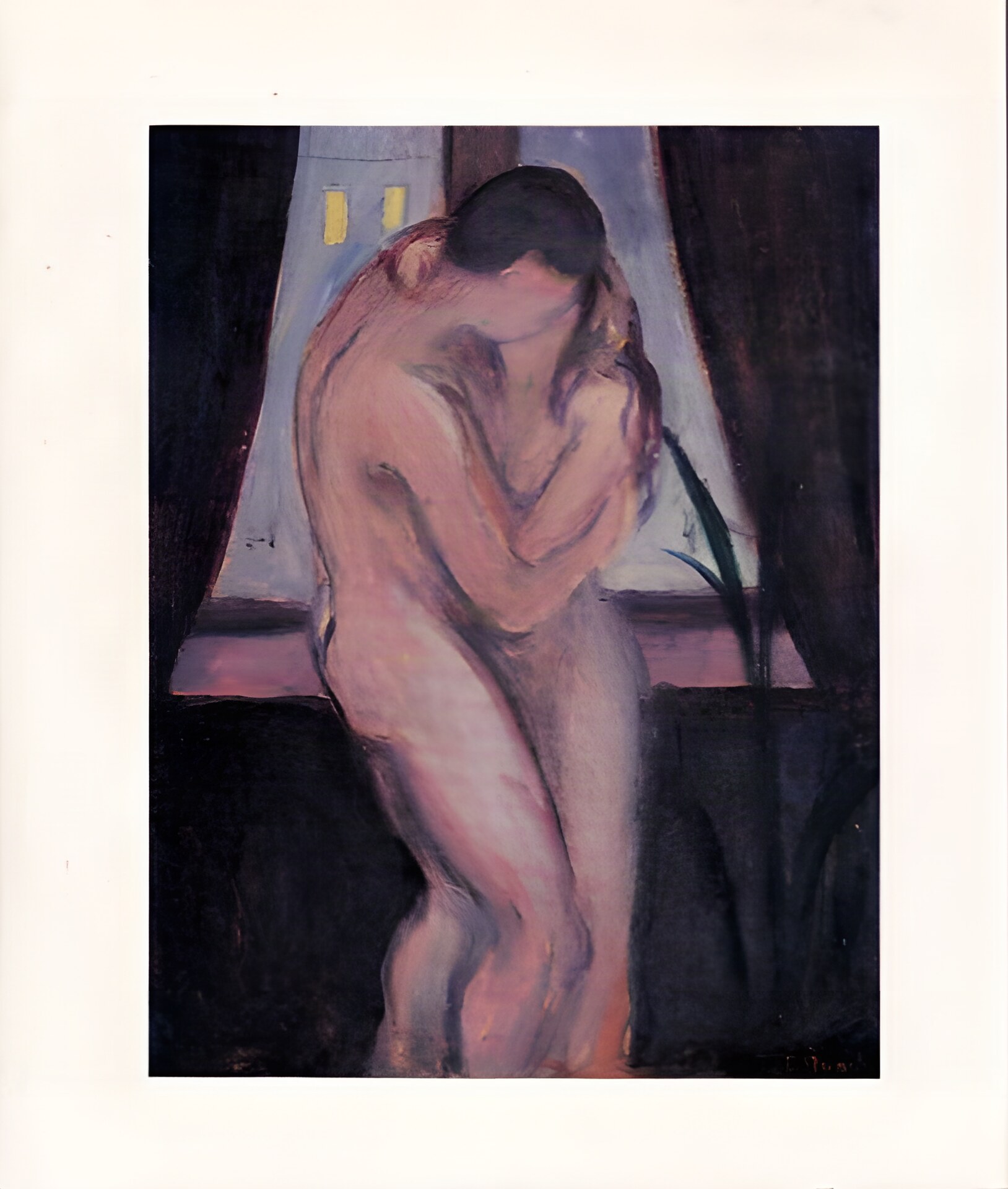
 "Edvard Munch: The Modern Life of the Soulby: Berman, Patricia")