Softcover. NY, Jaap Rietman, 1st, 1978, Book: Very Good, Dust Jacket: None, Softcover, 88 pages. Profusely illustrated in b&w. Essay by David Bourdon, with additional text by Barbara Rose. Designed by Richard S. Haymes. With a chronology, exhibition history and bibliography. This is the substantial catalogue published in conjunction with a 1978 circulating American Museum retrospective exhibition of sixteen sculptures and sculptural installations executed between 1959 and 1977 by minimal pioneer Carl Andre. Clean copy.
Hardcover. Darmstadt GR, Mathildenhohe, 1st, 1991, Book: Very Good, Dust Jacket: None, 170 pages, illustrated in color, bright red cloth covered boards with gilt lettering. Exhibition catalog for a show that traveled to Los Angeles the next year. Text in German and English. No dust jacket.
Softcover. Hohenems AUS, 1st, 1990, Book: Very Good, Dust Jacket: None, Softcover, 38 pages, b&w illustrations. German text. Caroline Ramersdorfer was born in Lustenau, Vorarlberg, Austria in 1960. She lives and works in Wells, NY. Ramersdorfer carves slabs of marble to reveal complex interior spaces creating a variety of "views" and perceptions. This catalog from the International Sculpture Symposia in Hohenems, Austria. Name inside front cover. Artist's name and addresses pasted in rear endpapers.
Softcover. Washington D.C., The Smithsonian Institution Press, 1st, 1981, Book: Very Good, Dust Jacket: None, Softcover. Exhibition catalog, 127 pages, 74 B&W plates throughout. Edgewear to cover. Small blemish to front of wrapper. Otherwise a very clean and tight copy.
Softcover. Seattle, WA, Fantagraphics Books, 1st, 2013, Book: Very Good, Dust Jacket: None, 160 pages. Softcover. A very clean, unmarked copy with only minor edgewear. Black and white illustrations throughout. At the age of 21, Gene Deitch discovered The Record Changer, a jazz fan magazine. Every jazz swinger in the '40s was called a "cat," so Gene Deitch created a cartoon feature titled "The Cat," which quickly became a fixture of the magazine. He also started drawing the covers, which graced almost every issue from 1945 to 1951. Deitch's stylistically virtuoso images exquisitely embodied the essence of the 1950s hipster, and was a visual paean to the joy of collecting records and appreciating jazz. The Cat on a Hot Thin Groove collects all of Deitch's Record Changer work in one gorgeous, coffee-table art book, with commentary and reminiscences by Deitch himself.
Softcover. Seattle, WA, Fantagraphics Books, 1st, 2013, Book: Very Good, Dust Jacket: None, 160 pages. Softcover. A very clean, unmarked copy with only minor edgewear. Black and white illustrations throughout. At the age of 21, Gene Deitch discovered The Record Changer, a jazz fan magazine. Every jazz swinger in the '40s was called a "cat," so Gene Deitch created a cartoon feature titled "The Cat," which quickly became a fixture of the magazine. He also started drawing the covers, which graced almost every issue from 1945 to 1951. Deitch's stylistically virtuoso images exquisitely embodied the essence of the 1950s hipster, and was a visual paean to the joy of collecting records and appreciating jazz. The Cat on a Hot Thin Groove collects all of Deitch's Record Changer work in one gorgeous, coffee-table art book, with commentary and reminiscences by Deitch himself.
Softcover. Philadelphia, Pennsylvania Academy of the Fine Arts, 1st, 1974, Book: Very Good, Dust Jacket: None, Softcover, 126 pages. Minor creasing in top right corner. B&W and color. Internally clean. Overall tight copy. Illustrated wraps. Introduction by Frank H. Goodyear, Jr. Foreword by Richard J. Doyle, Director. Published on the occasion of the exhibition organized by the Pennsylvania Academy of the Fine Arts, Philadelphia PA 1974-1975. Bibliography. Index of Illustrations. [
Hardcover. NY, Gallimard, 1st, 2017, Book: Very Good, Dust Jacket: None, Hardcover, 392 pages. Profusley illustrated, this book explores a hitherto overlooked topic in Chagall studies - the connection between Chagall and music. This intimate relationship, which ran deep in both his family history and the Jewish culture of his native city, was particularly meaningful in Chagall's creations for the stage. His works for the Jewish Theatre (Moscow, 1919-1920) and the ballets 'Aleko' (Mexico, 1942), 'The Firebird' (New York, 1945), 'Daphnis et Chloe' (1958) and 'The Magic Flute' (New York, 1967) celebrate the links he established between music, large-scale set design, and the material design of costumes. Chagall's monumental projects in the 1960s, such as the ceiling of the Paris Opera (1964) and his decorative architectural program for the Metropolitan Opera at Lincoln Center in New York (1966), are a reflection of his notion of 'total art', and his explorations in the universality of music and its translation into the spatial dimension. Music was a constant source of inspiration to Chagall. Clean, bright copy. No dust jacket.
Hardcover. London, Merrell Publishers, 1st, 2002, Book: Very Good, Dust Jacket: Very Good, Hardcover in a bright dust jacket, 224 pages, 200+ color illustrations. The first of a three-part series that explores the creativity and productivity of Native American artists. This volume "focuses on the work of nearly ninety of the most exciting and innovative artists of the region, working in a variety of media, from clay to glass, from fiber to jewelry, and from metal to wood, as well as mixed media." (flap).
Softcover. Washington, DC, Smithsonian Institution, 1st, 1978, Book: Very Good, Dust Jacket: None, Softcover, 96 pages, b&w and color illustrations. Very light edge wear; else a very clean, tight copy.
Softcover. Washington, DC, Smithsonian Institution, 1st, 1978, Book: Very Good, Dust Jacket: None, Softcover, 96 pages, b&w and color illustrations. Very light edge wear; else a very clean, tight copy.
Softcover. Hiram Blauvelt Art Museum, 1st, 1994, Book: Very Good, Dust Jacket: None, 95 pages, illustrated throughout in color and b&w. Light edgewear to wrappers, else a clean, tight copy.
Softcover. New York, Rizzoli, 1st, 1993, Book: Very Good, Dust Jacket: None, 305 pages, illustrated throughout in color and b&w. Light edgewear and sun-fade to spine. Previous owner's signature on front end paper. Clean, tight copy. Briefly traces the career of this contemporary American architect and shows examples of his houses, apartment buildings, libraries, museums, schools, hotels, churches, and conference centers.
Hardcover. New York, Museum of Contemporary Art, 1st, 1998, Book: Very Good, Dust Jacket: None, Hardcover, 119 pages, mostly illustrated in color. Essays by Paul Schimmel and Lisa Phillips. Illustrated boards, no dust jacket issued.
Hardcover. Washington DC, Smithsonian Institution, 1st, 1968, Book: Very Good, Dust Jacket: Good, Hardcover in a lightly worn, unclipped dust jacket. 156 pages, b&w and color illustrations. Accompanied the exhibit of the same name shown at the Smithsonian, the Philadelphia Museum of Art and the Whitney in 1968 and 1969. Essays by Martin Friedman, Bartlett Hayes and Charles Millard. Whitney Museum of American Art. Bibliography: p. 106-107. Charles Sheeler (July 16, 1883 - May 7, 1965) was an American painter and commercial photographer. He is recognized as one of the founders of American modernism, developing a "quasi-photographic" style of painting known as Precisionism and becoming one of the master photographers of the 20th century. Mild shelf wear, clean copy.
Softcover. Munich, Prestel/Art Institute of Chicago, 1st, 1987, Book: Very Good, Dust Jacket: None, Softcover, 480 pages, b&w and color illustrations. Published in association with the Art Institute of Chicago and in conjunction with an exhibition presented there in the summer of 1988, as well as in Paris and Frankfurt-am-Main in 1987-88. Contributors to the text include Robert Bruegmann, Sally Chappell, Meredith L. Clausen, Joan E. Draper and others.
Softcover. Pawtuxet Cove, RI, Dale Chihuly, 1st, 1982, Book: Very Good, Dust Jacket: None, 45 full page color reproductions. Beautiful catalog for exhibition traveling to Tucson Museum of Art, San Diego Museum of Art, and St. Louis Art Museum. Printed on Northwest Quintessence by Foremost Lithograph, Co. Slight wear on cover. All else in very good condition.
Softcover. Muncie, Ind., Ball State University, 1st, 1985, Book: Very Good, Dust Jacket: None, 72 pages, b&w and color illustrations. Light rubbing to wrappers, small tear to rear cover, else a very clean, tight copy.
Softcover. New York, W. W. Norton & Company, Inc., 1st, 1990, Book: Very Good, Dust Jacket: None, 143 pages. Softcover. A very clean, unmarked copy with only minor edgewear. Black & white photographs throughout.
Softcover. Washington, Smithsonian Institution, 1st, 1973, Book: Very Good, Dust Jacket: None, 236 pages. Paperback with faded paper wrappers. Black and white and colored pictures throughout. Tight copy
Softcover. Jackson MS, University Press of Mississippi, 1st, 1996, Book: Very Good, Dust Jacket: None, 208 pages, illustrated throughout in color and b&w. Light shelf-wear and rubbing to wrappers, otherwise a clean, tight copy. Essays by Trudy Wilner Stack and Allen Tullos was published in conjunction with a traveling exhibition of the same name. Christenberry's paintings, photography, sculpture and instal lations address the Southern identity. They describe and examine the social and material culture of the deep South.
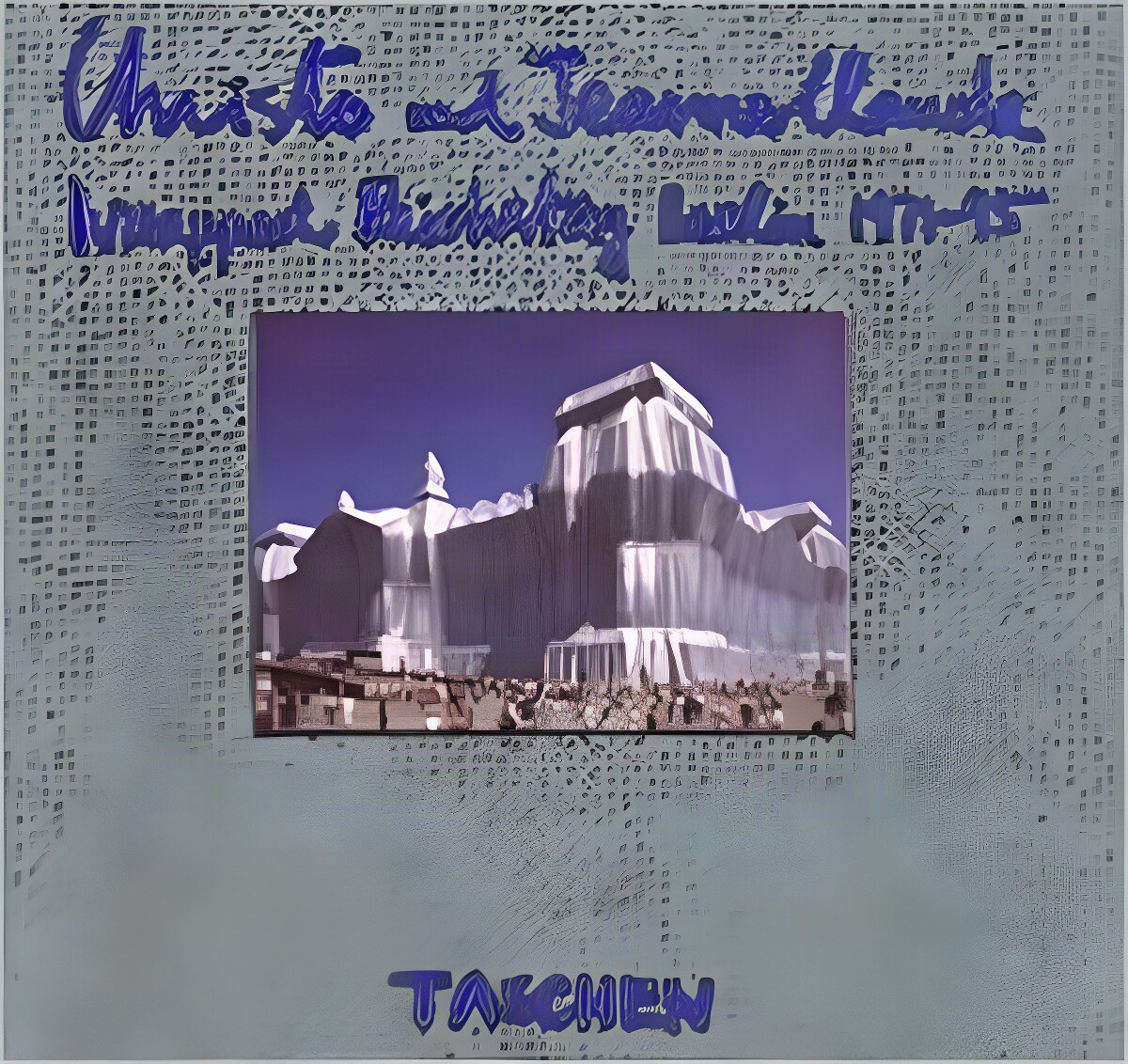
Hardcover. New York, National Gallery of Art/Harry N. Abrams, 1st, 2002, Book: Very Good, Dust Jacket: Very Good, 144 pages. Hardcover with dust jacket. Clean, tight copy with mniior wear to edges. Color photos throughout. Christo and Jeanne-Claude have created some of the most visually breathtaking works of the twentieth century. From early wrapped objects to monumental outdoor projects such as The Umbrellas, Japan-U.S.A., 1984-91 and Wrapped Reichstag, Berlin, 1971-95, the artists have used fabric - wrapped, draped, and folded over, around, and through natural and constructed forms - to transcend the traditional bounds of painting, drawing, sculpture, and architecture. This volume spanning forty years of Christo and Jeanne-Claude's remarkable career accompanies an exhibition at the National Gallery of Art of sixty-one works from the collection of Dorothy and Herbert Voqel, whose relationship with the artists dates to 1971. The wonderful breadth of works presented in color and discussed here includes several early packages, models for large-scale public works, preparatory drawings and collages for projects in urban and rural sites, and photographs of the completed projects.

 "Carl Andre: Sculpture 1959-1977by: David Bourdon; Barbara Rose")
 "Carlo Maria Mariani: Utopia Now!by: Mariani, Carlo Maria")

 "Cat On a Hot Thin Groove, Theby: Deitch, Gene")
 "Cat On a Hot Thin Groove, Theby: Deitch, Gene")
 "Cecilia Beaux and the Art of Portraiture by: Tappert, Tara Leigh")
 "Cecilia Beaux: Portrait of an Artistby: Pennsylvania Academy of the Fine Arts")
 "Chagall and Musicby: Ambre Gauthier and Meret Meyer")
 "Charles Burchfield: The Charles Rand Penney Collectionby: Penney, Charles Rand et. al.")
 "Charles Burchfield: The Charles Rand Penney Collectionby: Penney, Charles Rand et. al.")

 "Charles Moore: Buildings and Projects 1949-1986by: Johnson, Eugene J.")
 "Charles Rayby: Schimmel, Paul")

 "Chicago Architecture 1872-1922 Birth of a Metropolisby: Zukowsky (Ed.), John")
 "Chihuly Glassby: Chihuly, Dale. Introduction by Linda Norden.")
 "Childe Hassam in Indianaby: Joyaux, Alain G. (Contributor)")
 "Chile from Within, 1973-1988by: Meiselas, Susan")
 "Chinese Figure Paintingby: Lawton, Thomas")
 "Christenberry: Reconstruction: The Art of William Christenberryby: Stack, Trudy Wilner")
 "Christo and Jeanne-Claude in the Vogel Collectionby: Donovan, Molly")