Hardcover. US, Amer Federation of Arts, 1st, 2001-07-01, Book: Very Good, Dust Jacket: None, 134 pages, illustrated throughout in color and b&w. Light edgewear and rubbing to boards. No dust jacket. Clean, tight copy.
Hardcover. New York, Hamlyn Publishing Group, Ltd., 1st, 1973, Book: Very Good, Dust Jacket: Very Good, Illustrated guide to historical and modern Eskimo art. 96 pages, illustrated with more than 100 photographs, both color and black/white (many full-page). Book and dust jacket are in very good condition, dust jacket shows some light edge wear.
Hardcover. London, Victoria & Albert Museum, 1st, Book: Very Good, Dust Jacket: Very Good, Hardcover in a bright dust jacket. "This collection of illustrations from the National Art Library at the V&A contains well-known and unfamiliar fables accompanied by contemporary texts and translations, often with a topical or satirical content. It gives a cross-section of illustrative styles from the 15th to the 20th centuries. Fabulous color and b/w illustrations throughout. A wonderful reference volume, with a small bibliography and an "Analysis by Theme" at rear (plus Index)." Clean copy.
Hardcover. New York, Aurora, 1st, Aurora, Book: Good, Dust Jacket: Good, Hardcover, 459 pages, 1430 illustrations, including 705 plates in full color. Light edgewear and rubbing to dust jacket with small scratch to front cover. Excellent reference copy.
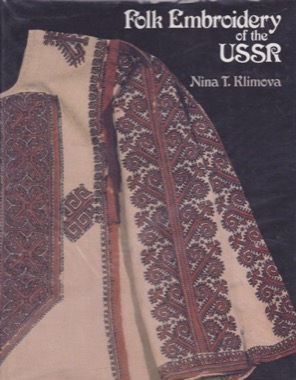
Softcover. New York, Hastings House Publishers, 1st, 1976, Book: Near Fine, Dust Jacket: Near Fine, Beautifully illustrating the folk art of Europe in two parts, Part one containing textile such as fabrics, rugs and embroidery, while part two deals with ceramics, metals, wood and other materials. Color and b&w illustrations throughout. Brown cloth, gilt lettering to spine, nice pictorial dust jacket, all in very nice, clean and crisp condition. Plain cardboard slipcase.
Hardcover. NY, Van Nostrand Reinhold, 1st, 1981, Book: Very Good, Dust Jacket: Very Good, Hardcover in a bright dust jacket. 128 pages, b&w illustrations, some color. Clean copy.
Hardcover. New York, Doubleday Page & Co., 1st, 1913, Book: Very Good, Dust Jacket: None, 129 pages. Hardcover with no dust jacket. Gilt decoration and laid in art on front cover. Black & white illustrations by Charles Livingston Bull.
Softcover. Toronto, Ontario Heritage Foundation, 1st, 1985, Book: Very Good, Dust Jacket: None, Softcover, 128 pages, 201 plates in color and b&w. Softcover exhibition catalog in clean, bright condition. Photos with brief descriptions of folk art & artifacts representing many ethnic groups including Pennsylvania German work. Clean copy.
Hardcover. Baton Rouge, Louisiana State University Press, 1st Edition, 1990, Book: Very Good, Dust Jacket: Very Good, 211 pages. Hardcover with light foxing to edges, preliminary pages and dust jacket interior. Published on occasion of the exhibition, Louisiana State University Union Art Gallery, Baton Rouge, August 20, 1990 - September 22, 1990 among other locations. Black & white photographs throughout. Dust jacket with minor edgewear. Otherwise clean, unmarked copy.
Hardcover. Chapel Hill, University of Carolina Press , 1st, 1936, Book: Very Good, Dust Jacket: None, 321 pages. Green cloth without a dust jacket. Minor sun-fade to spine. Clean, tight copy.
Hardcover. NY, Harper Collins, 1st, 1997, Book: Very Good, Dust Jacket: Very Good, Hardcover in a bright, unclipped dust jacket. Color Illustrations by Lettimore. In a carefully researched, lavishly illustrated original tale of long ago, Deborah Nourse Lattimore transports readers back through time to a land where Shoguns rule and mythical creatures abound. Focusing on one of her favorite periods in history--Japan's Edo period--Lattimore writes of a poor birdcatcher named Hideo who is banished from his village when he is accused of being the evil bandit who steals from Shogun and villager alike. Finding shelter under the boughs of a tree, Hideo hears a rustling and makes a catch beyond his wildest dreams. Painted in the art style of the Edo period, each spread is breathtaking in its detail; every page is awash in shimmering and vibrant color.
Hardcover. New York , Scholastic, 1st, 1993, Book: Very Good, Dust Jacket: Very Good, Hardcover in a bright dust jacket. 400 pages. SIGNED BY 12 ILLUSTRATORS plus editor, in book and on bookplate. More than 140 folktales, folk songs, poems, and essays, placed in historical context are brought together with over 300 original illustrations from 11 Caldecott Medal and 4 Caldecott Honor book artists.
Hardcover. NY, Da Capo Press, 1st, 2011, Book: Very Good, Dust Jacket: Very Good, Hardcover in a bright, unclipped dust jacket. Fug You is Ed Sanders's unapologetic and often hilarious account of eight key years of "total assault on the culture," to quote his novelist friend William S. Burroughs. Fug You traces the flowering years of New York's downtown bohemia in the sixties, starting with the marketing problems presented by publishing Fuck You / A Magazine of the Arts, as it faced the aboveground's scrutiny, and leading to Sanders's arrest after a raid on his Peace Eye Bookstore. The memoir also traces the career of the Fugs -- formed in 1964 by Sanders and his neighbor, the legendary Tuli Kupferberg (called "the world's oldest living hippie" by Allen Ginsberg) -- as Sanders strives to find a home for this famous postmodern, innovative anarcho-folk-rock band in the world of record labels.
Hardcover. Princeton NJ, Princeton University Press, 1st, 2003, Book: Very Good, Dust Jacket: Very Good, Hardcover in a bright dust jacket, 199 pages illustrated in color. Sphinxes, hydras, chimeras, dragons, unicorns, griffins, sirens, and centaurs--fantastic animals can be found in works from Greek vases to paintings by Bosch, Goya, and Picasso, from folk art to comic strips, advertising, and Hollywood movies. Here Be Dragons is a lavishly illustrated compendium of the marvelous menagerie of imaginary animals that humans have conjured up over the ages. Ariane and Christian Delacampagne take us on a visually and intellectually riveting journey through five thousand years of art, examining the symbolic meanings of such creatures and what they say about the unconscious life of the human mind. Clean copy.
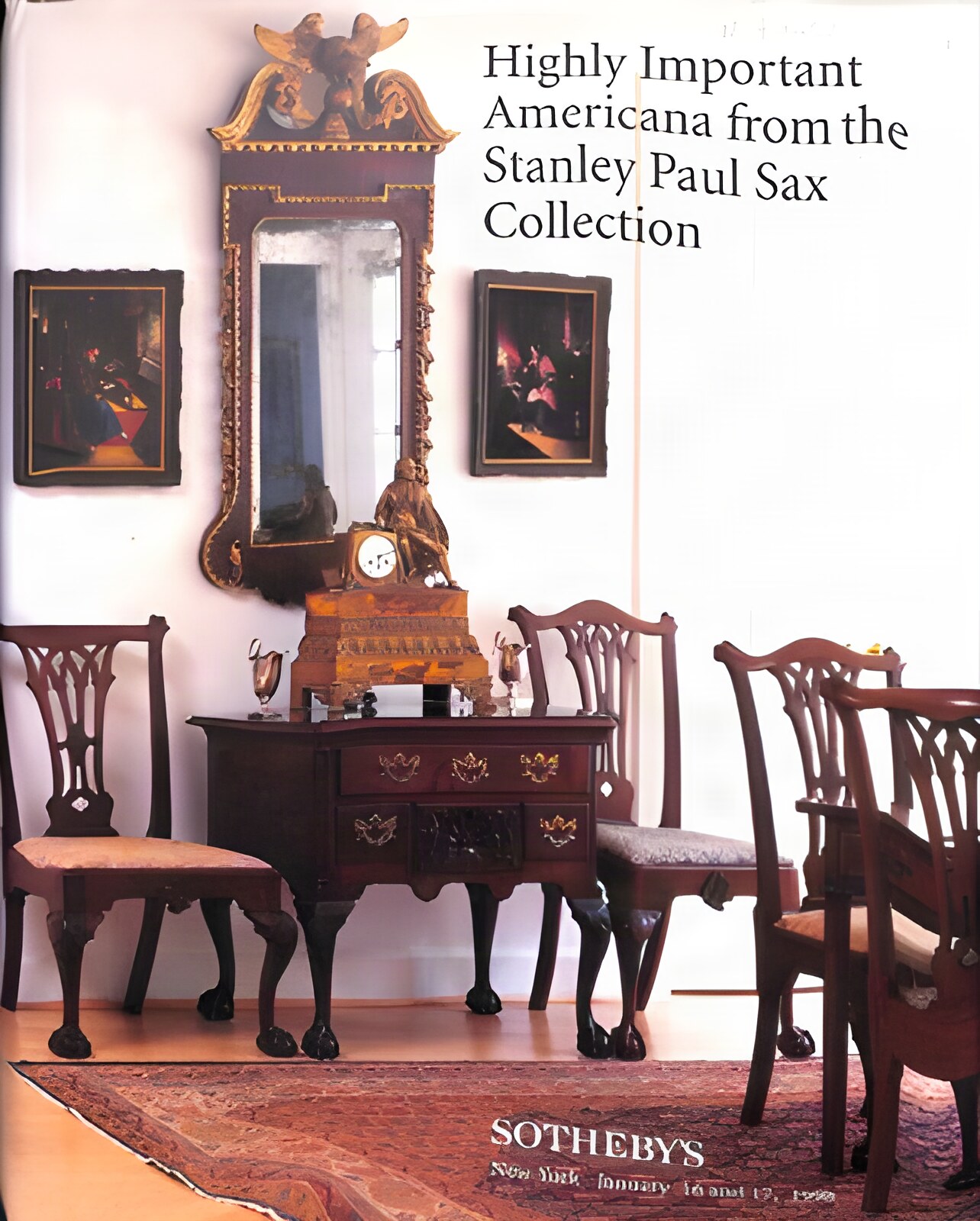
Hardcover. NY, Sotheby's New York, 1st, 1998, Book: Very Good, Dust Jacket: Very Good, Hardcover in a bright dust jacket, 579 lots, color photos throughout. Maroon cloth. Includes silver, miniatures, watches, prints and illustrations, maps, small statuary, a few paintings and marble busts, furniture, painted portraits, more furniture, clocks, chairs, Indian artifacts, more clocks, china, brassware, more furniture, a few paintings, samplers, embroidered items, carved ivory, more furniture, and some folk-art items. Lots of annotation on the more expensive items. Small dent to lower edge of front board, light shelf-wear to dust jacket, else a clean, tight copy. DOMESTIC SHIPPING ONLY.
Softcover. Colorado Springs, Colorado, Colorado Springs Fine Arts Center, 1st, 1977, Book: Good, Dust Jacket: None, Softcover. Exhibition catalogue featuring the Hispanic art of the American Southwest. 118 pages, 21 black/white plates, 105 other black/white illustrations of pieces, and 36 black/white photographs of featured artists. Good condition, some soiling/light discoloration on the cover, top right corner bent.
Hardcover. NY, Garden City Publishing, 1st, 1942, Book: Very Good, Dust Jacket: Very Good, Hardcover in a bright dust jacket, original price intact (5050). A retelling of an African folk tale with wonderful color and b&w artwork throughout by Feodor Rojankovsky. One of four of Rudyard Kipling's Just So Stories published by Garden City in 1942, all illustrated by Rojankovsky. The other three were: The Elephant's Child; How the Rhinoceros Got His Skin; and How the Camel Got His Hump. Unpaginated [28 pages]; full-color, 2-color, and b&w illustrations throughout.
Hardcover. London, Oxford University Press, 1st UK, 1979, Book: Very Good, Dust Jacket: Very Good, Hardcover, 64 pages of text. 638 photographs. Beautifully illustrating the Hungarian folk art and gives insight into the customs and lore of Hungarian peasantry. Folio. Gray cloth, decorated end papers. Small stain to dust jacket spine. Minute crinkling to spine bottom edge. A very clean, attractive and well preserved copy.
Hardcover. Philadelphia, Pennsylvania Academy of the Fine Arts/Universe Publishing, 1st, 1993, Book: Very Good, Dust Jacket: Very Good, Hardcover, 210 pages, 191 illustrations most in color. Bibliography and index. One of the foremost African-American artists of the twentieth century, Horace Pippin came to prominence in the late 1930s between the heyday of the American Scene painters and the ascendancy of Abstract Expressionism. An unschooled painter who was a disabled World War I veteran, Pippin is represented in public and private collections across America. I Tell My Heart features over 110 Pippin paintings including many never before reproduced nor shown in public since the artist's lifetime, as well as many black and white archival photographs of Pippin and his contemporaries.
Hardcover. Guilford CT, Backbeat, 1st, 2020, Book: Very Good, Dust Jacket: Very Good, Hardcover in a bright dust jacket, 304 pages, b&w illustrations. Phil Ochs is known primarily as a songwriter; however, his oeuvre extends far beyond that--to short stories, poetry, criticism, journalism, and satire, all of which are included in I'm Gonna Say It Now: The Writings of Phil Ochs, which represents the majority of what Ochs wrote outside of his large circle of songs. This comprehensive tome presents another side of the famous topical songwriter, showcasing his prose and poetry from across the full span of his life. From prizewinning stories and clear-eyed reporting while a journalism major in college to music criticism, satires, and political pieces written while part of the burgeoning folk scene of New York City in the early 1960s and during the tumultuous Vietnam War era; from sharp and lyrical poems (many previously unpublished) to reviews, features, and satires written while living in Los Angeles and the final, elegiac coda writings from near the end of his life--I'm Gonna Say It Now presents the complete picture. The book includes many rare or nearly impossible to find Ochs pieces, as well as previously unpublished works sourced from the unique holdings in the Ochs Archives at the Woody Guthrie Center. Additionally, never-before-seen reproductions from Ochs's journals, notebooks, and manuscripts provide a closer look at the hand of the artist, giving a deeper context and understanding to his writings. Never before published photographs of Ochs bestow the visual cherry on top.
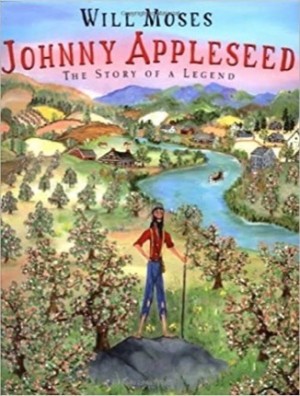
Hardcover. NY, Philomel Books, 4th pr., 2001, Book: Very Good, Dust Jacket: Very Good, Hardcover in a bright, unclipped dust jacket with mild fad to spine. The long-enduring American legend of Johnny Appleseed comes to life in the glorious folk illustrations and spirited storytelling of Will Moses. Everyone knows the story of Johnny Appleseed: how he traveled westward across our young country, spreading apple trees wherever he went and wearing outlandish hats, like a soup pot, on his head. But did you know that Johnny Appleseed was a real person? Born John Chapman in 1774, he grew up in a family of twelve children, and as a young man, struck out to find the frontier. It was along this journey that he discovered the wonders of apple trees, and where he had his life adventures. In the tradition of his great-grandmother, Grandma Moses, Will Moses's much-loved folk art perfectly illustrates this American tale.
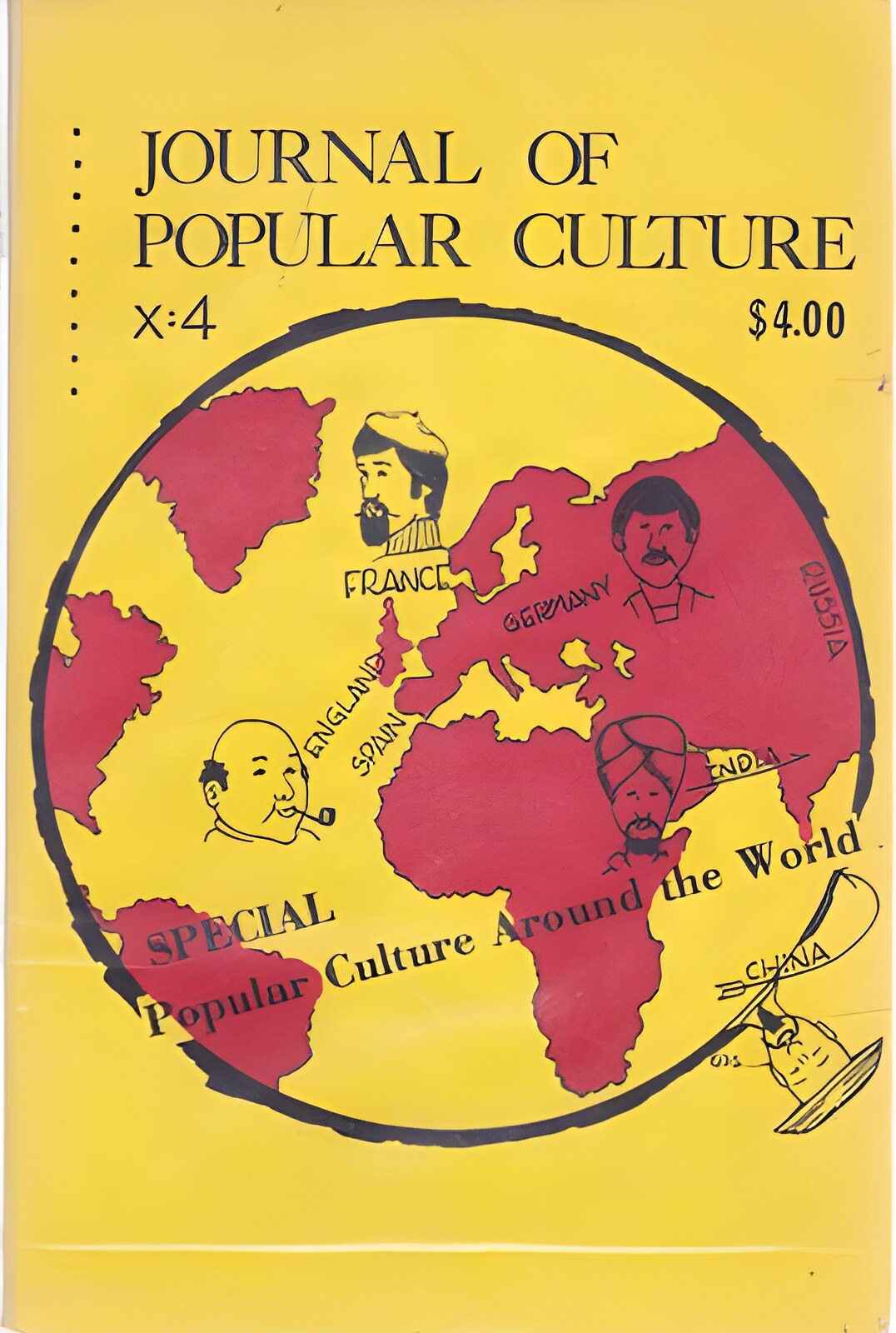
Softcover. Bowling Green OH, Journal of Popular Culture, 1st, 1977, Book: Very Good, Dust Jacket: None, Softcover, pages 701-909. Articles include: Philip Gordon on Ayn Rand. Louis F. Helbig on Struwwelpeter: an inquiry into the effects of violence in children's literature. French folk songs. D. L. Ashliman on the American Indian in German Travel Narratives and Literature. Clean.
Hardcover. Princeton NJ, Princeton University Press, 1st, 1992, Book: Very Good, Dust Jacket: Very Good, Hardcover in a bright dust jacket, 281 pages, b&w illustrations. "For, Lo! We live in an Iron Age--In the age of Steam and Fire!" wrote a poet mesmerized by the engines that were transforming American transportation, agriculture, and industry during his lifetime. Indeed, by the nineteenth century fire had become America's leitmotif--for good and for ill. "Keeping the flame" was deadly serious: even the slightest lapse of attention could convert a fire from friendly ally to ravaging destroyer. To examine the cultural context of fire in "combustible America," Margaret Hazen and Robert Hazen gather more than a hundred illustrations, most never before published, together with anecdotes and information from hundreds of original sources, including newspapers, diaries, company records, popular fiction, art, and music. What results is an immensely entertaining and encyclopedic history that ranges from stories of the tragic "great fires" of the century to fire imagery in folktales and popular literature. Dealing more with technology than with fire in nature, the book provides a vast amount of information on fire manipulation and prevention in urban life. Hazen and Hazen discuss the people who worked with fire--or against it. Founders, gaffers, blacksmiths, boilers at saltworks, and housewives knew how to "read" a fire and employ it for their purposes. A few dedicated investigators inquired about the scientific nature of heat and flame. And firefighters gradually progressed from "bucket brigades" to "using fire to fight fire" with the newly invented steam engine. The colorful stories of these Americans--the risks they took and the rewards they received--will fascinate not only social historians but also a broad audience of general readers. Clean copy.
Hardcover. New York , Abrams, 1st, 1999, Book: Very Good, Dust Jacket: Very Good, Hardcover, 254 pages, 173 illustrations, 131 in color. Although he is now seen as a progenitor of the "naive" style, during his lifetime Edward Hicks (1780-1849) was known only as a devout, impoverished Quaker minister who liked to paint. With a few exceptions, his extant body of work is made up of 62 "Peaceable Kingdom" pictures, based on Isaiah's biblical prophecy. Although these paintings, known for their charmingly wide-eyed and sensuous beasts, use potent color and effective design, they are technically unsophisticated and repetitive in the extreme. But they contain a powerfully serene devoutness, a mood probably expressed in compensation for Hicks's guilt about an avocation viewed as frivolous by other Quakers. As the popularity of folk art boomed in the early 20th century, Hicks's homely visions were popularized and became the focus of scholarly attention, and this work is probably the best to date. Weekley, the director of museums at Colonial Williamsburg, shrewdly considers Hicks's "secular" life and art through the filter of his intense piety and copiously illustrates her large-format book with brilliant color plates.

 "Elie Nadelman: Classical Folkby: Nadelman, Elie")
 "Eskimo Artby: Burland, Cottie")
![Fables: Five Hundred Years of Illustration and Text by: Anne Stevenson Hobbs [Ed]](javascript:largeIMTop('https://www.browsingisarousing.com/shop/images/Fables-Five-Hundred-Years-of-Illustration-and-Text_by_Anne-Stevenson-Hobbs-Ed382311-428527.jpg','https://www.browsingisarousing.com/shop/images/Fables-Five-Hundred-Years-of-Illustration-and-Text_by_Anne-Stevenson-Hobbs-Ed382311-428527.jpg',0,'382311',0,'') "Fables: Five Hundred Years of Illustration and Text by: Anne Stevenson Hobbs [Ed]")
 "Folk Art in the Soviet Unionby: Razina, T. M. (Tat?eiiana Mikhaaeilovna)")
 "Folk Art of Europeby: Bossert, Helmut Th.")
 "Folk of the Woodsby: Pardee, Lucius C., Charles Livingston Bull")

 "Folklife in Louisiana Photography - Images of Traditionby: De Caro, Frank")
 "Folksongs of Mississippi and Their Backgroundby: Hudson, Arthur Palmer")
 "Fool and the Phoenix, The - A Tale of Old Japanby: Lettimore, Deborah Nourse")
 "From Sea to Shining Sea: A Treasury of American Folklore and Folk Songs (SIGNED COPY)by: Cohn, Amy (Editor)")


 "Hispanic Crafts of the Southwestby: Wroth, Ed., William")
 "How the Leopard Got His Spotsby: Kipling, Rudyard/Rojankovsky Feodor")
 "Hungarian Folk Artby: Hofer, Tamas")
 "I Tell My Heart: The Art of Horace Pippinby: Stein, Judith E.")
 "I'm Gonna Say It Now: The Writings of Phil Ochsby: Phil Ochs and David Cohen")
 "Keepers of the Flame: The Role of Fire in American Culture, 1775-1925by: Margaret Hindle and Robert M Hazen")
 "Kingdoms of Edward Hicks, Theby: Weekley, Carolyn J.")