Hardcover. NY, Harry N. Abrams, 1st, 2000, Book: Very Good, Dust Jacket: Very Good, Hardcover, 240 pages. This stylish book re-creates the charmed life of two American expatriates in France at the turn of the 20th century-the noted artist Walter Gay and his wife, Matilda, whose glittering social circle included John Singer Sargent, Edith Wharton, Henry James, and many other artists and aristocrats. Narrated by witty excerpts from Matilda Gay's recently discovered journal, and richly illustrated with Walter Gay's remarkable, sought-after paintings of the rooms in which they and their friends lived, in Paris, Fontainebleau, Venice, and elsewhere, A Charmed Couple offers an intimate glimpse of a long-gone social milieu whose hold on the popular imagination continues to this day. WILLIAM RIEDER is a curator in the Department of European Sculpture and Decorative Arts at the Metropolitan Museum of Art in New York. Author of numerous articles, most on European furniture, in such journals as Architectural Digest, Connoisseur, and Antiques, he lives in New York City. 128 illustrations, 55 in full color, 81/2 x 101/2".
Hardcover. NY, St. Martin's Press, 2nd pr., 2018, Book: Very Good, Dust Jacket: Very Good, Hardcover in a bright, unclipped dust jacket. 388 pages, b&w illustrations. A revealing biography of Florence Gould, fabulously wealthy socialite and patron of the arts, who hid a dark past as a Nazi collaborator in 1940's Paris. Born in turn-of-the-century San Francisco to French parents, Florence moved to Paris at the age of eleven. Believing that only money brought respectability and happiness, she became the third wife of Frank Jay Gould, son of the railway millionaire Jay Gould. She guided Frank's millions into hotels and casinos, creating a luxury hotel and casino empire. She entertained Zelda and Scott Fitzgerald, Pablo Picasso, Joseph Kennedy, and many Hollywood stars-like Charlie Chaplin, who became her lover. While the party ended for most Americans after the Crash of 1929, Frank and Florence stayed on, fearing retribution by the IRS. During the Occupation, Florence took several German lovers and hosted a controversial Nazi salon. As the Allies closed in, the unscrupulous Florence became embroiled in a notorious money laundering operation for Hermann Goring's Aerobank. Yet after the war, not only did she avoid prosecution, but her vast fortune bought her respectability as a significant contributor to the Metropolitan Museum and New York University, among many others. It also earned her friends like Estee Lauder who obligingly looked the other way. A seductive and utterly amoral woman who loved to say "money doesn't care who owns it," Florence's life proved a strong argument that perhaps money can buy happiness after all.
Hardcover. New Castle DE, Oak Knoll, 1st, 2004, Hardcover in a bright dust jacket. A History of the Eragny Press, 1894-1914, is a full and exceptionally well-researched account of the Press. It begins with a brief survey of Lucien Pissarro's early career in France in order to establish the influences and motivations for his book designs and proceeds to examine Lucien's association with Charles Ricketts, the establishment of the Eragny Press, and the Press' relationship to the publishers Hacon & Ricketts. Eragny was not a commercial publisher, yet profits was an important motivation for the Pissarros. Included here is the first major account for a private press of the costs of production, profits, and marketing and distribution practices. Eragny Press books were promoted and sold in England, the Continent, and the United States. Two of the Eragny Press books were the results of commissions from French bibliophile clubs. This history of the Eragny Press includes a discussion of the influences and artistic theories that are the basis for the Pissarros' books and provides a critical reassessment of their significance within the history of the English Arts and Crafts Private Press movement. About half the book is devoted to an exhaustive and detailed bibliography of all the Eragny Press publications, with critical commentary on each. Accompanying the text and the descriptive bibliography are more than seventy-five reproductions of rare Eragny wood engravings ( by Lucien Pissarro, T. Sturge Moore, and others), title pages, borders and decorated initials, binding papers, and book covers. A History of the Eragny Press, 1894-1914, is an important book for anyone interested in the history of printing, the Arts and Crafts movement, Impressionism, private presses, the art of wood engraving, and illustrated and fine books.
Hardcover. NY, Knopf, 1st, 20, Book: Very Good, Dust Jacket: Very Good, Hardcover in a bright dust jacket. Drawing on original and exhaustive research from interviews and never-before-seen material in the Picasso family archives, this book opens with a visit by the Hungarian-French photographer Brassai to Picasso's chateau in Normandy, Boisgeloup, where he would take his iconic photographs of the celebrated plaster busts of Marie-Therese, Picasso's mistress and muse. Picasso was contributing to Andre Breton's Minotaur magazine and he was also spending more time with the likes of Man Ray, Salvador Dali, Lee Miller, and the poet Paul Eluard, in Paris as well as in the south of France. It was during this time that Picasso began writing surrealist poetry and became obsessed with the image of himself as the mythic Minotaur--head of a bull, body of a man--and created his most famous etching, Minotauromachie. Richardson shows us the artist is as prolific as ever, painting Marie-Therese, but also painting the surrealist photographer Dora Maar who has become a muse, a collaborator and more. In April 1937, the bombing of the town of Guernica during the Spanish Civil War inspires Picasso's vast masterwork of the same name, which he paints in just a few weeks for the Spanish Pavilion at the Paris World's Fair. When the Nazis occupy Paris in 1940, Picasso chooses to remain in the city despite the threat that his art would be confiscated. In 1943, Picasso meets Francoise Gilot who would replace Dora, and as Richardson writes, "rejuvenate his psyche, reawaken his imagery and inspire a brilliant sequence of paintings." As always, Richardson tells Picasso's story through his work during this period, analyzing how it shows what the artist was feeling and thinking. His fascinating and accessible narrative immerses us in one of the most exciting moments in twentieth century cultural history, and brings to a close the definitive and critically acclaimed account of one of the world's most celebrated artists.
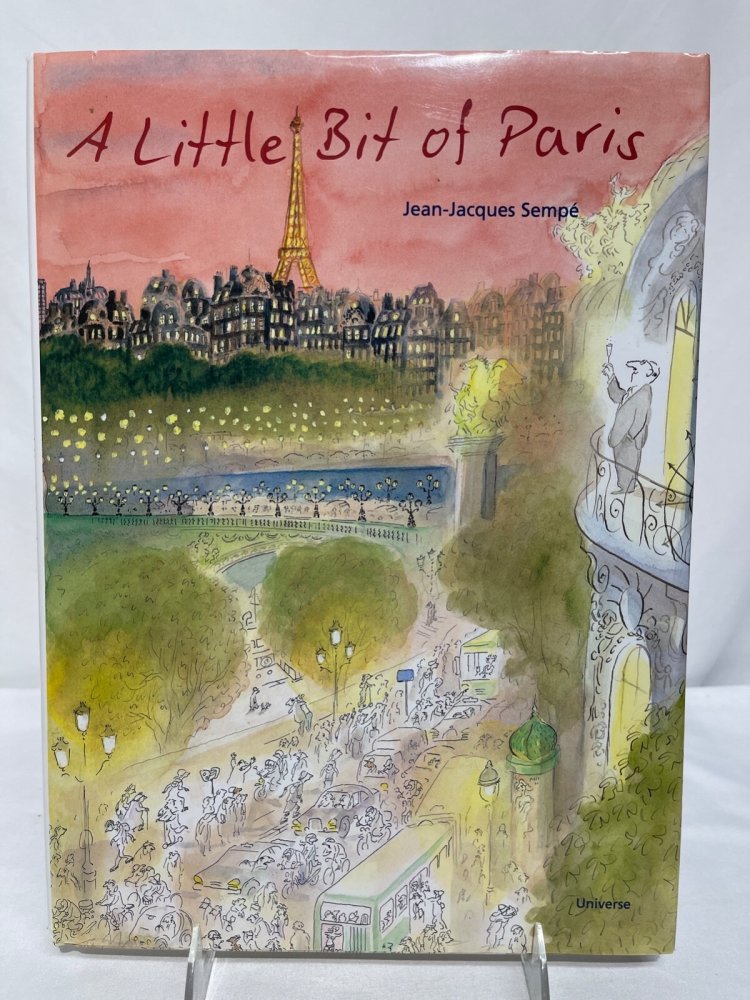
Hardcover. NY, Universe/Rizzoli, 1st, 2007, Book: Very Good, Dust Jacket: Very Good, Hardcover in a bright dust jacket, unpaginated. Renowned New Yorker cover illustrator Jean-Jacques Sempe illustrates the quirky charm of France's capital and it's residents with his signature style and humor. His drawings are famed for their striking use of pen and ink, their inimitable style, and most of all for their satire and tragic-comic vision. The 128 drawings in this charming portfolio are sweet and sentimental. Clean copy.
Hardcover. New Haven, Yale University Press, 1st, 1985, Book: Very Good, Dust Jacket: None, Hardcover, blue cloth, 262 pages. Illustrated with black & white photographs. Clean, tight copy. This portrait of Disderi and the carte de visite he patented in Paris in 1854 is far more than a biography. The c-d-v, or photographic calling card, was a relatively inexpensive product that made the photographic portrait available to the middle class . McCauley's carefully documented work explores Disderi's career and oeuvre , the impact of mass-produced celebrity cartes on the social and cultural life of mid-19th-century France, and aesthetics in c-d-v portraiture. The final third of the book is an art historical evaluation of the importance of the c-d-v for portrait painting of the period . The fine bibliography, generous illustrative matter, and detailed notes add to the value of this work for the avid student of photohistory or 19th-century studies.
Hardcover. France, Arthaud, 1st, 1967, Book: Very Good, Dust Jacket: Very Good, 209 pages. French text. Minor dust jacket edge wear and tear with minor yellowing on inside flaps. Otherwise, a very clean and tight copy.
Hardcover. New Havn CT, Yale University Press, 1st , 2001, Book: Very Good, Dust Jacket: Very Good, 333 pages. Hardcover with dust jacket. Illustrated in color, B&W. Clean, tight copy. Few painters lived the intellectual adventures of the early twentieth century as intensely as Albert Gleizes. At the centre of the public scandal over Cubism that broke out in Paris in 1911, he was with Marcel Duchamp and Francis Picabia in New York during the war and was one of the first European avant-garde artists to respond to the scale and vigour of New York life. Gleizes was also one of the few French painters of the 1920s to recognise nonrepresentational painting as the logical development of Cubism. His work as a painter is accompanied by an immense body of theoretical work, addressing the question posed so starkly by Duchamp and Picabia: why should we paint? What is the justification for the work of art? Over his life he touches on many spheres of human activity - religious, political and cultural history, physics and the philosophy of work. This book follows Gleizes' argument as it evolves, drawing on painting, and both published and unpublished writings. It reveals Gleizes, not just as a significant historical personality, but as a man whose work and thinking remains surprisingly fresh and relevant to the needs of our own time.
Hardcover. Giverney, France, Library of Congress/Musee d'Art Giverny, 1st, 2001, Book: Very Good, Dust Jacket: Very Good, Hardcover, 200 pages. Lovely copy. Minor wear to dust jacket, else like new. An exhibition held in Paris a century ago demonstrated the key role American women photographers played in the international pictorialist movement. Each of the 29 artists, including such well-known figures as Gertrude Kaesebier, Amelia van Buren and Zaida Ben-Yusuf, is represented in a selection of approximately 70 breathtaking color plates drawn from the Frances Benjamin Johnston Collection at the Library of Congress and the National Museum of American History. The photographs include landscapes, portraiture, genre scenes, and still-lifes, all of which are evocatively composed and delicately toned using a variety of photographic techniques.
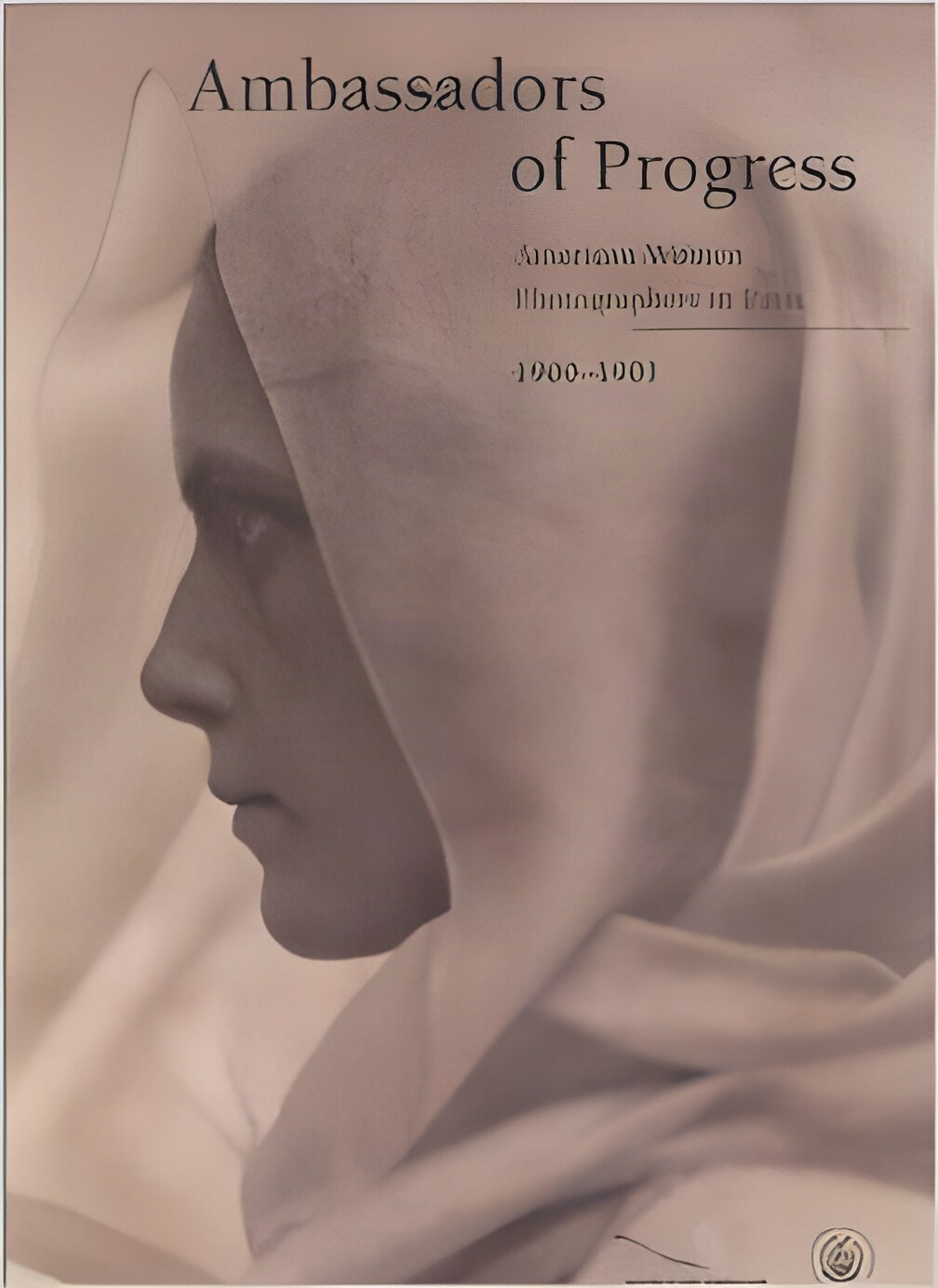
Hardcover. Washington DC, Library of Congress/Musee d'Art Giverny, 1st, 2001, Book: Very Good, Dust Jacket: Very Good, Like new in publishers shrink-wrap. Hardcover exhibition catalog with a dust jacket. 200 pages, 218 bw plates. An exhibition held in Paris a century ago demonstrated the key role American women photographers played in the international pictorialist movement. The accomplishment of these professional and amateur photographers clearly demonstrated a mastery of the medium and made a strong impression on those in attendance. Ambassadors of Progress explores this largely unknown event. Each of the 29 artists, including such well-known figures as Gertrude Kaesebier, Amelia van Buren and Zaida Ben-Yusuf, is represented in a selection of approximately 70 breathtaking color and b&w plates.
Hardcover. US, Library of Congress/Musee d'Art Giverny, 1st, 2001, Book: Very Good, Dust Jacket: Very Good, Like new in publisher's shrink-wrap. Hardcover, 250 pages. An exhibition held in Paris a century ago demonstrated the key role American women photographers played in the international pictorialist movement. The accomplishment of these professional and amateur photographers clearly demonstrated a mastery of the medium and made a strong impression on those in attendance. Ambassadors of Progress explores this largely unknown event. Each of the 29 artists, including such well-known figures as Gertrude Kaesebier, Amelia van Buren and Zaida Ben-Yusuf, is represented in a selection of approximately 70 breathtaking color plates drawn from the Frances Benjamin Johnston Collection at the Library of Congress and the National Museum of American History. The photographs include landscapes, portraiture, genre scenes, and still-lifes, all of which are evocatively composed and delicately toned using a variety of photographic techniques. The book contains essays by Verna Curtis (Curator of Photography, Library of Congress -- on Frances Benjamin Johnston as photographer and curator), Michel Poivert (President, Societe Francaise de Photographie -- on the French critical reception), Derrick R. Cartwright (Director, Hood Museum of Art, Dartmouth College -- on the relationship of pictorialist photography to contemporary American painting), and Andrew Robb (Senior Photograph Conservator, Library of Congress -- on the conservation processes surrounding these works).
Hardcover. NY, powerHouse Books, 1st, 2019, Book: Very Good, Dust Jacket: Very Good, Hardcover in a bright dust jacket, still in publisher's shrink wrap. Jean Patchett was both model and muse, a famous face from New York's vibrant midcentury popular culture and the most successful high-fashion model of her time. A small-town girl from rural Maryland, Patchett had no firm ambitions until a friend suggested she drop out of college and go to New York and become a model. Within a year Jean had left school, met model agent Eileen Ford, and begun a career that saw her photographed by the greatest photographers of her era, with more than 58 magazine covers over 14 years. "A young American goddess in Paris couture," was Irving Penn's epitaph for the model he photographed for a classic series in Lima, Peru where, pushed past their limits, Patchett and Penn created passionate art with a possible passionate relationship as well. Penn would go on to create stunning images of Patchett forVogueand later, for a series of nudes he called "the major artistic experience of my life." Letters from Patchett to her family show a young woman in love with her life and eager to share the thrills and struggles of her career. Quotes from photographers Cecil Beaton, John Rawlings, William Helburn, Jerry Schatzberg, and Francesco Scavullo reflect their admiration for her technical skills as a model as well as her unique beauty. A work diary from 1951 allows us to see how-and with whom-she worked from day to day.
Hardcover. NY, powerHouse Books, 1st, 2019, Book: Very Good, Dust Jacket: Very Good, Hardcover in a bright dust jacket, still in publisher's shrink wrap. Jean Patchett was both model and muse, a famous face from New York's vibrant midcentury popular culture and the most successful high-fashion model of her time. A small-town girl from rural Maryland, Patchett had no firm ambitions until a friend suggested she drop out of college and go to New York and become a model. Within a year Jean had left school, met model agent Eileen Ford, and begun a career that saw her photographed by the greatest photographers of her era, with more than 58 magazine covers over 14 years. "A young American goddess in Paris couture," was Irving Penn's epitaph for the model he photographed for a classic series in Lima, Peru where, pushed past their limits, Patchett and Penn created passionate art with a possible passionate relationship as well. Penn would go on to create stunning images of Patchett forVogueand later, for a series of nudes he called "the major artistic experience of my life." Letters from Patchett to her family show a young woman in love with her life and eager to share the thrills and struggles of her career. Quotes from photographers Cecil Beaton, John Rawlings, William Helburn, Jerry Schatzberg, and Francesco Scavullo reflect their admiration for her technical skills as a model as well as her unique beauty. A work diary from 1951 allows us to see how-and with whom-she worked from day to day.
Hardcover. NY, Doubleday, Page and Company, 1st, 1927, Book: Good, Dust Jacket: None, Hardcover, blue boards with black cloth spine with label. One Hundred and Seventy-Three Portraits Selected with a Descriptive Account. With A Biographical Dictionary of the Artists. 127 pages including index. INSCRIBED BY AUTHOR on front page: "For Frances with love from Henry B.W. 1927." Illustrated throughout in black and white with a color frontis. Discoloration on edges of front boards, light shelf wear. Interior very good.
Atgen PA, Schiffer, 1st, 2017, Book: Very Good, Dust Jacket: Very Good, Hardcover in a bright dust jacket. 144 pages illustrated in color and b&w. In 1942, Ed Vebell landed with the US Army in North Africa and was recruited by Stars & Stripes, the US armed forces newspaper, as their official staff artist. Daily, he drew illustrations and reported on the progress of World War II throughout Europe. This book offers a selection of his sketches, drawings, paintings, and photographs from that time, and presents one artist's view of the war from North Africa, through the campaigns in Italy, France, and Germany. After the war, the author spent two weeks with the Russians in Berlin, and was then assigned as the courtroom artist during the Nuremberg War Crimes Trials. Along the way are Ed's reminiscences about such personalities as famed war correspondent and artist Bill Mauldin, singers Josephine Baker and Edith Piaf, Charles de Gaulle, Gen. Teddy Roosevelt Jr., and many others. Ed also reminisces about his two years photographing backstage at the Folies Bergere in Paris, as well as his time as an Olympic fencer. Clean copy.
Hardcover. London, Frances Lincoln, 1st US, 2024, Book: Very Good, Dust Jacket: None, Hardcover in pictorial boards. A biography of the Pop artist told in a graphic novel format. Follow Warhol through his upbringing in Pittsburgh, moving to New York City, finding inspiration and conquering the creative world, in this unique graphic biography. Discover what made Warhol tick - his delights, drives and frustrations. Immerse yourself in his fascinating lifestyle within the New York scene and the incredible way that he continually evolved as an artist. 126 pages in color. Clean copy.
Hardcover. New Haven CONNECTICUT, Yale University Press, 1st, 2002, Book: Very Good, Dust Jacket: Very Good, Hardcover, 255 pages, illustrated with 103 color and 262 b&w plates. Still in publisher's shrinkwrap. Anne Vallayer-Coster (1744-1818) was one of the most talented still-life painters of the French school. Her exquisite paintings, today located in some of the world's finest museums, were admired and collected by many of her contemporaries, including Marie Antoinette, who became the artist's most important patron.
Hardcover. France, D.A.P./Les Presses du Reel, 1st, 2006, Book: Very Good, Dust Jacket: Very Good, Bound in red boards. stamped in black with illustrated dust jacket. Tight, clean copy of this 460 page book of art. Hundreds of illustrations (color and black and white).
Softcover. New York , Aperture Book, 1st, 1987, Book: Very Good, Dust Jacket: None, Softcover. Fall 1897. Includes work by: Sebastiao Salgado, Susan Meiselas, David Goldblatt, Bill Burke. Also writing by Arthur Miller, William Shawcross, Frances Hodgson, Nadine Gordimer.
Hardcover. London, Batsford, 1st, Book: Very Good, Dust Jacket: None, A history of the evolution of the Arts of Building, Decoration and Garden Design under classical influence. Many b&w photos, Illustrations. 528 pgs. Some sun-fading to spines, else a clean, tight set.
Hardcover. GR, Steidl, 1st, 2007, Book: Very Good, Dust Jacket: Very Good, Hardcover, 232 pages. When celebrated photographer Arnold Newman began his career in 1938 in chain portrait studios in Philadelphia, Baltimore and West Palm Beach, he also immediately began to make abstract and documentary photography on his own, studying people and places impoverished by the Depression. In June of 1941, Beaumont Newhall of The Museum of Modern Art, New York, and Alfred Stieglitz "discovered" him, and he was given an exhibit with Ben Rose at the A.D. Gallery that September. There Newman began to combine his independent work with the portraiture that had been his bread-and-butter, developing the approach for which he is best known, which came to be called "environmental portraiture," and which is so widely influential today that it might be the new standard practice. This style made Newman a distinctive contributor to publications like Life, Vanity Fair, and the New York Times Magazine, brought him into the collections of museums around the world, including The Museum of Modern Art, The Metropolitan Museum of Art, and the International Center of Photography in New York, and led to his recognition in photography histories and with awards including France's Commander of the Order of Arts and Letters. The photographs collected here were made before Newman achieved recognition as a pioneering portraitist, during the formative years from 1938 to 1942. They highlight the early stirrings of a great photographic master.
Hardcover. NY, E.P. Dutton, 1st, 1919, Book: Very Good, Dust Jacket: None, Hardcover, 288 pages. 100 plates (3 tipped-in color plates), including 37 examples by American artists. Survey of the art of the First World War by Allied artists from the United States, Canada, Great Britain, France and the Netherlands, including paintings, drawings, sculpture, lithographs, and posters. Works by Maxfield Parrish, George Luks, George Bellows, Harvey Dunn, Paul Manship, Mahonri Young, William Orpen, C.R.W. Nevinson, James McBey, Paul Nash, G. Spencer Pryse, Edmund Dulac, Wyndham Lewis, Frank Brangwyn, Th.A. Steinlen, and others. Bibliography, p. 285-288. Handsome production, with decorations designed by Frederick W. Goudy and printed by William E. Rudge. Dark green boards with black cloth spine, bright gilt lettering on cover and spine. Previous owner's bookplate inside front cover, light corner wear, mild bump to top of rear board.
Softcover. Paris, Books & Co., 1st, 1999, Book: Very Good, Dust Jacket: None, Softcover, 169 pages. A volume on French Art Nouveau design, architecture and interior decoration. Features designs by Emile Galle, Alphonse Mucha, Paul Signac and others. Color illustrations throughout.
Hardcover. New York, The Vendome Press, Reprint, 1980, Book: Very Good, Dust Jacket: Very Good, 204 pages. Hardcover. Purple covers with gilt titles to black cloth spine, gilt vase design to cover. Full page, full color and bw illustrations throughout. Dust jacket with light marginal wear to edges. Clean & unmarked pages throughout. Glass from the turn of the 19th - 20th century; the "Belle Epoque" era. Features many glass artists, including Philippe-Joseph Brocard, Auguste Jean, Ernest-Baptiste Leveille, Emile Galle, Les Freres Daum, Henri Cros, Albert Dammouse, Francois Decorchemont, and several others.

 "A Charmed Couple: The Art and Life of Walter and Matilda Gayby: Rieder, William")
 "A Dangerous Woman: American Beauty, Noted Philanthropist, Nazi Collaborator - The Life of Florence Gould by: Susan Ronald")

 "A Life of Picasso IV: The Minotaur Years 1933-1943by: John Richardson")
 "A.A.E. Disderi and the Carte de Visite Portrait Photographby: McCauley, Elizabeth Anne")
 "Aiguille du Midi Vallee Blancheby: Tairraz, George and Pierre")
 "Albert Gleizes - For and Against the Twentieth Century by: Brooke, Peter")
 "Ambassadors of Progress: American Women Photographers in Paris, 1900-1901by: Griffith, Bronwyn (Contributor)")
 "Ambassadors of Progress: American Women Photographers in Paris, 1900-1901by: Griffith, Bronwyn")
 "American Goddess: Jean Patchettby: Lilly, Robert & Lois")
 "American Goddess: Jean Patchettby: Lilly, Robert & Lois")




 "Anne Vallayer-Coster: Painter to the Court of Marie-Antoinetteby: Kahng, Eik and Marianne Roland Michel")
 "Annette Messager: Word For Wordby: Szeemann, Harald")
 "Aperture 108 Witness to Crisisby: Holborn, Mark")
 "Architecture of the Renaissance in France, The 1492-1830 (2 vols)by: Ward, W.H.")
 "Arnold Newman: The Early Workby: Philip Brookman , Arnold Newman")
 "Art and the Great War: With One Hundred Illustrationsby: Gallatin, Albert Eugene")
 "Art Nouveau In Franceby: Jean-Paul Midant")
 "Art of French Glass, The - 1860 - 1914by: Bloch-Dermant, Janine")