Hardcover. New York, Harry N. Abrams, 1st, 1996, Book: Very Good, Dust Jacket: Very Good, Hardcover, 600 pages, illustrated throughout with 504 illustrations, including 242 plates in full color. Heavy oversized book. Light edgewear and faint tanning to dust jacket, else a clean, tight copy. A definitive survey of the life and work of the Paul Ce+a7zanne follwows the evolution of his art from drawing school in the 1860s to his death in 1906, providing more than six hundred reproductions of drawings, watercolors, paintings, and sketchbook pages that demonstrate his masterful artistic style.
Hardcover. France, Diffusion Glenat, 1st, N/A, Book: Very Good, Dust Jacket: Very Good, 239 pages. Hardcover with dust jacket. Sunfading to dust jacket spine. An otherwise very clean, unmarked copy. SIGNED AND INSCRIBED BY AUTHOR ON FRONT FLYLEAF.
Hardcover. France, Editions Artlys, 1st, 2005, Book: Very Good, Dust Jacket: None, 256 pages. Hardcover no dust jacket. Like new in publisher's shrink-wrap. At once Dior scrapbook, survey and autobiography, this magnificent compendium offers a panorama of the life and art of one of the twentieth century's most influential fashion designers. It reprints Dior's 1956 autobiography Christian Dior et moi--in which the designer contrasted his reputation as both an individual and as a company with his own sense of himself--alongside eight articles by Dior first published in Elle magazine in 1951, which were then collected as Je suis couturier. Throughout, the volume takes as its thematic anchor the designer's beautiful childhood home in Granville, elaborating his lifelong attachment to the house (now the Christian Dior Museum) and its gardens, and showing how his work was influenced by these resplendent environs--a theme that especially preoccupied Dior himself, who once affirmed his "tender and wonderful memories of my childhood home," declaring that "my life and my style owe everything to its location and architecture." Many of the copious illustrations that accompany these writings are supplied by the Christian Dior Museum collection, and reproduce family albums and archival photographs, fashion sketches and formal presentations of classic Dior dresses, hats, shoes and jewelry. Dior scholar Jean-Luc Dufresne conducts a tour of the Dior house and garden, narrating its long and fascinating history.
Softcover. Rochester VT, Park Street Press, 1st, 2018, Book: Very Good, Dust Jacket: None, Softcover, 246 pages. A lavishly illustrated history of coca wine and the revolutionary advertising methods that made it a world-wide success. Follows 19th-century pharmacist Angelo Mariani's interest in coca from medical uses to the development and healing effects of his world-famous coca wine, Vin Mariani. In this full-color illustrated history of coca wine, the first of its kind, author Aymon de Lestrange follows Mariani's interest in coca from its medicinal applications to the creation of the tonic wine. The author explores the botany of coca, how it differs from cocaine, its traditional use in pre-Columbian America, and scientific studies on coca from the 17th through 19th centuries, including from Sigmund Freud, who was a known user. He describes the introduction of coca in the U.S. and France and the many coca preparations then available at drugstores. He also studies the introduction of cocaine in these two countries and the prohibition laws that followed.
Hardcover. NY/Paris, Pergamon Press, reprint, 1969, Book: Very Good, Dust Jacket: None, Approximately 7000 pages, 5 hardcover volumes complete, each book is 10" by 15'', bound in burgundy cloth covers with gilt lettering. Reproduced from the original 1651 17-volume edition, reduced here allowing 4 pages per sheet. French text. Clean, bright copies. No dust jackets ever issued. HUGE VOLUMES, DOMESTIC SHIPPING ONLY.
Hardcover. New Haven, Yale University Press, 1st , 1991, Book: Very Good, Dust Jacket: Very Good, 269 pages. Hardcover with dust jacket. Transl. from German by John W. Gabriel. Black & white illus. Clean, tight copy.
Hardcover. Paris, France, Guy Delcourt Productions, 1st Edition, 1989, Book: Very Good, Dust Jacket: None, 48 pages. Hardcover. FRENCH TEXT. Color illustrations throughout. Decorated cover boards, glossy, very good. Pages and edges clean and unmarked. Binding tight, spine straight. In excellent condition. Coutoo is dead. But Coutoo lives again. Coutoo, the mad killer with the terrifying face, once again haunts the streets of New York. Like his father before him, Inspector Krafft goes up the bloody trail taken up by this monstrous psychopath.
Hardcover. London, Arthur Baker, 1st, 1967, Book: Very Good, Dust Jacket: Good, Hardcover in a dust jacket with partial fading, 449 pages, b&w illustrations. The definitive biography of the larger-than-life figure of the French Revolution who was found guilty of loyalist inclinations and executed at the guillotine. Name on front fly leaf otherwise clean.
Hardcover. New York, Hyperion Press, 1st, 1938, Book: Very Good, Dust Jacket: Very Good, Hardcover. Translated from French by Eveline Byam Shaw. Many b&w gravure plates, tipped-in color plates, 168 pgs. previous owner's inscription front fly leaf.
Hardcover. NY, Thames and Hudson, 1st, 1988, Book: Very Good, Dust Jacket: Very Good, Hardcover in a bright dust jacket, 240 pages. 226 illustrations, 50 in color, "Nudes comprised more than 20 percent of Degas' subject matter. His typical unclothed female is a slightly plump middle-class lady at her bath. Yet the French artist explored nudity in many guises. The symbolic figures of his Medieval War Scene and David and Goliath suggest vulnerable, naked humanity. Then there are the prostitutes of his brothel pictures, salaciously or humorously observed. There are women in meditative poses, asleep, dancing and, infrequently, making love to other women. There is a bit of the voyeur in Degas' images, but as British art historian Thomson shows, the painter transcended his own conventional categories of 'nice' bourgeois women and 'fallen' lower-class whores. His explorations of the nude in charcoal, pastel, oil and sculpture exude empathy, even nobility." Clean copy.
Hardcover. New York, George Braziller, 1st, 1995, Book: Very Good, Dust Jacket: Very Good, 191 pages, 65 color plates. The only complete study of the artist's pastels. Like new in a bright dust jacket.
Hardcover. France, Editions du ChIne, 1st, 2002, Book: Very Good, Dust Jacket: Very Good, 167 pages. Hardcover with dust jacket. A very clean, unmarked copy with only minor wear to dust jacket edges. A tight copy. Black & white and color photographs throughout.
Hardcover. Germany, Taschen, 1st, 2013, Book: Very Good, Dust Jacket: Very Good, 3-vol set in slip case. Hardcovers. Like new in publisher's shrink-wrap. Editor Dian Hanson traces the fascinating development of the genre from 1900 to 1969 in three compact, informative volumes. In Volume 1 you'll learn about the first magazines that appeared around 1900 in France, Germany, and the U.S., and follow the development of the genre through the First and Second World Wars. Covered are men's magazines masquerading as movie magazines, humor magazines, art magazines, nudist magazines, and "spicy" fiction. Volume 2 documents the proliferation of pin-up magazines following World War II, most notably a little item called Playboy that debuted in December 1953 and spawned dozens of imitators. This volume also charts the emergence of English men's magazines, fetish magazines, and the top five covergirls of the 1950s. Volume 3 begins with an explosion of new American pin-up magazines following the loosening of U.S. obscenity laws, and continues with French titles in decline, England going pervy; nudists going hippy, and Germany going pervy, hippy and political.
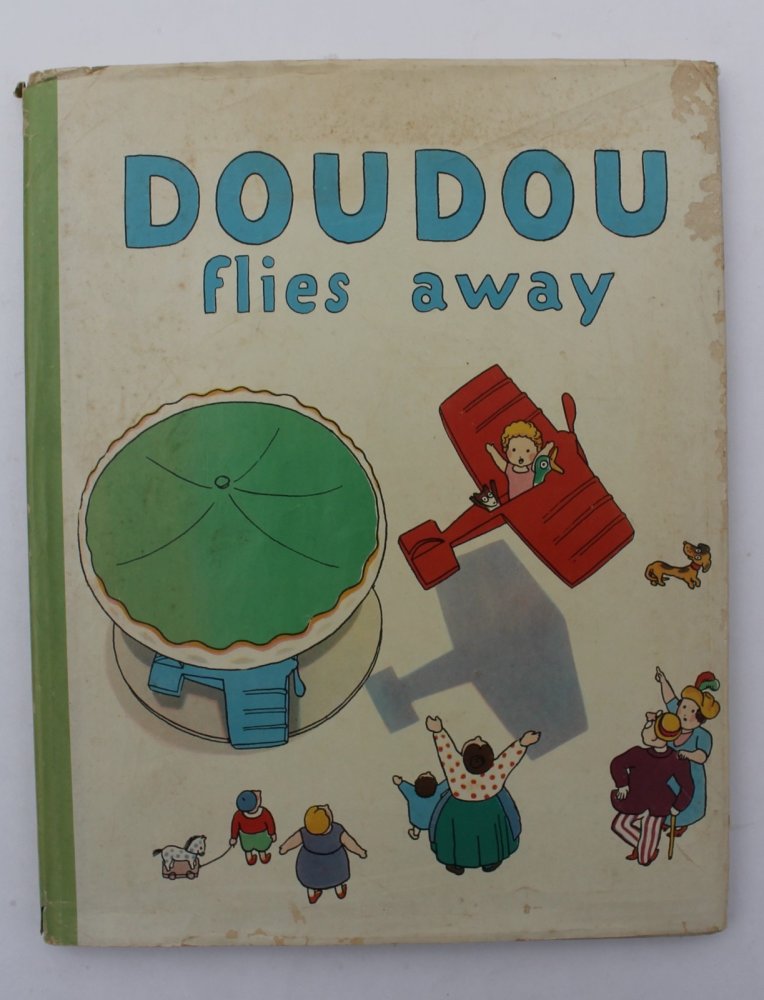
Hardcover. NY, Grosset and Dunlap, ist US, 1937, Book: Good, Dust Jacket: None, Hardcover, pictorial boards, illustrated in color by the author. Text in French and English. Light overall wear about the edges. A sweet shepherdess has an adventure which transports her a wild jungle. She wins over the animals with her love and they refuse to be separated from her. Charming art work. Short tear to paper at spine. Originally published in 1934 in France. A solid, clean copy.
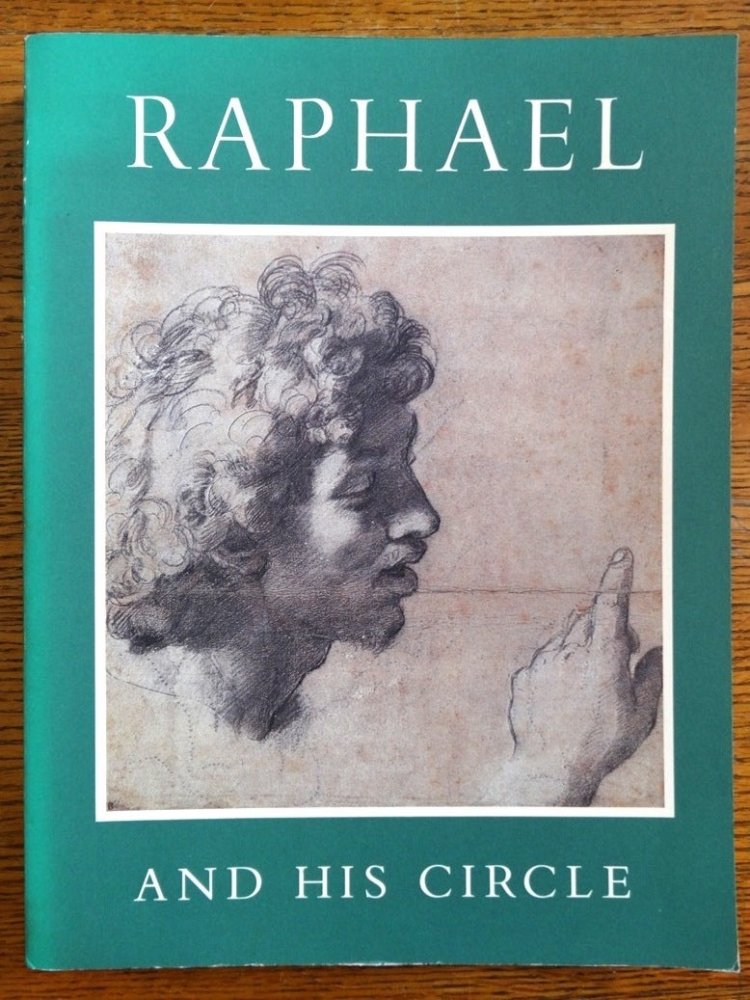
Softcover. NY, Pierpont Morgan Library, 1st, 1987, Book: Very Good, Dust Jacket: None, Softcover, 281 pages. This annotated and illustrated catalogue presents 90 specific pieces. "I felt that it would be of unusual value to scholars and to the public generally if we could see Raphael in relation to the artists working in his circle in Rome. Therefore, nearly half of the works described in this volume are by Raphael; the others are by Giulio Romano, Giovanni Francesco Penni, Perino del Vaga, Polidoro da Caravaggio, and Baldassare Peruzzi." Color and b&w plates. Clean copy.
Hardcover. NY, Liveright, 1st, 2012, Book: Very Good, Dust Jacket: Very Good, Hardcover, 272 pages. Who could have imagined that in 1972, when Aline Kominsky, a Long Island escapee and bodaciously talented artist, broke her foot one rainy fall day, it would result in the most unique collaboration in comics history? Laid up in her house, she was persuaded by R. Crumb, her nerdy, neurotic boyfriend, to pass the time drawing together a "two-man" comic. The result is a jaw-dropping yet tender account, not only of the joys and challenges of a legendary marriage but also of the obstacles faced by struggling female artists. In Drawn Together, our foremost male-female cartooning couple recall their success at shocking America with Weirdo Magazine, the life-altering birth of their precocious daughter Sophie, and their astonishing move to the safe haven of France. With an irresistible introduction and a striking four-color section, Drawn Together becomes a graphic cause-celebre and a must-have for any comics devotee.
Hardcover. New Haven, Yale University Press, 1st, March 1, 2002, Book: Very Good, Dust Jacket: Very Good, Hardcover, 245 pages, illustrated throughout. Clean, bright pages and tight binding. Pierre Puvis de Chavannes (1824-1898) was a towering figure in late nineteenth-century France. The country's greatest public painter, he created murals that decorated museums in Amiens, Rouen, and Lyons as well as major buildings in Paris-most notably the Pantheon, the Sorbonne, and the city hall. Critics from the political right, left, and center, the avant-garde, the Academy, and the state all agreed on the importance of Puvis's murals. Avant-garde artists greatly admired and drew from his work. There was much controversy, however, over the meaning of these murals. This handsomely illustrated book is the first full-length examination of Puvis's murals and their critical reception during the artist's lifetime. Jennifer L. Shaw explains that Puvis's paintings were imagined to embody a vision of France. Although his regional images, allegories of the French heritage, and evocations of the nation as an embracing motherland were all part of a grand tradition of public art, Puvis's painting style was more closely aligned with the avant-garde. Rather than providing a specific narrative or allegory of France, Puvis's murals provoked viewers to experience their own fantasies of Frenchness; rather than using the close brushwork favored by most of his contemporaries, Puvis used large flat areas of color to render his subjects. Shaw persuasively argues that Puvis was the only painter of the period to unite the traditions of public art and modernist form. Her original analysis of Puvis's art underlines his importance to the history of modernism; her examination of the public response to his art illuminates debates about art, subjectivity, and national identity in fin de siecle France.
Softcover. London, Pimlico , reprint, 1998, Book: Very Good, Dust Jacket: None, Softcover, 570 pages. The life of the painter and designer Duncan Grant spanned great changes in society and art from Edwardian Britain to the 1970s from Alma-Tadema to Gilbert and George. This authoritative biography combines an engrossing narrative with an invaluable assessment of Grant's individual achievement and his place within Bloomsbury and in the wider development of British art.
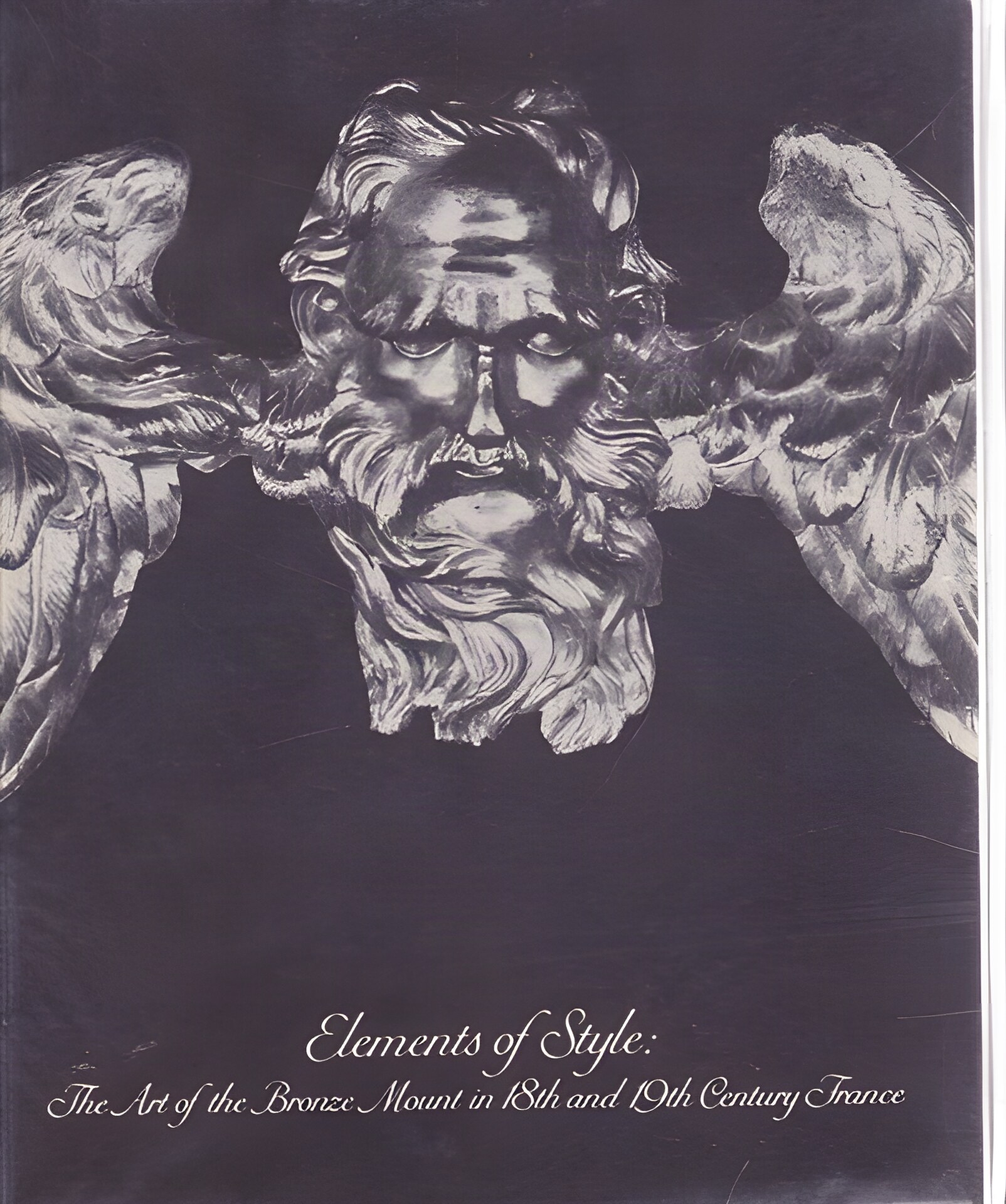
Softcover. NY, Rosenberg & Stiebel, Inc., 1st, 1984, Book: Very Good, Dust Jacket: None, Softcover, 68 pages, illustrated throughout with photos in b&w. Pictorial stiff wrappers. Light wear and rubbing to edges and slightly foxed spine, else a very nice, tight copy. Good scope to text and examples: Mounts and corner mounts on all manner of furniture and decorative arts.
Hardcover. Chicago, University of Chicago Library, 1st, 2014, Book: Very Good, Dust Jacket: None, Hardcover, 144 pages. Like new in publisher's shrink-wrap. With 2014 marking the one-hundredth anniversary of the commencement of World War I, En Guerre offers a fresh, thought-provoking exploration of the impact of the Great War as viewed through the lens of French graphic illustration of the period. Published in conjunction with an exhibition of these illustrations at the University of Chicago Library's Special Collections Research Center, this catalog draws from illustrated books, magazines, and prints to present a wide range of perspectives on themes essential to a deeper understanding of the war in France: patriotism, nationalism, propaganda, and the soldier's experience, as well as the mobilization of the French national home front as seen through fashion, music, humor, and children's literature. With a text by noted historians Neil Harris and Teri J. Edelstein and featuring more than one hundred reproductions of the vivid and colorful work of French illustrators, En Guerre reaffirms the persuasive role that art can play in the service of political and military power.
Hardcover. Kerber, 1st, 2008, Book: Very Good, Hardcover, 144 pages. Painter Francesco Clemente once said of Eric Fischl, "If life is what happens to you as you make other plans, then 'life' is Eric Fischl's subject matter." Though Fischl is best known for his figurative paintings, this monograph presents a 2007 series of 13 sculptures and corresponding large-format gouache works. Cast in polyester and resin, the life-sized, three-dimensional nudes enter into tense dialogue with the drawings, depicting the same element of human struggle that we find in Fischl's paintings. Naked bodies without context or reference, engaged in no specific narrative, offer any number of possible interpretations. They allow the viewer to indulge in careful observation, daring us to penetrate the surface patina of the sculptures to see if anything lies beneath. A special section includes a complete catalogue raisonee of the sculptural work from 1975 through 2007.
Hardcover. Saratoga Springs NY, Tang Teaching Museum & Art Gallery at Skidmore College,, 1st, 2015, Book: Very Good, Dust Jacket: None, Hardcover, pictorial boards, 208 pages. What, exactly, is a "teaching museum"? Everything is Connected answers that question by tracing the ideas and people behind the creation of the Frances Young Tang Teaching Museum and Art Gallery at Skidmore College. The book also explores the many ways the museum has realized its mission as an interdisciplinary space for the creation of new knowledge since opening in 2000. Through deep research and stunning photography, Everything is Connected shows the exhibitions and public programs that make the Tang a national leader among college and university museums. Clean copy in shrinkwrap.
Hardcover. NY, Simon & Schuster, 1st, 2000, Book: Very Good, Dust Jacket: Very Good, Hardcover in a bright, unclipped dust jacket, 512 pages. B&w illustrations. With this handsome book, David Sweetman, a biographer of Vincent van Gogh and Paul Gauguin, brings together the dissolute lives of various artists who came to represent decadent fin-de-siecle Paris: Oscar Wilde, Felix Feneon, Alfred Jarry, and, of course, Henri de Toulouse-Lautrec. As the author reminds us, imitations of the latter's work adorn the walls of French-themed bars worldwide and have become a shorthand for sanitized debauchery. Toulouse-Lautrec--absinthe drinker and brothel frequenter--was instrumental in the development of the poster, but what is his artistic legacy? Although Toulouse-Lautrec dominates the book's subtitle, Sweetman's sweep is much grander. In much the same way as his main subject was, Sweetman proves a sympathetic host to the women of Montmartre, tragic figures such as La Goulue, Jane Avril, and Suzanne Valadon, and he is particularly insightful on the singer Aristide Bruant's influence on the fledgling artist. Clean copy.

 "Cezanneby: Cachin, Francoise")
 "Chacun Son Chat (SIGNED - French Text)by: Lacroix, Georges")
 "Christian Dior: Man of the Centuryby: Dufresne, Jean-Luc")
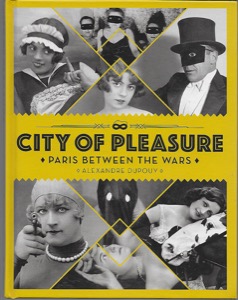
 "Coca Wine: Angelo Mariani's Miraculous Elixir and the Birth of Modern Advertisingby: Aymon de Lestrange")

 "Courbet: To Venture Independenceby: Herding, Klaus")
 "Coutoo (French Text)by: Andreas")


 "Daumierby: Lassaigne, Jacques")
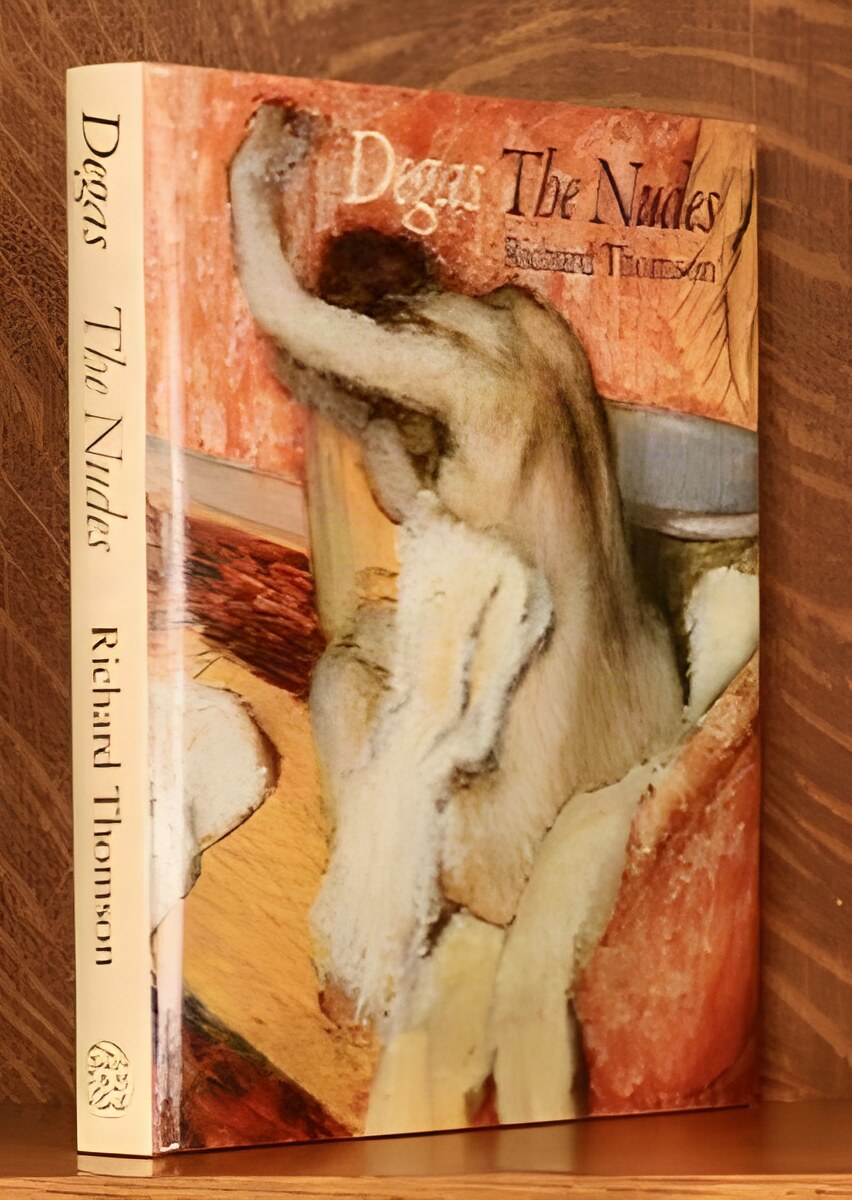
 "Delacroix Pastelsby: Johnson, Lee")
 "Des Photographes Et Parisby: Paviot, Francoise")
 "Dian Hanson's History of Pin-up Magazines Vol. 1-3by: Hanson, Dian (editor)")




 "Drawn Together: The Collected Works of R. and A. Crumbby: R. Crumb and A. Crumb")
 "Dream States: Puvis de Chavannes, Modernism, and the Fantasy of Franceby: Shaw, Professor Jennifer L.")
 "Duncan Grant: A Biography by: Frances Spalding")
 "En Guerre: French Illustrators and World War Iby: Harris, Neil and Teri J. Edelstein")
 "Eric Fischl: Ten Breathsby: Kay Heimer, Roland Meyer , et al.")
 "Everything is Connectedby: Moller, Barbara Kahn")


 "Explosive Acts: Toulouse Lautrec Oscar Wilde Felix Feneon and the Art & Anarchy of the Fin De Siecle by: Sweetman, David")