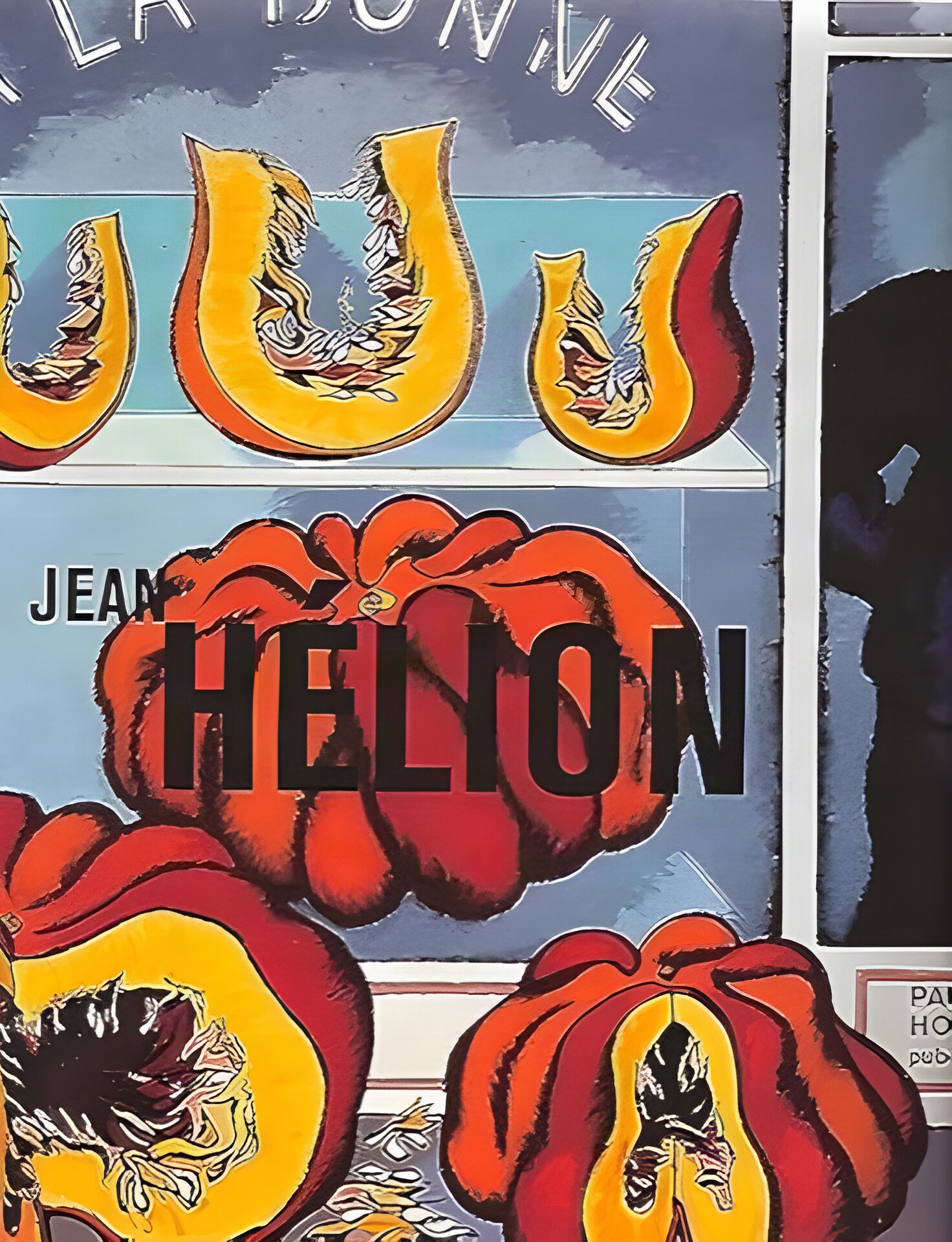
Softcover. Paris / London, Paul Holberton, 1st, 2004, Book: Very Good, Dust Jacket: None, Softcover, 216 pages in color. Jean Helion (1904-1987) became a leading member of the international Abstraction-Creation group in the early 1930s. He then took abstraction to New York, where he advised the avant-garde collector A. E. Gallatin on purchases for his Gallery of Living Art, a crucial influence on the early phases of the developing New York School. In France after World War II, however, he evolved a unique language of painting, employing people and objects that are both contructivist and naturalistic--his own language of signs populated by shop-window dummies, newspaper readers, and startling nudes. In his return to figuration he may be compared to his close friends Balthus and Alberto Giacometti, even though his style is unique. This book is the first in English on the artist for some thirty years. Mild crease to front cover, otherwise a clean, bright copy. DOMESTIC SHIPPING ONLY.
Hardcover. Paris, Maeght Editeur, 1st Ltd. Ed., 1977, Book: Very Good, Dust Jacket: Very Good, 217 pages, #647 of 5000, off-white cloth covers with black lettering on spine. Color and b&w illustrations including 5 original lithographic plates and lithographic wrap-around dust jacket. Dust jacket with minor edgewear, acetate wrapper chipped, worn.
Hardcover. New York , DK Publishing/Dorling Kindersley, 1st US, 1998, Book: Very Good, Dust Jacket: Very Good, 128 pages, illustrated throughout in color by Burningham. Clean hardcover in a bright, unclipped dust jacket. SIGNED BY BURNINGHAM on a bookplate pasted to the front fly leaf.
Softcover. Woodbury NY, Barron's , 1st, 1976, Book: Very Good, Dust Jacket: None, Softcover, 90 pages, color illustrations. English language edition. Paintings of France and Holland by Dutch artist, Johan Barthold Jongkind [1819-1891]. A volume in the series, 'Les Carnets de dessins'. Clean copy.
Hardcover. Cambridge MA, The MIT Press, 1st, 2001, Book: Very Good, Dust Jacket: Very Good, 144 pages. Hardcover with dust jacket. Clean, tight copy in publisher's shrinkwrap. Karl Blossfeldt (1865-1932) achieved overnight fame in the late 1920s with the first publication of his photographs of plants. Those photographs, which revealed the inner structures of the organic forms, immediately made him a pioneer of New Objectivity-an innovative movement in art and photography of the 1920s and 1930s. Blossfeldt, however, was neither a trained photographer nor a botanist. He was a sculptor and art professor who did his photographic work to generate teaching material for his students.The publication of this book is the result of an extraordinary event-the 1997 discovery in Blossfeldt's estate of sixty-one previously unknown collages, in virtually mint condition, of photographic contact prints arranged on large cardboard sheets. Blossfeldt apparently used these to study the relation and similarity of the photographs and to compare them graphically and aesthetically. On some, Blossfeldt had made marks or handwritten notations. Others show lines for cropping. The collages, published here for the first time, unveil a hidden treasure of modern photography and cast fresh light on the systematic approach Blossfeldt used in his photographic studies. All collages are reproduced in four colors. Introducing the book is an essay by Swiss art historian Ulrike Meyer-Stump, a Lecturer at the Zurich University of the Arts. Not for sale in France, Germany, Switzerland, Belgium, and Austria
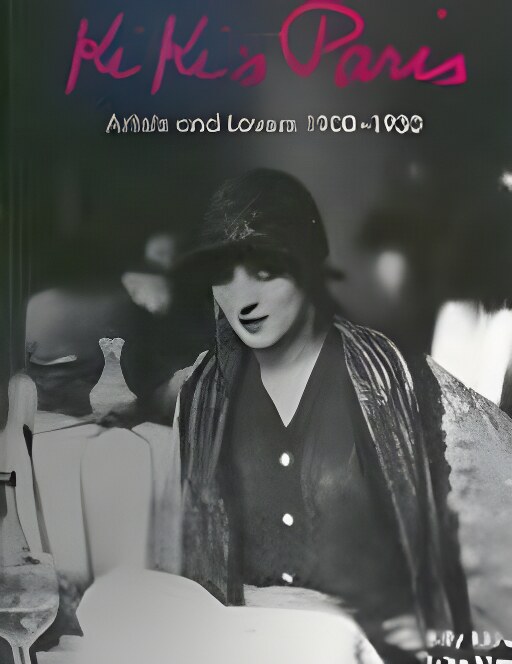
Hardcover. NY, Harry N Abrams, 1st, 1989, Book: Very Good, Dust Jacket: Very Good, 264 pages, illustrated throughout in b&w. Clean, unmarked copy with only minor wear to dust jacket. "A lavish, information-packed look at the people and places of an important, exciting era in art history. "?Publishers Weekly. From 1900 to 1930, Montparnasse was the center of artistic life for the whole world. A major contribution to the social and cultural history of the period? with its informative text and hundreds of photographs?. As The Washington Post said, Kiki's Paris "celebrates the people who made the modern movement in art, music and literature, most of whom were friends or lovers of Kiki, the woman Hemingway called 'The Queen of Montparnasse.'"
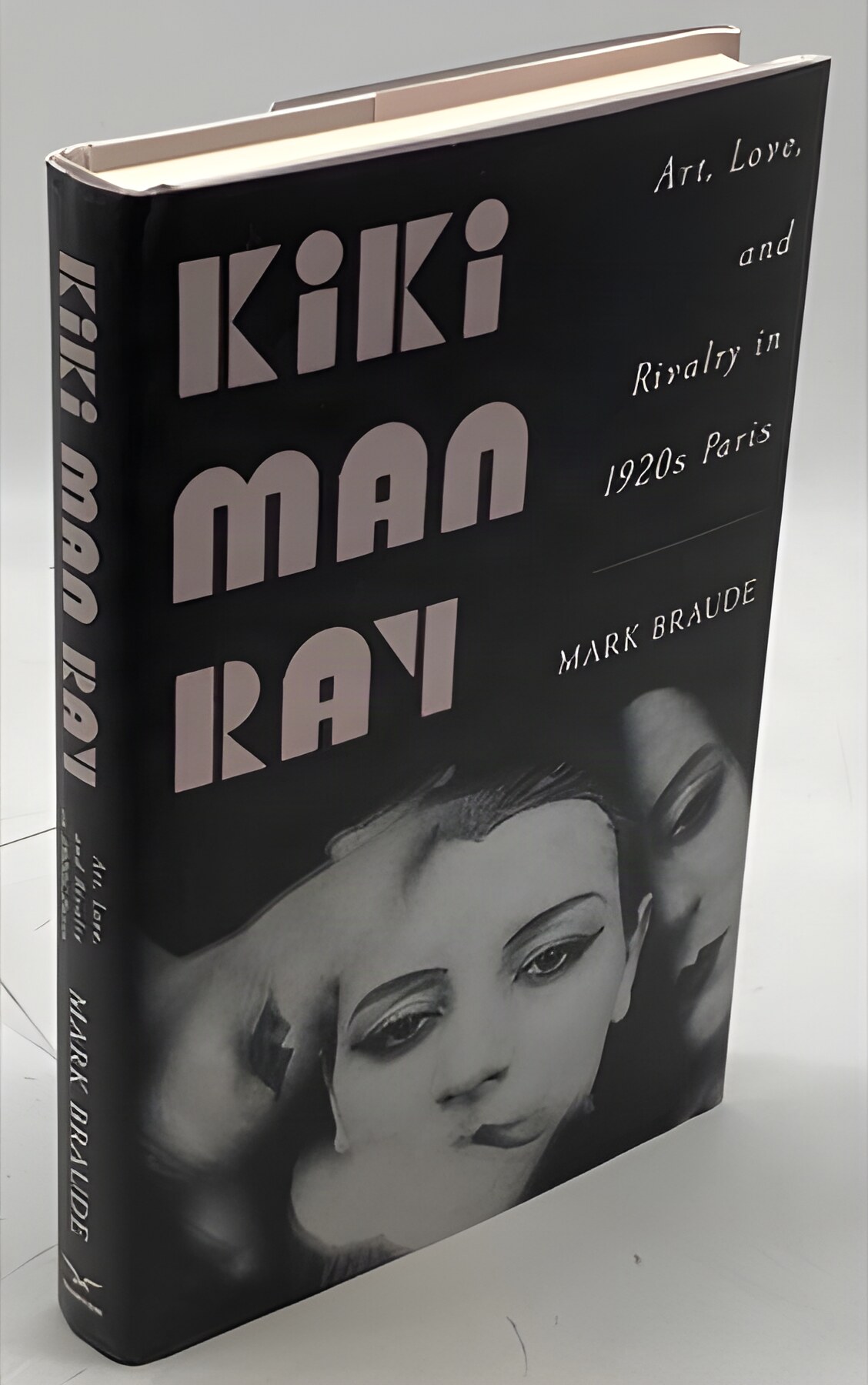
Hardcover. NY, W. W. Norton, 1st, 2022, Book: Very Good, Dust Jacket: Very Good, Hardcover in a bright dust jacket, 290 pages, color and b&w illustrations. Kiki was once the symbol of bohemian Paris. But if she is remembered today, it is only for posing for several now-celebrated male artists, including Amedeo Modigliani and Alexander Calder, and especially photographer Man Ray. Why has Man Ray's legacy endured while Kiki has become a footnote? Kiki and Man Ray met in 1921 during a chance encounter at a cafe. What followed was an explosive decade-long connection, both professional and romantic, during which the couple grew and experimented as artists, competed for fame, and created many of the shocking images that cemented Man Rays reputation as one of the great artists of the modern era. Remainder dot to top edge, otherwise clean.
Hardcover. NY, Abrams, 1st, 1989, Book: Very Good, Dust Jacket: Very Good, Hardcover, 264 pages, profusely illustrated with vintage photos. A great trip through time to visit the Paris of the turn of the century and see the artists and writers of the time as they entered the life of this fascinating woman, Alice Prin, better known as Kiki of Montparnasse, model to all the great artists.
Hardcover. New York, Holt, Rinehart and Winston, 1st US, 1980, Book: Very Good, Dust Jacket: Very Good, Hardcover in a bright, unclipped dust jacket, 239 pages. Illustrated with full color and black & white photographs. Clean, tight copy. Important career study of the late director that was first published in France. The book covers his films through "The Shining." Includes essays, interviews 100's of b&w & color stills & photos along with filmog. & biblio.
Softcover. Paris, Beaux Arts Magazine, 1st, 1994, Book: Very Good, Dust Jacket: None, 65 pages, illustrated throughout in color and b&w. Text in French. Light edgewear to wrappers, else a clean, tight copy.
Hardcover. New Haven CT, Yale University Press, 1st, 2013, Book: Very Good, Dust Jacket: None, Hardcover, 292 pages. No dj issued. An insightful look at the dynamic relationship between modern art and modern urban life in 1920s Paris through the lens of Fernand Léger's masterpiece The City. With his landmark 1919 painting The City, Fernand Léger (1881-1955) inaugurated a vitally experimental decade during which he and others redefined the practice of painting in confrontation with the forms of cultural production that were central to urban life, ranging from graphic and advertising design to theater, dance, film, and architecture. This catalogue casts new light on the painting (reproducing all of its studies together for the first time), the avant-garde use of print media, and Léger's fascination with cinema and architecture, and contextualizes a network of international avant-gardes--including Blaise Cendrars, Le Corbusier, Jean Epstein, Piet Mondrian, Amédée Ozenfant, Francis Picabia, and Theo van Doesburg--in relation to Léger. Featuring nearly 250 images of paintings, architectural designs, models, posters, set designs, and film stills and an anthology of relevant historical texts not previously published in English, this handsome volume conveys the spirit of experimentation of the 1920s. Scholars in the fields of art, architecture, and film history offer a deeper understanding of the relationship between art and the modern urban experience that defined this significant chapter in the history of modern art.
Hardcover. Los Angeles, Calif., Harry N. Abrams, 1st, 2001, Book: Very Good, Dust Jacket: Very Good, Hardcover with a dust jacket. This copy is still shrink-wrapped in plastic. Many b&w and color illustrations throughout. Accompanied an exhibit at the Los Angeles County Museum of Art in 2001. Examines more than seventy-five paintings and other artworks, representing the Purist movement in twentieth-century modernist art, featuring the works of Le Corbusier, AmTdTe Ozenfant, and Fernand LTger as well as a complete translation of the classic work AprFs le cubisme.
Hardcover. Paris, Arthur Hubschmid, 1st French, 1978, Book: Very Good, Dust Jacket: None, 2 volumes. French text. 1287 pages total, b&w cartoons. Cream cloth covers. Small smudge on Volumes 1, previous owner's signature on front fly leaf of Volume 2. Else very clean, tight copies.
Softcover. Modena Italy, Franco Cosimo Panini , 1st, 2005, Book: Very Good, Dust Jacket: None, Softcover, 268 pages. Color illustrated guide to all the historical and artistic attractions with critical commentary. 232 color plates, 200 schemes and diagrams. Clean copy.
Hardcover. New York, Calla Editions, 1st, 2018, Book: Very Good, Dust Jacket: Very Good, 208 pages. Hardcover with dust jacket. A very clean, unmarked copy with only minor wear to dust jacket edges. This deluxe large-format volume presents scores of sumptuous color illustrations from La Vie Parisienne's heyday, the years between 1917 and 1922. Consisting chiefly of cover designs and editorial cartoons, the images abound in chic young beauties in fanciful and occasionally risque tableaux. Many of these illustrations have not been readily available for nearly a century, making this compilation of particular interest and value to lovers of graphic art and Parisian culture.
Hardcover. Cambridge MA, MIT Press, 1st, 2001, Book: Very Good, Dust Jacket: Very Good, 406 pages, Hardcover with dust jacket. B&w illustrations. Clean, tight copy. How Le Corbusier's first trip to the United States shaped his critique of the country and affected both his work and the diffusion of his ideas. Le Corbusier's first trip to the United States in 1935 is generally considered a failure because it produced no commissions. The experience nevertheless had a profound effect on him, both personally and professionally. Sponsored by the Museum of Modern Art in New York, Le Corbusier promoted his ideas through a lecture tour, exhibition, and press conferences, as well as in meetings with industrialists, housing reformers, New Deal technocrats, and editors. His lectures were watershed events that advanced the cause of European modernism. Yet he returned to France empty-handed and published a bittersweet account, Quand les Cathedrales etaient blanches: Voyage au Pays des Timid Personnes (When the Cathedrals Were White: Journey to the Country of Timid People), which faulted America for lacking the courage to adopt his ideas.
Hardcover. NY, Phaidon Press, 1st, 2008, Book: Very Good, Dust Jacket: None, This slip-cased, oversized book, weighing 20 pounds and containing over 2000 illustrations, summarizes the life and work of the most important modern architect of the 20th century: the legendary, controversial, and confrontational Le Corbusier. Le Corbusier was not exclusively an architect but an artist (painter and sculptor), urbanist, author, furniture designer, world traveler, and media figure. What is most impressive in this volume are the huge-scale photographs drawn from the Le Corbusier archives at the Fondation Le Corbusier in France. These photographs are personal, professional, indicative, anecdotal, illustrative, and symbolic of the entire saga of Le Corbusier's life and career over 60 years. They make this book an absolute gold mine for anyone wanting to understand and steep themselves in the spirit and character of this greatest modern architect of the last century. The written material is also first-rate: Jean-Louis Cohen, France's best-known historian of modern architecture, contributes an informative introduction, and Tim Benton, a well-known British architectural historian, writes opening texts for individual chapters. Recommended for architecture and art libraries as well as public libraries with serious art collections.--Peter S. Kaufman, Boston Architectural Ctr. NOTE; DUE TO SIZE AND WEIGHT THIS VOLUME CANNOT BE SHIPPED OUTSIDE THE U.S.
Softcover. Paris, Librairie Floury, 1st, 1947, Book: Very Good, Dust Jacket: None, Softcover, gray wrappers with black and red lettering, 213 pages. Illustrated with black & white plates. Small tears at foot and crown of paper spine. Clean, tight copy. FRENCH TEXT.
Softcover. Bibliotheque de l'Image, 1st, 1995, Book: Very Good, Dust Jacket: None, Oversize softcover, 63 pages, French text with color illustrations throughout. Cover edge and spine fade and previous owner's embossed stamp on title page, otherwise, very clean and tight copy.
Hardcover. Prestel, 1st, 1998, Book: Very Good, Hardcover, 167 pages. Louise Bourgeois: The Secret of the Cells is both a catalog of works by and a biography of the famous Parisian artist. Born in 1911, the now-octogenarian Bourgeois has shown widely throughout the world and to great critical acclaim, especially within the last decade. Bourgeois's personal history is vastly important in the content of her work, and this book takes readers on a journey from her affluent childhood in France, including family photographs, to her schooling under painter Fernand Leger to her eventual marriage and move to the United States, where she continued her long and varied career working primarily as a sculptor and installation artist. Bourgeois's abstract figurative sculptures range in materials from plaster, marble, and bronze to the more nontraditional latex, glass, thread, etc. Regardless of the medium, the work is imbued with a strong physicality that echoes the forms of the human body. Included in the book are discussions of Bourgeois's work in relation to other artists and movements such as Rodin, Brancusi, and primitivism. Bourgeois has been an inspiration to an entire generation of artists, not just because of her long and illustrious career but because her work has pushed so many boundaries. Louise Bourgeois: The Secret of the Cells is an informative and beautiful book with 77 color and 176 black-and-white images.
Hardcover. NY, St. Martins Press, 1st, 1984, Book: Very Good, Dust Jacket: Very Good, Hardcover, 145 pages. From the front dust jacket flap "Louise Dahl-Wolfe, one of the most celebrated photographers of the thirties, forties and fifties, was a uniquely American artist whose work had enormous ramifications for Horst, Avedon, Penn, and other great photographers who followed her. Working in the heydey of Harper's Bazaar with editor-in-chief Carmel Snow and renowned fashion editor Diana Vreeland, she came to fashion photography at a time when formal, sometimes stilted, European elegance was the norm and infused it with her fresh new vision - informal, intimate, and undeniably American". Preface by Frances McFadden.
Softcover. Los Angeles, CA, Taschen, 1st, 2005, Book: Very Good, Dust Jacket: None, 192 pages. Softcover. Very clean, unmarked copy still in publishers shrink-wrap. Luis Bunuel, one of the most brilliant representatives of the surrealist movement, chose to make films and was able to make them with unflagging fidelity to his principles for fifty years. After an audacious Parisian showing of Un Chien Andalou in 1929 (Bunuel carried stones in his pockets in case he needed them to fend off the audience), Bunuel's subsequent career in Spain (Las Hurdes), Hollywood and Mexico (Los Olvidados, Robinson Crusoe, El, Nazarin) before returning to France (Diary of a Chambermaid, Belle de jour, The Discreet Charm of the Bourgeoisie, That Obscure Object of Desire), showed that the only subjects he cared to make films about were the three that are never supposed to be discussed in polite society: sex, religion, and politics.

 "Joan Miro: Lithographs Volume III 1964-1969by: Teixidor, Joan")
 "John Burningham's France (SIGNED COPY)by: Burningham, John")


 "Karl Blossfeldt: Working Collagesby: Wilde , Ann and Jurgen")
 "Ki Ki's Paris: Artists and Lovers 1900-1930by: Kluver, Billy/ Julie Martin")
 "Kurt Schwittersby: N/A")
 "L'Esprit Nouveau: Purism in Paris 1918-1925by: Ducros, Francoise")
 "L'Oeuvre Lithographique: Honore Daumier (2 Volumes)by: Daumier, Honore")
 "La Basilica di San Francesco ad Assisi-The Basilica of St Francis in Assisiby: G. Malafarina")
 "La Vie Parisienne: Covers and Cartoons, 1917-1922by: Herouard, Cheri")
 "Le Corbusier in America: Travels in the Land of the Timidby: Bacon, Mardges")
 "Le Corbusier Le Grandby: Jean-Louis Cohen (Editor), Tim Benton (Contributor)")



 "Les Maitres de l'Affiche Cassandreby: Weill, Alain")
 "Letters of Horatio Greenoughby: Greenough, Frances B.")
 "Louise Dahl-Wolfe: A Photographer's Scrapbookby: Louise Dahl-Wolfe")
 "Luis Bunuel: Chimera 1900-1983 (Directors)by: Krohn, Bill (Editor)")