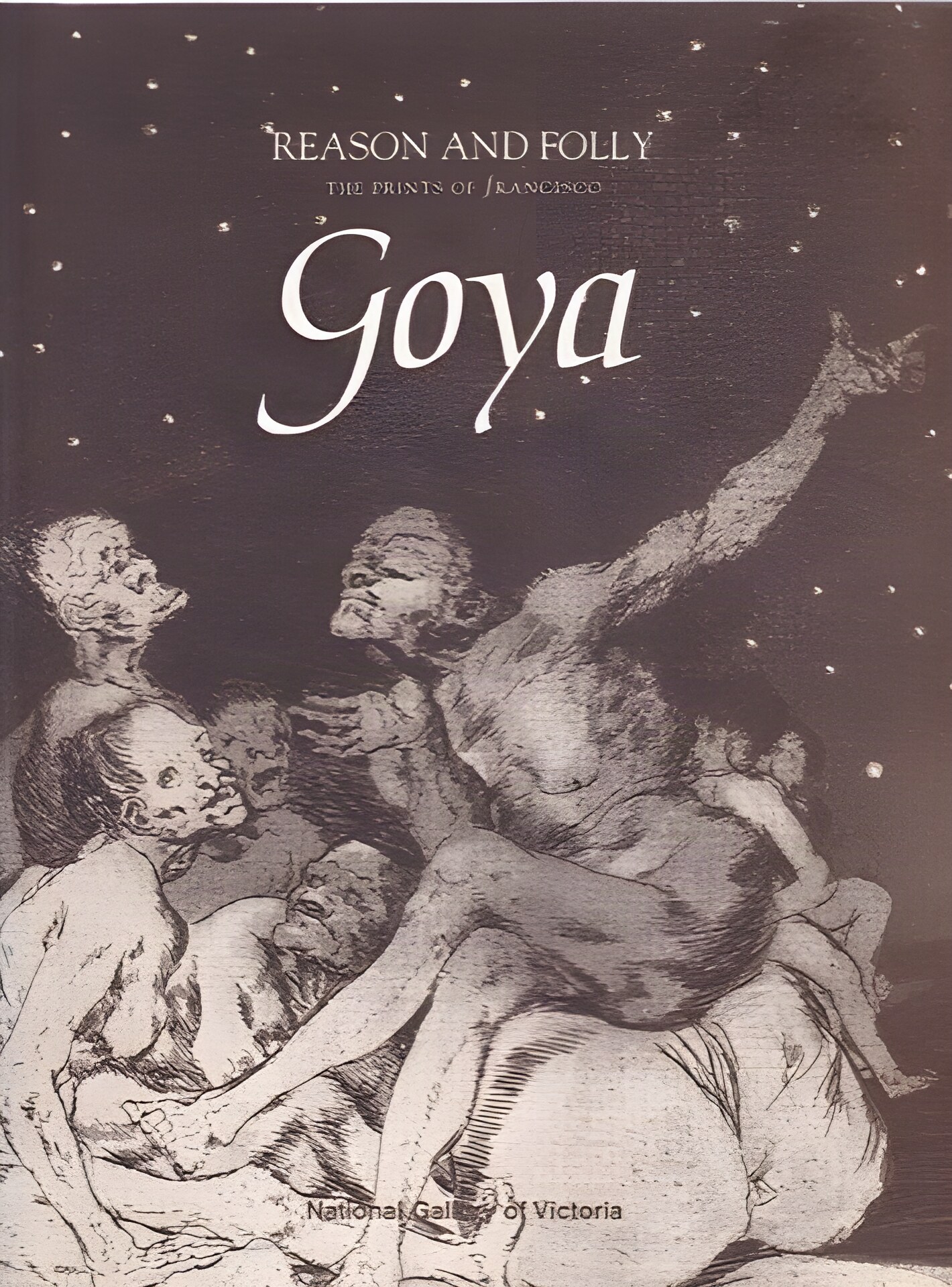
Softcover. Melbourne, National Gallery of Victoria, 1st, 1998, Book: Very Good, Dust Jacket: None, Softcover, 128 pages, profusely illustrated in b&w. The great Francesco Goya was pivotal to the development of European art. His engagement with dreams and fantasy link him to the Romantic era while his skeptical view of society, his questioning of the strictures of the Church and State, reflect Enlightenment attitudes familiar to contemporary viewers. His humane and shocking portrayal and denunciation of war still evokes an understanding and immediate response. This publication looks at the motivations of his art, to shine the light of Reason on human relations, and explores his patrons, his career and the times in which he lived. Clean, bright copy.
Softcover. NY, Museum of Modern Art, 1st, 1983, Book: Very Good, Dust Jacket: None, 222 pages. Softcover. B/w illustrations throughout. Wrapper and pages have some tanning due to age, otherwise clean. Front cover has a crease. In very good condition, no rips or tears. Binding tight.
Hardcover. NY, The Modern Library, 1st, 2004, Book: Very Good, Dust Jacket: Very Good, Hardcover in a bright, price-clipped dust jacket. 344 pages. Food articles collected from Gourmet Magazine, dispatched from Paris over the last 60 years and published together in print for the first time. Clean copy.
Hardcover. NY, Flammarion, 1st, 2004, Book: Very Good, Dust Jacket: Very Good, Hardcover, 224 pages, color and b&w illustrations. Rene Herbst's enduring furniture designs provide fundamental lessons for today's interior designers. A staunch modernist, Herbst was a founding member and later president of the Union des artistes modernes (UAM) in France, which sought to make domestic comfort accessible to all, regardless of class. The diversity of his work is testament to his prolific and creative output, and his design is marked by its simplicity and functionality. The French architect turned designer was nicknamed the "man of steel" because he pioneered the use of the material for furniture years before mass production on a large scale was possible. In 1929 he created several versions of his celebrated Sandow Chair, which ignited his research into serial production and inaugurated the era of mass production. This book presents a selection of the best works from the Herbst Collection held by the library of the Musee des Arts decoratifs in Paris, and demonstrates how Herbst was the catalyst of a new style of living that spurred the birth of modernity.
Hardcover. Washington DC, National Gallery of Art, 1st, 2007, Book: Very Good, Dust Jacket: Very Good, 296 pages, color plates throughout. Exhibition catalog, five scholarly essays. In publisher's shrinkwrap.
Softcover. Bowie MD, Heritage Books, reprint, 2001, Book: Very Good, Dust Jacket: None, Softcover, 425 pages. A facsimile reprint of the 1904 edition. Volume 1 ONLY. The present-day New York City neighborhood of Harlem was founded in the mid-17th century by Dutch Protestants, whose numbers included Huguenots (or their descendants) who had fled the counter-Reformation in France and the Walloon provinces of Artois, Cambresis, and Hainalt. Riker's Harlem is an extremely detailed historical and genealogical account of Harlem from its establishment by Kuyter and Stuyvesant between 1656 and 1660 to the end of the 17th century. Following several preliminary chapters on the Dutch and French context for the settlement of "New Haerlem," the author treats us to what seem like minute-by-minute accounts of its colonial development, including early efforts to settle the territory that became Harlem, the original land patents and their subsequent rearrangement, Indian wars, displacement of Dutch rule by the British in 1663 (and the brief reoccupation by Dutch forces in 1673), 17th-century village life, migrations to New Jersey, influx of Swedes, difficulties in assimilating English ways, and much, much more.
Softcover. Bowie MD, Heritage Books, reprint, 2001, Book: Very Good, Dust Jacket: None, Softcover, Pages 426-908 . A facsimile reprint of the 1904 edition. Volume 2 ONLY. The present-day New York City neighborhood of Harlem was founded in the mid-17th century by Dutch Protestants, whose numbers included Huguenots (or their descendants) who had fled the counter-Reformation in France and the Walloon provinces of Artois, Cambresis, and Hainalt. Riker's Harlem is an extremely detailed historical and genealogical account of Harlem from its establishment by Kuyter and Stuyvesant between 1656 and 1660 to the end of the 17th century. Following several preliminary chapters on the Dutch and French context for the settlement of "New Haerlem," the author treats us to what seem like minute-by-minute accounts of its colonial development, including early efforts to settle the territory that became Harlem, the original land patents and their subsequent rearrangement, Indian wars, displacement of Dutch rule by the British in 1663 (and the brief reoccupation by Dutch forces in 1673), 17th-century village life, migrations to New Jersey, influx of Swedes, difficulties in assimilating English ways, and much, much more.
Hardcover. teNeues, 1st, 2017, Book: Very Good, Dust Jacket: Very Good, Hardcover, 216 pages. Photographer Edward Quinn chronicles the sweet life of the French Riviera in the 1950s and 60s in this homage to the stylish celebrities who lived and loved on this chic coastline. Born in Dublin in 1920, Edward Quinn played Hawaiian guitar in Belfast, then went into the Royal Air Force. He eventually made his way to the Cote d'Azur, where he photographed world leaders, glamour girls and playboys, as well as figures from the worlds of art, music and literature. His most memorable work included images of an unknown Audrey Hepburn, Grace Kelly's first meeting with Prince Rainier, and a precocious Brigitte Bardot. His exacting eye showcased Picasso, T.S. Eliot, and Gary Cooper. With a polished technique and great patience and charm, Quinn caught some of the post-war Riviera's most memorable moments.
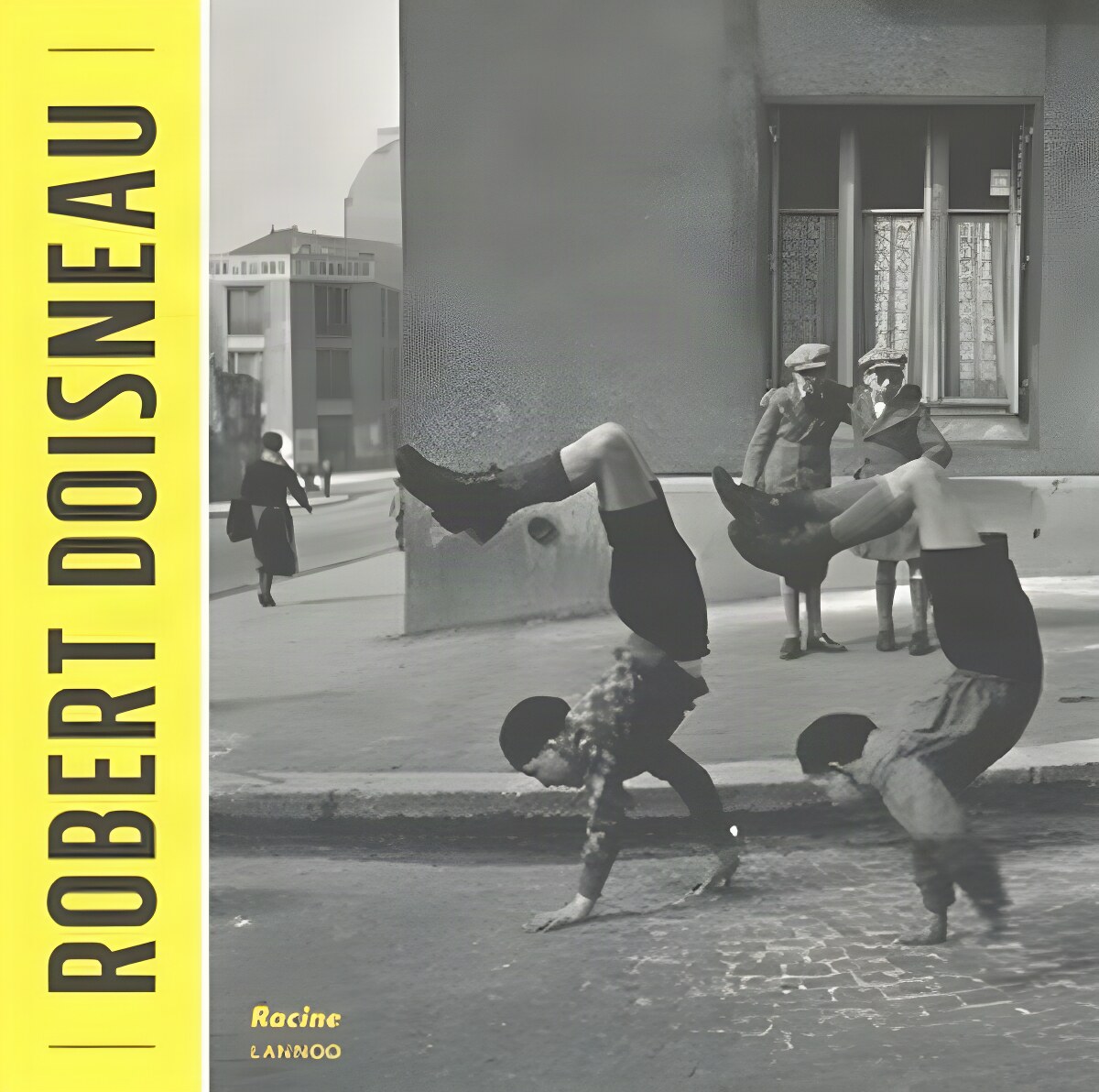
Softcover. Racine/Lannoo, 1st, 2017, Book: Very Good, Dust Jacket: None, Softcover, 239 pages, b&w and color plates. Text in English and French. Featuring the most well-known photos from Robert Doisneau since the beginning of his career. This retrospective also gives an insight in the lives of famous artists such as Picasso and Niki de Saint Phalle. The book is themed by three subjects: the main characteristics of his work and his importance for 20th century photography, the notion of the poetry of realism and 164 photos, which are also themed: daily beauty, Palm Springs, artists' studios. Published to accompany an exhibition in Musee Ixelles (Brussels) from 19 October 2017 until 4 February 2018. Clean, bright copy.
Hardcover. Germany, Steidl, 1st, 2010, Book: Very Good, Dust Jacket: None, Hardcover, 224 pages. Like new in publisher's shrink-wrap. Nowhere is the breezy and urbane romance of Paris conjured as memorably as in the photography of Robert Doisneau (1912-1994). A gentle minstrel of visual anecdote, Doisneau interpreted the city's charms in an iconography that both natives and Francophiles instantly recognize: the young hip couple stealing a spontaneous kiss at a busy intersection, the gendarme chatting with a mother while her kid tiptoes along a riverbank bench, the sweetly melancholic abandoned merry-go-round in the rain and the entire pageant of Parisian life mingling at cafes, bus shelters and on the banks of the Seine. Doisneau was possessed of both lightness of touch and spontaneity, as a result of which he has been sometimes championed as a photographer of the "pure" moment. But his ocular touch is even lighter than that suggests-his images are not so much "seized" as "netted." Accompanying the Fondation Cartier-Bresson's exhibition of around 100 prints from the Doisneau estate, From Craft to Art presents these treasures alongside a new version of Jean-Francois Chevrier's classic 1983 essay on the photographer, which describes Doisneau's knack for capturing "the shining melancholy that separates an individual from the crowd.
Softcover. London, Tauris Parke Books, 1st, 1992, Book: Very Good, Dust Jacket: None, Softcover, 126 pages. 107 b&w plates. A retrospective for exhibition at Museum of Modern Art, Oxford. Clean, bright copy.
Hardcover. NY, Flammarion, 1st, 2020, Book: Very Good, Dust Jacket: Very Good, Hardcover, 360 pages. From high-society balls and fashion shoots to portraits of artists and scenes from urban life in France, this handsome volume--which features an open spine binding so that it lays flat to show off the photographs to their best advantage--showcases Doisneau's best photographs for Vogue Paris. Celebrated photographer Robert Doisneau worked for Vogue from 1949 until 1965, illustrating a postwar France filled with a renewed zest for life. His little-known images of haute couture featured models like Brigitte Bardot and Bettina, who he photographed in the studio and out on the streets. He chronicled the members of the cafe society in their stately homes and at glamorous costume galas, dancing the night away. Best known for his humanist approach, he masterfully captured scenes from everyday life--from the grace of a wedding procession over a footbridge to the petulance of a child impatient for cake. Doisneau's photographs captured the spirit of the era and featured celebrities like Karen Blixen, Picasso, Colette, and Jean Cocteau, as well as jazz musicians, movie stars, and humble craftsmen at work. Legendary Vogue editor in chief Edmonde Charles-Roux's personal homage to the photographer--who was her friend and colleague--offers intimate insight into the man behind the camera, as complex and beautiful as the people and places he immortalized.
Hardcover. Paris, Zodiaque, 1st, 1984, Book: Very Good, Dust Jacket: Very Good, 334 pages plus index. Color, b&w gravure photographs, plans of churches, cathedrals, abbeys and monasteries in France. Text in French. Ribbon marker. Clean, tight copy in a bright dust jacket.
Hardcover. Paris, Zodiaque, 1st, 1982, Book: Very Good, Dust Jacket: Very Good, Hardcover, 407 pages plus index. Color and b&w gravure plates, plans of medieval churches of France. French text. A clean, tight copy in a bright dust jacket.
Hardcover. Madison, WI, The University of Wisconsin Press, 1st, 1948, Book: Good, Dust Jacket: None, Volume dedicated to the rural art originating in Wisconsin. Discusses 30 different artists and contains illustrations (color and black/white) of their pieces. Good condition; cloth bound book shows some wear on the edges of the covers. No dust jacket. Commemorates the 100th Anniversary of the founding of the University of Wisconsin by means of the work of rural Wisconsin artists such as Ambrose G. Ammel, Joan Arend, John M. Black, WIlliam H. Boose, Frances Burt, Frank H. Engebretson, Francis D. Grady, Louis Grebetz, Rachel Gertrude Grimm, Lois Ireland, Arthur Johnson, and many more.
Softcover. New Haven, Yale University Press, 1st, 2006, Book: Very Good, Dust Jacket: None, Large softcover, 287 pages, b&w and color illustrations throughout. A very clean, tight copy. Published on the occasion of the exhibition at the Frances Lehman Loeb Art Centre, New York. Illustrated card covers with long inside flaps, minimal wear. An exhaustive compilation of the best graphic work of Steinberg covering his life in advertising, graphic design and fine arts.
Hardcover. Paris, Denoel, reprint, 1977, Book: Very Good, Dust Jacket: None, Hardcover, 123 pages of b&w cartoons by Sempe, originally published in 1964. Green cloth covers with fading to spine. previous owner's signature on front fly leaf. Otherwise clean, very good. French language but most of his cartoons are wordless.
Paperback. Albany, NY, Education Department, Albany Institute of History and Art., revised, 1984, Book: Very Good, Dust Jacket: None, Softcover, 201 pages. Very little wear to cover. Inside is bright and clean with many b&w illustrations throughout.
Hardcover. New Haven/New York, Yale University Press/Metropolitan Museum of Art, 1st, 2001, Book: Very Good, Dust Jacket: Very Good, Hardcover, 340 pages, 223 color, 92 b&w plates. Still in publisher's shrinkwrap. DUE TO WEIGHT, DOMESTIC SHIPPING ONLY.
Softcover. Princeton NJ, Princeton University Press, 1st US, 2018, Book: Very Good, Dust Jacket: None, Softcover, 276 pages, b&w illustrations. Wry political fairy tales from a nineteenth-century politician that speak to our current times. Edouard Laboulaye (1811-1883), one of nineteenth-century France's most prominent politicians and an instrumental figure in establishing the Statue of Liberty, was also a prolific writer of fairy tales. Smack-Bam, or The Art of Governing Men brings together sixteen of Laboulaye's most artful stories in new translations. Filled with biting social commentary and strong notions of social justice, these rediscovered tales continue to impart lessons today. Inspired by folktales from such places as Estonia, Germany, Iceland, and Italy, Laboulaye's deceptively entertaining stories explore the relationships between society and the ruling class. Clean copy.
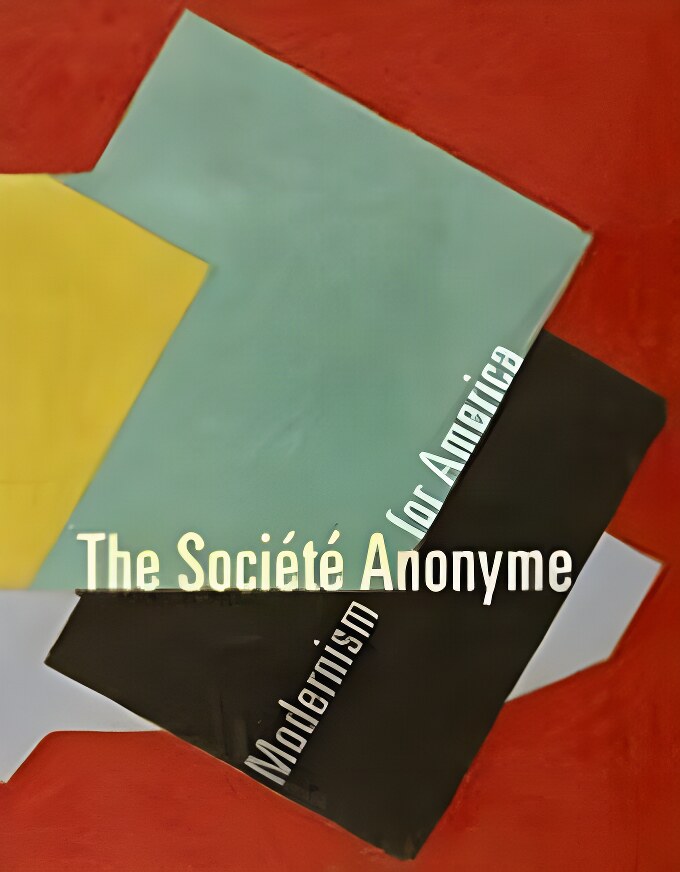
Hardcover. New Haven, Yale University Press , 1st, 2006, Book: Very Good, Dust Jacket: Very Good, Hardcover with dust jacket. Like new in publisher's shrink-wrap. This beautifully illustrated book highlights the unique history of The Societe Anonyme, Inc., an organization founded in 1920 by the artists Katherine S. Dreier (1877-1952), Marcel Duchamp (1887-1968), and Man Ray (1890-1976). As America's first "experimental museum" for modern art, the Societe Anonyme provided a means for artists, rather than historians, to chronicle the rise of modernism. Led by Dreier and Duchamp, the group eventually assembled a collection of more than one thousand artworks, which it presented to the public in a variety of innovative programs, publications, and exhibitions. The incredible collection of the Societe Anonyme now belongs to the Yale University Art Gallery, a gift from the Societe and Dreier. It features the work of more than one hundred artists, many of whom are among the century's most renowned--including Jean Arp, Duchamp, Max Ernst, Wassily Kandinsky, Paul Klee, El Lissitzky, Piet Mondrian, Man Ray, Kurt Schwitters, and Joseph Stella--as well as works by lesser-known artists whose contributions to modernism are substantial. With new archival information, including personal correspondence between Dreier and the artists whose work she assembled, a host of previously unpublished images, essays by leading scholars, and an interview with artists Robert and Sylvia Mangold about the contemporary significance of this collection, this fascinating book is essential to our understanding of the reception and interpretation of modernism in America.
Hardcover. London, William Pickering, 1st, 1835, Book: Good, Dust Jacket: None, Hardcover, 298 pages. Black leather covers with gilt rules, faded gilt title on ribbed spine. All edges gilt. Covers with edgewear and the top 6th of the spine leather is gone. Marbled endpapers with bookplate inside front cover. Rear flyleaf with a chunk cut out. Interior is very good. Medieval and Renaissance French poetry, translated into English by an acclaimed poet, travel writer, historian, and painter. Louisa Costello (1799-1870), was an accomplished Anglo-Irish artist and prolific poet and author. She was also a fine miniature painter, and her illustrations show her exquisite sensibility. 4 beautifully hand-colored lithograph plates by the author. Not all copies contain these plates.
Hardcover. NY, The Century Co., 1st, 1885-86, Book: Very Good, Dust Jacket: None, Hardcover, 12 issues bound in one volume, dark green cloth covers with gilt lettering on spine. 960 pages. A collection of the best juvenile writing and illustration of the day. The premier children's magazine in America at this time, offering a mix of fiction (some of it fantastic), articles, humor and lavish illustrations. Contributors include Palmer Cox, Laura E. Richards, E. P. Roe, J. T. Trowbridge, Alice May, Edward Eggleston, Frances Hodgson Burnett, Daniel C. Beard, and many others. Includes the debut of Burnett's "Little Lord Fauntleroy," which appeared for the first time in St. Nicholas. Clean copy, no library marks. DOMESTIC SHIPPING ONLY.
Hardcover. NY, Abrams, 1st, 2005, Book: Very Good, Dust Jacket: Very Good, Hardcover, 240 pages. Steinberg's high-concept graphic art--epitomized by his oft-imitated cartoon map in which a Manhattan distended with self-importance shoves the continents of North America and Asia to the margins--is enchantingly showcased in this lavishly illustrated retrospective of his work for the New Yorker. Smith, a curator at the Frances Lehman Loeb Art Center at Vassar and author of Edward Steichen: The Early Years, surveys six decades of Steinberg's pieces, including all 89 New Yorker covers (in full color), cartoons, wartime sketches from overseas, evocative (but never literal-minded) illustrations for articles, and unpublished items from the artist's portfolio. The material is arranged thematically, examining such recurring motifs as cats, pedestals and rubber-stamped figures and documenting the turn to visual metaphor in Steinberg's later work, where symbolic graphic representations of sound, abstract relationships and existential conundrums replace the usual scenario-with-verbal-punch line cartoon setup. Smith's pithy biographical essay situates Steinberg as a self-conscious modernist who helped develop a distinctive New Yorker visual style, one with "a wry, informal wit... attuned to the jittery optimism of the Atomic Age." Steinberg's cartoons usually made readers think before they laughed, and so will this splendid memorial to a 20th-century artistic landmark.

 "Rediscovering French Filmby: Bandy, Mary Lea (Editor), Raud, Richard (Introduction)")


![Remembrance of Things Paris: Sixty Years of Writing from Gourmet by: Reichl, Ruth [Editor]](https://www.browsingisarousing.com/shop/images/Remembrance-of-Things-Paris-Sixty-Years-of-Writing-from-Gourmet_by_Reichl-Ruth-Editor-399427-454964.jpg "Remembrance of Things Paris: Sixty Years of Writing from Gourmet by: Reichl, Ruth [Editor]")
 "Rene Herbst: Pioneer of Modernismby: Guillemette Delaporte")


 "Renoir Landscapes 1865-1883by: Bailey, Colin and Christopher Riopelle")



 "Robert Doisneau: From Craft to Artby: Chevrier, Jean-Franaois")
 "Robert Doisneau: The Vogue Yearsby: Doisneau/Edmonde Charles-Roux, Robert")
 "Routes Romanes - 2: La Route aux Solitudesby: Oursel, Raymond")

 "Rural Artists of Wisconsinby: Barton, John Rector")
 "Saul Steinberg: Illuminationsby: Smith, Joel")
 "Sauve Qui Peutby: Sempe")
 "Seventeenth Century Albany: A Dutch Profile.by: Wilcoxen, Charlotte")
 "Signac 1863-1935by: Ferretti-Bocquillon, Marina")
 "Smack-Bam, or The Art of Governing Men: Political Fairy Tales of Edouard Laboulayeby: Edouard Laboulaye")
 "SPECIMENS OF THE EARLY POETRY OF FRANCE, from the Time of the Troubadours and Trouveres to the Reign of Henry Quatre by: Costello, Louisa Stuart")



 "Steinberg at the New Yorkerby: Smith/Saul Steinberg, Joel")