Hardcover. Princeton NJ, Princeton University Press, 1st, 2010, Book: Very Good, Dust Jacket: Very Good, Hardcover in a bright, unclipped dust jacket, 391 pages. How Maoism captured the imagination of French intellectuals during the 1960s. Michel Foucault, Jean-Paul Sartre, Julia Kristeva, Phillipe Sollers, and Jean-Luc Godard. During the 1960s, a who's who of French thinkers, writers, and artists, spurred by China's Cultural Revolution, were seized with a fascination for Maoism. Combining a merciless expose of left-wing political folly and cross-cultural misunderstanding with a spirited defense of the 1960s, The Wind from the East tells the colorful story of this legendary period in France. Richard Wolin shows how French students and intellectuals, inspired by their perceptions of the Cultural Revolution, and motivated by utopian hopes, incited grassroots social movements and reinvigorated French civic and cultural life.
Hardcover. NY, Museum of Modern Art , 1st, 1982, Book: Very Good, Dust Jacket: Good, Hardcover in a bright, price-clipped dust jacket. Volume Two Only. First Edition. Photographs by Eugene Atget. Essay and notes to the plates by Maria Morris Hambourg. Appendixes include Berenice Abbott's typewritten copy of Andre Calmette's handwritten letter to her (late 1928). Maroon cloth with debossed title blind-stamped on cover and in gilt on spine, with dust jacket. 192 pp. with 116 plates and 84 black and white reference illustrations. Printed by The Meriden Gravure Company from halftone negatives made by Richard Benson. Clean, tight copy.
Hardcover. NY, Museum of Modern Art , 1st, 1983, Book: Very Good, Dust Jacket: Good, Hardcover in a bright, price-clipped dust jacket. Volume Three Only. First Edition. 188 pages, 120 plates. Fore-edge of dust jacket has chipping, edgewear. Otherwise a clean, VG copy.
Hardcover. NY, Museum of Modern Art , 1st, 1985, Book: Very Good, Dust Jacket: Good, Hardcover in a bright, price-clipped dust jacket. Volume Four Only. First Edition. Photographs by Eugene Atget. Essay and notes to the plates by Maria Morris Hambourg. 182 pages, 117 bw photographic plates and several text illustrations. A nice, bright copy.
Hardcover. NY, Museum of Modern Art , 1st, 1981, Book: Very Good, Dust Jacket: Very Good, Hardcover in a bright, price-clipped dust jacket. Volume One Only. First Edition. 180 pages,121 plates with 83 b&w photo illustrations, slight edgewear to jacket, else a very nice, clean copy. Atget was a groundbreaking photographer, documenting three decades of rapid urban transition in Paris from the late 19th to early 20th centuries. His works depict the architecture, streets, gardens, and people of the city.
Hardcover. NY, Horizon Press, 1st, 1964, Book: Very Good, Dust Jacket: Very Good, Hardcover, 176 black and white plates with Subject Guide at rear. Illustrated with black and white plates. First Edition/First Printing. DJ has light shelfwear present with chipping present to the DJ extremities. No ownership marks present. Text is clean and free of marks, binding tight and solid, boards clean with no wear present. Eugene Atget (1857-1927) was a French flaneur and a pioneer of documentary photography, noted for his determination to document all of the architecture and street scenes of Paris before their disappearance to modernization. Most of his photographs were first published by Berenice Abbott after his death. An inspiration for the surrealists and other artists, his genius was only recognized by a handful of young artists in the last two years of his life, and he did not live to see the wide acclaim his work would eventually receive.
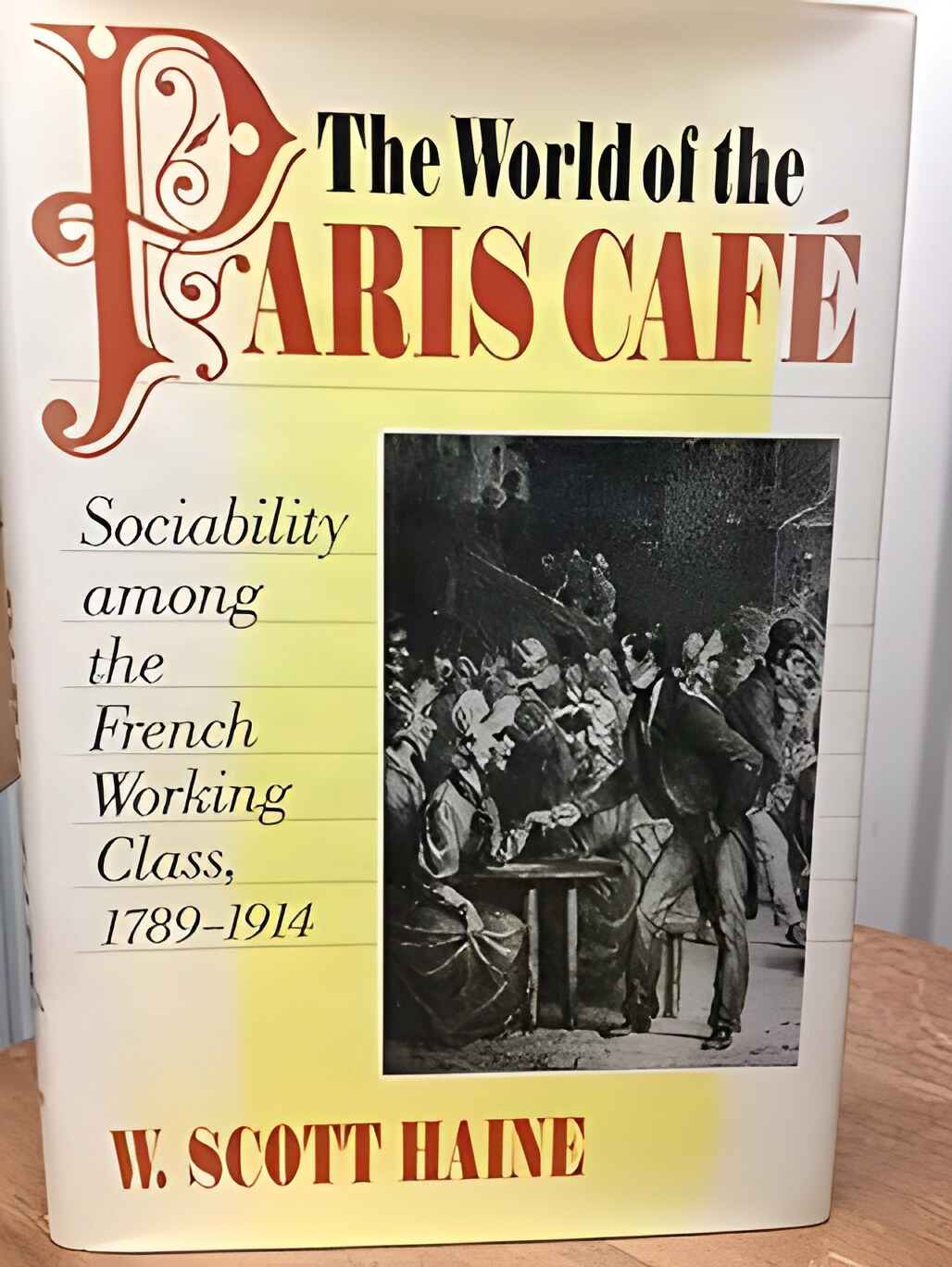
Hardcover. Baltimore, Johns Hopkins University Press, 1st, 1996, Book: Very Good, Dust Jacket: Good, Hardcover in a dust jacket with sunning to spine, 325 pages, b&w illustrations. In The World of the Paris Café, W. Scott Haine investigates what the working-class café reveals about the formation of urban life in nineteenth-century France. Café society was not the product of a small elite of intellectuals and artists, he argues, but was instead the creation of a diverse and changing working population. Making unprecedented use of primary sources -- from marriage contracts to police and bankruptcy records -- Haine investigates the café in relation to work, family life, leisure, gender roles, and political activity. This rich and provocative study offers a bold reinterpretation of the social history of the working men and women of Paris. Clean copy.
Hardcover. NY, Thames & Hudson, 1st, 2001, Book: Very Good, Dust Jacket: Very Good, Hardcover in a bright, unclipped dust jacket. 112 pages illustrated in color. Originally trained as sculptor, Thomas Demand approaches photography as a means of preserving his painstakingly created, ephemeral paper constructions. At no time do his forms strive for the perfect illusion, his is a wholly artificial world reduced to generic forms. Large immaculate photographs of interiors and architectural exteriors - a world peopled with inanimate objects and bathed in uniform lighting - are mounted on Plexiglass, which underscores the materiality of the photographic object. For each of his reproductions, Demand constructs life-size models using paper and cardboard. Like new.
Hardcover. Princeton, Princeton University Press, 1st, 1972, Book: Very Good, Dust Jacket: None, Hardcover, 226 pages of text followed by section of corresponding black & white photographic illustrations. Hardcover. Clean, tight copy. No dust jacket.
Hardcover. New York, Abrams, 1st, 1965, Book: Very Good, Dust Jacket: Good, Hardcover, 368 pages plus fold-out list of plates. Hardcover. 54 full color plates plus hundreds of black & white works by Toulouse-Lautrec. Dust jacket protected with clear plastic cover. Clean, tight copy. Complete coverage of works in lithography and drypoint including fine prints, posters, illustrations, book jackets, sheet music, etc.
Hardcover. New York, Harry N. Abrams, 1st English, 1996, Book: Very Good, Dust Jacket: Very Good, Hardcover, 143 pages, b&w photographs throughout. A very clean, tight copy.
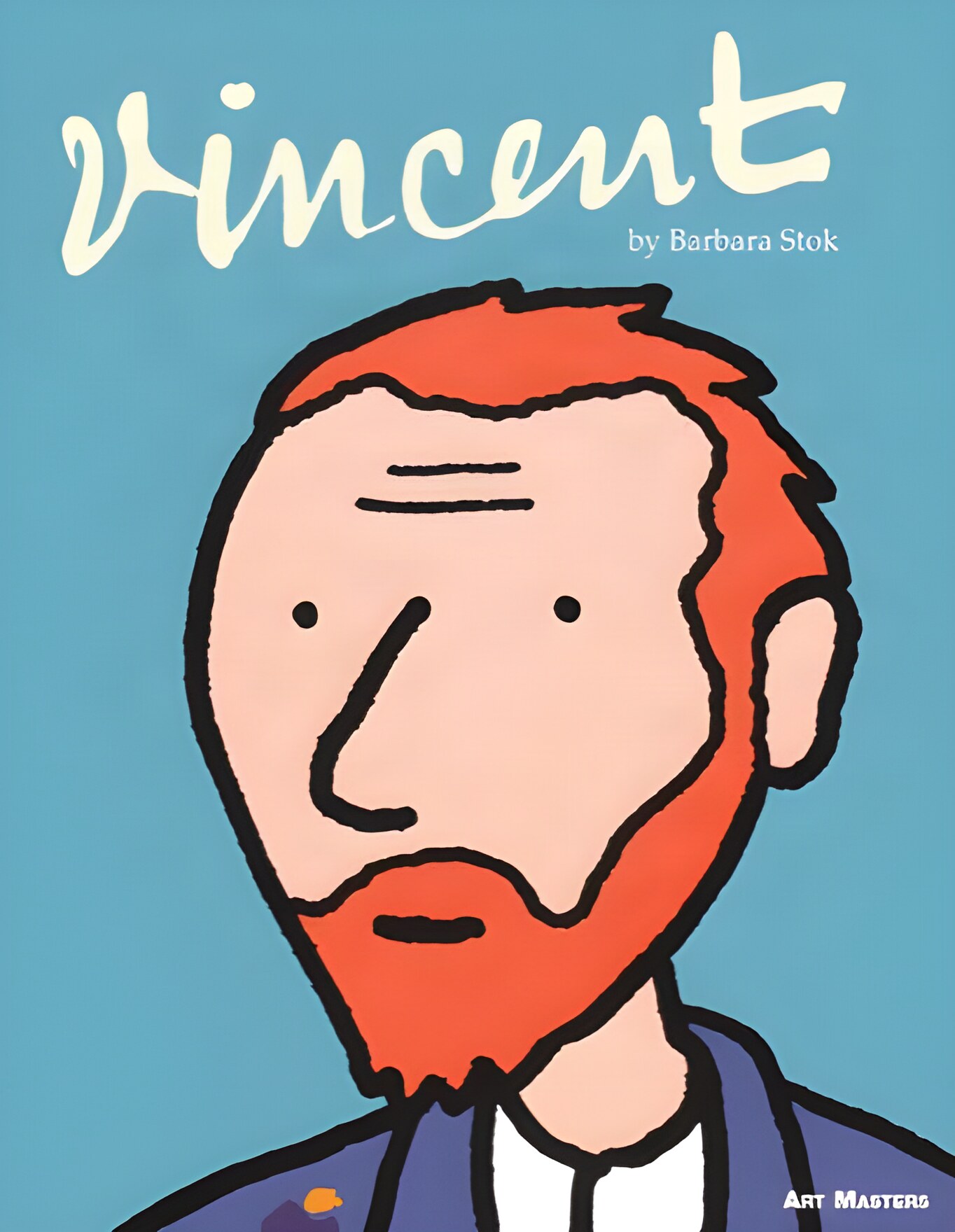
Softcover. SelfMadeHero, 1st US, 2015, Softcover, 142 pages illustrated in color by Stok. Translated from the Dutch by Laura Watkinson. This graphic biography documents the brief and intense period of creativity Vincent van Gogh (1853-1890) spent in Arles, Provence, in southern France. Here van Gogh dreams of setting up an artists' studio--a haven where he and his friends can paint together. But attacks of mental illness leave the painter confused and disoriented. When his friend and fellow artist Paul Gauguin refuses to reside permanently at the Yellow House, a distraught van Gogh cuts off part of his own ear. Throughout this period of intense emotion and hardship, Vincent's brother, Theo, stands by him, offering constant and unconditional support. Writer and illustrator Barbara Stok breathes riveting new life into a fascinating episode of art history, creating a vivid portrait of one of the world's most beloved and legendary artists. Clean copy.
Softcover. Worcester MA, Worcester Art Museum, 1st, 1982, Book: Very Good, Dust Jacket: None, Softcover, 285 pages. 148 plates including 9 in color. Includes notes, bibliography, and catalogue. Minor edgewear to wrappers, clean copy.
Softcover. New York, Guggenheim Museum, 1st, 1997, Book: Very Good, Dust Jacket: None, 147 pages. Softcover. Full color illustrations. Light bump to top right corner. Clean, unmarked copy.
Hardcover. London, Dewi Lewis Publishing, 1st, 2000, Book: Very Good, Dust Jacket: None, Nonpaginated. Hardcover. Color illustrations throughout. Clean inside and out. From the back cover: "The images in Vital Signs, Harvey Benge's fourth book of photographs, have been made in Paris, London, Prague, Hong Kong and beyond. They engage both the eye and the mind, inviting viewers to examine their own experience of urban life and what that means to them."
Softcover. NY, Grolier Club, 1st, 2017, Softcover, oblong format, 136 pages. A fascinating overview of the Golden Age of social and political satire in nineteenth-century France, Vive Les Satiristes! focuses on controversial and wildly popular journals like La Caricature and Le Charivari, and such great illustrators as Daumier and Grandville, who captured in their pages the foibles of those around them with unmatched humor, skill, and style. Published in conjunction with a Grolier Club exhibition, and beautifully illustrated, it includes a collector's statement, an introduction, and an essay by Josephine Lea Iselin. Still in publisher'e shrinkwrap.
Hardcover. NY, Grove Press, 1st US, 2005, Book: Very Good, Dust Jacket: Very Good, Hardcover in a bright, unclipped dust jacket. In 1753, Voltaire -- playwright, poet, philosopher, and one of the most feted figures in Europe -- was forced by Louis XV into exile, where he remained for the last twenty-five years of his life. These years heralded a startling new beginning for this remarkable man. Voltaire carved out a new and vibrant world in his isolation, becoming a successful entrepreneur and writing his masterpiece Candide. In Voltaire in Exile, Ian Davidson re-creates this period in the life of one of the giants of the Enlightenment. By painstakingly translating the rich correspondence between Voltaire and his family, members of the Court at Versailles, and the French intellectual elite, Davidson allows us to discover Voltaire the artist, the campaigner, the aesthete, the lover, the humorist. The result is a wonderfully vivid portrait of this extraordinarily funny, iconoclastic, complex, and, above all, ferociously intelligent individual. Clean copy.
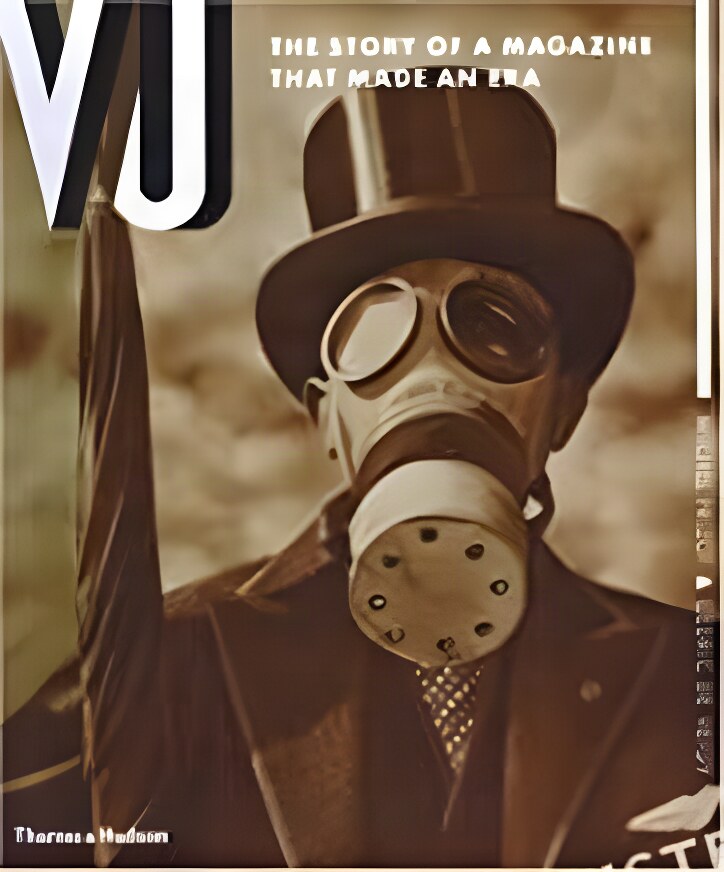
Hardcover. NY, Thames & Hudson;, 1st, 2009, Book: Very Good, Dust Jacket: Very Good, Hardcover in a bright, unclipped dust jacket. The best pages from the sensational photo magazine published in France in the 1920s and 1930s. Established in Paris in 1928, VU combined stunning photography with dynamic layouts and first-rate reporting, creating a revolution in journalism and setting the stage for future photo magazines like Life, Stern, and Paris Match. For a weekly magazine that only published 665 issues (21 March 1928 -- 5 June 1940) VU left behind a remarkable legacy as revealed in these pages. There are eight main chapters: Page layouts; Faces; Photo stories; Photomontages; The rise of Hitler; Sensation and spectacle; Image innovations; Covers and each is crammed with spreads and covers from the magazine and lots of them are big enough to read the stories and captions (assuming you know French). VU was created by publisher Lucien Vogel with editor Carlo Rim and art editor Alexander Liberman (who became US Vogue's art editor and later creative director of Conde Nast) as a general interest picture weekly, some years before Life and Look in the US and Picture Post in Britain. They all took advantage of developing technologies of the day like wire transmission of photos and rotogravure printing. VU was the first though to use photos in a very creative way, especially with cover montages created by Liberman, no doubt influenced by Russian magazines of the twenties designed Rodchenko, Tellingater, Lissitzky and Stepanova.
Hardcover. NY, Thames & Hudson, 1st, 2009, Hardcover, 320 pages. The best pages from the sensational photo magazine published in France in the 1920s and 1930s. Established in Paris in 1928, VU combined stunning photography with dynamic layouts and first-rate reporting, creating a revolution in journalism and setting the stage for future photo magazines like Life, Stern, and Paris Match. VU covered a wide and eclectic range of subjects including politics, world affairs, social issues, discoveries, exploration, the arts, sports, and entertainment. It intended to be an illustrated journal of the week's events-a movie newsreel on paper-and published work by some of the most important photographers of the time: Robert Capa, Andre Kertesz, Henri Cartier-Bresson, Brassai, Man Ray, and more. This book gathers some of the best work from more than 600 issues of VU: covers, double-page spreads, and complete reports. It provides both a record of the prewar world of the twenties and thirties, and an unparalleled history of photojournalism in the early twentieth century. 200+ b&w illustrations
Rome, Franca May, 1st, 1975, Book: Very Good, Dust Jacket: Very Good, Black cardboard slip-case is VG with some wear. This is a written essay by the Italian author, Soavi of the art and world of Jean-Michel Folon. There are many full page full-color plates of the artist's paintings and serigraphs. This is also a visual essay (via color photos) of the farm in Burcy, near Paris, where the artist has his home and atelier. In all, twenty-eight of the artist's works are reproduced, most either taking up a full page, and some as two-page spreads.
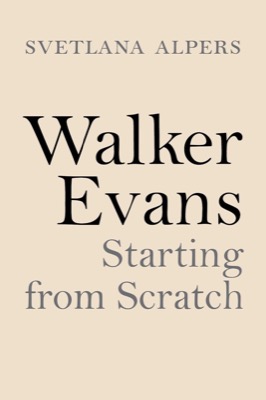
Hardcover. Princeton NJ, Princeton University Press, 1st, 2020, Book: Very Good, Dust Jacket: Very Good, Hardcocer in a bright dust jacket, 257 pages plus 143 b&w pages of photographs in the front of the book. Walker Evans (1903-75) was a great American artist photographing people and places in the United States in unforgettable ways. He is known for his work for the Farm Security Administration, addressing the Great Depression, but what he actually saw was the diversity of people and the damage of the long Civil War. In Walker Evans, renowned art historian Svetlana Alpers explores how Evans made his distinctive photographs. Delving into a lavish selection of Evans's work, Alpers uncovers rich parallels between his creative approach and those of numerous literary and cultural figures, locating Evans within the wide context of a truly international circle. Alpers demonstrates that Evans's practice relied on his camera choices and willingness to edit multiple versions of a shot, as well as his keen eye and his distant straight-on view of visual objects. Illustrating the vital role of Evans's dual love of text and images, Alpers places his writings in conversation with his photographs. She brings his techniques into dialogue with the work of a global cast of important artists--from Flaubert and Baudelaire to Elizabeth Bishop and William Faulkner--underscoring how Evans's travels abroad in such places as France and Cuba, along with his expansive literary and artistic tastes, informed his quintessentially American photographic style.
Hardcover. NY, Thames and Huson, 1st, 2007, Book: Very Good, Dust Jacket: Very Good, Hardcover, 256 pages. Published to accompany an exhibition at London's Imperial War Museum, this book features more than 250 superb full-color illustrations of hard-hitting propaganda and groundbreaking graphic art. It encompasses iconic images such as Alfred Leete's "Your Country Needs You" as well as additional material drawn from the world of advertising and documentary photographs of posters in situ. Through posters, the author examines the social, political, ethnic, and cultural aspirations of America, Britain, Ireland, Germany, France, the Netherlands, Belgium, Russia, Austria, Hungary, and the Czech Republic. Covering topics as diverse as advertising in World War I, the Bolshevik Revolution, the Spanish Civil War, Germany and Occupied Europe in World War II, anti-nuclear campaigns, and Vietnam, the book is comprehensive and highly analytical, yet accessible. 300 illustrations, 250 in color.
Hardcover. Santa Fe, Arena Editions, 1st, 1998, Book: Very Good, Dust Jacket: Very Good, 168 pages. Hardcover. Bright purple fabric covered covers with gilt title on spine. B/w illustrations throughout. Mylar covered dust jacket in good shape. Very clean inside. Former bookseller price tag on front flap. "Out of print". From the front flap: "This definitive retrospective monograph encompasses the period 1972 though 1997, and includes images from every genre Cratsley has pursued."
Softcover. Bloomington, IN, Indiana University Press, 1st, 2015, Book: Very Good, Dust Jacket: None, 232 pages. Softcover. A very clean, unmarked copy with only minor edgewear. Black and white photographs throughout. The center of the art world before the war, Paris fired the Nazis' greed. The discovery of more than 1,500 prized paintings and drawings in a private Munich residence, as well as a recent movie about Allied attempts to recover European works of art, have brought Nazi plundering back into the headlines, but the thievery was far from being limited to works of art. From 1942 onwards, ordinary Parisian Jews-mostly poor families and recent immigrants from Eastern Europe-were robbed, not of sculptures or paintings, but of toys, saucepans, furniture, and sheets. Witnessing the Robbing of the Jews tells how this vast enterprise of plunder was implemented in the streets of Paris by analyzing images from an album of photographs found in the Federal Archives of Koblenz. Brought from Paris in 1945, the photographs were cataloged by the staff of the Munich Central Collecting Point. Beyond bearing witness to the petty acts of larceny, these images provide crucial information on how the Germans saw their work. They enable us to grasp the "Nazi gaze" and to confront the issue of the relation between greed and mass destruction.


![The Work of Atget, Vol. 2: The Art of Old Parisby: [Eugene Atget] Szarkowski, John and Hambourg, Maria](javascript:largeIMTop('https://www.browsingisarousing.com/shop/images/The-Work-of-Atget-Vol.-2-The-Art-of-Old-Paris_by_Eugene-Atget-Szarkowski-John-and-Hambourg-Maria398320-451721.jpg','https://www.browsingisarousing.com/shop/images/The-Work-of-Atget-Vol.-2-The-Art-of-Old-Paris_by_Eugene-Atget-Szarkowski-John-and-Hambourg-Maria398320-451721.jpg',0,'398320',0,'') "The Work of Atget, Vol. 2: The Art of Old Parisby: [Eugene Atget] Szarkowski, John and Hambourg, Maria")
![The Work of Atget, Vol. 3: The Ancien Regime by: [Eugene Atget] Szarkowski, John and Hambourg, Maria](javascript:largeIMTop('https://www.browsingisarousing.com/shop/images/The-Work-of-Atget-Vol.-3-The-Ancien-Regime_by_Eugene-Atget-Szarkowski-John-and-Hambourg-Maria398319-451855.jpg','https://www.browsingisarousing.com/shop/images/The-Work-of-Atget-Vol.-3-The-Ancien-Regime_by_Eugene-Atget-Szarkowski-John-and-Hambourg-Maria398319-451855.jpg',0,'398319',0,'') "The Work of Atget, Vol. 3: The Ancien Regime by: [Eugene Atget] Szarkowski, John and Hambourg, Maria")
![The Work of Atget, Vol. 4: Modern Timesby: [Eugene Atget] Szarkowski, John and Hambourg, Maria](https://www.browsingisarousing.com/shop/images/The-Work-of-Atget-Vol.-4-Modern-Times_by_Eugene-Atget-Szarkowski-John-and-Hambourg-Maria398321-451824.jpg "The Work of Atget, Vol. 4: Modern Timesby: [Eugene Atget] Szarkowski, John and Hambourg, Maria")
![The Work of Atget, Vol. 4: Modern Timesby: [Eugene Atget] Szarkowski, John and Hambourg, Maria](https://www.browsingisarousing.com/shop/images/The-Work-of-Atget-Vol.-4-Modern-Times_by_Eugene-Atget-Szarkowski-John-and-Hambourg-Maria398321-451824_50_th.jpg)
![The Work of Atget, Vol. 4: Modern Timesby: [Eugene Atget] Szarkowski, John and Hambourg, Maria](https://www.browsingisarousing.com/shop/images/The-Work-of-Atget-Vol.-4-Modern-Times_by_Eugene-Atget-Szarkowski-John-and-Hambourg-Maria398321-451825_50_th.jpg)
![The Work of Atget, Vol. I, Old Franceby: [Eugene Atget] Szarkowski, John and Hambourg, Maria](https://www.browsingisarousing.com/shop/images/The-Work-of-Atget-Vol.-I-Old-France_by_Eugene-Atget-Szarkowski-John-and-Hambourg-Maria398317-451719.jpg "The Work of Atget, Vol. I, Old Franceby: [Eugene Atget] Szarkowski, John and Hambourg, Maria")
 "The World of Atget by: Abbott, Berenice and Eugene Atget")
 "Thomas Demandby: Francesco Bonami, Regis Durand, Thomas Demand")
 "Throne of Wisdom - Wood Sculptures of the Madonna in Romanesque France, Theby: Forsyth, Ilene H.")
 "Toulouse-Lautrec - His Complete Lithographs and Drypointsby: Adhemar, Jean")
 "Village in France: Louis Clergeau's Photographic Portrait of Daily Life in Pontlevoy, 1902-1936by: Couderc, Jean-Mary")
 "Vital Signsby: Benge, Harvey")
 "Vive Les Satiristes!:French Caricature During the Reign of Louis Philipp 1830-1848; Books Albums, and Prints from the Collection of Josephine Lea Iselin by: Josephine")
 "Voltaire In Exile: The Last Years, 1753-78 by: Ian Davidson")
 "Vu: The Story of a Magazineby: C")
 "Vue Imprenable - Essays on the World of Folonby: Soavi, Giorgio")


 "War Posters: Weapons of Mass Communicationby: James Aulich")

 "Witnessing the Robbing of the Jews: A Photographic Album, Paris, 1940-1944by: Gensburger, Sarah")