Hardcover. New York , Arts, Inc., 1st, 1961, Book: Very Good, Dust Jacket: Very Good, Hardcover, 164 pages, 128 illustrations, 57 in color, including many tipped-in. Bright dust jacket with price-clipped flap. Previous owner's signature on front fly leaf otherwise clean, very good.
Hardcover. New York, Prestel, 1st, 2014, Book: Very Good, Dust Jacket: None, Hardcover, 10 x 13", 207 pages. Color and b&w images. Widely considered one of the major works of Expressionist printmaking, this series of spectacular woodcuts by Ernst Ludwig Kirchner is presented for the first time in a comprehensive study, specifically designed to allow readers a full understanding of the artist's achievement. No dust jacket issued.
Softcover. Germany, Hatje Cantz, 1st, 2011, Book: Very Good, Dust Jacket: None, 128 pages. Softcover. Like new in publisher's shrink-wrap. For the last 50 years, Erro has been creating paintings that make equal use of art history, cartoons, comic books, politics, popular culture and social tableaux. This publication features Erro's series Scapes, and for the first time, presents the entire 1968 Monster cycle--double portraits that contrast the official likenesses of celebrities with monstrously distorted visages.
Softcover. New Haven, Yale University Art Gallery, 1at, 1992, Book: Very Good, Dust Jacket: None, Softcover, 253 pages, b&w and color illustrations, illustrated end paper. Bottom front left corner slightly bumped. Light marks to bottom edge. Else a very clean, tight copy. The book includes essays by five noted authorities: Linda Norden discusses Hesse's early career in New York following her years as a student of Josef Albers; Maria Kreutzer writes on Hesse's work in Germany in the mid-sixties, when she moved from two to three dimensions; Robert Storr places Hesse in relation to the central American artistic concerns of the 1960s, focusing on her links to such artists as Jasper Johns, Sol LeWitt, and Claes Oldenburg; Anna Chave analyzes Hesse's mature work in light of contemporary feminist theory on authorship and subjectivity; and Maurice Berger examines Hesse's radical and personal approach to the sculptural object following her rejection of painting. In addition, Helen Cooper draws on the artist's extensive diaries, notebooks, and correspondence for a chronology detailed as much as possible in Hesse's own words.
Hardcover. NY, Jewish Museum / Yale University Press, 1st, 2006, Book: Very Good, Dust Jacket: Very Good, Hardcover, 192 pages. Eva Hesse: Sculpture focuses on the artist's large-scale sculptures in latex and fiberglass and provides a rare opportunity to look at Hesse's artistic achievement within the historical context of her life in never-before-seen family diaries and photographs. Essays consider Hesse's art from a variety of angles: Elisabeth Sussman discusses the sculptures shown in the 1968 solo exhibition; Fred Wasserman delves into the Hesse family's life in Nazi Germany and in the German Jewish community in New York in the 1940s; Yve-Alain Bois examines Hesse's works within the context of the art and aesthetic theories of the 1960s; and Mark Godfrey analyzes the importance of Hesse's celebrated hanging sculptures of 1969-70. In addition to color reproductions of the artist's sculpture, the book features a copiously illustrated chronology of the artist's life.
Softcover. Berkeley CA, University of California Press, 1st, 2001, Book: Near Fine, Dust Jacket: Near Fine, Still wrapped in plastic. Accompanied the exhibition "Expressionist Utopias" at the Los Angeles County Museum in 1993. In great condition. Color illustrations throughout. A nice, tight copy.The notion of utopia exists in every culture, capturing shared dreams and common goals. This book--prepared to accompany the exhibition Expressionist Utopias mounted at the Los Angeles County Museum in 1993--explores how the optimistic themes of utopia and fantasy sustained faith among artists and architects in the power of art to shape a better world during the tumultuous World War I era in Germany. The exhibition's curator, Timothy O. Benson along with David Frisby, Reinhold Heller, Anton Kaes, Wolf Prix, and Iain Boyd White present the diverse manifestations of the utopia metaphor in its progression throughout Expressionism from Arcadian to manmade utopias.
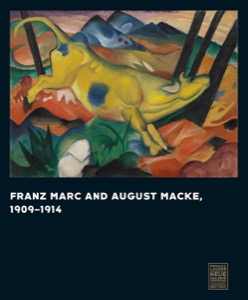
Hardcover. Munich / New York, Prestel / Neue Galerie, 1st, 2019, Book: Very Good, Dust Jacket: Very Good, Hardcover in a bright dust jacket, 207 pages. profusely illustrated in color and black & white throughout, including several full-page illustrations. Includes a preface by Ronald S. Lauder, a foreword by Renee Price and essays by Vivian Endicott Barnett, Erich Franz, Ursula Heiderich, Annegret Hoberg, Isabelle Jansen, and Olaf Peters. This generously illustrated volume focuses on the poignant friendship of Franz Marc and August Macke, two innovative members of the Blue Rider group. During the five years Franz Marc and August Macke knew each other, the two men carried on an artistic and personal friendship that had an immense impact of each of their careers. This book traces their relationship and features meticulously reproduced images that bring their paintings, and the bond they shared, to life. In addition to paintings, watercolors, and drawings from both artists, this book includes objects and documents that show their connection to one another. Clean copy.
Hardcover. Milan, Artvera's, 1st, 2012, Book: Very Good, Dust Jacket: None, Hardcover without dust jacket. Like new in publisher's shrink-wrap. This one-of-a-kind book brings the work of German Expressionist artist Friedrich Karl Gotsch (1900-1984) to a larger, well-deserved audience. Gotsch, whose paintings are in the collections of the Brooklyn Museum and the Museum of Modern Art in New York, trained at the Dresden School of Fine Arts in the early 1920s and was inspired by the works of Oskar Kokoschka and Edvard Munch. While his early paintings follow a straightforward Expressionist style, he truly came into his own after World War II, when his work became distinct and easily recognizable: The energy, contrasting primary colors, vivid outlines, and free brushwork combine to produce powerful, spellbinding images. In addition to stunning color reproductions of his work, this book includes essays on Gotsch's art and life, illuminating the artist's creative development and the cultural milieu and influences that inspired him.
Hardcover. NY, Neue Galerie, 1st, 2009, Book: Very Good, Dust Jacket: Very Good, Hardcover in a bright dust jacket, Foreword by Ronald S. Lauder. More than 160 works illustrated in color. 123 pages. Clean, bright copy.
Hardcover. NY, Neue Galerie, 1st, 2009, Book: Very Good, Dust Jacket: Very Good, Hardcover in a bright dust jacket, Foreword by Ronald S. Lauder. More than 160 works illustrated in color. 123 pages. Short closed tear to dust jacket in rear. Otherwise a clean, bright copy.
Softcover. Berlin GR, Walther Konig/Contemporary Fine Arts, Berlin, 1st, 2007, Book: Very Good, Dust Jacket: None, Softcover, 56 pages, color and b&w illustrations. Collection of new works on paper by the German neo-Expressionist Georg Baselitz is beautifully printed on deluxe paper and includes a tipped in centerfold on glossy paper. Here Baselitz revisits and remixes early works in fresh new ways. Bright, clean copy. English and German text.
Hardcover. New York, Macmillan Publishing, 1st , 1983, Book: Near Fine, Dust Jacket: Very Good, Hardcover, 312 pages, illustrated throughout with drawings in b&w. Black blind-stamped boards, brown cloth spine with gilt title. White pictorial dust jacket. Light wear to covers and spine, else a very nice, tight copy.
Hardcover. Galerie Raeber, 1st, 1976, Book: Very Good, Dust Jacket: Very Good, Hardcover in a bright dust jacket. GERMAN TEXT. 190 pages plus a photo gallery showing 572 works in b&w in rear. The main section has a generous selection of paintings reproduced in color. Georges Einbeck was born in 1871 in the West Prussian town Golluschutz (Goluszyce). After several trips to Paris, Einbeck begins self-taught with painting in 1897, followed by studies at the Academy of Arts in Munich and at the Ecole des Beaux Arts as well as the Academie de la Grande Chaumiere in Paris. He also studied with Henri Matisse. In the 1920s, he lived in Switzerland for some time. His early works still show influences of Art Nouveau style, the later works, however, are influenced by Expressionism especially the Fauvism painting. He died in 1951. Book is clean and tight.
Hardcover. Kunsthalle Bremen & Verlag Fred Jahn, 1st, 1993, Book: Very Good, Dust Jacket: Very Good, Black cloth with dust jacket. Text in German by numerous contributors. illustrated checklist to the exhibition. 170 pages with 69 four-color plates and numerous b/w reference illustrations. GERMAN LANGUAGE.
Hardcover. New York, Museum of Modern Art, 3rd pr., 2003, Book: Very Good, Dust Jacket: Very Good, Hardcover, 303 illustrations 138 in color. Essay by Robert Storr and with an interview of Richter by Storr as well. Includes numerous color and black and white illustrations, artist chronology, list of previous exhibitions, and a selected bibliography. Published on the occasion of the exhibition from The Museum of Modern Art, New York NY February 14-May 21, 2002. In a bright, unclipped dust jacket.
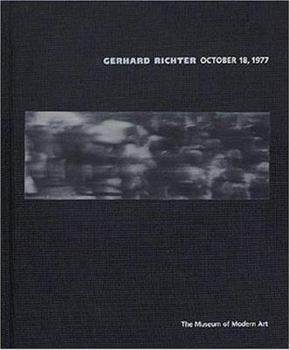
Hardcover. NY, Museum of Modern Art/Abrams, 1st, 2000, Book: Very Good, Dust Jacket: None, Hardcover, black cloth with cover paste-down plate, white lettering. Gerhard Richter (b. 1932) is one of the most highly regarded of contemporary artists, and his series of 15 paintings known as October 18, 1977, is one of the 20th century's most famous works on a political theme. It commemorates the day on which three young German radicals, members of the militant Baader-Meinhof group, were found dead in a Stuttgart prison; they were pronounced suicides, but many people suspected that they had been murdered. Richter's paintings, created 11 years after this traumatic event, are among the most challenging works of the artist's career. These hauntingly powerful images, derived from newspaper and police photography, are now in the collection of the Museum of Modern Art, New York. Clean copy.
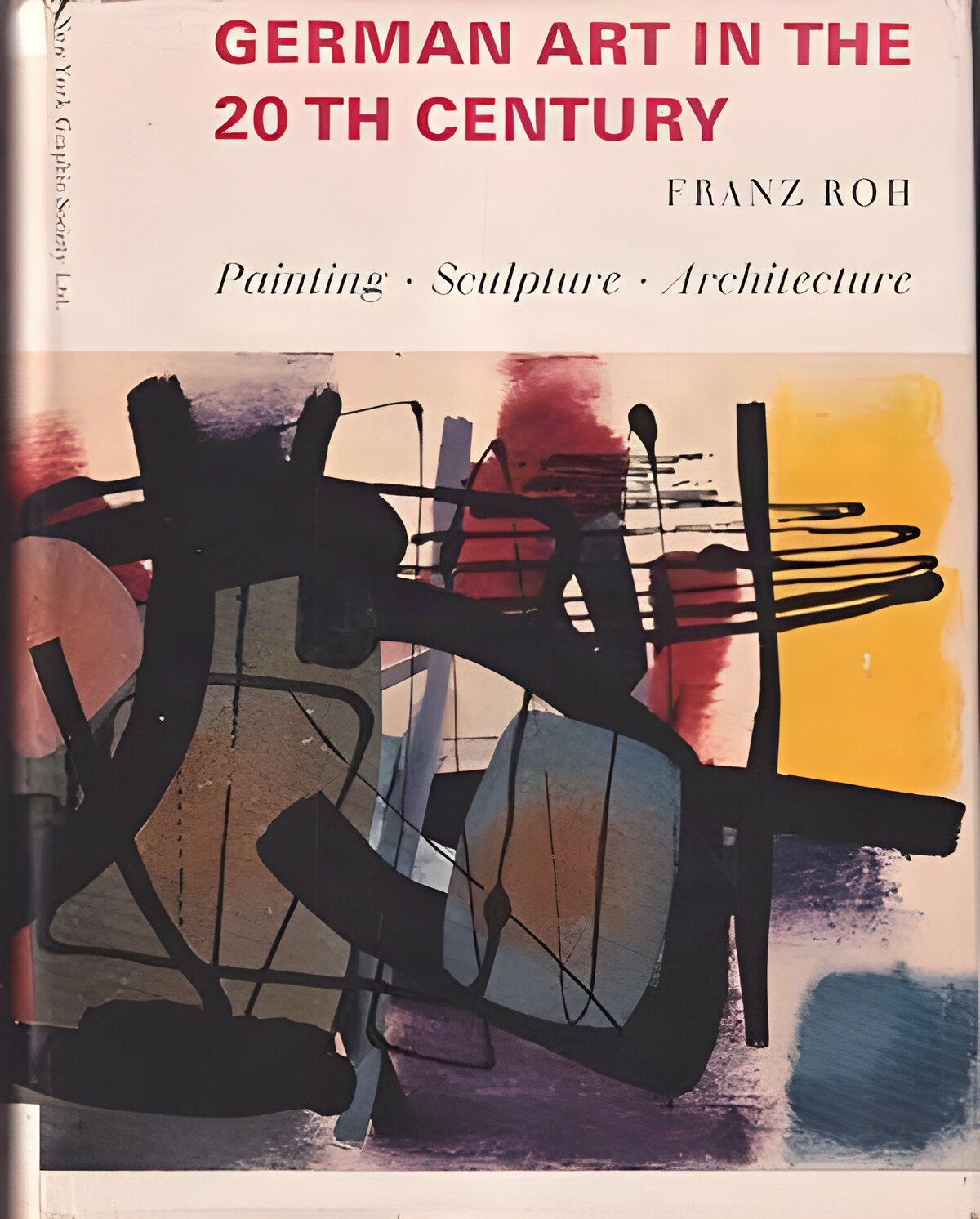
Hardcover. Greenwich CT, New York Graphic Society, 1st, 1968, Book: Very Good, Dust Jacket: Very Good, Hardcover in a lightly worn dust jacket with short, closed tears, 516 pages. 623 black and white illustrations, 42 color plates. "By 'German Art' we mean here 'Art in Germany,' the art that developed on German soil, even if it was created by a Swiss (Obrist), an Austrian (Kokoschka), a Russian (Kandinsky) or a Hungarian (Moholy). This definition should not be interpreted as nationalistic presumption, for cultural environment is more significant than the birth certificate." DOMESTIC SHIPPING ONLY.
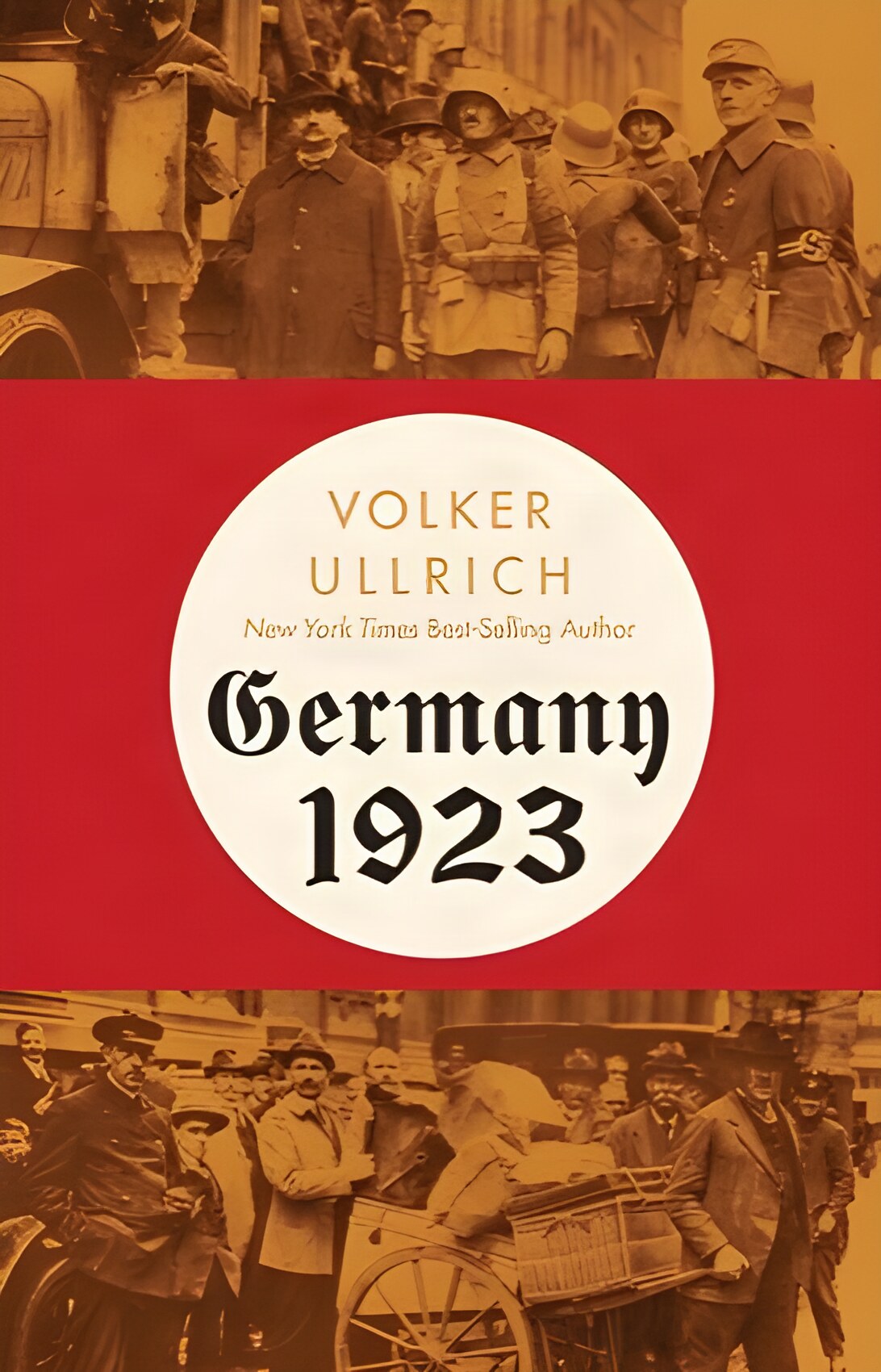
Hardcover. NY, Liveright, 1st, 2023, Book: Very Good, Dust Jacket: Very Good, Hardcover in a bright, unclipped dust jacket, 432 pages, b&w illustrations. As the great Austrian writer Stefan Zweig confided in his autobiography, written in exile, "I have a pretty thorough knowledge of history, but never, to my recollection, has it produced such madness in such gigantic proportions." He was referring to the situation in Germany in 1923. It was a "year of lunacy," defined by hyperinflation, a political system on the verge of collapse, and separatist movements that threatened Germany's territorial integrity. Most significantly, Adolf Hitler launched his infamous Beer Hall Putsch in Munich-a failed coup that nonetheless drew international attention and demonstrated the Nazis' ruthless determination to seize power. In Germany 1923, award-winning historian Volker Ullrich draws on letters, memoirs, newspaper articles, and other sources from the time to present a captivating new history of those explosive twelve months. Clean copy.
Hardcover. Heidelberg, Germany, Kehrer Verlag, 1st, 2014, Book: Very Good, Dust Jacket: None, 112 pages. Hardcover with no dust jacket. Very clean, unmarked copy still in shrink wrap. Many color photographs of secret marijuana growing communities. Published under the pseudonym "H. Lee" to protect those whom she photographed.
Softcover. Princeton NJ, Princeton University Press, 2nd pr., 1997, Book: Very Good, Dust Jacket: None, Softcover in pictorial wrappers, 255 pages. Color and black and white illustrations throughout. Second paperback printing. Bright and clean. Hans Holbein the Younger (1497/8-1543), one of the most versatile and admired painters of the Northern Renaissance, trained under his father in Augsburg and then worked for leading patrons in Switzerland before settling in England as Court Painter to Henry VIII. To commemorate the five-hundredth anniversary of the artist's birth, Oskar Batschmann and Pascal Griener offer this richly illustrated book the first comprehensive monograph on the artist to appear in more than forty years which is a major advance in our understanding of Holbein's contribution to European art.
Hardcover. Germany, Steidl, 1st, 2012, Book: Very Good, Dust Jacket: None, 262 pages. Hardcover with no dust jacket. Very clean, unmarked copy still in publishers shrink-wrap. Photographs throughout. Tight copy. The High and Lonesome Sound combines Cohen's vintage photos, film and musical recordings as well as an anecdotal text into a multimedia tribute to this underappreciated legend of American music whose every performance was, in Cohen's words, "not just a rendition of music, but a test of something to be overcome."
Hardcover. Germany, Steidl, 1st, 2012, Book: Very Good, Dust Jacket: None, 262 pages. Hardcover with no dust jacket. Very clean, unmarked copy still in publishers shrink-wrap. Photographs throughout. Tight copy. The High and Lonesome Sound combines Cohen's vintage photos, film and musical recordings as well as an anecdotal text into a multimedia tribute to this underappreciated legend of American music whose every performance was, in Cohen's words, "not just a rendition of music, but a test of something to be overcome."
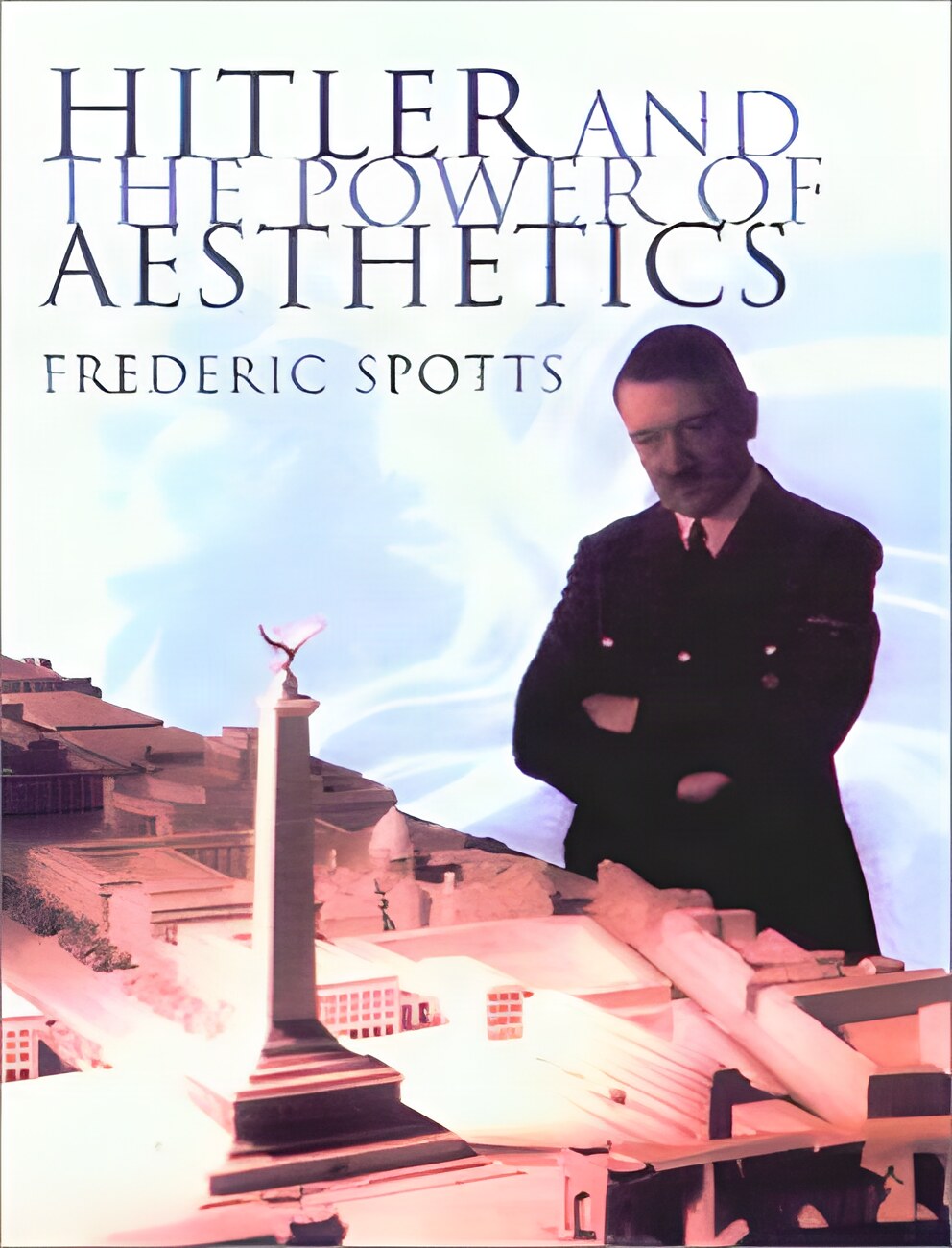
Hardcover. Woodstock NY, Overlook Press, 1st US, 2003, Book: Very Good, Dust Jacket: Very Good, Hardcover in a bright dust jacket, 456 pages with b&w and color illustrations. In Hitler and the Power of Aesthetics, acclaimed historian Frederic Spotts presents a startling reassessment of Hitler's aims and motivations. Spotts dismisses the traditional biographical view that Hitler was an "unperson," who had no life outside of politics, Spotts shows that Hitler's interest in the arts was as intense as his racism and his argument is punctuated with photographs and illustrations, including reproductions of Hitler's watercolors and drawings from his 1925 sketchbook. The book offers the first full analysis of Hitler's own work as a painter, as well as of his art collection. It also treats the entire range of his personal interests: from architecture, painting, symphony, opera, and sculpture, to the German autobahn system and the development of the Volkswagen. A riveting and highly original work, Hitler and the Power of Aesthetics provides a key to an understanding of the Third Reich which has, until now, been missing from biographies and studies of the arts in the Third Reich, as well as from political and military studies of Hitler. Clean copy.

 "Durer - The Artist and His Drawingsby: White, Christopher")
 "E. L. Kirchnerby: Grohmann, Will")
 "Ernst Ludwig Kirchner: Peter Schlemihl's Wondrous Storyby: Moeller, Magdalena M.; Gercken, Gunther")
 "Erroby: Schlicht, Esther; Hollein Max")
 "Eva Hesse: A Retrospectiveby: Cooper, Helen A.")


 "Eva Hesse: Sculpture, Organized by the Jewish Museum and Presented from May 12 to September 17, 2006by: Elisabeth Sussman and Fred Wasserman")
 "Expressionist Utopias: Paradise, Metropolis, Architectural Fantasyby: Benson, Timothy O.")




 "Georg Baselitz: The Bridge Ghost's Supperby: Baselitz, Georg")
 "George Grosz: An Autobiographyby: Grosz, George")
 "Georges Einbeck (Malerei Text- und Bilddokumente Werkverzeichnis)by: Kneubuhler, Theo/Einbeck, Georges")
 "Gerhard Richter Editionen 1965-1993by: Butin, Hubertus")
 "Gerhard Richter: Forty Years of Painting by: Storr, Robert")
 "Grasslandby: Lee, H.")

 "High & Lonesome Sound, The: The Legacy of Roscoe Holcombby: Cohen, John (Photographer)")
 "High & Lonesome Sound, The: The Legacy of Roscoe Holcombby: Cohen, John (Photographer)")