Hardcover. Cambridge MA, privately printed, 1st, 1936, Book: Very Good, Dust Jacket: None, Hardcover, brown boards with gilt lettering, black cloth spine. INSCRIBED BY AUTHOR WHITE on the front fly leaf, dated 1966. Joseph Frank Currier (1843-1909) was an American artist who spent most of his career working in Germany. Illustrated with 62 black and white plates. Clean copy.
Hardcover. NY, Farrar, Straus and Giroux, 2nd pr, 2021, Book: Very Good, Dust Jacket: Very Good, Hardcover in a bright, unclipped dust jacket. 312 pages, color and b&w illustrations. A bristling and brilliant memoir of the mid-twentieth-century New York School of painters and their times by the renowned artist and critic Edith Schloss, who, from the early years, was a member of the group that shifted the center of the art world from Paris to New York. Schloss was born in Germany and moved to New York City during World War II. She became part of a thriving community of artists and intellectuals that included Elaine and Willem de Kooning, Larry Rivers, John Cage, and Frank O'Hara. She married the photographer and filmmaker Rudy Burckhardt. She was both a working artist and an incisive critic, and was a candid and gimlet-eyed witness of the close-knit community that was redefining the world of art. In Italy she spent time with Giorgio Morandi, Cy Twombly, Meret Oppenheim, and Francesca Woodman. Remainder dot to top edge otherwise clean.
Hardcover. Princeton NJ, Princeton University Press, 1st, 2006, Book: Very Good, Dust Jacket: Very Good, Hardcover in a unclipped dust jacket with fading to spine, 260 pages. This fascinating and unusual book tells the story of an arguably catastrophic German habit - that of valuing cultural achievement above all else and envisioning it as a noble substitute for politics. Lepenies examines how this tendency has affected German history from the late eighteenth century to today. He argues that the German preference for art over politics is essential to understanding the peculiar nature of Nazism, including its aesthetic appeal to many Germans (and others) and the fact that Hitler and many in his circle were failed artists and intellectuals who seem to have practiced their politics as a substitute form of art. Clean copy.
Softcover. Baltimore MD, Gateway Press, 1st, 2002, Book: Very Good, Dust Jacket: None, Softcover. 272 pages. INSCRIBED BY AUTHOR on the title page. 226 men with ties to College Point, New York took part in the Civil War. They served in 82 different Army units, and in the Navy, both on land and on sea. They were infantry men, engineers and artillerists, and one was a musician in the Marine Band. The majority claimed Germany as their country of birth, and 24 died in the service of their adopted homeland. This Gunner at His Piece tells their stories, before, during and after the American Civil War. Clean copy.
Softcover. London, Sirius, 1st, 2022, Book: Very Good, Dust Jacket: None, Softcover, 192 pages. Award-winning cartoonist Tony Husband tells the story of World War II through a selection of the era's finest political cartoons. Satire is one of the key weapons of war. Forget 'sticks and stones', each country uses cartoons to hit the enemy where it really hurts and to maintain morale on the home front. Each country brought their own unique style and this collection features work from Britain, the USA, Germany, Russia and Japan and features the work of some of World War II's greatest cartoonists including Bill Mauldin, Fougasse, Emett, David Low and Graham Laidler. Clean, bright copy.
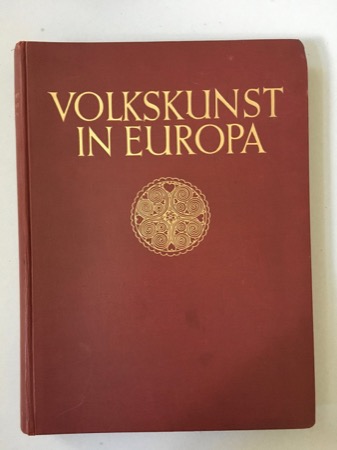
Hardcover. NY, E. Weyhe, 1st US, Book: Very Good, Dust Jacket: None, Hardcover, large folio, ( over 12" - 15" tall ), red cloth stamped in gilt. 56 pages of German text, comprising introduction and detailed catalogue of plates, the origins of objects (textiles, ceramics and wood) which demonstrate the origins and continued use of traditional design in the folk arts of Europe. Followed by 132 color plates of the objects mostly from Eastern Europe, most pasted in. First published in Germany in 1926, this appears to be the first US edition produced the same year. Architect Albert Kahn's copy with his ownership signature in pencil and date of 1926 on the front fly leaf. DOMESTIC SHIPPING ONLY.
Hardcover. NY, Thames and Huson, 1st, 2007, Book: Very Good, Dust Jacket: Very Good, Hardcover, 256 pages. Published to accompany an exhibition at London's Imperial War Museum, this book features more than 250 superb full-color illustrations of hard-hitting propaganda and groundbreaking graphic art. It encompasses iconic images such as Alfred Leete's "Your Country Needs You" as well as additional material drawn from the world of advertising and documentary photographs of posters in situ. Through posters, the author examines the social, political, ethnic, and cultural aspirations of America, Britain, Ireland, Germany, France, the Netherlands, Belgium, Russia, Austria, Hungary, and the Czech Republic. Covering topics as diverse as advertising in World War I, the Bolshevik Revolution, the Spanish Civil War, Germany and Occupied Europe in World War II, anti-nuclear campaigns, and Vietnam, the book is comprehensive and highly analytical, yet accessible. 300 illustrations, 250 in color.
Softcover. New York, Abbeville Press, 1st US, 1984, Book: Very Good, Dust Jacket: None, 160 pages, illustrated throughout in b&w. Previous owner's sticker on front end paper, light edgewear and soil to wrappers. Clean, tight copy. The pictures assembled here show how this artistic culture originated in the aftermath of the First World War and the unsettled early years of the Weimar Republic, uneasily balanced between revolutionary pretensions and the desire for order. The montage of images--photographs, paintings, drawings, collages, books, and film stills--evokes the period with shocking vividness.
Hardcover. Chicago, University Of Chicago Press, 1st, 2006, Book: Very Good, Dust Jacket: Very Good, Hardcover, pages. In When Buildings Speak,Anthony Alofsin explores the rich yet often overlooked architecture of the late Austro-Hungarian Empire and its successor states. He shows that several different styles emerged in this milieu during the late nineteenth and early twentieth centuries. Moreover, he contends that each of these styles communicates to us in a manner resembling language and its particular means of expression. Covering a wide range of buildings--from national theaters to crematoria, apartment buildings to warehouses, and sanatoria to postal savings banks--Alofsin proposes a new way of interpreting this language. He calls on viewers to read buildings in two ways: through their formal elements and through their political, social, and cultural contexts. By looking through Alofsin's eyes, readers can see how myriad nations sought to express their autonomy by tapping into the limitless possibilities of art and architectural styles. And such architecture can still speak very powerfully to us today about the contradictory issues affecting parts of the former Habsburg Empire.
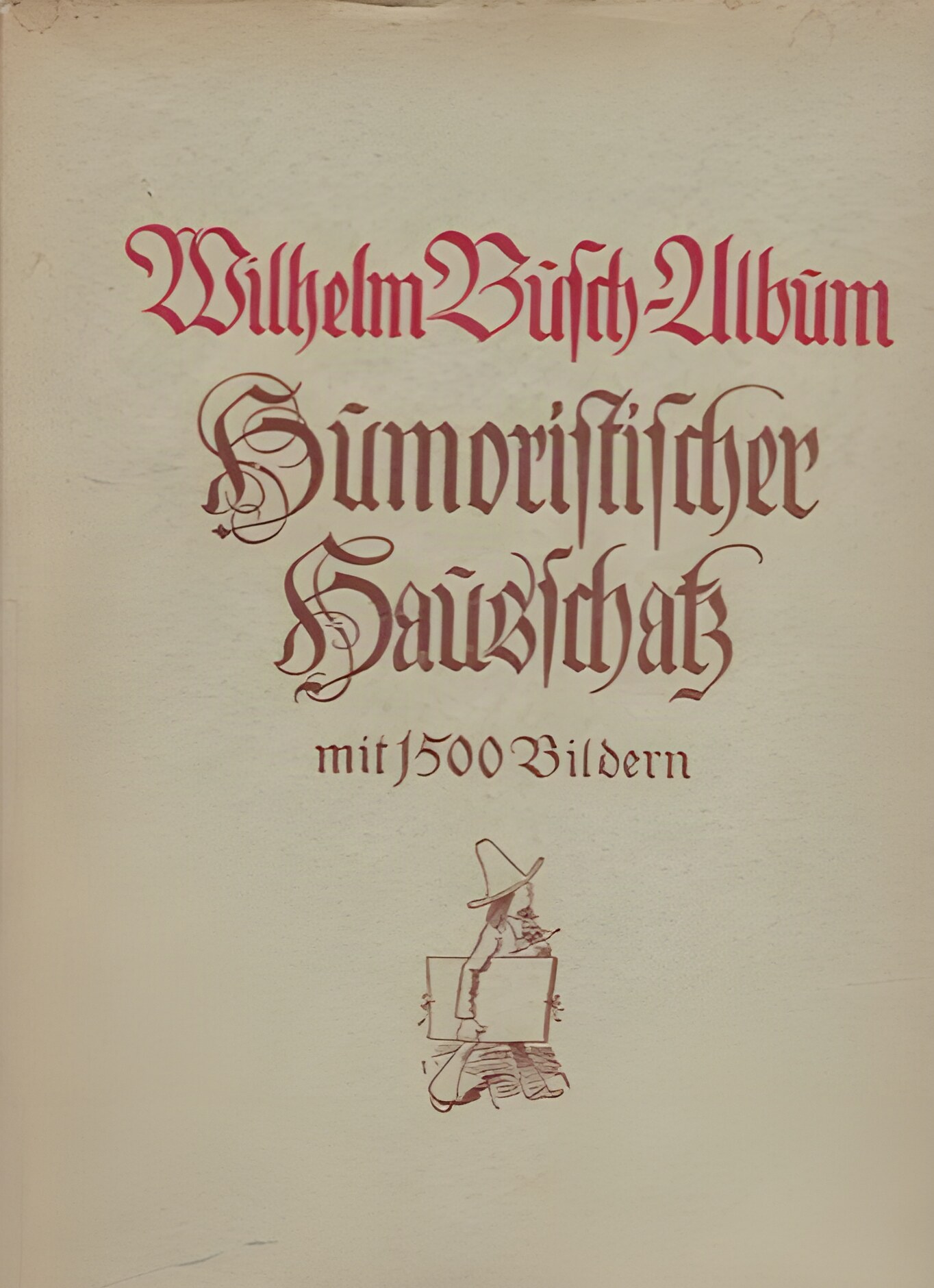
Hardcover. Munich, Fr. Bassermann, 1st, Book: Very Good, Dust Jacket: Very Good, Hardcover, beige cloth with red-stamped spine and cover titles. 356 pages with b&w cartoon illustrations by the German artist's works. GERMAN TEXT. His picture stories are regarded as one of the main precursors of the modern comic strip. His celebrated best-seller, Max and Moritz, was an inspiration for the Katzenjammer Kids. Clean copy. DOMESTIC SHIPPING ONLY.
Hardcover. NY, Thames & Hudson, 1st, 2015, Book: Very Good, Dust Jacket: None, Hardcover, 208 pages, 174 color plates. Window-Shopping through the Iron Curtain presents a selection of more than 100 images of shop windows shot by David Hlynsky during four trips taken between 1986 and 1990 to Poland, Czechoslovakia, Hungary, Yugoslavia, Bulgaria, East Germany, and Moscow. Using a Hasselblad camera, Hlynsky captured the slow, routine moments of daily life on the streets and in the shop windows of crumbling Communist countries. The resulting images could be still-lifes representing the intersection of a Communist ideology and a consumerist, Capitalist tool-the shop window-with the consumer stuck in the middle. Devoid of overt branding or calculated seduction, the shop windows were typically adorned with traditional yet incongruous symbols of cheer: homey lace curtains, paper flowers, painted butterflies, and pictures of happy children. Some windows were humble in their simple offerings of loaves and tinned fishes; others were zanily artistic, as in the modular display of military shirts in a Moscow storefront; and some illustrated intense professional pride, such as a sign in a Prague beauty salon depicting a pedicurist smiling fiendishly over an imperfect sole. The photographs are accompanied by essays by art historian Martha Langford and cultural studies specialist Jody Berland, as well as Hlynsky's own account of his time as a flaneur in the shopping plazas of the collapsing Soviet empire-"a vast ad-hoc museum of a failing utopia" that in 1989 began to close forever. No dj issued.
Hardcover. NY, Thames & Hudson, 1st, 2015, Book: Very Good, Dust Jacket: None, Hardcover, 208 pages, 174 color plates. Window-Shopping through the Iron Curtain presents a selection of more than 100 images of shop windows shot by David Hlynsky during four trips taken between 1986 and 1990 to Poland, Czechoslovakia, Hungary, Yugoslavia, Bulgaria, East Germany, and Moscow. Using a Hasselblad camera, Hlynsky captured the slow, routine moments of daily life on the streets and in the shop windows of crumbling Communist countries. The resulting images could be still-lifes representing the intersection of a Communist ideology and a consumerist, Capitalist tool-the shop window-with the consumer stuck in the middle. Devoid of overt branding or calculated seduction, the shop windows were typically adorned with traditional yet incongruous symbols of cheer: homey lace curtains, paper flowers, painted butterflies, and pictures of happy children. Some windows were humble in their simple offerings of loaves and tinned fishes; others were zanily artistic, as in the modular display of military shirts in a Moscow storefront; and some illustrated intense professional pride, such as a sign in a Prague beauty salon depicting a pedicurist smiling fiendishly over an imperfect sole. The photographs are accompanied by essays by art historian Martha Langford and cultural studies specialist Jody Berland, as well as Hlynsky's own account of his time as a flaneur in the shopping plazas of the collapsing Soviet empire-"a vast ad-hoc museum of a failing utopia" that in 1989 began to close forever. No dj issued.
Hardcover. Boston, MA, Houghton Mifflin Company, 1st, 1976, Book: Very Good, Dust Jacket: Very Good, 324 pages. Hardcover. Color and b/w illustrations throughout. Cover boards bound in green cloth, gilt title stamped on spine and decoration on front cover. Black endpapers. Binding tight, spine straight. Dust jacket unclipped, has a touch of tanning from age, but still in excellent condition. Pages' outer edges are very slightly tanned, but otherwise clean. This is a beautiful volume that examines an artist's technique, while also telling a story through word and paint brush, about the German immigrants with whom he was living.

 "The Loft Generation: From the de Koonings to Twombly: Portraits and Sketches 1942 2011 by: Schloss, Edith")
 "The Seduction of Culture in German Historyby: Lepenies, Wolf")
 "This Gunner at His Piece: College Point, New York & the Civil War, with Biographies of the Men Who Served (SIGNED COPY)by: James E Haas")



 "War Posters: Weapons of Mass Communicationby: James Aulich")
 "Weimar Years, The : A Culture Cut Shortby: Willett, John")
 "When Buildings Speak: Architecture as Language in the Habsburg Empire and Its Aftermath, 1867-1933by: Alofsin, Anthony")






 "Wyeth at Kuernersby: Wyeth, Betsy James")

