Softcover. NY/London, Routledge, reprint, 2007, Book: Very Good, Dust Jacket: None, Softcover, 470 pages. Forty of the world's most active art historians and theorists, including Victor Burgin, Joel Snyder, Rosalind Krauss, Alan Trachtenberg, Geoffrey Batchen, Carol Squiers, Margaret Iversen and Abigail Solomon-Godeau in animated debate on the nature of photography. Photography has been around for nearly two centuries, but we are no closer to understanding what it is. For some people, a photograph is an optically accurate impression of the world, for others, it is mainly a way of remembering people and places. Some view it as a sign of bourgeois life, a kind of addiction of the middle class, whilst others see it as a troublesome interloper that has confused people's ideas of reality and fine art to the point that they have difficulty even defining what a photograph is. For some, the whole question of finding photography's nature is itself misguided from the beginning. This provocative second volume in the Routledge The Art Seminar series presents not one but many answers to the question what makes a photograph a photograph? Clean copy.
Hardcover. Princeton University Press, 1st, 1997, Book: Very Good, Dust Jacket: Very Good, Hardcover, 208 pages. The Victoria and Albert Museum (V&A) has one of the finest and oldest collections of photography in the world. In this fascinating book, Mark Haworth-Booth, Curator of Photographs at the V&A, offers the first comprehensive introduction to this extensive and impressive collection. In the process, he provides the reader with a general history of photography from its beginnings as a scientific curiosity, through its international commercialization, to its coming of age as an art form in its own right. The V&A's Victorian holdings are outstanding, with major photographs by Roger Fenton, David Octavius Hill, Robert Adamson, Julia Margaret Cameron, Gustave Le Gray, Camille Silvy, and Lady Hawarden. In recent years, the museum has acquired significant works by such twentieth-century master photographers as Bill Brandt, Henri Cartier-Bresson, Paul Martin, Walker Evans, Paul Strand, Manuel Alvarez Bravo, and Cecil Beaton. A number of these photographs are published here for the first time
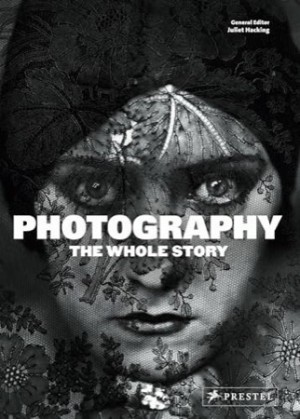
Hardcover. Prestel Publishing, 1st, Book: Very Good, Dust Jacket: Very Good, Hardcover in a bright dust jacket, 576 pages. Unlike many other artistic media, photographys origins are well documented, as are its ever-changing technologies and applications. Written by an international team of experts, this definitive history of photography looks at every step of the fields dynamic evolution, period by period and movement by movement. Each key genre is chronologically presented within its social, economic, and political context, along with close analysis of specially selected works that best exemplify the characteristics of the period. With more than 500 gorgeous examples in black and white and color, the book explores in-depth virtually every aspect of the medium since its first public demonstration in 1839 to the latest innovations: from early portraits and the birth of photojournalism to travel photography and the mapping of the world; from the Pictorialists to the avant-garde; from celebrity and fashion to documentary and landscape. Along the way readers will learn why some photographs are considered iconic, and why the medium as an art form continues to challenge and enthrall us. DUE TO WEIGHT, DOMESTIC SHIPPING ONLY.
Hardcover. NY, Farrar Straus & Giroux, 1st US, 2023, Book: Very Good, Dust Jacket: Very Good, Hardcover in a bright, unclipped dust jacket, 588 pages, several color plates. Before Picasso became Picasso-the iconic artist now celebrated as one of France's leading figures-he was constantly surveilled by the French police. Amid political tensions in the spring of 1901, he was flagged as an anarchist by the security services-the first of many entries in an extensive case file. Though he soon emerged as the leader of the cubist avant-garde, and became increasingly wealthy as his reputation grew worldwide, Picasso's art was largely excluded from public collections in France for the next four decades. The genius who conceived Guernica in 1937 as a visceral statement against fascism was even denied French citizenship three years later, on the eve of the Nazi occupation. In a country where the police and the conservative Academie des Beaux-Arts represented two major pillars of the establishment at the time, Picasso faced a triple stigma-as a foreigner, a political radical, and an avant-garde artist. Picasso the Foreigner approaches the artist's career and art from an entirely new angle, making extensive use of fascinating and long-overlooked archival sources. In this groundbreaking narrative, Picasso emerges as an artist ahead of his time not only aesthetically but politically, one who ignored national modes in favor of contemporary cosmopolitan forms. Remainder dot to top edge, otherwise a bright, clean copy.
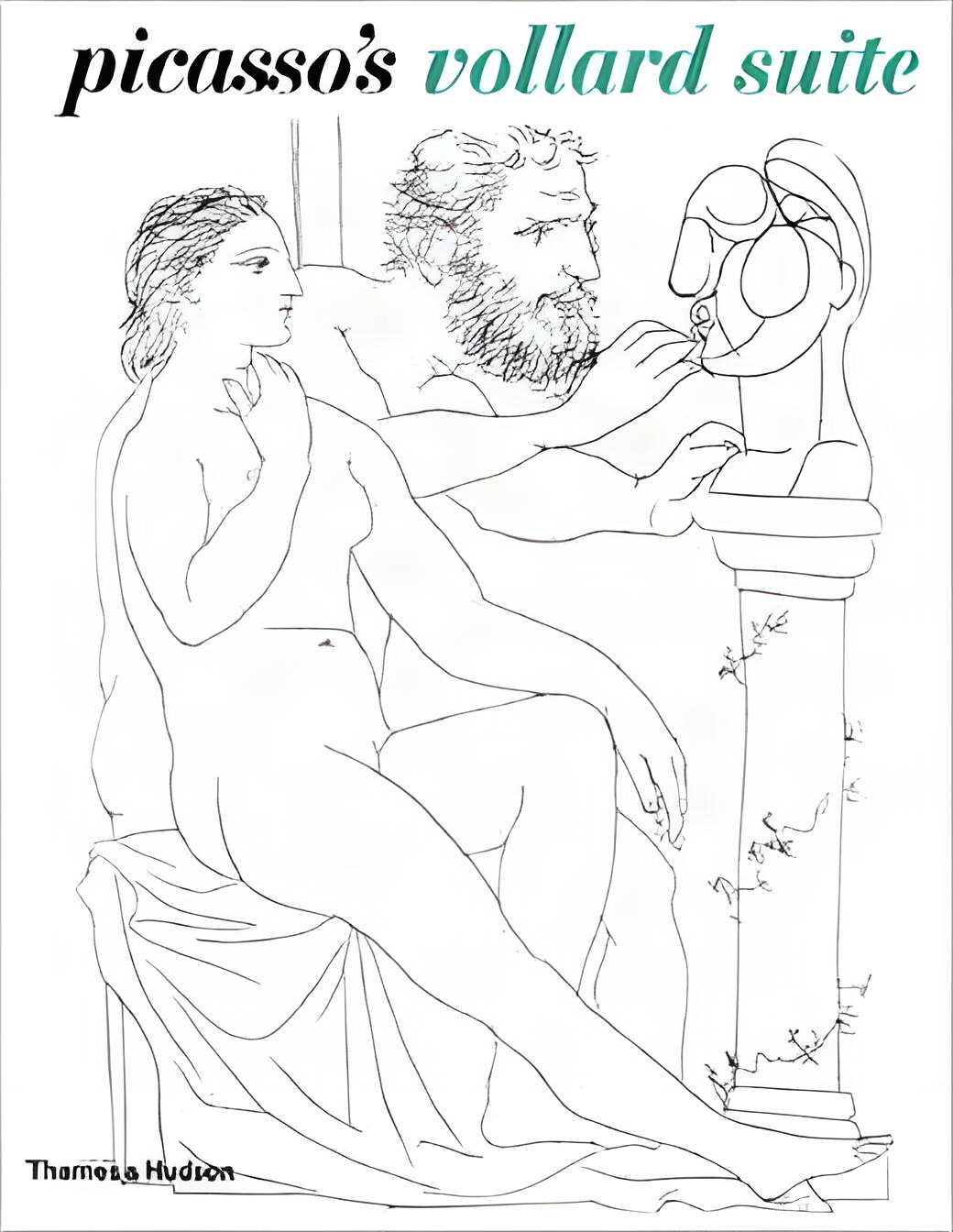
Softcover. New York , Thames & Hudson, reprint, 1985, Book: Very Good, Dust Jacket: None, 100 pages, illustrated throughout in b&w. Clean, unmarked copy with only minor wear to wrappers. The 100 etchings made by Picasso between 1930 and 1937 for the great art critic and dealer Ambroise Vollard have long been recognised as one of the supreme productions of the master's hand. These plates show, more than any of his other works, a man at once inspired by and prey to his dazzling imagination and the demands of his inner demon.
Hardcover. NY, Rizzoli, 1st, 1996, Book: Very Good, Dust Jacket: Very Good, Hardcover, 208 pages. Pictorial photography is noted for its artistic expressiveness, careful design and composition, and muted focus. In 1914 Clarence White (1871-1925) left Alfred Stieglitz's Photo-Secession group, abandoned his ambitions to be a photographic illustrator, and opened the Manhatten-based Clarence H. White School of Photography. Lecturers at his school included Stieglitz, Paul Strand, and Edward Steichen. White's unique teaching skills, especially his encouragement of women students, nurtured the careers of such talented photographers as Margaret Bourke-White, Laura Gilpin, and Dorothea Lange. Presented by the Detroit Institute of Arts and the George Eastman House, this companion volume for a traveling exhibition contains the elegant photographic imagery of White and his students. The clear text by two photography curators imparts how the revered teacher's romantic pictorialism became the foundation for the student's avant-garde modernism. By far the most substantial review of White's work and influence in print.
Hardcover. NY, Charles Scribner's Sons, 1st, 1947, Book: Very Good, Dust Jacket: Very Good, Hardcover in a lightly worn, unclipped dust jacket. 308 pages with 393 b&w photographs, endpapers map. As proclaimed on the dust jacket: "This volume, carefully prepared under the direction of the Picture Maker's son, Mr. C. S. Jackson, contains an unrivaled pictorial record which can never be duplicated. It was created by a great artist and photographer who himself played a part in the opening of the frontier country." A truly wonderful work-attractive and informative. "A" On Copyright Page. Light bump to top corner of text block causing a mild crimp to pages at corner. Otherwise very good.
Hardcover. Preinceton NJ, Princeton University Press, 2nd pr., 2006, Book: Very Good, Dust Jacket: Very Good, Hardcover in a bright, unclipped dust jacket. "What is abstract art good for? What's the use-for us as individuals, or for any society-of pictures of nothing, of paintings and sculptures or prints or drawings that do not seem to show anything except themselves?" In this invigorating account of abstract art since Jackson Pollock, eminent art historian Kirk Varnedoe, the former chief curator of painting and sculpture at the Museum of Modern Art, asks these and other questions as he frankly confronts the uncertainties we may have about the nonrepresentational art produced in the past five decades. He makes a compelling argument for its history and value, much as E. H. Gombrich tackled representation fifty years ago in Art and Illusion, another landmark A. W. Mellon Lectures volume. Realizing that these lectures might be his final work, Varnedoe conceived of them as a statement of his faith in modern art and as the culminating example of his lucidly pragmatic and philosophical approach to art history. He delivered the lectures, edited and reproduced here with their illustrations, to overflowing crowds at the National Gallery of Art in Washington in the spring of 2003, just months before his death. 297 pages; approx. 250 color and bw figures. Remains a nice, sharp and bright copy.
Softcover. NY, The Museum of Modern Art, 1st, 2002, Book: Very Good, Dust Jacket: None, Softcover, 192 pages. Selected from 17 million prints preserved in the archives of The New York Times, the spectacular photographs in this book provide a spellbinding sample from the rich archive that is the twentieth century, as seen through the eyes of a great newspaper. Revealed is the extraordinary and omnivorous breadth of photography's gaze: vivid pictures of both World Wars; of presidents, mayors, dictators and celebrities; of Beatles fans and Halley's comet; of victims and perpetrators, riots and disasters; of Bill Bradley on the court and Willie Mays sliding into home--and a great many more. Underlying them all is the gripping immediacy that makes news photography not only an indispensable presence in the daily paper but a vital part of history. This book includes an illustrated chronology that traces the evolution of the technology and business of news photography, with special attention to the role of The New York Times and to the recent rise of digital technologies in newspaper production. Originally published to accompany an exhibition at The Museum of Modern Art, New York.
NY, Harper & Brothers , reprint, 1900, Book: Very Good, Dust Jacket: None, Hardcover, 385 pages. Illustrated with a frontispiece and 48 half tone photographs. Original decorated publisher's cloth, with gilt titles. First published in 1897. Account of Sicily at the turn of the 20th century, with a focus on the art, history, and landscape of the Island, from the largest of cities to its hamlets and villages. Contemporary color postcard laid in. Original pale green cloth fafed, previous owners name, embossed stamp on front fly leaf, otherwise clean.
Hardcover. NY, William Edwin Rudge, 1st, 1930, Book: Good, Dust Jacket: None, Hardcover, red cloth, 46 pages + 51 b&w plates (color frontispiece). Russian artist and diplomatic secretary Paul or Pavel Svinin (1787-1839) toured the northeastern United States in the early 1800s. Here are excerpts of his notes, details about the time and his trip, and 51 BW reproductions of landscapes he rendered along the way. Most of the paintings show scenes from Pennsylvania, New York, New Jersey, Virginia and Maryland. Of interest to both cultural and art historians. With an introduction by R.T.H. Halsey. One of 1000 copies. Ex-lib with stamping, residue to endpapers, gilt lettering on spine faded, otherwise clean.
Hardcover. US, Univ of New Mexico Press, 1st, 1995-10-01, Book: Very Good, Dust Jacket: Very Good, 227 pages. Minor edgewear to dust jacket, else a clean, tight copy. A in depth study of the exhibition held at the Museum of Modern Art in 1955, and its influence, with a final chapter on "Edward Steichen, Robert Frank and American Modernism".
Hardcover. Florence, Italy, Cantini, 1st, 1989, Book: Very Good, Dust Jacket: Very Good, 271 pages. Hardcover with dust jacket in SLIPCASE cover. ITALIAN TEXT. Color pictures. Previous owner's bookplate on end paper, otherwise clean, unmarked copy with only minor wear to dust jacket. Slipcase has some tape repair on bottom edge. Red cloth covers with gilt lettering on spine.
Hardcover. New Haven CT, Yale University Press, 1st, 1998, Book: Very Good, Dust Jacket: Very Good, Hardcover in a bright dust jacket, 183 pages. This beautiful book examines the art of Pieter de Hooch, one of the most famous and innovative painters of Holland's Golden Age. It discusses de Hooch's position in Dutch genre painting, his favorite themes and their cultural context, his artistic development, and his approach to narration. The book was the catalogue for an exhibition at the Wadsworth Atheneum in Hartford. A 75-page text covering the artist's life and techniques and themes of his work is followed by nearly 100 pages presenting plates of works in the show; eight entries bring the catalog raisonne up to date. Sutton has achieved the rare feat of creating a work that is both a significant addition to scholarship and a reader-friendly introduction for those not already familiar with the artist. Clean copy.
Hardcover. New York, William Morrow and Company, Inc., 1st, 1994, Book: Very Good, Dust Jacket: Very Good, 128 pages. Hardcover. Color and b/w illustrations throughout. Dust jacket unclipped. Gilt title on spine. Dust jacket has a little bit of chipping at top of spine, patched with tape. Otherwise great. Clean and unmarked inside. Gilt endpapers.
Hardcover. New York, Aperture , 1st, 2001, Book: Very Good , Dust Jacket: Very Good, Hardcover, 144 pages, B&W photos. In original shrink wrap. For almost sixty years Pirkle Jones has chronicled the people, politics, and landscape of Northern California-a "promised land" which has long held sway in the American cultural imagination. Within the confines of that locale, he has unearthed a universe of beauty and meaning, photographing everything from flea-market finds to some of the most important American social movements of the second half of the twentieth century. Operating primarily within a social-documentary framework, Jones has made images characterized by sensitivity and acute observation. With uncanny prescience, a sense of urgency, and a sympathetic eye, Jones often plays the dual roles of artist and witness, combining portraiture, landscapes, and architectural photographs to create thorough documents of social structure and upheaval. Among the photo-essays included in Pirkle Jones: California Photographs are a compassionate and controversial piece on the Black Panther Party in the San Francisco Bay Area, Jones's portraits of the Sausalito houseboat community known as Gate 5, and a notable 1956 photo-essay done in collaboration with Dorothea Lange photographing the destruction and dislocation of the Berryessa Valley before it was flooded on completion of the Monticello Dam. Produced as a single issue of Aperture magazine in 1960 under the name "Death of a Valley", this essay remains a powerful testament to the price of progress. The book also includes Jones's work from the last few decades, in which he shifted his focus to an extended series of elegant, contemplative landscapes. A biographical essay by curator Tim B. Wride frames Jones and his work within the context of photographic history, the people he collaborated with-including Ansel Adams as well as Lange-and the great scope of Californian life.
Hardcover. New York, D.T. Valentine, N/A, 1856, Book: Very Good, Dust Jacket: None, B&w lithographic print of New York street scene for a proposed pedestrian overpass on Broadway, allowing horse-drawn vehicles to pass underneath. Image size 9 1/2" X 6 1/2", with matte 10 X 12". Two vertical creases where it was once folded. Matte has light soiling.
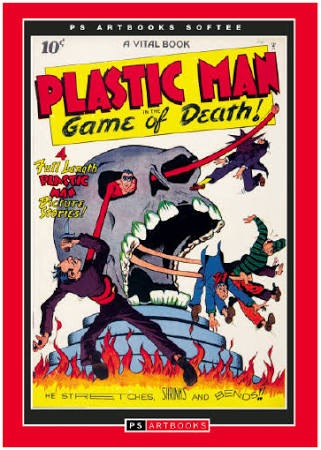
Softcover. UK, PS Artbooks, reprint, nd, Book: Very Good, Dust Jacket: None, Softcover. Reprints the first four comic books (published by Vital Publications, 1943-1946) in their entirety. All in color including covers and ads. Featuring art by the great Jack Cole, firmly locating Plastic Man in the humorous super-hero genre.
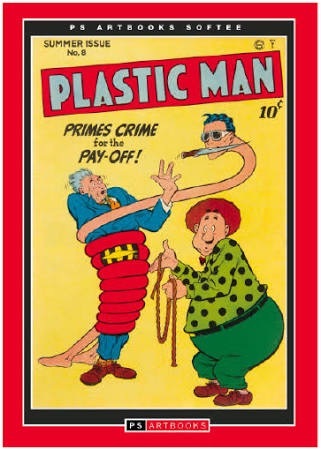
Softcover. UK, PS Artbooks, reprint, nd, Book: Very Good, Dust Jacket: None, Softcover. Reprints Plastic Man Nos. 5-8 in their entirety. All in color including covers and ads. Originally published 1946-47. Featuring art by the great Jack Cole, firmly locating Plastic Man in the humorous super-hero genre.
Hardcover. Cambridge UK, Cambridge University Press, 1st, 2004, Book: Very Good, Dust Jacket: Very Good, Hardcover in a bright dust jacket, 218 pages. The Timaeus-Critias is concerned with cosmology and Plato's claim that its central task is to articulate the way in which the cosmos manifests the values of goodness and beauty. This book examines this important dialogue in its entirety using current methods of Platonic scholarship. Arguing that Aristotle's physics is far closer to the Timaeus than usually realized, the study's other prominent findings reinforce the dialogue's essentially moral message, and clarify its literary character.
Hardcover. NY, Doubleday, 1st, 2016, Book: Very Good, Dust Jacket: Very Good, Hardcover in a bright dust jacket. For generations the electric guitar has been an international symbol of freedom, danger, rebellion, and hedonism. In Play It Loud, veteran music journalists Brad Tolinski and Alan di Perna bring the history of this iconic instrument to roaring life. It's a story of inventors and iconoclasts, of scam artists, prodigies, and mythologizers as varied and original as the instruments they spawned. Clean copy.
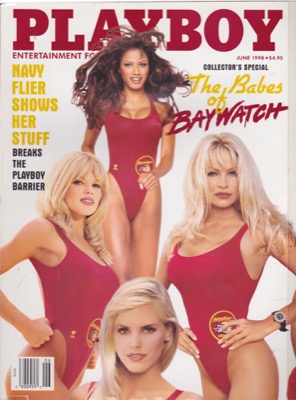
Softcover. Chicago, Playboy Press, 1998, Book: Very Good, Single issue. Soft cover. Very Good. Minor wear. Centerfold intact. Binding tight, pages clean. Pictorial wraps with Baywatch Babes on fold-out cover. This month articles feature: Navy flier shows her stuff, breaks the Playboy barrier; Interview with Paul Reiser; Nascar, history of the sexual revolution, 60 to 69 (make love not war), playmate Anne Randalll and more.
Hardcover. New Texture, 1st, 2022, Book: Very Good, Dust Jacket: None, Hardcover, pictorial boards, 135 pages. A prolific men's action magazine illustrator from the magazines' start in the 1950s until their passing from American newsstands in the 1970s, POLLEN IN PRINT's complete, chronological presentation of Pollen's contributions serves as its own visual history, illuminating both Pollen's growth as an artist, as well as the magazines' (and their readers') shifting focus and changing interests across three decades. Clean copy.
Rome, Contrasto, 1st, 2010, Book: Very Good, Dust Jacket: None, Hardcover, 136 pages, 53 b&w plates. A collection of 53 photographs of Pompeii, never published before, shot by the master photographer Mimmo Jodice. Unique images, visions conjuring up a long-lost past tradition, coupled with texts by Ethan Canin, Jim Nisbet and Jay Parini. No dj issued.

 "Photography Theoryby: James Elkins")
 "Photography, an Independent Art: Photographs from the Victoria and Albert Museum, 1839-1996by: Mark Haworth-Booth")

 "Pictorialism into Modernism: The Clarence H. White School of Photographyby: Marianne Fulton")
 "Picture Maker of the Old West: William H. Jacksonby: Jackson, Clarence S.")


 "Pictures of Nothing: Abstract Art since Pollock (The A. W. Mellon Lectures in the Fine Arts, 38)by: Kirk Varnedoe , Adam Gopnik, et al.")
 "Pictures of the Times: A Century of Photography from The New York Timesby: Safire, William/ Peter Galassi, Susan Kismaric")


 "Picturesque United States of America 1811 1812 1813 being a Memoir on Paul Svinin Russian Diplimatic Officer Artist and Author Containing Copious Excerpts from His Account of His Travels in America with Fifty two Reproductions of Wat")
 "Picturing an Exhibition: The Family of Man and 1950s Americaby: Sandeen, Eric J.")
 "Piero della Francesca (Italian Edition)by: Paolucci, Antonio")


 "Pirkle Jones - California Photographs 1935-1982by: Jones, Pirkle")
 "Plan for the Relief of Broadway Presented to the Common Council October 4th 1852 by John T. Dodge Street Commissioner (PRINT)by: Hayward, G.")
 "Plato's Natural Philosophy: A Study of the Timaeus-Critiasby: Johansen, Thomas Kjeller")

 "Pollen In Print: 1955-1959by: Deis, Robert, Doyle, Wyatt")
 "Pompeii: Echoes from the Grand Tourby: Jay Parini, Ethan Canin, Jim Nisbet, Angelo Cannavacciuolo (Creator), Mimmo Jodice (Photographer), Marcello Fiori (Introduction")