Hardcover. New York, Frederick A. Stokes, 1st, 1939, Book: Very Good, Dust Jacket: None, Non-paginated. Hardcover with red covers. Lightly soiled. Black and white wordless cartoons by Soglow.
Hardcover. New Haven CT, Yale University Press, 1st, 2013, Book: Very Good, Dust Jacket: Very Good, Hardcover in a bright dust jacket, 430 pages. SIGNED BY MONOD on the tile page, also INSCRIBED on the half-title page. The late seventeenth and eighteenth centuries are known as the Age of Enlightenment, a time of science and reason. But in this illuminating book, Paul Monod reveals the surprising extent to which Newton, Boyle, Locke, and other giants of rational thought and empiricism also embraced the spiritual, the magical, and the occult. Although public acceptance of occult and magical practices waxed and waned during this period they survived underground, experiencing a considerable revival in the mid-eighteenth century with the rise of new antiestablishment religious denominations. The occult spilled over into politics with the radicalism of the French Revolution and into literature in early Romanticism. Even when official disapproval was at its strongest, the evidence points to a growing audience for occult publications as well as to subversive popular enthusiasm. Ultimately, finds Monod, the occult was not discarded in favor of "reason" but was incorporated into new forms of learning. In that sense, the occult is part of the modern world, not simply a relic of an unenlightened past, and is still with us today. Clean copy.
Hardcover. New Haven, CT, William Edwin Rudge, 1st, 1941, Book: Very Good, Dust Jacket: None, 73 pages. Dark gray cloth covers, gilt titles, b&w photographic frontispiece, top edge red. Clean covers with slight wear to corners, pages crisp and unmarked, stiff binding; a very neat tight copy in great condition.
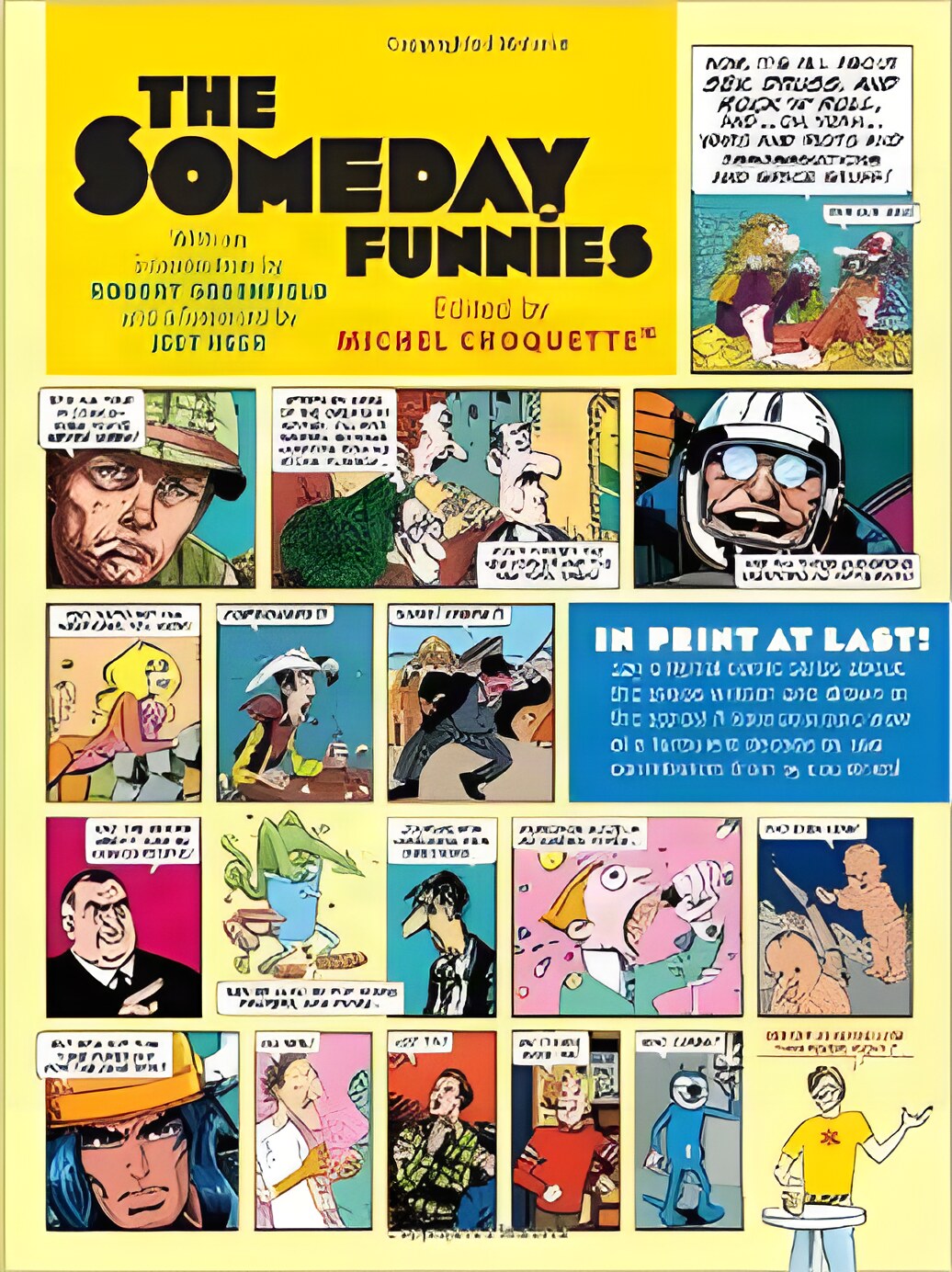
Hardcover. New York , Harry N. Abrams, 1st, 2011, Book: Very Good, Dust Jacket: Very Good, Hardcover, 216 pages. Like new in publisher's shrink-wrap. The long-awaited collection of comic strips created in the early 1970s by some 169 contributors from 15 countries from C.C. Beck to Art Spiegelman. What started out as a special insert for Rolling Stone took on a life of its own as writer/editor Michel Choquette traveled the world, commissioning this visual chronicle of the 1960s, only to find himself without a publishing partner or the financial support to continue. Forty years later, readers finally get to experience this legendary anthology as Choquette celebrate the birth, death, and resurrection of The Someday Funnies. DUE TO SIZE, DOMESTIC SHIPPING ONLY.
Softcover. New York, Hudson Hills, 1st, 1987, Book: Very Good, Dust Jacket: None, Softcover, 130 pages, color and b&w photographs. Exhibition catalogue dedicated to the contemporary Navajo artist and her weaving of Chant Rugs; a majority of the 83 textiles (shown in color plates) that have been selected are a well-balanced demonstration of the very finest weaving skills of any period in Navajo history.
Softcover. London, Green Wood Publishing, 1st, 1992, Book: Very Good, Dust Jacket: None, Softcover, unpaginated, approx. 90 pages. A visual history of comic book cover art from England, all space-related. Color illustrations throughout. Clean, bright copy.
Softcover. Seattle, Fantagraphics, 2nd pr., 2026, Book: Very Good, Dust Jacket: None, Softcover, 264 pages in color. Basil Wolverton is one of the greatest, most idiosyncratic talents in comic book history. Though he is best known for his humorous grotesqueries in MAD magazine, it is his science-fiction character Spacehawk that Wolverton fans have most often demanded be collected. The wait is over: Spacehawk features every story from Spacehawk's intergalactic debut in 1940 to his final, Nazi-crushing adventure in 1942. Spacehawk is the closest thing to a colorfully-costumed, conventional action hero Wolverton ever created, yet the strip is infused with Wolverton's quintessential weirdness: controlled, organic artwork of strangely repulsive aliens and monsters and bizarre planets, and stories of gruesome retribution that bring to mind Wolverton's peer, Fletcher Hanks. Spacehawk had no secret identity, no fixed base of operations beyond his spaceship, and no sidekicks or love interests. He had but one mission in life: to protect the innocent throughout the Solar System, and to punish the guilty. Clean copy.
Hardcover. NY, Harper and Brothers, 1st, 1891, Book: Very Good, Dust Jacket: None, Hardcover, decorative blue cloth with gilt lettering and red and black stamped designs. 444 pages plus 4 pages of publisher's ads. Over 100 b&w illustrations by the Harper stable of artists: mostly Thure de Thulstrup along with a number of maps. Front cover with small area of discoloration, front hinge partially cracked, otherwise clean, binding solid.
Hardcover. New Bedford MA, Old Dartmouth Historical Society, 1st, 1982, Book: Very Good, Dust Jacket: None, Hardcover, red cloth with gilt lettering on spine. 221 pages, b&w photographs. The photographs and descriptive captions provide a wealth of information on the whaling vessel, its gear, shipboard routine, whaleboats, and the cutting in and processing of whales. The photographs the artist Ashley took for his own reference and constitute the most complete known pictorial record of a sperm whaling voyage. ... The photographs and descriptive captions provide a wealth of information on the whaling vessel, its gear, shipboard routine, whaleboats, and the cutting of whales. No dust jacket. Clean copy.
Softcover. New York, Harry N. Abrams, Inc., 1st, 1997, Book: Very Good, Dust Jacket: None, 336 pages. Softcover. Color and b/w illustrations throughout. Covers in excellent condition. Touch of foxing to top edge. Pages clean and bright. The ever-rapacious Nazis looted staggering quantities of great art and antiques from the nations they occupied. Much of it found its way back to Germany, and following the Allied victory, many thousands of rare (and some priceless) pieces were identified, and returned to the countries from which they had been taken. But not all of the paintings, statues, and archaeological treasures were recovered: Some were taken by Soviet troops and disappeared into Russia. Still others slipped into the black market in western Europe, and were snapped up by wealthy (if unprincipled) collectors. A 1995 symposium at the Bard Graduate Center for Studies in the Decorative Arts brought together European and American investigators and historians to discuss both the the Nazi thefts and the current state of knowledge of the whereabouts of the many still missing treasures. Those papers are reprinted here. While the pieces are detailed, dry, and likely to be of most interest to specialists, there are some extraordinary stories, most prominently the description of the recent rediscovery of ``Priam's treasure,'' excavated by Schliemann at Troy and hidden since WW II in a Russian museum. (123 illustrations, 25 in color).
Hardcover. New York, Clarkson N. Potter Publishing, 1st US, 1972, Book: Very Good, Dust Jacket: Good, 200 pages. Hardcover with dust jacket. Ex-Lib with usual markings and stamps on end papers and pages. Light edgewear on cover boards, and dust jacket is covered with plastic. Black and white and color illustrations throughout.
Hardcover. NY, Prestel, 1st, 2021, Book: Very Good, Dust Jacket: None, Hardcover in pictorial boards, 345 pages, illustrated in color and b&w. Discover how the designers of women's sporting attire navigated the worlds of fashion, function, and propriety, from the beginning of the 19th century to 1960. This book offers a stunning visual record of the evolution of women's sporting attire over nearly two centuries. With selections from Keds, Pendleton, and Spalding and garments by Coco Chanel, Claire McCardell, and Jean Patou, among many others, it features familiar names in fashion, as well as significant rediscoveries. At the intersection of the history of fashion and feminism, Sporting Fashion highlights the extraordinary impact of new technologies and evolving social mores on women's clothing for sport. It explores how the basic forms of women's sportswear we know today--from swimsuits to sneakers--were developed during a time when women were achieving more freedom. Full color illustrations of sport and leisure ensembles are included, along with magazine spreads and archival images. This very heavy book will require extra postage if shipped overseas.
Hardcover. NY, Sports Illustrated , 1st, 2004, Book: Very Good, Dust Jacket: Very Good, Hardcover, 304 pages. A fiftieth anniversary compilation of the best from the Sports Illustrated archives features memorable photographs and articles from the pages of the popular sports magazine since its launch in 1954, offering an entertaining and informative look at great moments in American sports history.
Softcover. NY, Bard Graduate Center, 1st, 2012, Book: Very Good, Dust Jacket: None, Softcover, 208 pages illustrated in color and b&w. Although Jane Hading (1859-1940), Lily Elsie (1886-1962), and Billie Burke (1884-1970) gained fame as stage actresses, their popular appeal also rested on their ability to cultivate a glamorous appearance. Their careers illustrate the early transformation of actresses into marketable commodities whose celebrity status depended on the consumption of their images. This celebrity, in turn, was used to market an array of beauty and fashion goods to women striving to emulate them. The three women featured in Staging Fashion exemplify the factors that ensured success for 20th-century actresses. Each of these women was dressed by a leading couturier (or several couturiers), both onstage and offstage. In major cities such as New York, Paris, and London, actresses depended on exquisite, custom-made gowns both to secure principal roles and to maintain popularity. Their physical beauty, which was consistent with elite notions of class and race, was depicted on postcards and in popular fashion and theatre magazines and newspapers. Finally, these actresses developed distinct "personalities," which were conveyed by their stage roles and in numerous photos and articles.
Hardcover. NY, Ten Speed Press, 1st, 2023, Book: Very Good, Dust Jacket: None, Hardcover, pictorial boards, 283 pages. In collaboration with award-winning historian and comic artist Joel Christian Gill, this stunningly illustrated graphic-novel adaptation of Dr. Kendi's groundbreaking Stamped from the Beginning explores, with vivid clarity and dimensionality, the living history of America, and how we can learn from the past to work toward a more equitable, antiracist future. Clean copy.
Hardcover. London, Lund Humphries, 1st, 1971, Book: Very Good, Dust Jacket: Very Good, Hardcover, 184 pages, b&w and some color illustrations. Dust jacket bright, unclipped.
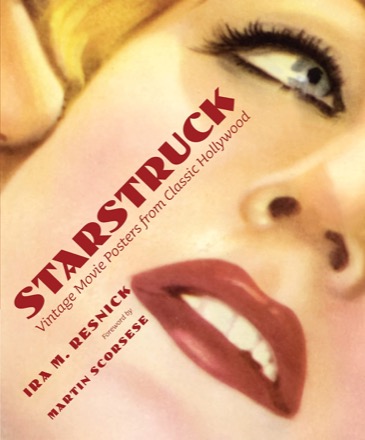
Hardcover. NY, Abbeville Press, 1st, 2010, Book: Very Good, Dust Jacket: Very Good, Hardcover, in a bright unclipped dust jacket. A one-of-a-kind collection of movie posters spanning fifty years, from silent films to Cinemascope For four decades film historian Ira M. Resnick has been amassing a superb collection of 2,000 vintage movie posters and 1,500 stills, which has never before been published. Starstruck: Vintage Movie Posters from Classic Hollywood features the best of Resnick's collection, with vivid reproductions of 250 posters and forty stills from the golden age of Hollywood, 1912 to 1962. In a moving introduction, Resnick relates how his love of vintage movie art translated into a career as a collector and the founder of the Motion Picture Arts Gallery, the first gallery devoted exclusively to the art of the movies. Resnick's firsthand account offers entertaining anecdotes about how he managed to acquire such stellar film artwork, as well as historical information about the stars and films shown on the pieces he collected. Guiding the reader through the best posters and stills of his collection, Resnick provides a tour of cinematic history, starting in the silent film era and continuing up to Breakfast at Tiffany's (1961). By showcasing several posters for each performer--such as Lillian Gish, the Marx Brothers, Marilyn Monroe, John Barrymore, and Audrey Hepburn--Resnick offers a unique method of charting the evolution of each movie star's career. Still like new in publisher's shrinkwrap. NOTE: Due to size and weight DOMESTIC SHIPPING ONLY.
NY, Abbeville Press, 1st, 2010, Book: Very Good, Dust Jacket: Very Good, Hardcover, in a bright unclipped dust jacket. A one-of-a-kind collection of movie posters spanning fifty years, from silent films to Cinemascope For four decades film historian Ira M. Resnick has been amassing a superb collection of 2,000 vintage movie posters and 1,500 stills, which has never before been published. Starstruck: Vintage Movie Posters from Classic Hollywood features the best of Resnick's collection, with vivid reproductions of 250 posters and forty stills from the golden age of Hollywood, 1912 to 1962. In a moving introduction, Resnick relates how his love of vintage movie art translated into a career as a collector and the founder of the Motion Picture Arts Gallery, the first gallery devoted exclusively to the art of the movies. Resnick's firsthand account offers entertaining anecdotes about how he managed to acquire such stellar film artwork, as well as historical information about the stars and films shown on the pieces he collected. Guiding the reader through the best posters and stills of his collection, Resnick provides a tour of cinematic history, starting in the silent film era and continuing up to Breakfast at Tiffany's (1961). By showcasing several posters for each performer--such as Lillian Gish, the Marx Brothers, Marilyn Monroe, John Barrymore, and Audrey Hepburn--Resnick offers a unique method of charting the evolution of each movie star's career. Still like new in publisher's shrinkwrap. NOTE: Due to size and weight DOMESTIC SHIPPING ONLY.
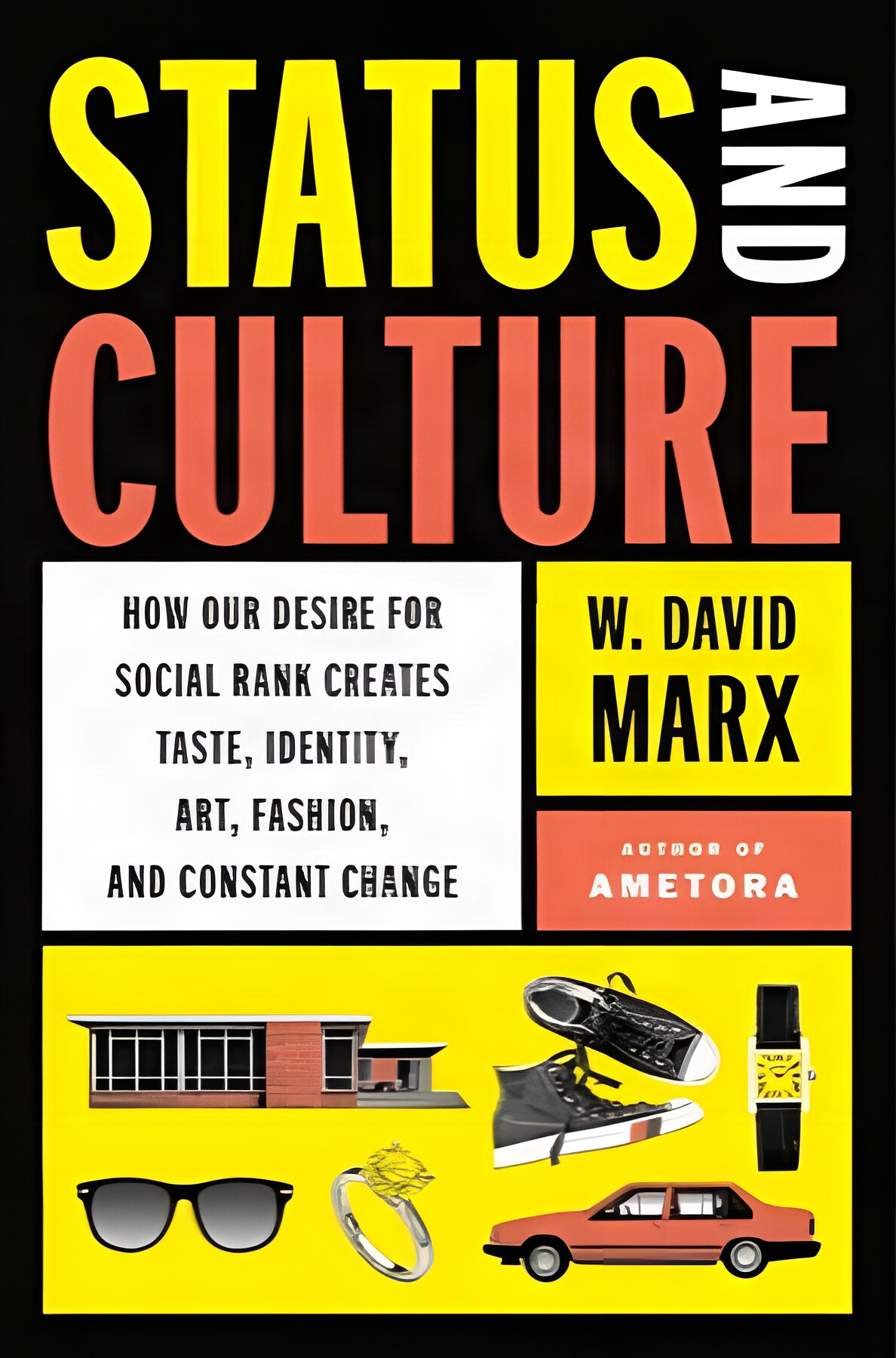
Hardcover. NY, Viking, 1st, 2022, Book: Very Good, Dust Jacket: Very Good, Hardcover in a bright dust jacket, 346 pages. In Status and Culture, W. David Marx weaves together the wisdom from history, psychology, sociology, anthropology, economics, philosophy, linguistics, semiotics, cultural theory, literary theory, art history, media studies, and neuroscience to demonstrate exactly how individual status seeking creates our cultural ecosystem. Marx examines three fundamental questions: Why do individuals cluster around arbitrary behaviors and take deep meaning from them? How do distinct styles, conventions, and sensibilities emerge? Why do we change behaviors over time and why do some behaviors stick around? The answers then provide new perspectives for understanding the seeming "weightlessness" of internet culture. Clean copy.
Softcover. Wooster, College of Wooster Art Museum, The, 1st, 2000, Book: Very Good, Dust Jacket: Very Good, 55 pages. Softcover. Minor wear to cover edges. Full page black & white photographs throughout. Clean unmarked text.
Hardcover. NY, Museum of Modern Art, 1st, 1978, Book: Very Good, Dust Jacket: Good, Hardcover, Brown cloth boards with gilt titles, in a lightly worn, price-clipped dust jacket. 180 pages, 91 illustrations (6 in color), text by Dennis Longwell. Includes a catalog of the plates, an essay on Steichen's printing techniques, a selected bibliography and an index to the plates. Covers with mild soil, interior clean and bright. Related clippings laid in.
Hardcover. New York, Metropolitan Museum of Art, 1st, 2011, Book: Very Good, Dust Jacket: Very Good, Hardcover still in publisher's shrinkwrap. Binding strong. Dust jacket unmarked. Clean tight copy.
Hardcover. NY, St. Martin's/Minotaur Books, 1st, 2006, Book: Very Good, Dust Jacket: Very Good, Hardcover in a bright, unclipped dust jacket. SIGNED BY TAYLOR on title page. Art history professor Sweeney St. George is in the middle of putting together an exhibit on her specialty, "the art of death," for the university museum when she makes an unusual discovery: A valuable piece of Egyptian funerary jewelry that should be in the museum's collection seems to be missing. Searching for answers, Sweeney learns that a student intern at the museum was the last person to check out the piece, a young woman who died of an apparent suicide soon after she handled the piece, more than twenty-five years ago. Going on with the exhibition without the intricately beaded Egyptian collar, Sweeney can't let it drop altogether. Nor can she forget the student, Karen Philips, who died just a few months after working with the piece. A little digging shows that Karen was working at the museum the night it was robbed, that same year, and Sweeney becomes even more curious. But her interest in mysteries past pales when a present-day murder brings Sweeney and her colleagues at the museum under the Cambridge Police Department spotlight in the person of Detective Tim Quinn, whom Sweeney has worked with before. In the fourth installment in this rich and fascinating series, Sweeney and Tim go after a killer, trying to resolve questions both immediate and decades-old before it's too late.

 "Soglow's 'Confidential' History of Modern Englandby: Soglow, Otto")

 "Some Aspects of Printing, Old and Newby: Updike, Daniel Berkeley")
 "Song of the Loom, The/ New Traditions in Navajo Weavingby: Dockstader, Frederick")
 "Space Aces! Comic Book Heroes from the Forties and Fiftiesby: Gifford, Denis")



 "Sparring with Gil Kane: Debating the History and Aesthetics of Comicsby: Groth (editor), Gary")


 "Sporting Art England 1700-1900by: Walker, Stella A.")



 "Sports Illustrated 50 Years: The Anniversary Bookby:")




 "Stanley Morison: His Typographic Achievementby: Moran, James")


 "Starstruck: Vintage Movie Posters from Classic Hollywoodby: Ira M. Resnick, Martin Scorsese (Foreword)")


 "Steel & Real Estate - Margaret Bourke-White and Corporate Culture in Cleveland 1927 - 1929by: Bourke-White, Margaret/Geraldine Wojno Kiefer")

 "Stieglitz and His Artists - Matisse to O'Keefeby: Messinger, Lisa Mintz")
 "Still As Death (Sweeney St. George Mystery): (SIGNED COPY)by: Taylor, Sarah Stewart")